
Lecture 6 Model Assessment and Selection Outline Introduction
![Example: Bias-variance Tradeoff 80 obs, 20 predictors ~ U[0, 1]^20](https://slidetodoc.com/presentation_image_h2/827d17a44f266c5510f4aea46f3616c2/image-14.jpg "Example: Bias-variance Tradeoff 80 obs, 20 predictors ~ U[0, 1]^20")
- Slides: 31
Lecture 6. Model Assessment and Selection
Outline • • • Introduction – Generalization Error Bias-Variance Decomposition Optimism of Training Error Rate AIC, BIC, MDL Cross Validation Bootstrap
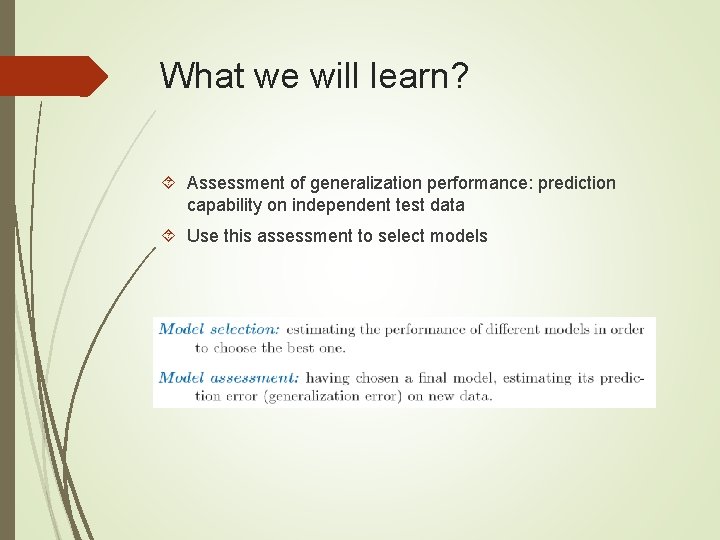
What we will learn? Assessment of generalization performance: prediction capability on independent test data Use this assessment to select models
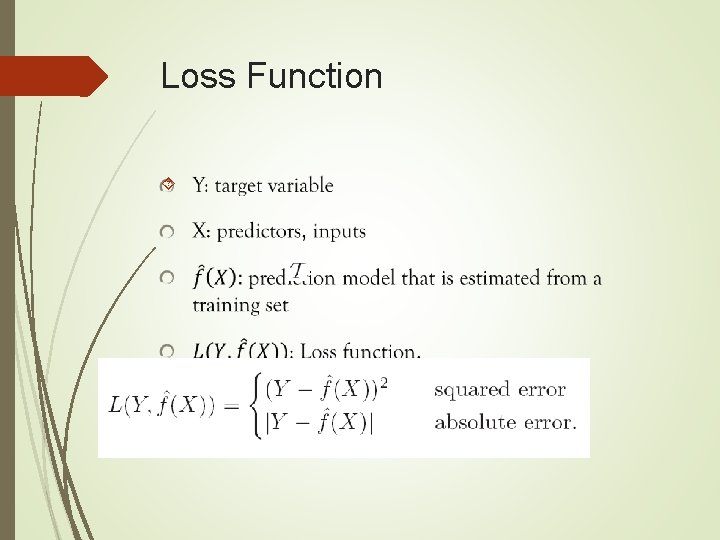
Loss Function
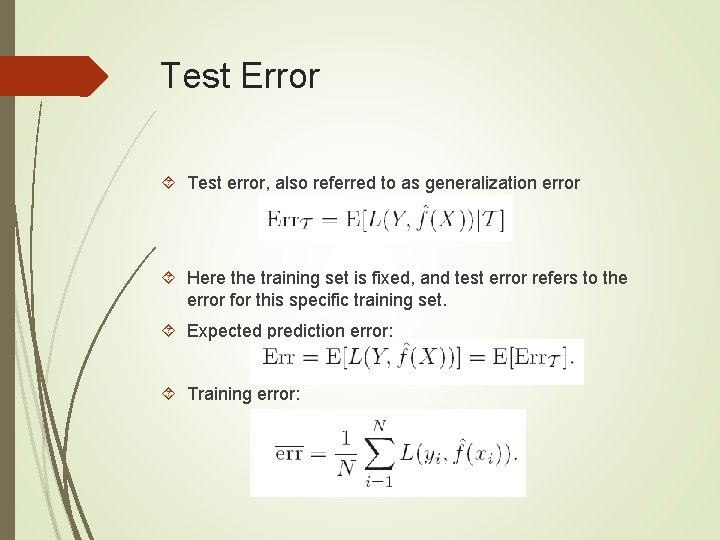
Test Error Test error, also referred to as generalization error Here the training set is fixed, and test error refers to the error for this specific training set. Expected prediction error: Training error:
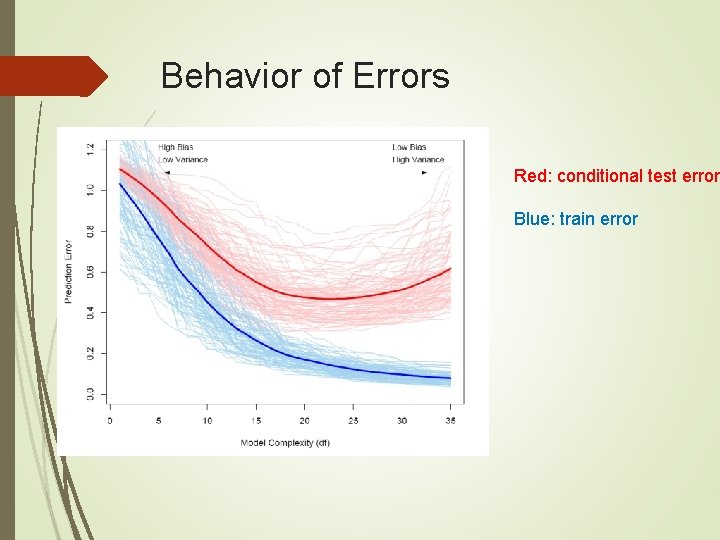
Behavior of Errors Red: conditional test error Blue: train error
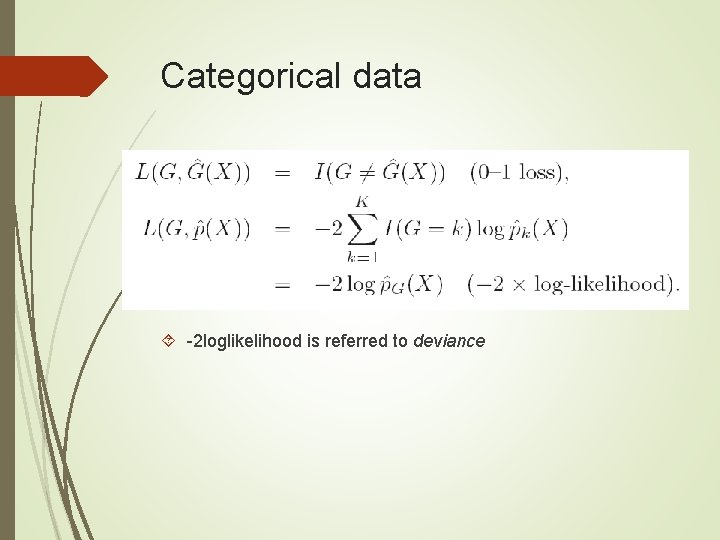
Categorical data -2 loglikelihood is referred to deviance
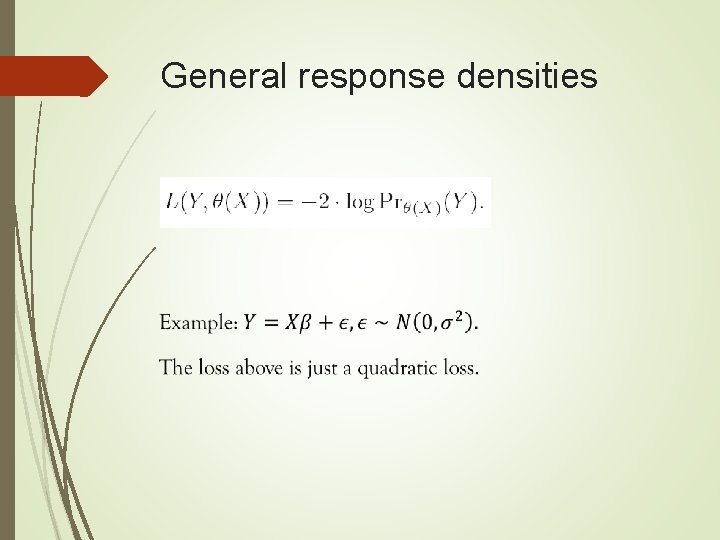
General response densities
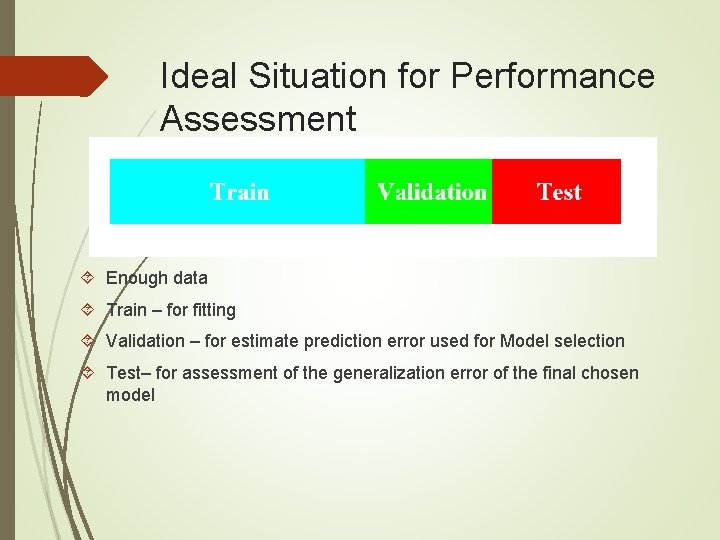
Ideal Situation for Performance Assessment Enough data Train – for fitting Validation – for estimate prediction error used for Model selection Test– for assessment of the generalization error of the final chosen model
What if insufficient data? Approximate generalization error via AIC, BIC, CV or Bootstrap
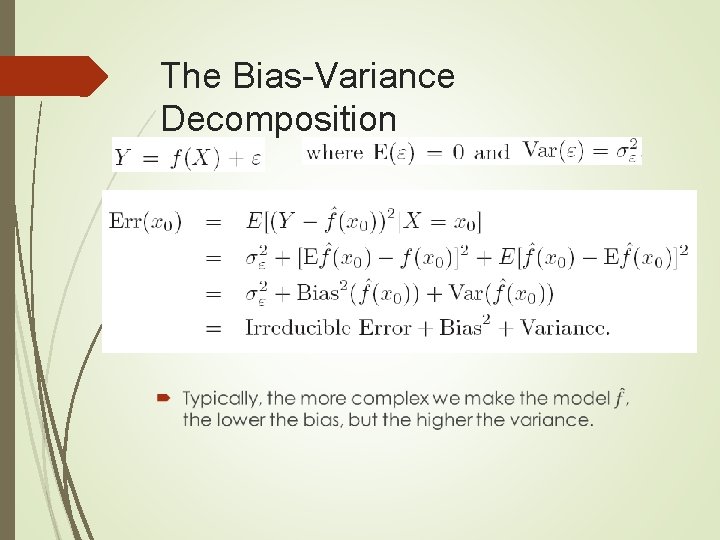
The Bias-Variance Decomposition
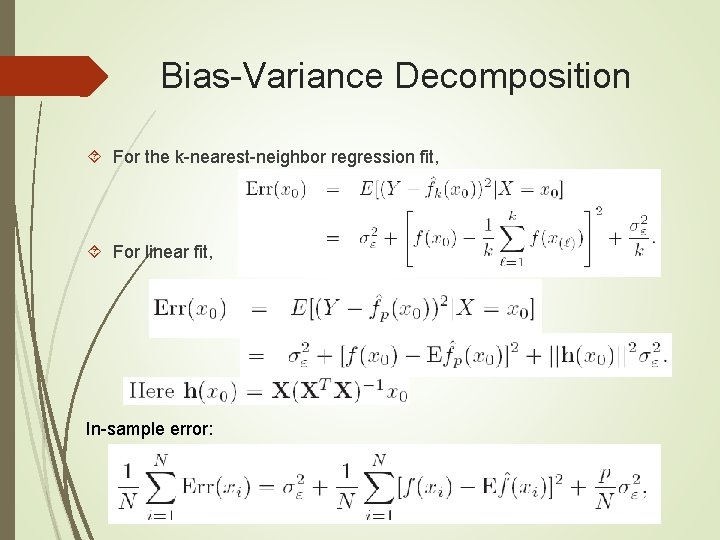
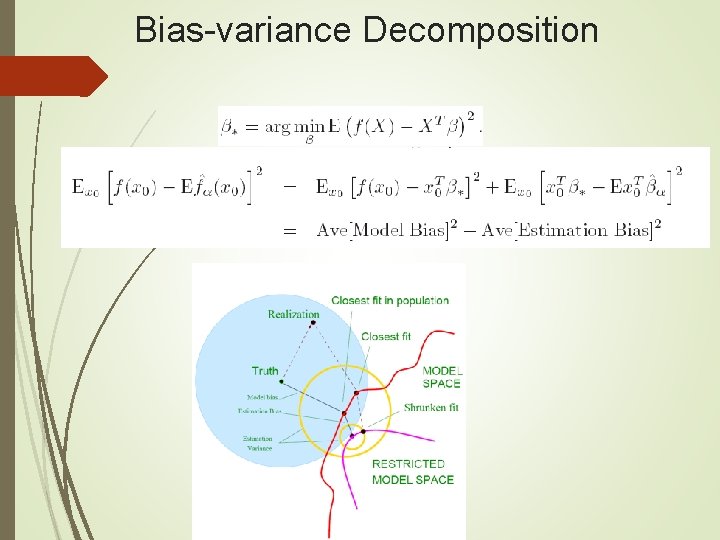
Bias-Variance Decomposition For the k-nearest-neighbor regression fit, For linear fit, In-sample error:
Bias-variance Decomposition
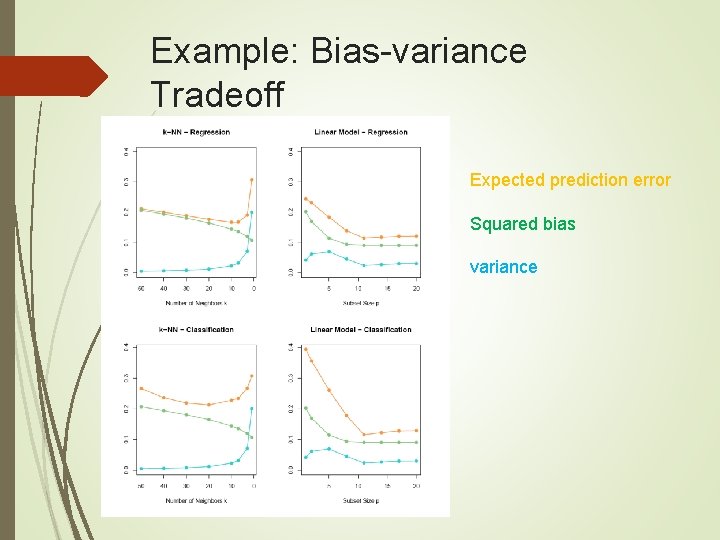
Example: Bias-variance Tradeoff 80 obs, 20 predictors ~ U[0, 1]^20
Example: Bias-variance Tradeoff Expected prediction error Squared bias variance
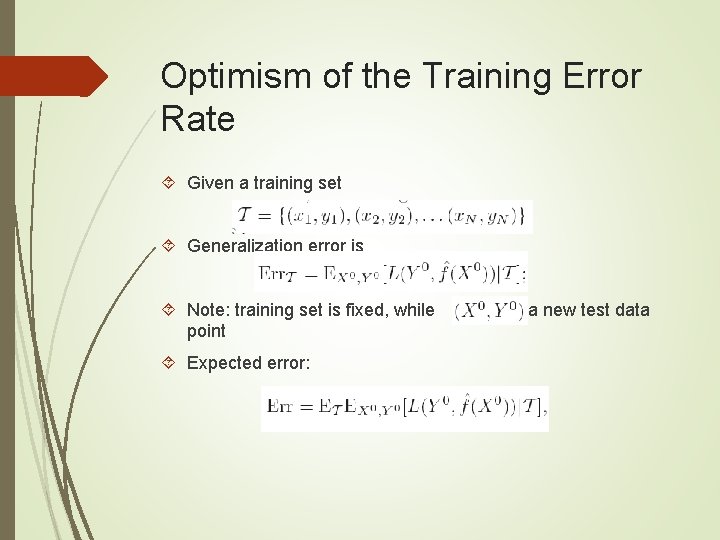
Optimism of the Training Error Rate Given a training set Generalization error is Note: training set is fixed, while point Expected error: is a new test data
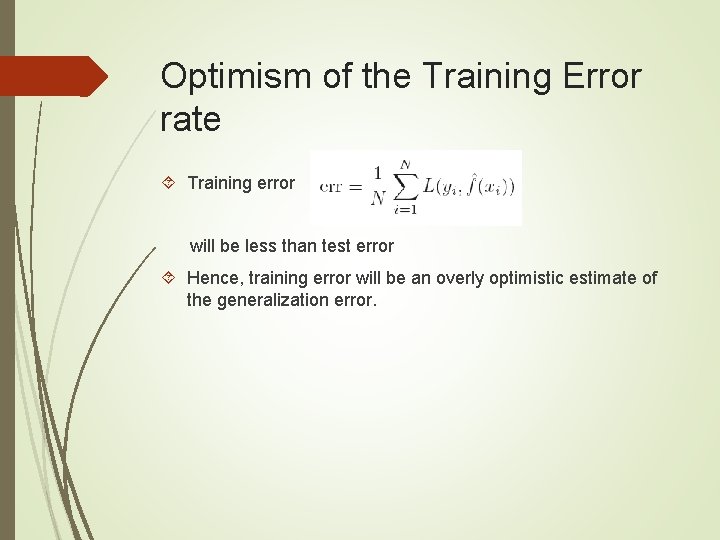
Optimism of the Training Error rate Training error will be less than test error Hence, training error will be an overly optimistic estimate of the generalization error.
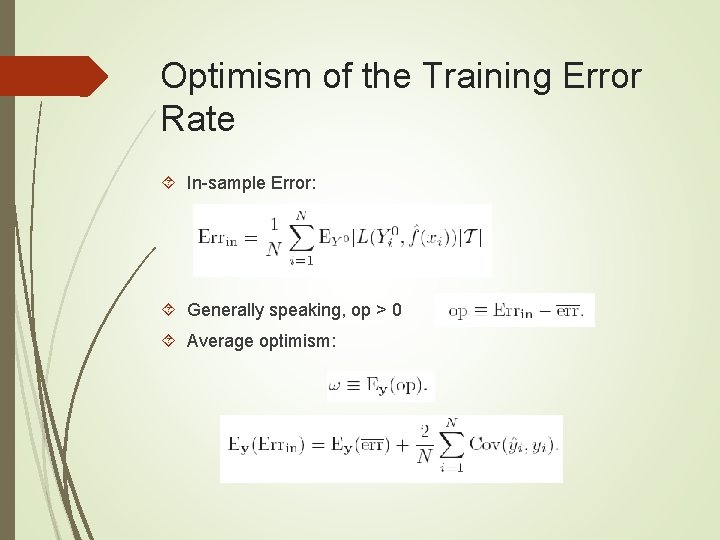
Optimism of the Training Error Rate In-sample Error: Generally speaking, op > 0 Average optimism:
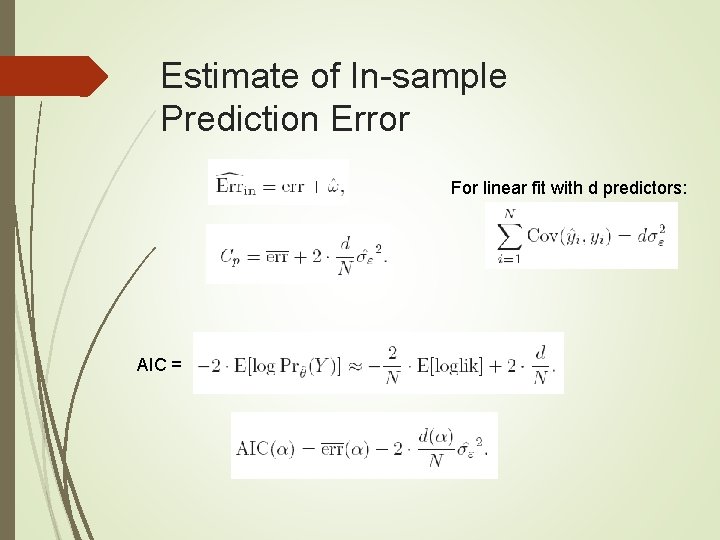
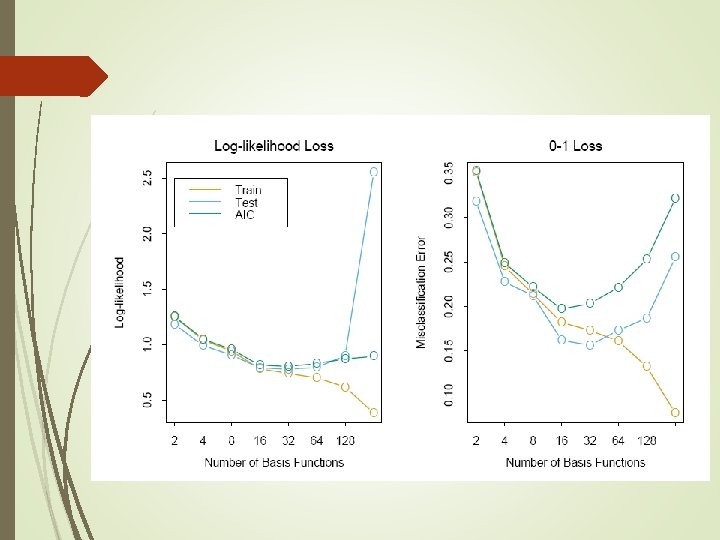
Estimate of In-sample Prediction Error For linear fit with d predictors: AIC =
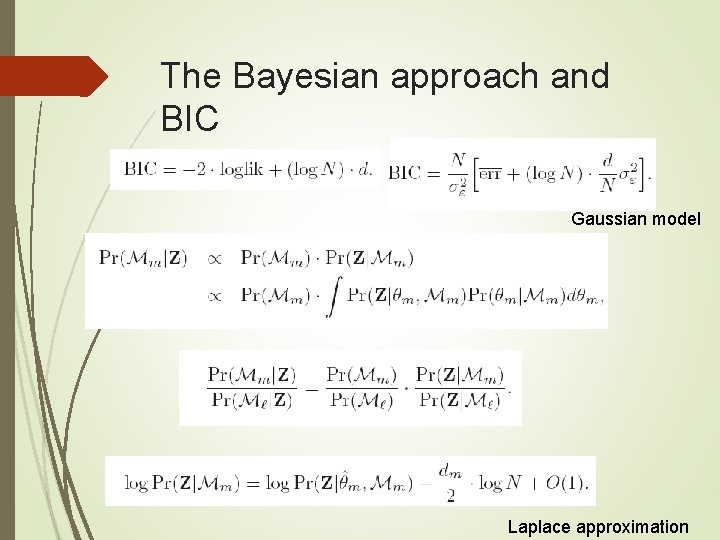
The Bayesian approach and BIC Gaussian model Laplace approximation
Cross Validation
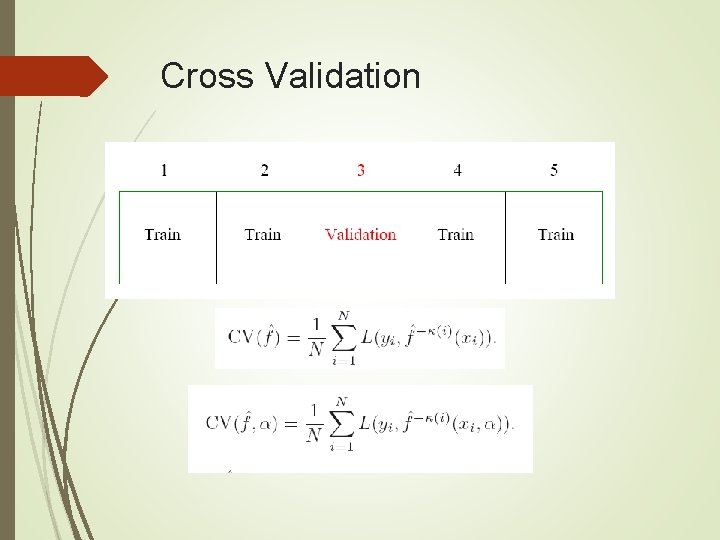
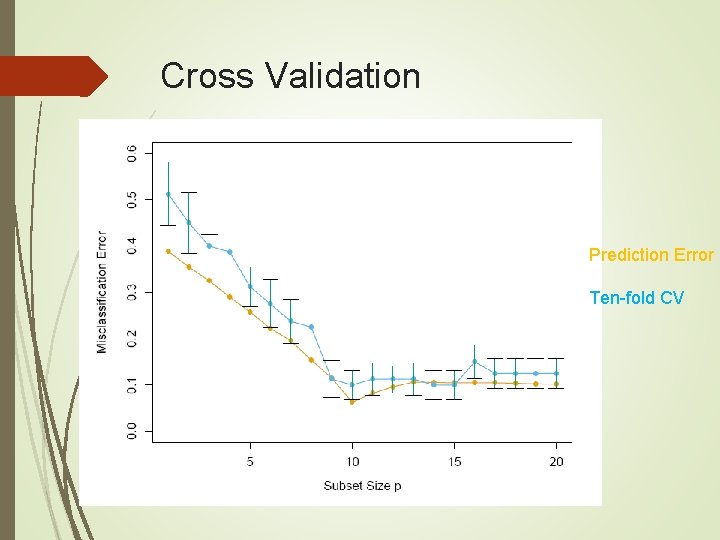
Cross Validation Prediction Error Ten-fold CV
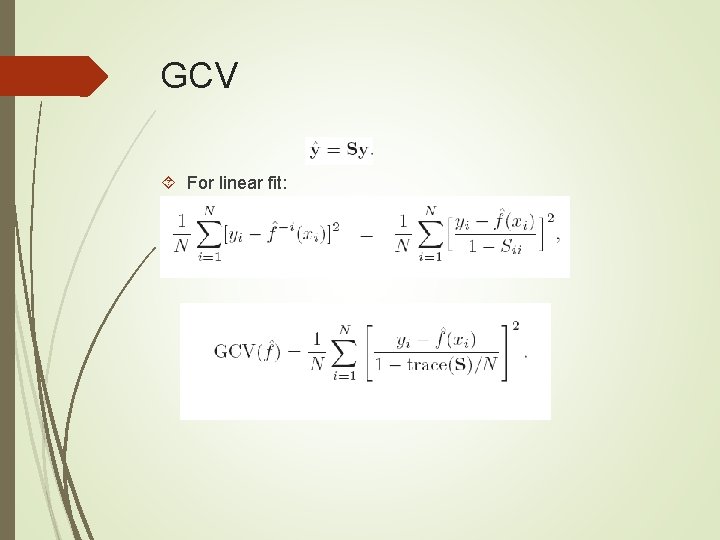
GCV For linear fit:
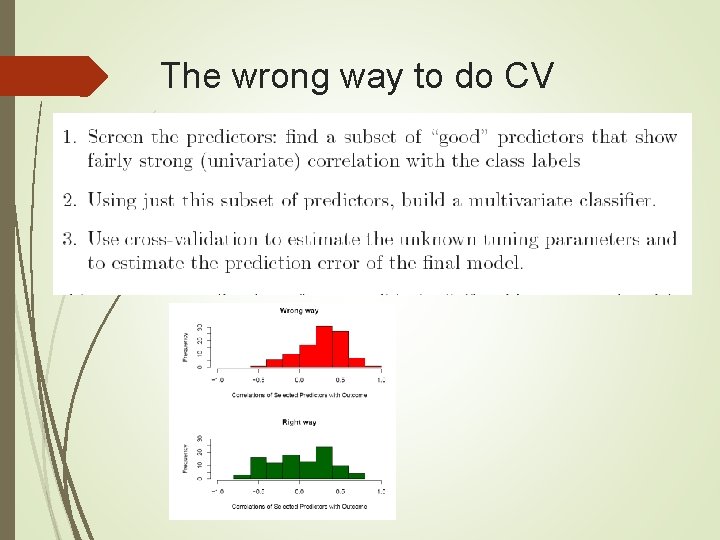
The wrong way to do CV
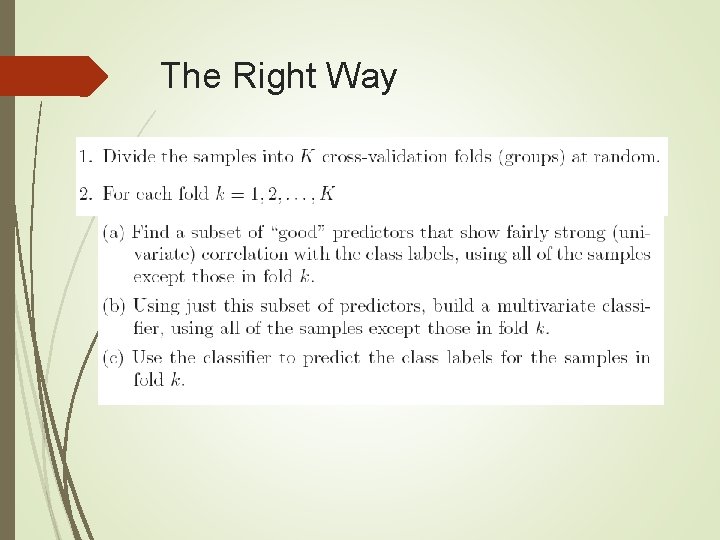
The Right Way
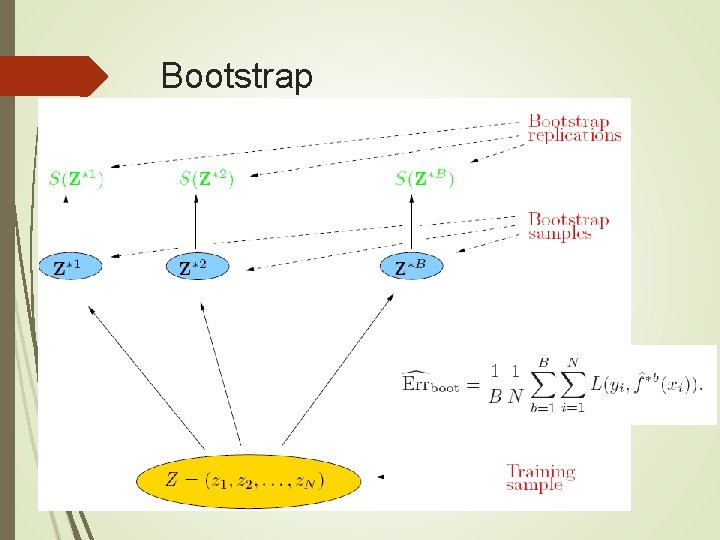
Bootstrap
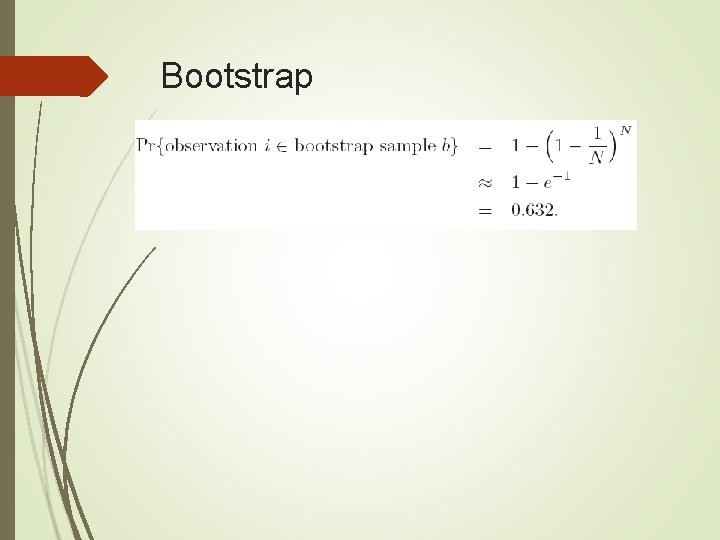
Bootstrap
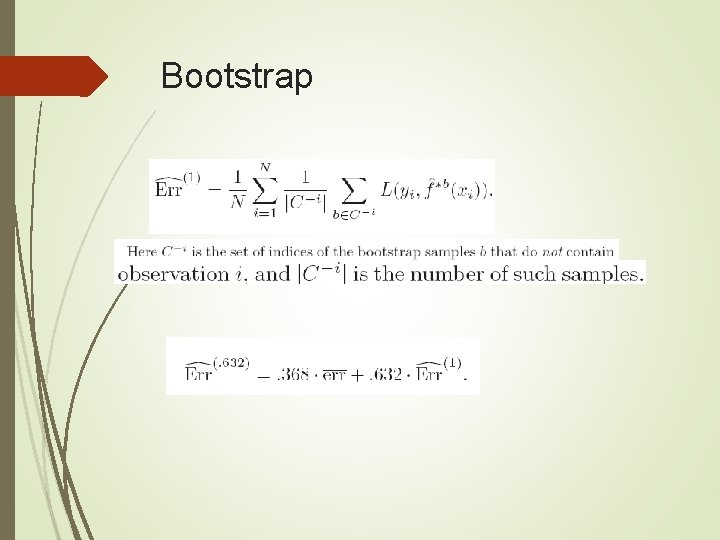
Bootstrap
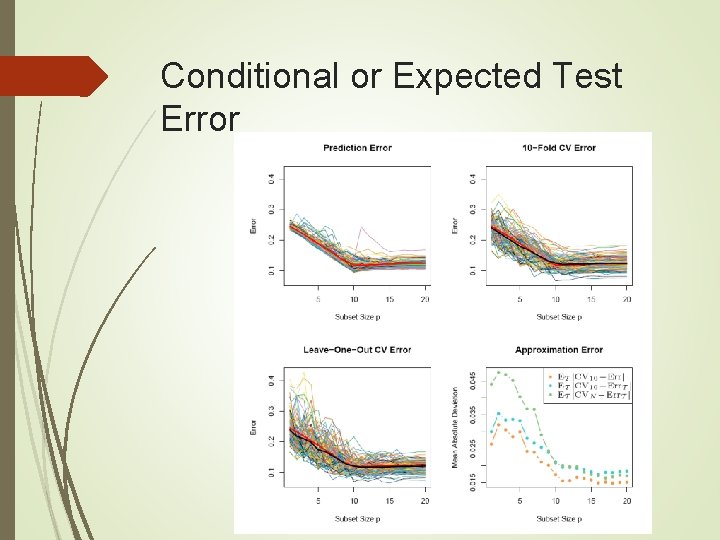
Conditional or Expected Test Error
Homework Due May 16 ESLII_print 5, pp 216. Exercise 7. 3, 7. 9, 7. 10, Reproduce Figure 7. 10