
Lecture 6 Kinetics of a point particle Chpt
- Slides: 21
Lecture 6: Kinetics of a point particle (Chpt 8) 1
Topics • • • Concept of a point-like particle What is an approximation One-d motion, position as a function of time. Velocity Newton’s first law, inertial frame. Acceleration Three dimensional coordinates Position vector, coordinates Basis vector, Velocity and acceleration in 3 D Example of motion in gravitational fields. 2
A point particle? • A point particle is a particle without any size. It is a mathematical point, this is an approximation. • In dealing with physics problems, it is important to make approximation. A good approximation usually simplifies a problem considerably but still preserve the important physics. • When considering the motion of the earth around the sun, it is useful to treat the earth as a point-like particle. • Usually if the size of an object is small compared with the range of motion, it can be considered as 3 point-like.
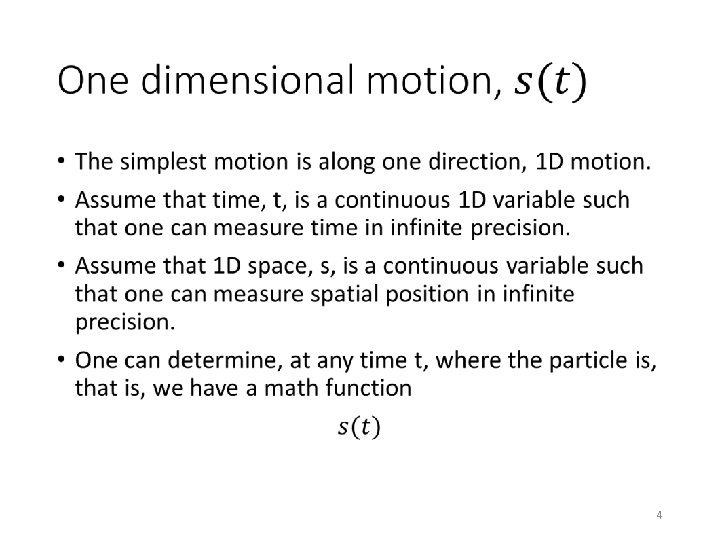
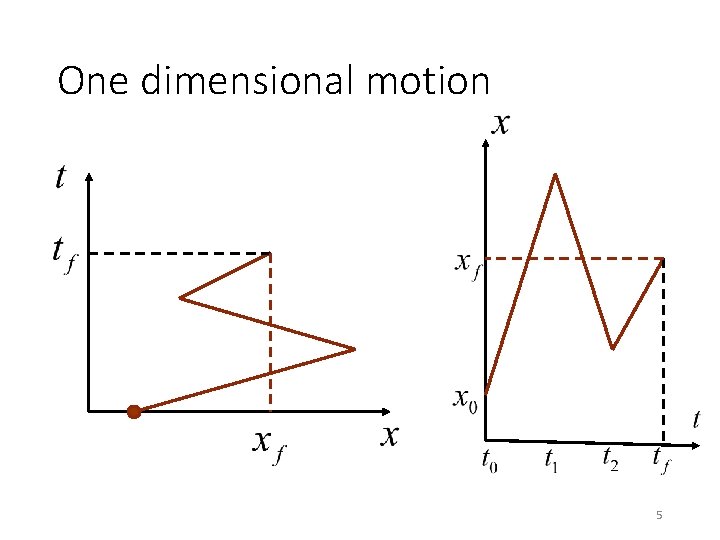
One dimensional motion 5
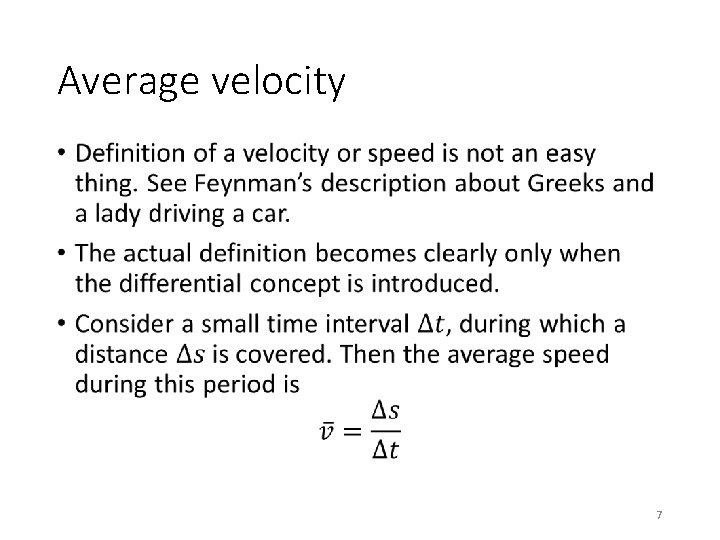
Average velocity • 7
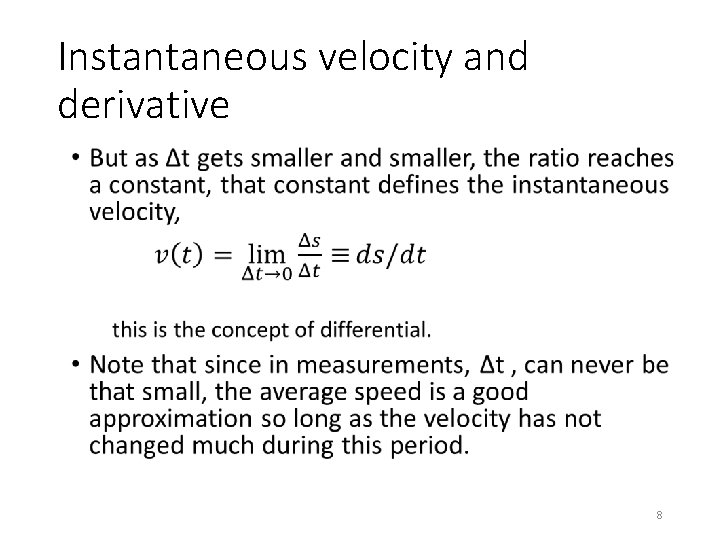
Instantaneous velocity and derivative • 8
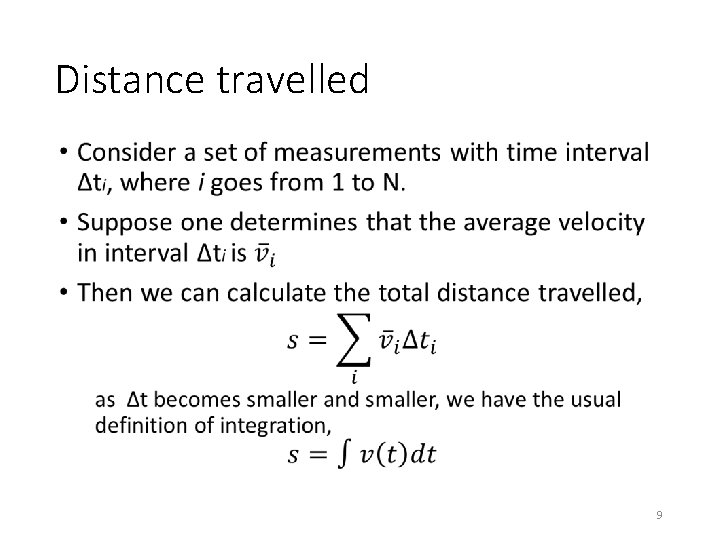
Distance travelled • 9
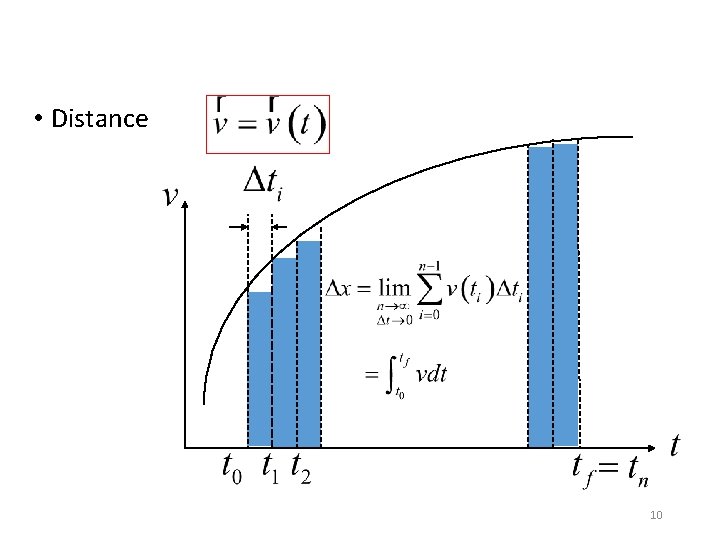
• Distance 10
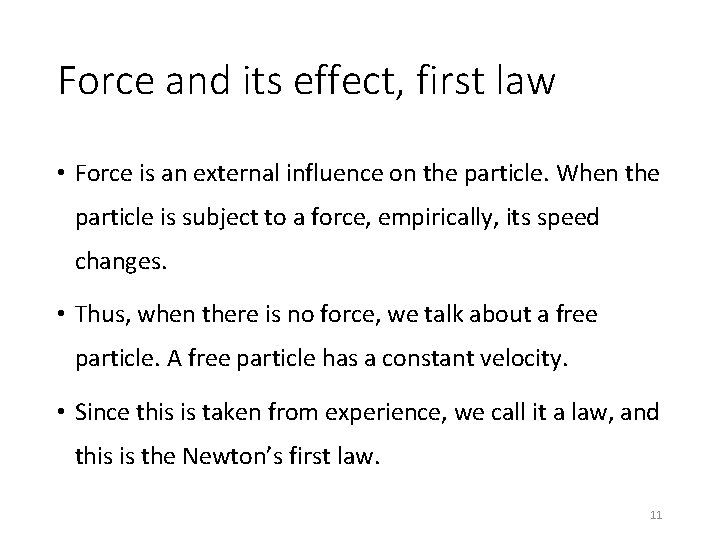
Force and its effect, first law • Force is an external influence on the particle. When the particle is subject to a force, empirically, its speed changes. • Thus, when there is no force, we talk about a free particle. A free particle has a constant velocity. • Since this is taken from experience, we call it a law, and this is the Newton’s first law. 11
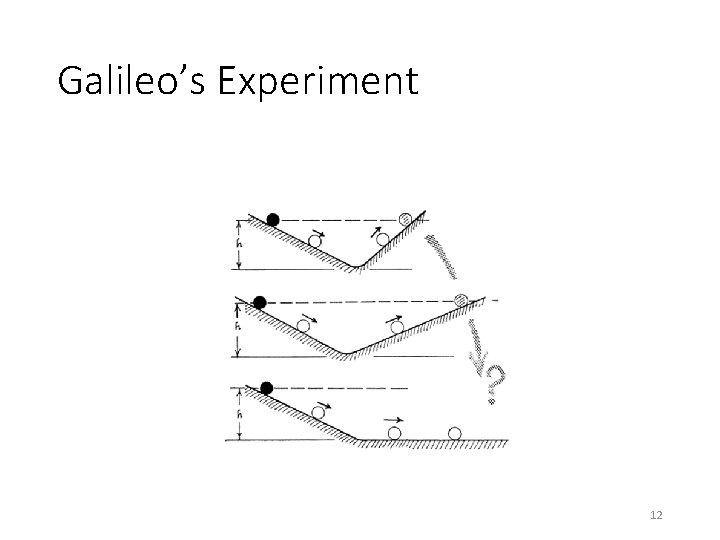
Galileo’s Experiment 12
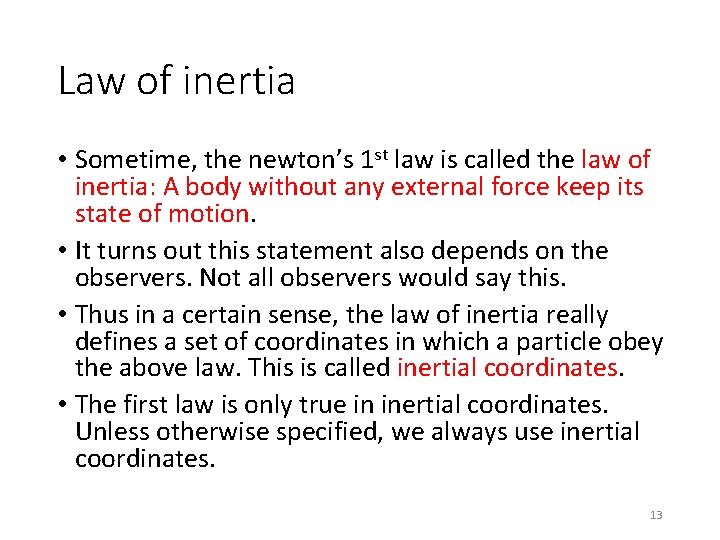
Law of inertia • Sometime, the newton’s 1 st law is called the law of inertia: A body without any external force keep its state of motion. • It turns out this statement also depends on the observers. Not all observers would say this. • Thus in a certain sense, the law of inertia really defines a set of coordinates in which a particle obey the above law. This is called inertial coordinates. • The first law is only true in inertial coordinates. Unless otherwise specified, we always use inertial coordinates. 13
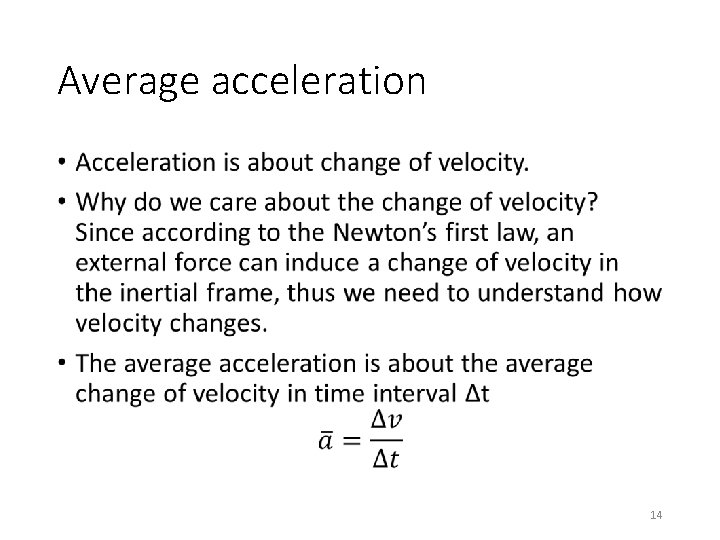
Average acceleration • 14
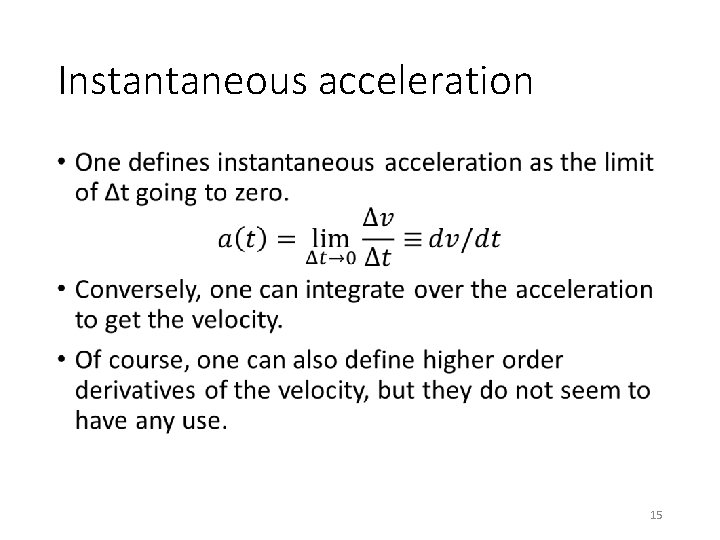
Instantaneous acceleration • 15
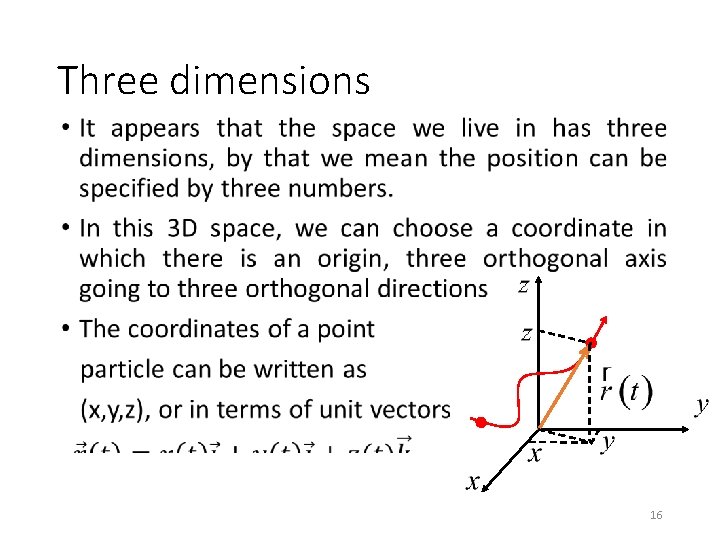
Three dimensions • 16
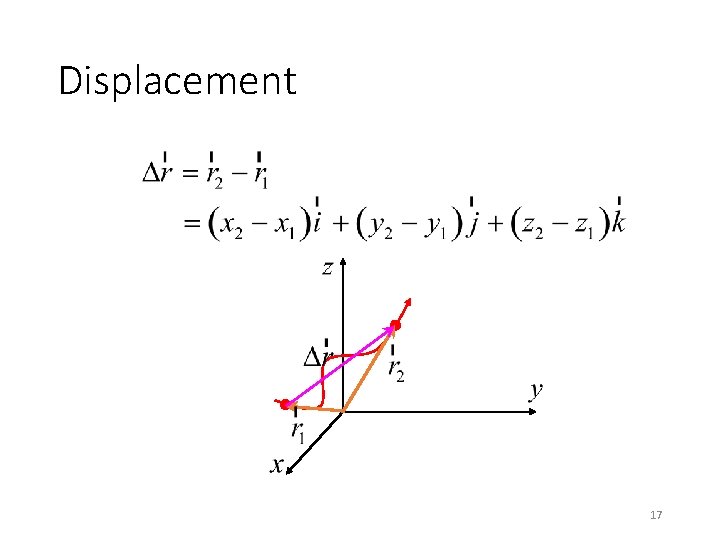
Displacement 17
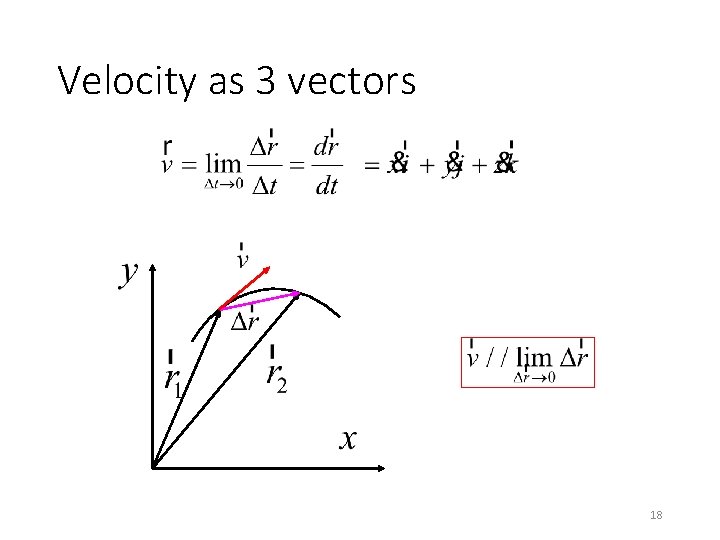
Velocity as 3 vectors 18
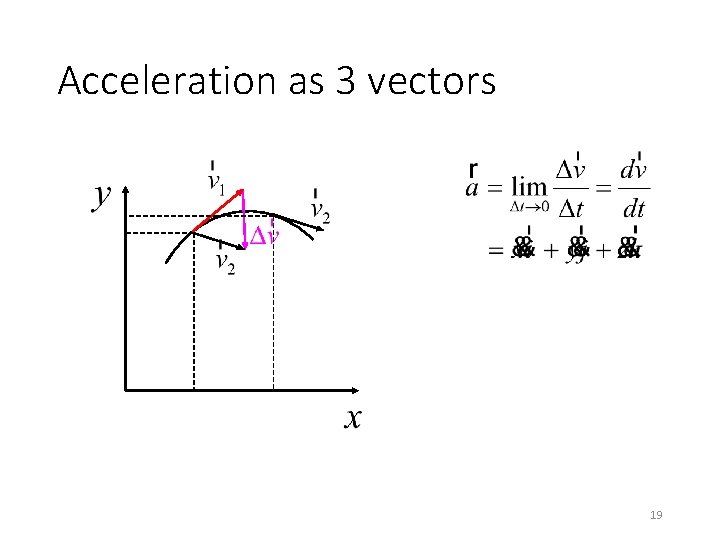
Acceleration as 3 vectors 19
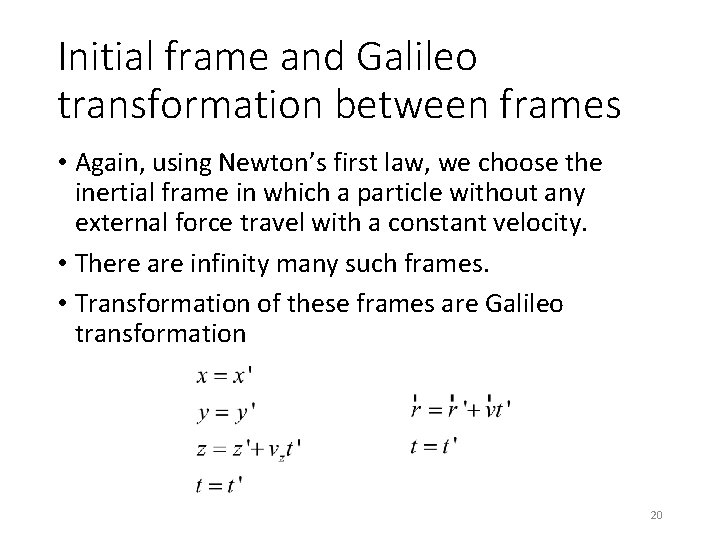
Initial frame and Galileo transformation between frames • Again, using Newton’s first law, we choose the inertial frame in which a particle without any external force travel with a constant velocity. • There are infinity many such frames. • Transformation of these frames are Galileo transformation 20
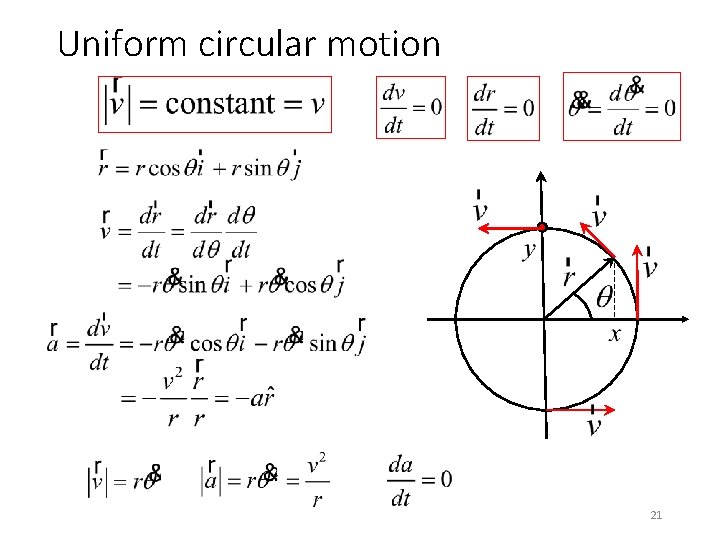
Uniform circular motion 21