
Lecture 6 DELIVERY OF PLACENTA PUERPERIUM LACTATION Prof


- Slides: 54
Lecture 6 DELIVERY OF PLACENTA PUERPERIUM LACTATION Prof. Vlad TICA, M. D. , Ph. D.
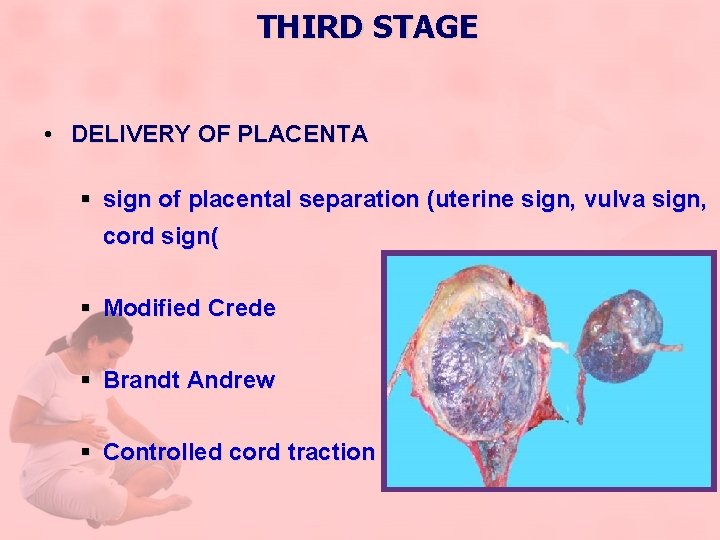
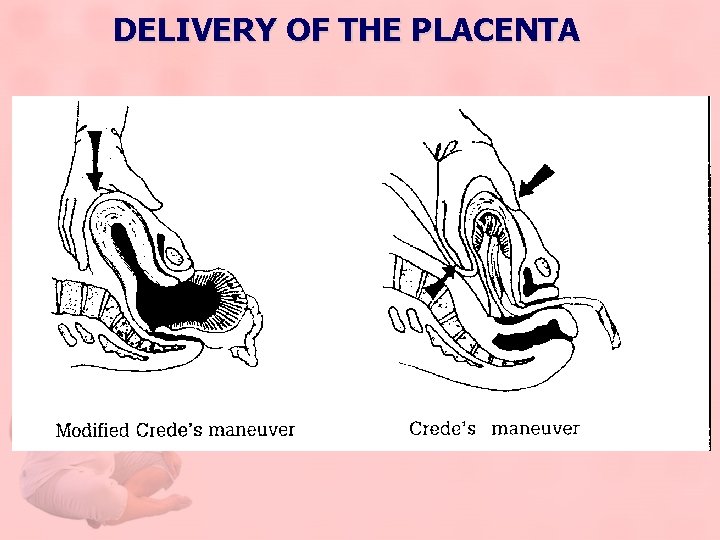
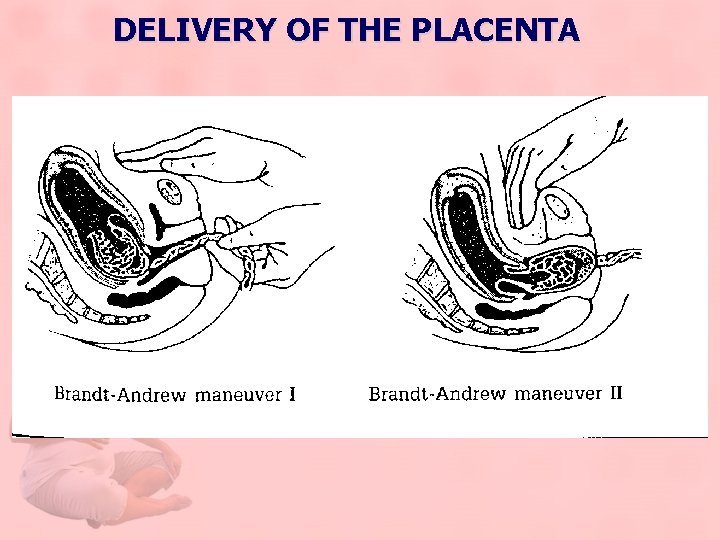
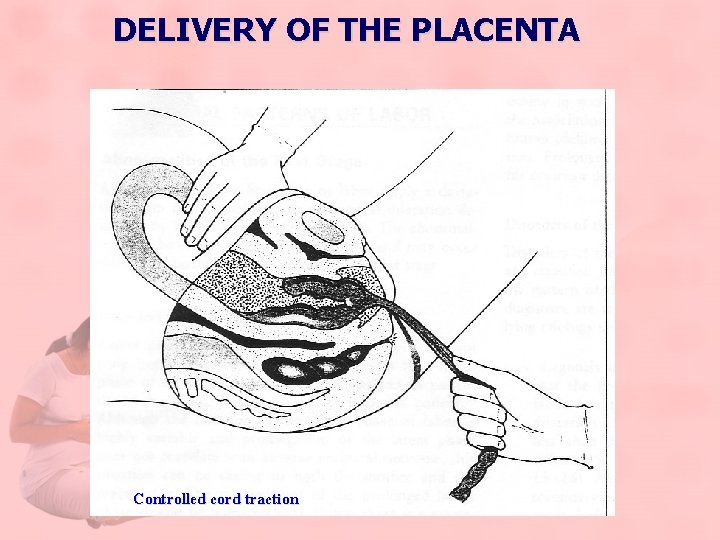
THIRD STAGE • DELIVERY OF PLACENTA § sign of placental separation (uterine sign, vulva sign, cord sign( § Modified Crede § Brandt Andrew § Controlled cord traction
DELIVERY OF THE PLACENTA
DELIVERY OF THE PLACENTA
DELIVERY OF THE PLACENTA Controlled cord traction
DELIVERY OF THE PLACENTA • Prevent postpartum hemorrhage § oxytocic drugs • Syntocinon® : IV push, IV drip, IM • Methergin® : IM, IV
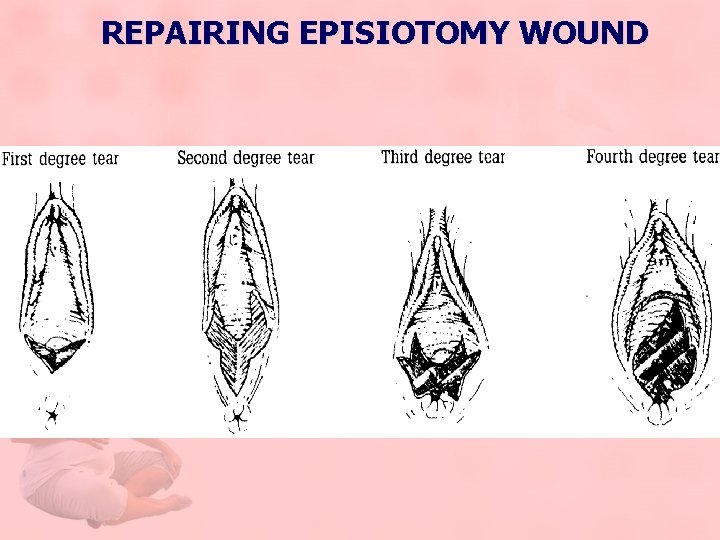
REPAIRING EPISIOTOMY WOUND Perineal tear during vaginal birth • First-degree tear • Second-degree tear • Third-degree tear • Fourth-degree tear
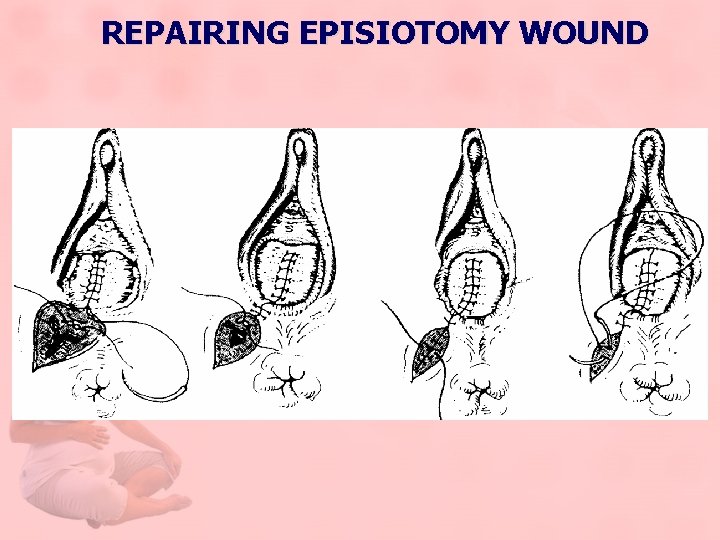
REPAIRING EPISIOTOMY WOUND
REPAIRING EPISIOTOMY WOUND
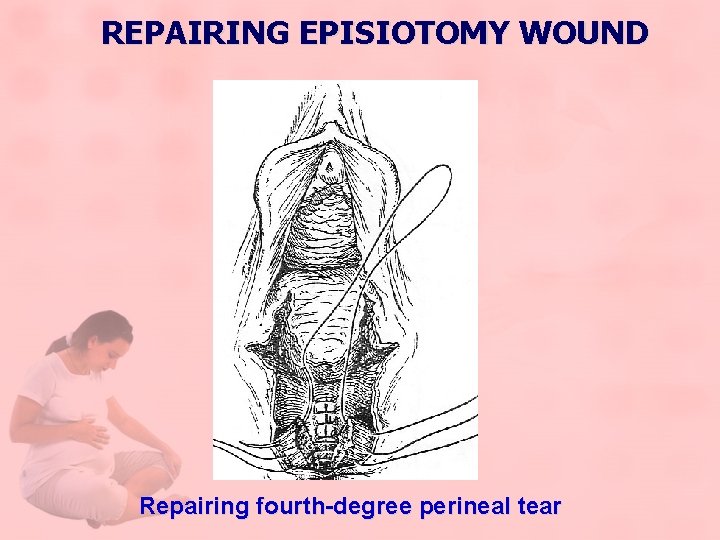
REPAIRING EPISIOTOMY WOUND Repairing fourth-degree perineal tear
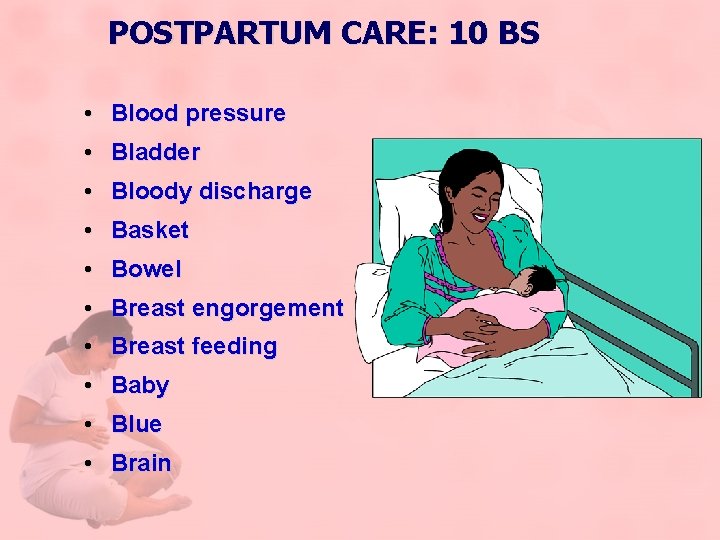
POSTPARTUM CARE: 10 BS • Blood pressure • Bladder • Bloody discharge • Basket • Bowel • Breast engorgement • Breast feeding • Baby • Blue • Brain
PUERPERIUM • is defined as the time from the delivery of the placenta through the first few weeks after the delivery • This period is usually considered to be 6 weeks in duration • By 6 weeks after delivery, most of the changes of pregnancy, labor, and delivery have resolved and the body has reverted to the nonpregnant state • An overview of the relevant anatomy and physiology in the postpartum period follows
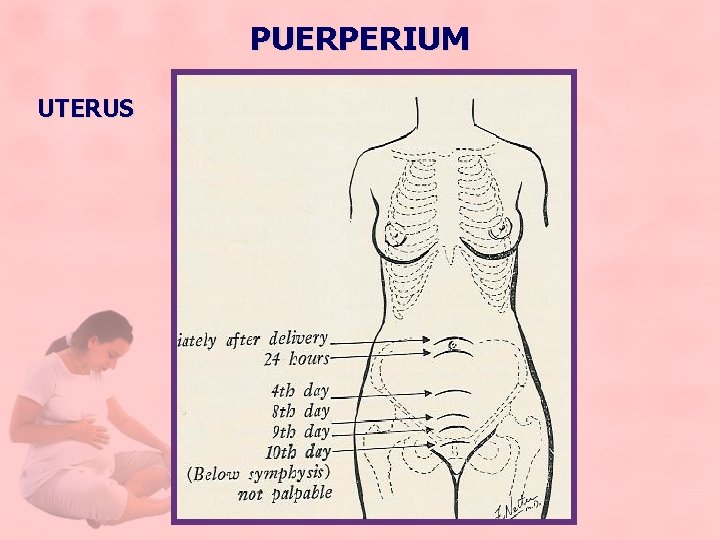
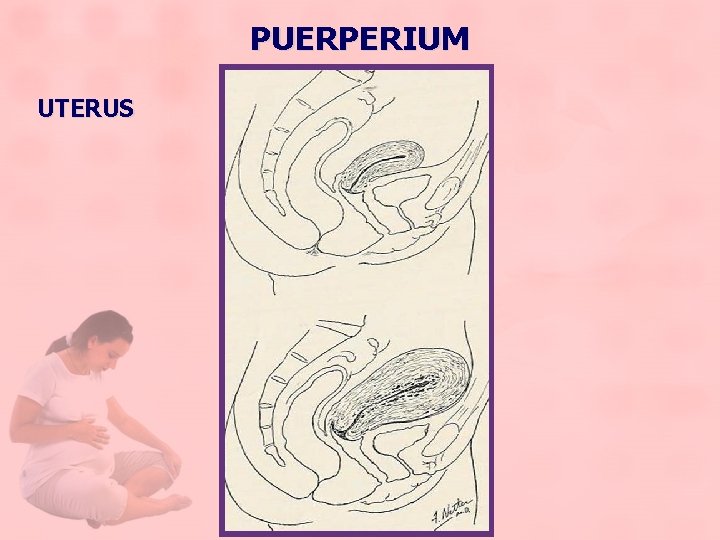
PUERPERIUM UTERUS • The pregnant term uterus (not including baby, placenta, fluids, etc) weighs approximately 1000 g • In the 6 weeks following delivery, the uterus recedes to a weight of 50 -100 g • Immediately postpartum, the uterine fundus is palpable at or near the level of the maternal umbilicus • Thereafter, most of the reduction in size and weight occurs in the first 2 weeks, at which time the uterus has shrunk enough to return to the true pelvis
PUERPERIUM UTERUS
PUERPERIUM UTERUS
PUERPERIUM UTERUS • Over the next several weeks, the uterus slowly returns to its nonpregnant state, although the overall uterine size remains larger than prior to gestation • The endometrial lining rapidly regenerates, so that by the 7 th day endometrial glands are already evident • By the 16 th day, the endometrium is restored throughout the uterus, except at the placental site
PUERPERIUM UTERUS • The placental site undergoes a series of changes in the postpartum period • Immediately after delivery, the contractions of the arterial smooth muscle and compression of the vessels by contraction of the myometrium ("physiologic ligatures") result in hemostasis • The size of the placental bed decreases by half, and the changes in the placental bed result in the quantity and quality of the lochia that is experienced
PUERPERIUM UTERUS • Immediately after delivery, a large amount of red blood flows from the uterus until the contraction phase occurs • Thereafter, the volume of vaginal discharge (lochia) rapidly decreases • The duration of this discharge, known as lochia rubra, is variable • The red discharge progressively changes to brownish red, with a more watery consistency (lochia serosa) • Over a period of weeks, the discharge continues to decrease in amount and color and eventually changes to yellow (lochia alba) • The period of time the lochia can last varies, although it averages approximately 5 weeks
PUERPERIUM UTERUS • The amount of flow and color of the lochia can vary considerably • 15% of women have continue to have lochia 6 weeks or more postpartum • Often, women experience an increase in the amount of bleeding at 7 -14 days secondary to the sloughing of the eschar on the placental site • This is the classic time for delayed postpartum hemorrhages to occur
PUERPERIUM CERVIX • The cervix also begins to rapidly revert to a nonpregnant state, but it never returns to the nulliparous state • By the end of the first week, the external os closes such that a finger cannot be easily introduced
PUERPERIUM VAGINA • The vagina also regresses but it does not completely return to its prepregnant size • Resolution of the increased vascularity and edema occurs by 3 weeks, and the rugae of the vagina begin to reappear in women who are not breastfeeding • At this time, the vaginal epithelium appears atrophic on smear • This is restored by weeks 6 -10; however, it is further delayed in breastfeeding mothers because of persistently decreased estrogen levels
PUERPERIUM PERINEUM • The perineum has been stretched and traumatized, and sometimes torn or cut, during the process of labor and delivery • The swollen and engorged vulva rapidly resolves within 1 -2 weeks • Most of the muscle tone is regained by 6 weeks, with more improvement over the following few months • The muscle tone may or may not return to normal, depending on the extent of injury to muscle, nerve, and connecting tissues.
PUERPERIUM ABDOMINAL WALL • The abdominal wall remains soft and poorly toned for many weeks • The return to a prepregnant state depends greatly on maternal exercise
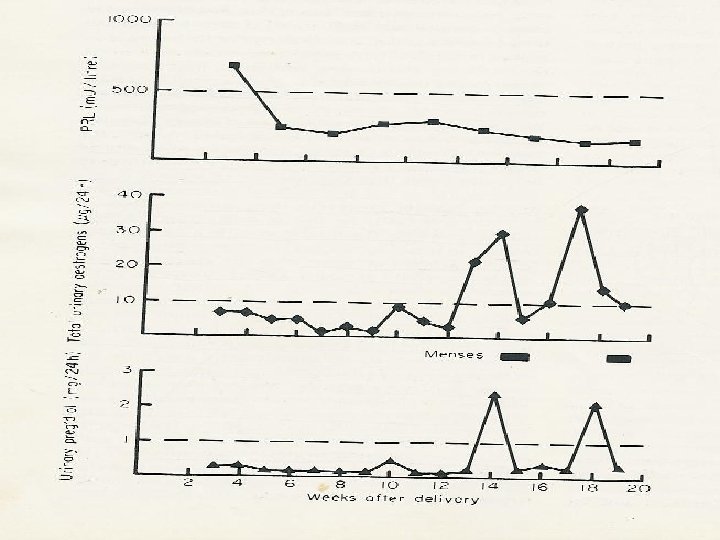
PUERPERIUM OVARIES • The resumption of normal function by the ovaries is highly variable and is greatly influenced by breastfeeding the infant. • The woman who breastfeeds her infant has a longer period of amenorrhea and anovulation than the mother who chooses to bottle-feed. • The mother who does not breastfeed may ovulate as early as 27 days after delivery. • Most women have a menstrual period by 12 weeks; the mean time to first menses is 7 -9 weeks
PUERPERIUM OVARIES • In the breastfeeding woman, the resumption of menses is highly variable and depends on a number of factors, including how much and how often the baby is fed and whether the baby's food is supplemented with formula. • The delay in the return to normal ovarian function in the lactating mother is caused by the suppression of ovulation due to the elevation in prolactin. • ½ to ¾ of women who breastfeed return to periods within 36 weeks of delivery
PUERPERIUM BREASTS • The changes to the breasts that prepare the body for breastfeeding occur throughout pregnancy • If delivery ensues, lactation can be established as early as 16 weeks' gestation • Lactogenesis is initially triggered by the delivery of the placenta, which results in falling levels of estrogen and progesterone, with the continued presence of prolactin • If the mother is not breastfeeding, the prolactin levels decrease and return to normal within 2 -3 weeks
PUERPERIUM BREASTS • The colostrum is the liquid that is initially released by the breasts during the first 2 -4 days after delivery. • High in protein content, this liquid is protective for the newborn • The colostrum, which the baby receives in the first few days postpartum, is already present in the breasts, and suckling by the newborn triggers its release
PUERPERIUM BREASTS • The process, which begins as an endocrine process, switches to an autocrine process; the removal of milk from the breast stimulates more milk production • Over the first 7 days, the milk matures and contains all necessary nutrients in the neonatal period • The milk continues to change throughout the period of breastfeeding to meet the changing demands of the baby
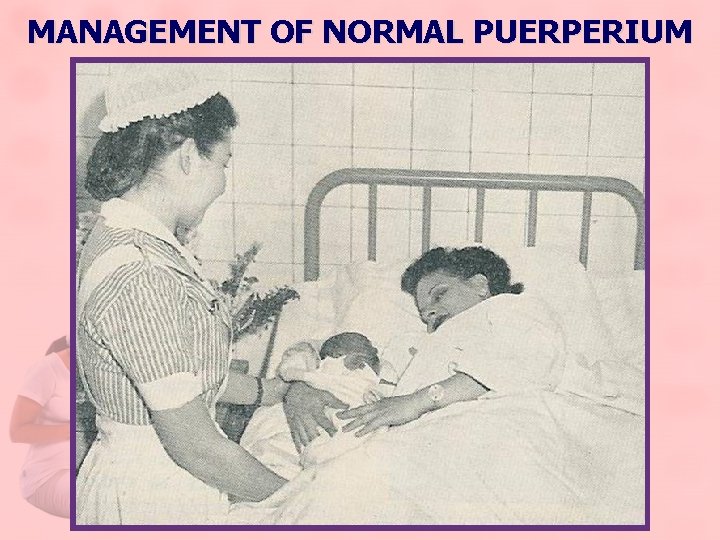
MANAGEMENT OF NORMAL PUERPERIUM • The majority of mothers are perfectly well during the puerperium and should be encouraged to establish normal activities • Immediately following the delivery of the placenta observation of :
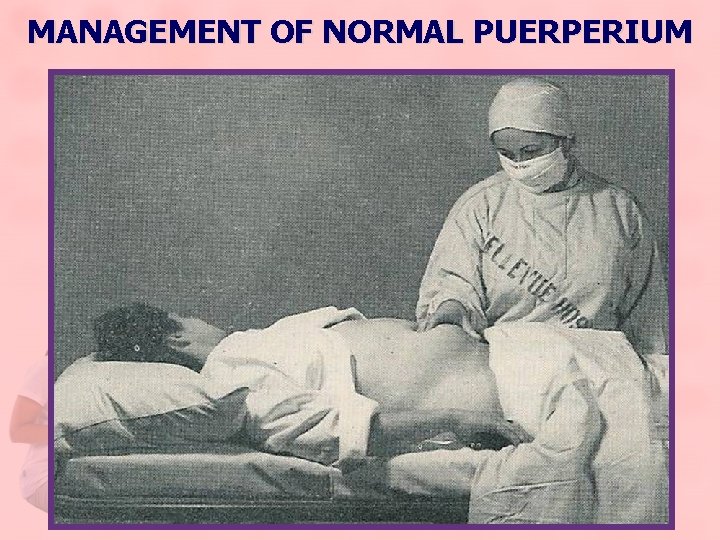
MANAGEMENT OF NORMAL PUERPERIUM 1. Vital signs (P, BP, Temp, R. R) + contraction of the uterus (uterin involution) + lochia (amount; colour and odder) = every 5 min. for ½ hours, then every ½ hourly for 2 hours, then transfer the mother to the postnatal ward and observation every 2 hours for 6 hourly; then 6 hourly till discharge
MANAGEMENT OF NORMAL PUERPERIUM
MANAGEMENT OF NORMAL PUERPERIUM 2. Breast examination + lawer limb examination for the detection of signs of DVT every day 3. The mother should be encouraged to pass urine
MANAGEMENT OF NORMAL PUERPERIUM
MANAGEMENT OF NORMAL PUERPERIUM 4. Early mobilization 5. Management of episiotomy; and perineum tears 6. In normal delivery the mother can go home 48 hours after delivery; and 72 hours in C-section 7. Diet regime 8. Postnatal visit 9. Advising for contraception and spacing of pregnancy
BREAST FEEDING
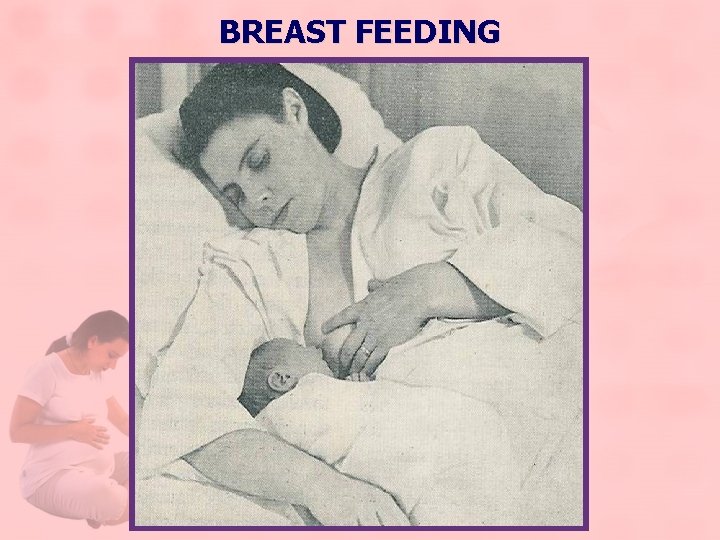
LACTATION • In those mothers who breast feed, lactation is the most dominant physiological event of puerperium • The primary function of breast feeding is to continuing of nutrition for newborn • The secondary functions: vprotection agonist infant infection vinhibition of ovarian activity vencouragement of uterine involution
PHYSIOLOGY OF LACTATION • The major part of breast development occurs at puberty before the first pregnancy • So, only requires minimal hormonal stimulation for production of milk • The skin of the areola is relatively insensitive to tactile stimuli during pregnancy but, much more sensitive immediately after delivery
BREAST CHANGES
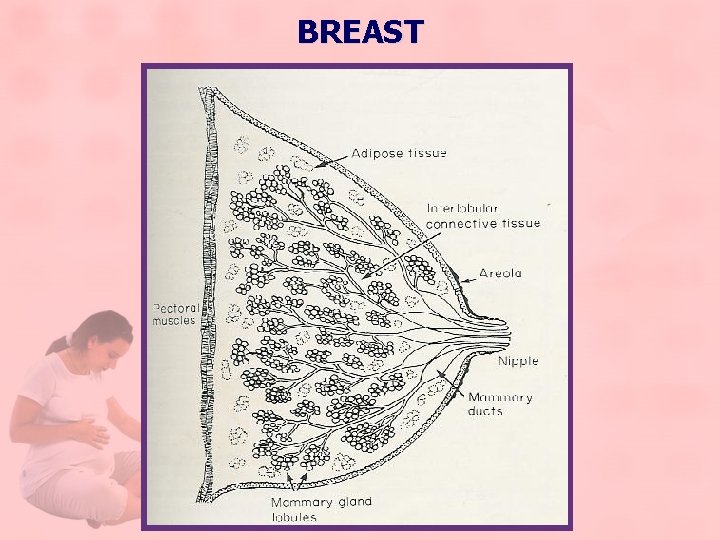
BREAST
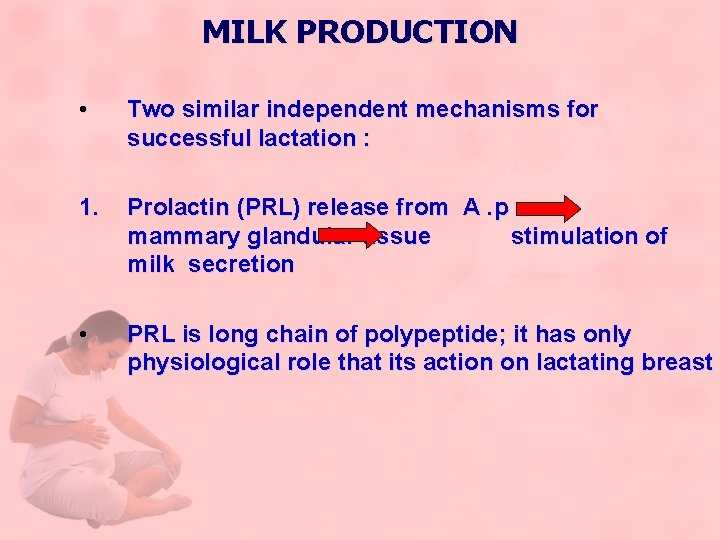
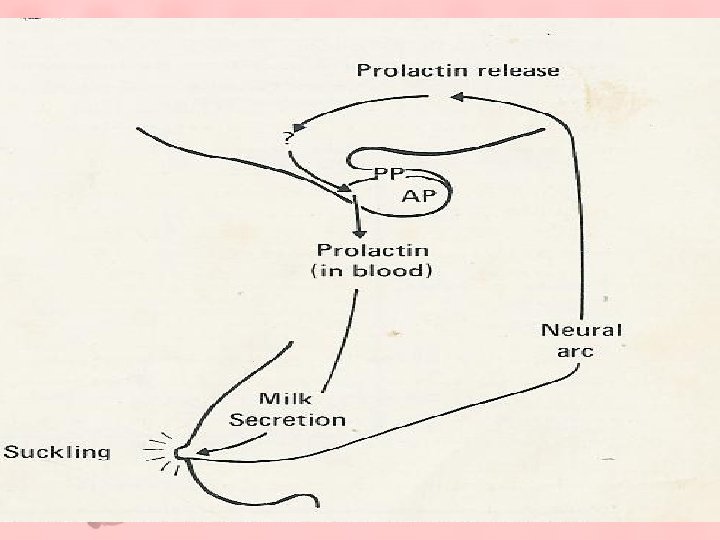
MILK PRODUCTION • Two similar independent mechanisms for successful lactation : 1. Prolactin (PRL) release from A. p mammary glandular tissue stimulation of milk secretion • PRL is long chain of polypeptide; it has only physiological role that its action on lactating breast
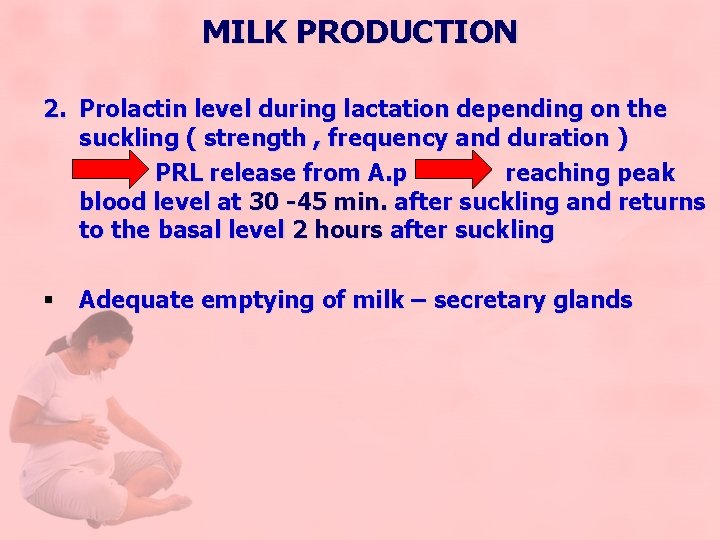
MILK PRODUCTION 2. Prolactin level during lactation depending on the suckling ( strength , frequency and duration ) PRL release from A. p reaching peak blood level at 30 -45 min. after suckling and returns to the basal level 2 hours after suckling § Adequate emptying of milk – secretary glands
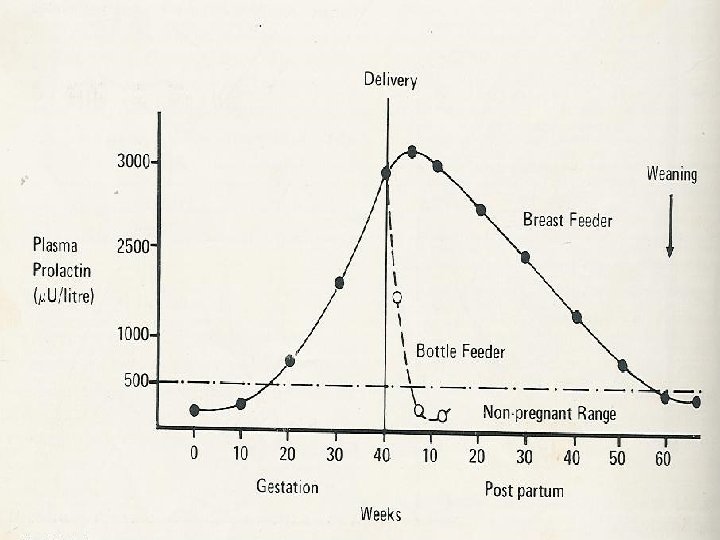
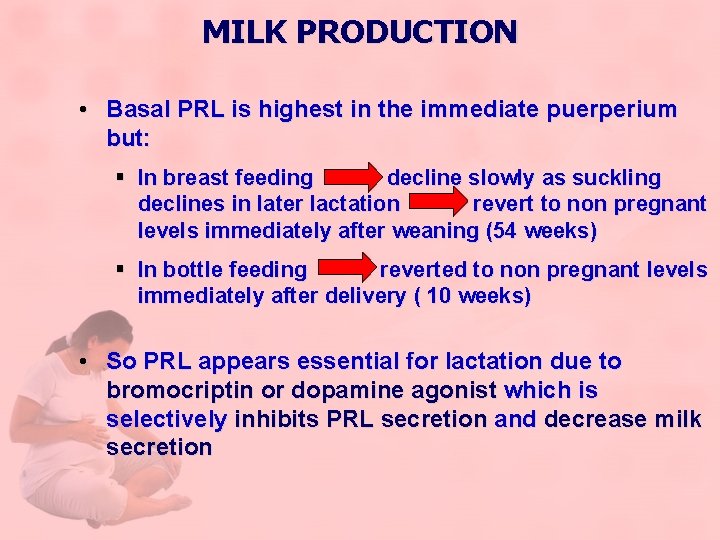
MILK PRODUCTION • Basal PRL is highest in the immediate puerperium but: § In breast feeding decline slowly as suckling declines in later lactation revert to non pregnant levels immediately after weaning (54 weeks) § In bottle feeding reverted to non pregnant levels immediately after delivery ( 10 weeks) • So PRL appears essential for lactation due to bromocriptin or dopamine agonist which is selectively inhibits PRL secretion and decrease milk secretion
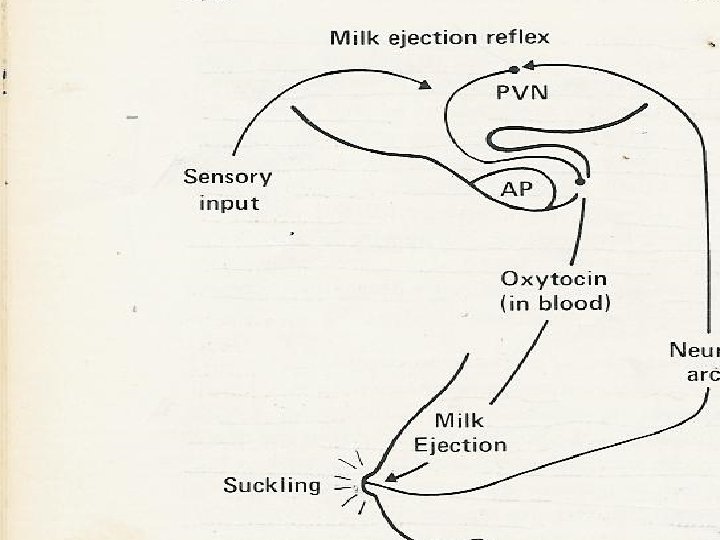
MILK PRODUCTION • Milk ejection reflex ( milk lead down ) mediated by release of oxytocin from hypothalamus and (p. p): § causing contraction of myoepithelial cells around the milk –secretary § dilatation of main ducts So , Expelling milk from glands • Oxytocin released in response to: suckling, and sensory input like mother seeing or hearing their baby crying
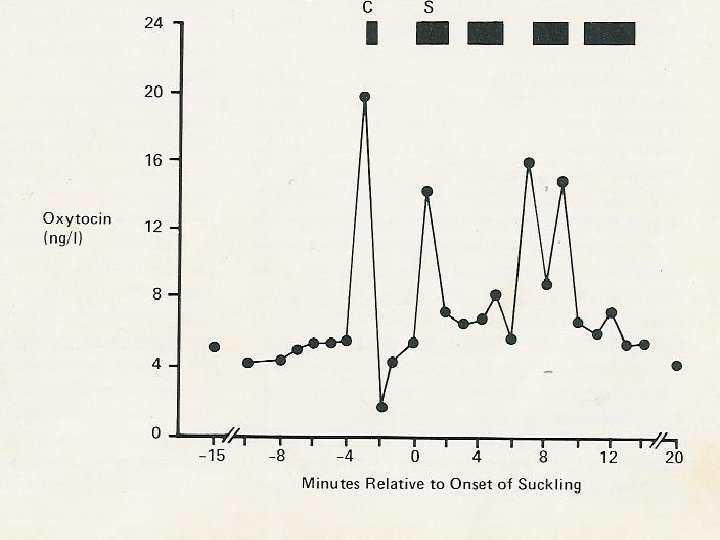
MILK PRODUCTION • Highest levels of oxytocin occurring before suckling in response to the baby cry • Milk ejection reflex may be inhibited by emotional stress and maternal anxiety and leads to failure of lactation • So, the key of both mechanisms activated by suckling and mediated through neuroendocrianological pathways
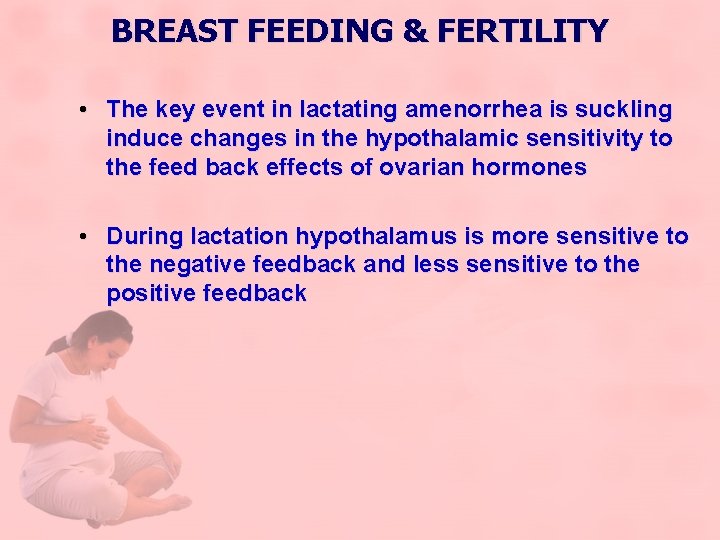
BREAST FEEDING & FERTILITY • The key event in lactating amenorrhea is suckling induce changes in the hypothalamic sensitivity to the feed back effects of ovarian hormones • During lactation hypothalamus is more sensitive to the negative feedback and less sensitive to the positive feedback
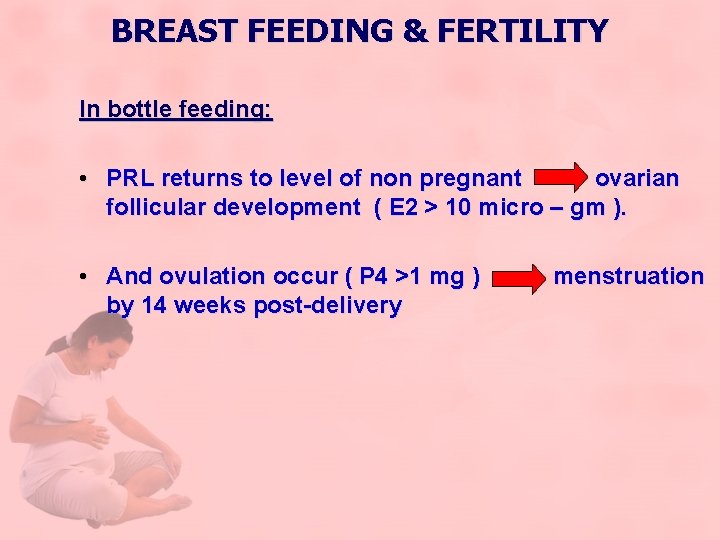
BREAST FEEDING & FERTILITY In bottle feeding: • PRL returns to level of non pregnant ovarian follicular development ( E 2 > 10 micro – gm ). • And ovulation occur ( P 4 >1 mg ) by 14 weeks post-delivery menstruation
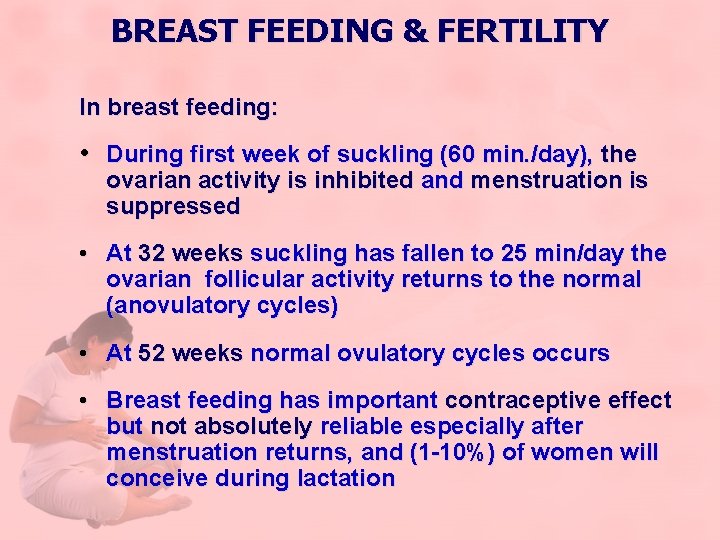
BREAST FEEDING & FERTILITY In breast feeding: • During first week of suckling (60 min. /day), the ovarian activity is inhibited and menstruation is suppressed • At 32 weeks suckling has fallen to 25 min/day the ovarian follicular activity returns to the normal (anovulatory cycles) • At 52 weeks normal ovulatory cycles occurs • Breast feeding has important contraceptive effect but not absolutely reliable especially after menstruation returns, and (1 -10%) of women will conceive during lactation