
Lecture 6 Control Systems n n Why control
- Slides: 8
Lecture 6: Control Systems n n Why control systems Basic elements in control systems Problems of ineffective control systems Designing control systems
Why Control Systems? n n n Gap between organizational goals and individual goals Designed to increase the congruence (area of overlap in Figure 9 -1) Premise?
Basic Elements in Control Systems n n Set up standards Measure actual performances Find out differences between standards and actual performances Minimize the differences
Problems of Ineffective Control Systems n n n Rigid bureaucratic behavior (wrong assumptions) Selective attention to multiple standards (wrong focus) Strategic measurementship (wrong manipulations)
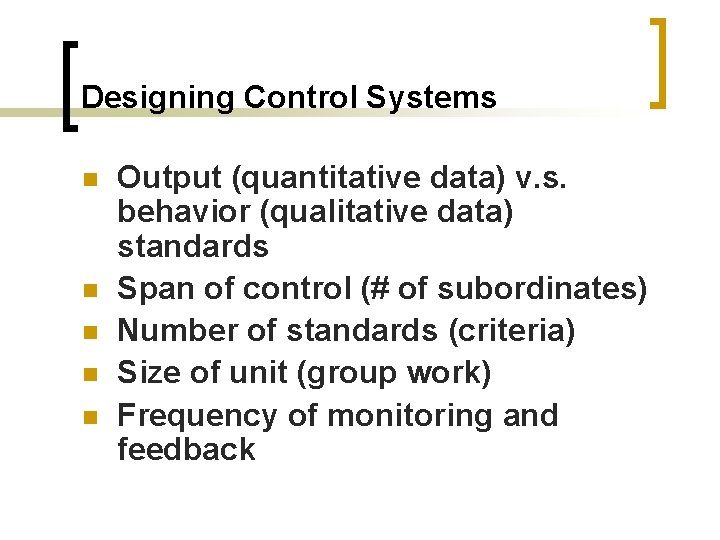
Designing Control Systems n n n Output (quantitative data) v. s. behavior (qualitative data) standards Span of control (# of subordinates) Number of standards (criteria) Size of unit (group work) Frequency of monitoring and feedback
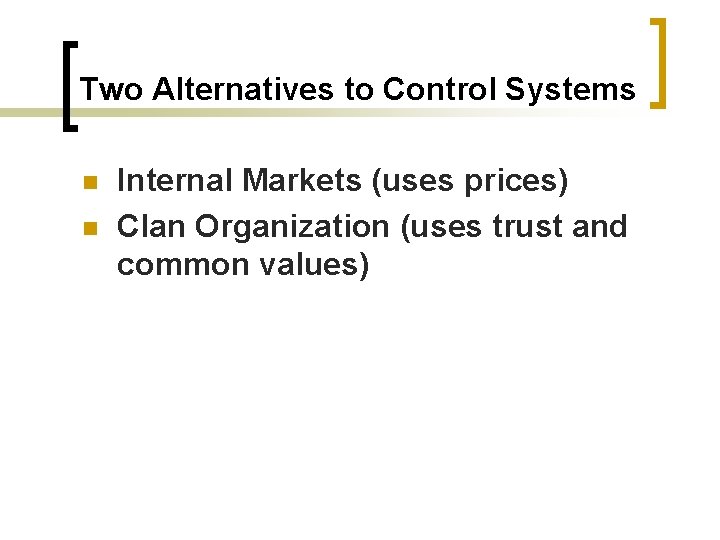
Two Alternatives to Control Systems n n Internal Markets (uses prices) Clan Organization (uses trust and common values)
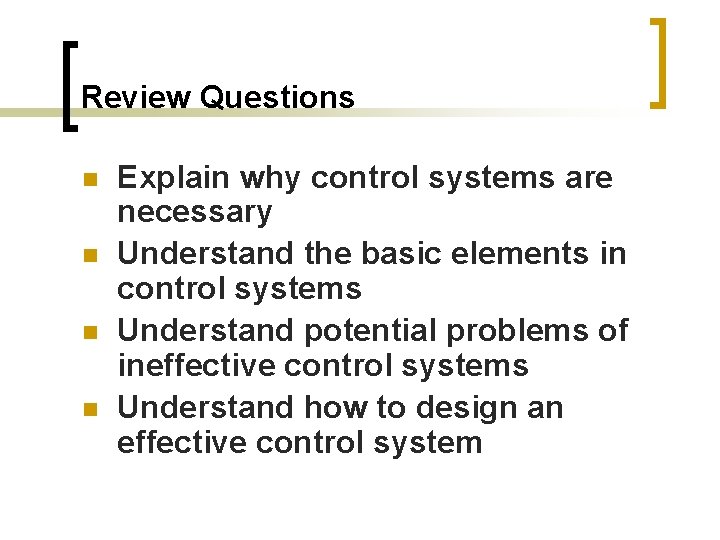
Review Questions n n Explain why control systems are necessary Understand the basic elements in control systems Understand potential problems of ineffective control systems Understand how to design an effective control system
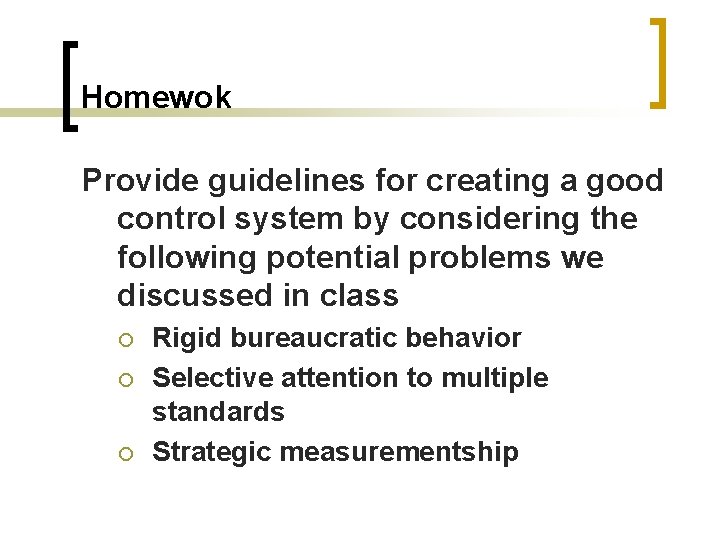
Homewok Provide guidelines for creating a good control system by considering the following potential problems we discussed in class ¡ ¡ ¡ Rigid bureaucratic behavior Selective attention to multiple standards Strategic measurementship