
Lecture 6 Anterior posterior axis formationthe posterior signal

![Hunchback gradient and the regulation of gap genes Regulatory rules medium [HB] activates Kr](https://slidetodoc.com/presentation_image_h2/6732bea914ced1f65e1041aa32c9605d/image-44.jpg "Hunchback gradient and the regulation of gap genes Regulatory rules medium [HB] activates Kr")
- Slides: 65
Lecture 6 • Anterior posterior axis formation-the posterior signal • Anterior posterior axis formation-down the hierarchy
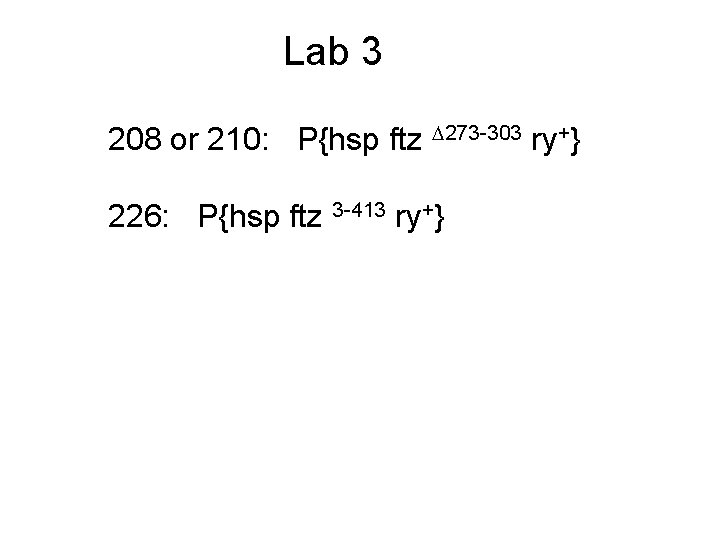
Lab 3 208 or 210: P{hsp ftz D 273 -303 ry+} 226: P{hsp ftz 3 -413 ry+}
Lab 5 166 refers to embryos laid by DH 502 females crossed with DH 302 males. 167 refers to embryos laid by DH 502 females crossed with DH 301 males. Consult Hyduk and Percival-Smith for the genotypes associated with the above strain names. See Table 1 and Figure 5.
The mutant allele used for the engrailed and wingless experiments was ftz 13.
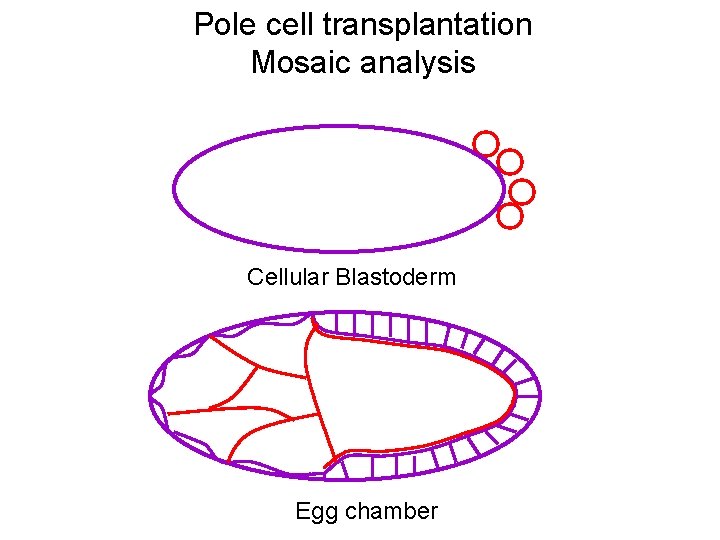
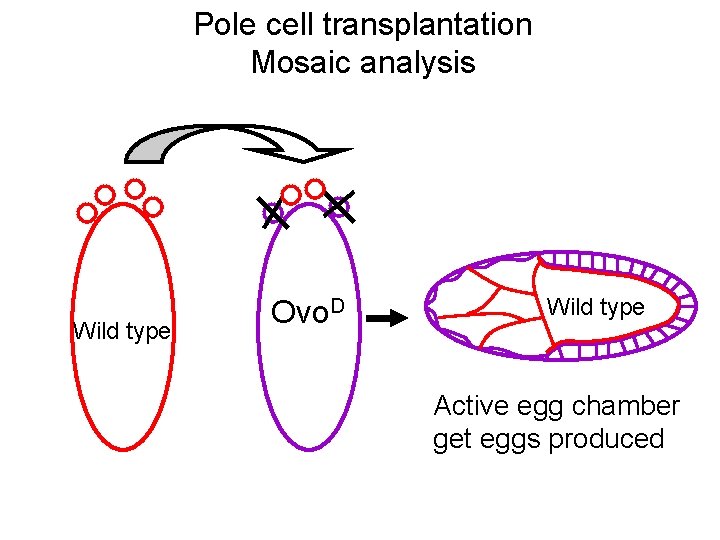
Pole cell transplantation Mosaic analysis Cellular Blastoderm Egg chamber
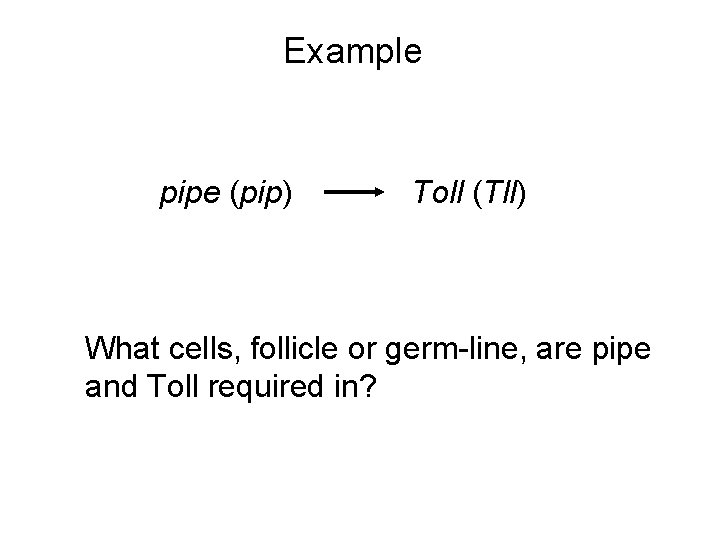
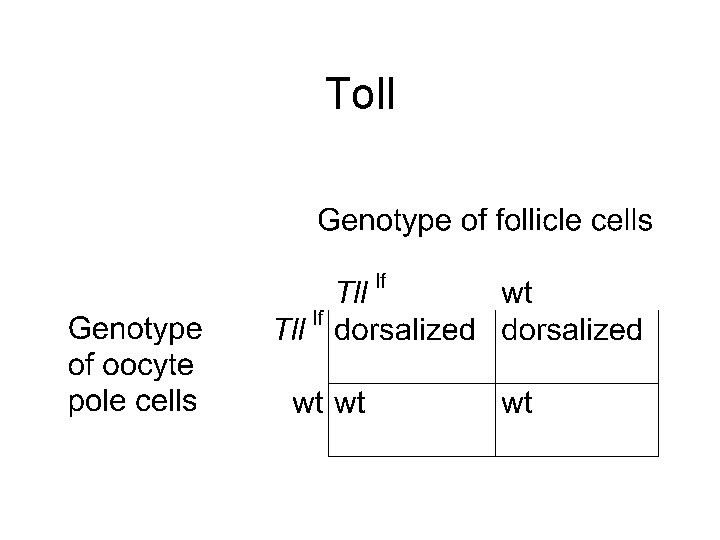
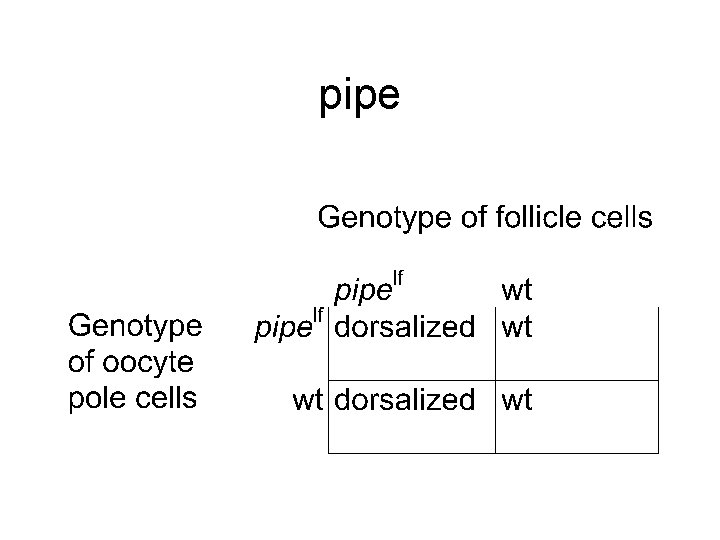
Example pipe (pip) Toll (Tll) What cells, follicle or germ-line, are pipe and Toll required in?
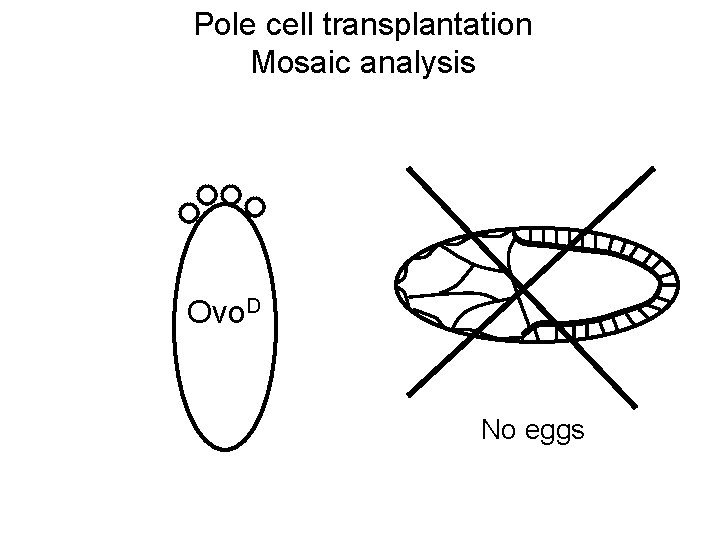
Pole cell transplantation Mosaic analysis Ovo. D No eggs
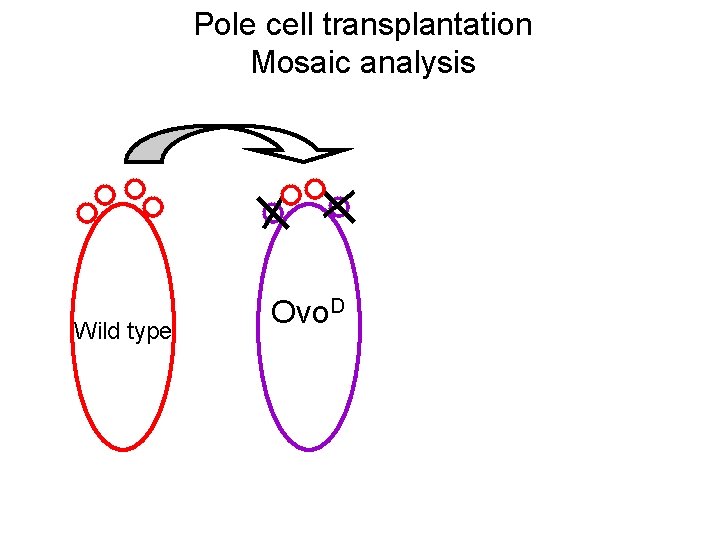
Pole cell transplantation Mosaic analysis Wild type Ovo. D
Pole cell transplantation Mosaic analysis Wild type Ovo. D Wild type Active egg chamber get eggs produced
Toll
pipe
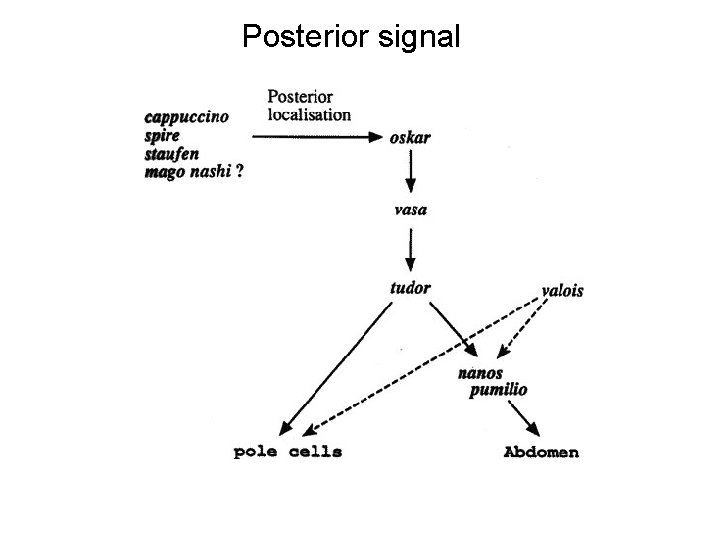
Posterior signal
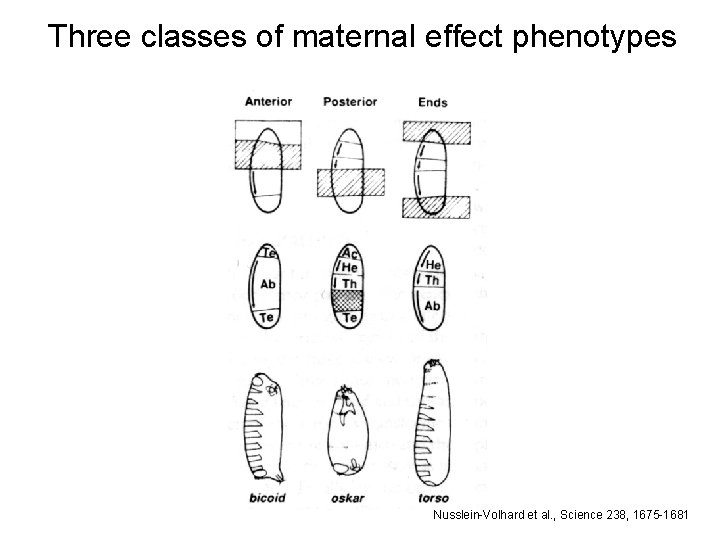
Three classes of maternal effect phenotypes Nusslein-Volhard et al. , Science 238, 1675 -1681
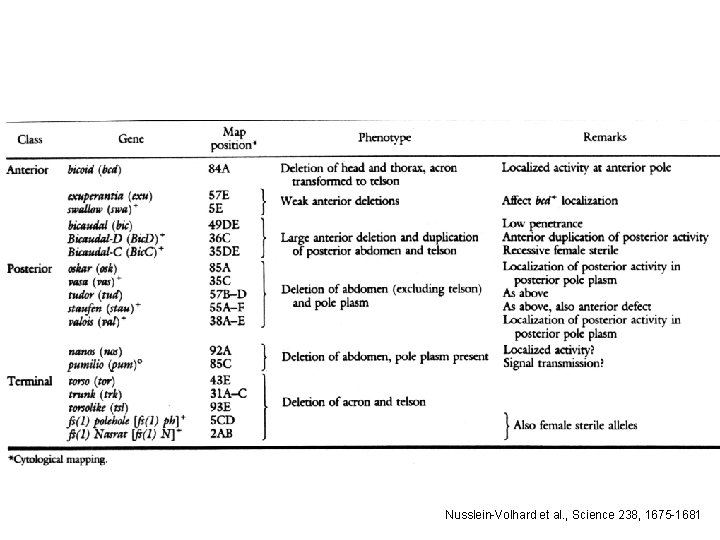
Nusslein-Volhard et al. , Science 238, 1675 -1681
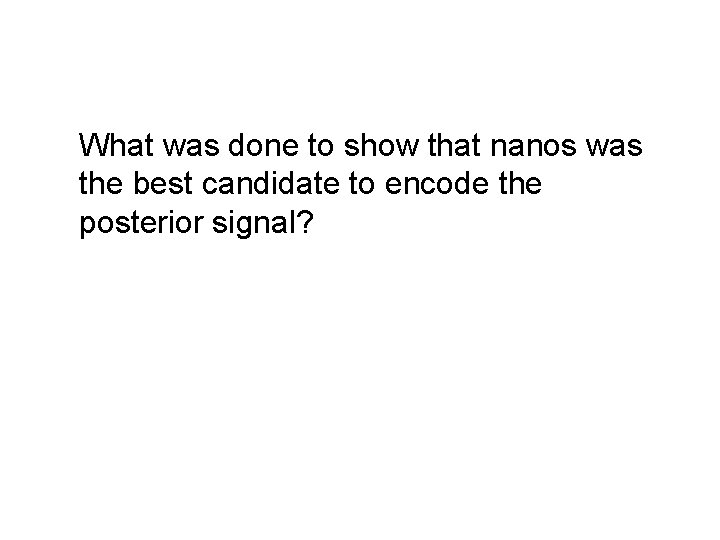
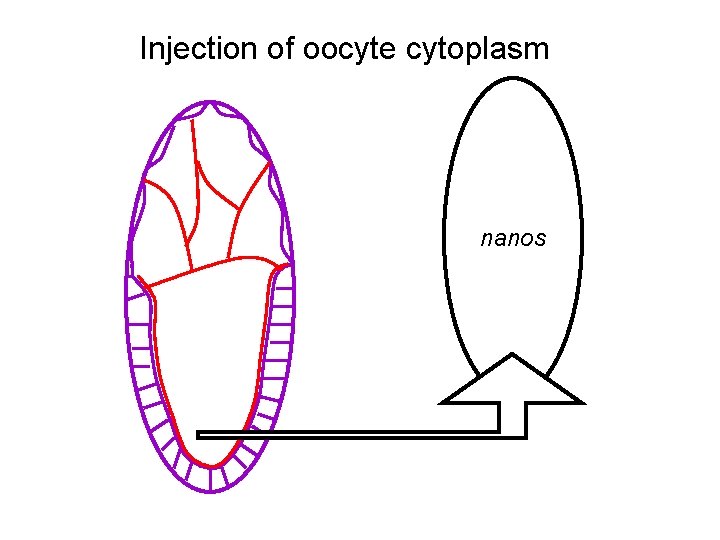
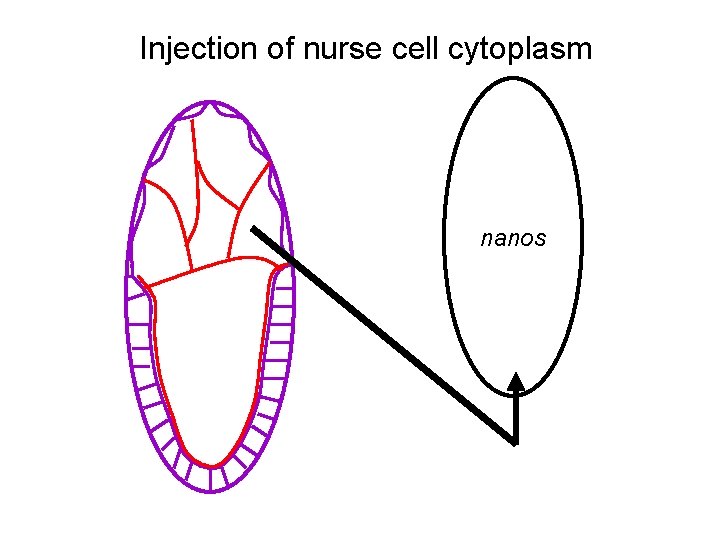
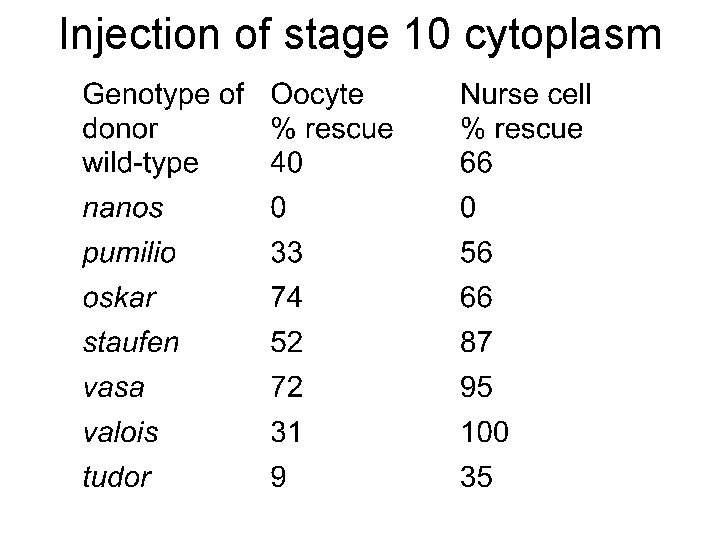
What was done to show that nanos was the best candidate to encode the posterior signal?
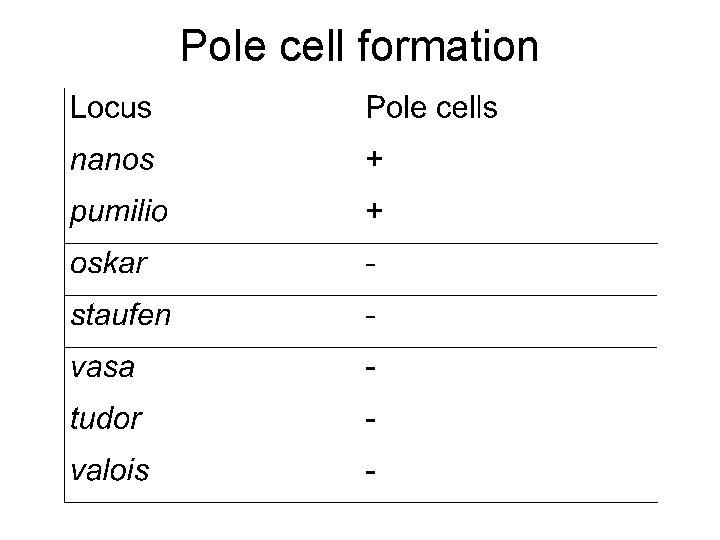
Pole cell formation
Injection of oocyte cytoplasm nanos
Injection of nurse cell cytoplasm nanos
Injection of stage 10 cytoplasm
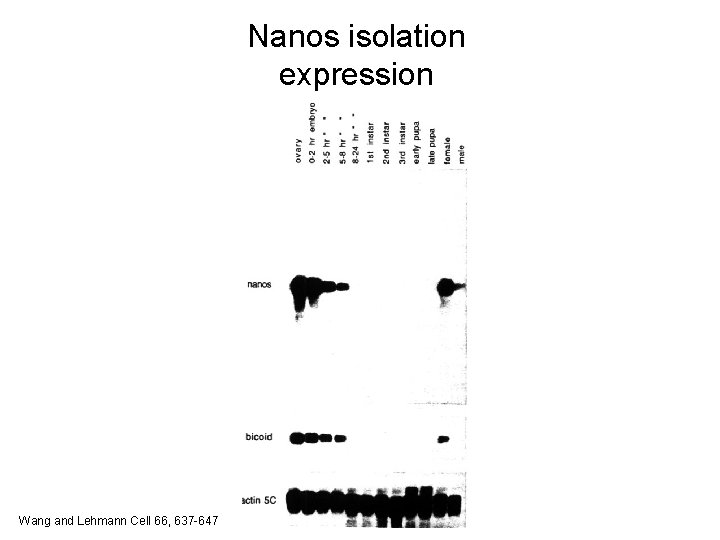
Nanos isolation expression Wang and Lehmann Cell 66, 637 -647
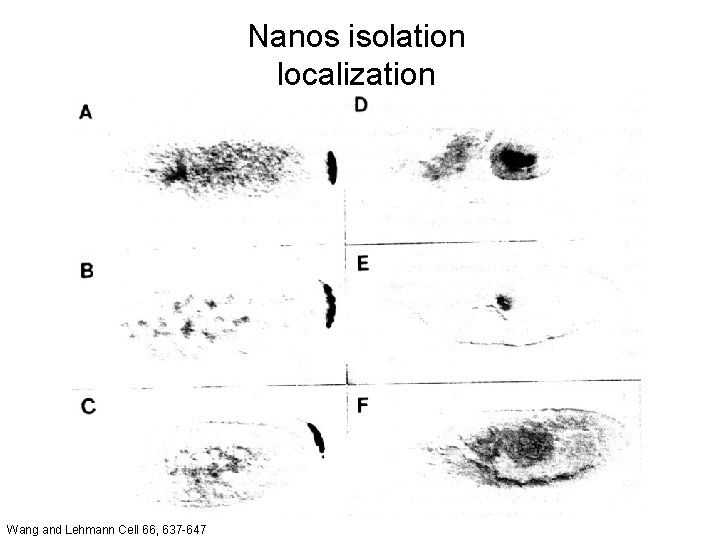
Nanos isolation localization Wang and Lehmann Cell 66, 637 -647
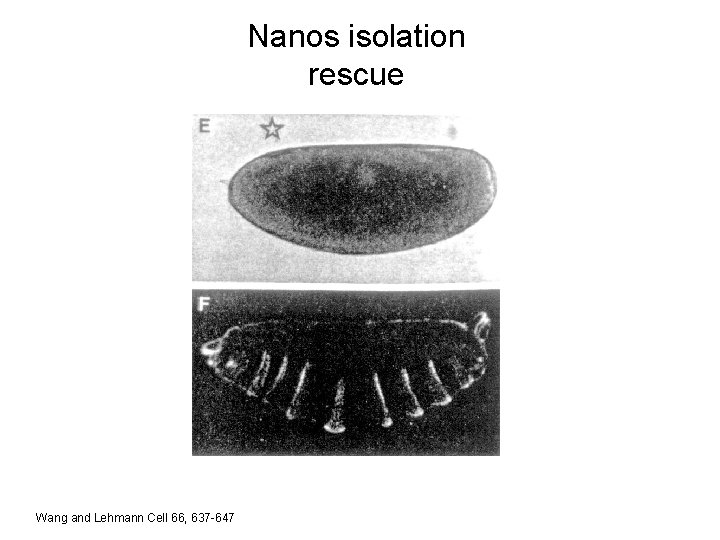
Nanos isolation rescue Wang and Lehmann Cell 66, 637 -647
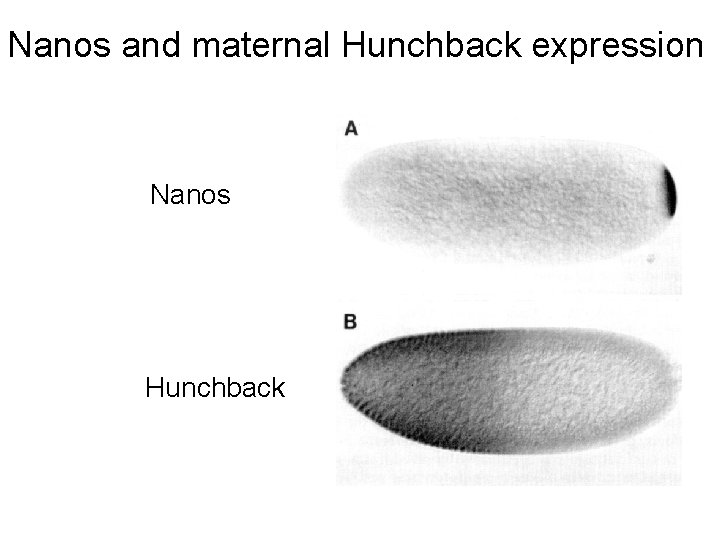
Nanos and maternal Hunchback expression Nanos Hunchback
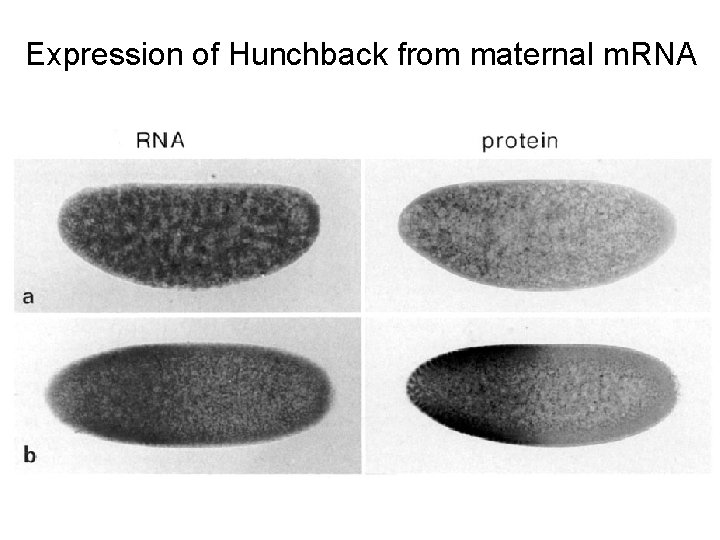
Expression of Hunchback from maternal m. RNA
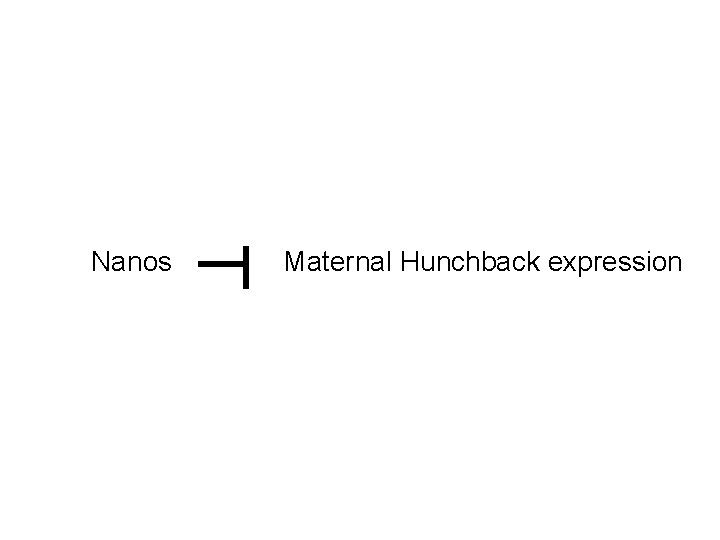
Nanos Maternal Hunchback expression
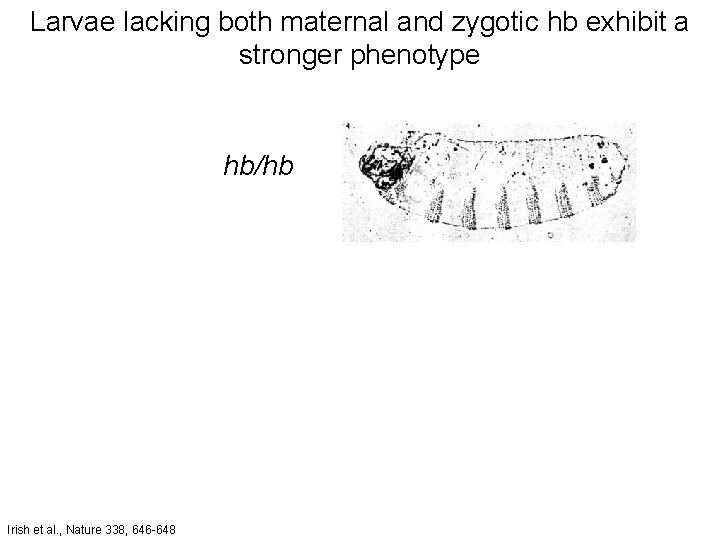
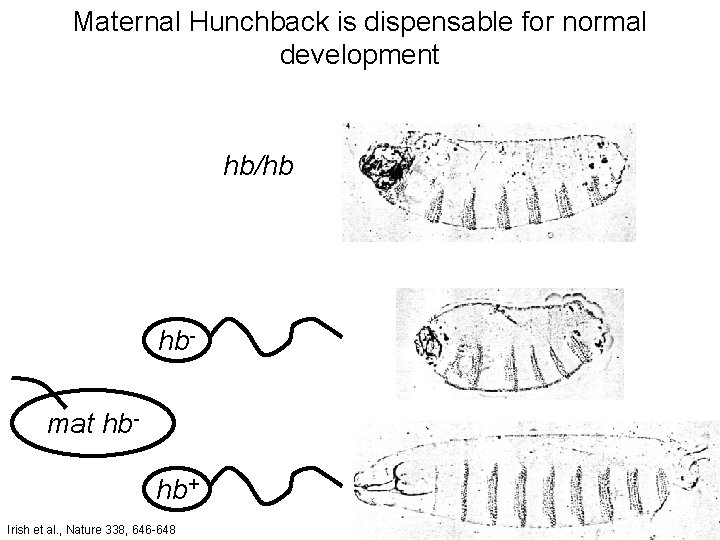
Larvae lacking both maternal and zygotic hb exhibit a stronger phenotype hb/hb Irish et al. , Nature 338, 646 -648
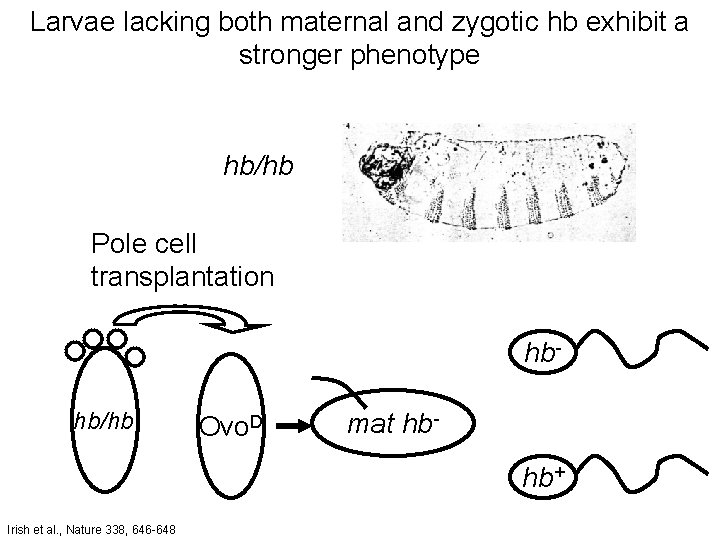
Larvae lacking both maternal and zygotic hb exhibit a stronger phenotype hb/hb Pole cell transplantation hbhb/hb Ovo. D mat hbhb+ Irish et al. , Nature 338, 646 -648
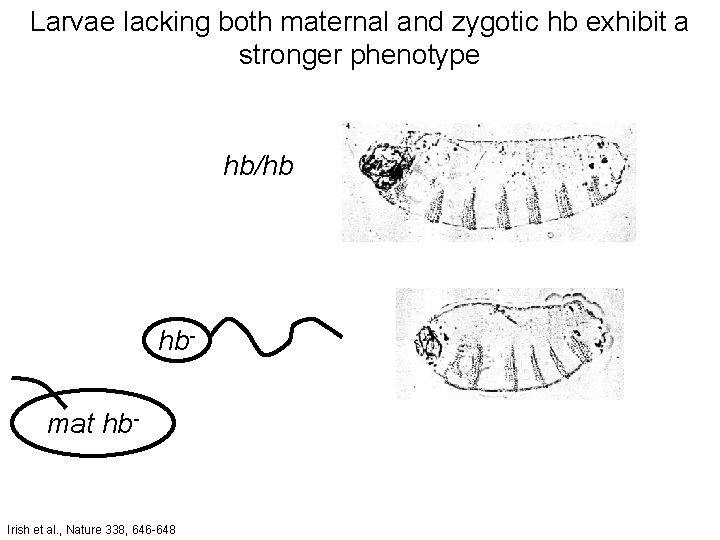
Larvae lacking both maternal and zygotic hb exhibit a stronger phenotype hb/hb hbmat hb- Irish et al. , Nature 338, 646 -648
Maternal Hunchback is dispensable for normal development hb/hb hbmat hbhb+ Irish et al. , Nature 338, 646 -648
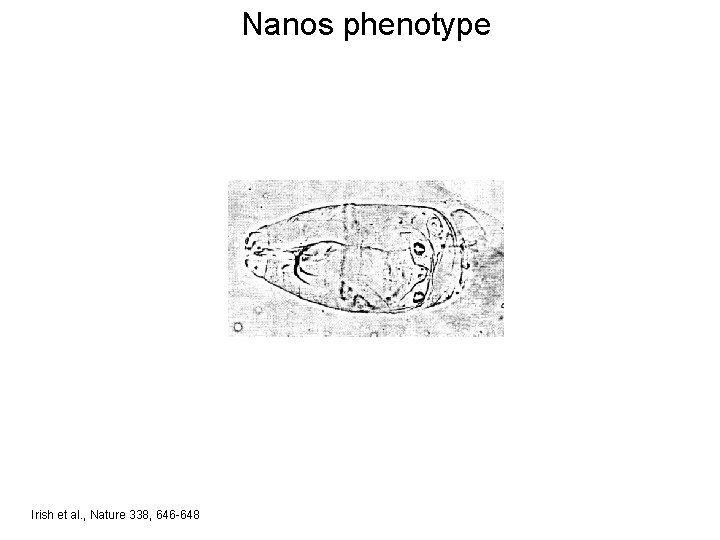
Nanos phenotype Irish et al. , Nature 338, 646 -648
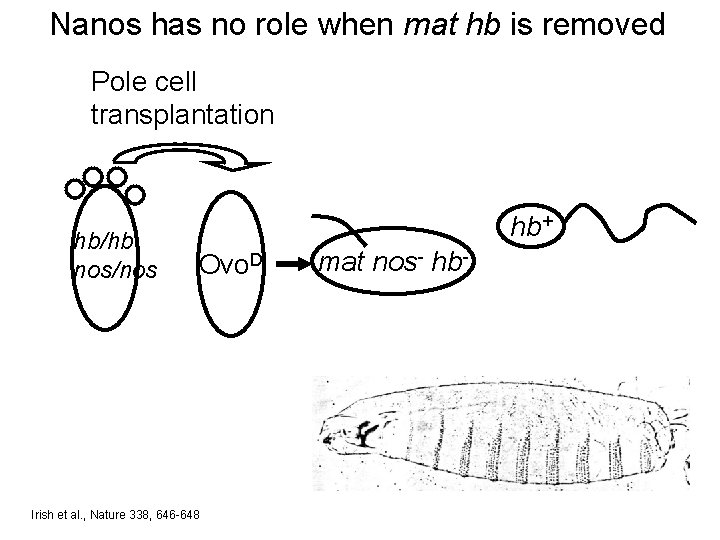
Nanos has no role when mat hb is removed Pole cell transplantation hb/hb nos/nos hb+ Ovo. D Irish et al. , Nature 338, 646 -648 mat nos- hb-
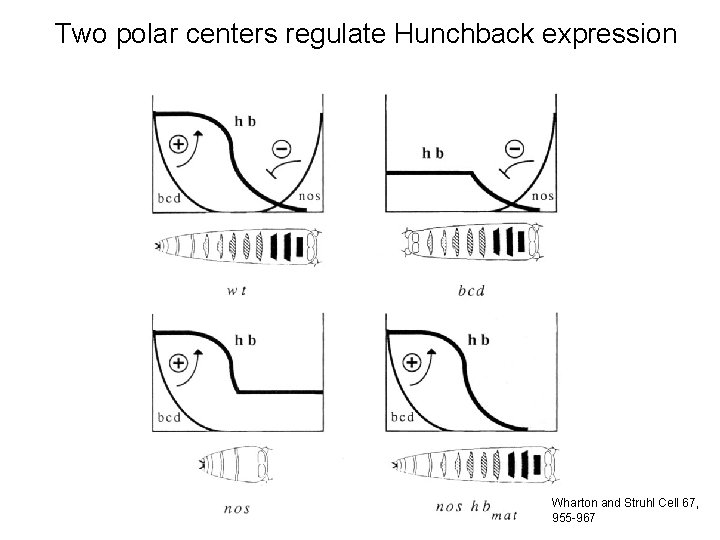
Two polar centers regulate Hunchback expression Wharton and Struhl Cell 67, 955 -967
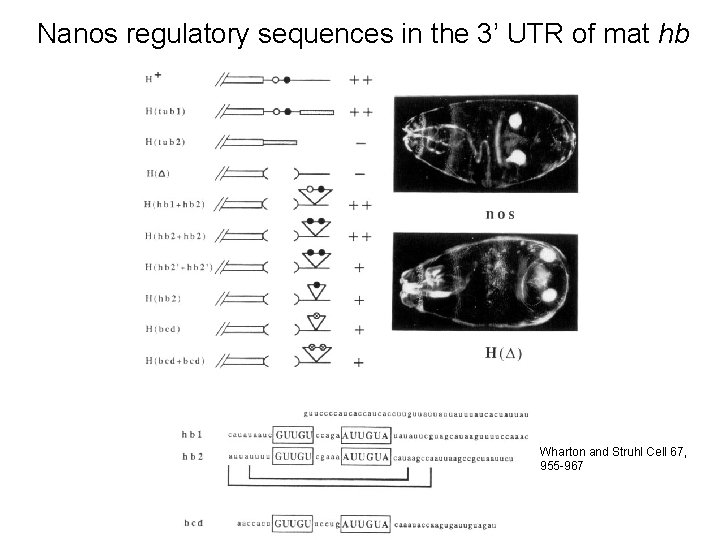
Nanos regulatory sequences in the 3’ UTR of mat hb Wharton and Struhl Cell 67, 955 -967
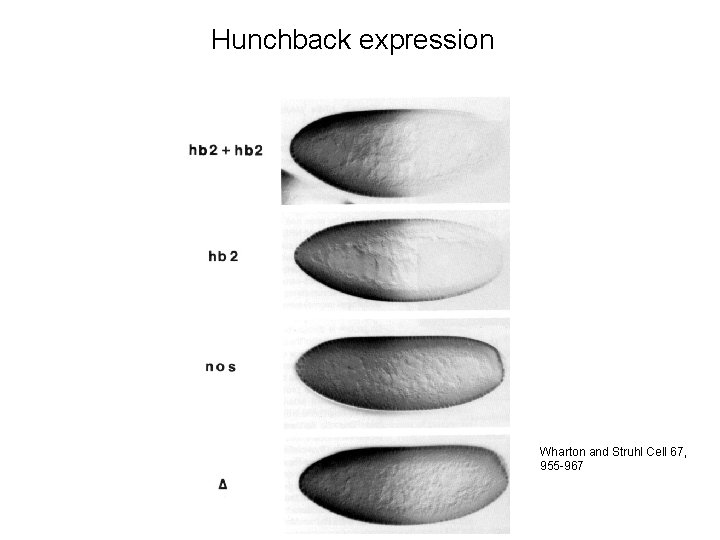
Hunchback expression Wharton and Struhl Cell 67, 955 -967
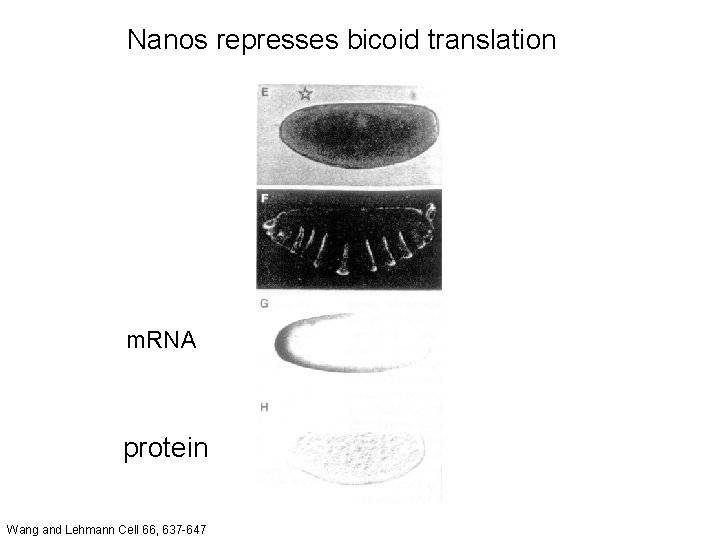
Nanos represses bicoid translation m. RNA protein Wang and Lehmann Cell 66, 637 -647
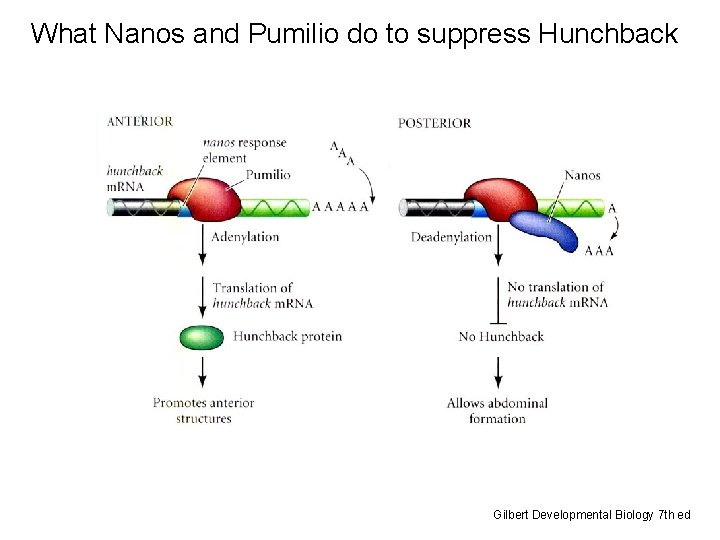
What Nanos and Pumilio do to suppress Hunchback Gilbert Developmental Biology 7 th ed
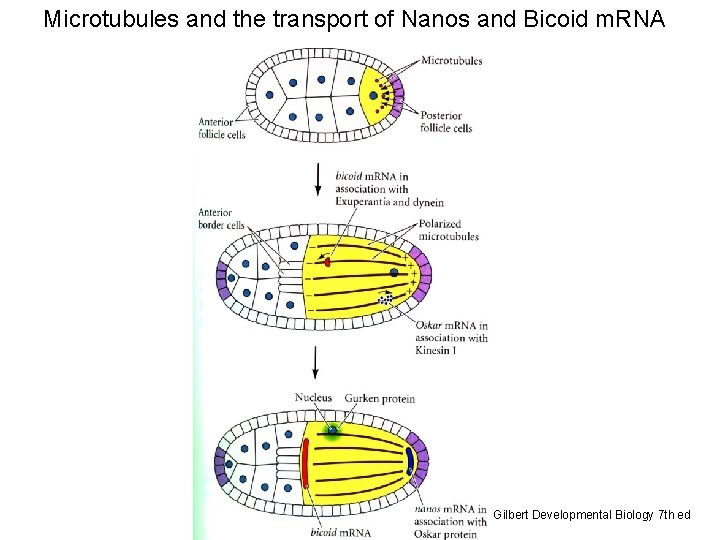
Microtubules and the transport of Nanos and Bicoid m. RNA Gilbert Developmental Biology 7 th ed
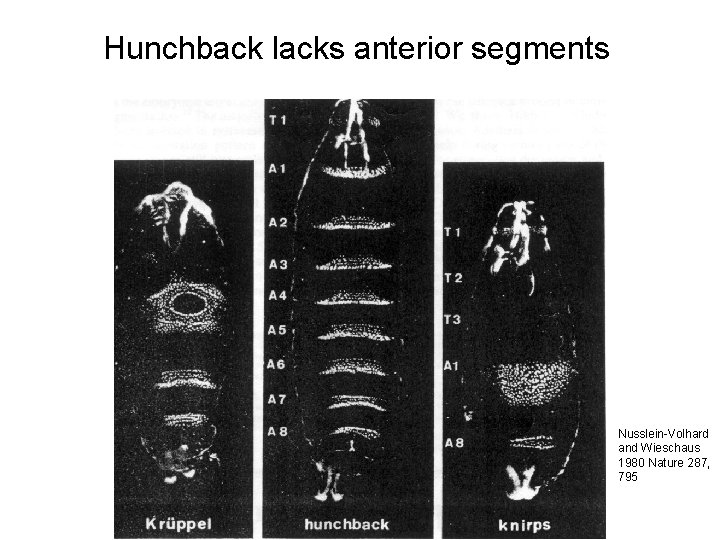
Hunchback lacks anterior segments Nusslein-Volhard and Wieschaus 1980 Nature 287, 795
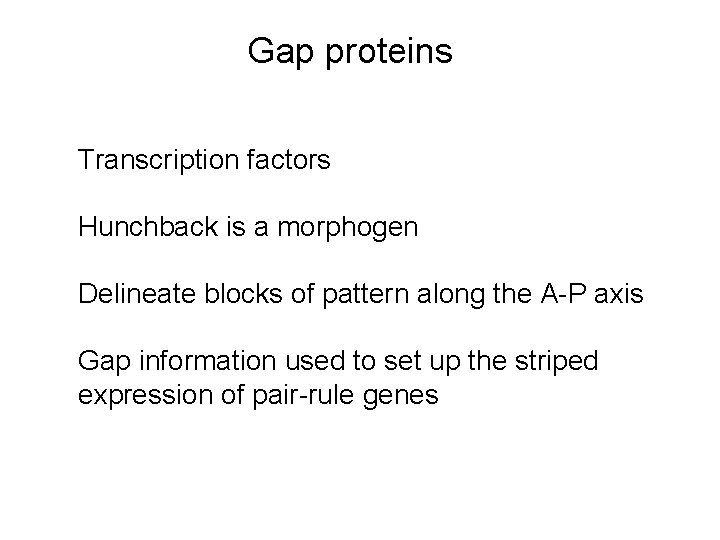
Gap proteins Transcription factors Hunchback is a morphogen Delineate blocks of pattern along the A-P axis Gap information used to set up the striped expression of pair-rule genes
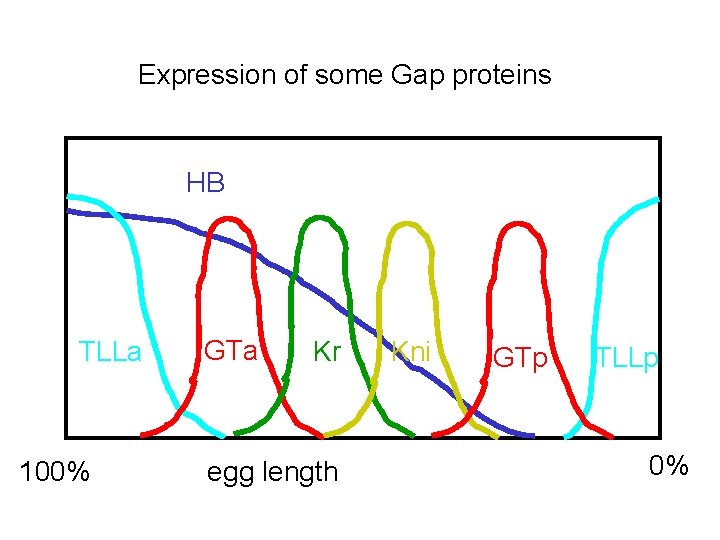
Expression of some Gap proteins HB TLLa 100% GTa Kr egg length Kni GTp TLLp 0%
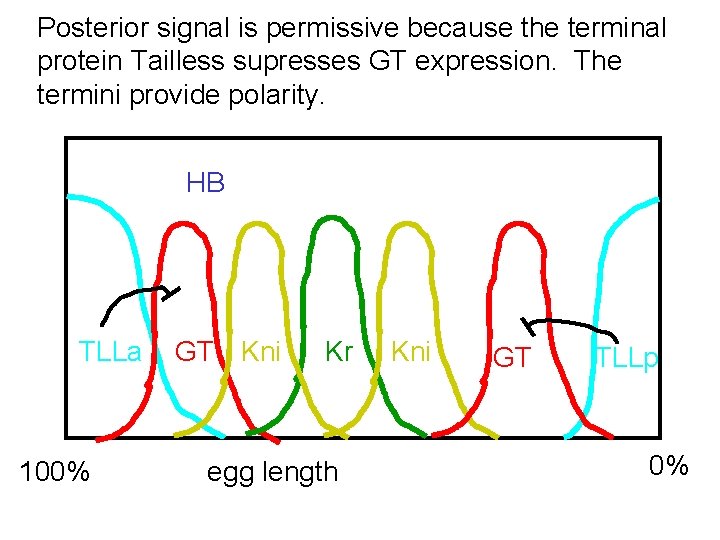
Posterior signal is permissive because the terminal protein Tailless supresses GT expression. The termini provide polarity. HB TLLa 100% GT Kni Kr egg length Kni GT TLLp 0%
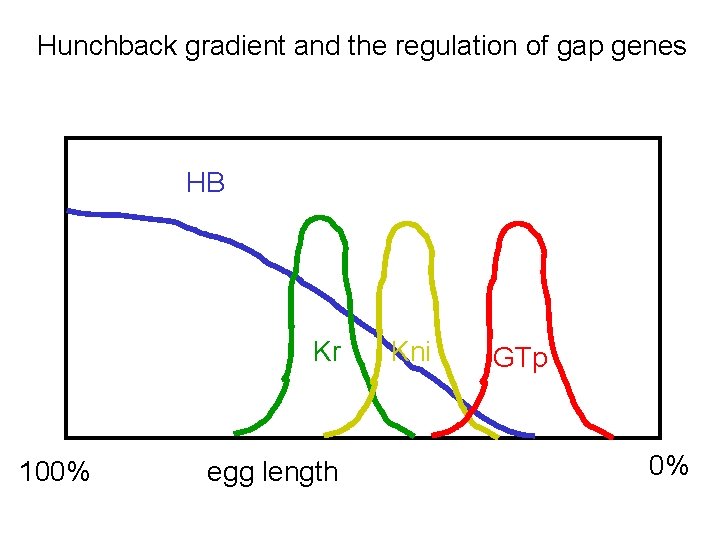
Hunchback gradient and the regulation of gap genes HB Kr 100% egg length Kni GTp 0%
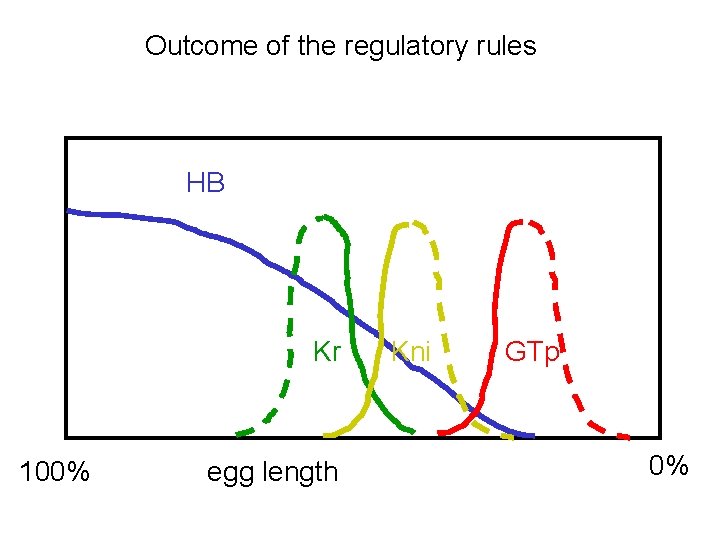
Hunchback gradient and the regulation of gap genes Regulatory rules medium [HB] activates Kr medium [HB] represses Kni low [HB] represses gtp
Outcome of the regulatory rules HB Kr 100% egg length Kni GTp 0%
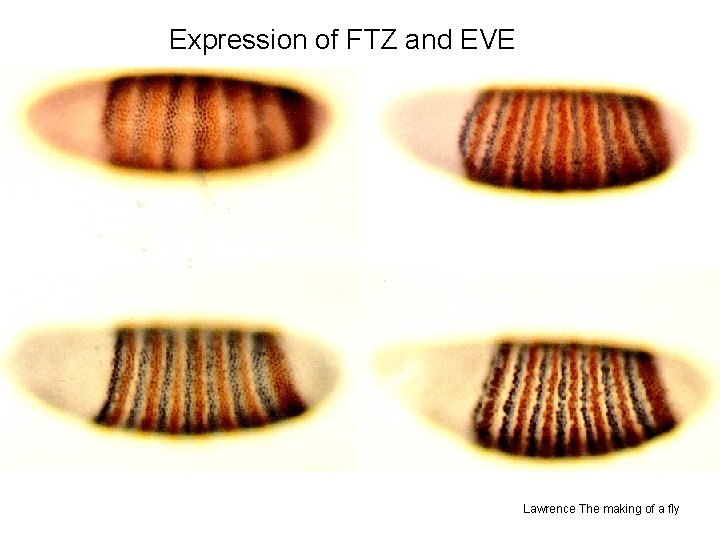
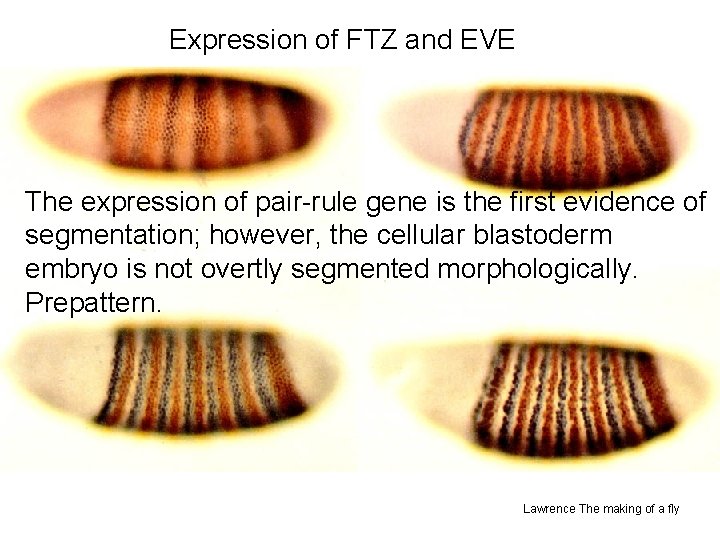
Expression of FTZ and EVE Lawrence The making of a fly
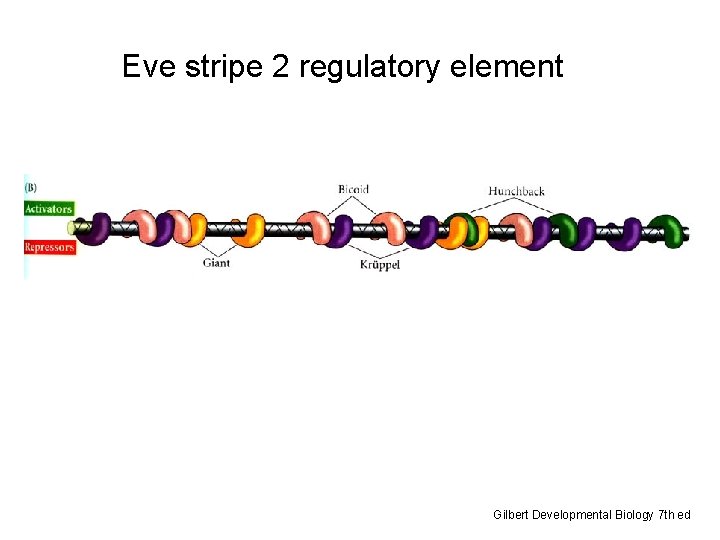
Eve stripe 2 regulatory element Gilbert Developmental Biology 7 th ed
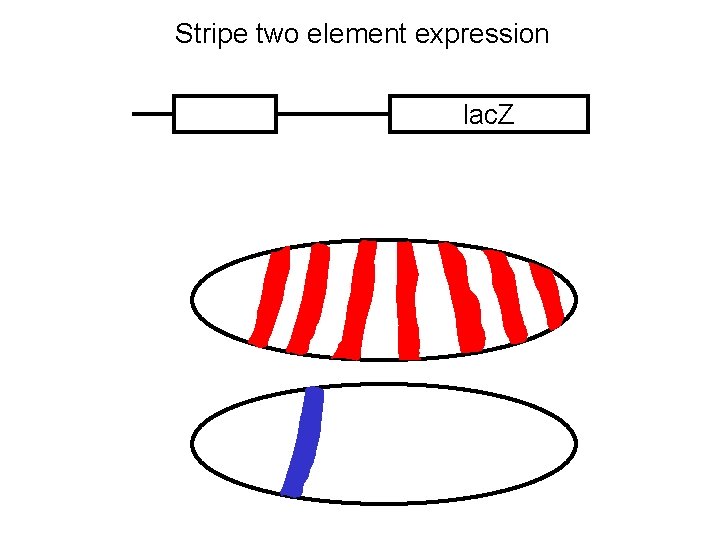
Stripe two element expression lac. Z
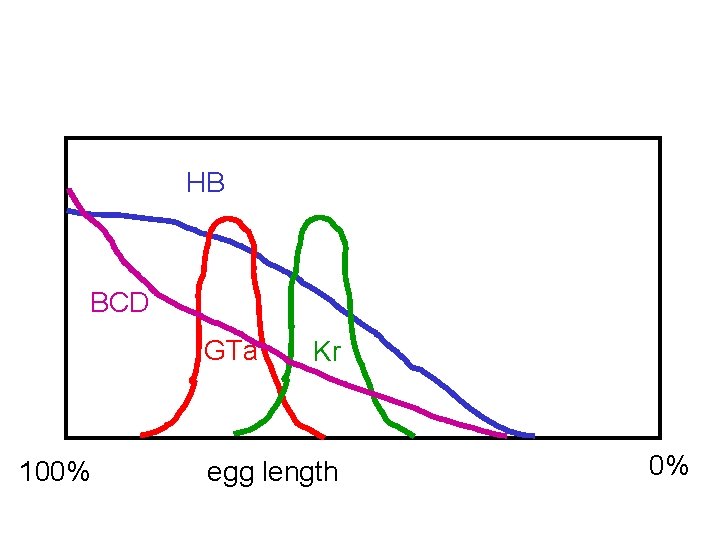
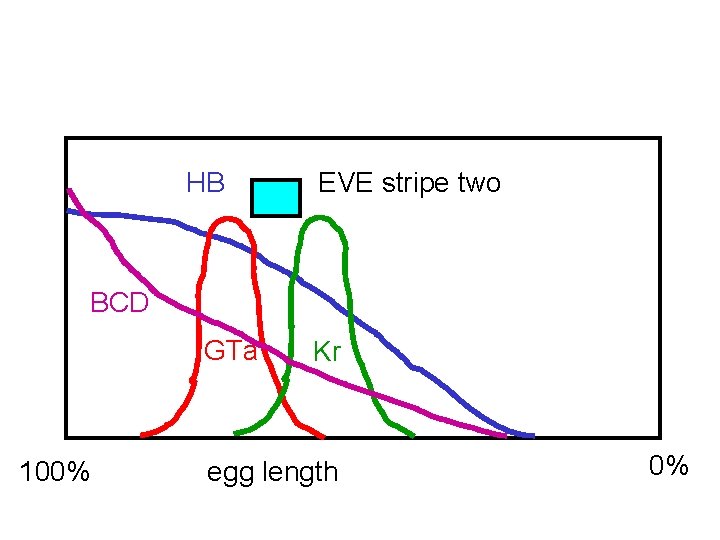
HB BCD GTa 100% Kr egg length 0%
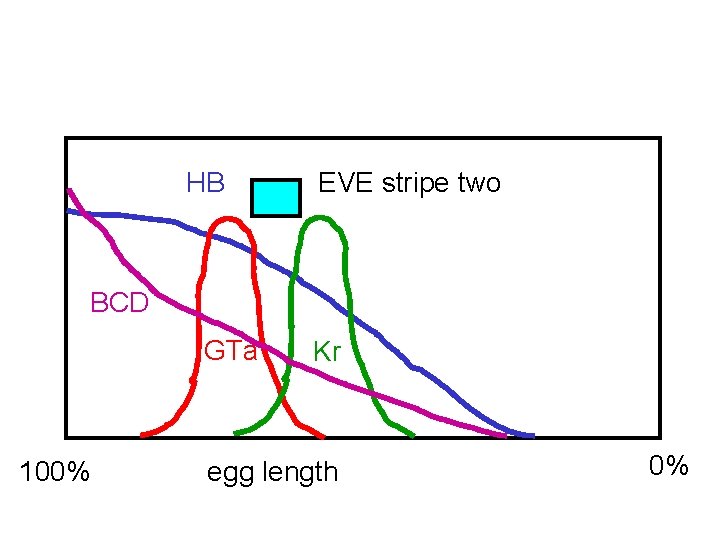
HB EVE stripe two BCD GTa 100% Kr egg length 0%
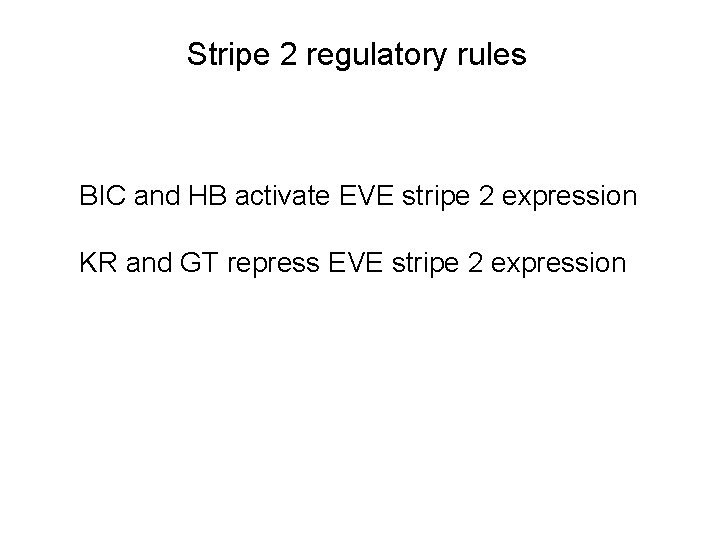
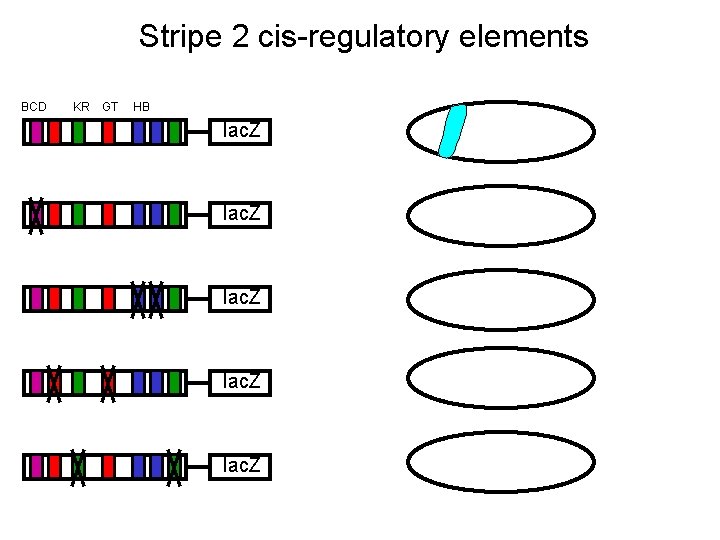
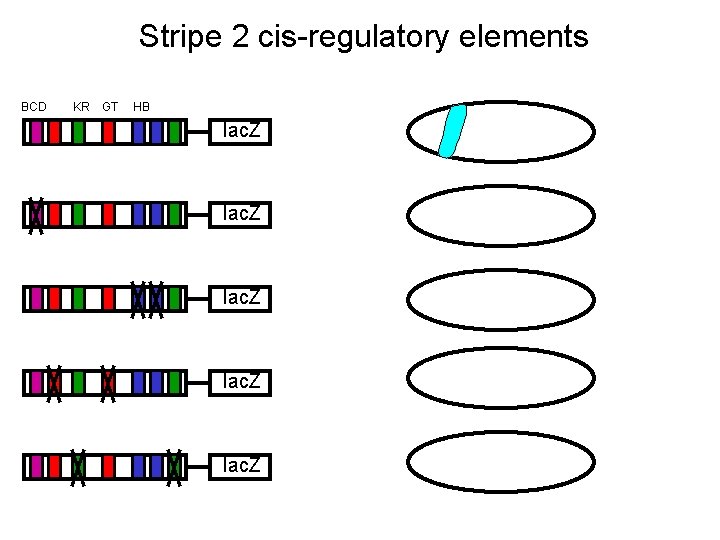
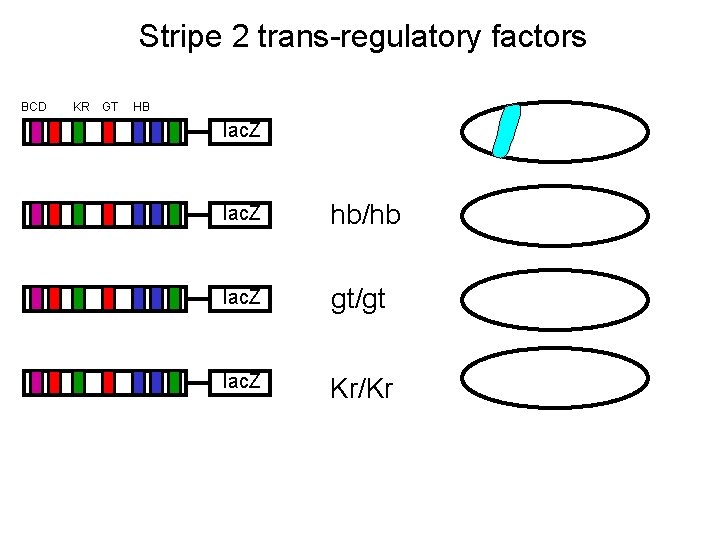
Stripe 2 regulatory rules BIC and HB activate EVE stripe 2 expression KR and GT repress EVE stripe 2 expression
Stripe 2 cis-regulatory elements BCD KR GT HB lac. Z
HB EVE stripe two BCD GTa 100% Kr egg length 0%
Stripe 2 cis-regulatory elements BCD KR GT HB lac. Z
Stripe 2 trans-regulatory factors BCD KR GT HB lac. Z hb/hb lac. Z gt/gt lac. Z Kr/Kr
Expression of FTZ and EVE The expression of pair-rule gene is the first evidence of segmentation; however, the cellular blastoderm embryo is not overtly segmented morphologically. Prepattern. Lawrence The making of a fly
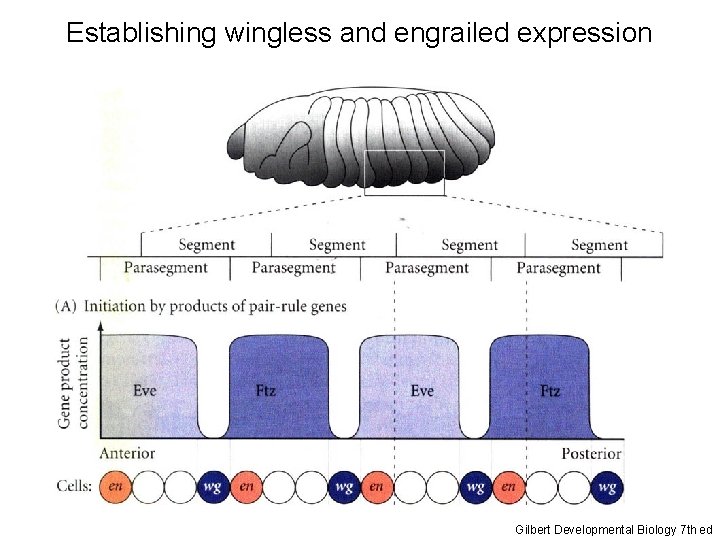
Establishing wingless and engrailed expression Gilbert Developmental Biology 7 th ed
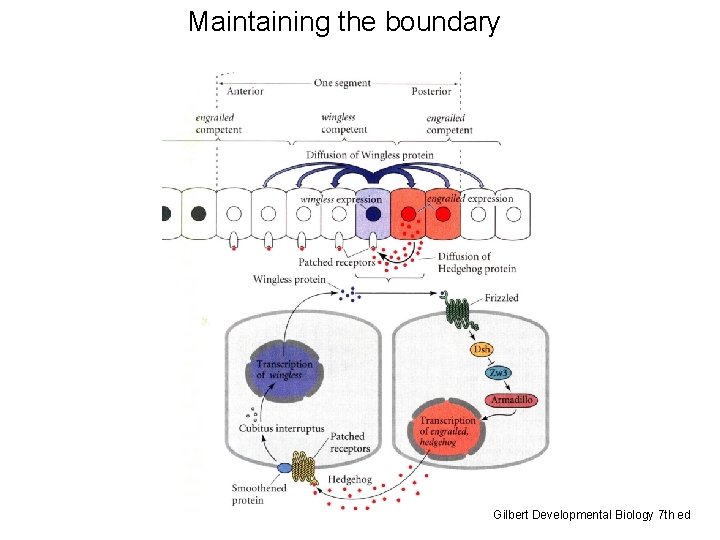
Maintaining the boundary Gilbert Developmental Biology 7 th ed
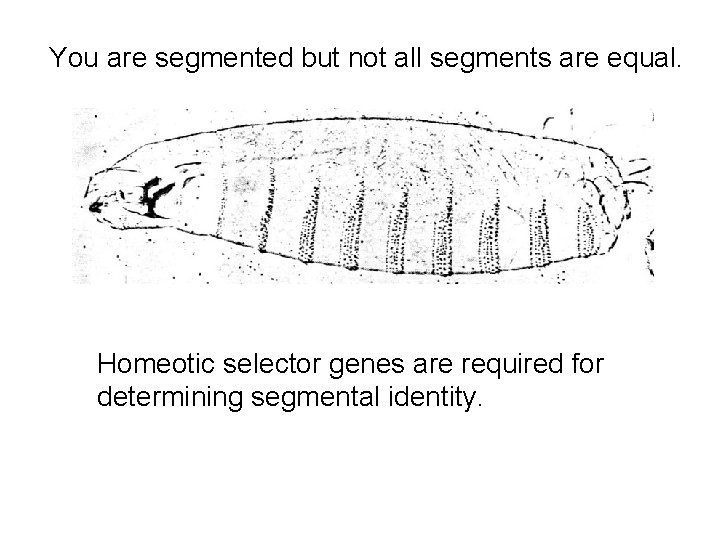
You are segmented but not all segments are equal. Homeotic selector genes are required for determining segmental identity.
Homeosis Homeotic mutation
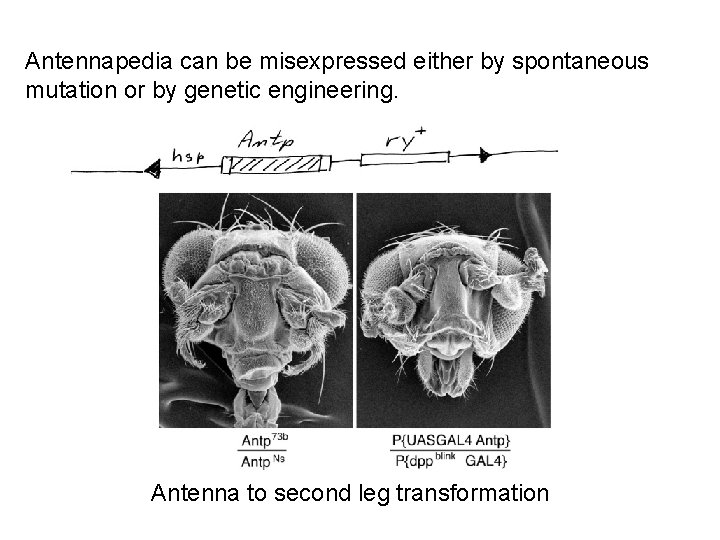
Antennapedia can be misexpressed either by spontaneous mutation or by genetic engineering. Antenna to second leg transformation
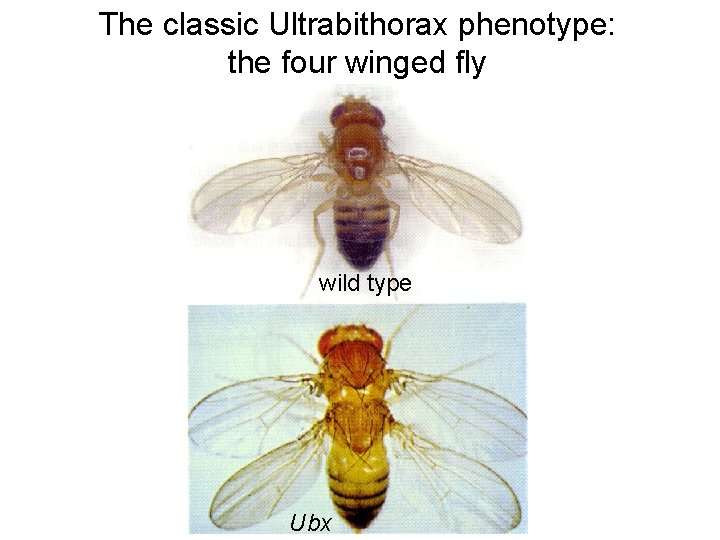
The classic Ultrabithorax phenotype: the four winged fly wild type Ubx
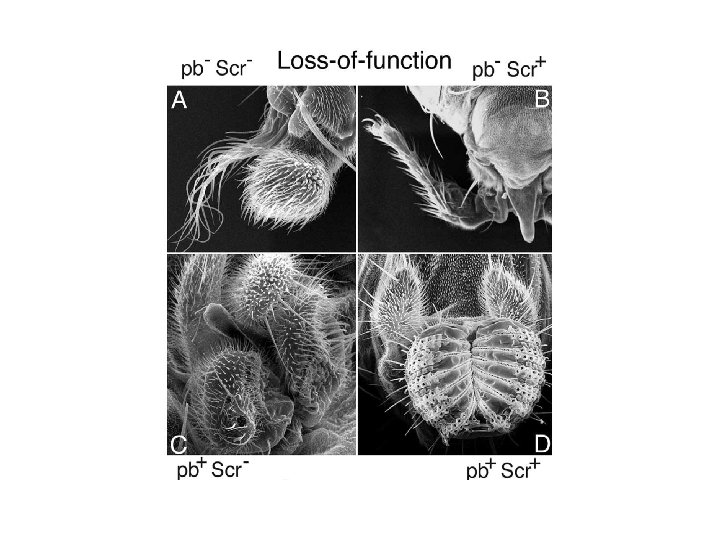
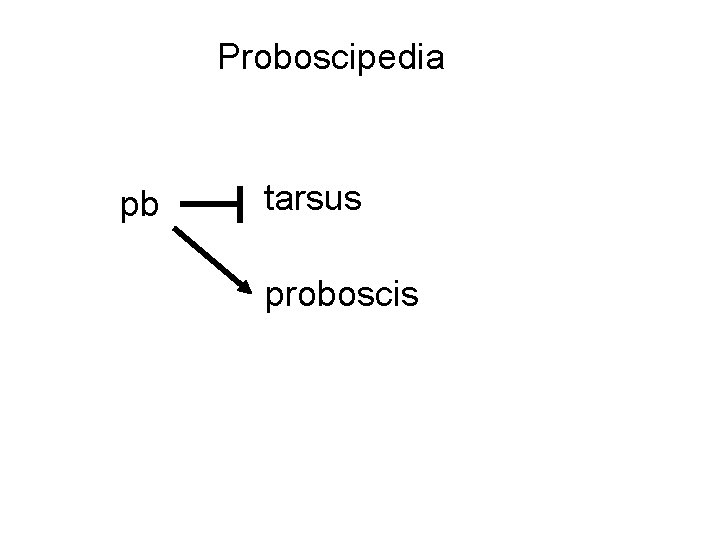
Proboscipedia pb tarsus proboscis
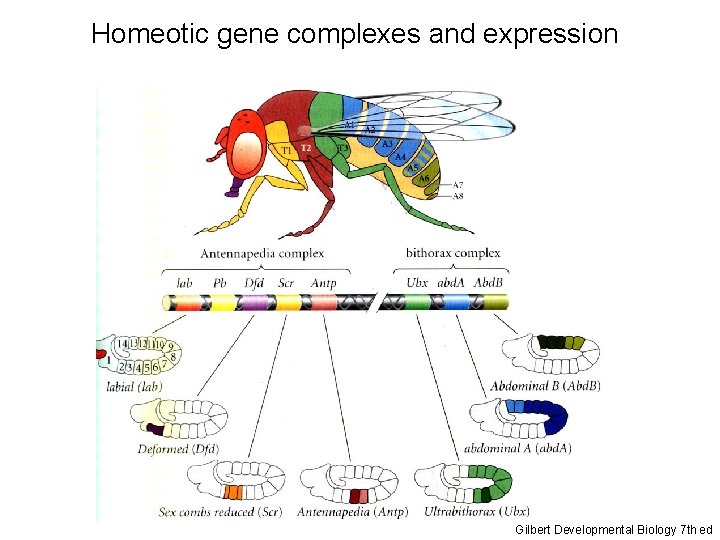
Homeotic gene complexes and expression Gilbert Developmental Biology 7 th ed