
Lecture 5 Plant hormones and Signal transduction PLSC



- Slides: 35
Lecture 5 Plant hormones and Signal transduction PLSC 452/552 1/23/14 Department of Plant Sciences Neal Stewart Lab
Brain teaser • Little Johnny nails a sign 90 cm off the ground to a tree outside of his clubhouse that says “no girls allowed. ” If the tree grows 12 cm every year, at what height will the sign be when Little Johnny returns as Big Johnny in 15 years?
Overview • Define “hormone” as a functional compound. What is the function and importance of hormones? • Know the major plant hormones • Understand real-world application of hormones • Importance of hormones for tissue culture: introduction
What is a hormone? • Biochemical which regulates growth based on biological and environmental influences • Synonyms: Plant hormones, plant growth regulators (PGRs), phytohormones • Regulate growth and development • Mobile throughout plant • Environment and stress responsive
Major plant hormones • • Auxin – Greek: auxein; to grow or increase Cytokinin – cytokinesis (cell division) Abscisic acid – abscission Jasmonic acid – found in jasmine oil Gibberellic acid – pathogen Gibberella Ethylene – chemical brother to ethanol Brassinosteroids – derived from Brassica spp.
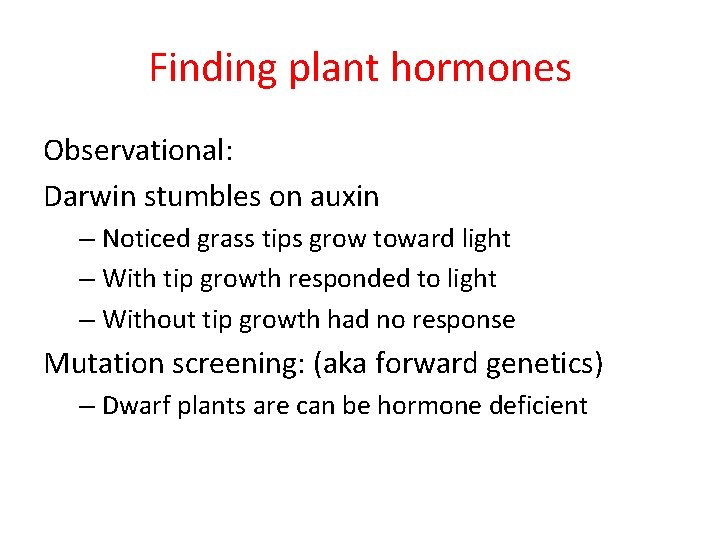
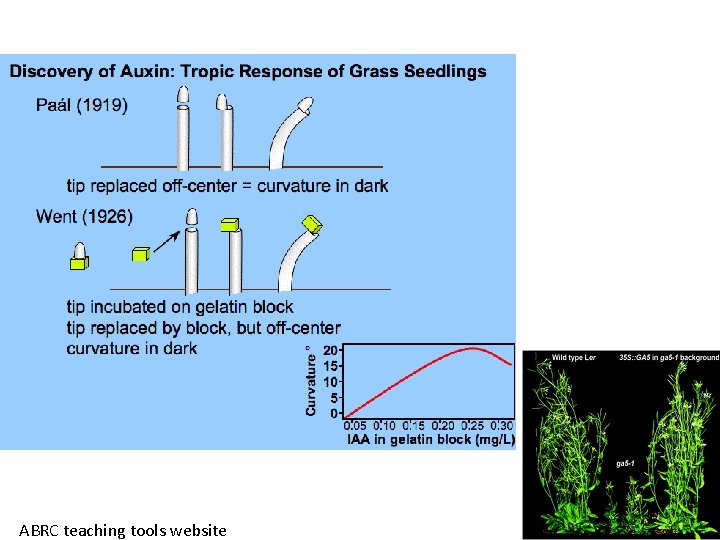
Finding plant hormones Observational: Darwin stumbles on auxin – Noticed grass tips grow toward light – With tip growth responded to light – Without tip growth had no response Mutation screening: (aka forward genetics) – Dwarf plants are can be hormone deficient
ABRC teaching tools website
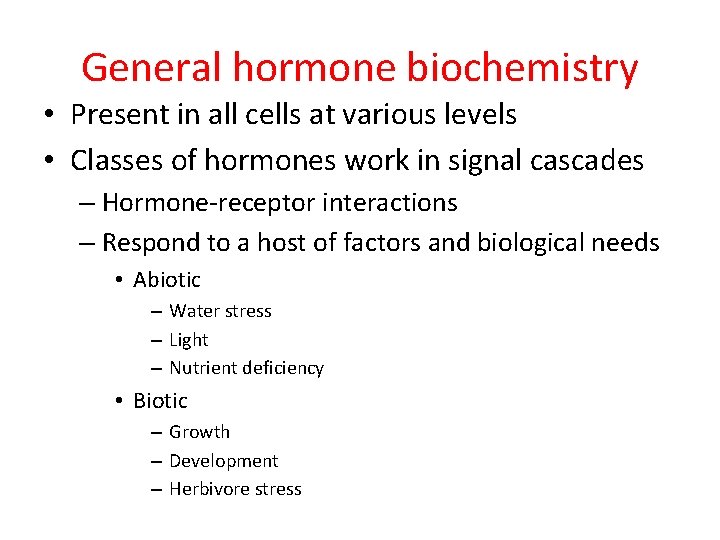
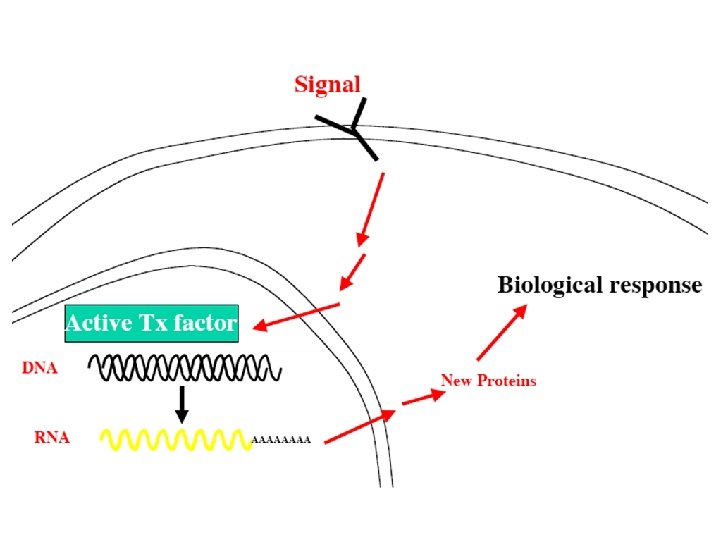
General hormone biochemistry • Present in all cells at various levels • Classes of hormones work in signal cascades – Hormone-receptor interactions – Respond to a host of factors and biological needs • Abiotic – Water stress – Light – Nutrient deficiency • Biotic – Growth – Development – Herbivore stress
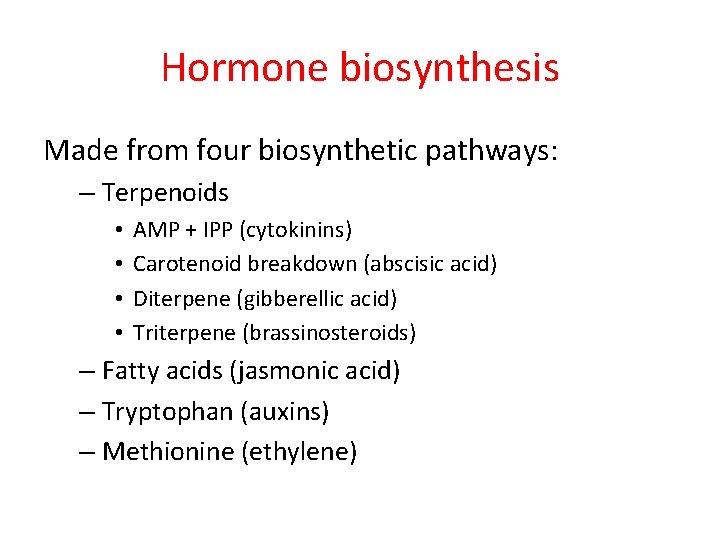
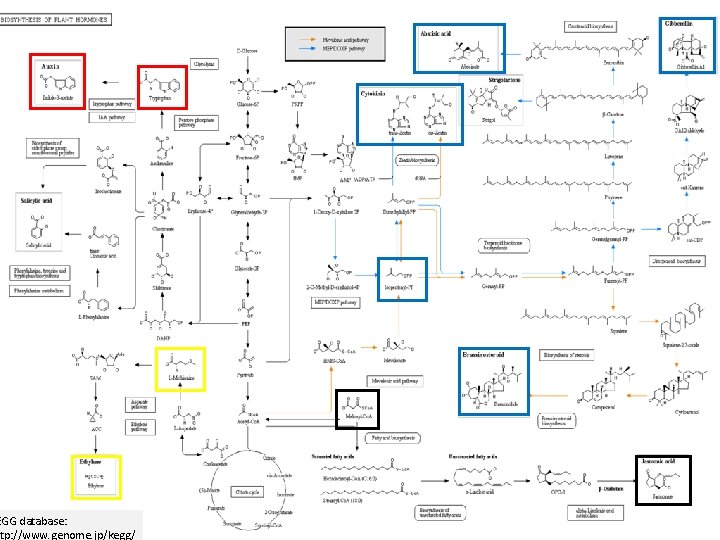
Hormone biosynthesis Made from four biosynthetic pathways: – Terpenoids • • AMP + IPP (cytokinins) Carotenoid breakdown (abscisic acid) Diterpene (gibberellic acid) Triterpene (brassinosteroids) – Fatty acids (jasmonic acid) – Tryptophan (auxins) – Methionine (ethylene)
EGG database: tp: //www. genome. jp/kegg/
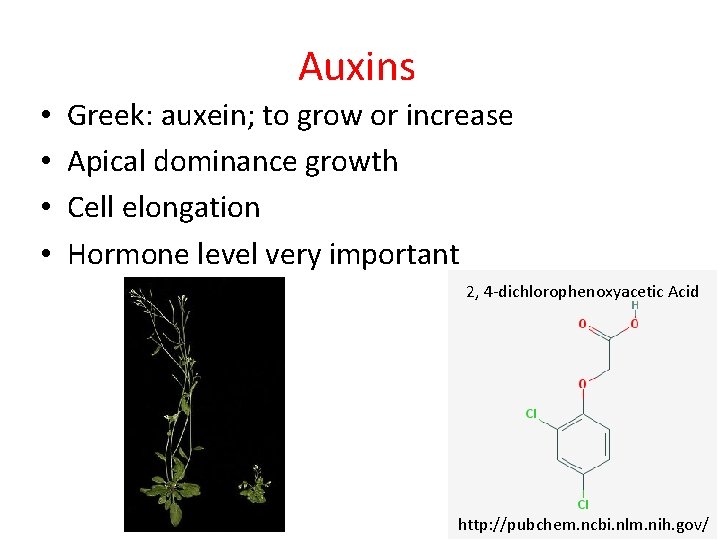
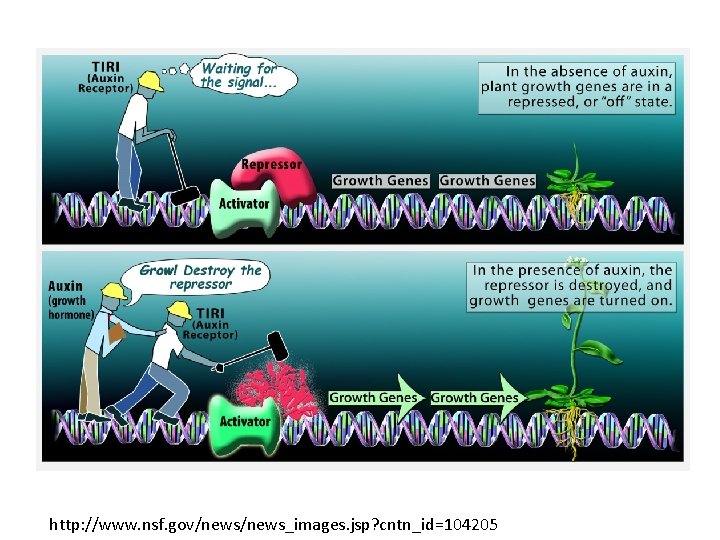
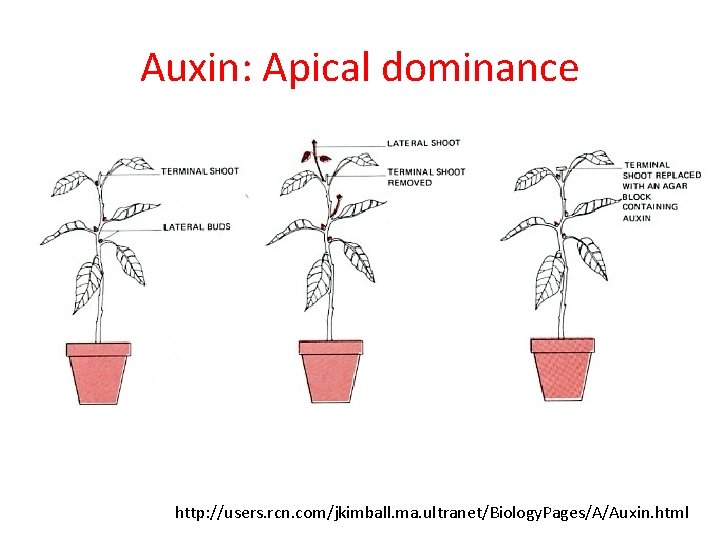
Auxins • • Greek: auxein; to grow or increase Apical dominance growth Cell elongation Hormone level very important 2, 4 -dichlorophenoxyacetic Acid http: //pubchem. ncbi. nlm. nih. gov/
http: //www. nsf. gov/news_images. jsp? cntn_id=104205
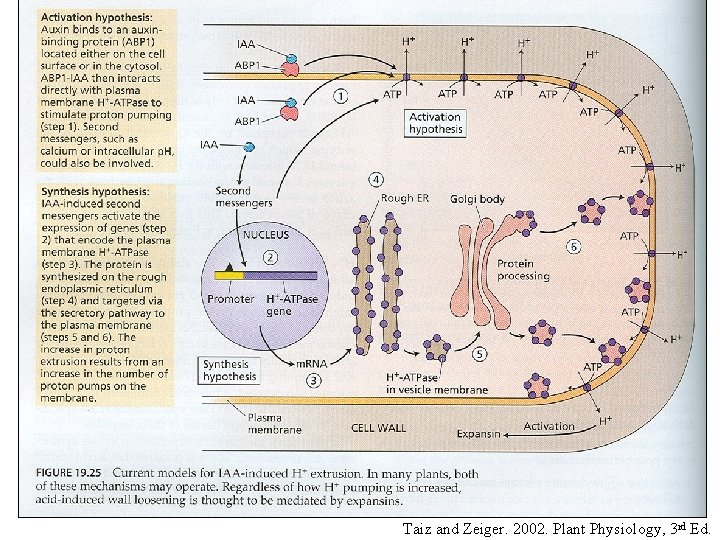
Taiz and Zeiger. 2002. Plant Physiology, 3 rd Ed.
Auxin: Apical dominance http: //users. rcn. com/jkimball. ma. ultranet/Biology. Pages/A/Auxin. html
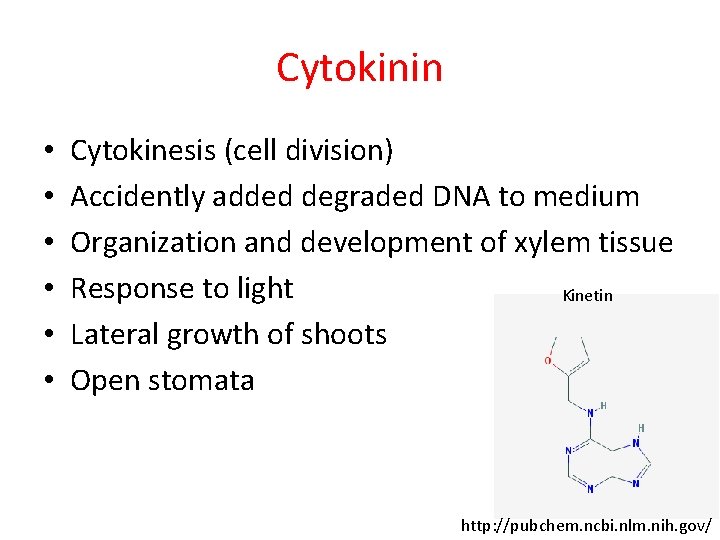
Cytokinin • • • Cytokinesis (cell division) Accidently added degraded DNA to medium Organization and development of xylem tissue Response to light Kinetin Lateral growth of shoots Open stomata http: //pubchem. ncbi. nlm. nih. gov/
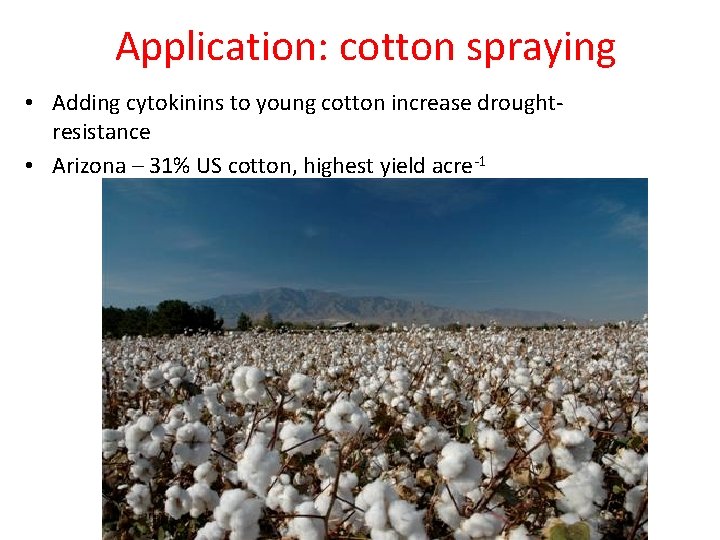
Application: cotton spraying • Adding cytokinins to young cotton increase droughtresistance • Arizona – 31% US cotton, highest yield acre-1
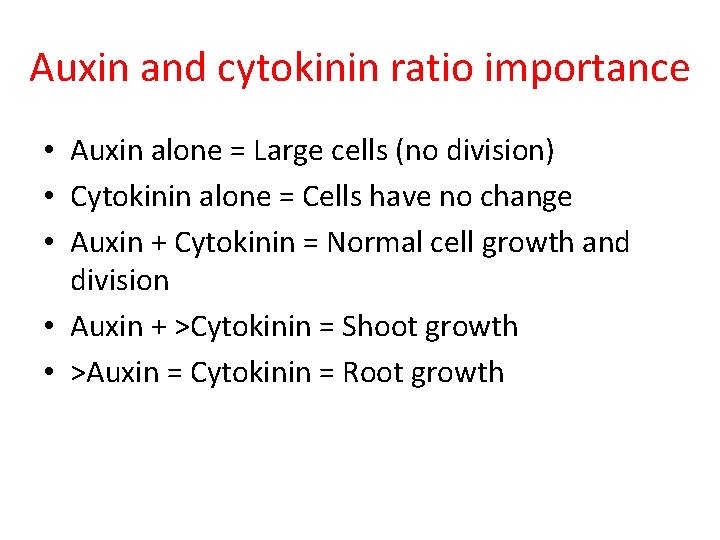
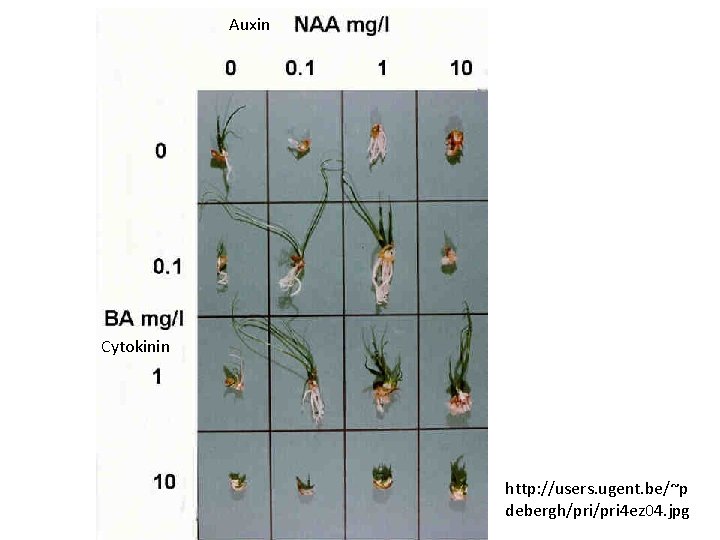
Auxin and cytokinin ratio importance • Auxin alone = Large cells (no division) • Cytokinin alone = Cells have no change • Auxin + Cytokinin = Normal cell growth and division • Auxin + >Cytokinin = Shoot growth • >Auxin = Cytokinin = Root growth
Auxin Cytokinin http: //users. ugent. be/~p debergh/pri 4 ez 04. jpg
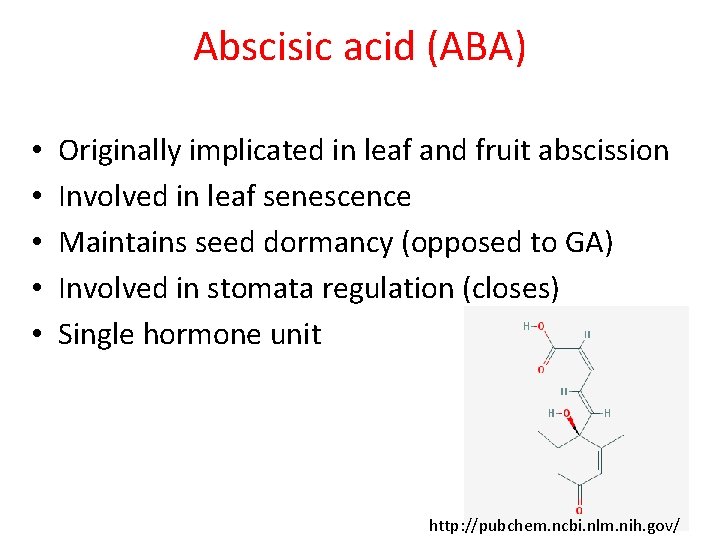
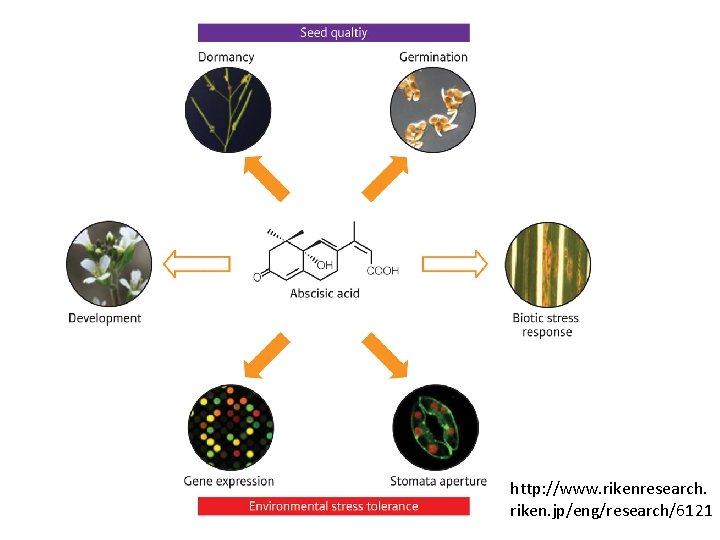
Abscisic acid (ABA) • • • Originally implicated in leaf and fruit abscission Involved in leaf senescence Maintains seed dormancy (opposed to GA) Involved in stomata regulation (closes) Single hormone unit http: //pubchem. ncbi. nlm. nih. gov/
http: //www. rikenresearch. riken. jp/eng/research/6121
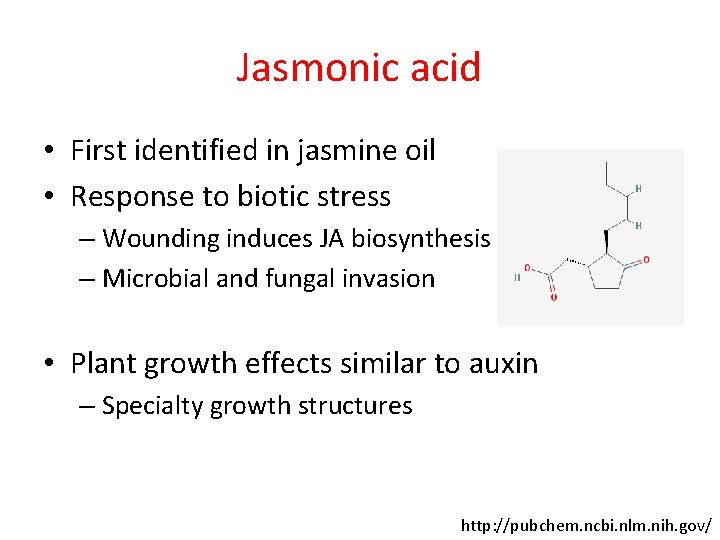
Jasmonic acid • First identified in jasmine oil • Response to biotic stress – Wounding induces JA biosynthesis – Microbial and fungal invasion • Plant growth effects similar to auxin – Specialty growth structures http: //pubchem. ncbi. nlm. nih. gov/
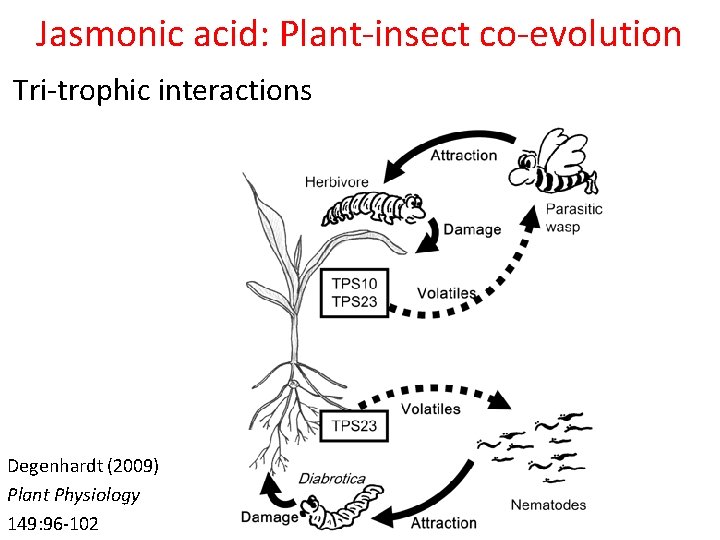
Jasmonic acid: Plant-insect co-evolution Tri-trophic interactions Degenhardt (2009) Plant Physiology 149: 96 -102
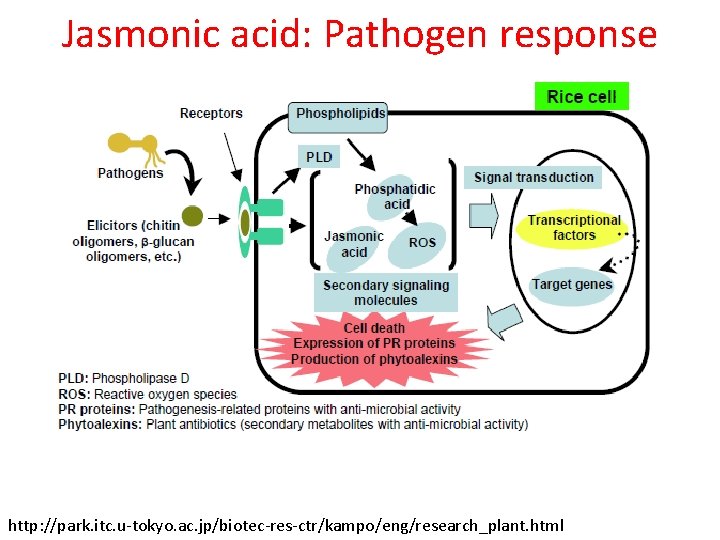
Jasmonic acid: Pathogen response http: //park. itc. u-tokyo. ac. jp/biotec-res-ctr/kampo/eng/research_plant. html
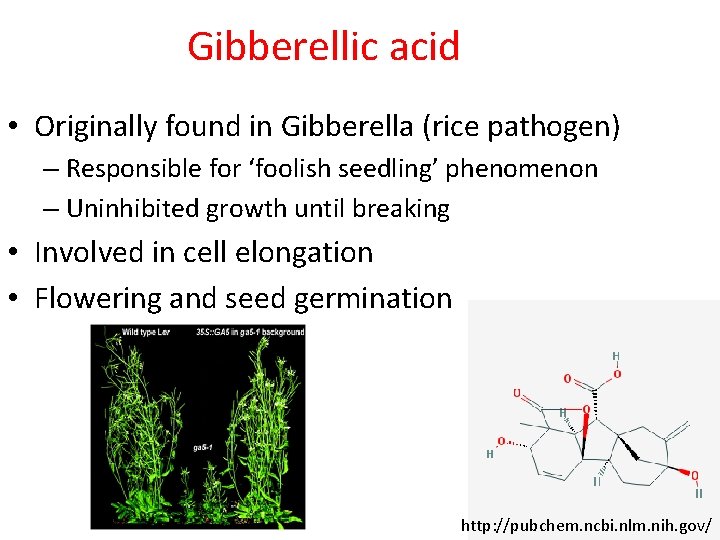
Gibberellic acid • Originally found in Gibberella (rice pathogen) – Responsible for ‘foolish seedling’ phenomenon – Uninhibited growth until breaking • Involved in cell elongation • Flowering and seed germination http: //pubchem. ncbi. nlm. nih. gov/
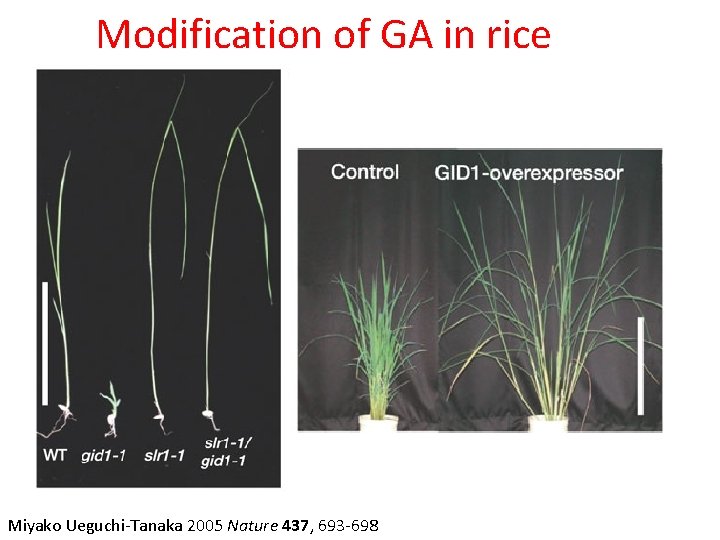
Modification of GA in rice Miyako Ueguchi-Tanaka 2005 Nature 437, 693 -698
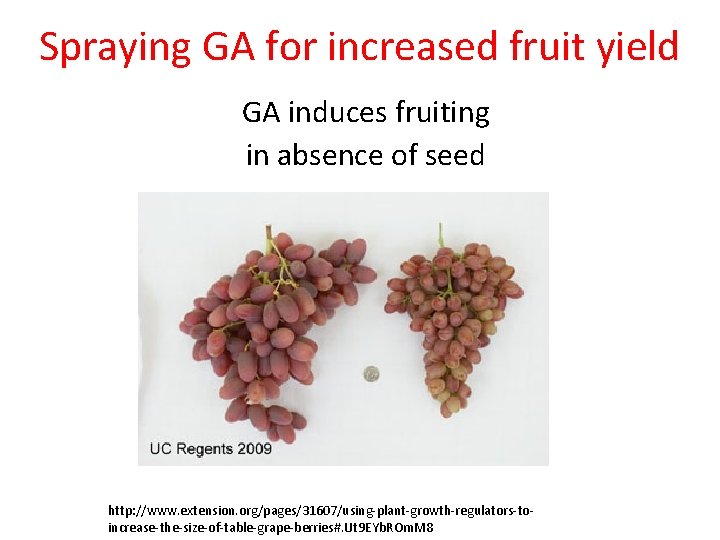
Spraying GA for increased fruit yield GA induces fruiting in absence of seed http: //www. extension. org/pages/31607/using-plant-growth-regulators-toincrease-the-size-of-table-grape-berries#. Ut 9 EYb. ROm. M 8
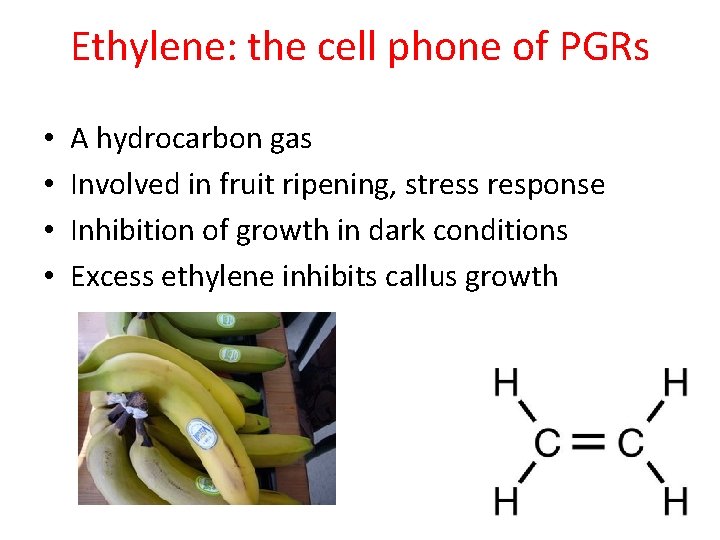
Ethylene: the cell phone of PGRs • • A hydrocarbon gas Involved in fruit ripening, stress response Inhibition of growth in dark conditions Excess ethylene inhibits callus growth
Conversational Plants? • Ethylene production increases during stress – Drought – Heat • Perceived by neighboring plants • Unstressed plants induce stress pathways
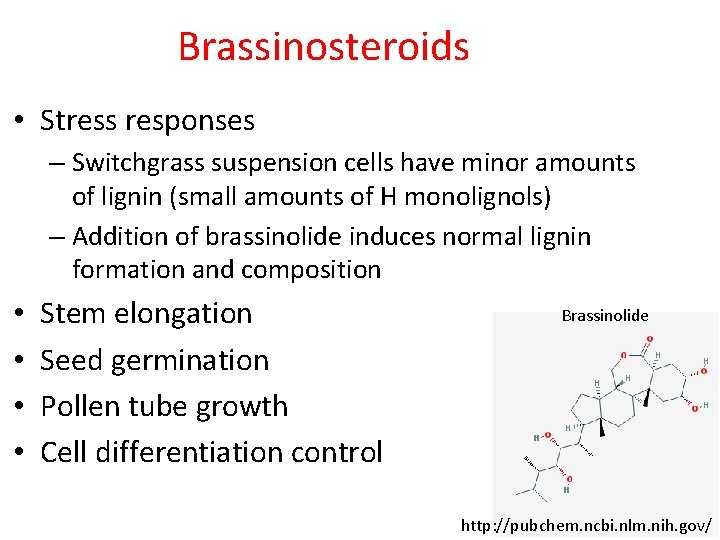
Brassinosteroids • Stress responses – Switchgrass suspension cells have minor amounts of lignin (small amounts of H monolignols) – Addition of brassinolide induces normal lignin formation and composition • • Stem elongation Seed germination Pollen tube growth Cell differentiation control Brassinolide http: //pubchem. ncbi. nlm. nih. gov/
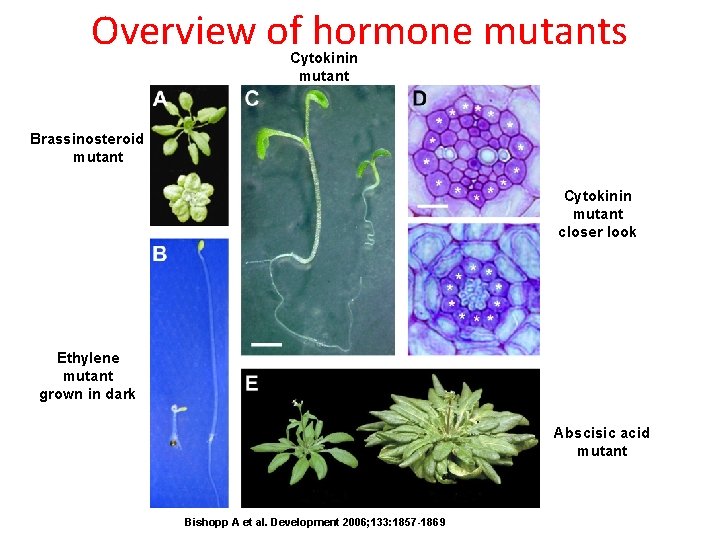
Overview of hormone mutants Cytokinin mutant Brassinosteroid mutant Cytokinin mutant closer look Ethylene mutant grown in dark Abscisic acid mutant Bishopp A et al. Development 2006; 133: 1857 -1869
Hormones (PGR) pathways • PGRs work in complex cascades to produce signals – Synergistic – Anatognistic • Variety of actions in cell – Gene transcription – Protein degradation http: //chriscarterart. wordpress. com/2010/05/09/m others-day-2/mikado-plant-watercolor-sketch-chriscarter-050910/
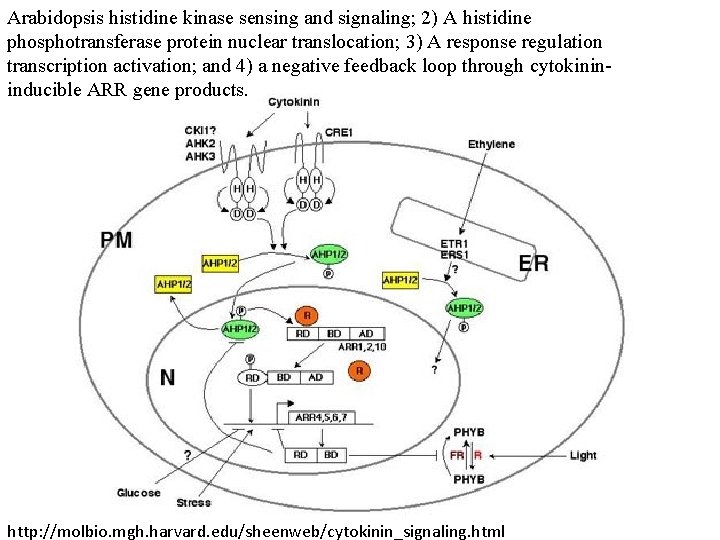
Arabidopsis histidine kinase sensing and signaling; 2) A histidine phosphotransferase protein nuclear translocation; 3) A response regulation transcription activation; and 4) a negative feedback loop through cytokinininducible ARR gene products. http: //molbio. mgh. harvard. edu/sheenweb/cytokinin_signaling. html
Introduction: the importance of manipulation of hormones for tissue culture • Auxins and cytokinins are very important – Higher auxin induces root growth – Equal ratio induces callus and cell enlargement – Lower auxin induces shoot growth • Gibberellic acid germinates difficult seeds • Add brassinosteroids for cell wall induction
Lecture summary • Hormones are biochemicals that regulate plant growth based on biological and environmental cues • Auxin and cytokinin are key for plant growth • Abiotic and biotic stress response is regulated by hormones • Cell signaling is regulated by specific receptors on cell membranes