
Lecture 5 Physical Changes 1 Appearance and Mobility
Lecture 5 Physical Changes 1. Appearance and Mobility – Psychological Implications 2. Sensory Systems – Psychological Implications 3. Nervous System – Psychological Implications 4. Myth Busting: Facts on Aging Revisited
Lecture 5 Physical Changes 1. Appearance and Mobility – Psychological Implications 2. Sensory Systems – Psychological Implications 3. Nervous System – Psychological Implications 4. Myth Busting: Facts on Aging Revisited
Appearance and Mobility Changes skin hair voice body build mobility
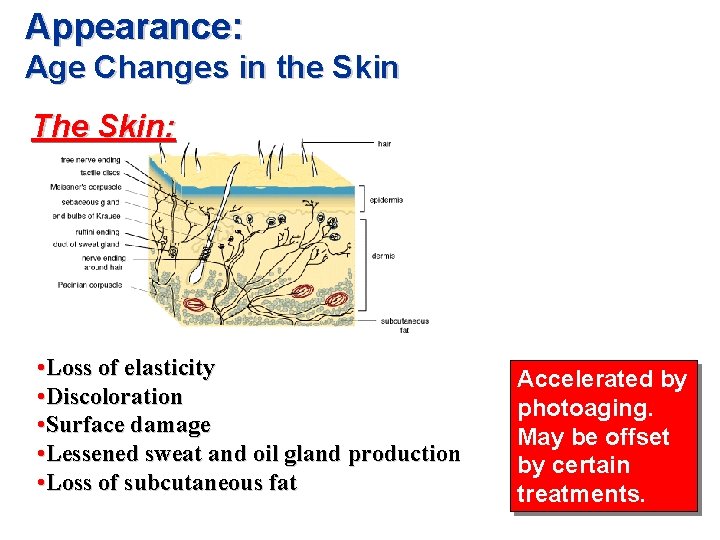
Appearance: Age Changes in the Skin The Skin: • Loss of elasticity • Discoloration • Surface damage • Lessened sweat and oil gland production • Loss of subcutaneous fat Accelerated by photoaging. May be offset by certain treatments.
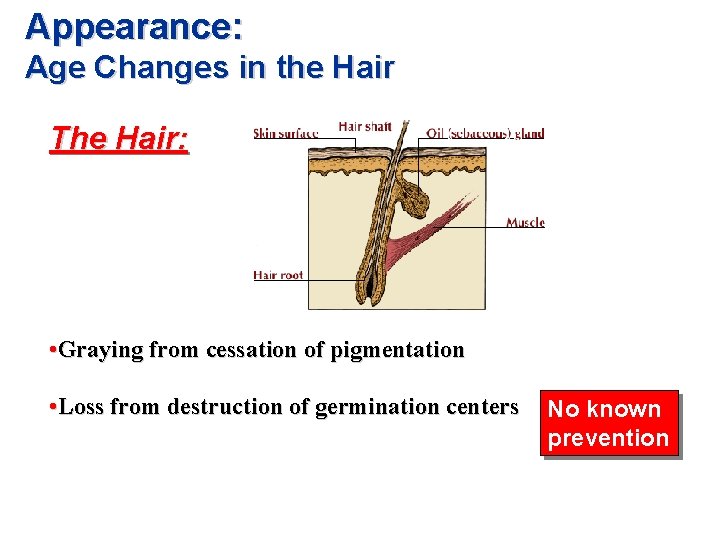
Appearance: Age Changes in the Hair The Hair: • Graying from cessation of pigmentation • Loss from destruction of germination centers No known prevention
Appearance: Age Changes in the Voice The Voice: • Voice is thinner and weaker • lower pitch • increased breathlessness • trembling (vocal jitter) • slower • less pronunciation • decreased volume
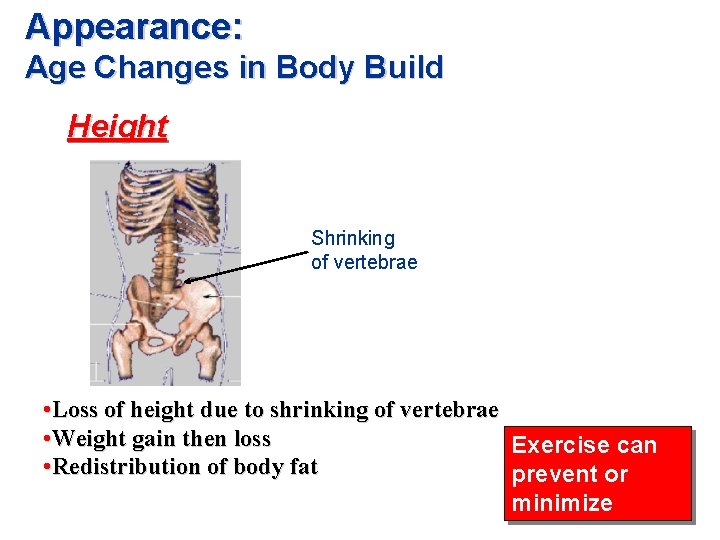
Appearance: Age Changes in Body Build Height Shrinking of vertebrae • Loss of height due to shrinking of vertebrae • Weight gain then loss Exercise can • Redistribution of body fat prevent or minimize
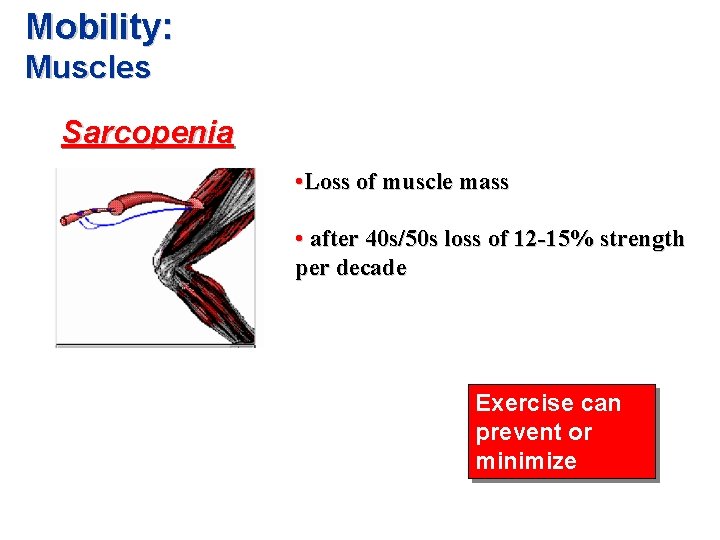
Mobility: Muscles Sarcopenia • Loss of muscle mass • after 40 s/50 s loss of 12 -15% strength per decade Exercise can prevent or minimize
Mobility: Bones Loss of Bone Strength • Due to relative increase in bone destruction compared to growth of tissue • Because of decrease in bone mineral content of 5 -12% per decade from 20 s -90 s Exercise, diet, no smoking can prevent or minimize
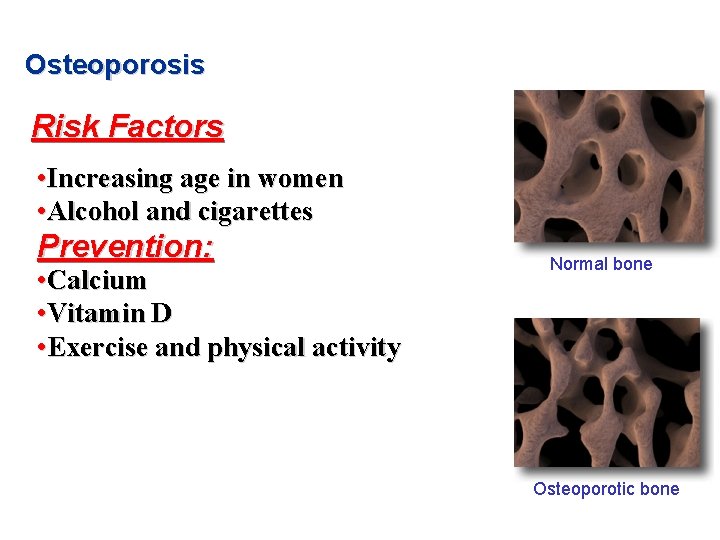
Osteoporosis Risk Factors • Increasing age in women • Alcohol and cigarettes Prevention: • Calcium • Vitamin D • Exercise and physical activity Normal bone Osteoporotic bone
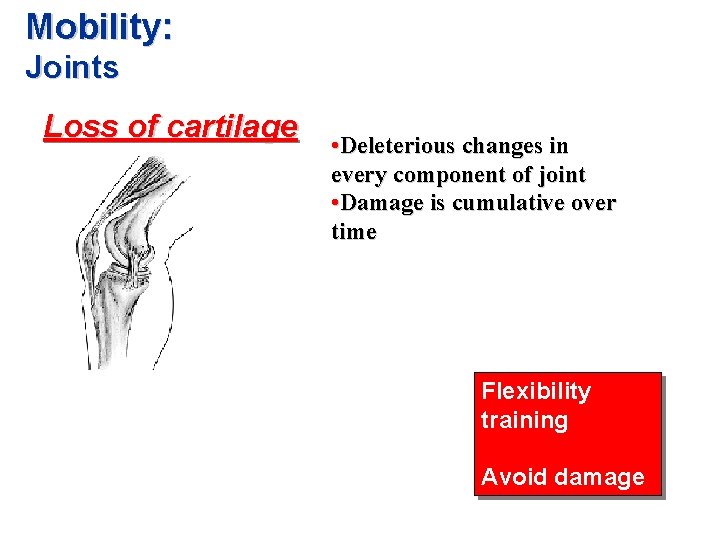
Mobility: Joints Loss of cartilage • Deleterious changes in every component of joint • Damage is cumulative over time Flexibility training Avoid damage
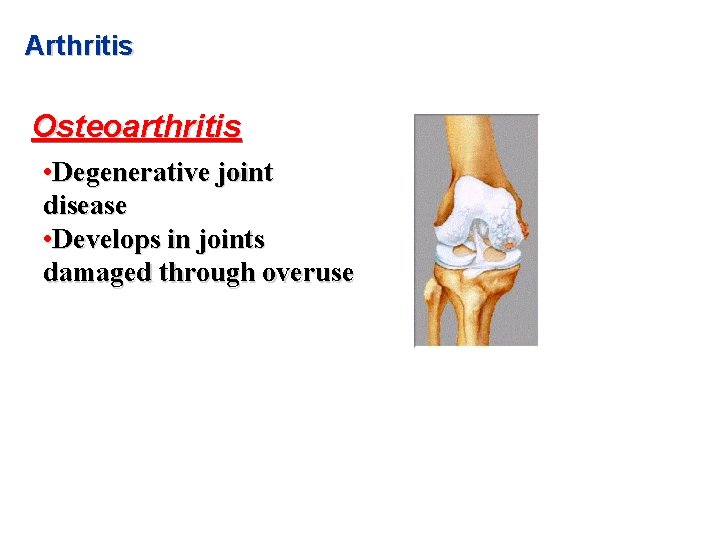
Arthritis Osteoarthritis • Degenerative joint disease • Develops in joints damaged through overuse
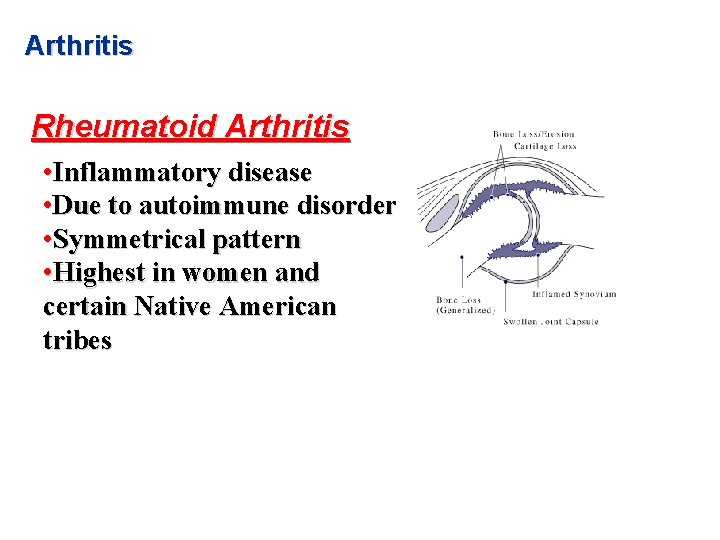
Arthritis Rheumatoid Arthritis • Inflammatory disease • Due to autoimmune disorder • Symmetrical pattern • Highest in women and certain Native American tribes
Psychological Implications Looking and bodily “feeling” old Identity (self concept) Identity (viewed by others-ageism) Independence (daily living) Prompt: Age-related control behaviors (+/-) Prompt: Ergonomic design issues
Lecture 5 Physical Changes 1. Appearance and Mobility – Psychological Implications 2. Sensory Systems – Psychological Implications 3. Nervous System – Psychological Implications 4. Myth Busting: Facts on Aging Revisited
Sensory Systems Changes in vision hearing somesthesia balance taste and smell
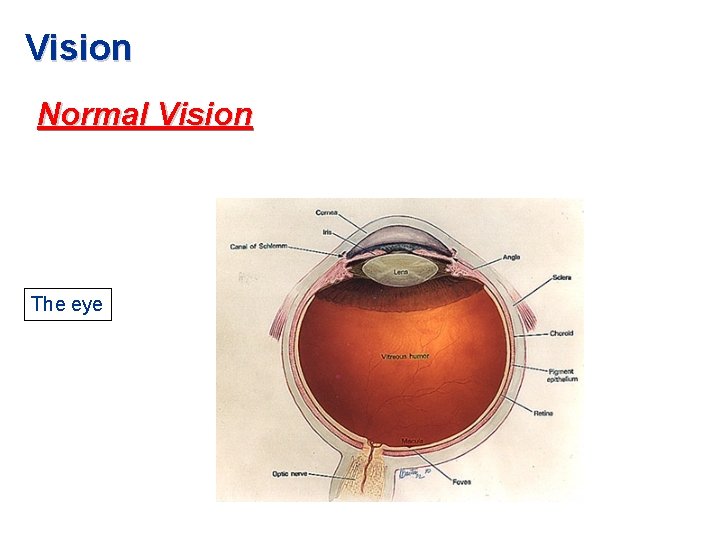
Vision Normal Vision The eye
Vision Changes • Due to structural changes – older need more light – increased sensitivity to glare – dark and light adaptation takes longer – poorer colour discrimination for short wave lengths – focussing near-far and far-near takes longer » presbyopia
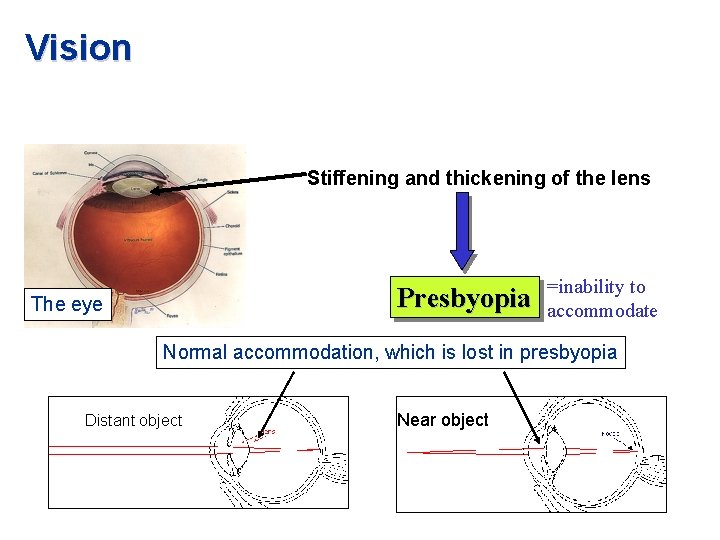
Vision Stiffening and thickening of the lens Presbyopia The eye =inability to accommodate Normal accommodation, which is lost in presbyopia Distant object Near object
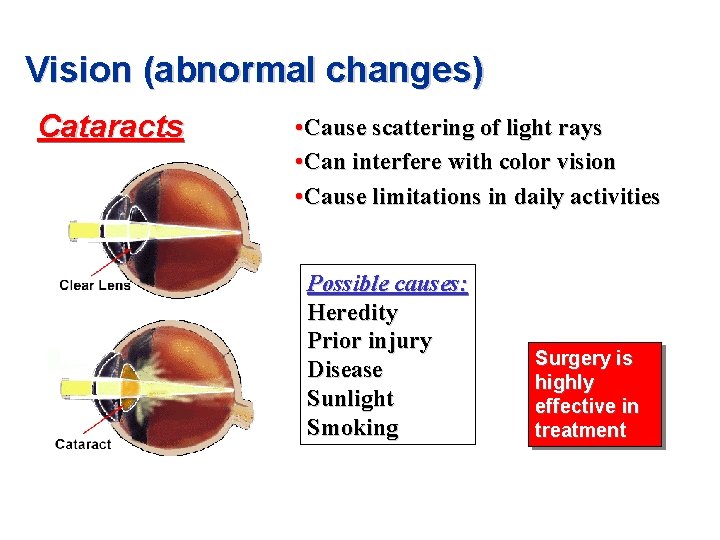
Vision (abnormal changes) Cataracts • Cause scattering of light rays • Can interfere with color vision • Cause limitations in daily activities Possible causes: Heredity Prior injury Disease Sunlight Smoking Surgery is highly effective in treatment
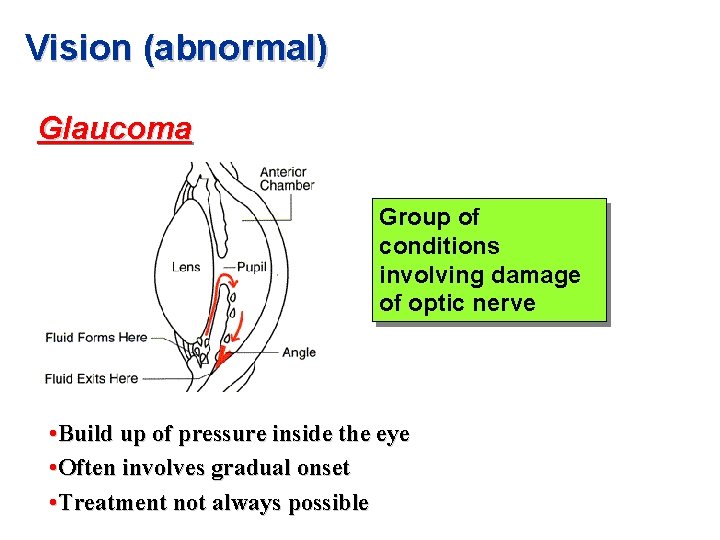
Vision (abnormal) Glaucoma Group of conditions involving damage of optic nerve • Build up of pressure inside the eye • Often involves gradual onset • Treatment not always possible
Vision Changes • Due to changes in the retina – decrease in visual acuity (in combination with structural changes) – increased chance of macular degeneration (abnormal) – diabetic retinopathy (abnormal)
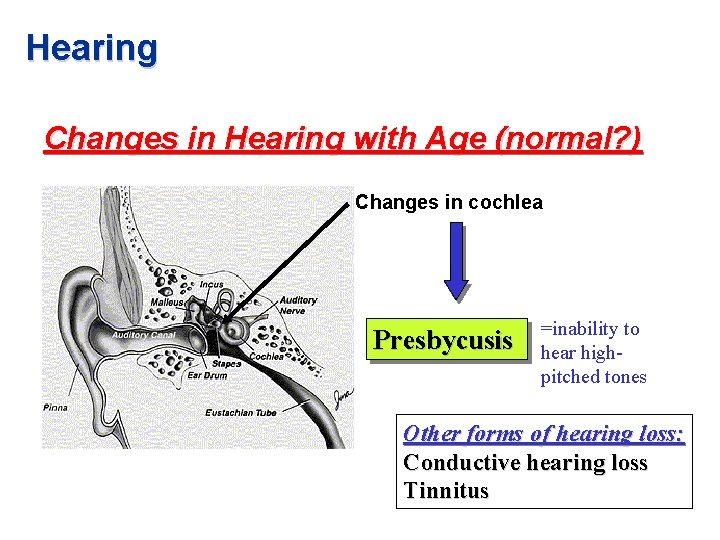
Hearing Changes in Hearing with Age (normal? ) Changes in cochlea Presbycusis =inability to hear highpitched tones Other forms of hearing loss: Conductive hearing loss Tinnitus
Impact for Speech Understanding • Some speech sounds will be harder to distinguish • Some populations will be harder to understand
Somesthesia Age changes Touch: declines in ability to discriminate touch Pain: inconclusive findings Positioning: declines in perception of position of the feet and legs
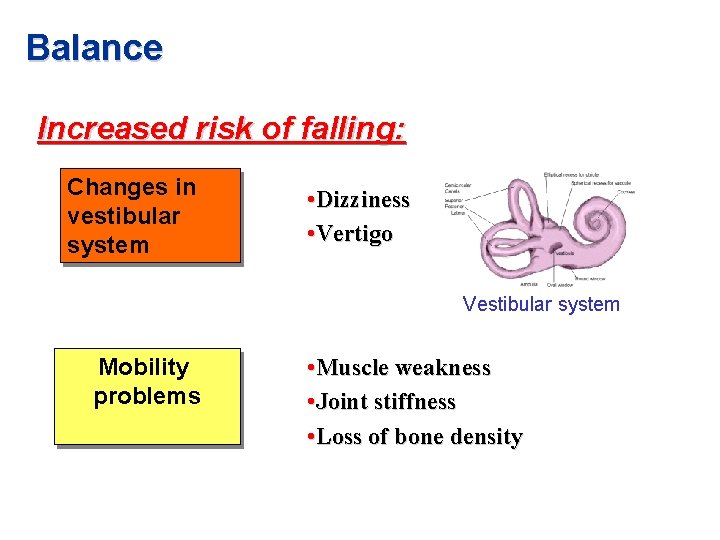
Balance Increased risk of falling: Changes in vestibular system • Dizziness • Vertigo Vestibular system Mobility problems • Muscle weakness • Joint stiffness • Loss of bone density
Smell and Taste Losses in smell and taste sensitivity But could be due to • Disease and infections • Exposure to harmful chemicals • Tobacco smoke • Head injury • Dentures
Psychological Implications Changes in Sensation and Perception Identity (self concept) Identity (viewed by others-ageism) Independence (daily living) Prompt: Age-related control behaviors (+/-) Prompt: Ergonomic design issues
Lecture 5 Physical Changes 1. Appearance and Mobility – Psychological Implications 2. Sensory Systems – Psychological Implications 3. Nervous System – Psychological Implications 4. Myth Busting: Facts on Aging Revisited
Nervous System 1. Central Nervous System neuronal change 2. Autonomic Nervous System sleep regulation of body temperature
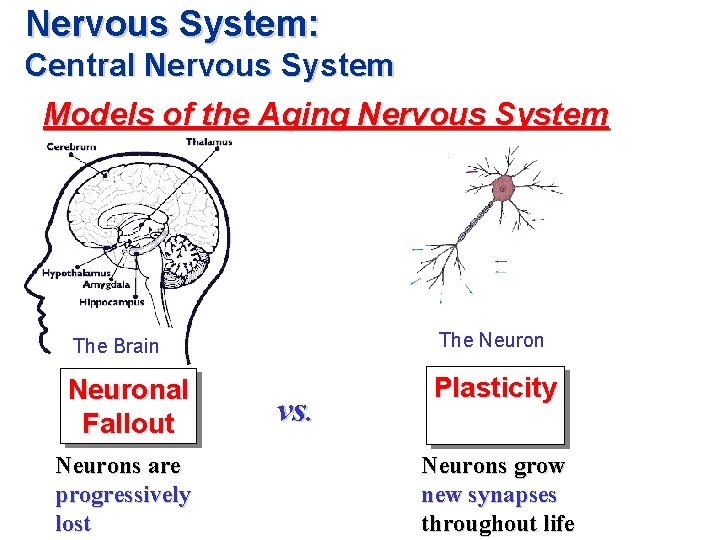
Nervous System: Central Nervous System Models of the Aging Nervous System The Brain The Neuronal Fallout Plasticity Neurons are progressively lost vs. Neurons grow new synapses throughout life
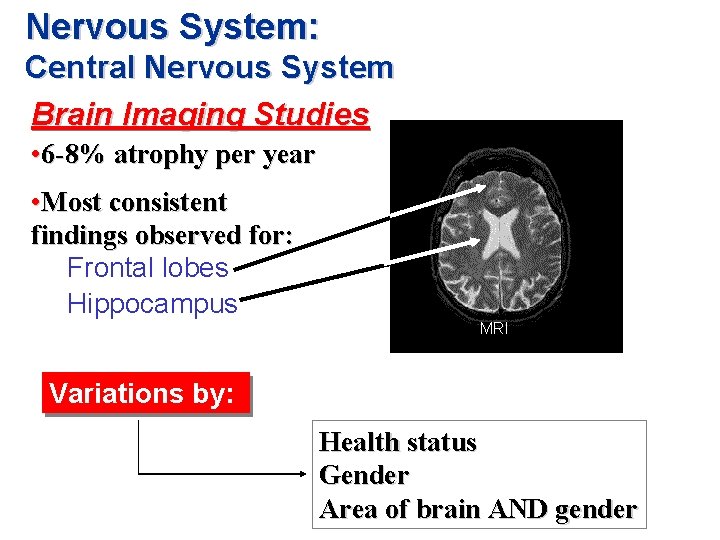
Nervous System: Central Nervous System Brain Imaging Studies • 6 -8% atrophy per year • Most consistent findings observed for: Frontal lobes Hippocampus MRI Variations by: Health status Gender Area of brain AND gender
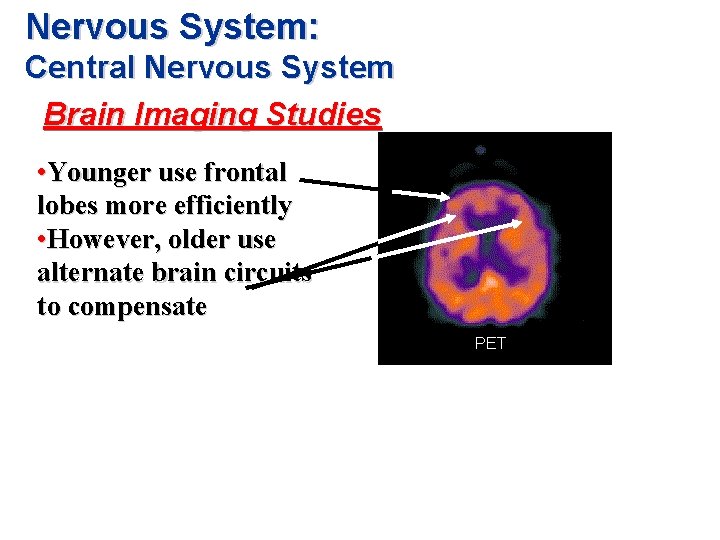
Nervous System: Central Nervous System Brain Imaging Studies • Younger use frontal lobes more efficiently • However, older use alternate brain circuits to compensate MRI PET
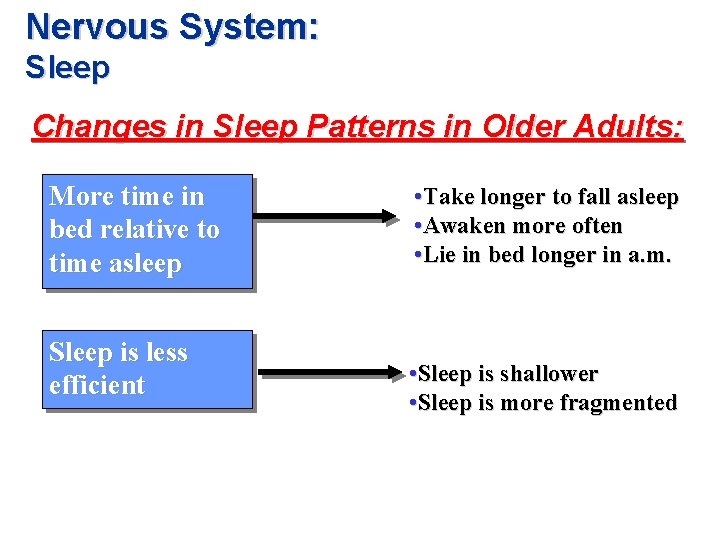
Nervous System: Sleep Changes in Sleep Patterns in Older Adults: More time in bed relative to time asleep Sleep is less efficient • Take longer to fall asleep • Awaken more often • Lie in bed longer in a. m. • Sleep is shallower • Sleep is more fragmented
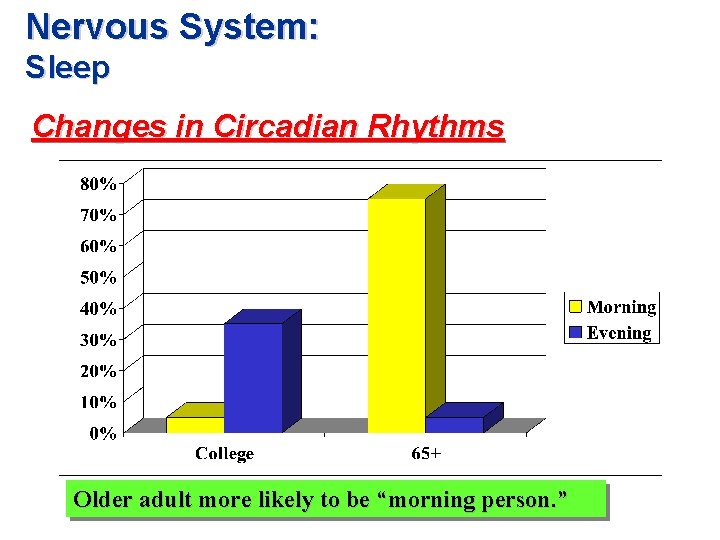
Nervous System: Sleep Changes in Circadian Rhythms Older adult more likely to be “morning person. ”
Nervous System: Temperature Control Dysthermia Abnormalities in bodily reaction to extreme heat and cold Related to age OR. . . ? ? • Body fat • Gender • Physical fitness • Chronic medical conditions • Medications
Psychological Implications Changes in sleep and temperature control Prompt: Age-related control behaviors (+/-) Prompt: Ergonomic design issues
Lecture 5 Physical Changes 1. Appearance and Mobility – Psychological Implications 2. Sensory Systems – Psychological Implications 3. Nervous System – Psychological Implications 4. Myth Busting: Facts on Aging Revisited
Myth Busting: Facts on Aging Revisited • #2 The five senses (sight, hearing, taste, touch, and smell) all tend to weaken in old age. – TRUE
Myth Busting: Facts on Aging Revisited • #4 Lung vital capacity tends to decline in old age. – TRUE
Myth Busting: Facts on Aging Revisited • #6 Physical strength tends to decline in old age. – TRUE
Myth Busting: Facts on Aging Revisited • #10 Over three fourths of the aged are healthy enough to do their normal activities without help. – TRUE
- Slides: 42