
Lecture 5 Measuring the Milky Way Astronomy 5
- Slides: 24
Lecture 5: Measuring the Milky Way Astronomy 5: The Formation and Evolution of the Universe Sandra M. Faber Spring Quarter 2007 UC Santa Cruz
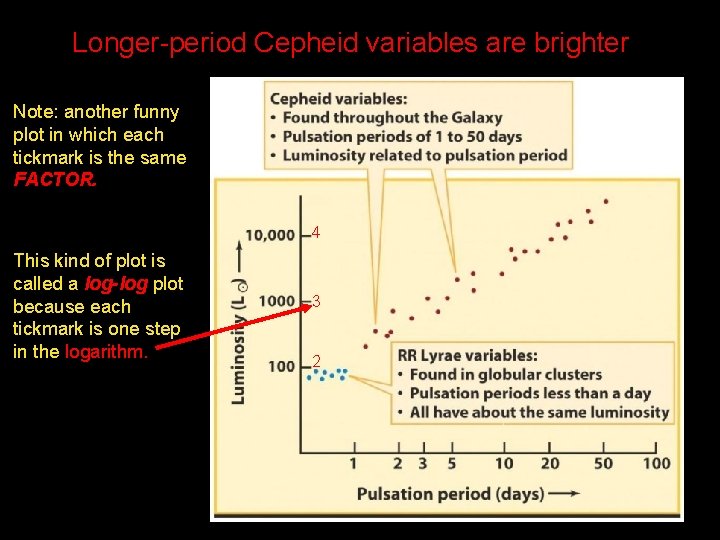
Longer-period Cepheid variables are brighter Note: another funny plot in which each tickmark is the same FACTOR. 4 This kind of plot is called a log-log plot because each tickmark is one step in the logarithm. 3 2
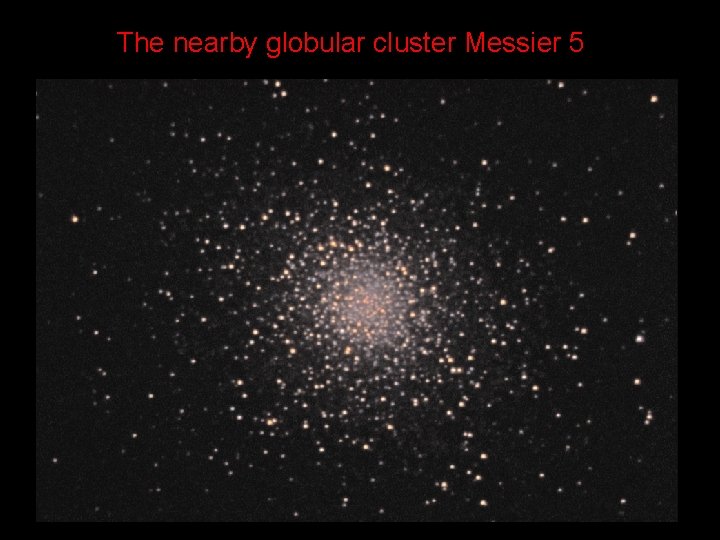
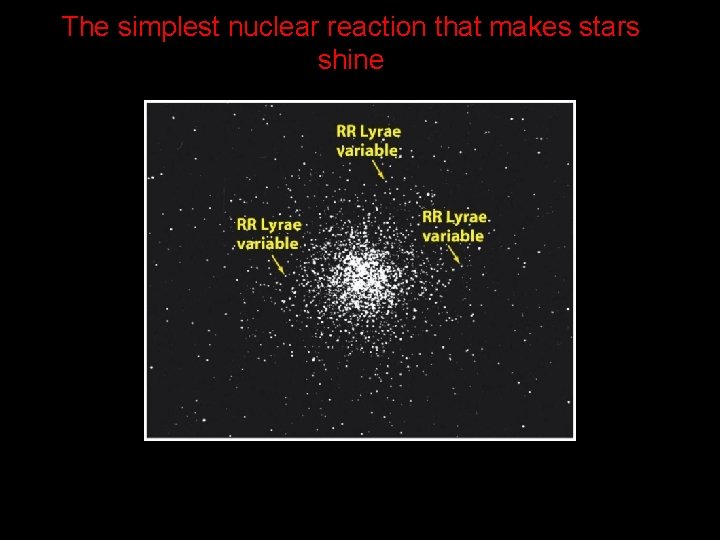
The nearby globular cluster Messier 5
Circling around a globular cluster
Globular clusters are spherical because their orbits are scrambled
The simplest nuclear reaction that makes stars shine
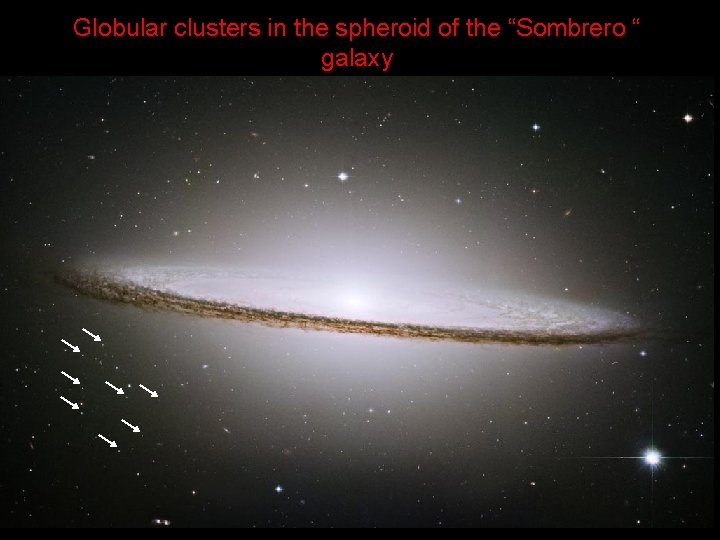
Globular clusters in the spheroid of the “Sombrero “ galaxy
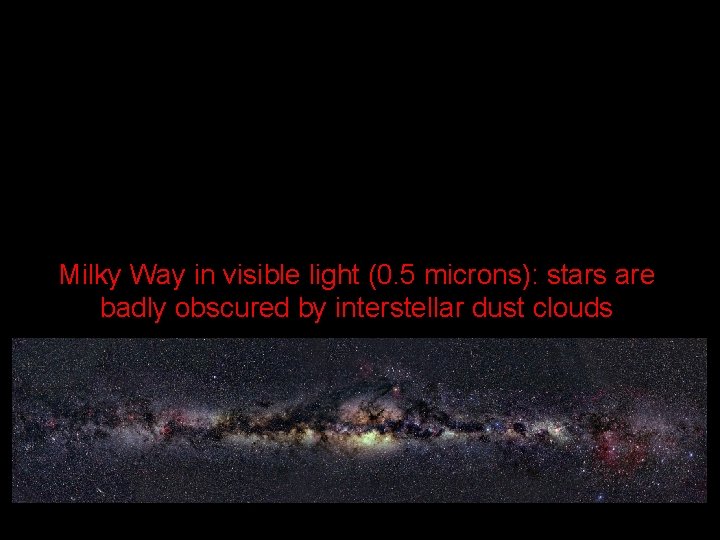
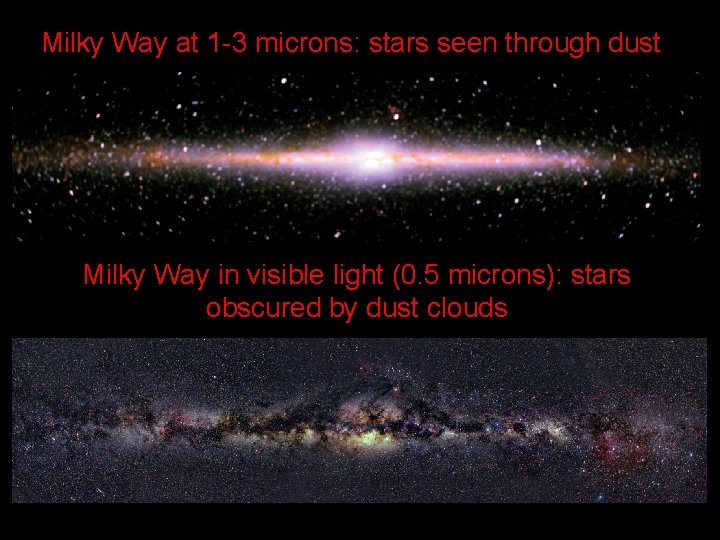
Milky Way in visible light (0. 5 microns): stars are badly obscured by interstellar dust clouds
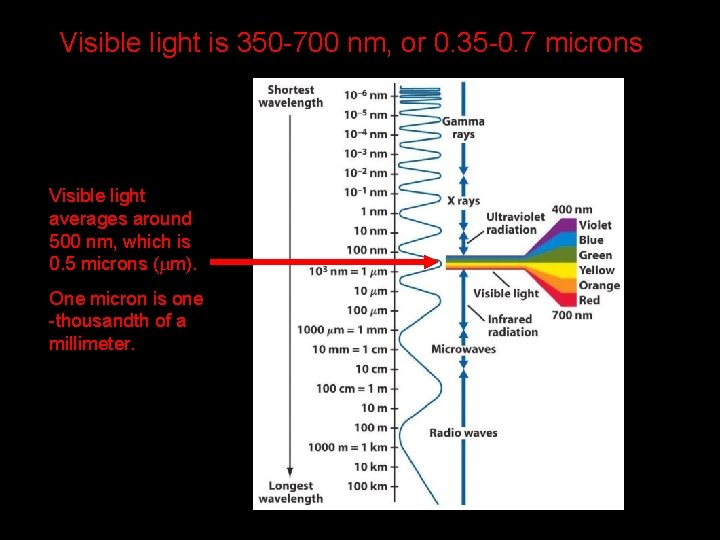
Visible light is 350 -700 nm, or 0. 35 -0. 7 microns Visible light averages around 500 nm, which is 0. 5 microns ( m). One micron is one -thousandth of a millimeter.
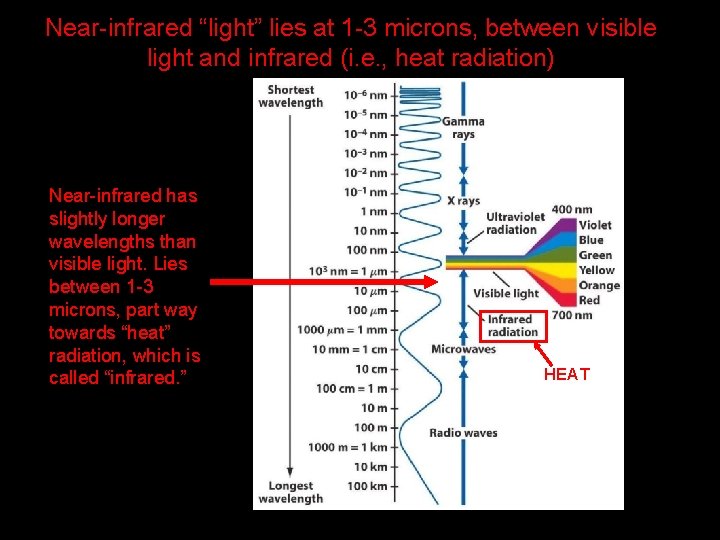
Near-infrared “light” lies at 1 -3 microns, between visible light and infrared (i. e. , heat radiation) Near-infrared has slightly longer wavelengths than visible light. Lies between 1 -3 microns, part way towards “heat” radiation, which is called “infrared. ” HEAT
Milky Way at 1 -3 microns: stars seen through dust Milky Way in visible light (0. 5 microns): stars obscured by dust clouds
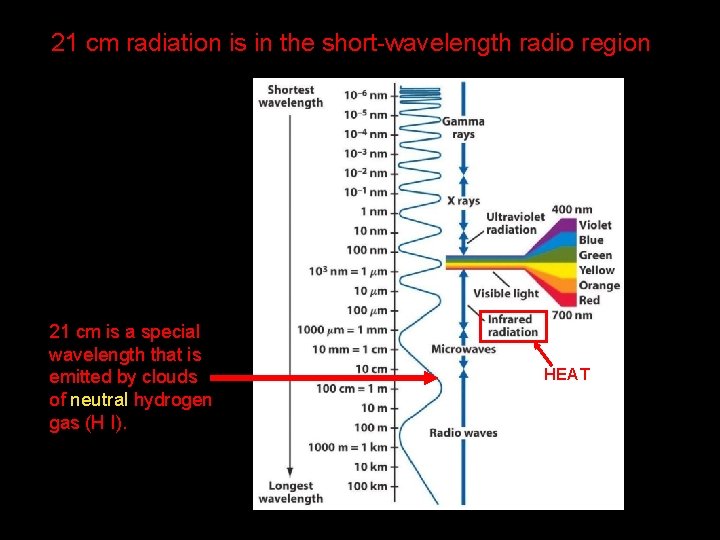
21 cm radiation is in the short-wavelength radio region 21 cm is a special wavelength that is emitted by clouds of neutral hydrogen gas (H I). HEAT
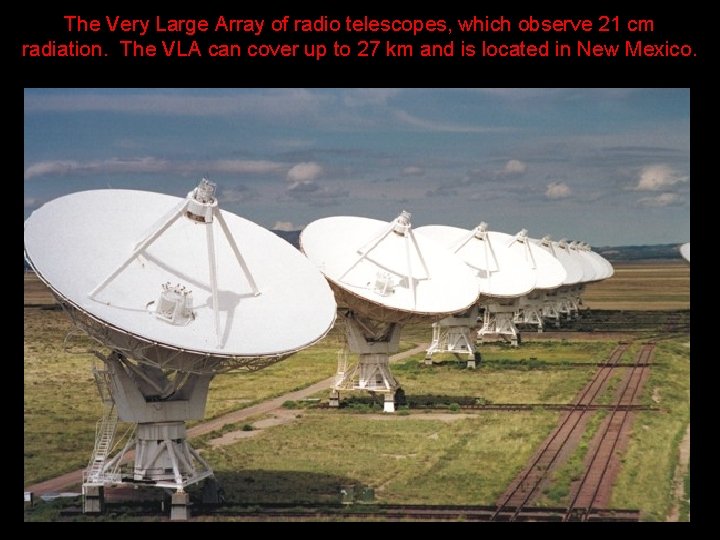
The Very Large Array of radio telescopes, which observe 21 cm radiation. The VLA can cover up to 27 km and is located in New Mexico.
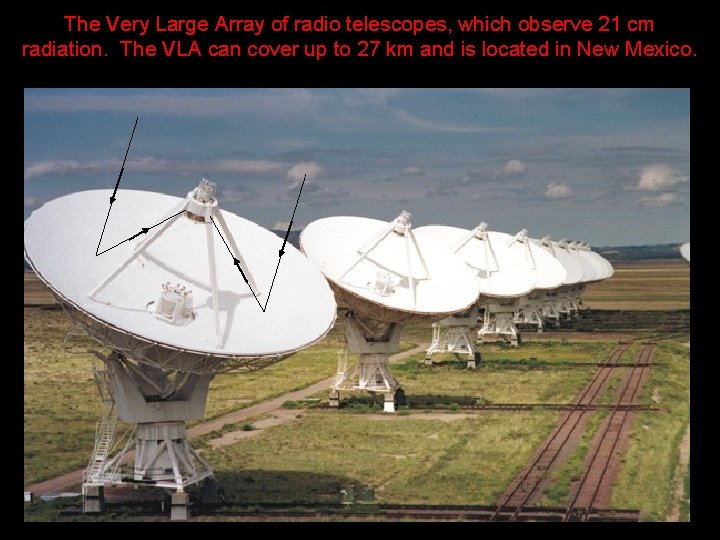
The Very Large Array of radio telescopes, which observe 21 cm radiation. The VLA can cover up to 27 km and is located in New Mexico.
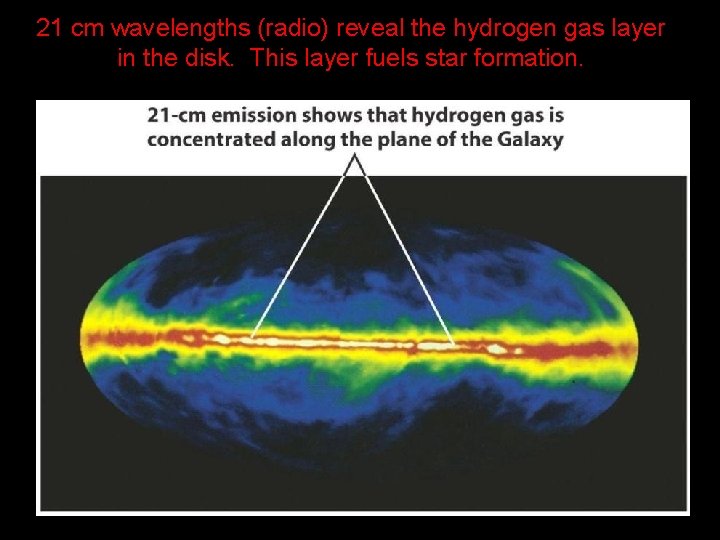
21 cm wavelengths (radio) reveal the hydrogen gas layer in the disk. This layer fuels star formation.
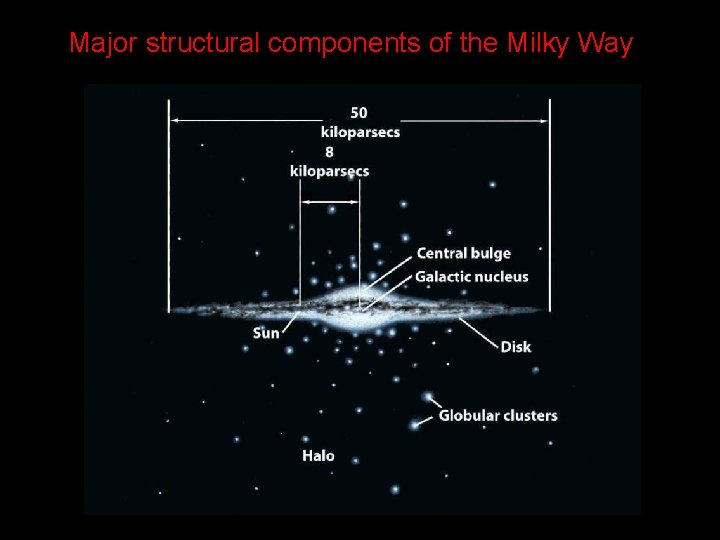
Major structural components of the Milky Way
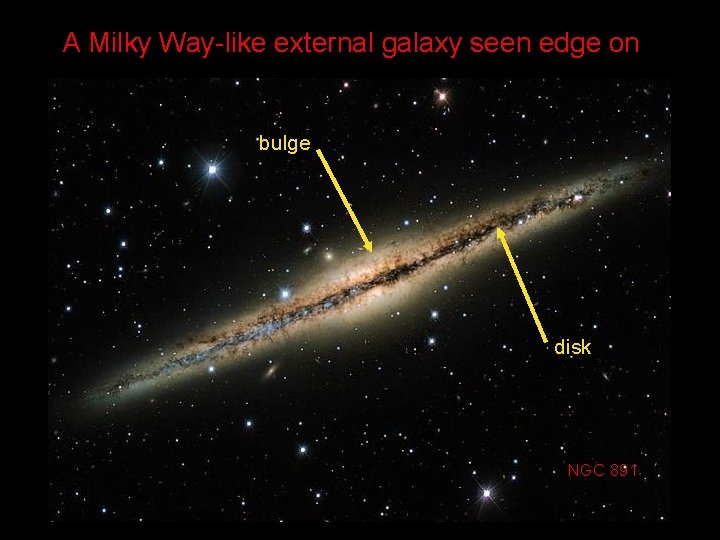
A Milky Way-like external galaxy seen edge on bulge disk NGC 891
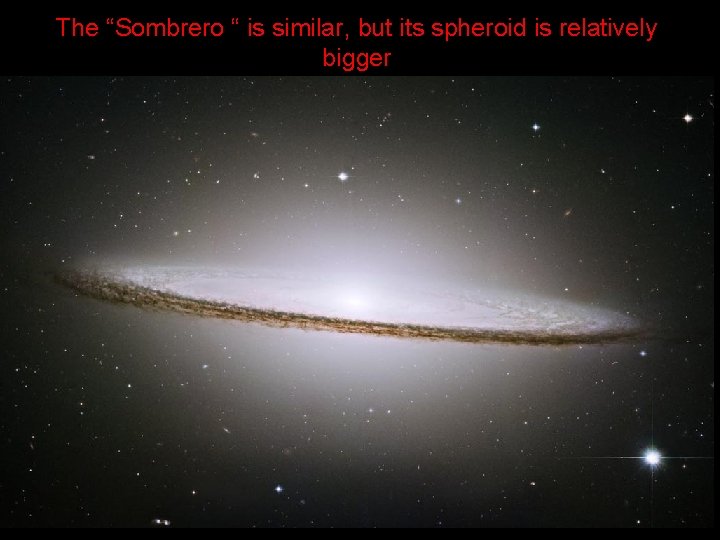
The “Sombrero “ is similar, but its spheroid is relatively bigger
The orbits of spheroid stars in the Milky Way are scrambled like those in a globular cluster Spheroidal systems have scrambled orbits. Disk systems have orderly orbits marching in circles.
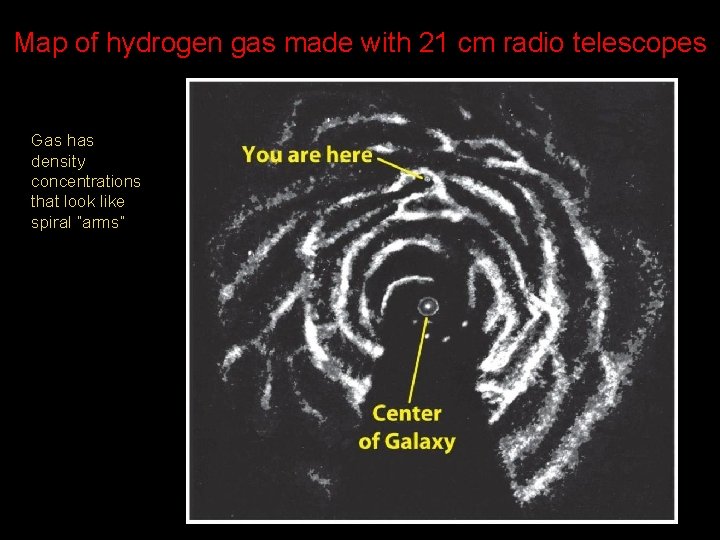
Map of hydrogen gas made with 21 cm radio telescopes Gas has density concentrations that look like spiral “arms”
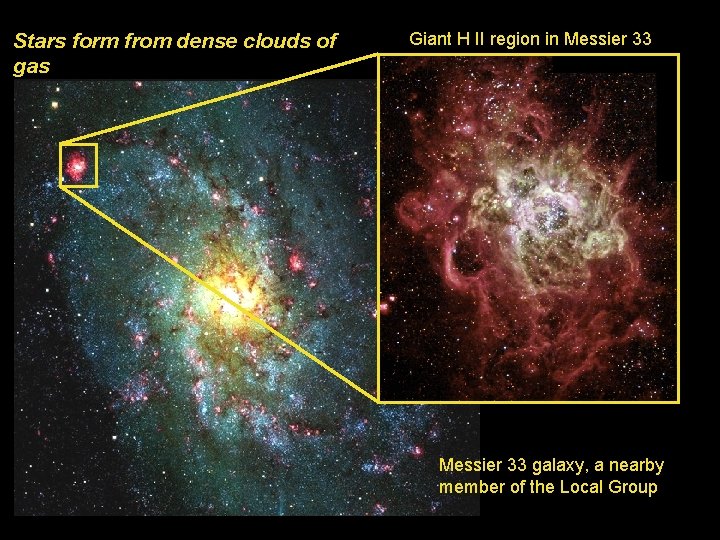
Stars form from dense clouds of gas Giant H II region in Messier 33 galaxy, a nearby member of the Local Group
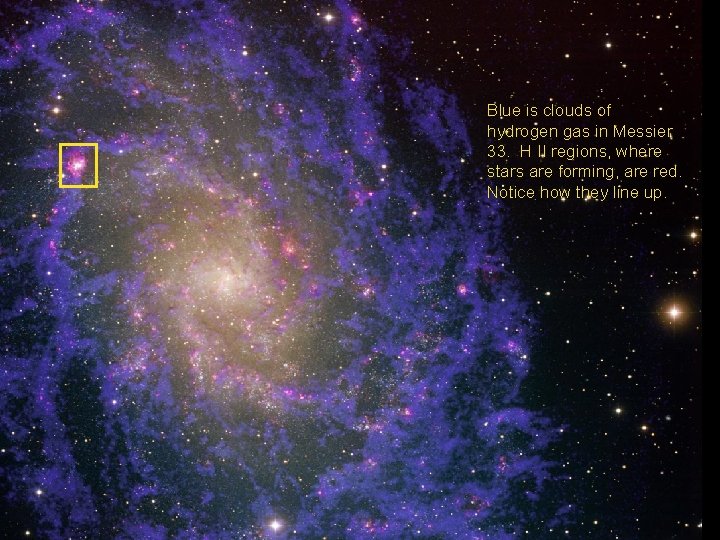
The simplest nuclear reaction that makes stars shine Blue is clouds of hydrogen gas in Messier 33. H II regions, where stars are forming, are red. Notice how they line up.
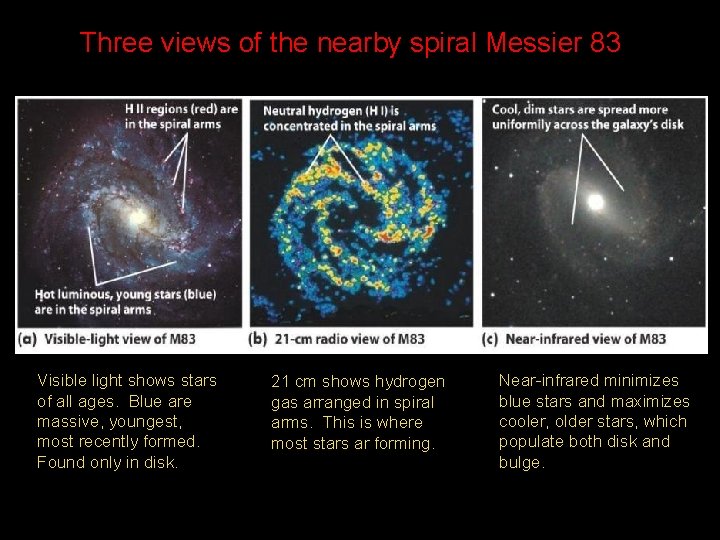
Three views of the nearby spiral Messier 83 Visible light shows stars of all ages. Blue are massive, youngest, most recently formed. Found only in disk. 21 cm shows hydrogen gas arranged in spiral arms. This is where most stars ar forming. Near-infrared minimizes blue stars and maximizes cooler, older stars, which populate both disk and bulge.
Schematic explanation of long-lived spiral arms The naturally circular disk orbits are deformed by the gravity of the spiral arms in to ellipses. Successively larger ellipses are rotated slightly with respect to smaller ones. Even though the stars (hardly) change speed as they rotate around the center, their orbits converge where the ellipses nearly touch. This spiral pattern is what is needed to deform the ellipses in the first place, and so the pattern is self-sustaining.