
LECTURE 5 MARKETING CONSIDERATIONS n Marketing Arrangements n
- Slides: 51
LECTURE #5 MARKETING CONSIDERATIONS n Marketing Arrangements n Target Marketing n The Marketing Mix n Public Relations Activities 1
MARKETING ARRANGEMENTS n Marketing is the social and managerial process by which individuals and groups obtain what they need and want through creating and exchanging products and value for others. 2
MARKETING ARRANGEMENTS n Market n The set of actual and potential buyers of a product. 3
MARKETING ARRANGEMENTS n Marketing begins with identification of customer needs & ends with satisfaction of those needs 4
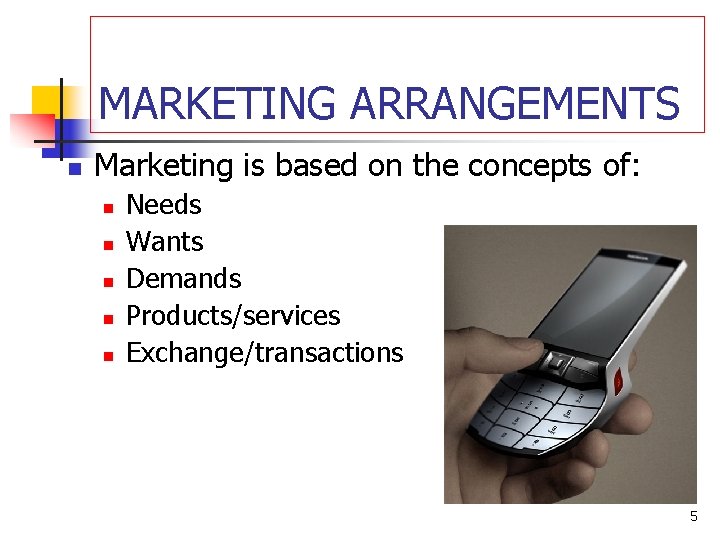
MARKETING ARRANGEMENTS n Marketing is based on the concepts of: n n n Needs Wants Demands Products/services Exchange/transactions 5
MARKETING ARRANGEMENTS n A need – a state of felt deprivation n Basic needs – 3 types n n n Physical – food, clothing, warmth & safety Social – belonging & affection Individual – for knowledge & self-expression 6
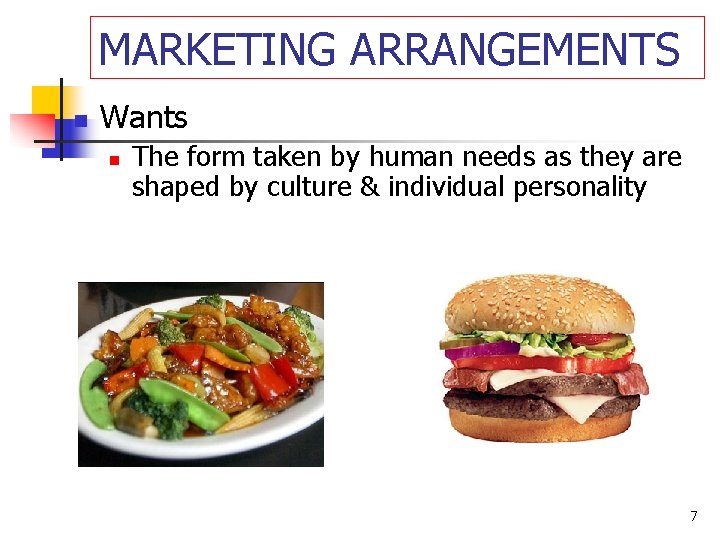
MARKETING ARRANGEMENTS n Wants n The form taken by human needs as they are shaped by culture & individual personality 7
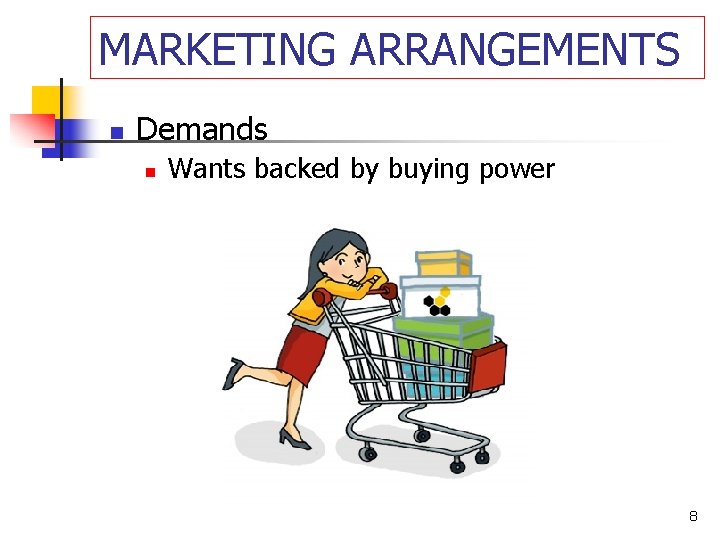
MARKETING ARRANGEMENTS n Demands n Wants backed by buying power 8
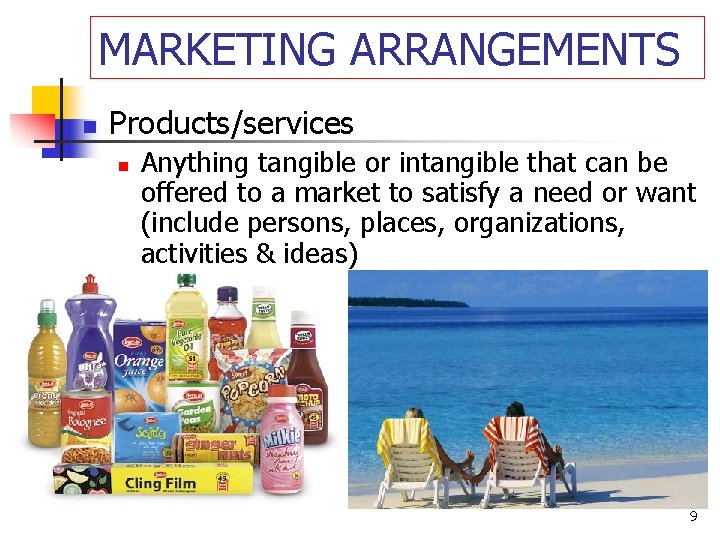
MARKETING ARRANGEMENTS n Products/services n Anything tangible or intangible that can be offered to a market to satisfy a need or want (include persons, places, organizations, activities & ideas) 9
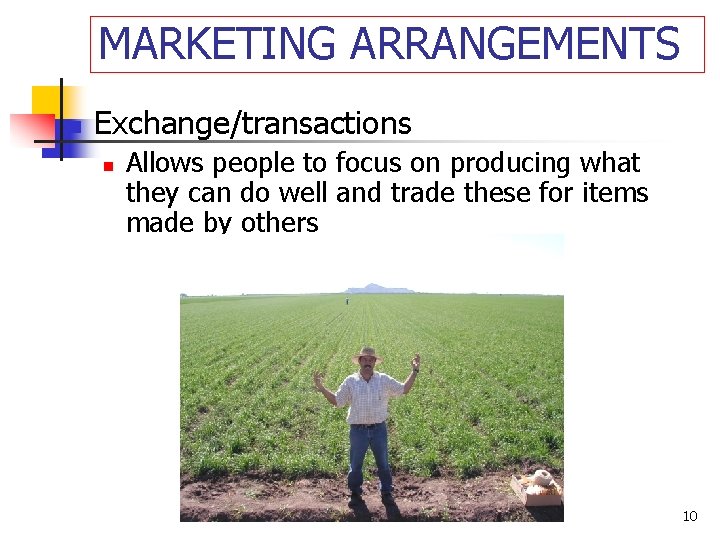
MARKETING ARRANGEMENTS n Exchange/transactions n Allows people to focus on producing what they can do well and trade these for items made by others 10
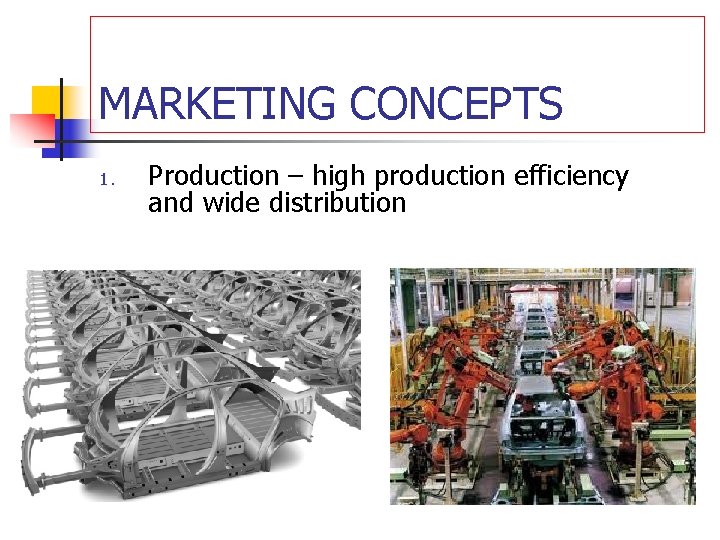
MARKETING CONCEPTS 1. Production – high production efficiency and wide distribution
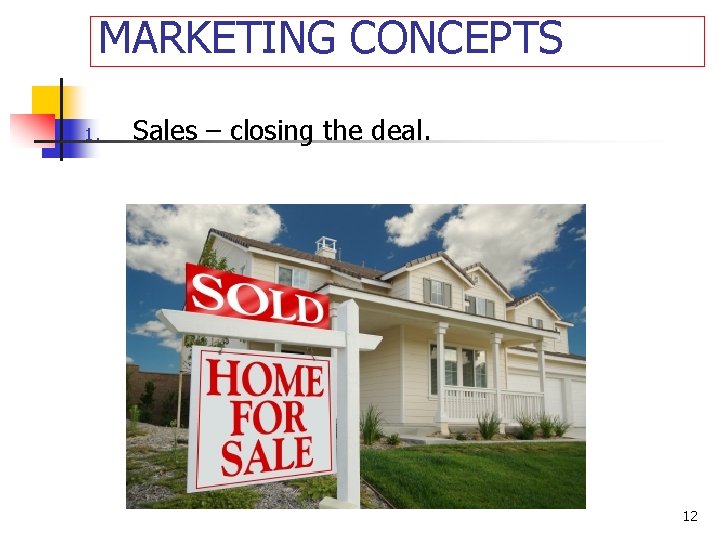
MARKETING CONCEPTS 1. Sales – closing the deal. 12
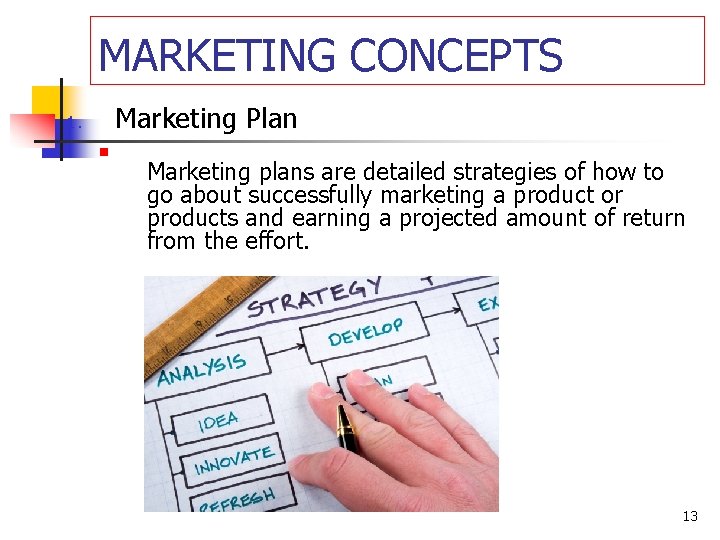
MARKETING CONCEPTS Marketing Plan 1. n Marketing plans are detailed strategies of how to go about successfully marketing a product or products and earning a projected amount of return from the effort. 13
MARKETING CONCEPTS Marketing Plan 1. n The marketing plan may focus on strategies related to the upcoming twelve-month period, the next calendar year, or include a span of three to five years into the future. 14
MARKETING CONCEPTS Marketing Plan 1. n A comprehensive marketing plan will consider such important elements as distribution costs, production costs, advertising expenses and any expense related to identifying and marketing the products to the consumers in the targeted markets. 15
MARKETING CONCEPTS Marketing Activities 1. n Activities which marketers perform to achieve the organization’s objectives. Those activities include the implementation of specific strategies and tactics aimed at managing the various components of the marketing mix. 16
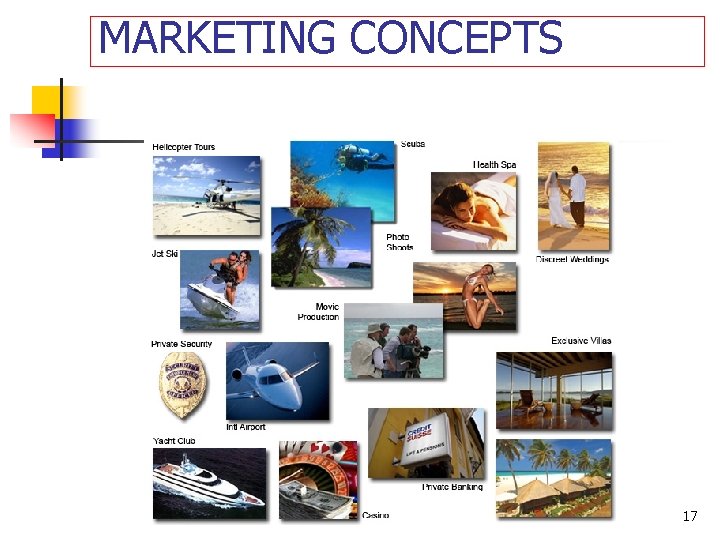
MARKETING CONCEPTS 17
MARKETING CONCEPTS Marketing Activities that may be selected include but are not limited to the following: 1. n n n Conventional Advertising on TV, Radio, newspaper, magazines, Online banner bars & buttons (provide finishing touches to websites enabling strong visual appeal) Print & online newsletters, press releases Trade show exhibits, seminars, special events, charitable activities, Letterheads, business cards, Formation of strategic alliances 18
MARKETING 1. 2. Marketing Overall Objective To be more effective than competitors in integrating marketing activities towards determining and satisfying the needs and wants of target 19
MARKETING CONCEPTS 5. Societal Marketing – the thrust towards determining needs, wants, and interests of target markets, and to deliver the desired satisfaction more effectively and efficiently than competitors in a way that preserves or enhances the consumers’ and the society’s long term interest or well being. 20
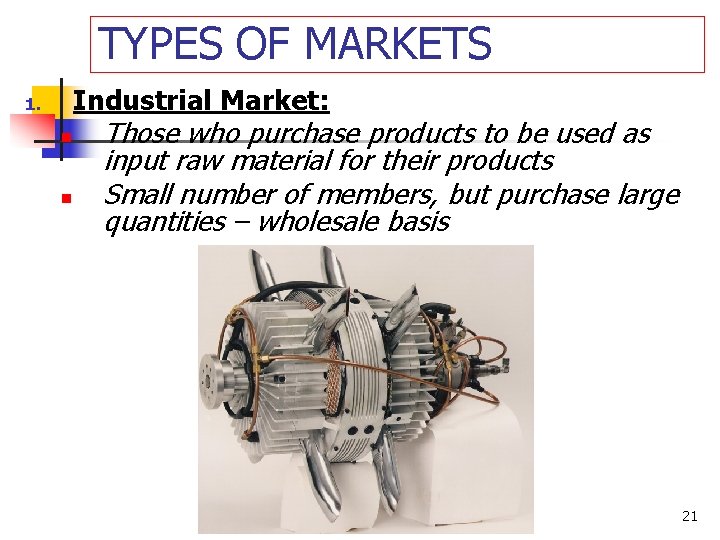
TYPES OF MARKETS Industrial Market: 1. n n Those who purchase products to be used as input raw material for their products Small number of members, but purchase large quantities – wholesale basis 21
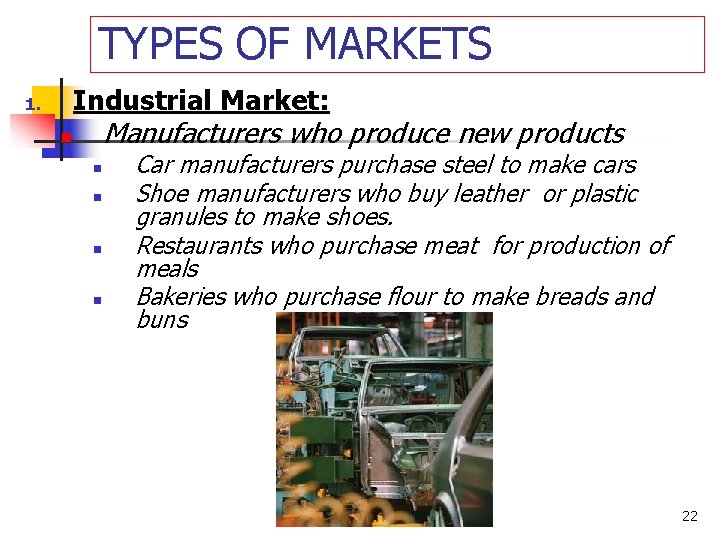
TYPES OF MARKETS Industrial Market: 1. Manufacturers who produce new products n n n Car manufacturers purchase steel to make cars Shoe manufacturers who buy leather or plastic granules to make shoes. Restaurants who purchase meat for production of meals Bakeries who purchase flour to make breads and buns 22
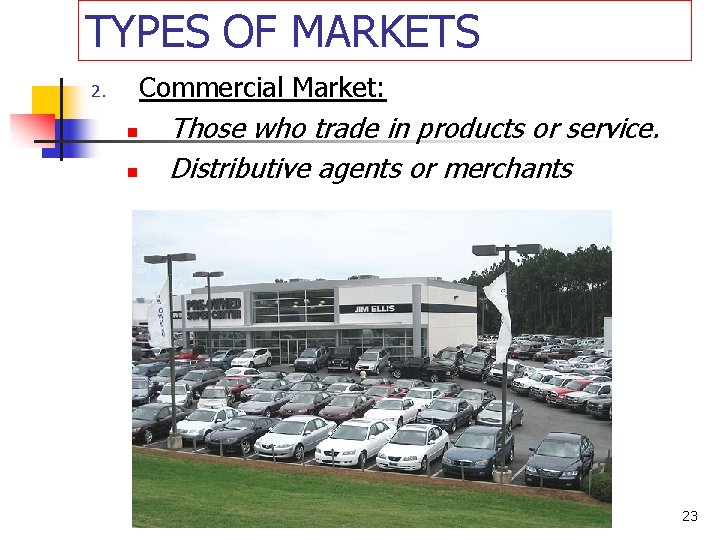
TYPES OF MARKETS Commercial Market: 2. n n Those who trade in products or service. Distributive agents or merchants 23
TYPES OF MARKETS Commercial Market: 2. Usually more commercial market members than in the industrial market. n n Could include traders, wholesalers , dealers & distributors 24
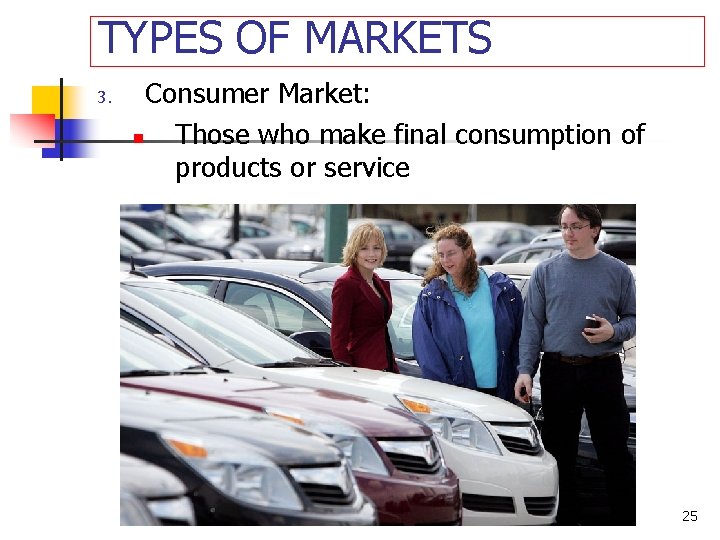
TYPES OF MARKETS 3. Consumer Market: n Those who make final consumption of products or service 25
TYPES OF MARKETS 3. Consumer Market: n Usually the largest market n Smaller quantities purchased than in the 1 st two markets n The retail trade 26
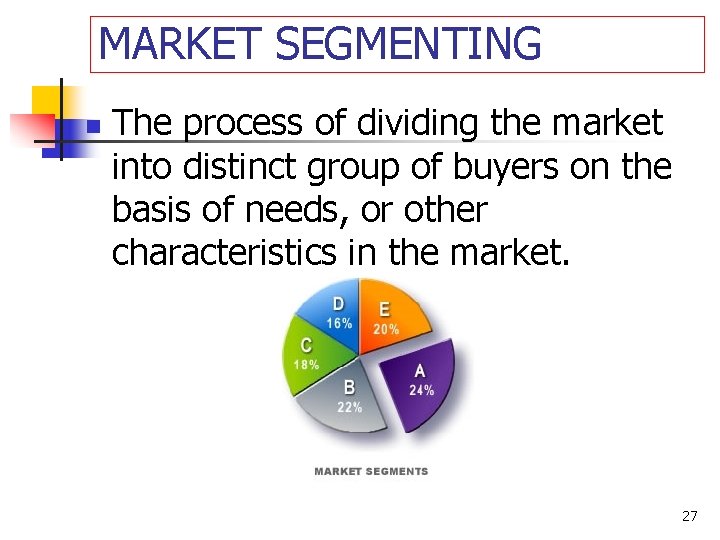
MARKET SEGMENTING n The process of dividing the market into distinct group of buyers on the basis of needs, or other characteristics in the market. 27
MARKET SEGMENTING n 1. 2. Major Segmenting Variables/Factors in a Consumer Market. Geographic: locations, population, climate, density. Demographic (demography – study of characteristics of a population): age, gender, family size, income, occupation, race, religion, nationality, education. 28
MARKET SEGMENTING n Major Segmenting Variables/Factors in a Consumer Market Cont’d 3. 4. Psycho-graphic: lifestyles, personality, social class Behavioural: occasions, benefits, user status, readiness stage, attitude. NB. Different factors may be required for commercial or industrial markets 29
TARGET MARKETING n A target market : n n is a set of buyers sharing common needs or characteristics that a company is able to serve. is a subset or a segment of the market. is similar to a niche market has special traits or characteristics that are particularly appealing to a company 30
TARGET MARKETING n In the absence of a target market, a company employs an undifferentiated marketing programme, offering a standard product to any market. 31
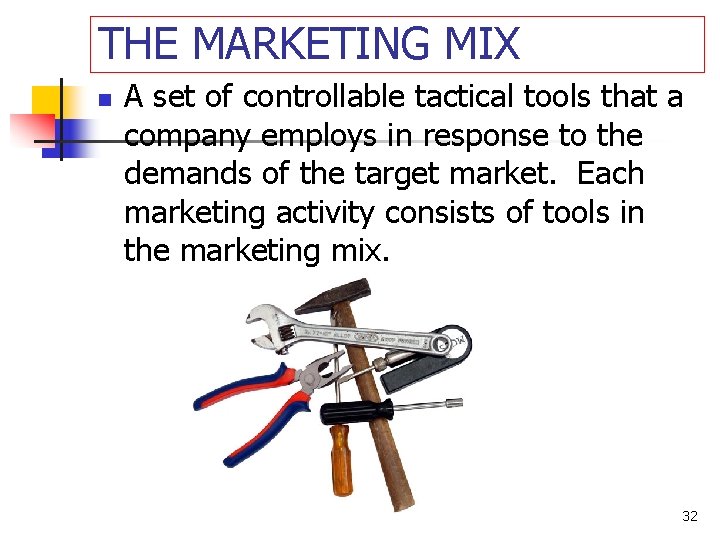
THE MARKETING MIX n A set of controllable tactical tools that a company employs in response to the demands of the target market. Each marketing activity consists of tools in the marketing mix. 32
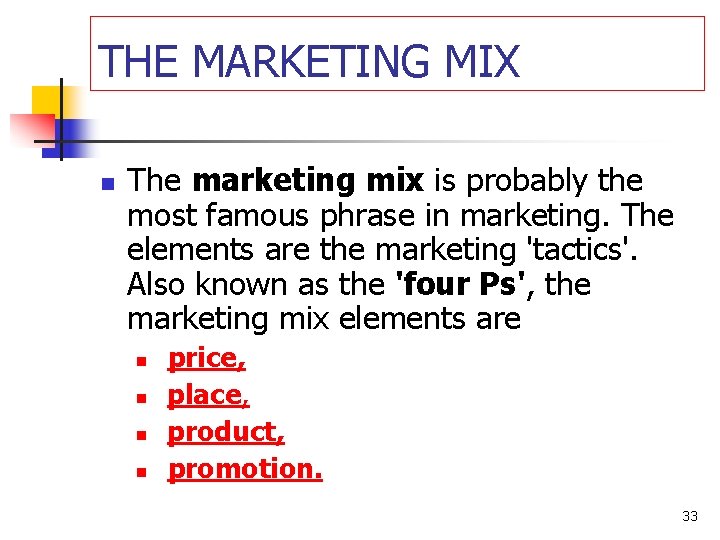
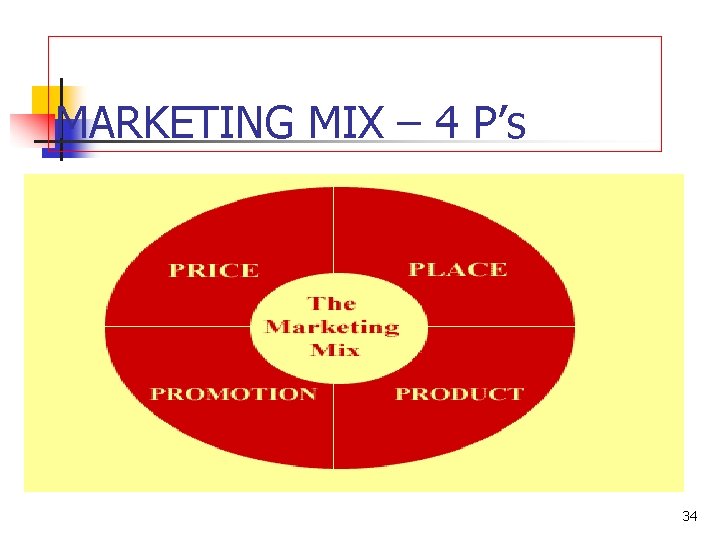
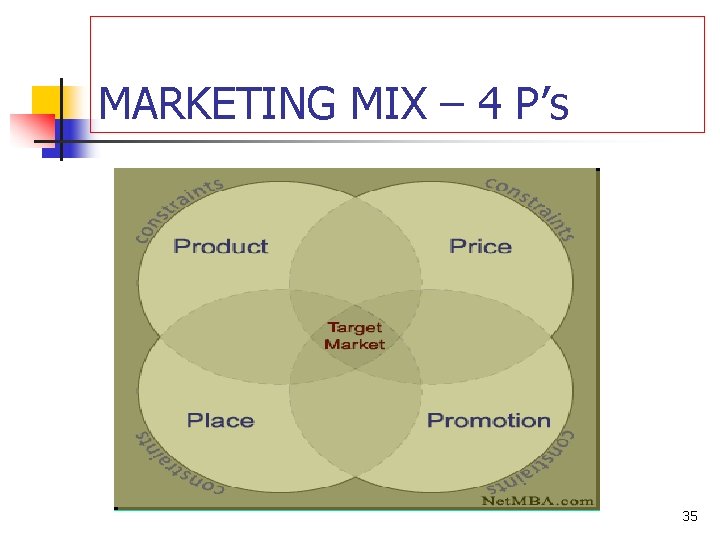
THE MARKETING MIX n The marketing mix is probably the most famous phrase in marketing. The elements are the marketing 'tactics'. Also known as the 'four Ps', the marketing mix elements are n n price, place, product, promotion. 33
MARKETING MIX – 4 P’s 34
MARKETING MIX – 4 P’s 35
MARKETING MIX – Price 36
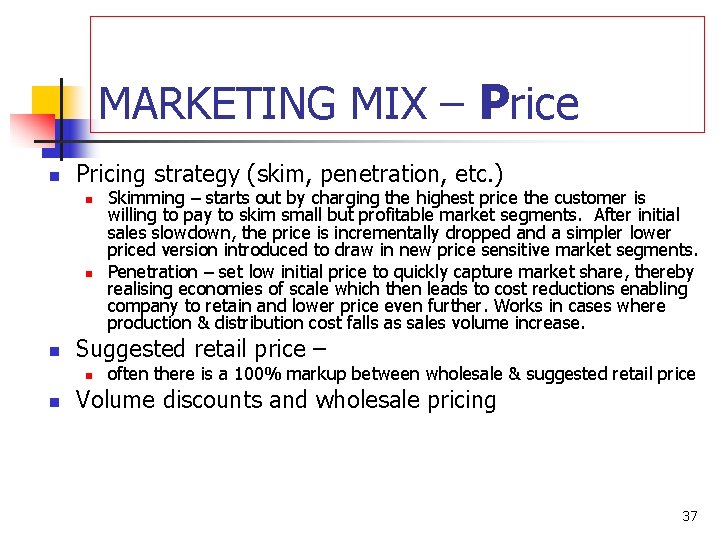
MARKETING MIX – Price n Pricing strategy (skim, penetration, etc. ) n n n Suggested retail price – n n Skimming – starts out by charging the highest price the customer is willing to pay to skim small but profitable market segments. After initial sales slowdown, the price is incrementally dropped and a simpler lower priced version introduced to draw in new price sensitive market segments. Penetration – set low initial price to quickly capture market share, thereby realising economies of scale which then leads to cost reductions enabling company to retain and lower price even further. Works in cases where production & distribution cost falls as sales volume increase. often there is a 100% markup between wholesale & suggested retail price Volume discounts and wholesale pricing 37
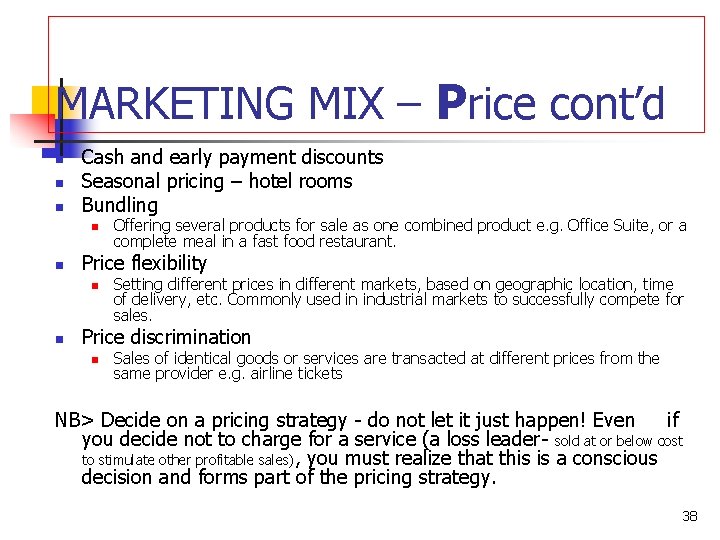
MARKETING MIX – Price cont’d n n n Cash and early payment discounts Seasonal pricing – hotel rooms Bundling n n Price flexibility n n Offering several products for sale as one combined product e. g. Office Suite, or a complete meal in a fast food restaurant. Setting different prices in different markets, based on geographic location, time of delivery, etc. Commonly used in industrial markets to successfully compete for sales. Price discrimination n Sales of identical goods or services are transacted at different prices from the same provider e. g. airline tickets NB> Decide on a pricing strategy - do not let it just happen! Even if you decide not to charge for a service (a loss leader- sold at or below cost to stimulate other profitable sales), you must realize that this is a conscious decision and forms part of the pricing strategy. 38
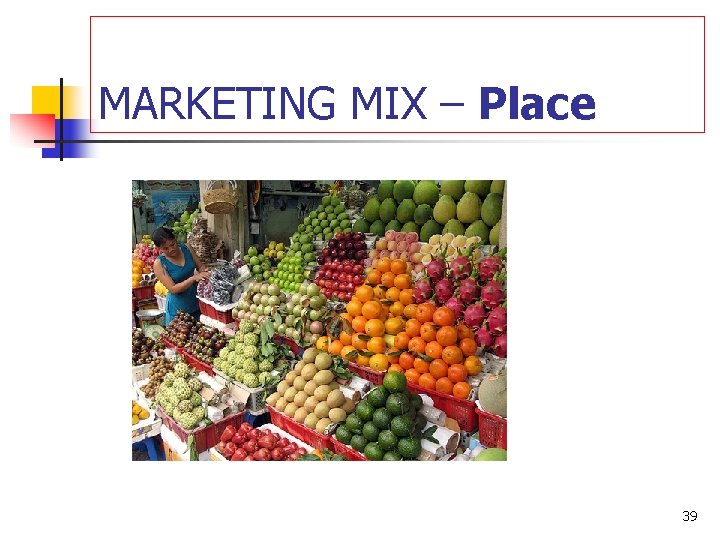
MARKETING MIX – Place 39
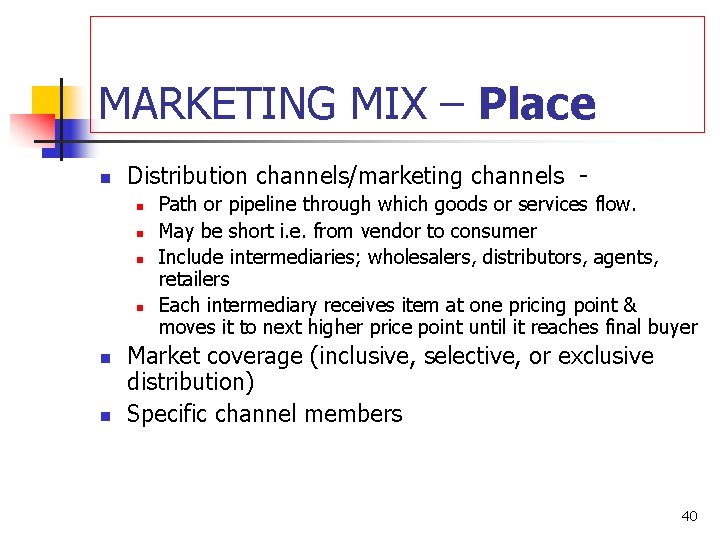
MARKETING MIX – Place n Distribution channels/marketing channels n n n Path or pipeline through which goods or services flow. May be short i. e. from vendor to consumer Include intermediaries; wholesalers, distributors, agents, retailers Each intermediary receives item at one pricing point & moves it to next higher price point until it reaches final buyer Market coverage (inclusive, selective, or exclusive distribution) Specific channel members 40
MARKETING MIX – Place cont’d n Inventory management n n n Policies, procedures, techniques designed to maintain the optimum number of each inventory item to provide uninterrupted production, sales & customer service levels at minimum cost. Inventory as the largest current asset can cause business failure. Warehousing Distribution centers Order processing Transportation Reverse logistics n Flow of surplus or unwanted material, goods or equipment back to the firm through its logistics chain for reuse recycling or disposal 41
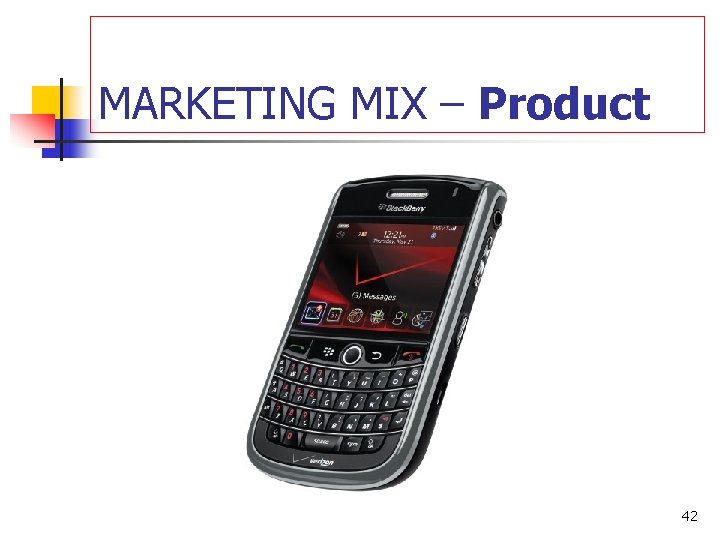
MARKETING MIX – Product 42
MARKETING MIX – Product n The term "product" refers to tangible, physical products as well as services. n Here are some examples of the product decisions to be made: n n n n n Brand name Functionality Styling Quality Safety Packaging Repairs and Support Warranty Accessories and services 43
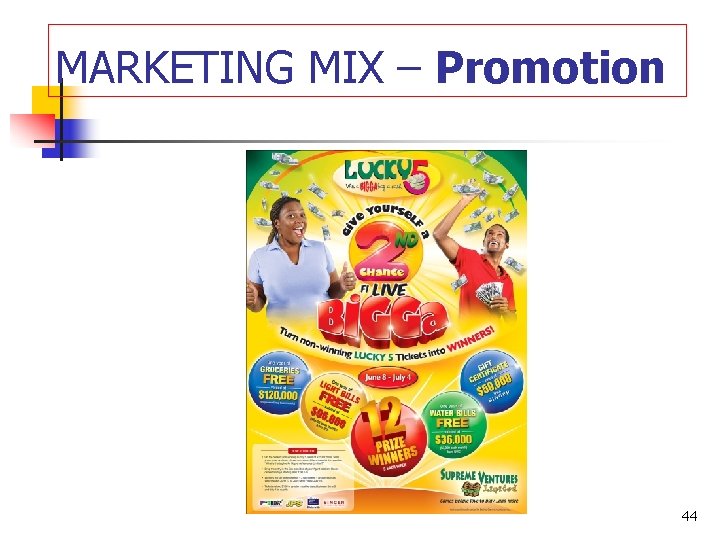
MARKETING MIX – Promotion 44
MARKETING MIX – Promotion n n promotion represents the various aspects of marketing communication, that is, the communication of information about the product with the goal of generating a positive customer response Promotional strategy (push, pull, etc. ) n n Pull – heavy advertising to generate pent up demand which draws customers into retail stores when product is made available Push – filling distribution channel with a product hoping customers will be attracted by availability, features & price Advertising Personal selling & sales force 45
MARKETING MIX – Promotion cont’d n Sales promotions – n n Public relations & publicity n n n Sales stimulation achieved through contests, demonstration, discounts, exhibitions, trade shows, games, giveaways, point-of-sale displays & merchandising, special offers etc. Systematic efforts to create & maintain goodwill of customers, employees, investors & suppliers through publicity & other non-paid forms of communication. Include support for the arts, charitable causes, education, sports etc. Marketing communications budget 46
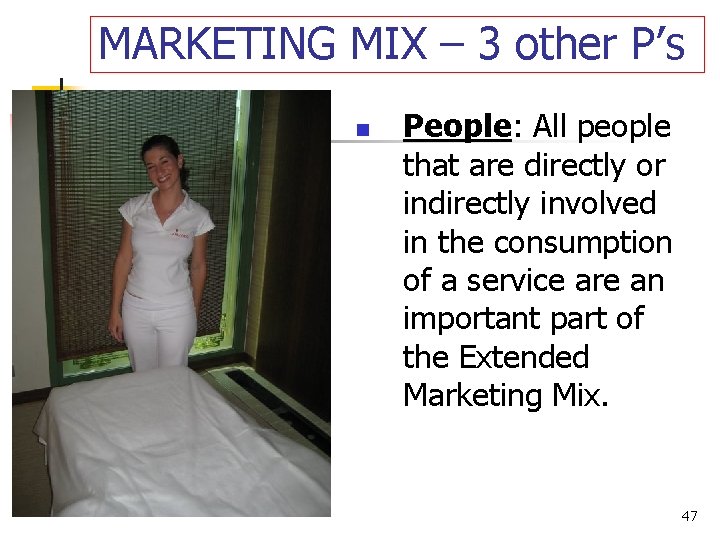
MARKETING MIX – 3 other P’s n People: All people that are directly or indirectly involved in the consumption of a service are an important part of the Extended Marketing Mix. 47
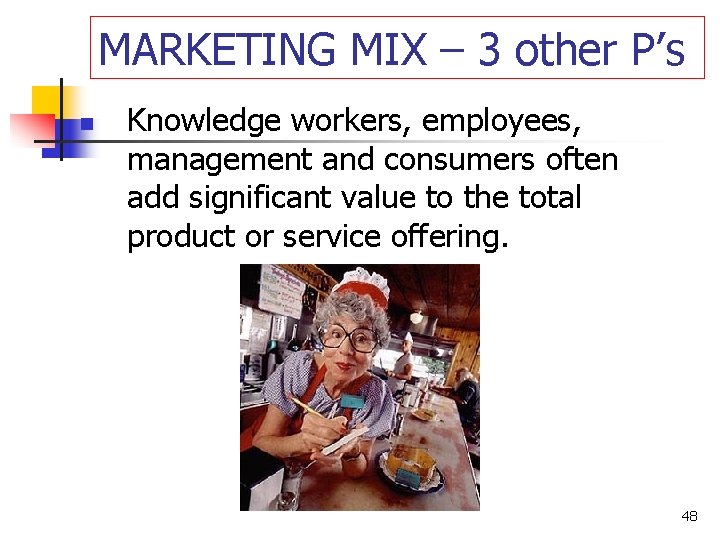
MARKETING MIX – 3 other P’s n Knowledge workers, employees, management and consumers often add significant value to the total product or service offering. 48
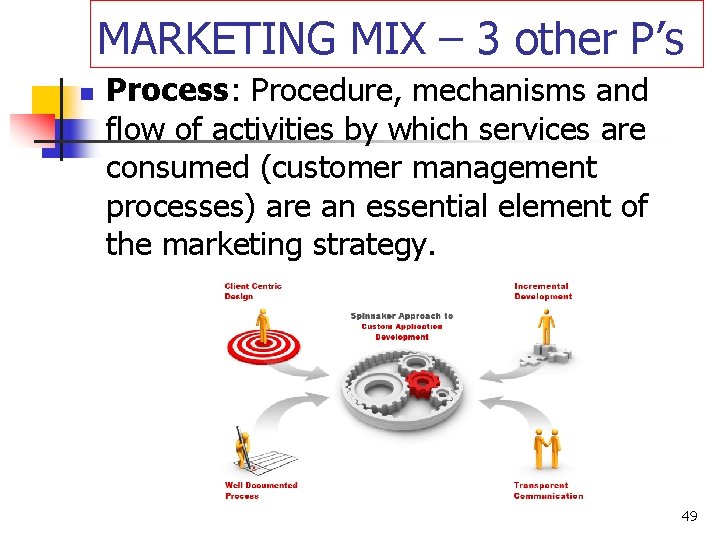
MARKETING MIX – 3 other P’s n Process: Procedure, mechanisms and flow of activities by which services are consumed (customer management processes) are an essential element of the marketing strategy. 49
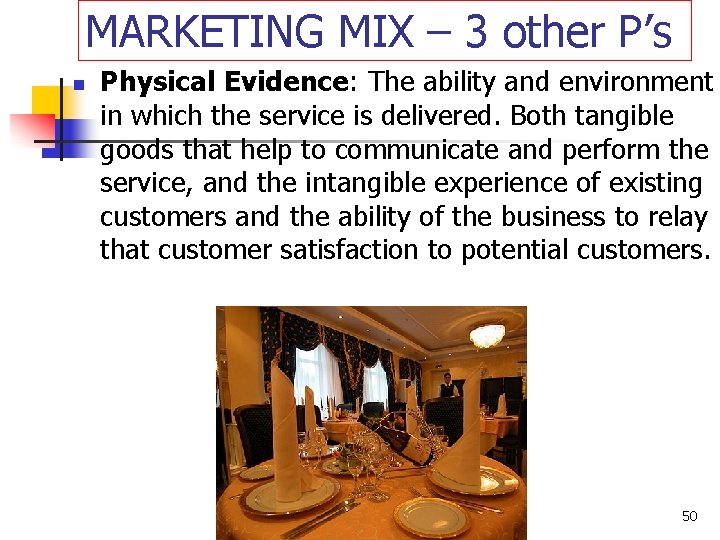
MARKETING MIX – 3 other P’s n Physical Evidence: The ability and environment in which the service is delivered. Both tangible goods that help to communicate and perform the service, and the intangible experience of existing customers and the ability of the business to relay that customer satisfaction to potential customers. 50
PUBLIC RELATIONS ACTIVITIES n Involve a variety of programmes and activities that will promote or protect a company’s image or the acceptance of its product (s). , viz: n n n Publications Events News Speeches Public service activities ======= 51