
Lecture 5 Introduction to Probability Distribution 1 Probability
Lecture 5 Introduction to Probability Distribution 1
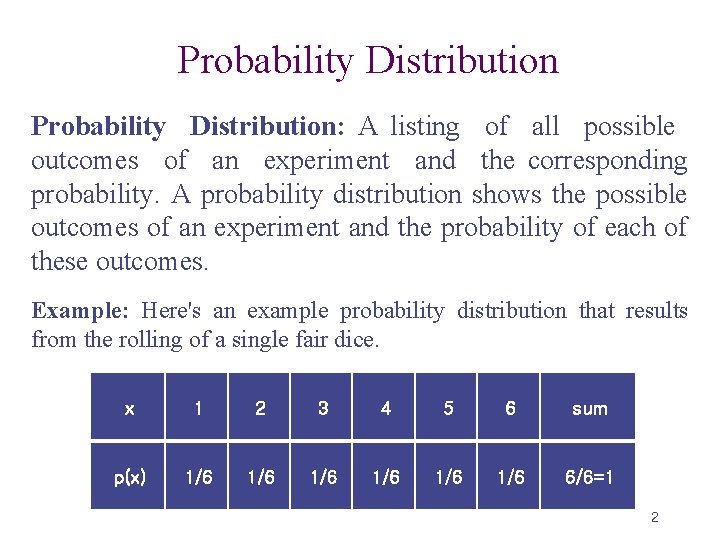
Probability Distribution: A listing of all possible outcomes of an experiment and the corresponding probability. A probability distribution shows the possible outcomes of an experiment and the probability of each of these outcomes. Example: Here's an example probability distribution that results from the rolling of a single fair dice. x 1 2 3 4 5 6 sum p(x) 1/6 1/6 1/6 6/6=1 2
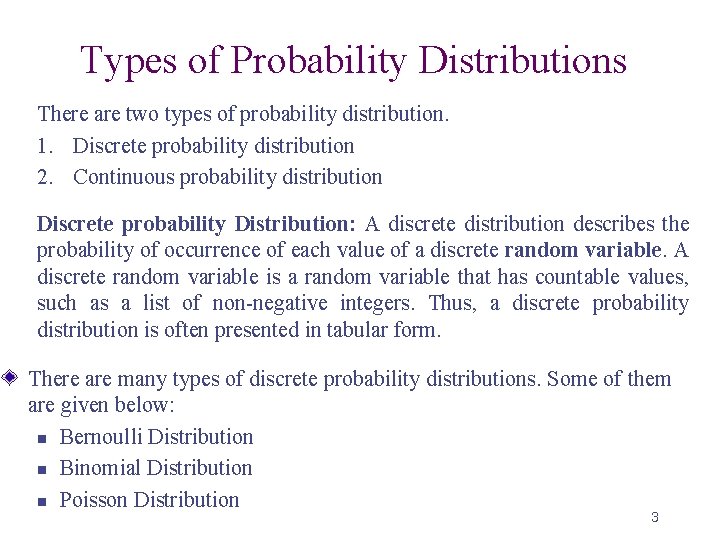
Types of Probability Distributions There are two types of probability distribution. 1. Discrete probability distribution 2. Continuous probability distribution Discrete probability Distribution: A discrete distribution describes the probability of occurrence of each value of a discrete random variable. A discrete random variable is a random variable that has countable values, such as a list of non-negative integers. Thus, a discrete probability distribution is often presented in tabular form. There are many types of discrete probability distributions. Some of them are given below: n Bernoulli Distribution n Binomial Distribution n Poisson Distribution 3
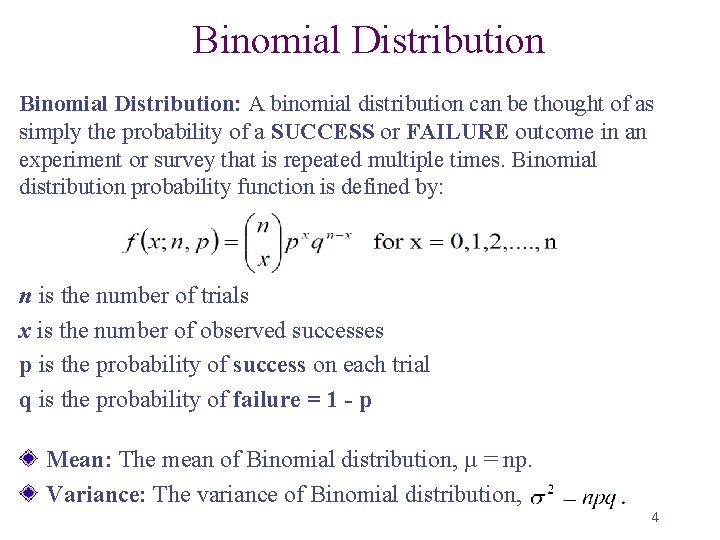
Binomial Distribution: A binomial distribution can be thought of as simply the probability of a SUCCESS or FAILURE outcome in an experiment or survey that is repeated multiple times. Binomial distribution probability function is defined by: n is the number of trials x is the number of observed successes p is the probability of success on each trial q is the probability of failure = 1 - p Mean: The mean of Binomial distribution, µ = np. Variance: The variance of Binomial distribution, 4
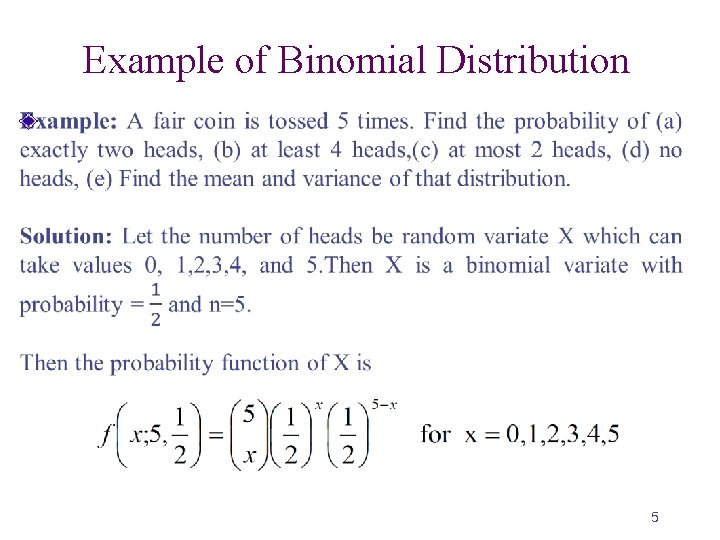
Example of Binomial Distribution 5
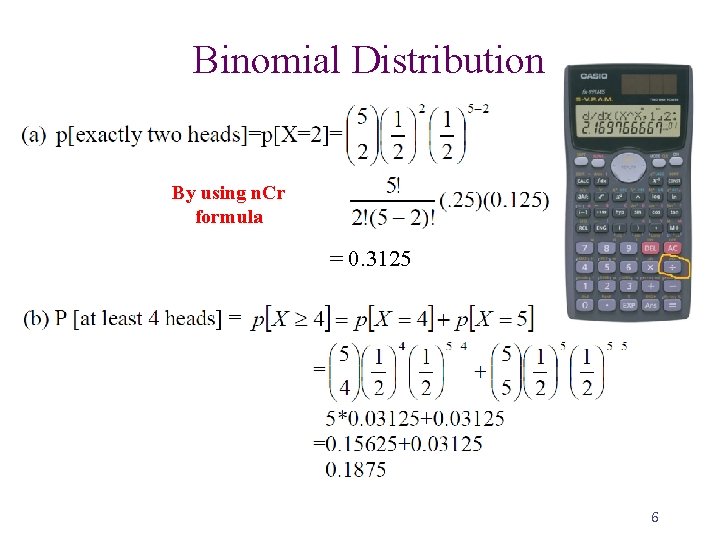
Binomial Distribution S By using n. Cr formula = 0. 3125 6
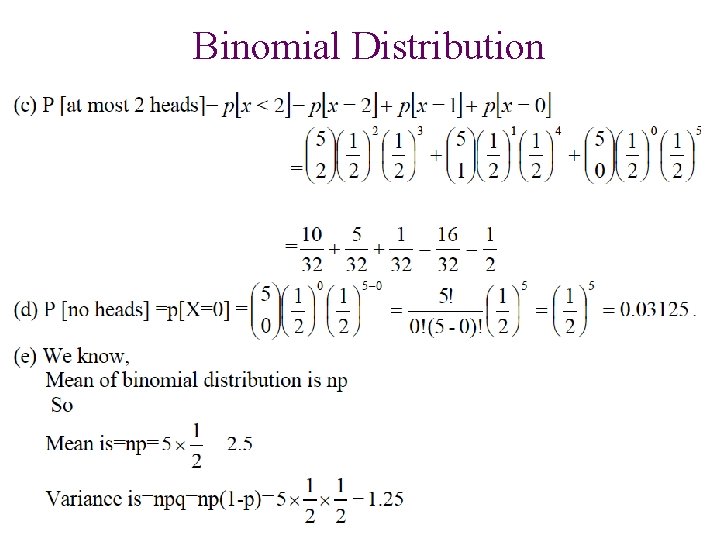
Binomial Distribution 7
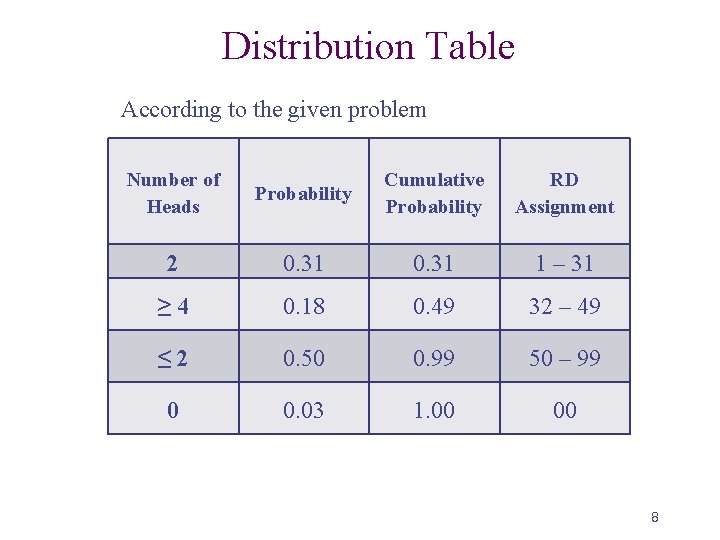
Distribution Table According to the given problem Number of Heads Probability Cumulative Probability RD Assignment 2 0. 31 1 – 31 ≥ 4 0. 18 0. 49 32 – 49 ≤ 2 0. 50 0. 99 50 – 99 0 0. 03 1. 00 00 8
The End 9
- Slides: 9