
Lecture 5 GinzburgLandau theory surface energy and vortices
Lecture 5: Ginzburg-Landau theory --- surface energy and vortices Today Discussion the Ginzburg-Landau theory in three parts: 1. Presentation of the model and derivation of the penetration length and coherence length 2. Calculation of the surface energy and categorization of Type I and Type II superconductivity 3. Current-carrying states and phase coherence Thursday Lecture 6: Ginzburg-Landau Theory --- current-carrying states and phase coherence

Ginzburg-Landau Theory (summary) G-L free energy: CONDENSATION phase ENERGY KINETIC ENERGY MAGNETIC FIELD EXPULSION (1) (2) Interplay of the order parameter and magnetic fields coherence length penetration length G-L parameter
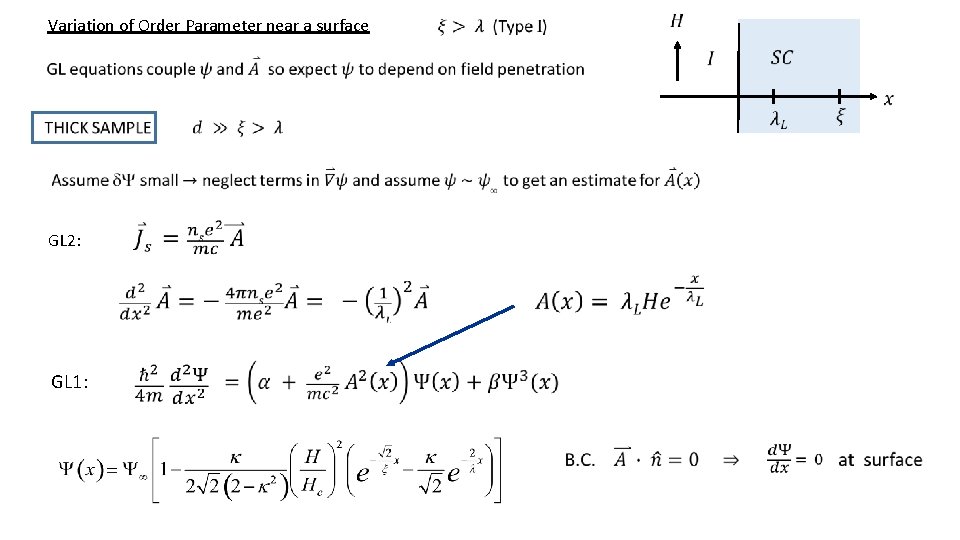
Variation of Order Parameter near a surface GL 2: GL 1:
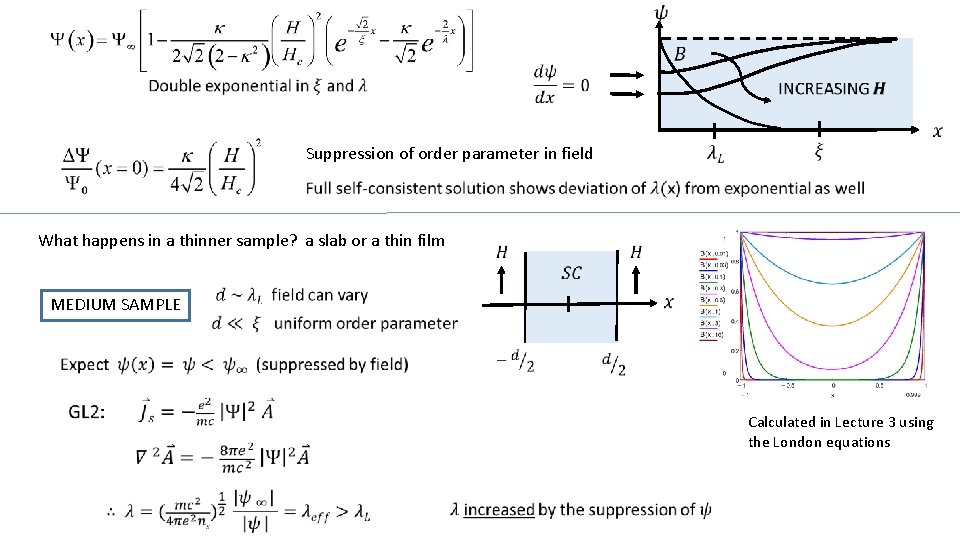
Suppression of order parameter in field What happens in a thinner sample? a slab or a thin film MEDIUM SAMPLE Calculated in Lecture 3 using the London equations
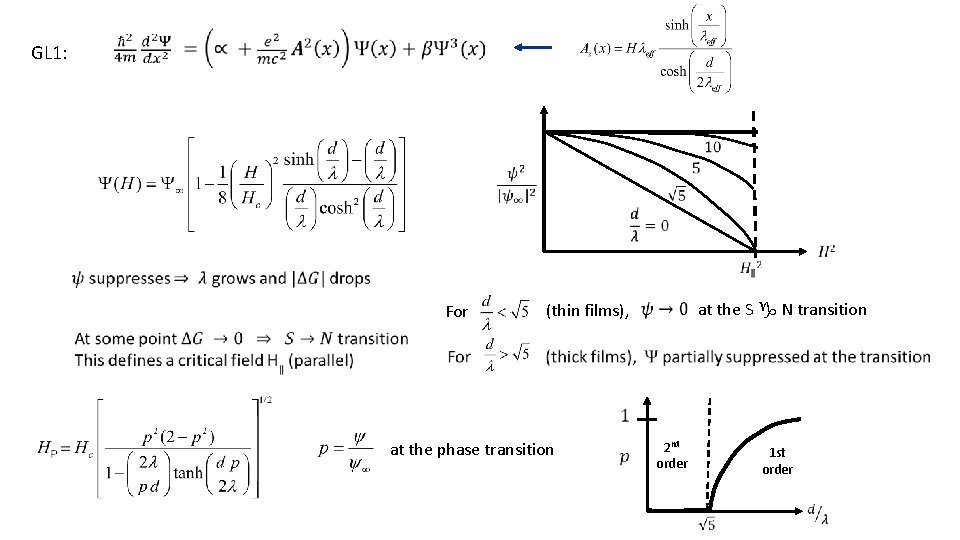
GL 1: For (thin films), at the S N transition at the phase transition 2 nd order 1 st order
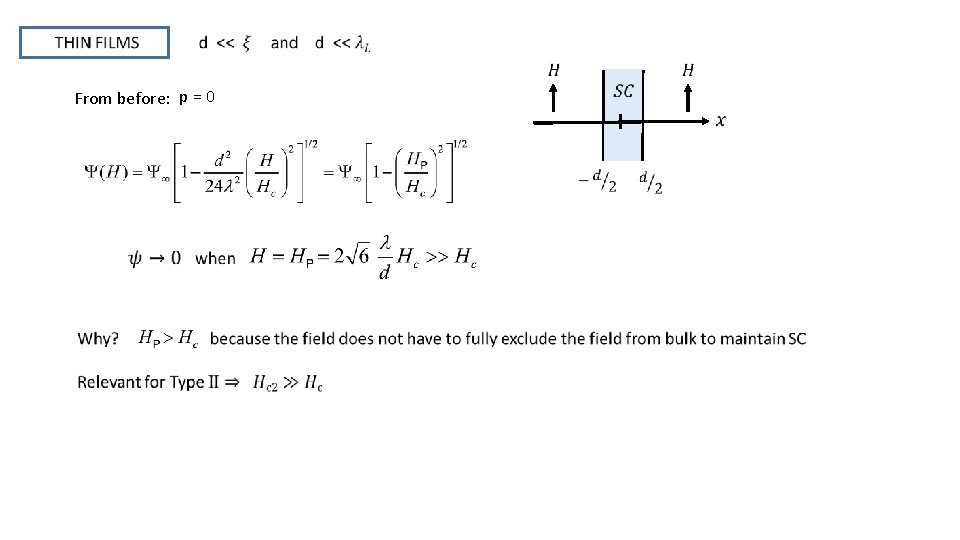
From before: p = 0
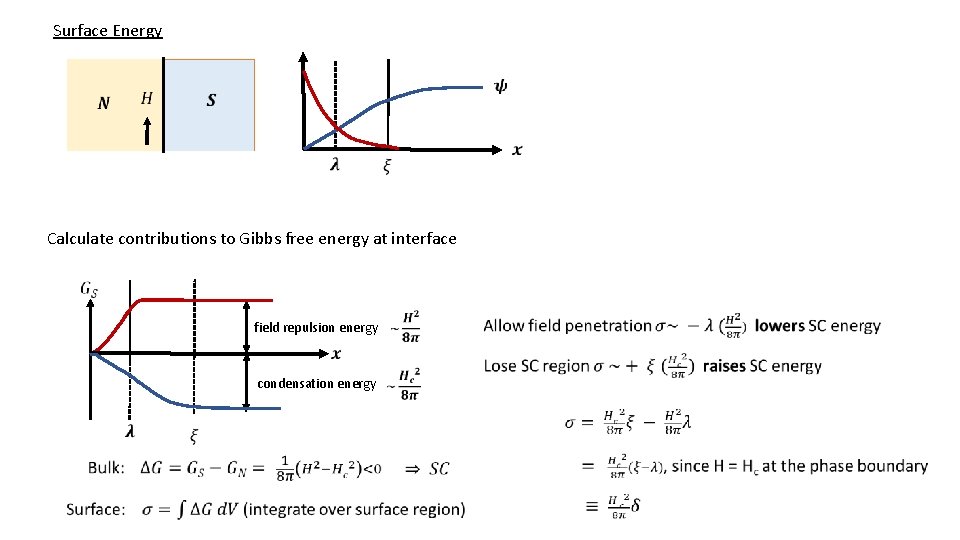
Surface Energy Calculate contributions to Gibbs free energy at interface field repulsion energy condensation energy
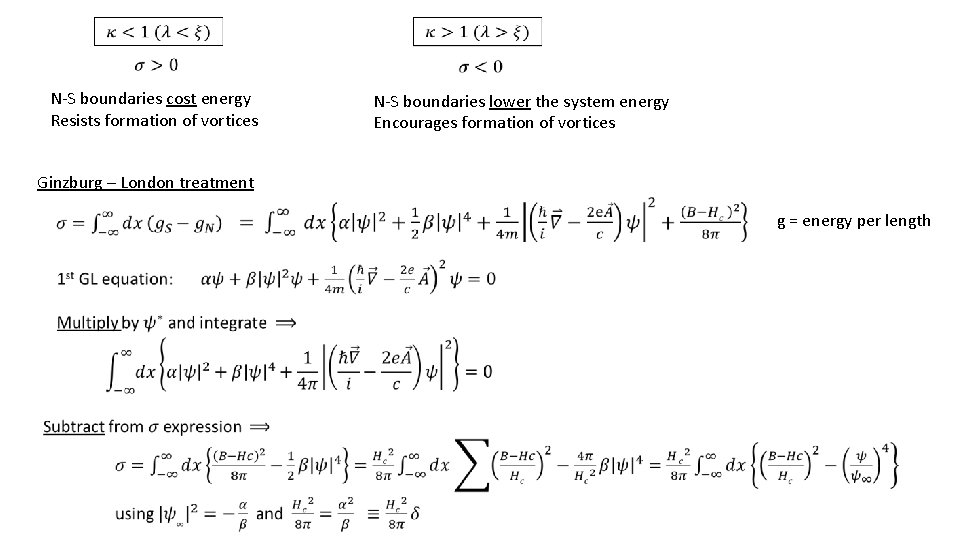
N-S boundaries cost energy Resists formation of vortices Ginzburg – London treatment N-S boundaries lower the system energy Encourages formation of vortices g = energy per length
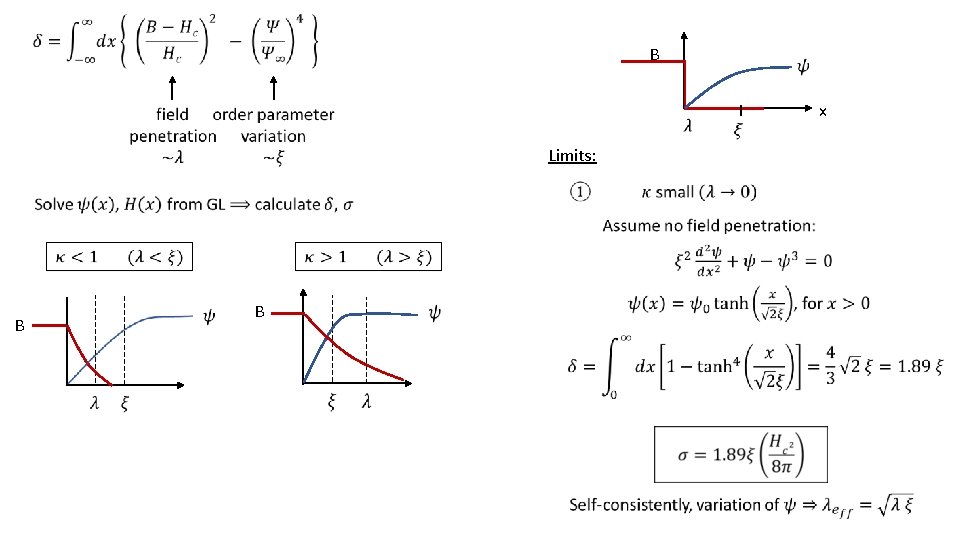
B Limits: B B I x
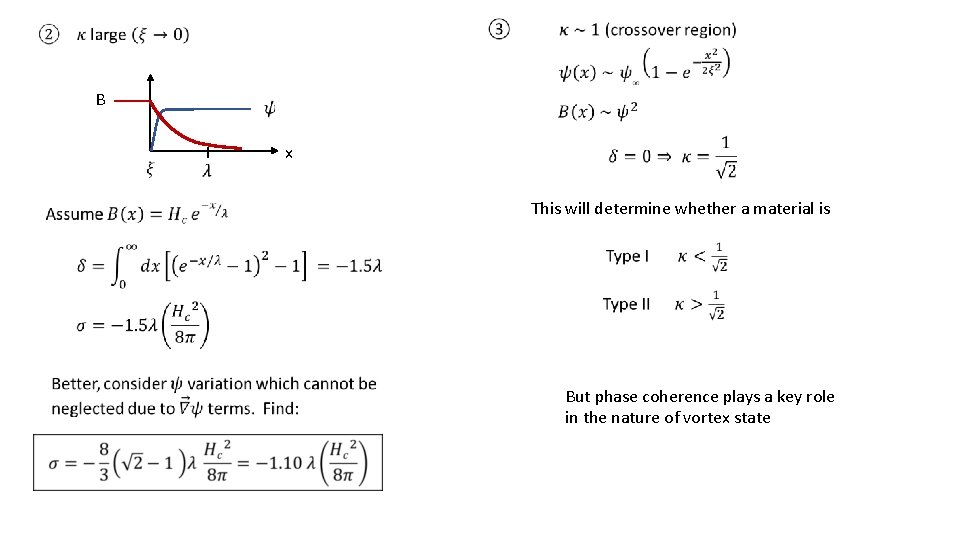
B x This will determine whether a material is I But phase coherence plays a key role in the nature of vortex state

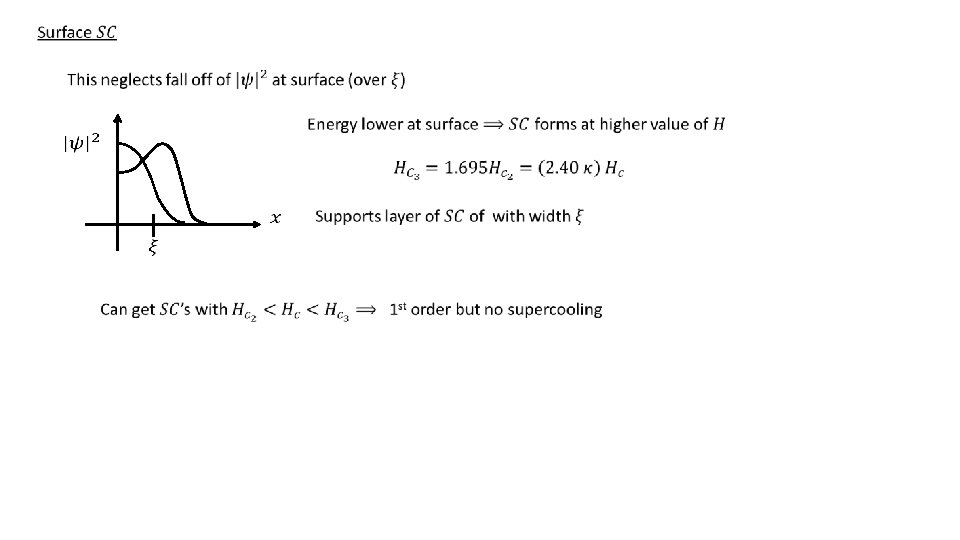
Type II Superconductivity VORTEX STATE VORTEX Vortex density: B H NORMAL SURFACE nucleation of SC at surface VORTEX nucleation of SC in bulk flux entry into SC MEISSNER Triangle lattice more stable (barely)

VORTEX STRUCTURE Abrikosov vortex B --- defines “core” of the vortex I I r We will show next time that the quantity that is quantized is the “fluxoid” (not the magnetic flux): I I r

Use linearized GL equation: Assume
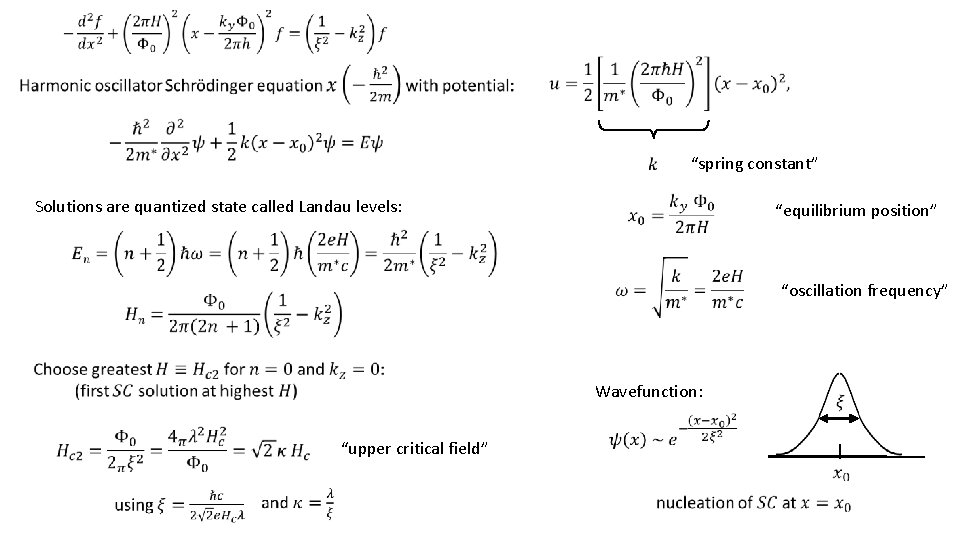
“spring constant” Solutions are quantized state called Landau levels: “equilibrium position” “oscillation frequency” Wavefunction: “upper critical field”
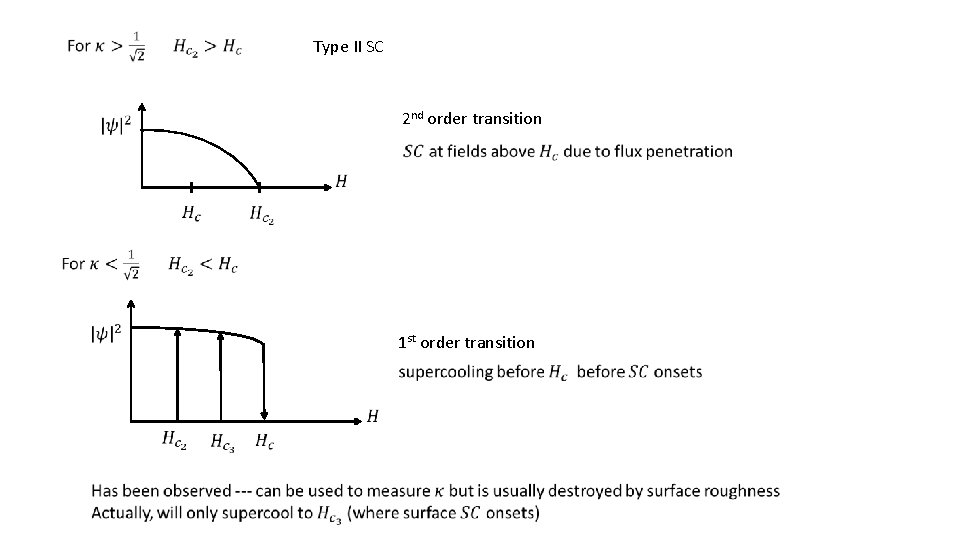
Type II SC 2 nd order transition 1 st order transition
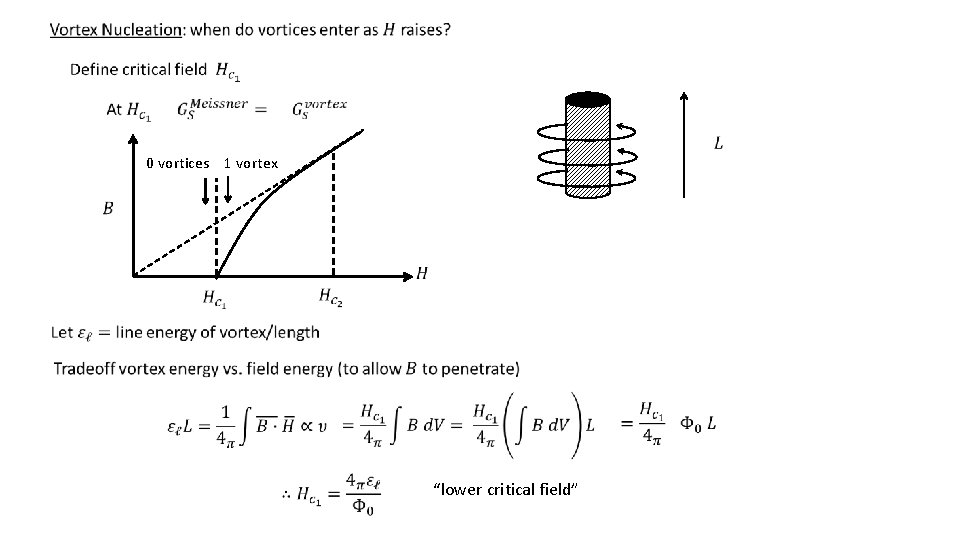
0 vortices 1 vortex “lower critical field”
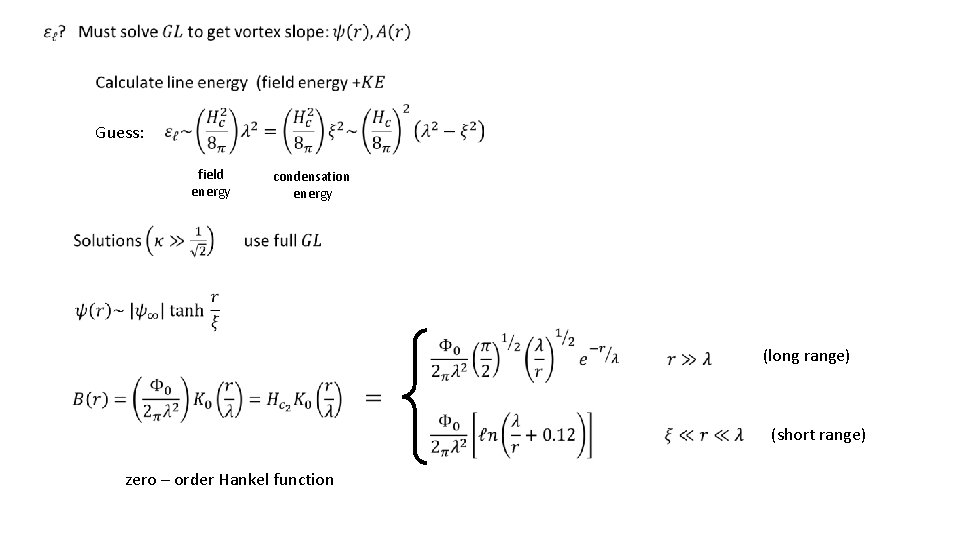
Guess: field energy condensation energy (long range) zero – order Hankel function (short range)
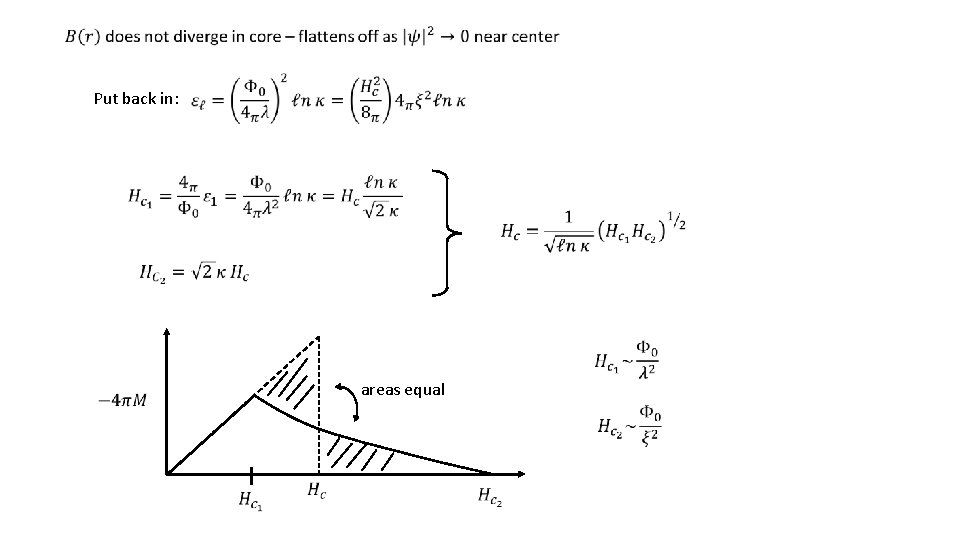
Put back in: areas equal
- Slides: 19