
Lecture 5 Ecosystems Biodiversity and Human Populations 7
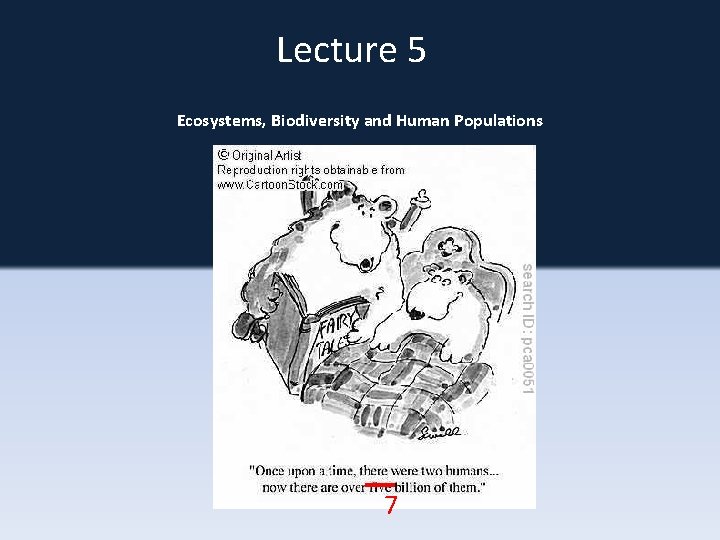
Lecture 5 Ecosystems, Biodiversity and Human Populations 7
What country is the city in? ? Delhi Mumbai Sao Paulo Dhaka India Brazil Bangledesh Mexico City Mexico Kolkata Shanghai Karachi Lagos Kinshasa India China Pakistan Nigeria Demographic Republic of the Congo
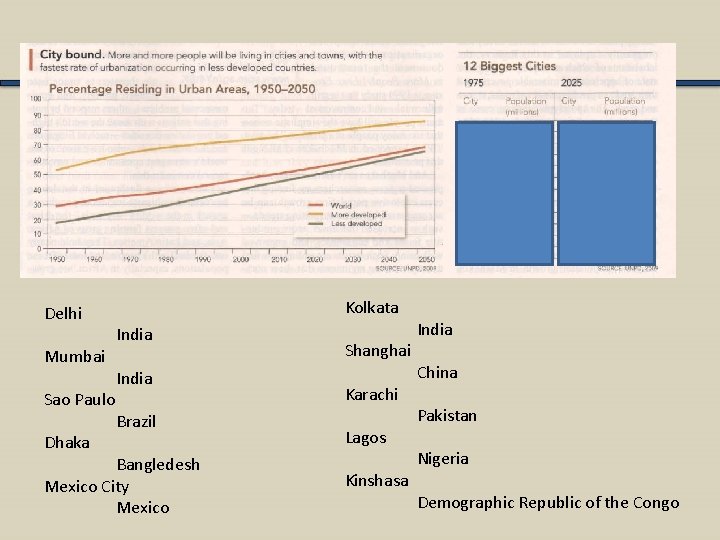
Delhi Mumbai Sao Paulo Dhaka Kolkata India Brazil Bangledesh Mexico City Mexico Shanghai Karachi Lagos Kinshasa India China Pakistan Nigeria Demographic Republic of the Congo
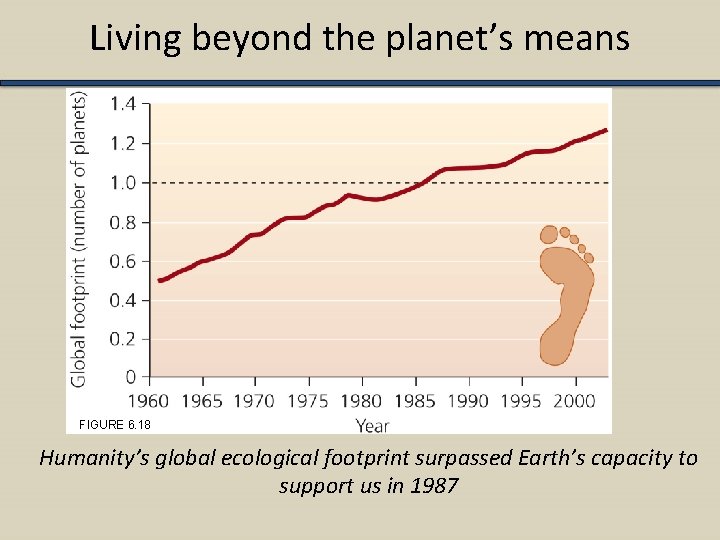
Living beyond the planet’s means FIGURE 6. 18 Humanity’s global ecological footprint surpassed Earth’s capacity to support us in 1987
Natural selection What is natural selection ? Natural selection is the gradual, non-random, process by which biological traits become either more or less common in a population as a function of differential reproduction of their bearers. It is a key mechanism of evolution. Ecology and evolution are tightly intertwined
Natural selection is the means by which beneficial variations in a population tend to be preserved while unfavorable variations tend to be lost. One of the key concepts behind theory of natural selection is that there is variation within populations. As a result of that variation, some individuals are better suited to their environment while other individuals are not so well-suited. Because members of a population must compete for finite resources, those better suited to their environment will out-compete those that are not as well-suited.
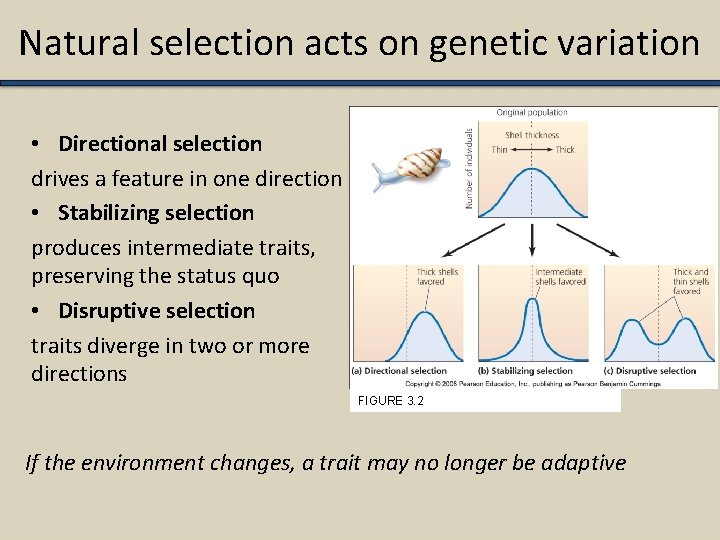
Natural selection acts on genetic variation • Directional selection drives a feature in one direction • Stabilizing selection produces intermediate traits, preserving the status quo • Disruptive selection traits diverge in two or more directions FIGURE 3. 2 If the environment changes, a trait may no longer be adaptive
Some species are more vulnerable to extinction than others • Extinction occurs when the environment changes too rapidly for natural selection to keep up • Many other factors also cause extinction – Severe weather – New species – Specialized species Endemic species a species only exists in a certain, specialized area. These species: – Are very susceptible to extinction – Usually have small populations http: //www. mnn. com/earth-matters/animals/photos/endemic-species-top-9 -lonelyanimals/sinarapan
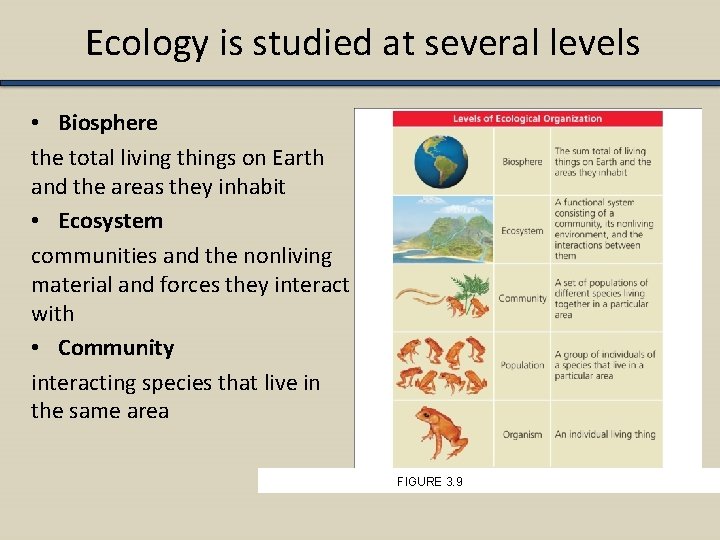
Ecology is studied at several levels • Biosphere the total living things on Earth and the areas they inhabit • Ecosystem communities and the nonliving material and forces they interact with • Community interacting species that live in the same area FIGURE 3. 9
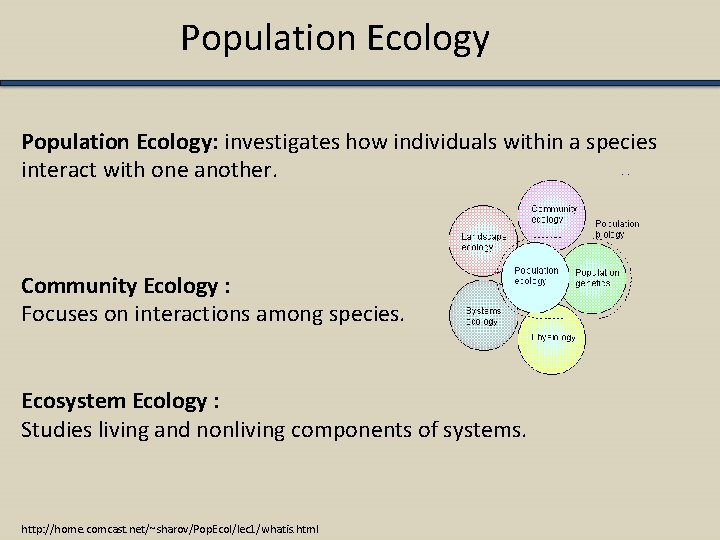
Population Ecology: investigates how individuals within a species interact with one another. Community Ecology : Focuses on interactions among species. Ecosystem Ecology : Studies living and nonliving components of systems. http: //home. comcast. net/~sharov/Pop. Ecol/lec 1/whatis. html
Population Ecology Habitat, niche and degree of specialization are important in organizational ecology. Habitat: The specific environment in which an organism lives. Each organism has patterns of habitat use. Niche: A species’ niche reflects its use of resources and its functional role in a community. Specialists: Species with very specific requirements. Generalists: Species with broad tolerances, able to use a wide array of habitats or resources.
Population Ecology Populations exhibit characteristics that help predict their dynamics. Important Characteristics of a population are: Population Size: the number of individual organisms present at a given time. Population Density: the number of individuals in a population per unit area. Population Distribution (dispersion): the spatial arrangement of organisms within a particular area.
Population Ecology (continued) Important Characteristics of a population are: Populations sex ratio: Proportion of males to females. Age distribution (structure): The relative numbers of organisms of each age within a population. Birth and death rate: Measure the number of births and deaths per 1000 individuals for a given time period. The likelihood of death varies with age; this can be graphically shown in survivorship curves.
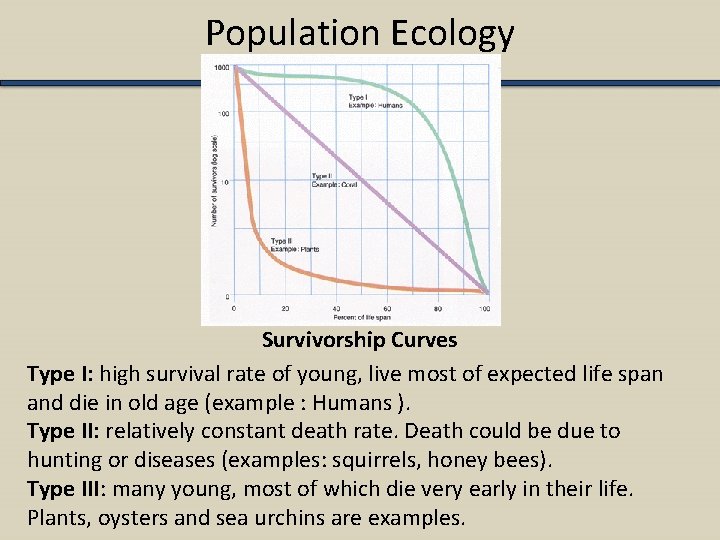
Population Ecology Survivorship Curves Type I: high survival rate of young, live most of expected life span and die in old age (example : Humans ). Type II: relatively constant death rate. Death could be due to hunting or diseases (examples: squirrels, honey bees). Type III: many young, most of which die very early in their life. Plants, oysters and sea urchins are examples.
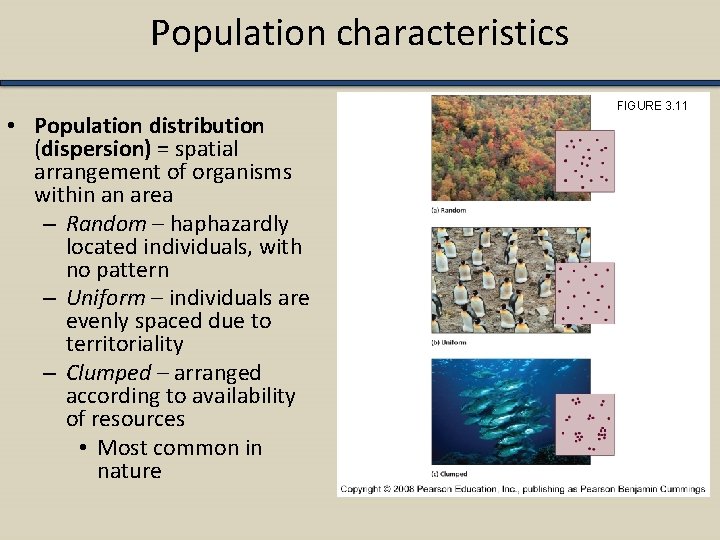
Population characteristics • Population distribution (dispersion) = spatial arrangement of organisms within an area – Random – haphazardly located individuals, with no pattern – Uniform – individuals are evenly spaced due to territoriality – Clumped – arranged according to availability of resources • Most common in nature FIGURE 3. 11

Population Ecology Populations are dynamic, they can: Grow Shrink Remain stable Population growth or decline is determined by : Births Deaths Immigration Emigration
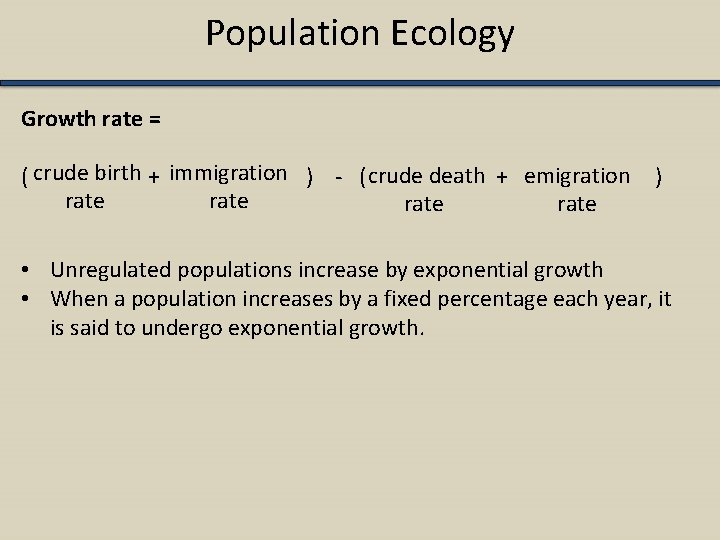
Population Ecology Growth rate = crude birth immigration crude death emigration ( + ) - ( + ) rate • Unregulated populations increase by exponential growth • When a population increases by a fixed percentage each year, it is said to undergo exponential growth.
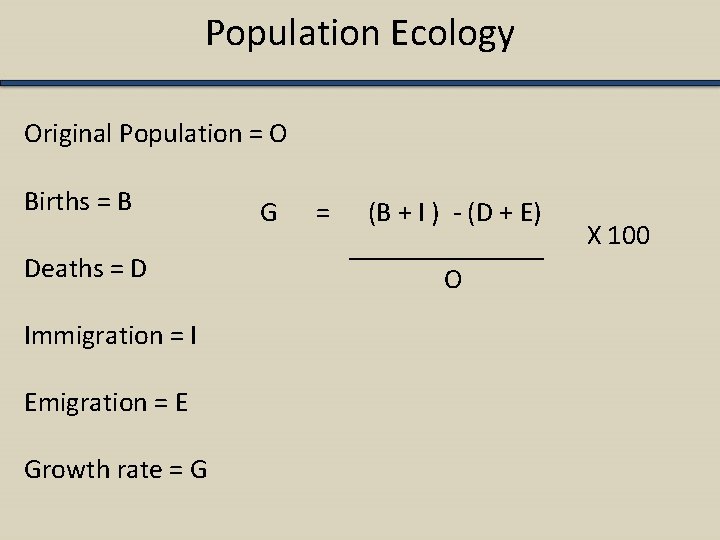
Population Ecology Original Population = O Births = B Deaths = D Immigration = I Emigration = E Growth rate = G G = (B + I ) - (D + E) _______ O X 100
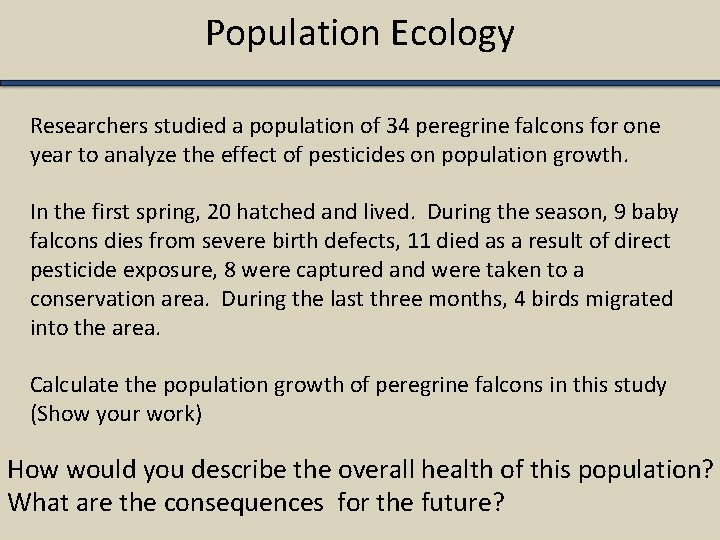
Population Ecology Researchers studied a population of 34 peregrine falcons for one year to analyze the effect of pesticides on population growth. In the first spring, 20 hatched and lived. During the season, 9 baby falcons dies from severe birth defects, 11 died as a result of direct pesticide exposure, 8 were captured and were taken to a conservation area. During the last three months, 4 birds migrated into the area. Calculate the population growth of peregrine falcons in this study (Show your work) How would you describe the overall health of this population? What are the consequences for the future?
Population Ecology Extirpation : http: //dictionary. reference. com/browse/extirpation
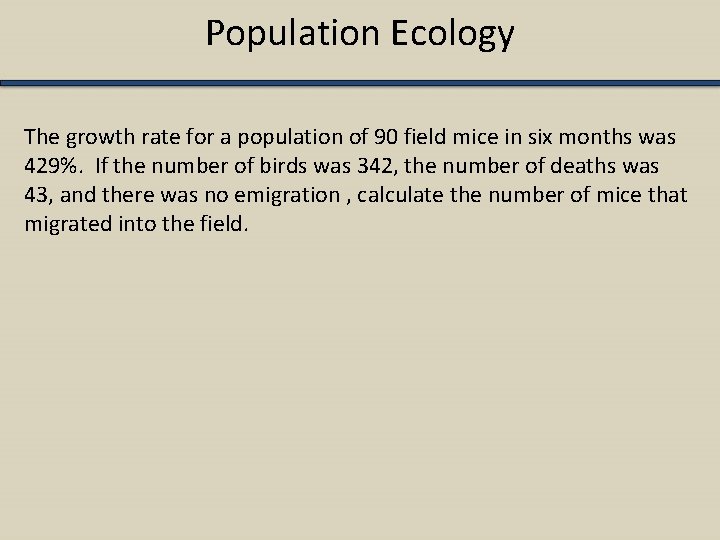
Population Ecology The growth rate for a population of 90 field mice in six months was 429%. If the number of birds was 342, the number of deaths was 43, and there was no emigration , calculate the number of mice that migrated into the field.
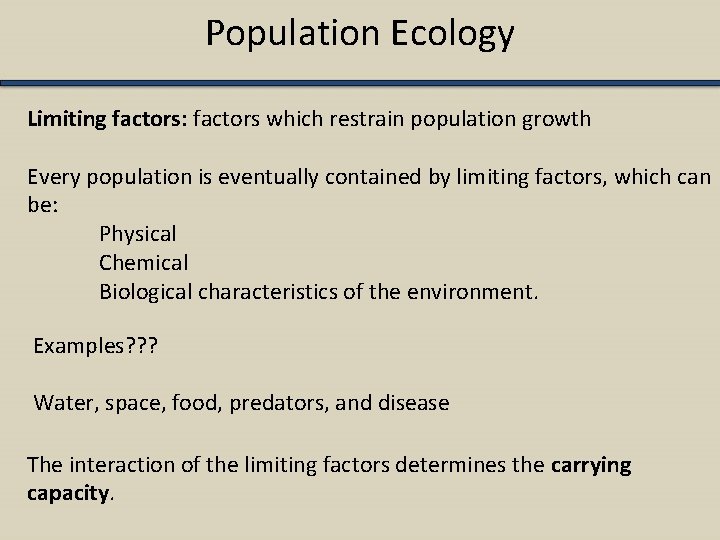
Population Ecology Limiting factors: factors which restrain population growth Every population is eventually contained by limiting factors, which can be: Physical Chemical Biological characteristics of the environment. Examples? ? ? Water, space, food, predators, and disease The interaction of the limiting factors determines the carrying capacity.
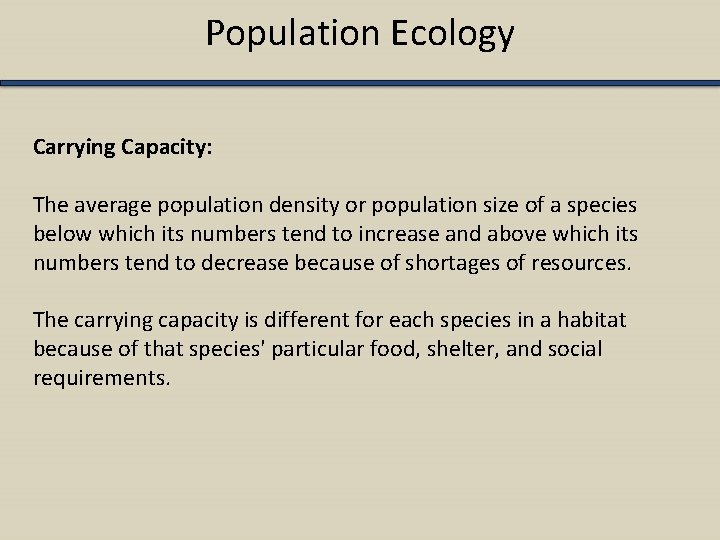
Population Ecology Carrying Capacity: The average population density or population size of a species below which its numbers tend to increase and above which its numbers tend to decrease because of shortages of resources. The carrying capacity is different for each species in a habitat because of that species' particular food, shelter, and social requirements.
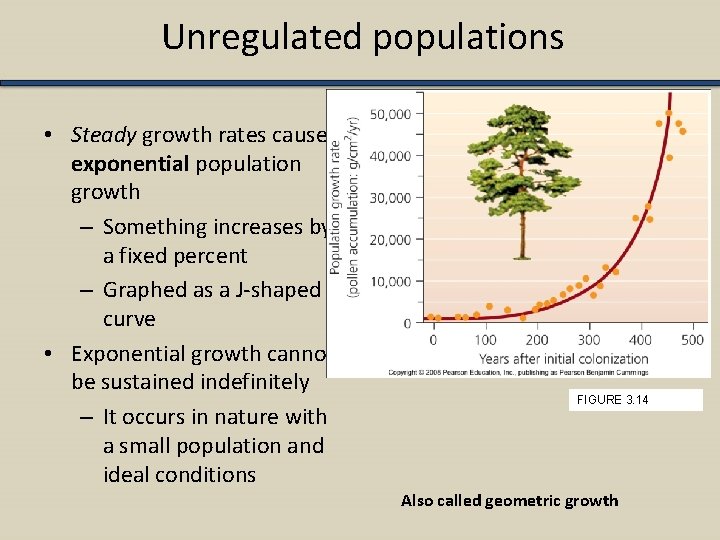
Unregulated populations • Steady growth rates cause exponential population growth – Something increases by a fixed percent – Graphed as a J-shaped curve • Exponential growth cannot be sustained indefinitely – It occurs in nature with a small population and ideal conditions FIGURE 3. 14 Also called geometric growth
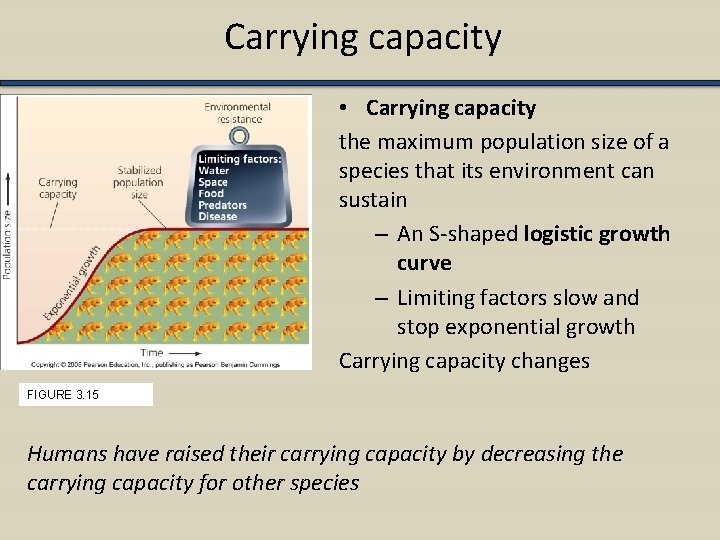
Carrying capacity • Carrying capacity the maximum population size of a species that its environment can sustain – An S-shaped logistic growth curve – Limiting factors slow and stop exponential growth Carrying capacity changes FIGURE 3. 15 Humans have raised their carrying capacity by decreasing the carrying capacity for other species
Population Ecology • • Carrying Capacities can change Some factors are density-dependent, others are densityindependent Biotic potential and reproductive strategies vary amongst species K-selected: Species that devote large amounts of energy and resources to caring for a few offspring - their populations tend to stabilize over time at or near their carrying capacity. R-selected: Species that have high biotic potential and devote their energy and resources to producing as many offspring as possible in a relatively short time. Changes in populations influence the composition of communities
Conclusion • Natural selection, speciation, and extinction help determine Earth’s biodiversity. • Understanding how ecological processes work at the population level is crucial to protecting biodiversity
Trying to be environmentally friendly…. . http: //www. ted. com/talks/catherine_mohr_builds_green. html
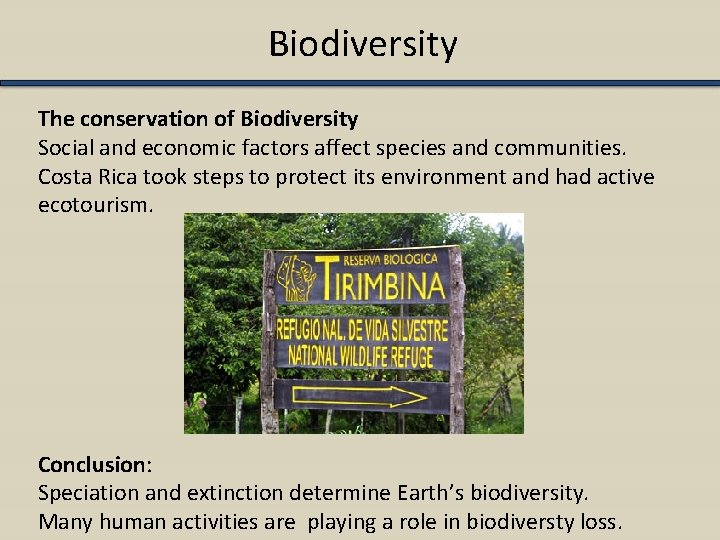
Biodiversity The conservation of Biodiversity Social and economic factors affect species and communities. Costa Rica took steps to protect its environment and had active ecotourism. Conclusion: Speciation and extinction determine Earth’s biodiversity. Many human activities are playing a role in biodiversty loss.
http: //polarbears. wwf. ca/ http: //wwf. panda. org/about_our_earth/biodiversity/threatsto_biodiversity/
http: //www. cbd. int/doc/publications/cbd-ts-50 -en. pdf
Biodiversity What is it? ?
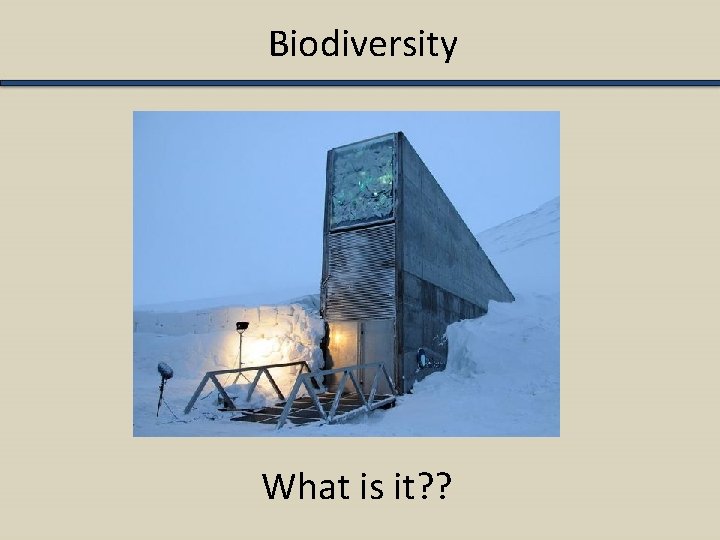
Svalbard Seed Bank Located in an old copper mine on remote northern island of Spitsbergen, Norway. The main storage is 120 m inside a sandstone mountain, on a tectonically dead island. Seeds are packaged in special four-ply packets and heat sealed to exclude moisture. A local coal mine and powerplant supplies the electricity for refrigeration control. The remote northern location also serves as a natural fridge. In the case of complete power failure at least several weeks will elapse before the temperature rises to the temperature of the surrounding sandstone bedrock.
Svalbard Seed Bank There are many types or "cultivars" of any given fruit. A cultivar is a cultivated plant which is chosen and given a special name because of its desired characteristics. Various types of cultivars (for example in apples, the Red Delicious in the 1870 s) come in and out of favour over the years. In the middle of 20 th century the dominant banana cultivar exported to North America and Europe was the Gros Michel. Around 1950 the Gros Michel become virtually extinct due to the rapid spread of the so called "Panama Disease, " a fungal infection that attacks the roots of the banana plant. The Gros Michel was replaced with more resilient but notably less tasty Cavendish cultivar
Biodiversity Modern agriculture is generally focused on maximizing profit by extracting maximal possible crop yield. A small number of specially selected cultivars of any given crop are planted throughout the world, displacing in the process numerous other local varieties. This approach guarantees consistently high yields under normal conditions.
Biodiversity Essentially, every single commercially grown plant is a clone of only a few specially selected strains of genetic material. Diversity of genetic material is thus reduced to a bare minimum, leaving crop species exposed to any disease which can exploit that single strain. With corn, wheat, and rice being grown world wide in such a fashion, there is a concern that a newly mutated strain of fungus could wipe out an entire world crop in matter of months, and cause massive food shortages.
Biodiversity “We can no longer see the continued loss of biodiversity as an issue separate from the core concerns of society: to tackle poverty, to improve the health, prosperity and security of present and future generations, and to deal with climate change. Each of those objectives is undermined by current trends in the state of our ecosystems, and each will be greatly strengthened if we finally give biodiversity the priority it deserves. ” Convention on Biological Diversity's 'Global Biodiversity Outlook 3' report http: //gbo 3. cbd. int/
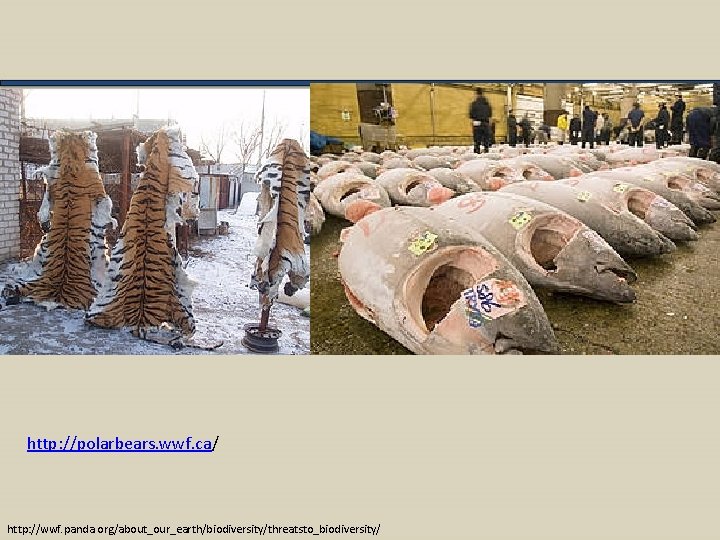
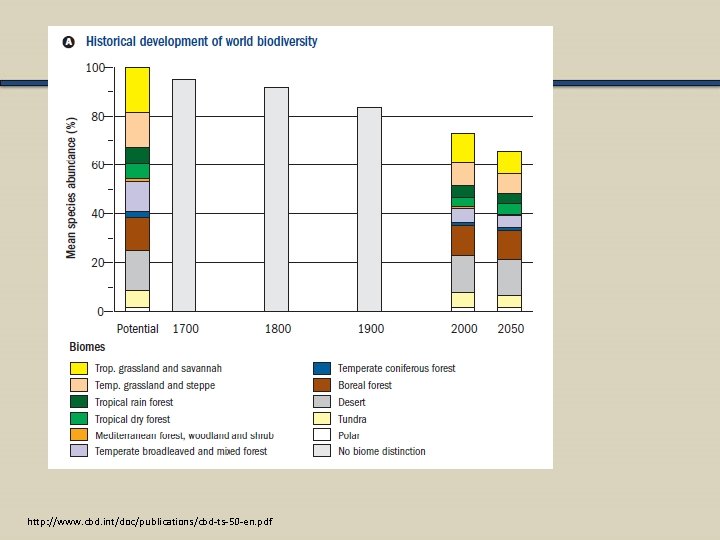
Biodiversity has declined by more than a quarter in the last 35 years. The Living Planet Index (LPI), which tracks nearly 4, 000 populations of wildlife, shows an overall fall in population trends of 27% between 1970 and 2005. Population growth and our consumption are the primary reasons. Specifically, habitat destruction and wildlife trade are the major causes of population decline in species. Click me. .
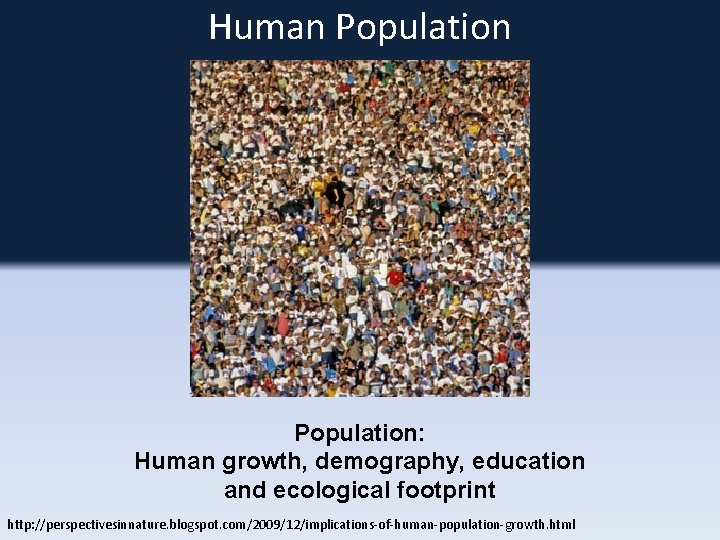
Human Population: Human growth, demography, education and ecological footprint http: //perspectivesinnature. blogspot. com/2009/12/implications-of-human-population-growth. html
“As you improve health in a society, population growth goes down. You know. I thought it was…before I learned about it, I thought it was paradoxical. ” – Bill Gates, Microsoft Corp. http: //www. gatesfoundation. org/Pages/home. aspx
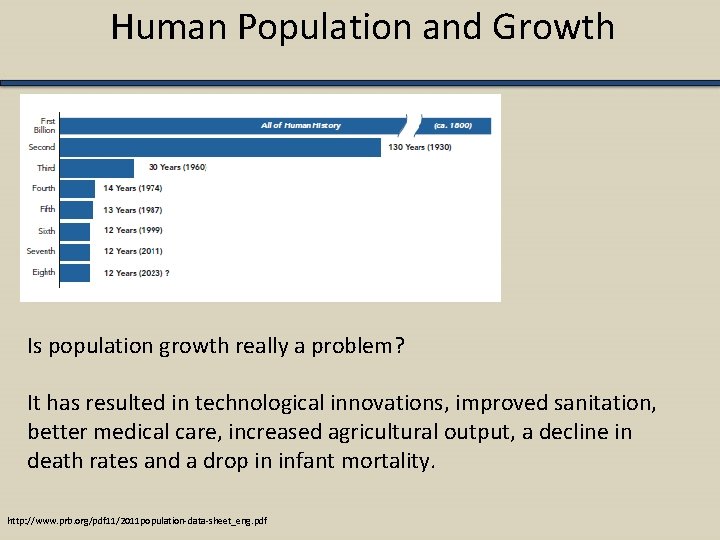
Human Population and Growth Is population growth really a problem? It has resulted in technological innovations, improved sanitation, better medical care, increased agricultural output, a decline in death rates and a drop in infant mortality. http: //www. prb. org/pdf 11/2011 population-data-sheet_eng. pdf
Perspectives on human population have changed over time • 1700 s more children meant better support in old age and more labour for factory work • 1766: Thomas Malthus – growing population is eventually checked by limits on births or increases in deaths • 1968: Paul Ehrlich – population is growing too fast and must be controlled
Human Population and Growth Cornucopian view: Resource depletion as a consequence of greater numbers of people, is not a problem if new resources can be found to replace the depleted ones. Even if resource substitution could enable indefinite population growth, could we maintain the quality of life that we would desire, or would our descendants have less space, less food, and less material wealth than the average person does today? Many governments have found it difficult to let go of the notion that population growth increases a nation’s economic, political, and military strength.
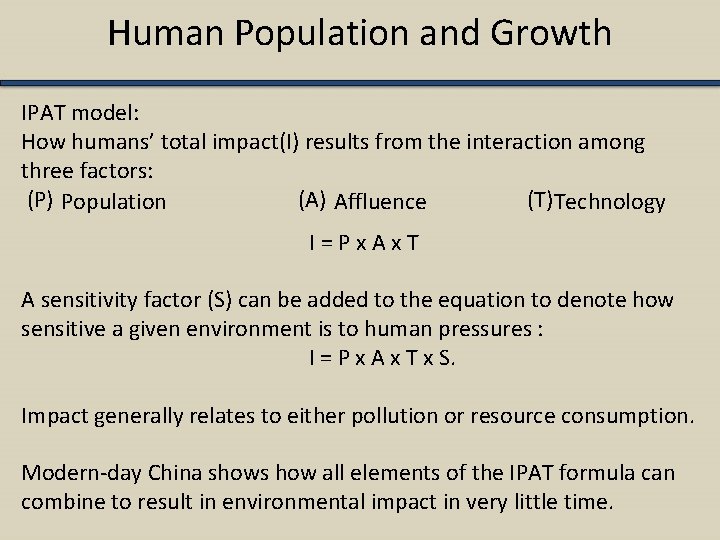
Human Population and Growth IPAT model: How humans’ total impact(I) results from the interaction among three factors: (P) (A) (T) Population Affluence Technology I = P x A x T A sensitivity factor (S) can be added to the equation to denote how sensitive a given environment is to human pressures : I = P x A x T x S. Impact generally relates to either pollution or resource consumption. Modern-day China shows how all elements of the IPAT formula can combine to result in environmental impact in very little time.
Human Population and Growth One-Child Policy Under Mao Zedong’s leadership (1949 -1976), improved food production and distribution and better medical care allowed China’s population to swell, causing environmental problems The government instituted a population-control program in the 1970’s. • Started with education and outreach efforts encouraging late marriage and fewer children, and increasing the accessibility of contraceptives and abortion. • In 1979 instituted a system of rewards and punishments, in forcing a one-child limit per family. • China’s growth rate is down but there have been unintended consequences such as widespread killing of female infants and an unbalanced sex ratio.
Demography: The science of human population: The application of population ecology principles to the study of statistical change in human populations is the focus. The principles of population ecology apply to humans Like other organisms, humans have a carrying capacity set by environmental limitations on our population growth. Estimates of the human carrying capacity have ranged greatly, from 1 -2 billion people living prosperously in a healthy environment to 33 billion living in extreme poverty in a degraded world without natural areas.
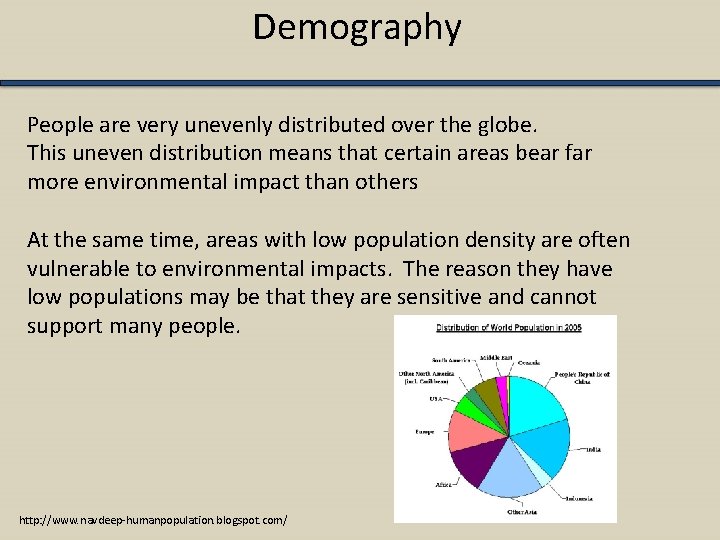
Demography People are very unevenly distributed over the globe. This uneven distribution means that certain areas bear far more environmental impact than others At the same time, areas with low population density are often vulnerable to environmental impacts. The reason they have low populations may be that they are sensitive and cannot support many people. http: //www. navdeep-humanpopulation. blogspot. com/
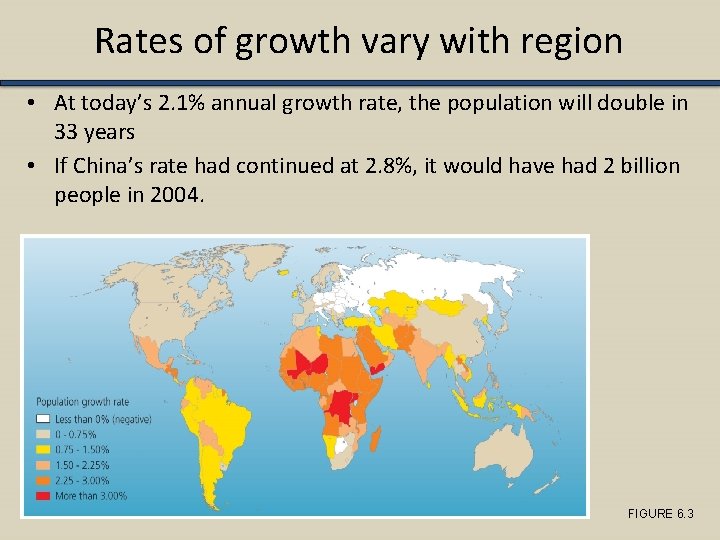
Rates of growth vary with region • At today’s 2. 1% annual growth rate, the population will double in 33 years • If China’s rate had continued at 2. 8%, it would have had 2 billion people in 2004. FIGURE 6. 3
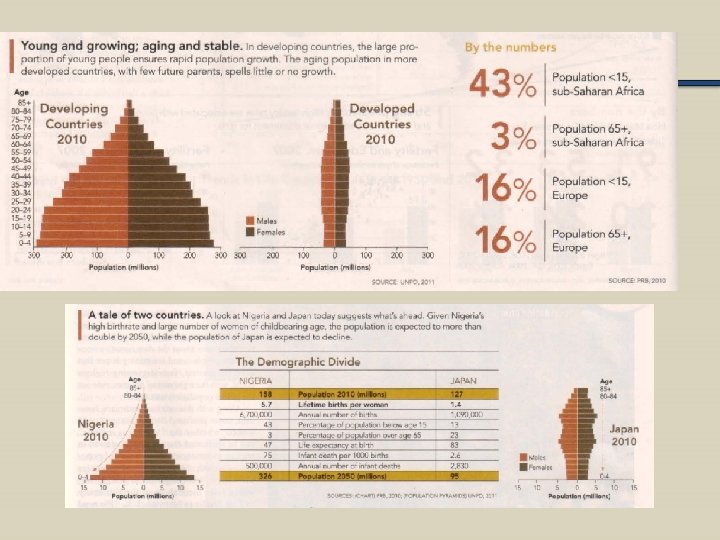
Demography Age structure diagrams show the relative sizes of each age group in a population and are especially valuable to demographers in predicating future dynamics of a population. • The ratio of males to females, the sex ratio can also affect population dynamics. • The naturally occurring sex ratio in human populations at birth features a slight preponderance of males. This ratio can be skewed, examples are China and Sarnia
Demography • Live male births in the Aamjiwnaang First Nation has been declining from the early 1990 s to 2003, from an apparently stable sex ratio. • Likely due to environmental and occupational chemical exposures. • This community is located immediately adjacent to several large petrochemical, polymer, and chemical industrial plants. • A community health survey is currently under way to gather more information about the health of the community. - Mackenzie, Lockridge and Keith (2005) http: //ehp 03. niehs. nih. gov/article/fetch. Article. action? article. URI=info: doi/10. 1289/ehp. 8479
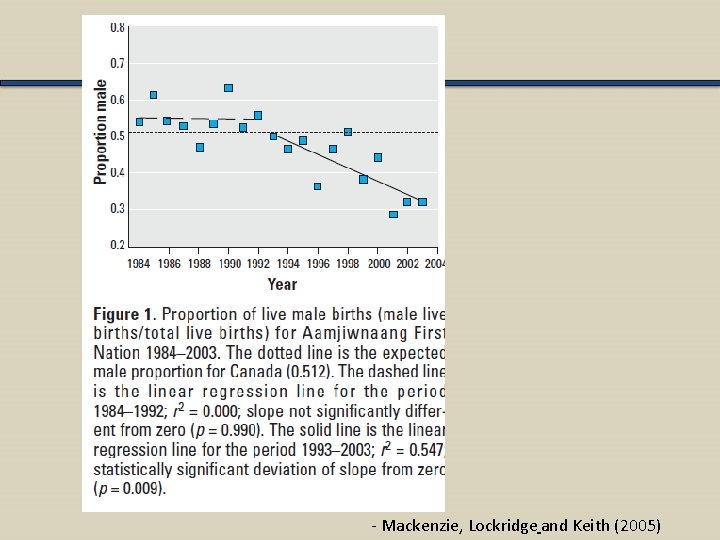
- Mackenzie, Lockridge and Keith (2005)
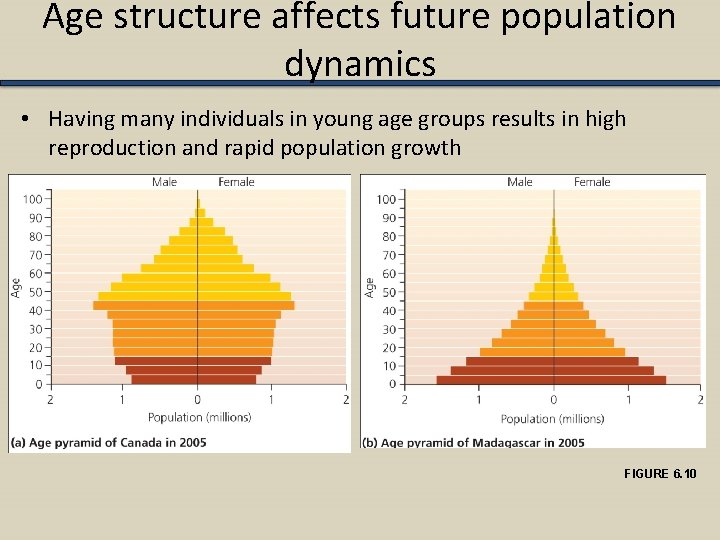
Age structure affects future population dynamics • Having many individuals in young age groups results in high reproduction and rapid population growth FIGURE 6. 10
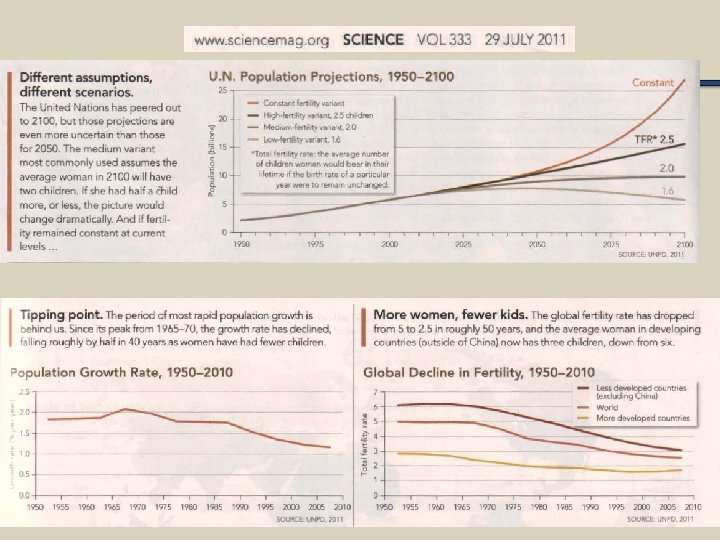
Population growth depends on what 4 factors? Birth, death, immigration and emigration Immigration and emigration are increasingly important in the modern world: flow of refugees transportation Natural rate of population change: is the change due to birth and death rates alone, excluding migration. Since 1970 s growth rates in many countries have been declining and the global growth rate has declined partially because of a steep drop in birth rates.
Population growth Total Fertility Rate (TFR): is the average number of children born per female member of a population during her lifetime. Replacement Fertility: the TFR that keeps the size of a population stable, for humans it is 2. 1.
Population growth Demographic transition is a theoretical model of economic and cultural change that explains the trend of declining death rates and birth rates that occurs when nations become industrialized. Pre industrial: characterized by condition in which both death rates and birth rates are high Transitional stage: death rates decline and birth rates remain high. Industrial stage: creates employment opportunities, particularly for women causing birth rate to fall Post-industrial stage: both birth rates and death rates remain low and populations stabilize or decline slightly.
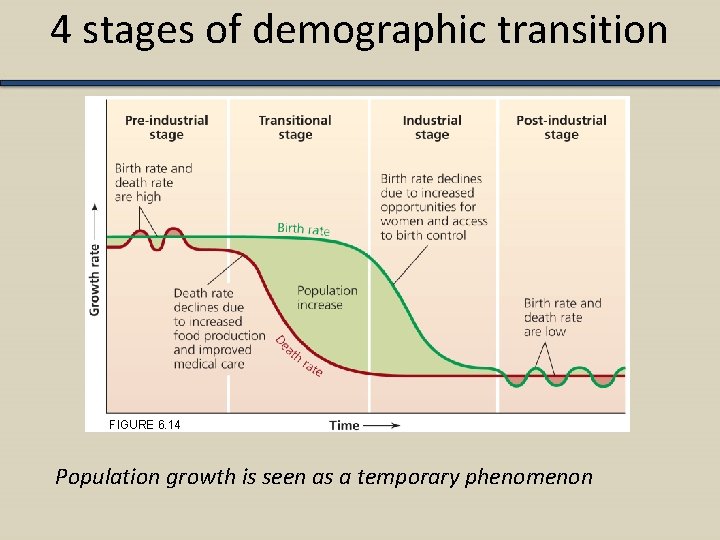
4 stages of demographic transition FIGURE 6. 14 Population growth is seen as a temporary phenomenon
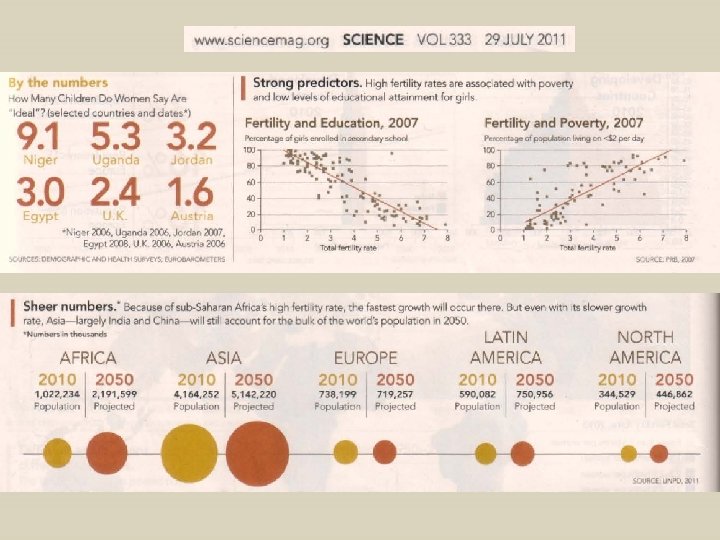
Female literacy is associated with birth rates Women’s empowerment greatly affects population growth rates Drops in TFR have been most noticeable in countries where women have gained improved access to contraceptives and education, particularly family planning education. Many women still lack the information and personal freedom of choice to allow them to make their own decisions about when to have children and how many to have. In societies in which women are freer to make reproductive decisions, fertility rates have fallen, and the children are better cared for, healthier, and better educated.
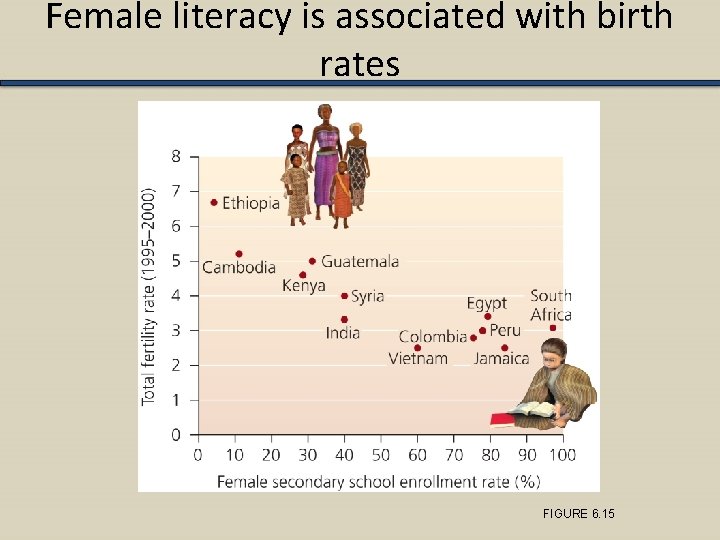
Female literacy is associated with birth rates FIGURE 6. 15
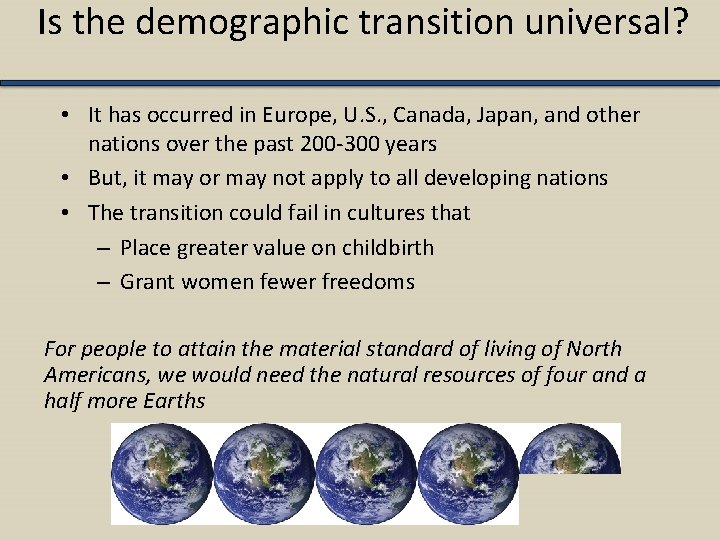
Is the demographic transition universal? • It has occurred in Europe, U. S. , Canada, Japan, and other nations over the past 200 -300 years • But, it may or may not apply to all developing nations • The transition could fail in cultures that – Place greater value on childbirth – Grant women fewer freedoms For people to attain the material standard of living of North Americans, we would need the natural resources of four and a half more Earths
Is the demographic transition universal? Population policies and family-planning programs are working around the globe. The government of Thailand has relied on an education–based approach to family planning that has reduced birth rates and slowed population growth. India has had long-standing policies, but some think they need to be strengthened. http: //www. indexmundi. com/g/g. aspx? c=in&v=31 Brazil, Mexico, Iran, Cuba and other developing countries have instituted active programs consisting of population reduction targets, incentives, education, contraception and reproductive health care. http: //www. indexmundi. com/map/? v=31
Is the demographic transition universal? • In 1994 the united Nations hosted a conference in Cairo on population and development at which 179 nations endorsed a platform calling for all governments to offer universal access to reproductive health care within 20 years. • Despite the successes of family planning internationally, the United States has often declined to fund family –planning efforts by the United Nations. • Cancelling this funding was one of George W. Bush’s first acts upon becoming a U. S. President in 2001
Is the demographic transition universal? Poverty is strongly correlated with population growth Consumption from affluence creates environmental impact Individuals in affluent societies leave a larger “ecological footprint” In 1999 the richest 20% of the world’s people: used 86% of the world’s resources had over 80 times the income of the poorest 20% The wealth gap and population growth contribute to violent conflict
Other factors HIV/AIDS is a major influence on human populations in parts of the world Of the 38 million people around the world infected with HIV/AIDS in 2004, 25 million lived in the nations of sub-Saharan Africa. The AIDS epidemic is unleashing a variety of demographic changes Premature deaths, of both infants and young adults are reducing the average life expectancy in African nations. Severe demographic changes have social, political, and economic repercussions.
Other factors Everywhere in sub-Saharan Africa, AIDS is undermining the ability of developing countries to make the transition to modern technologies because it is removing many of the youngest and most productive members of society.
Is the demographic transition universal? Although global populations are still growing, the rate of growth has decreased nearly everywhere. There has been progress in expanding rights for women worldwide. In addition to the clear ethical progress of this development, it also helps to slow population growth. True sustainability demands that we stabilize our population size in time to avoid destroying the natural systems that support our economies and societies.
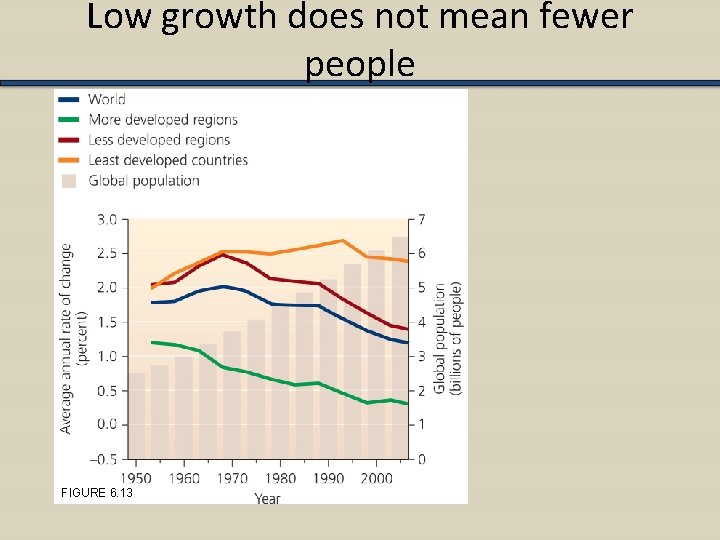
Low growth does not mean fewer people FIGURE 6. 13
Conclusion • The human population is larger than at any time in the past • However, the rate of growth has decreased because of: – Demographics – Better rights for women • How will the population stop rising? – demographic transitions – governmental intervention – disease – social conflict
- Slides: 71