
Lecture 5 Anatomical Structure of Softwoods part I


- Slides: 15
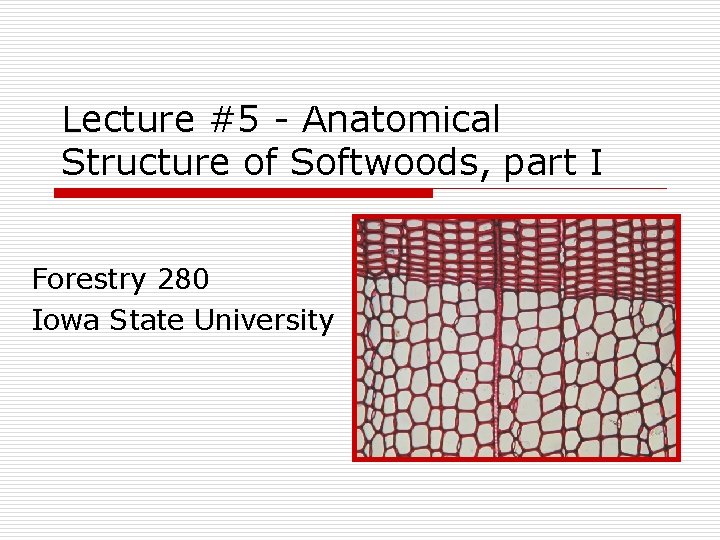
Lecture #5 - Anatomical Structure of Softwoods, part I Forestry 280 Iowa State University
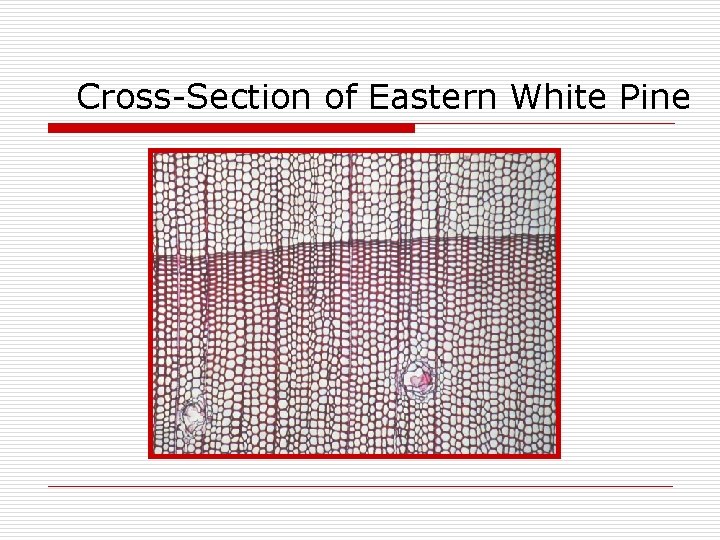
Cross-Section of Eastern White Pine
Cell Types of Coniferous Woods Longitudinal Cells o o Tracheids – Tracheids conduct water/solutes and provide mechanical support. Two Types: n n Longitudinal Tracheids Strand Tracheids Radial Section (RS) XS
Longitudinal Tracheids (LTs) o o o Elongated cells with thickened walls and tapering, pointed ends Closed at the ends, i. e. , are “imperforate” as opposed to the vessel elements found in hardwoods. Side walls of tracheids contain pits.
Longitudinal Tracheids, continued o o o Mature-wood softwood tracheids are typically between 3 -5 mm long and have a l/d ratio of about 100; thus, the average diameter of such cells would be 30 -50 micrometers in (tangential) diameter. The radial diameter of LTs decreases from earlywood to latewood. LTs typically comprise 90 to 94% of softwood volume.
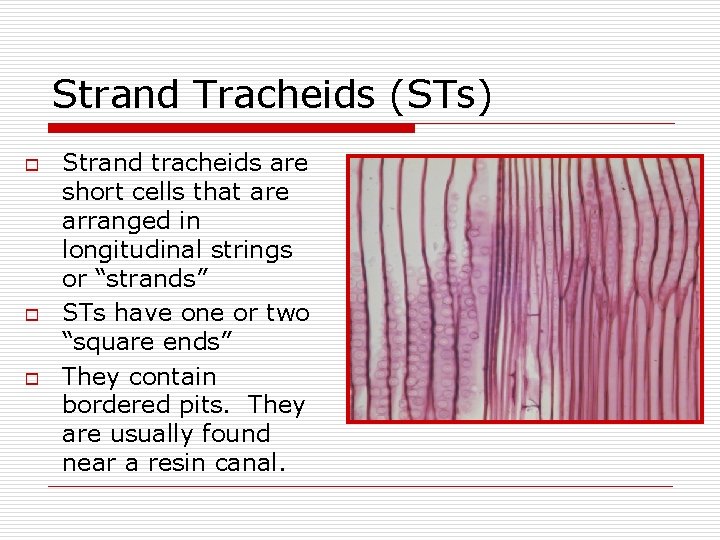
Strand Tracheids (STs) o o o Strand tracheids are short cells that are arranged in longitudinal strings or “strands” STs have one or two “square ends” They contain bordered pits. They are usually found near a resin canal.
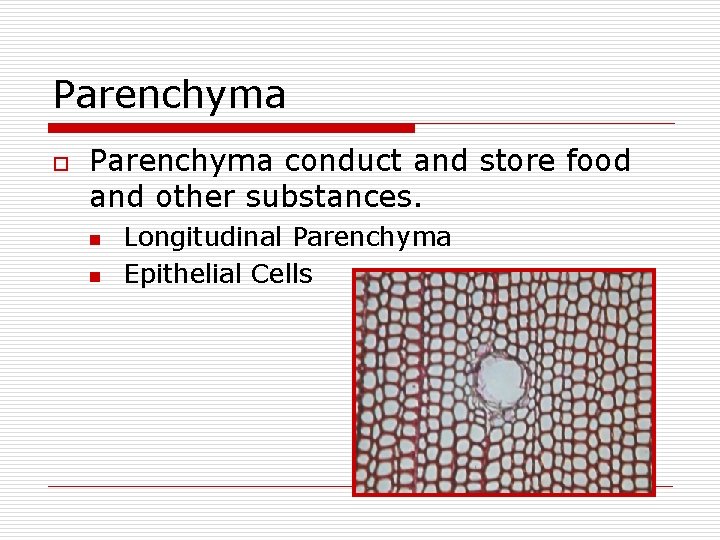
Parenchyma o Parenchyma conduct and store food and other substances. n n Longitudinal Parenchyma Epithelial Cells
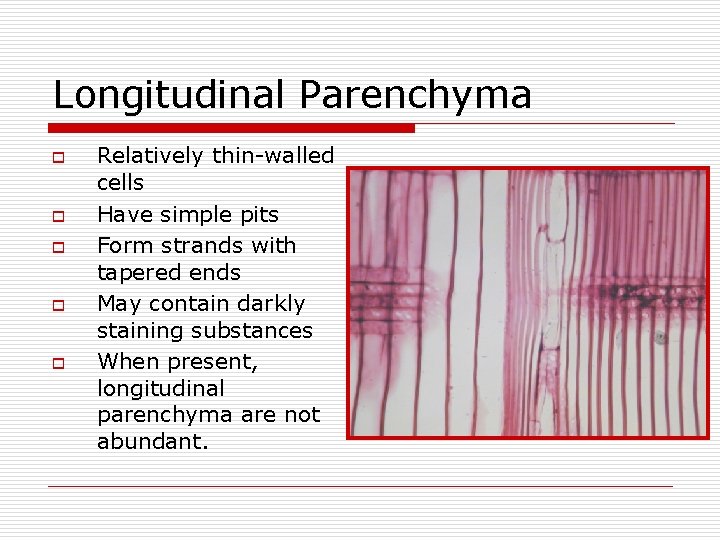
Longitudinal Parenchyma o o o Relatively thin-walled cells Have simple pits Form strands with tapered ends May contain darkly staining substances When present, longitudinal parenchyma are not abundant.
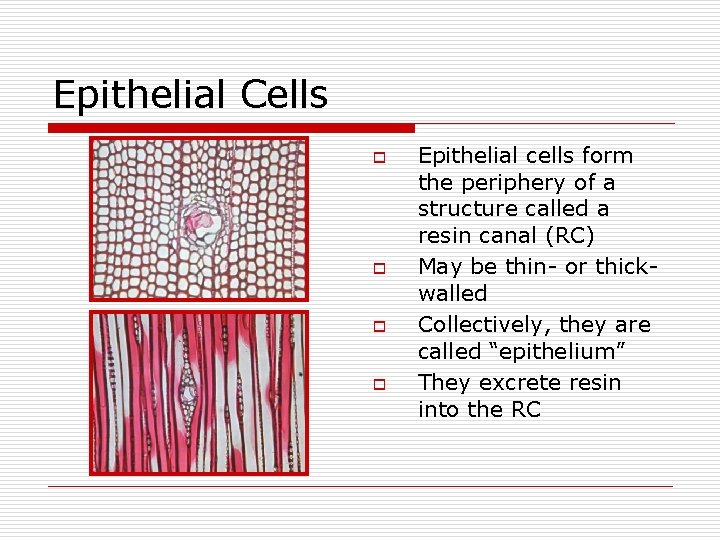
Epithelial Cells o o Epithelial cells form the periphery of a structure called a resin canal (RC) May be thin- or thickwalled Collectively, they are called “epithelium” They excrete resin into the RC
Epithelial Cells, continued o o “Normal” resin canals are found in four domestic genera, namely Pinus (pines), Picea (spruces), Larix (larches), and Pseudotsuga (Douglas fir) “Traumatic” resin canals (i. e. , those arising in response to an injury to the tree) may be found in these and other coniferous genera. Longitudinal only.
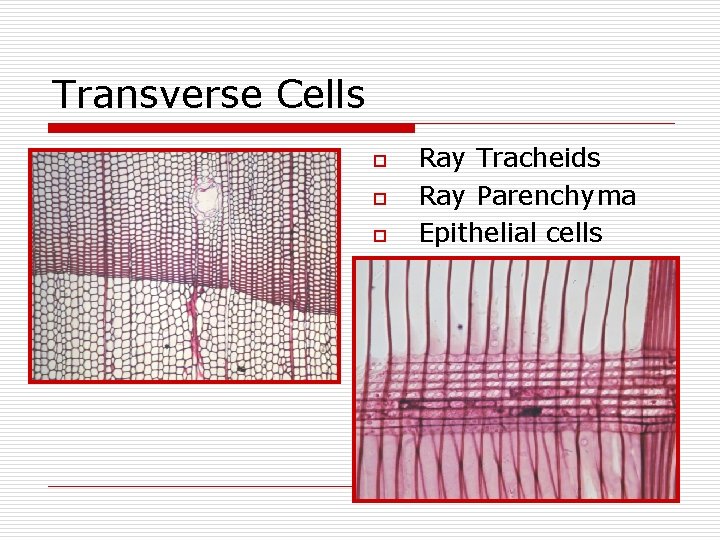
Transverse Cells o o o Ray Tracheids Ray Parenchyma Epithelial cells
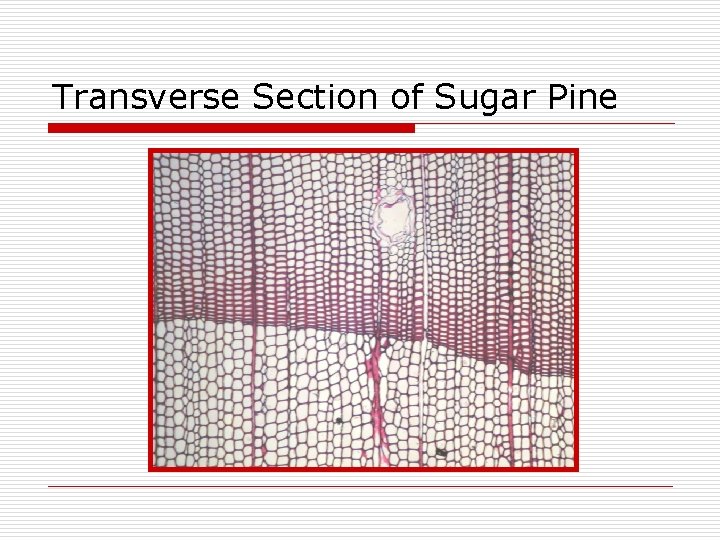
Transverse Section of Sugar Pine
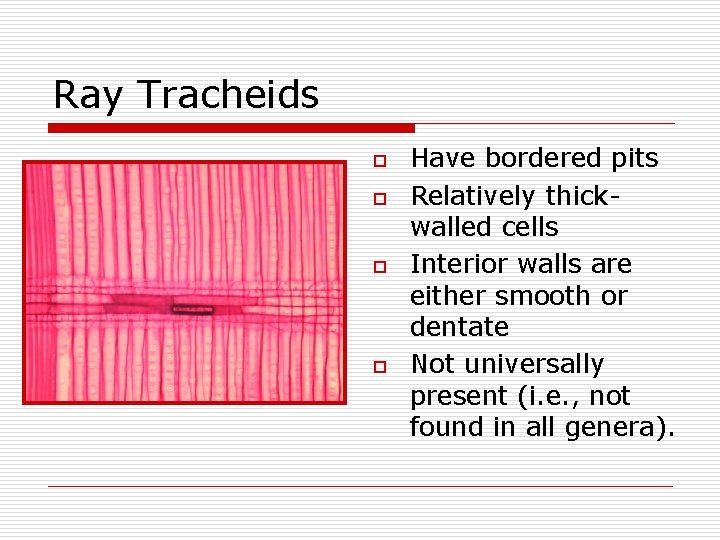
Ray Tracheids o o Have bordered pits Relatively thickwalled cells Interior walls are either smooth or dentate Not universally present (i. e. , not found in all genera).
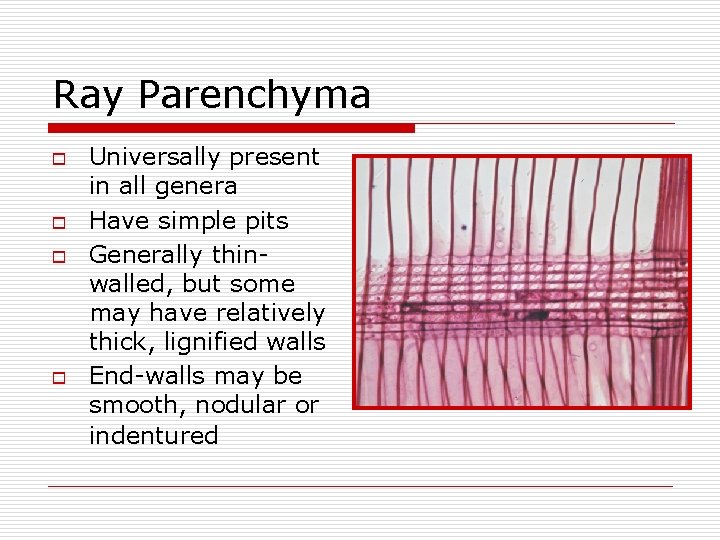
Ray Parenchyma o o Universally present in all genera Have simple pits Generally thinwalled, but some may have relatively thick, lignified walls End-walls may be smooth, nodular or indentured
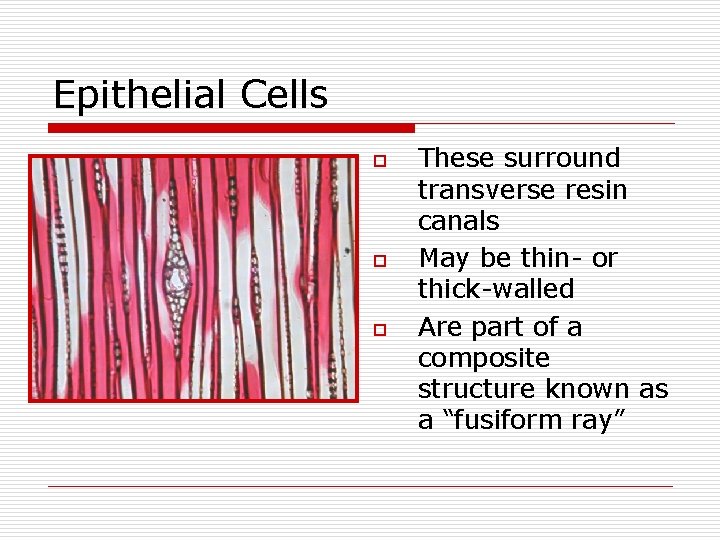
Epithelial Cells o o o These surround transverse resin canals May be thin- or thick-walled Are part of a composite structure known as a “fusiform ray”