
Lecture 4 The Self Outline n n n
- Slides: 31
Lecture 4 The Self
Outline n n n Introduction The Self Concept n Self-concept and self-construals Sources of Self-Knowledge n Self-Observation and Social Comparison n Interpersonal Relations n Group Membership and Social Identity Self-Presentation Self-Esteem n Self-Enhancement Theories n Self-Verification Theory
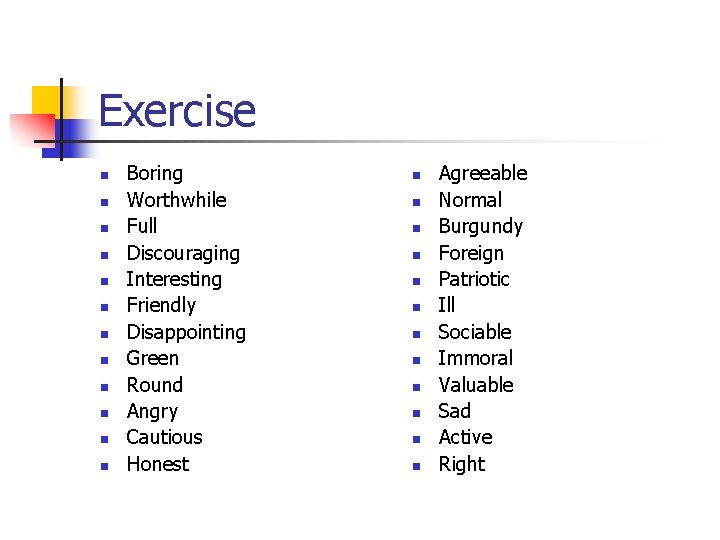
Exercise n n n Boring Worthwhile Full Discouraging Interesting Friendly Disappointing Green Round Angry Cautious Honest n n n Agreeable Normal Burgundy Foreign Patriotic Ill Sociable Immoral Valuable Sad Active Right
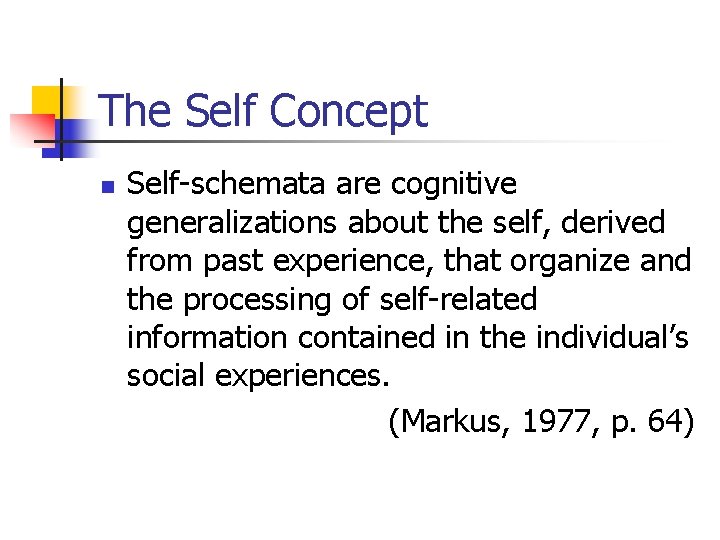
The Self Concept n Self-schemata are cognitive generalizations about the self, derived from past experience, that organize and the processing of self-related information contained in the individual’s social experiences. (Markus, 1977, p. 64)
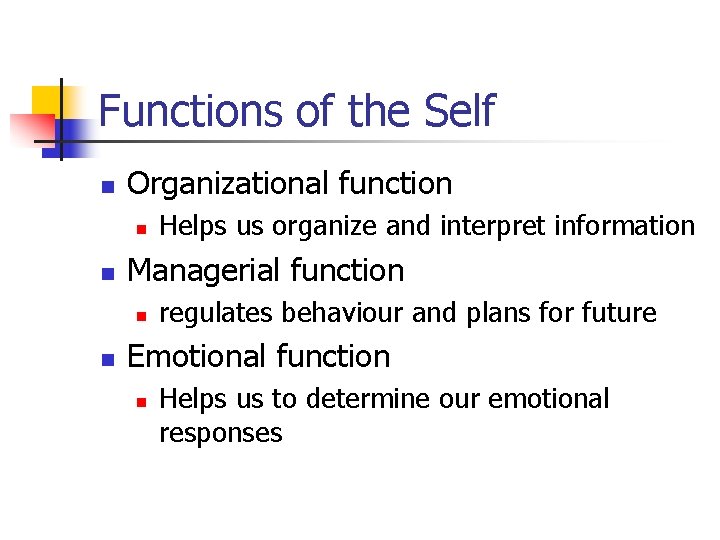
Functions of the Self n Organizational function n n Managerial function n n Helps us organize and interpret information regulates behaviour and plans for future Emotional function n Helps us to determine our emotional responses
The Self Concept, continued n n Independent self-construals Interdependent self-construals
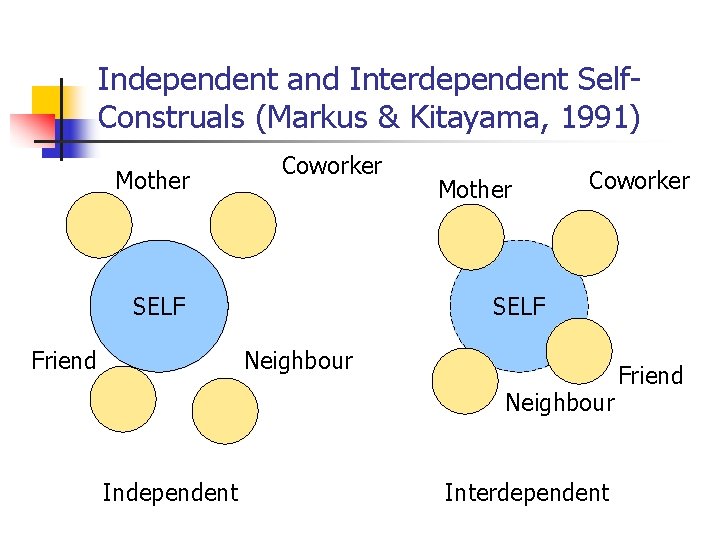
Independent and Interdependent Self. Construals (Markus & Kitayama, 1991) Mother Coworker SELF Friend Mother Coworker SELF Neighbour Independent Interdependent Friend
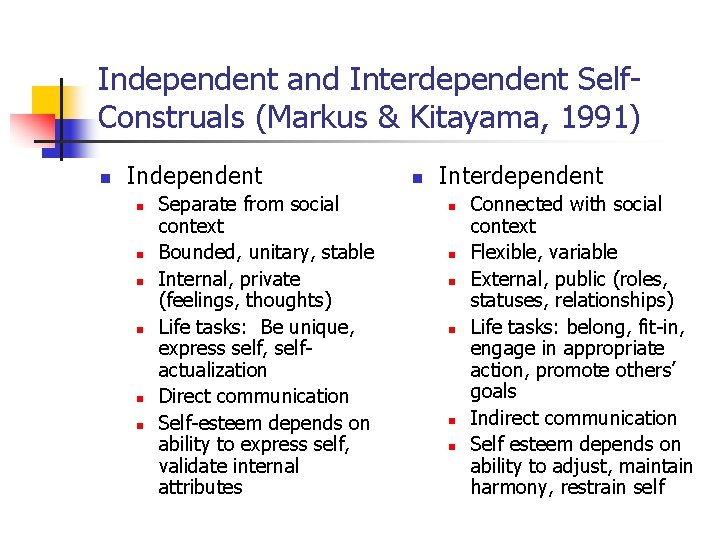
Independent and Interdependent Self. Construals (Markus & Kitayama, 1991) n Independent n n n Separate from social context Bounded, unitary, stable Internal, private (feelings, thoughts) Life tasks: Be unique, express self, selfactualization Direct communication Self-esteem depends on ability to express self, validate internal attributes n Interdependent n n n Connected with social context Flexible, variable External, public (roles, statuses, relationships) Life tasks: belong, fit-in, engage in appropriate action, promote others’ goals Indirect communication Self esteem depends on ability to adjust, maintain harmony, restrain self
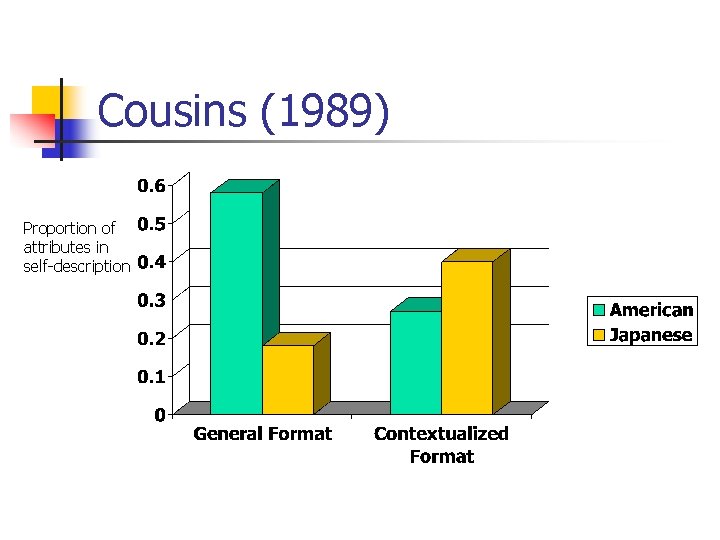
Cousins (1989) Proportion of attributes in self-description
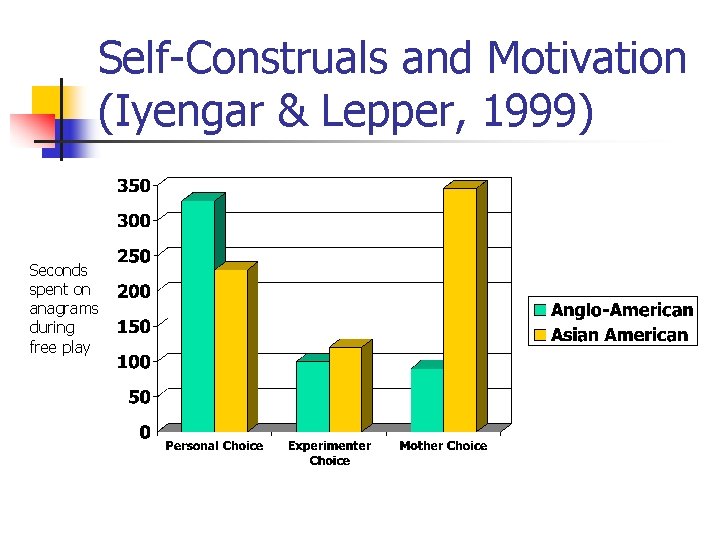
Self-Construals and Motivation (Iyengar & Lepper, 1999) Seconds spent on anagrams during free play
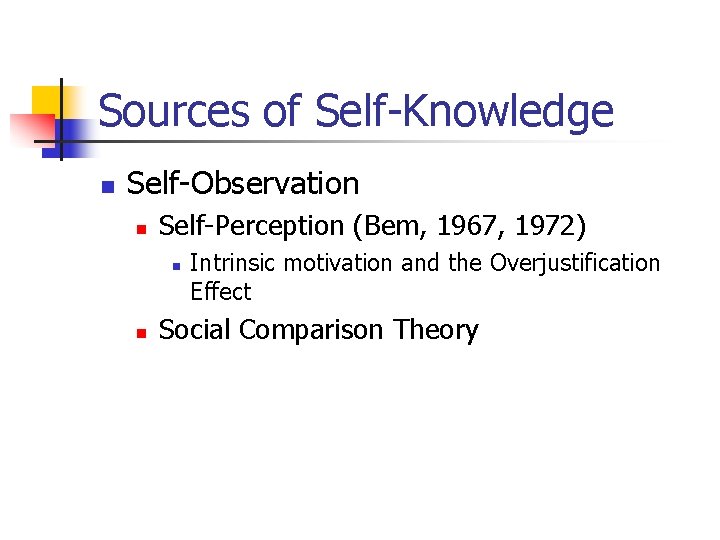
Sources of Self-Knowledge n Self-Observation n Self-Perception (Bem, 1967, 1972) n n Intrinsic motivation and the Overjustification Effect Social Comparison Theory
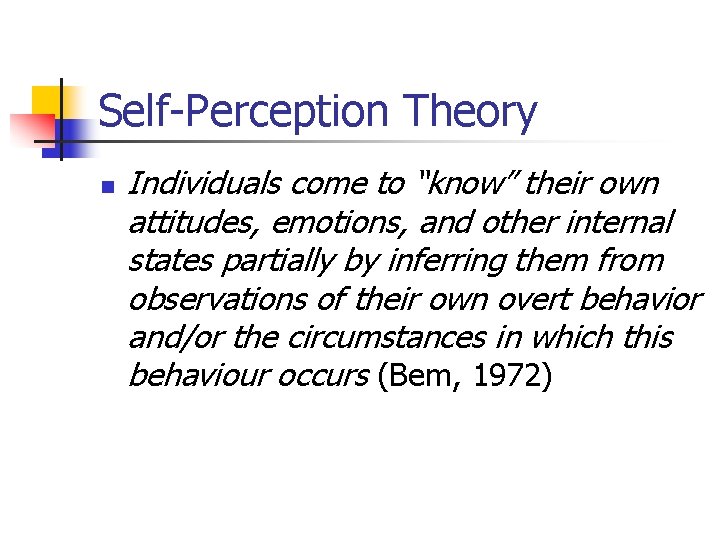
Self-Perception Theory n Individuals come to “know” their own attitudes, emotions, and other internal states partially by inferring them from observations of their own overt behavior and/or the circumstances in which this behaviour occurs (Bem, 1972)
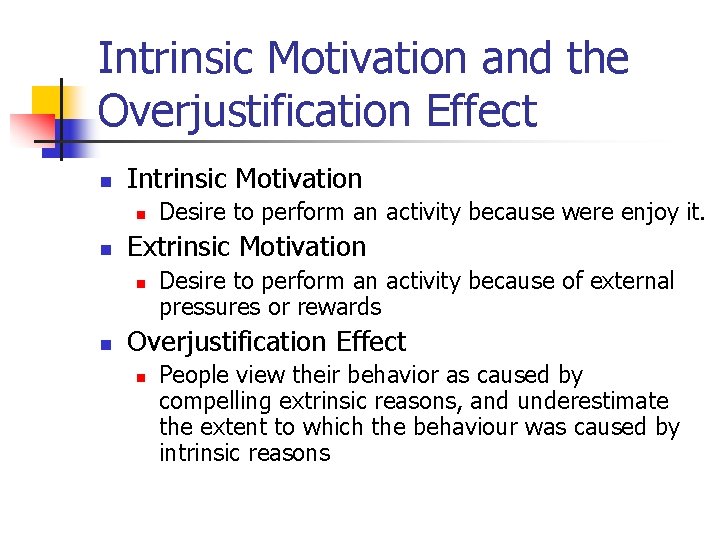
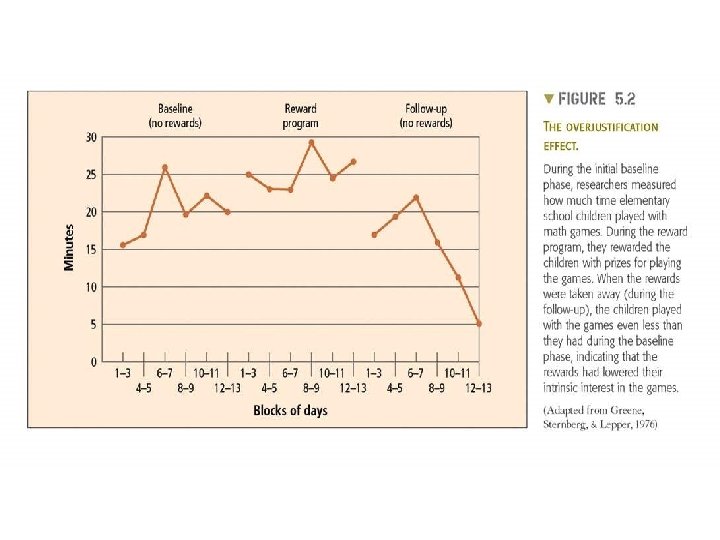
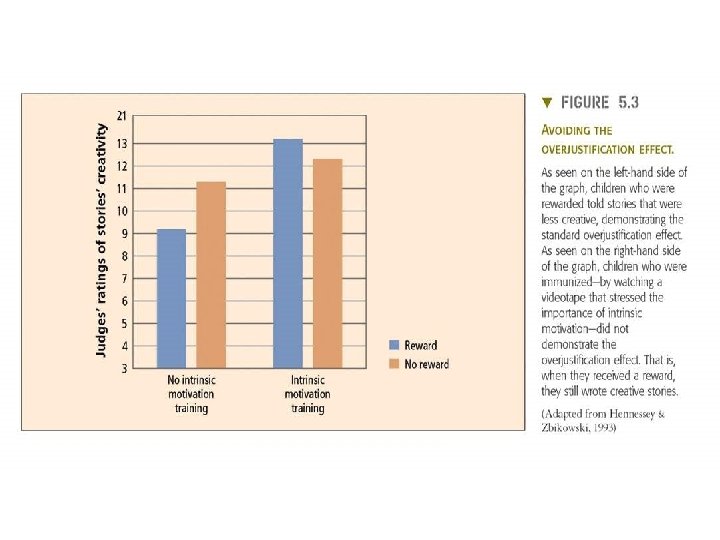
Intrinsic Motivation and the Overjustification Effect n Intrinsic Motivation n n Extrinsic Motivation n n Desire to perform an activity because were enjoy it. Desire to perform an activity because of external pressures or rewards Overjustification Effect n People view their behavior as caused by compelling extrinsic reasons, and underestimate the extent to which the behaviour was caused by intrinsic reasons
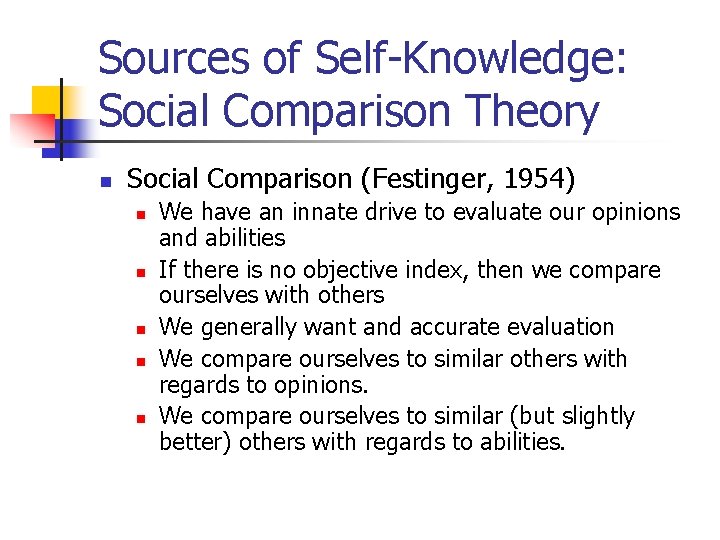
Sources of Self-Knowledge: Social Comparison Theory n Social Comparison (Festinger, 1954) n n n We have an innate drive to evaluate our opinions and abilities If there is no objective index, then we compare ourselves with others We generally want and accurate evaluation We compare ourselves to similar others with regards to opinions. We compare ourselves to similar (but slightly better) others with regards to abilities.
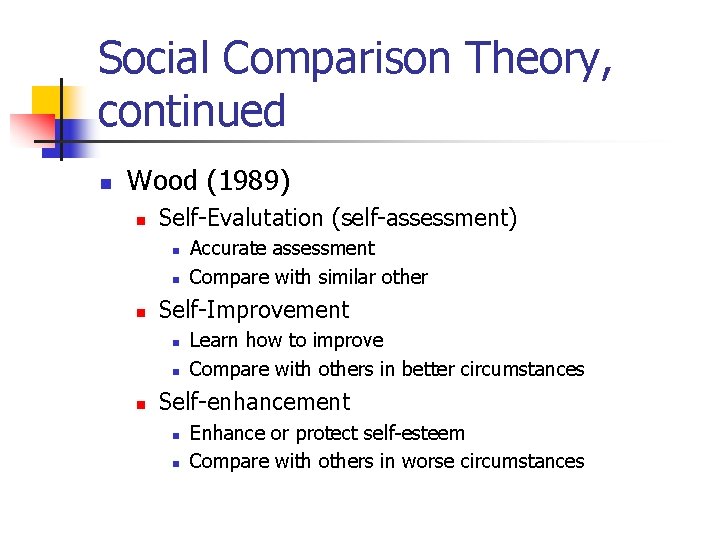
Social Comparison Theory, continued n Wood (1989) n Self-Evalutation (self-assessment) n n n Self-Improvement n n n Accurate assessment Compare with similar other Learn how to improve Compare with others in better circumstances Self-enhancement n n Enhance or protect self-esteem Compare with others in worse circumstances
Sources of Self-Knowledge: Interpersonal Relations n n Direct Interpersonal Influence Indirect Interpersonal Influence n n Reflected self-appraisals Rejected Interpersonal Influence
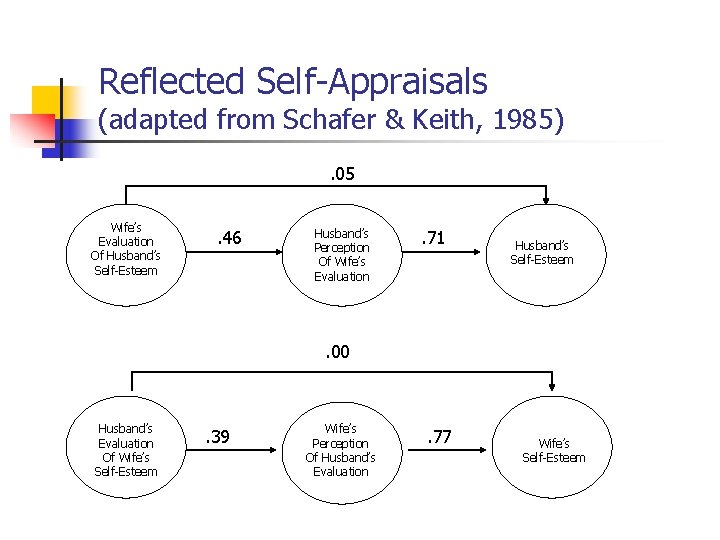
Reflected Self-Appraisals (adapted from Schafer & Keith, 1985). 05 Wife’s Evaluation Of Husband’s Self-Esteem . 46 Husband’s Perception Of Wife’s Evaluation . 71 Husband’s Self-Esteem . 00 Husband’s Evaluation Of Wife’s Self-Esteem . 39 Wife’s Perception Of Husband’s Evaluation . 77 Wife’s Self-Esteem
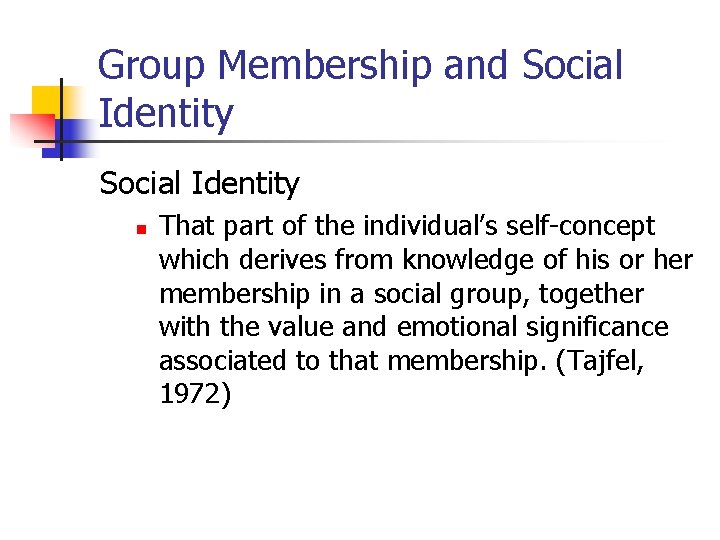
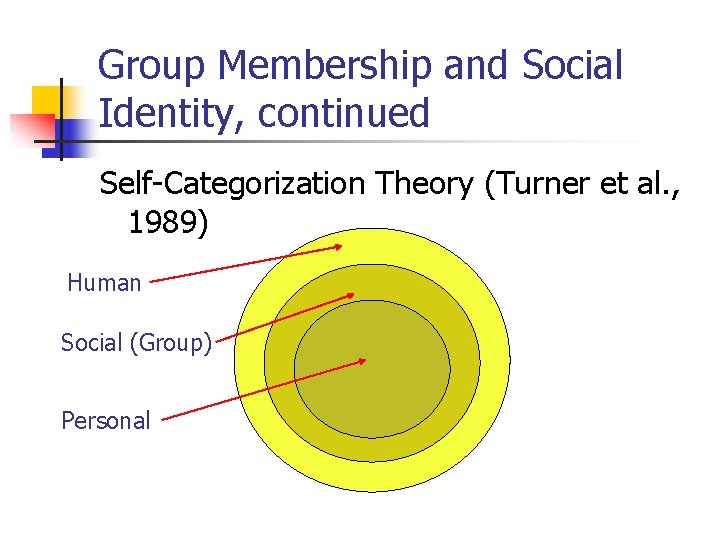
Group Membership and Social Identity n That part of the individual’s self-concept which derives from knowledge of his or her membership in a social group, together with the value and emotional significance associated to that membership. (Tajfel, 1972)
Group Membership and Social Identity, continued Self-Categorization Theory (Turner et al. , 1989) Human Social (Group) Personal
Self-Presentation and Impression Management n Strategic Self Presentation n n Ingratiation Intimidation Self-promotion Exemplification Supplication
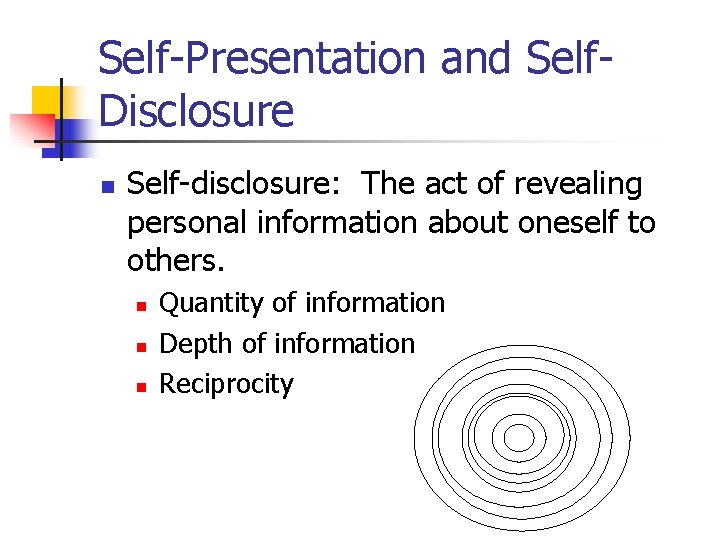
Self-Presentation and Self. Disclosure n Self-disclosure: The act of revealing personal information about oneself to others. n n n Quantity of information Depth of information Reciprocity
Self-Esteem n n Self-esteem refers to affective evaluations of one’s worth, value or importance. Synonymous with selfworth, self-regard, self-respect, selfacceptance. Various theories have been proposed to explain how people work to maintain a stable, positive self-concept.
Self-Discrepancy Theory (Higgins, 1987, 1989, 1996) n n n Feel distressed when our “actual” self is different from our “ideal” (the type of person we desire to be) or “ought” (the type of person we feel we should be) self, on a criterion that is important to us. “Actual-ideal” discrepancies are associated with dejection, sadness, dissatisfaction, and depression-related emotions. “Actual-ought” discrepancies are associated with fear, worry, tension and anxiety-related emotions.
Self-Completion Theory (Gollwitzer & Wicklund, 1985) n n When people experience a threat to a valued aspect of their self-concept, they become highly motivated to seek social recognition of that aspect of the self. When an important identity has been challenged, we behave in ways to legitimate our claim to that identity.
Self-Evaluation Maintenance Theory (Tesser et al. , 1995) n n Aspects of our self-concept can be threatened by another person’s behaviour. Two factors are important: n n The immediacy of the other person The personal importance of the behaviour
Basking in Reflected Glory (BIRGing) n We take pride in the achievements of certain people and groups, even when we had nothing to do with attaining them.
Self-Enhancement and Self. Verification n n Self-enhancement is the tendency to hold unrealistically positive views about ourselves Self-verification is the tendency to seek veridical information about the self, whether positive or negative.
Self-Verification Theory (Swann 1990, 1996) n n We are motivated to have stable, coherent self-concepts. Information from others (both positive and negative) that is contrary to our self -concept n n threatens the stability of the self-concept. makes it comfortable to interact with someone who doesn’t share our selfconcept
Self-Verification Theory, continued n When do we self-verify n n n In close relationships When we are highly certain of our selfconcept Consequences of being “discovered” are high