
Lecture 4 The Cell organelles 1 The nucleus
- Slides: 14
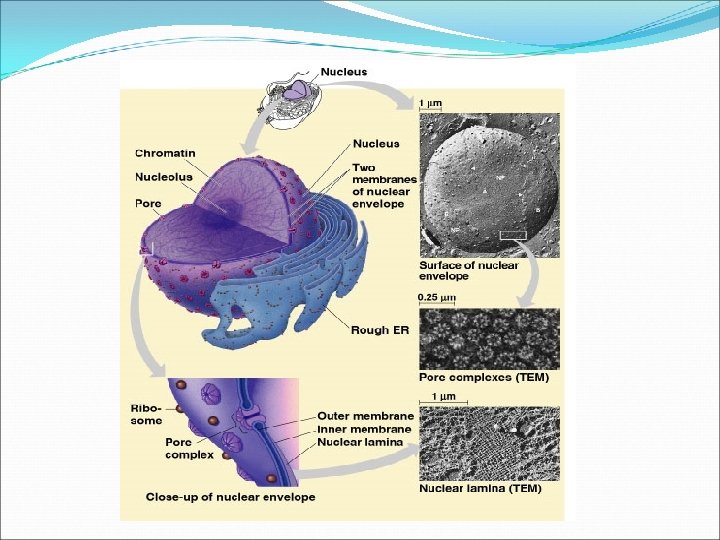
Lecture 4: The Cell organelles 1. The nucleus: Contains the cell’s genetic library ﺍﻟﻤﻜﺘﺒﺔ )ﺍﻟﻤﺤﺘﻮﻯ( ﺍﻟـﺠﻴﻨﻲ The nucleus contains most of the genes in an eukaryotic cell. The nucleus is separated from the cytoplasm by a double membrane ﻏﺸﺎﺀ ﻣﺰﺩﻭﺝ called nuclear membrane. The nuclear membrane contains pores ﺛﻘﻮﺏ that allow large macromolecules and particles to pass through. The nuclear membrane helps to maintain the shape of the nucleus.
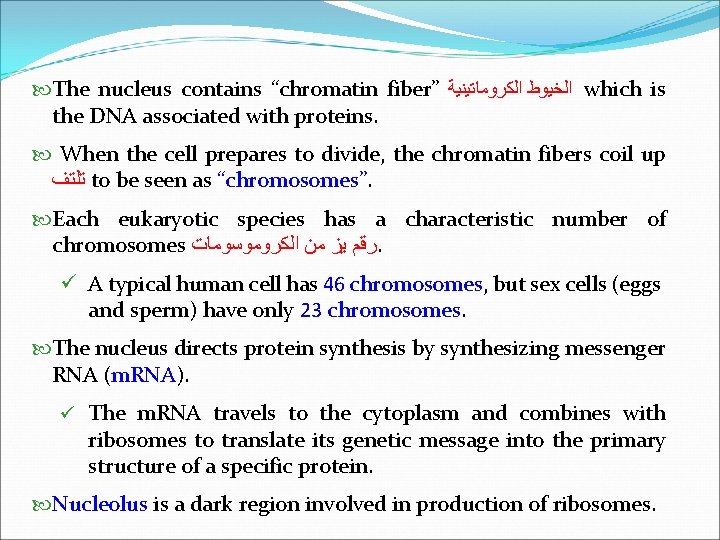
The nucleus contains “chromatin fiber” ﺍﻟﺨﻴﻮﻁ ﺍﻟﻜﺮﻭﻣﺎﺗﻴﻨﻴﺔ which is the DNA associated with proteins. When the cell prepares to divide, the chromatin fibers coil up ﺗﻠﺘﻒ to be seen as “chromosomes”. Each eukaryotic species has a characteristic number of chromosomes ﺭﻗﻢ ﻳﺯ ﻣﻦ ﺍﻟﻜﺮﻭﻣﻮﺳﻮﻣﺎﺕ. ü A typical human cell has 46 chromosomes, but sex cells (eggs and sperm) have only 23 chromosomes. The nucleus directs protein synthesis by synthesizing messenger RNA (m. RNA). ü The m. RNA travels to the cytoplasm and combines with ribosomes to translate its genetic message into the primary structure of a specific protein. Nucleolus is a dark region involved in production of ribosomes.
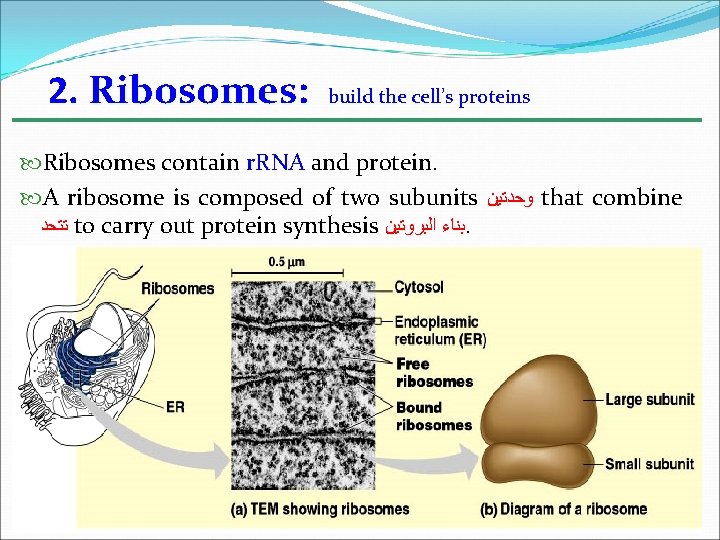
2. Ribosomes: build the cell’s proteins Ribosomes contain r. RNA and protein. A ribosome is composed of two subunits ﻭﺣﺪﺗﻴﻦ that combine ﺗﺘﺤﺪ to carry out protein synthesis ﺑﻨﺎﺀ ﺍﻟﺒﺮﻭﺗﻴﻦ.
In the nucleolus, ribosomal RNA (r. RNA) is synthesized and assembled with proteins from the cytoplasm to form ribosomal subunits. The subunits pass from the nuclear pores to the cytoplasm where they combine to form ribosomes. Cell types that synthesize large quantities of proteins (e. g. , pancreas) have large numbers of ribosomes. Types of Ribosomes: 1) Free ribosomes ﺭﻳﺒﻮﺳﻮﻣﺎﺕ ﺣﺮﺓ are suspended ﻣﻌﻕ in the cytosol and synthesize proteins that function within the cytosol. 2) Bound ribosomes ﺭﻳﺒﻮﺳﻮﻣﺎﺕ ﻣﺮﺗﺒﻄﺔ are attached to ﻣﻠﺘﺼﻖ ﺑـ the outside of the endoplasmic reticulum. ü These synthesize proteins that are either included into membranes or for secretion ﺇﻓﺮﺍﺯ outside the cell. 5
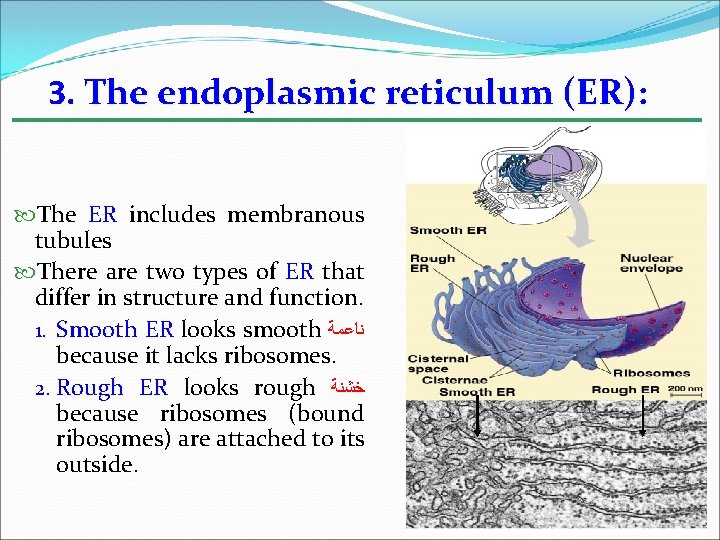
3. The endoplasmic reticulum (ER): The ER includes membranous tubules There are two types of ER that differ in structure and function. 1. Smooth ER looks smooth ﻧﺎﻋﻤﺔ because it lacks ribosomes. 2. Rough ER looks rough ﺧﺸﻨﺔ because ribosomes (bound ribosomes) are attached to its outside.
1 - The smooth ER: ﺍﻟﺸﺒﻜﺔ ﺍﻹﻧﺪﻭﺑﻼﺯﻣﻴﺔ ﺍﻟﻨﺎﻋﻤﺔ • It is rich in enzymes and plays a role in metabolic processes. • Its enzymes synthesize lipids ( ﺩﻫﻮﻥ oils, phospholipids, and steroids) including the sex hormones ﺍﻟﻬﺮﻣﻮﻧﺎﺕ ﺍﻟﺠﻨﺴﻴﺔ. • Extensive ﺗﻮﺟﺪ ﺑﻜﺜﺮﺓ in the liver, it helps detoxify ﺇﺑﻄﺎﻝ ﺍﻷﺜﺮ ﺍﻟﺴﺎﻡ drugs ﺍﻟﻤﺨﺪﺭﺍﺕ and poisons ﺍﻟﺴﻤﻮﻡ 2 - The rough ER: ﺍﻟﺸﺒﻜﺔ ﺍﻹﻧﺪﻭﺑﻼﺯﻣﻴﺔ ﺍﻟﺨﺸﻨﺔ • It is especially abundant ﻣﺘﻮﻓﺮﺓ in those cells that secrete proteins as it contains ribosomes. • These secretory proteins are packaged in transport vesicles that carry them to their next stage.
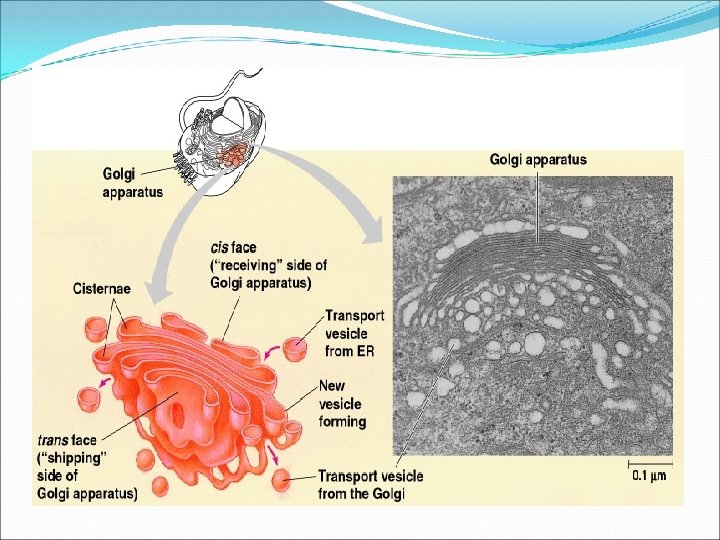
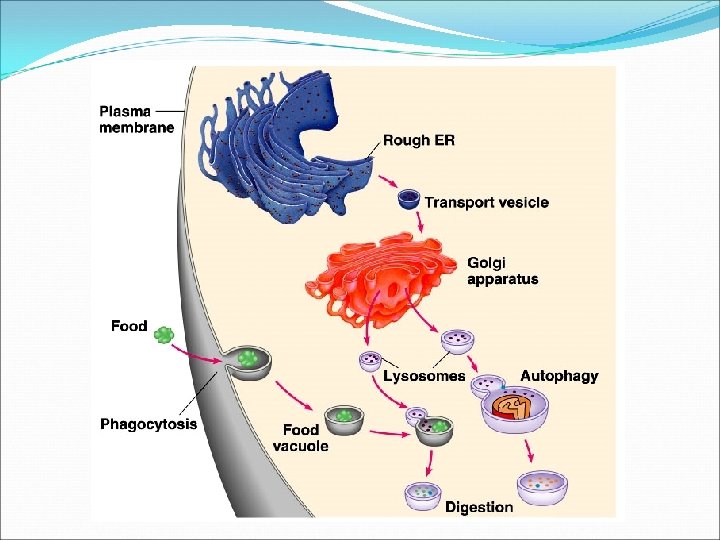
4 - Golgi apparatus: ﺟﻬﺎﺯ ﺟﻮﻟﺠﻲ Many transport vesicles ﺣﻮﻳﺼﻼﺕ ﺍﻟﻨﻘﻞ from the ER travel to the Golgi apparatus for modification ﺗﻌﺪﻳﻞ of their contents. The Golgi function is manufacturing ﺗﺼﻨﻴﻊ , warehousing ﺗﺨﺰﻳﻦ , sorting ﻓﺮﺯ , and shipping ﻧﻘﻞ materials to outside the cell. The Golgi apparatus is especially extensive in cells specialized for secretion ﺍﻹﻓﺮﺍﺯ. The Golgi also manufactures pectin ﺍﻟﺒﻜﺘﻴﻦ and polysaccharides.
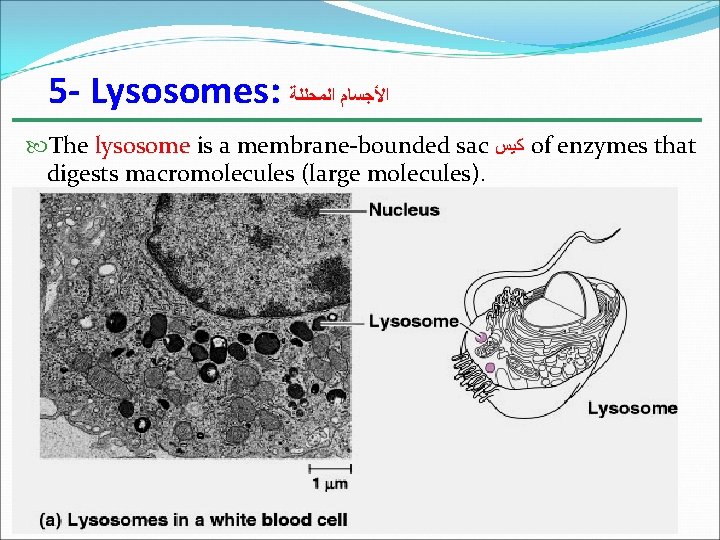
5 - Lysosomes: ﺍﻷﺠﺴﺎﻡ ﺍﻟﻤﺤﻠﻠﺔ The lysosome is a membrane-bounded sac ﻛﻴﺲ of enzymes that digests macromolecules (large molecules).
Lysosomal enzymes: • Lysosomal enzymes work best at p. H = 5 (acidic). • They are synthesized by rough ER and then transferred to ﺗﻨﻘﻞ ﺇﻟﻰ the Golgi then to lysosomes. Functions of Lysosomal enzymes: 1) They hydrolyze ﻳﺤﻠﻞ proteins, fats, polysaccharides, and nucleic acids. 2) Can destroy the cell by autodigestion (autophagy) ﺍﻟﻬﻀﻢ ﺍﻟﺬﺍﺗﻰ. 3) Can fuse with food vacuoles ﺍﻟﻔﺠﻮﺓ ﺍﻟﻐﺬﺍﺋﻴﺔ to digest food, (when a food item is brought into the cell by phagocytosis). 4) Can also fuse with another organelle or part of the cytoplasm. This process of autophagy called recycling which renews the cell.
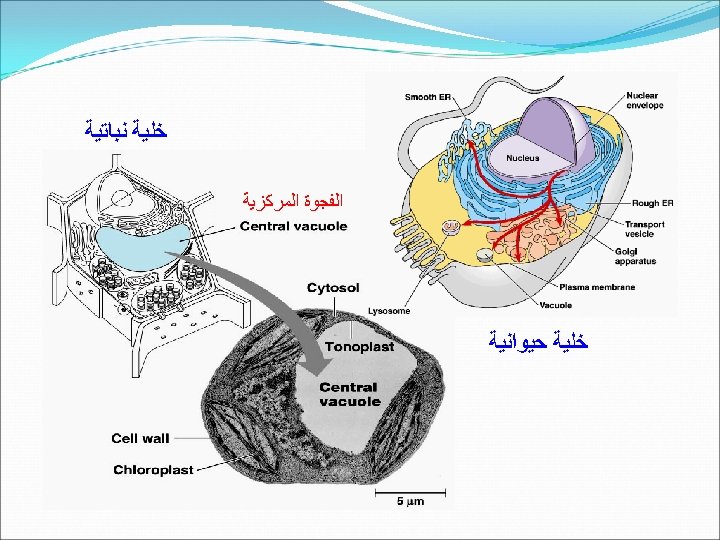
6 - Vacuoles: ﺍﻟﻔﺠﻮﺍﺕ Vesicles and vacuoles are membrane-bound sacs ﺃﻜﻴﺎﺱ ﺫﺍﺕ ﺃﻐﺸﻴﺔ with diverse functions. Types of vacuoles: 1. Food vacuoles ﻓﺠﻮﺓ ﻏﺬﺍﺋﻴﺔ : from phagocytosis ﺍﻟﺒﻠﻌﻤﺔ , fuse with lysosomes. 2. Contractile vacuoles ﻓﺠﻮﺓ ﻣﻨﻘﺒﻀﺔ : are found in freshwater Protists ﺍﻟﻄﻼﺋﻌﻴﺎﺕ , pump excess water out of the cell. 3. Central vacuoles ﻓﺠﻮﺓ ﻣﺮﻛﺰﻱ : are found in many mature plant cells.