
Lecture 4 Superclass Osteichthyes The Bony Fishes Chapter

Lecture 4: Superclass Osteichthyes The Bony Fishes Chapter 24 pp. 530 -545
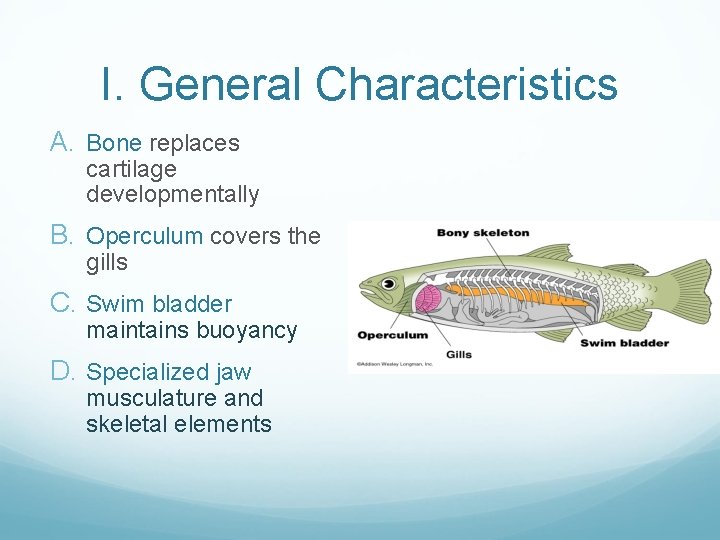
I. General Characteristics A. Bone replaces cartilage developmentally B. Operculum covers the gills C. Swim bladder maintains buoyancy D. Specialized jaw musculature and skeletal elements

II. Bony Fish Evolution
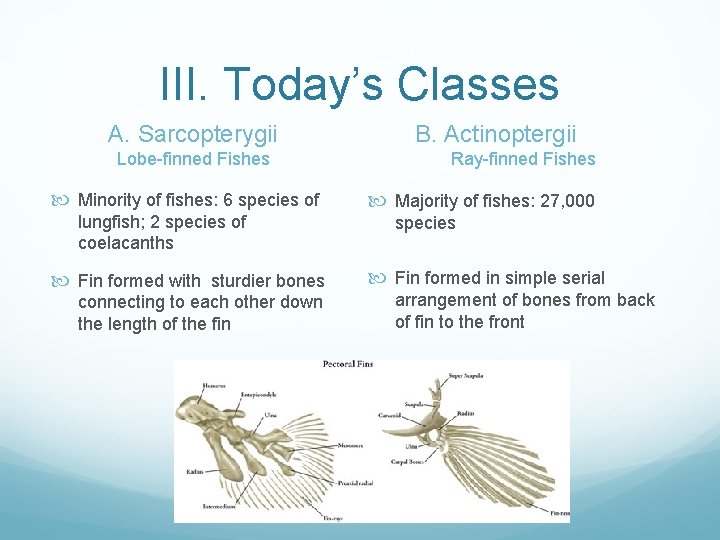
III. Today’s Classes A. Sarcopterygii Lobe-finned Fishes Minority of fishes: 6 species of lungfish; 2 species of coelacanths Fin formed with sturdier bones connecting to each other down the length of the fin B. Actinoptergii Ray-finned Fishes Majority of fishes: 27, 000 species Fin formed in simple serial arrangement of bones from back of fin to the front
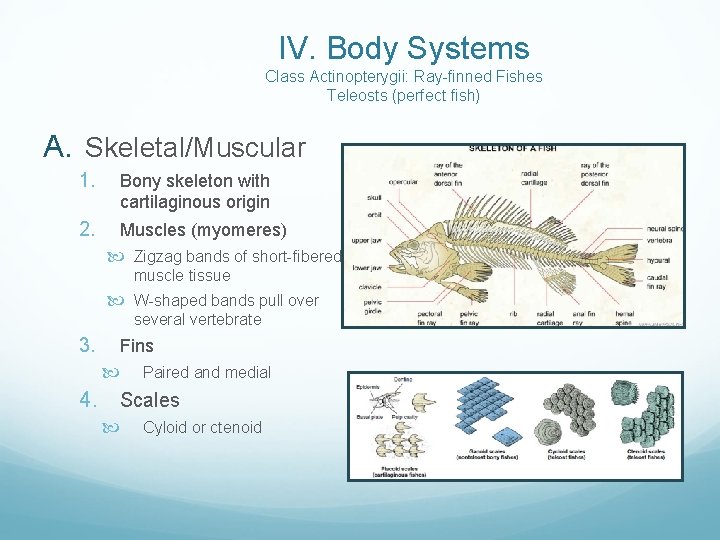
IV. Body Systems Class Actinopterygii: Ray-finned Fishes Teleosts (perfect fish) A. Skeletal/Muscular 1. 2. Bony skeleton with cartilaginous origin Muscles (myomeres) Zigzag bands of short-fibered muscle tissue W-shaped bands pull over several vertebrate 3. Fins Paired and medial 4. Scales Cyloid or ctenoid
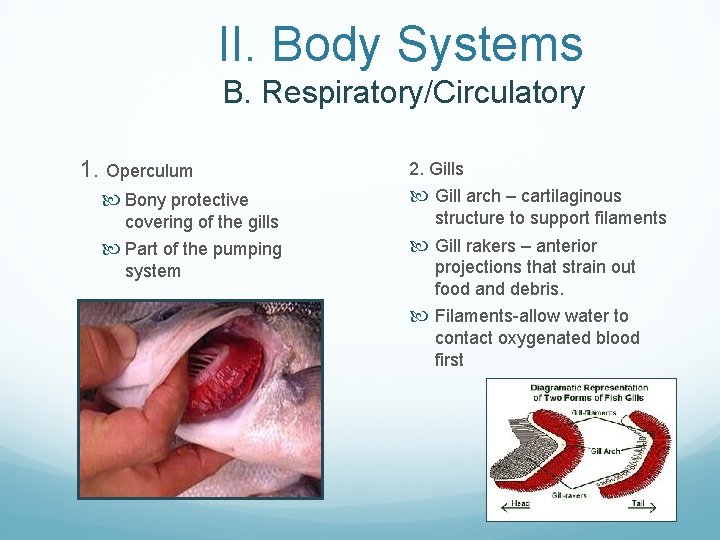
II. Body Systems B. Respiratory/Circulatory 1. Operculum Bony protective covering of the gills Part of the pumping system 2. Gills Gill arch – cartilaginous structure to support filaments Gill rakers – anterior projections that strain out food and debris. Filaments-allow water to contact oxygenated blood first
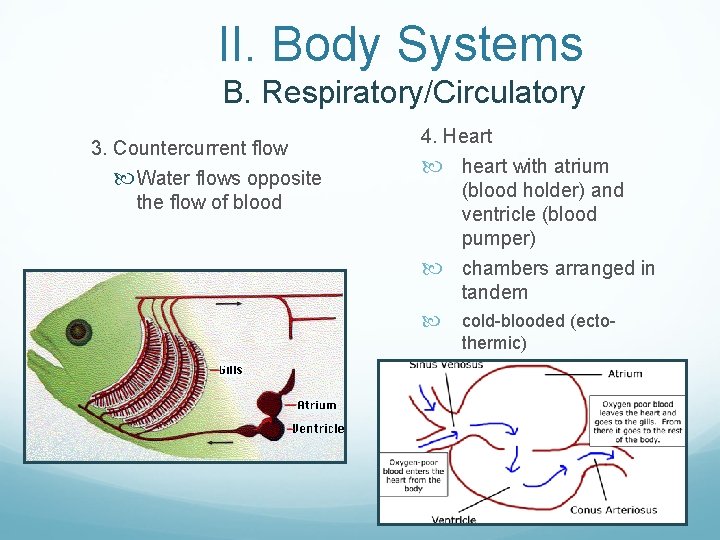
II. Body Systems B. Respiratory/Circulatory 3. Countercurrent flow Water flows opposite the flow of blood 4. Heart heart with atrium (blood holder) and ventricle (blood pumper) chambers arranged in tandem cold-blooded (ectothermic)
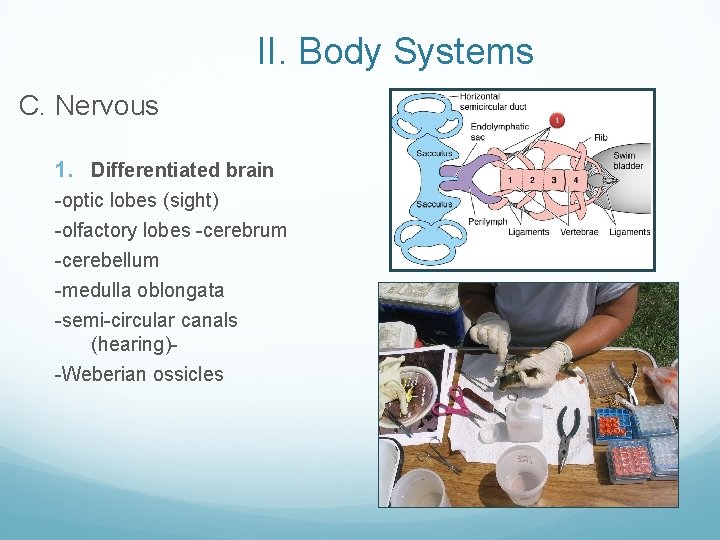
II. Body Systems C. Nervous 1. Differentiated brain -optic lobes (sight) -olfactory lobes -cerebrum -cerebellum -medulla oblongata -semi-circular canals (hearing)-Weberian ossicles
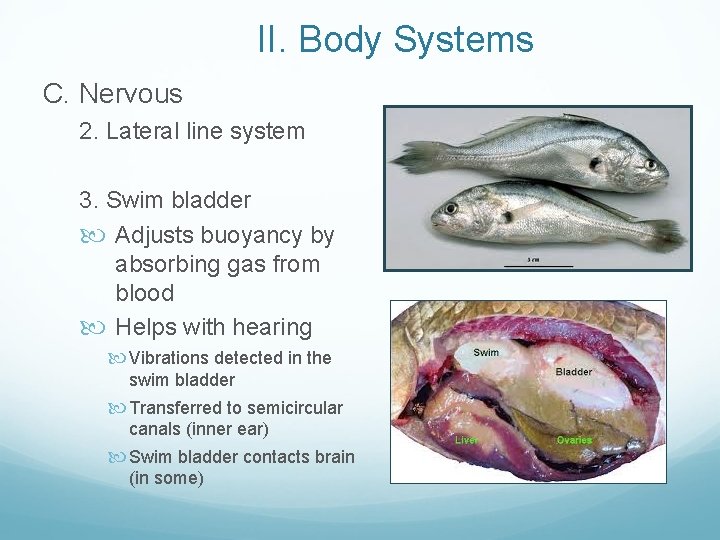
II. Body Systems C. Nervous 2. Lateral line system 3. Swim bladder Adjusts buoyancy by absorbing gas from blood Helps with hearing Vibrations detected in the swim bladder Transferred to semicircular canals (inner ear) Swim bladder contacts brain (in some)
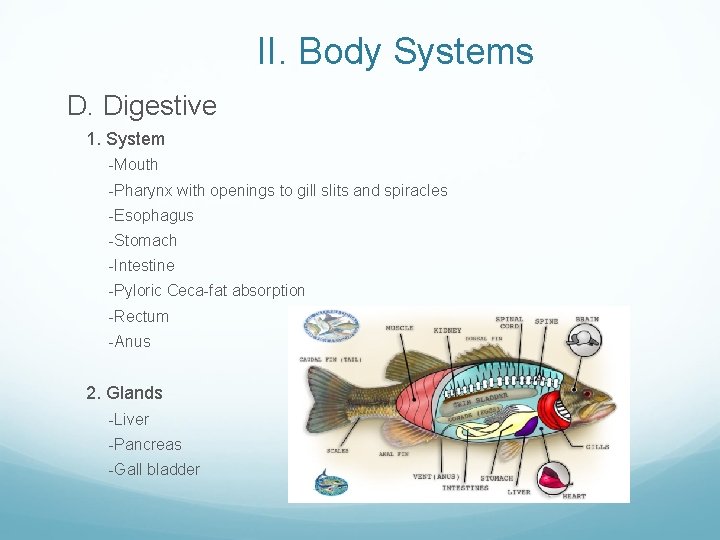
II. Body Systems D. Digestive 1. System -Mouth -Pharynx with openings to gill slits and spiracles -Esophagus -Stomach -Intestine -Pyloric Ceca-fat absorption -Rectum -Anus 2. Glands -Liver -Pancreas -Gall bladder
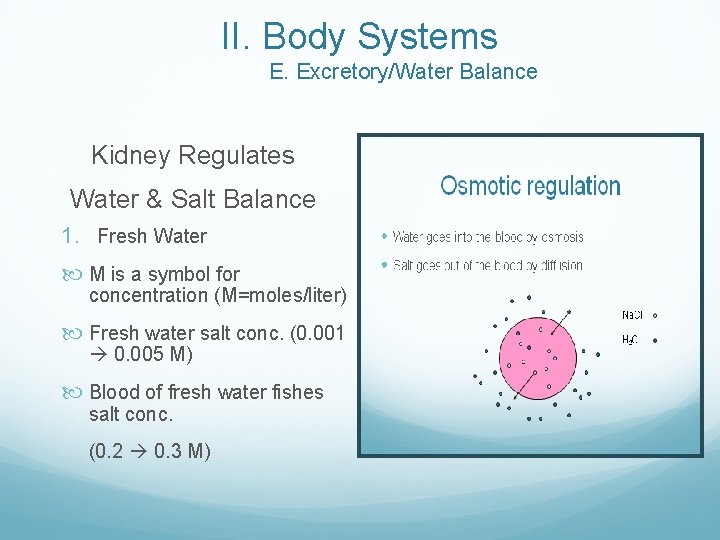
II. Body Systems E. Excretory/Water Balance Kidney Regulates Water & Salt Balance 1. Fresh Water M is a symbol for concentration (M=moles/liter) Fresh water salt conc. (0. 001 0. 005 M) Blood of fresh water fishes salt conc. (0. 2 0. 3 M)
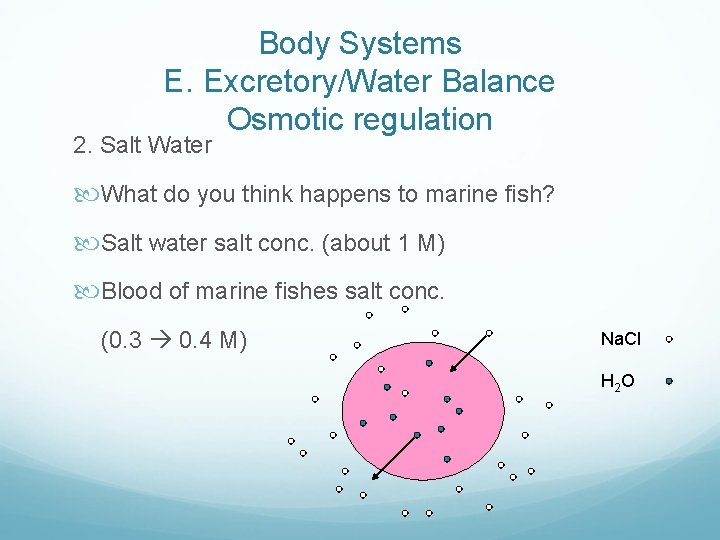
Body Systems E. Excretory/Water Balance Osmotic regulation 2. Salt Water What do you think happens to marine fish? Salt water salt conc. (about 1 M) Blood of marine fishes salt conc. (0. 3 0. 4 M) Na. Cl H 2 O
II. Body Systems Reproduction Oviparous – eggs develop externally Fertilized externally Most fish species Ovoviviparous – young develop internally Yolk not placenta Viviparous - young develop internally Placenta not yolk
- Slides: 13