
LECTURE 4 Section 1 THE PERIODIC TABLE History
LECTURE 4 Section 1 -THE PERIODIC TABLE
History of Periodic Table w John Newlands n n Placed elements in order according to their properties and in order of increasing atomic mass. Discovered the Law of Octaves-Properties appeared to repeat ever 8 elements

History of Periodic Table w Dmitri Mendeleev n n Created the first periodic table using Newlands’ information. Used all 63 known elements. Wrote the symbol, physical and chemical properties, and relative atomic mass, all on a card. Arranged until he found a pattern. Left gaps where elements had not been discovered yet and predicted their properties.
History of Periodic Table w Henry Moseley n n 40 years after Mendeleev arranged the elements, Moseley used x-rays to look at 38 different elements and their spectra, and realized that the elements were arranged by atomic number, not atomic mass. This fixed the discrepancies that were in Mendeleev’s table.
The Periodic Table w Periodic Law n When the elements are arrange according to their atomic numbers, elements with similar properties appear at regular intervals. w Valence electrons n An electron that is found in the outermost shell of an atom and that determines the atom’s chemical properties.
The Periodic Table w Organized by the number of protons (it’s atomic number) w Contains: n n Atomic number Symbol Name Atomic mass
The Periodic Table w Groups n Vertical columns (↕) containing elements with similar properties w Periods n Horizontal rows (↔) with predictable trends
Section 2 - A tour-Metals w w w w On the left of the zig-zag line Make up most of the P. T. Have Luster (shiny) Good conductors of heat and electricity Malleable (can be shaped) Ductile (can be made into a wire) High tensile strength (wires can hold mass)
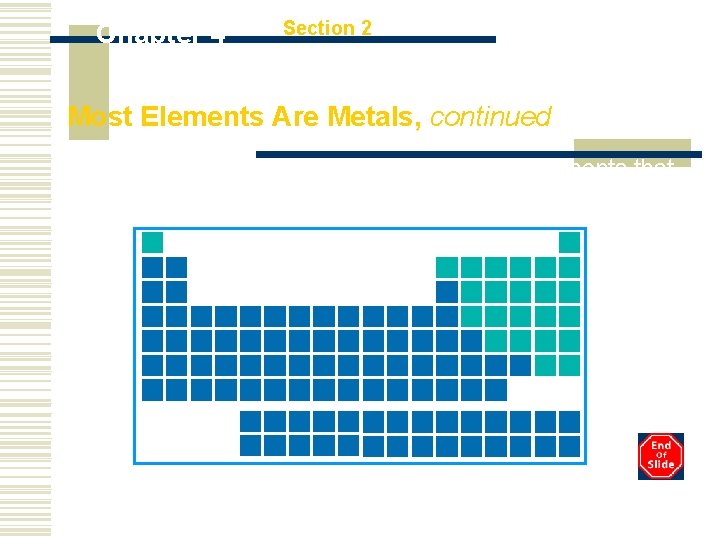
Chapter 4 Section 2 Tour of the Periodic Table Most Elements Are Metals, continued The regions highlighted in blue indicate the elements that are metals.
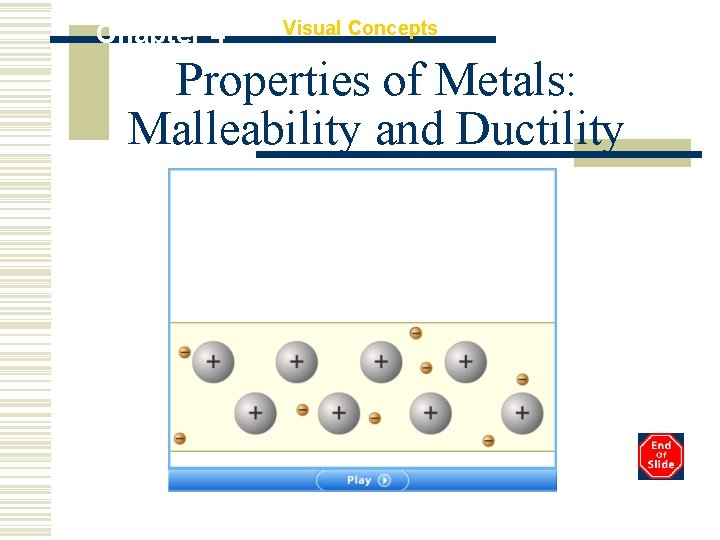
Chapter 4 Visual Concepts Properties of Metals: Malleability and Ductility
Nonmetals w Found to the right of the zig-zag line w INCLUDES HYDROGEN w Many are gases at room temperature w Solids are brittle w Poor conductors of heat & electricity
Metalloids Semi-Metals w Found straddling the zig-zag line w Some properties of metals & nonmetals w Semiconductors of electricity
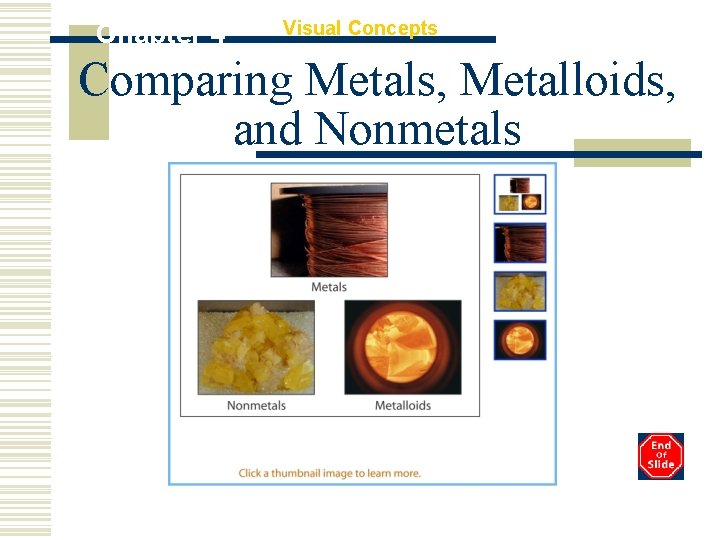
Chapter 4 Visual Concepts Comparing Metals, Metalloids, and Nonmetals
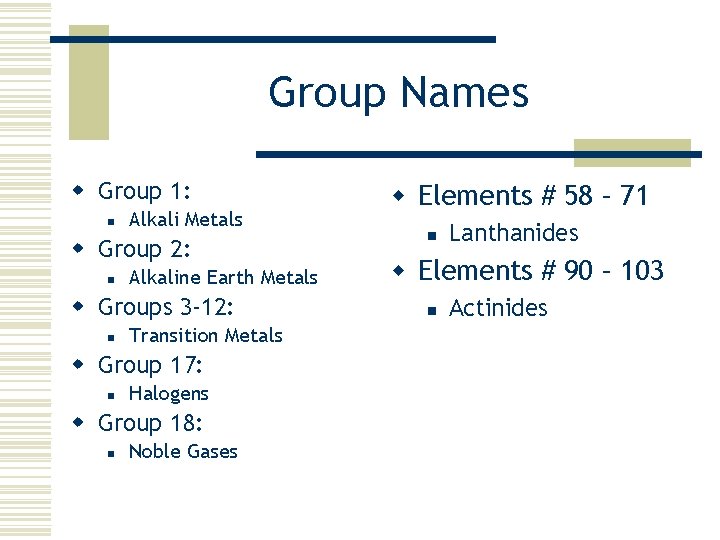
Group Names w Group 1: n Alkali Metals w Group 2: n Alkaline Earth Metals w Groups 3 -12: n Transition Metals w Group 17: n Halogens w Group 18: n Noble Gases w Elements # 58 – 71 n Lanthanides w Elements # 90 – 103 n Actinides
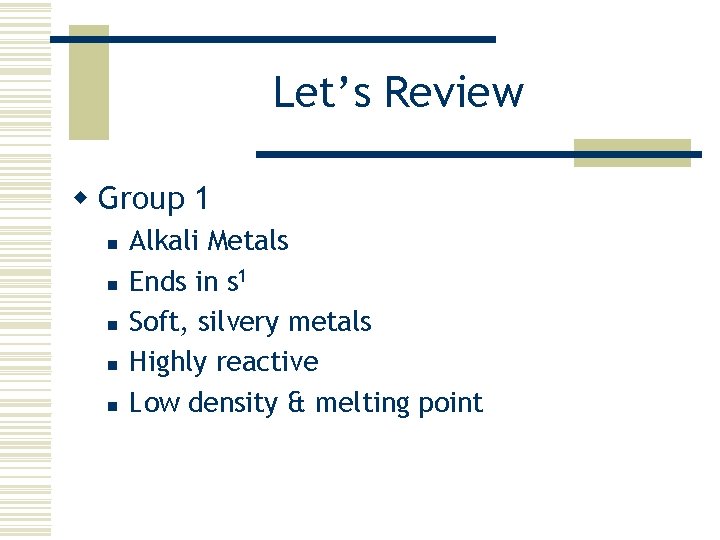
Let’s Review w Group 1 n n n Alkali Metals Ends in s 1 Soft, silvery metals Highly reactive Low density & melting point
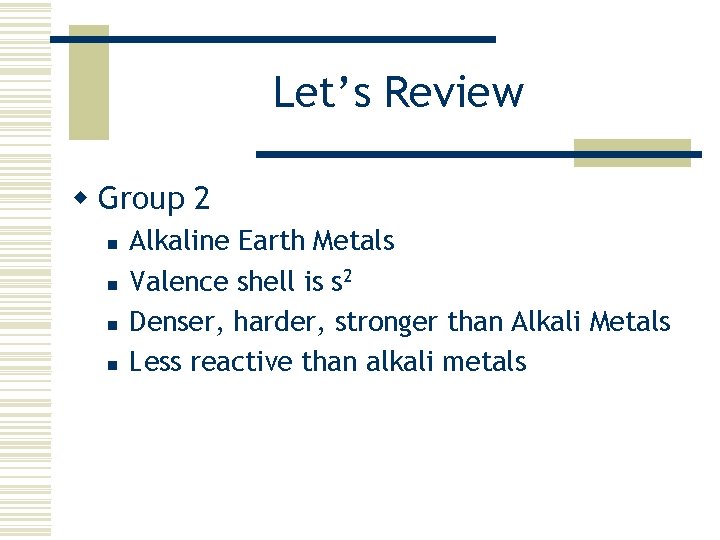
Let’s Review w Group 2 n n Alkaline Earth Metals Valence shell is s 2 Denser, harder, stronger than Alkali Metals Less reactive than alkali metals
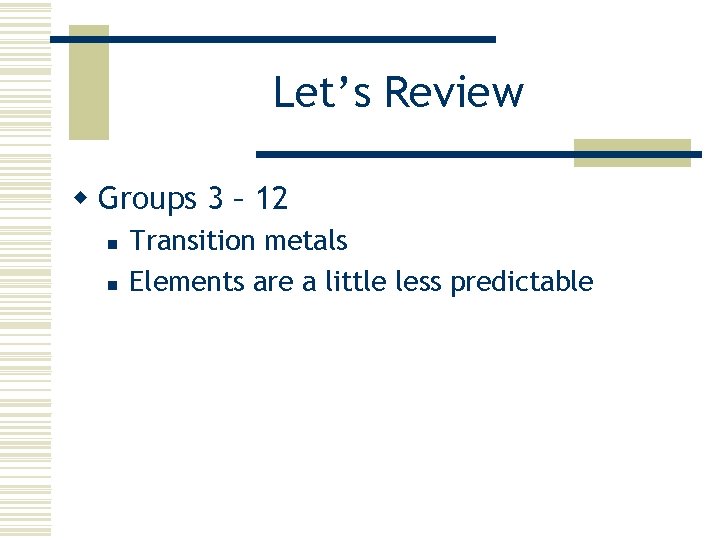
Let’s Review w Groups 3 – 12 n n Transition metals Elements are a little less predictable
Let’s Review w Metalloids n n n Along the staircase starting in Group 13 Valence levels p orbital Share properties of metals & nonmetals Referred to as semimetals Used as semiconductors in electronics
Let’s Review w Group 17 n n Halogens Valence level is s 2 p 5 Highly reactive NONmetals Forms salts when combined with Group 1 or 2 metals
Let’s Review w Group 18 n n n Noble Gases Valence level is s 2 p 6 Usually unreactive
And finally …. w Lanthanides (f-block) n n Top Row of f-block Shiny metals similar to Group 2 w Actinides n n Bottom Row of f-block Naturally radioactive elements
TRENDS IN THE PERIODIC TABLE Section 3

What are the trends?
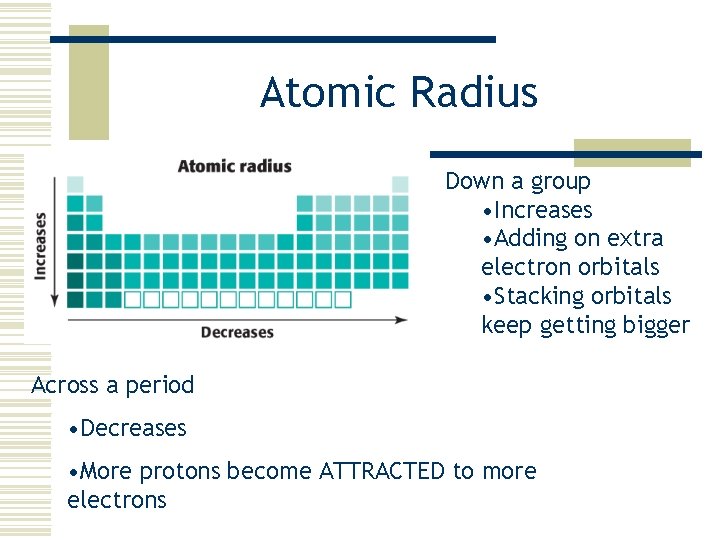
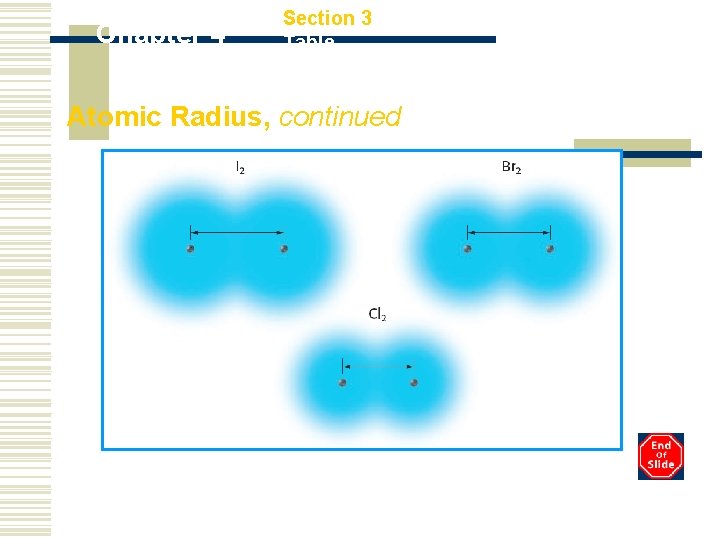
Atomic Radius Down a group • Increases • Adding on extra electron orbitals • Stacking orbitals keep getting bigger Across a period • Decreases • More protons become ATTRACTED to more electrons
Chapter 4 Section 3 Trends in the Periodic Table Atomic Radius, continued
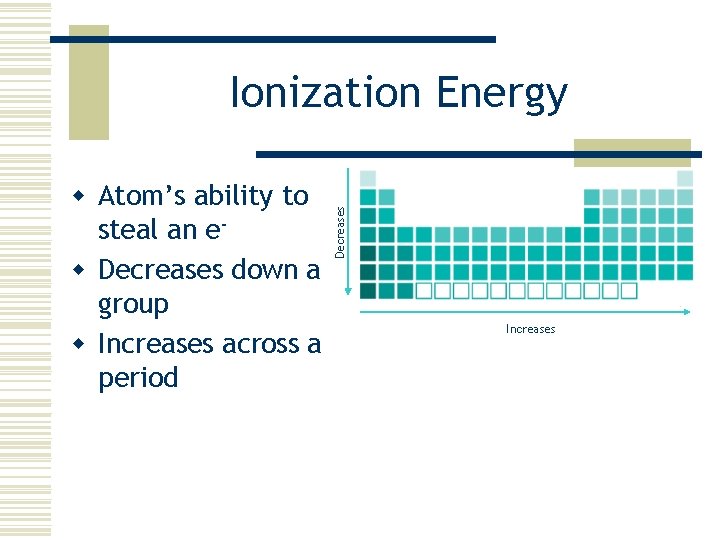
w Atom’s ability to steal an ew Decreases down a group w Increases across a period Decreases Ionization Energy Increases
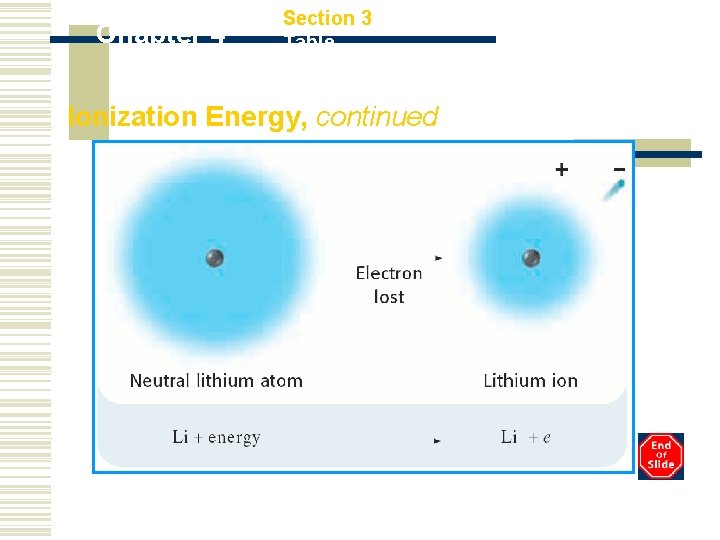
Chapter 4 Section 3 Trends in the Periodic Table Ionization Energy, continued
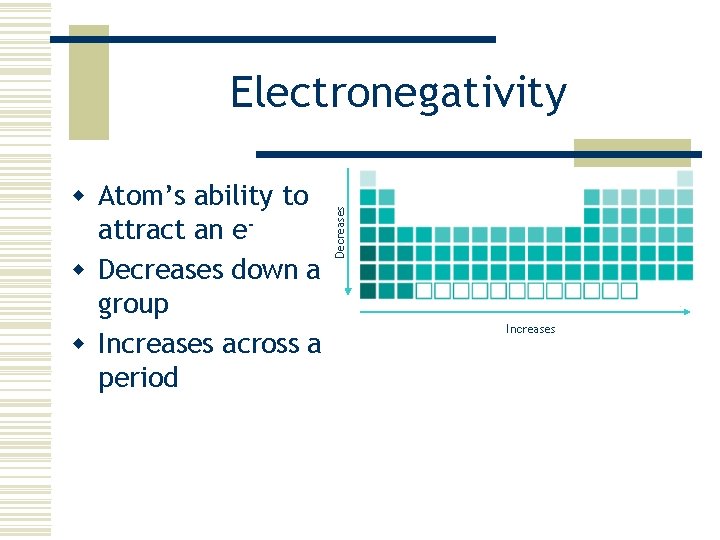
w Atom’s ability to attract an ew Decreases down a group w Increases across a period Decreases Electronegativity Increases
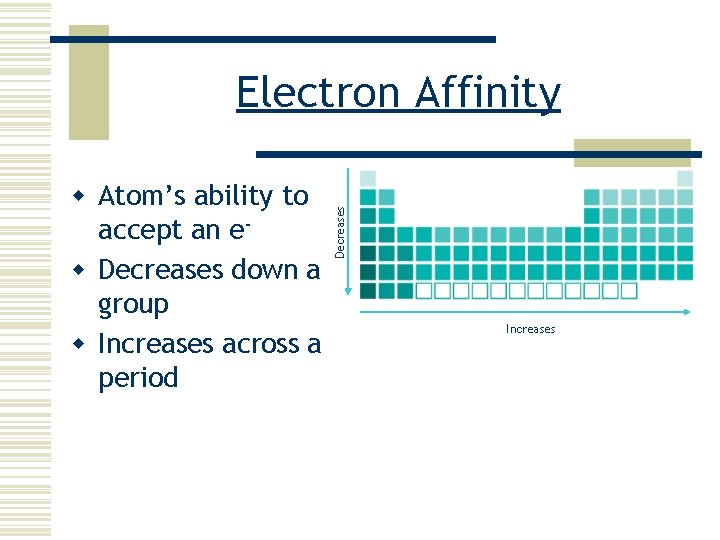
w Atom’s ability to accept an ew Decreases down a group w Increases across a period Decreases Electron Affinity Increases
NUCLEAR REACTIONS
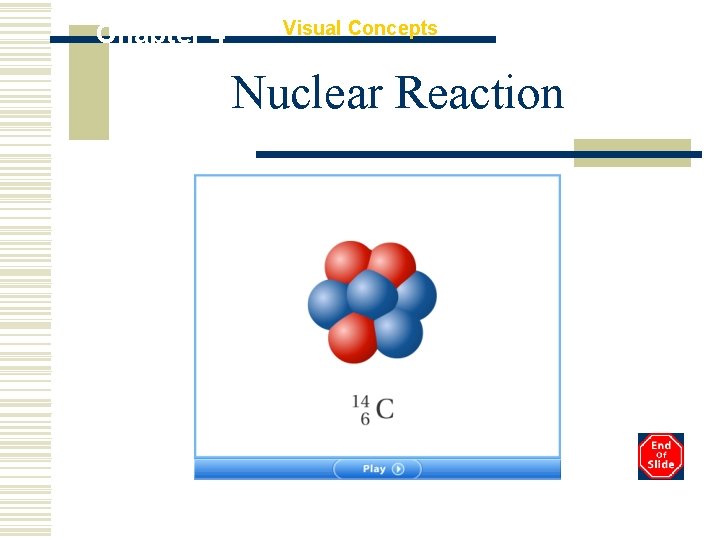
Chapter 4 Visual Concepts Nuclear Reaction
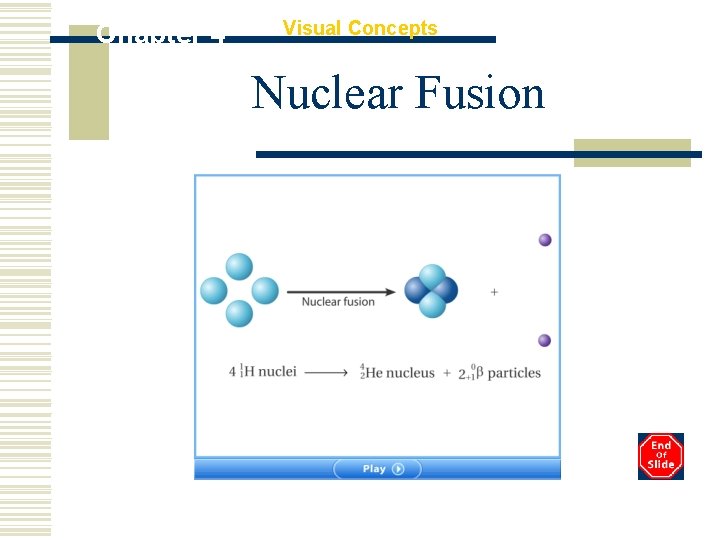
Chapter 4 Visual Concepts Nuclear Fusion
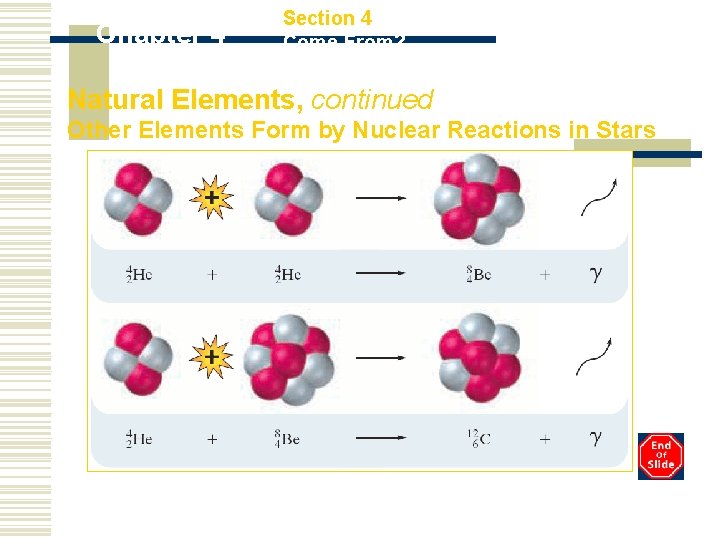
Chapter 4 Section 4 Where Did the Elements Come From? Natural Elements, continued Other Elements Form by Nuclear Reactions in Stars
ELECTRON CONFIGURATIONS REFER BACK TO CHAPTER 3 SECTION 3
ELECTRONS w Found in specific regions – orbital w 4 orbitals n n s (sphere shaped) p (dumbbell shape) d (cross dumbbells) f (don’t ask… it’s complicated)
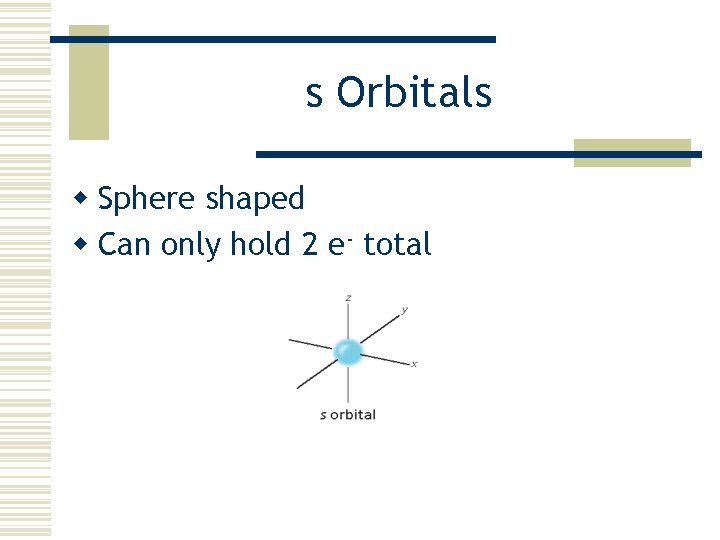
s Orbitals w Sphere shaped w Can only hold 2 e- total
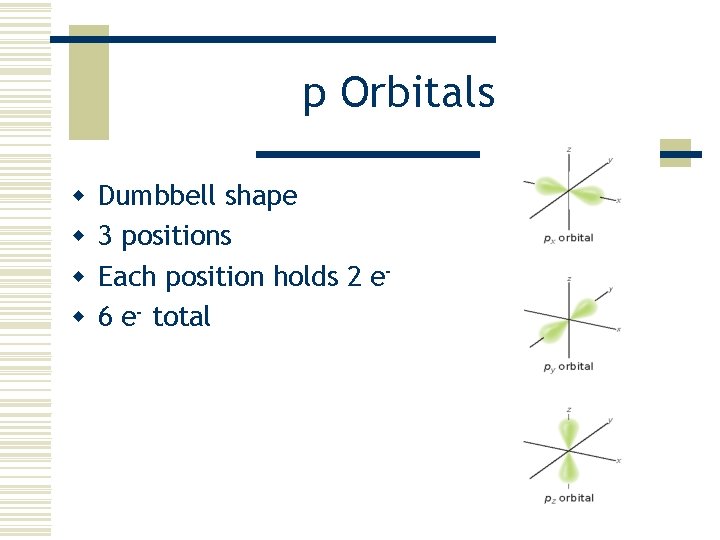
p Orbitals w w Dumbbell shape 3 positions Each position holds 2 e 6 e- total
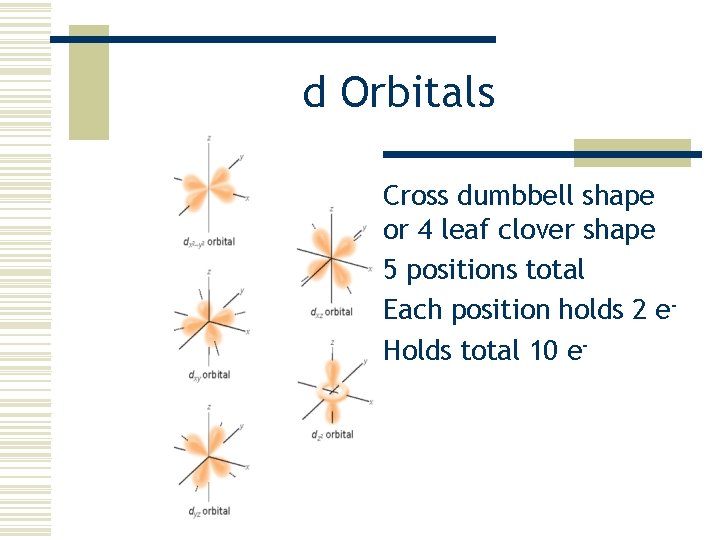
d Orbitals w Cross dumbbell shape or 4 leaf clover shape w 5 positions total w Each position holds 2 ew Holds total 10 e-
f Orbitals w Dumbbell shape surrounded by donut shape w 7 positions w Each position holds 2 ew Holds total of 14 e-
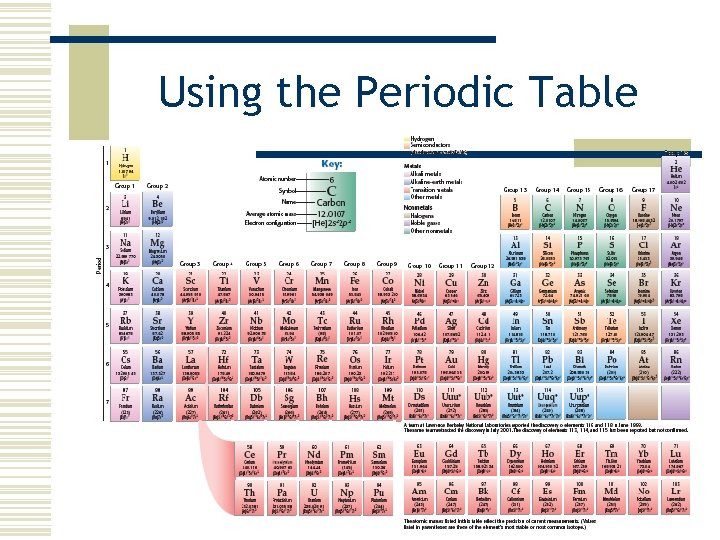
Using the Periodic Table
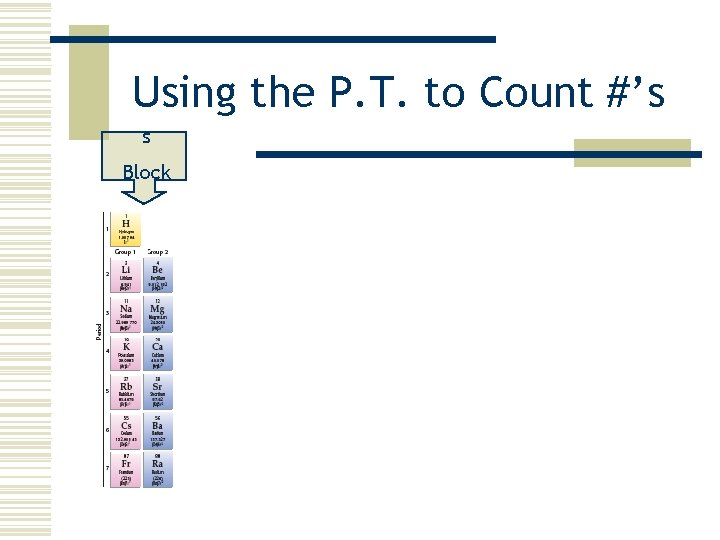
Using the P. T. to Count #’s s Block
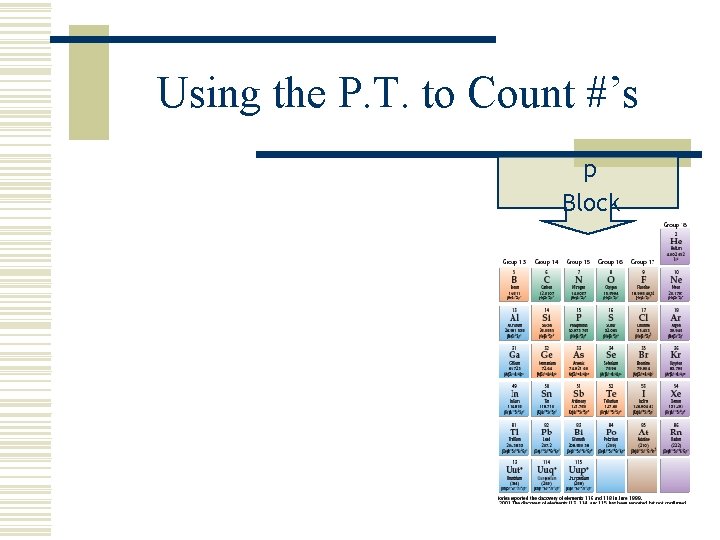
Using the P. T. to Count #’s p Block
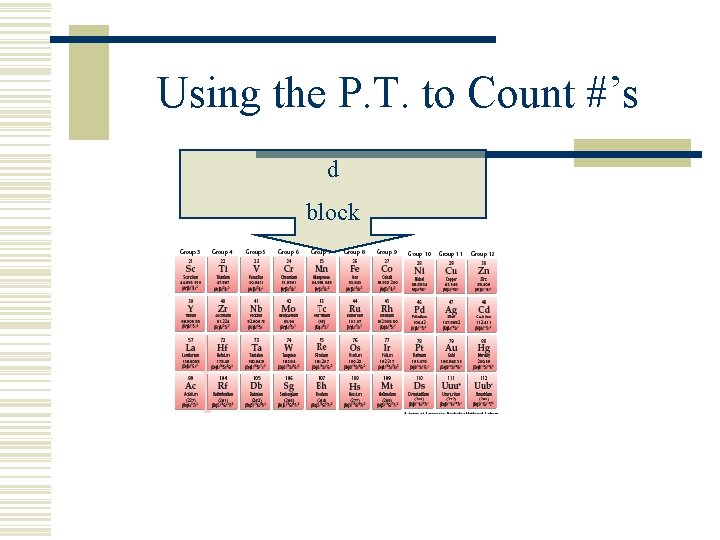
Using the P. T. to Count #’s d block
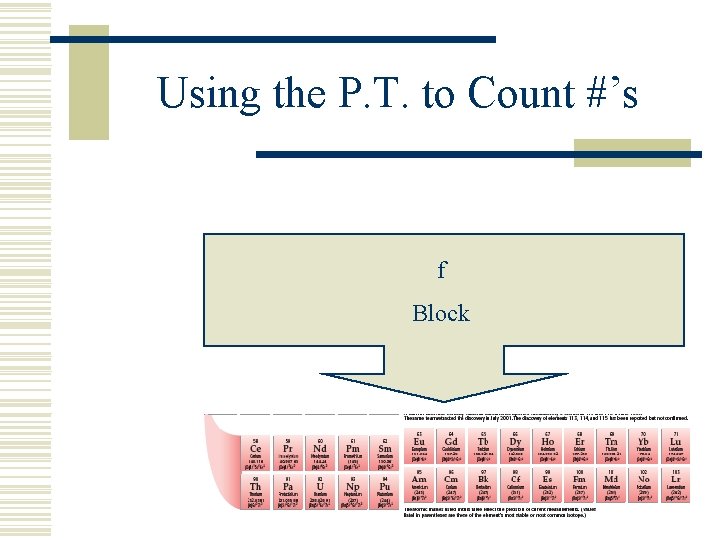
Using the P. T. to Count #’s f Block
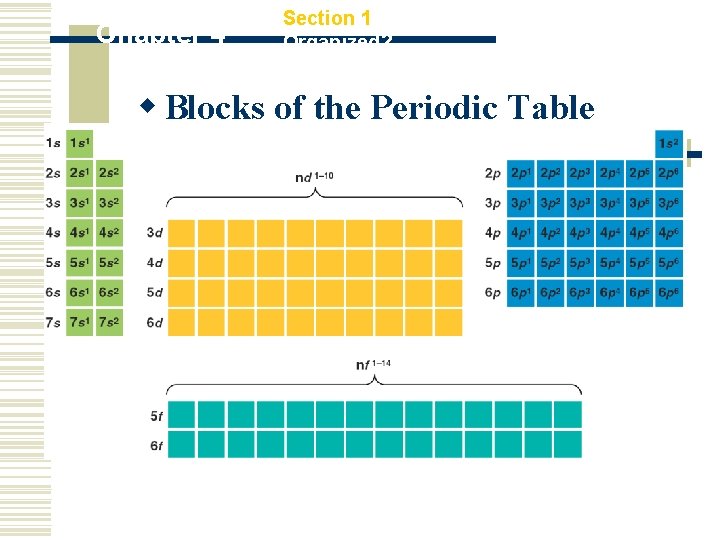
Chapter 4 Section 1 How Are Elements Organized? w Blocks of the Periodic Table
Writing Electron Configurations w Orbitals must fill in a particular order w The 1 st number indicates the period or level the electron is found in. w The letter indicates the orbital the electron is found in. w The exponent indicates how many electrons are there.
Sample Problem A Write the electron configuration for Sodium, Na.
Sample Problem A Write the electron configuration for Sodium, Na. Step 1: Find the # of electrons (Look at the Atomic number) Na is Atomic # 11. Na has 11 e-
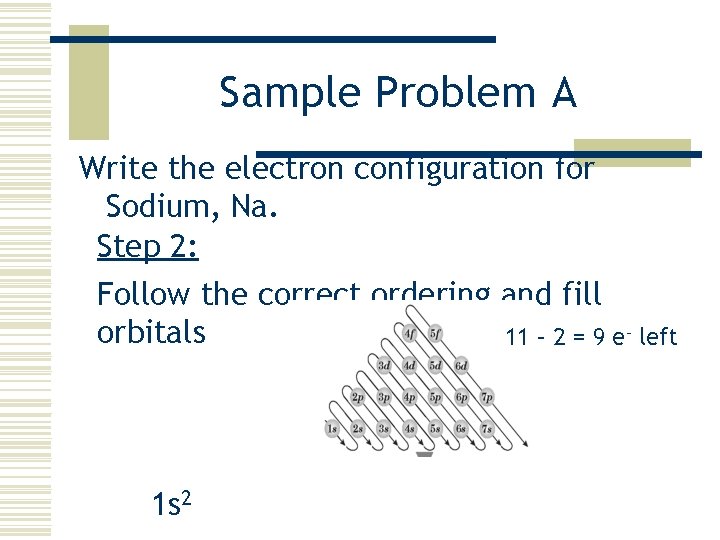
Sample Problem A Write the electron configuration for Sodium, Na. Step 2: Follow the correct ordering and fill orbitals 11 – 2 = 9 e- left 1 s 2
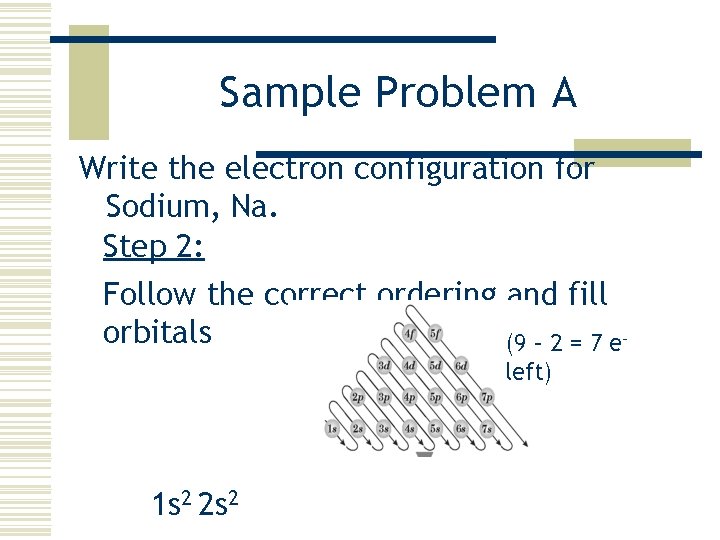
Sample Problem A Write the electron configuration for Sodium, Na. Step 2: Follow the correct ordering and fill orbitals (9 – 2 = 7 eleft) 1 s 2 2 s 2
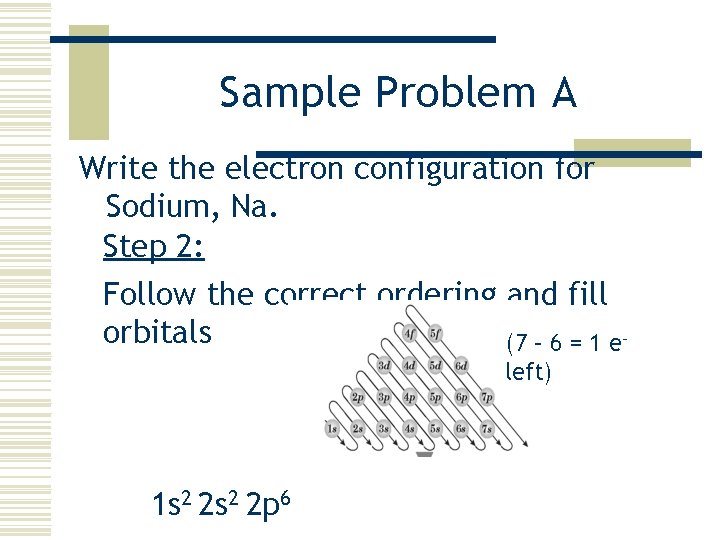
Sample Problem A Write the electron configuration for Sodium, Na. Step 2: Follow the correct ordering and fill orbitals (7 – 6 = 1 eleft) 1 s 2 2 p 6
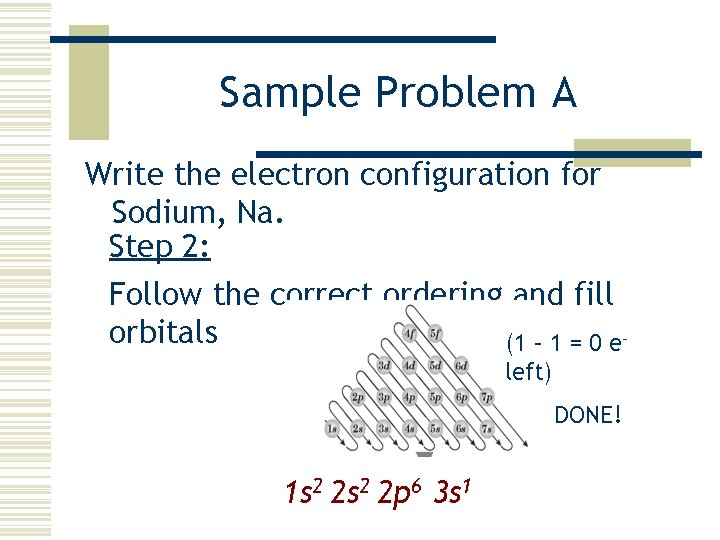
Sample Problem A Write the electron configuration for Sodium, Na. Step 2: Follow the correct ordering and fill orbitals (1 – 1 = 0 eleft) DONE! 1 s 2 2 p 6 3 s 1
Sample Problem B Write the electron configuration for Argon, Ar.
Sample Problem B Write the electron configuration for Argon, Ar. Step 1: Find the # of electrons (Look at the Atomic number) Ar is Atomic # 18. Ar has 18 e-
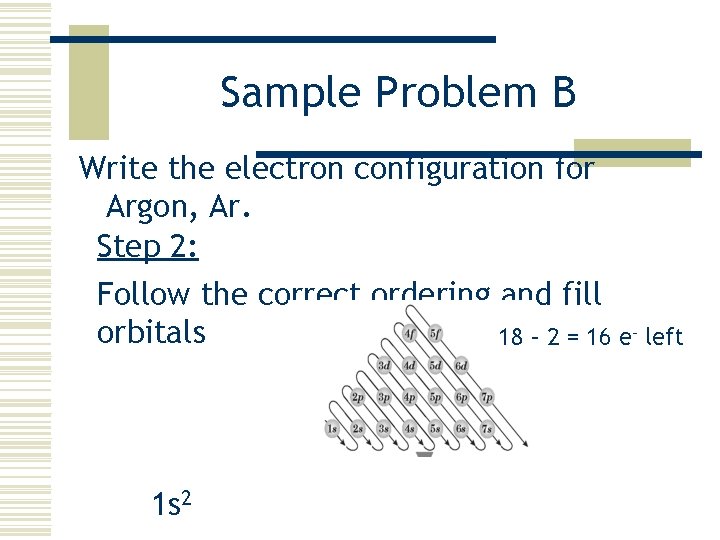
Sample Problem B Write the electron configuration for Argon, Ar. Step 2: Follow the correct ordering and fill orbitals 18 – 2 = 16 e- left 1 s 2
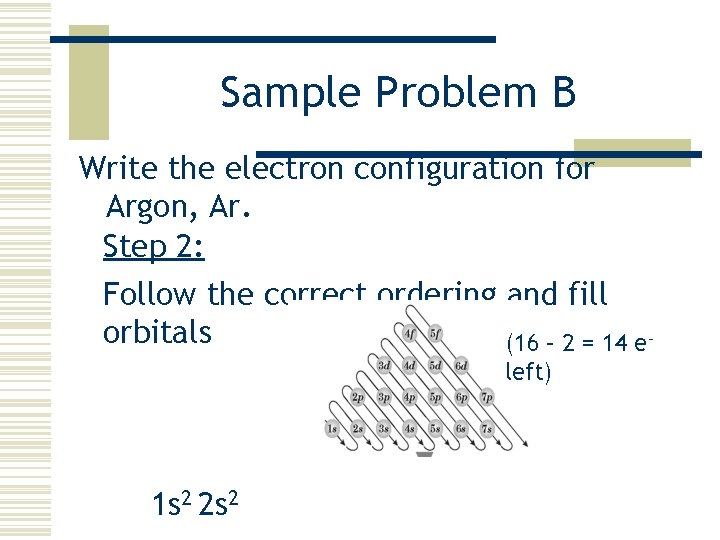
Sample Problem B Write the electron configuration for Argon, Ar. Step 2: Follow the correct ordering and fill orbitals (16 – 2 = 14 eleft) 1 s 2 2 s 2
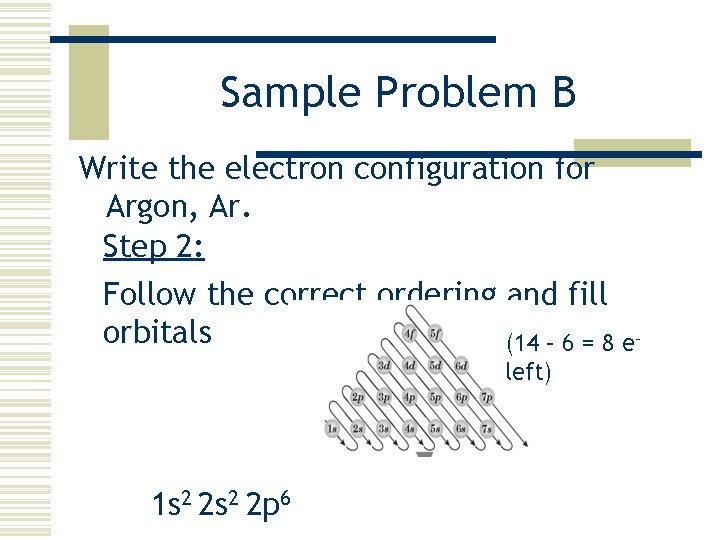
Sample Problem B Write the electron configuration for Argon, Ar. Step 2: Follow the correct ordering and fill orbitals (14 – 6 = 8 eleft) 1 s 2 2 p 6
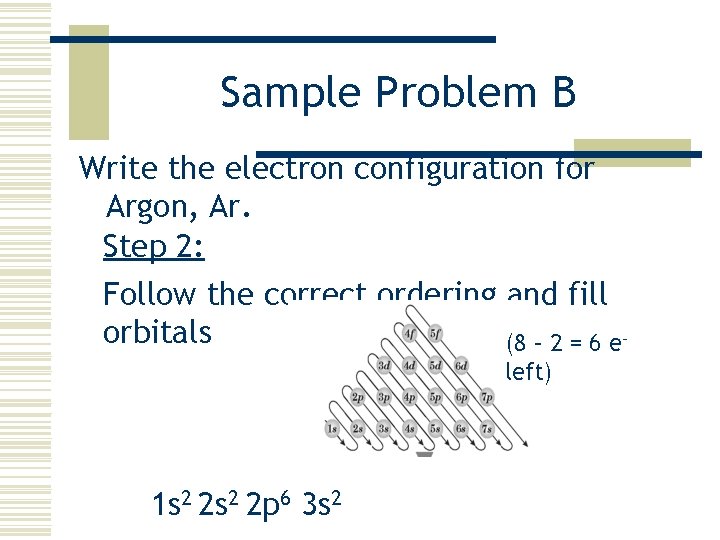
Sample Problem B Write the electron configuration for Argon, Ar. Step 2: Follow the correct ordering and fill orbitals (8 – 2 = 6 eleft) 1 s 2 2 p 6 3 s 2
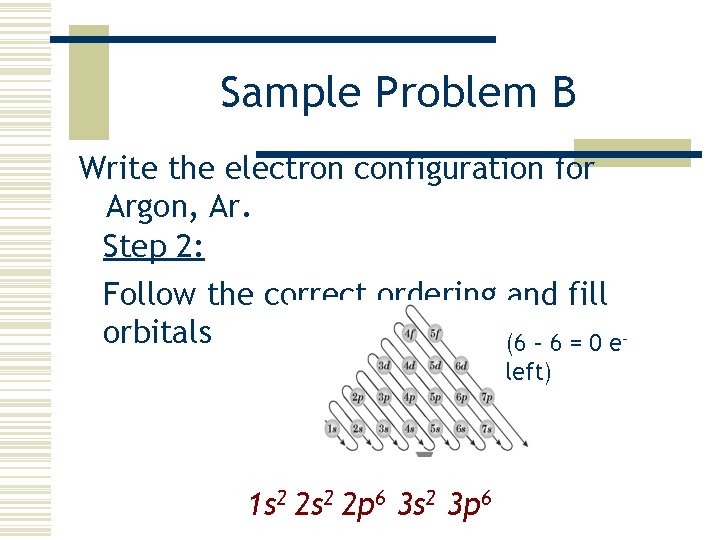
Sample Problem B Write the electron configuration for Argon, Ar. Step 2: Follow the correct ordering and fill orbitals (6 – 6 = 0 eleft) 1 s 2 2 p 6 3 s 2 3 p 6
Sample Problem C Write the electron configuration for Bromine, Br.
Sample Problem C Write the electron configuration for Bromine, Br. Step 1: Find the # of electrons (Look at the Atomic number) Br is Atomic # 35. Br has 35 e-
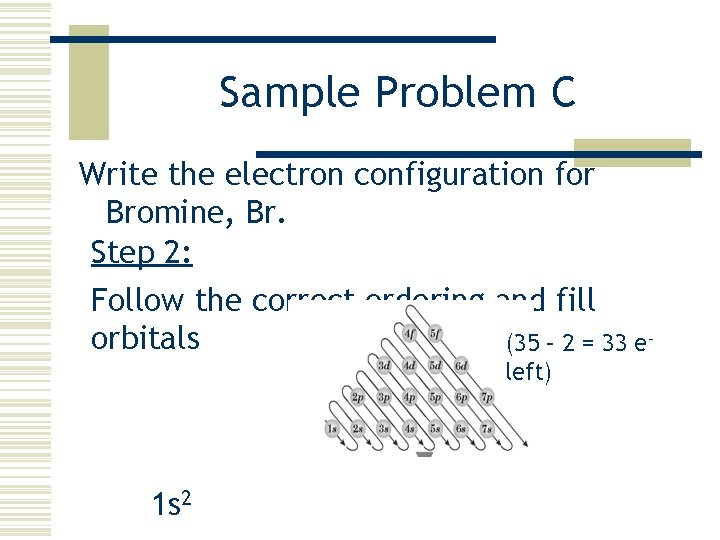
Sample Problem C Write the electron configuration for Bromine, Br. Step 2: Follow the correct ordering and fill orbitals (35 – 2 = 33 eleft) 1 s 2
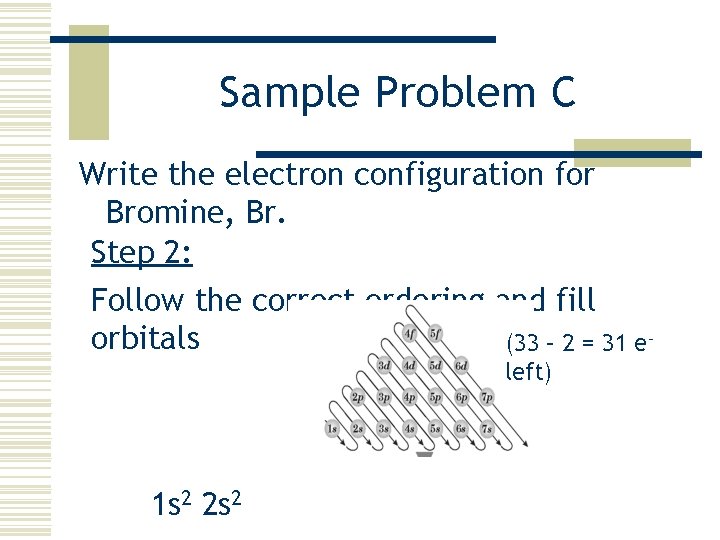
Sample Problem C Write the electron configuration for Bromine, Br. Step 2: Follow the correct ordering and fill orbitals (33 – 2 = 31 eleft) 1 s 2 2 s 2
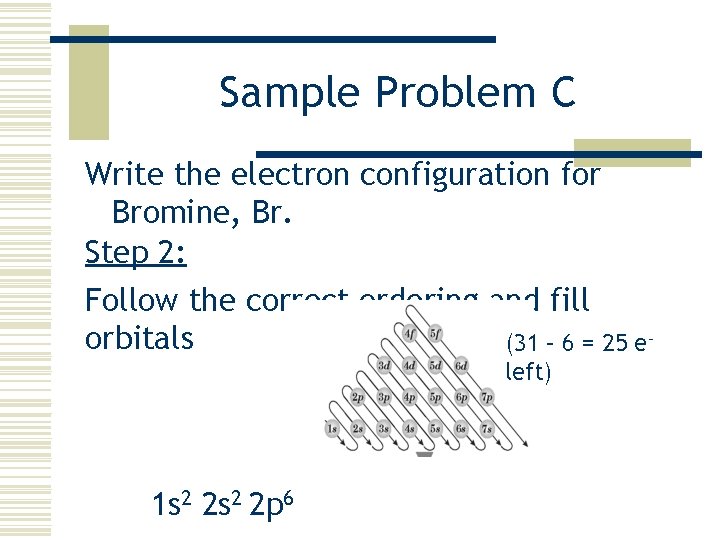
Sample Problem C Write the electron configuration for Bromine, Br. Step 2: Follow the correct ordering and fill orbitals (31 – 6 = 25 eleft) 1 s 2 2 p 6
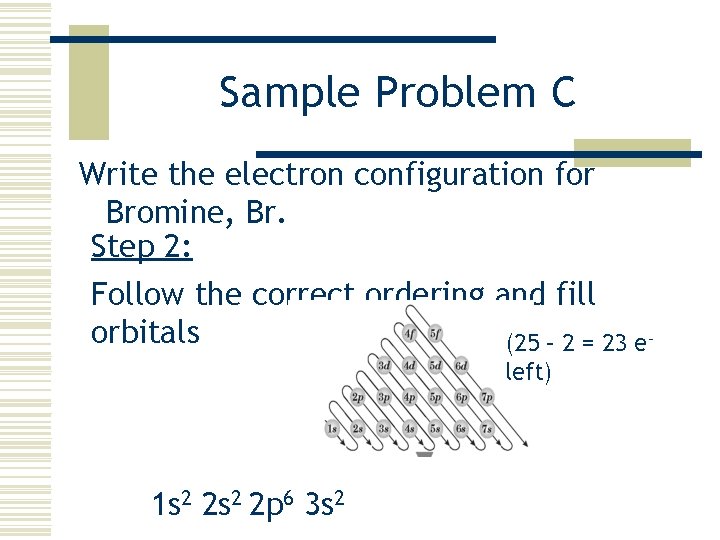
Sample Problem C Write the electron configuration for Bromine, Br. Step 2: Follow the correct ordering and fill orbitals (25 – 2 = 23 eleft) 1 s 2 2 p 6 3 s 2
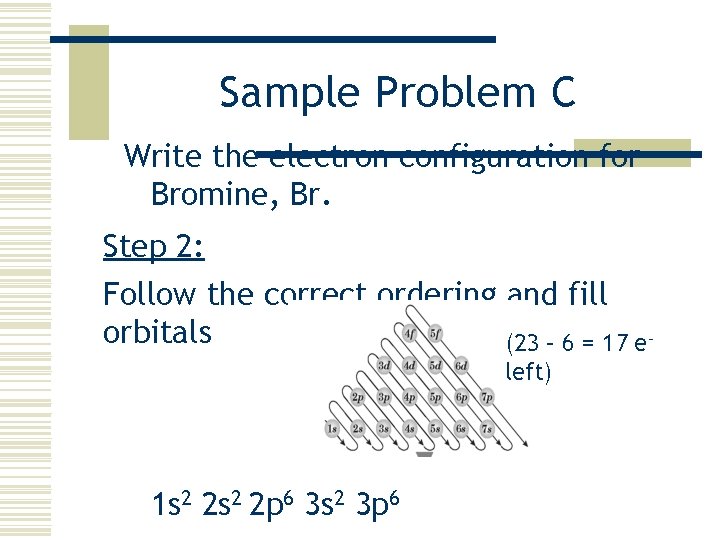
Sample Problem C Write the electron configuration for Bromine, Br. Step 2: Follow the correct ordering and fill orbitals (23 – 6 = 17 eleft) 1 s 2 2 p 6 3 s 2 3 p 6
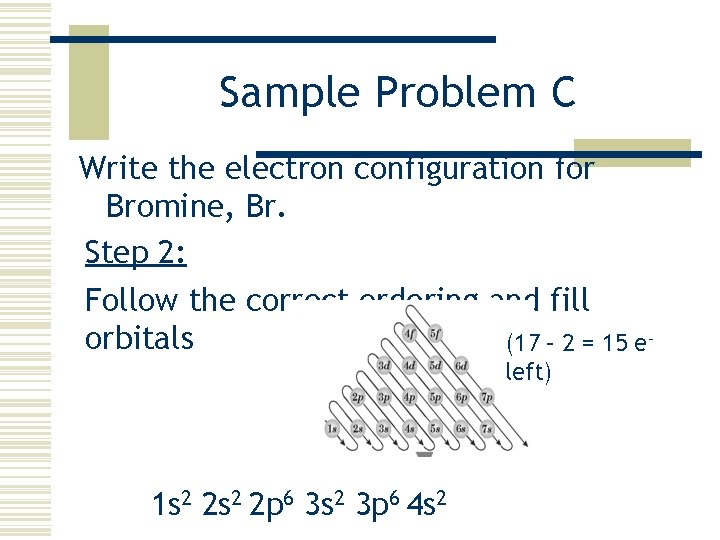
Sample Problem C Write the electron configuration for Bromine, Br. Step 2: Follow the correct ordering and fill orbitals (17 – 2 = 15 eleft) 1 s 2 2 p 6 3 s 2 3 p 6 4 s 2
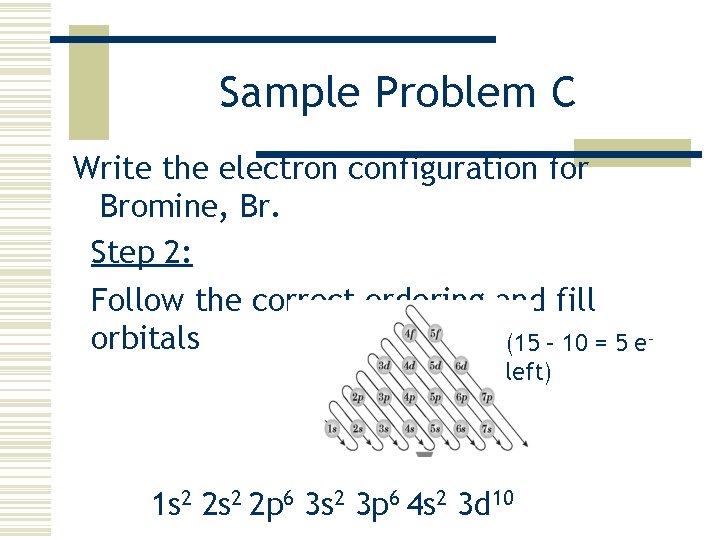
Sample Problem C Write the electron configuration for Bromine, Br. Step 2: Follow the correct ordering and fill orbitals (15 – 10 = 5 eleft) 1 s 2 2 p 6 3 s 2 3 p 6 4 s 2 3 d 10
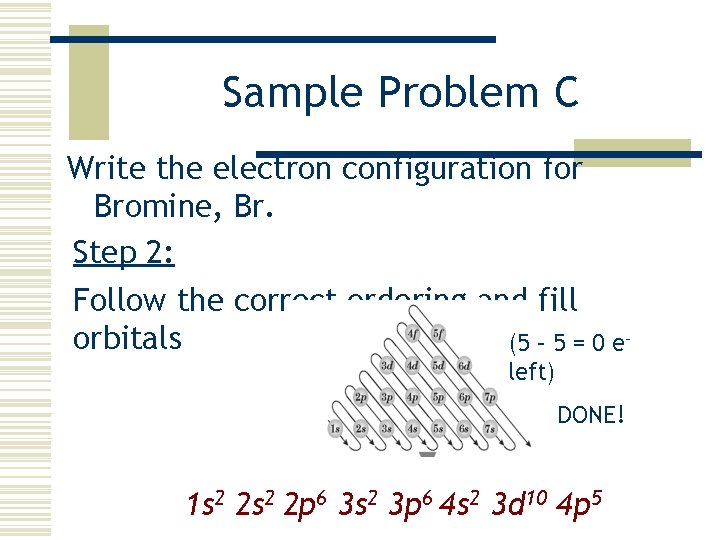
Sample Problem C Write the electron configuration for Bromine, Br. Step 2: Follow the correct ordering and fill orbitals (5 – 5 = 0 eleft) DONE! 1 s 2 2 p 6 3 s 2 3 p 6 4 s 2 3 d 10 4 p 5
Your turn … Writing Electron Configurations #1
Writing Noble Gas Configurations A Short Cut
Noble Gas Configurations w Rules n n Find the noble gas tha appears BEFORE the element Following the usual order, write the remaining electrons contained in the element’s period w Confusing…but you’ll get it. w DON’T USE THE BACK OF YOUR TEXT! w The ordering is incorrect and I’ll know you cheated!! =(
Sample Problem C Write the noble gas configuration for Sodium. Step 1: Find the noble gas BEFORE sodium. Ne appears before Na. [Ne]
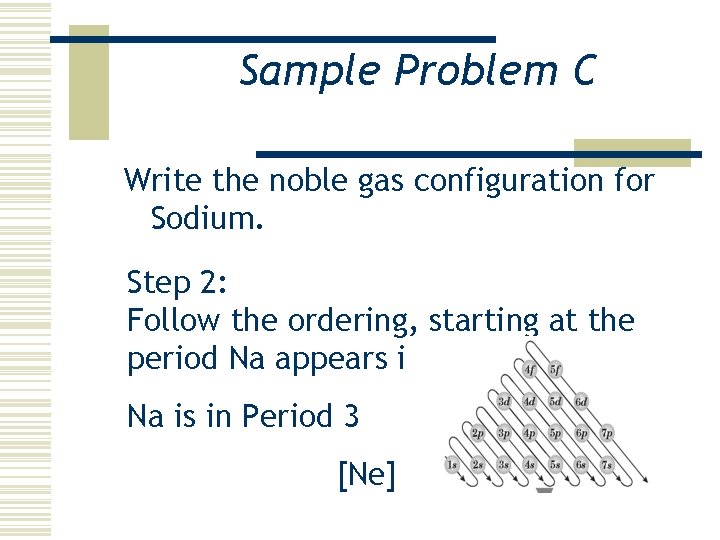
Sample Problem C Write the noble gas configuration for Sodium. Step 2: Follow the ordering, starting at the period Na appears in. Na is in Period 3 [Ne] 3 s
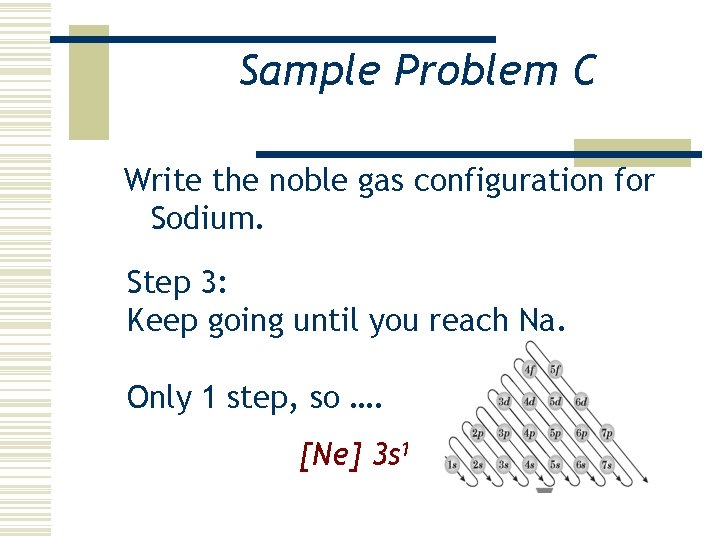
Sample Problem C Write the noble gas configuration for Sodium. Step 3: Keep going until you reach Na. Only 1 step, so …. [Ne] 3 s 1

Sample Problem D Write the noble gas configuration for Bromine. Step 1: Find the noble gas BEFORE Br. Ar appears before Br. [Ar]
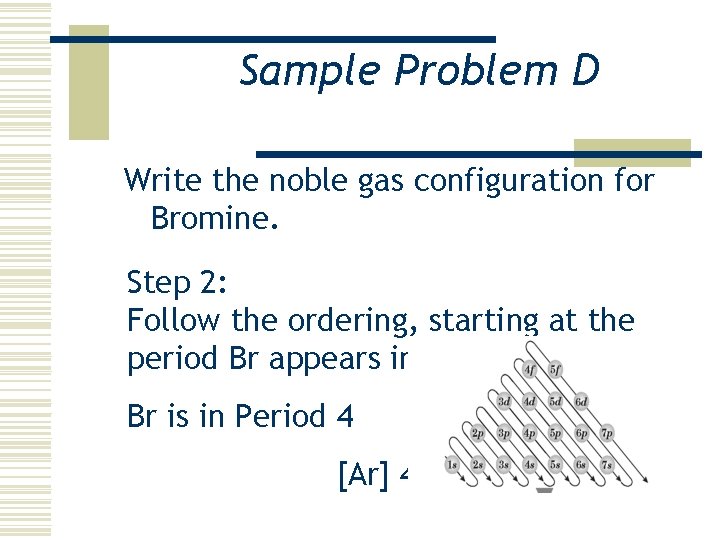
Sample Problem D Write the noble gas configuration for Bromine. Step 2: Follow the ordering, starting at the period Br appears in. Br is in Period 4 [Ar] 4 s
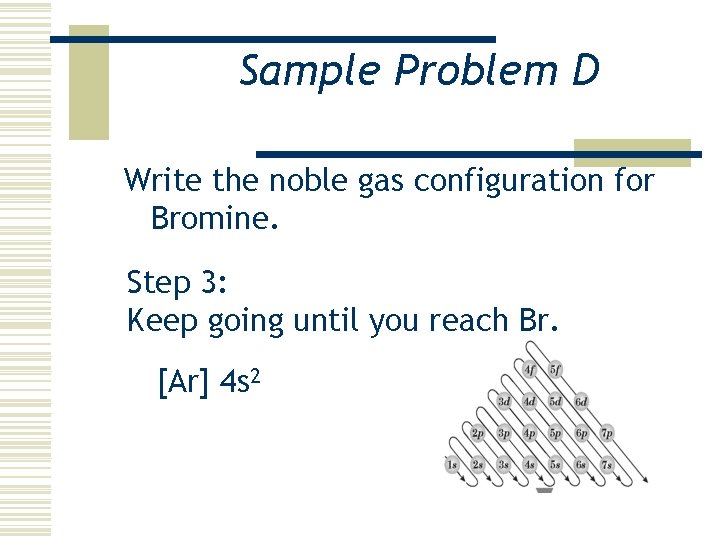
Sample Problem D Write the noble gas configuration for Bromine. Step 3: Keep going until you reach Br. [Ar] 4 s 2
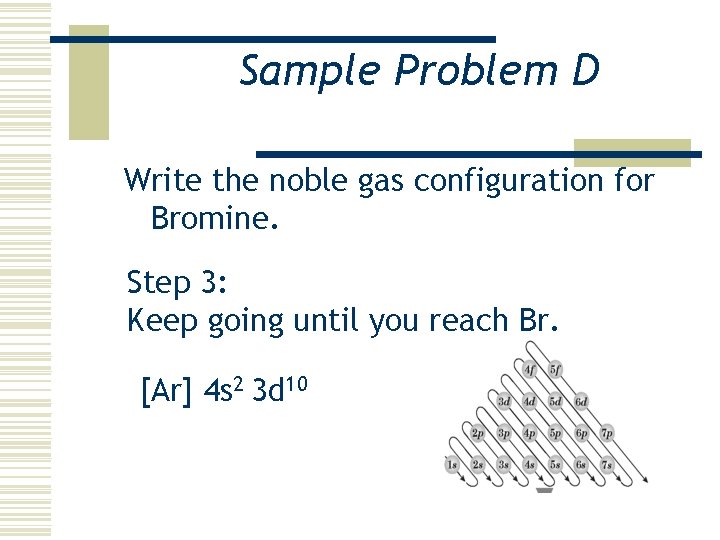
Sample Problem D Write the noble gas configuration for Bromine. Step 3: Keep going until you reach Br. [Ar] 4 s 2 3 d 10
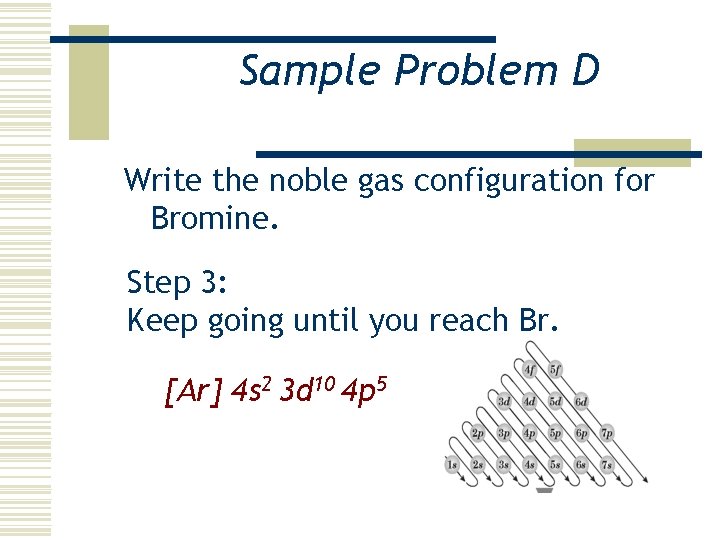
Sample Problem D Write the noble gas configuration for Bromine. Step 3: Keep going until you reach Br. [Ar] 4 s 2 3 d 10 4 p 5
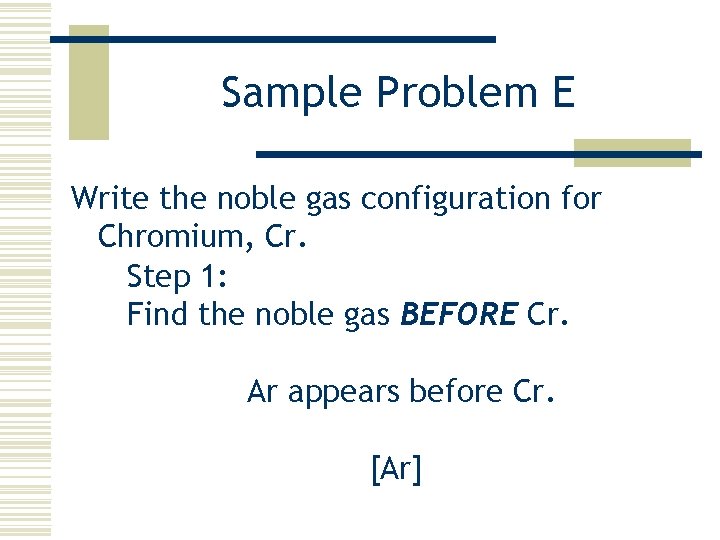
Sample Problem E Write the noble gas configuration for Chromium, Cr. Step 1: Find the noble gas BEFORE Cr. Ar appears before Cr. [Ar]
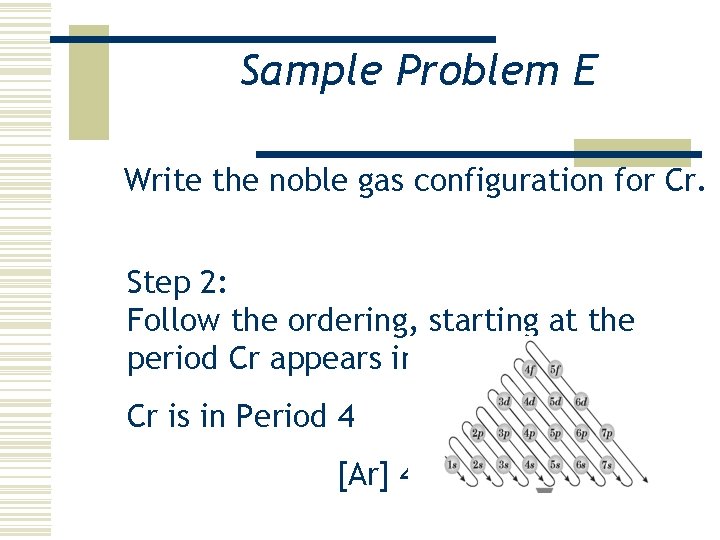
Sample Problem E Write the noble gas configuration for Cr. Step 2: Follow the ordering, starting at the period Cr appears in. Cr is in Period 4 [Ar] 4 s
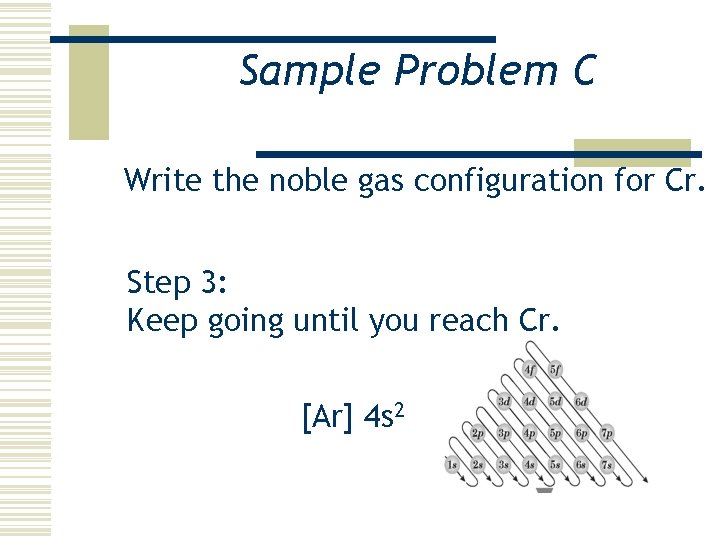
Sample Problem C Write the noble gas configuration for Cr. Step 3: Keep going until you reach Cr. [Ar] 4 s 2
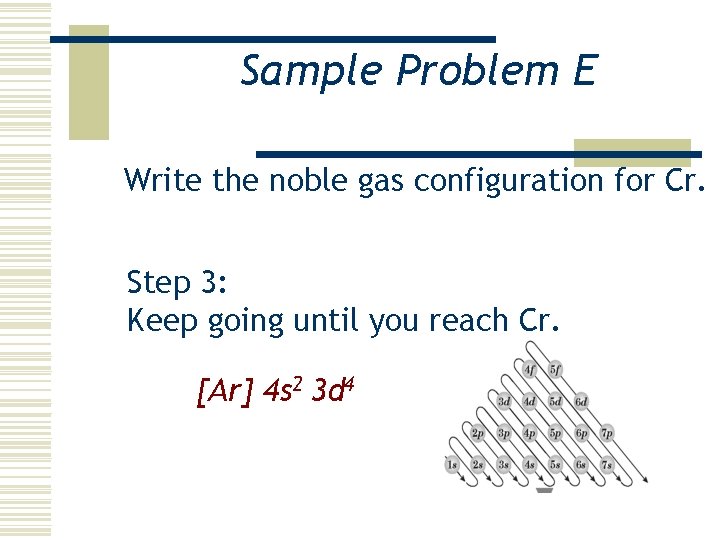
Sample Problem E Write the noble gas configuration for Cr. Step 3: Keep going until you reach Cr. [Ar] 4 s 2 3 d 4
Your turn … Writing Noble Gas Configurations #1
Valence Electron Configurations The REALLY Short way.
Valence Electron Configurations w Rules: n Do everything you did with Noble Gas configurations…. . EXCEPT DON’T WRITE THE NOBLE GAS!
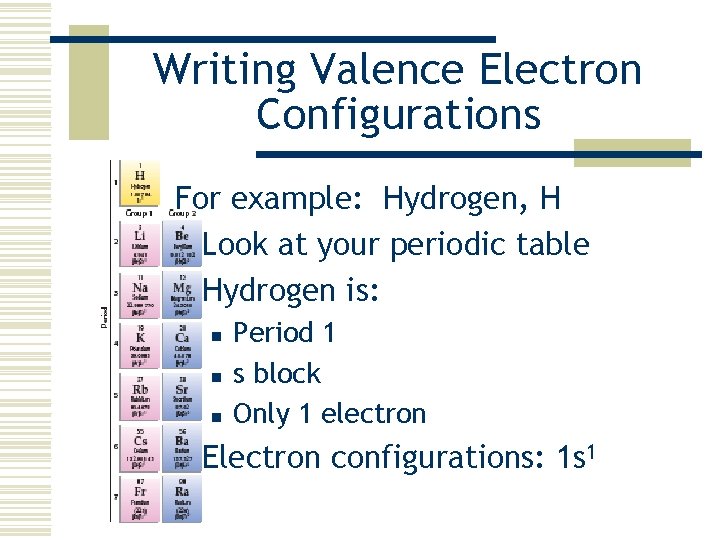
Writing Valence Electron Configurations For example: Hydrogen, H w Look at your periodic table w Hydrogen is: n n n Period 1 s block Only 1 electron w Electron configurations: 1 s 1
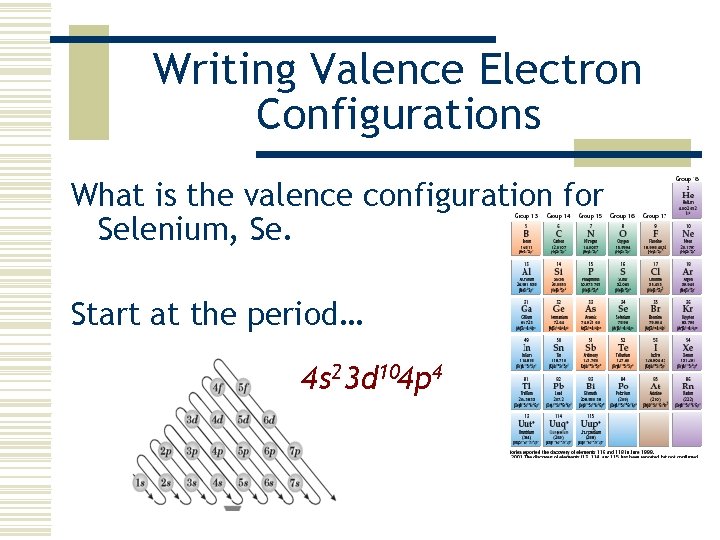
Writing Valence Electron Configurations What is the valence configuration for Selenium, Se. Start at the period… 4 s 2 3 d 104 p 4
Your Turn … Writing Electron Configurations & Valence Configurations #1
- Slides: 90