
Lecture 4 Polycythemia causes clinical signs and labortary


Lecture (4) Polycythemia, causes, clinical signs and labortary diagnosis VARIATIONS IN NUMBER OF RED BLOOD CELLS: PHYSIOLOGICAL VARIATIONS : A. Increase in RBC Count Increase in the RBC count is known as polycythemia. It occurs in both physiological and pathological conditions. It occurs in the following conditions: 1. Age At birth, the RBC count is (8 - 10 )million/cu mm of blood 2. Sex Before puberty and after menopause in females the RBC count is similar to that in males. 3. High altitude Inhabitants of mountains (above 10, 000 feet from mean sea level) have an increased RBC count of more than 7 million/cu mm

4. Muscular exercise There is a temporary increase in RBC count after exercise. 5. Emotional conditions RBC count increases during the emotional conditions such as anxiety. 6. Increased environmental temperature Increase in atmospheric temperature increases RBC count. 7. After meals , there is a slight increase in the RBC count after taking meals.

se in RBC Count : Decrease in RBC count occurs in the following physiological conditions: 1 -High barometric pressures : At high barometric pressures as in deep sea, when the oxygen tension of blood is higher, the RBC count decreases 2 -During sleep RBC count decreases slightly during sleep and immediately after getting up from sleep 3. Pregnancy: in pregnancy, the RBC count decreases

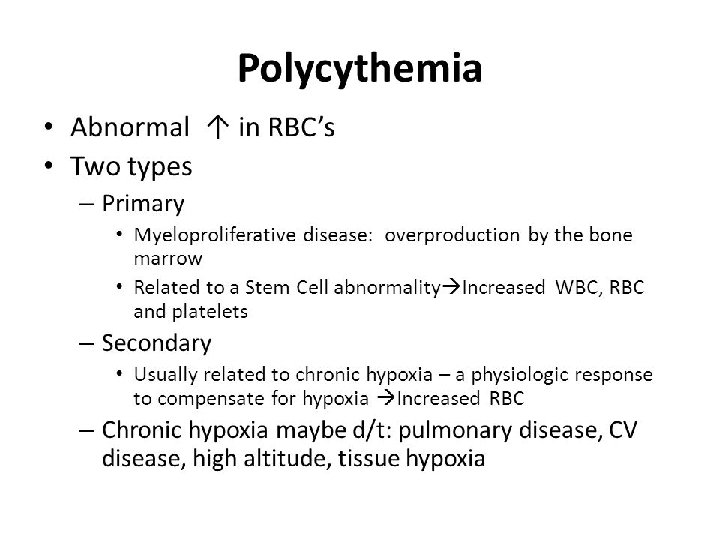
PATHOLOGICAL VARIATIONS Pathological polycythemia is the abnormal increase in the RBC count. Red cell count increases above 7 million/ cu mm of the blood. Polycythemia is of two types, the primary polycythemia and secondary polycythemia. Primary Polycythemia – Polycythemia Vera: Primary polycythemia is otherwise known as polycythemia vera. It is a disease characterized by persistent increase in RBC count above 14 million/cu mm of blood. This is always associated with increased white blood cell count above 24, 000/cu mm of blood

Secondary Polycythemia: This is secondary to some of the pathological conditions (diseases) such as: 1. Respiratory disorders like emphysema. 2. Congenital heart disease. 3 -Ayerza’s disease (condition associated with hypertrophy of right ventricle and obstruction of blood flow to lungs). 4. Chronic carbon monoxide poisoning. 5. Poisoning by chemicals like phosphorus and arsenic. 6. Repeated mild hemorrhages.

Pathophysiology of Polycythemia


P. Vera - Symptoms & Signs Symptoms -Splenomegaly 70% -Headache -Weakness -Skin plethora 67% -Hepatomegaly 40% -Pruritis -Conjunctival plethora -Dizziness 59% -Visual disturbance -Systolic Hypertension -Weight loss 72%


- Slides: 13