
LECTURE 4 Microevolution Part 2 Mutations TODAYS OBJECTIVES
LECTURE 4: Microevolution Part 2 Mutations TODAY’S OBJECTIVES: • Describe the types of mutations that can affect genes • Explain what could cause a mutation
What is a mutation? • Mutation: – Any change in the nucleotide sequence of DNA – Can be a large portion of DNA or single nucleotide change • 2 TYPES: – POINT MUTATIONS » Base substitution » Change in nucleotide (Base change) – FRAMESHIFT MUTATIONS » Base insertions/deletions » Nucleotides inserted/deleted from sequence
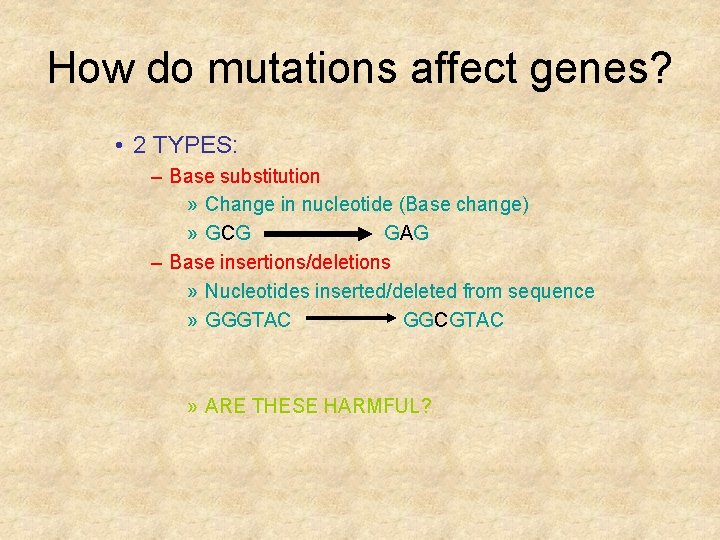
How do mutations affect genes? • 2 TYPES: – Base substitution » Change in nucleotide (Base change) » GCG GAG – Base insertions/deletions » Nucleotides inserted/deleted from sequence » GGGTAC GGCGTAC » ARE THESE HARMFUL?
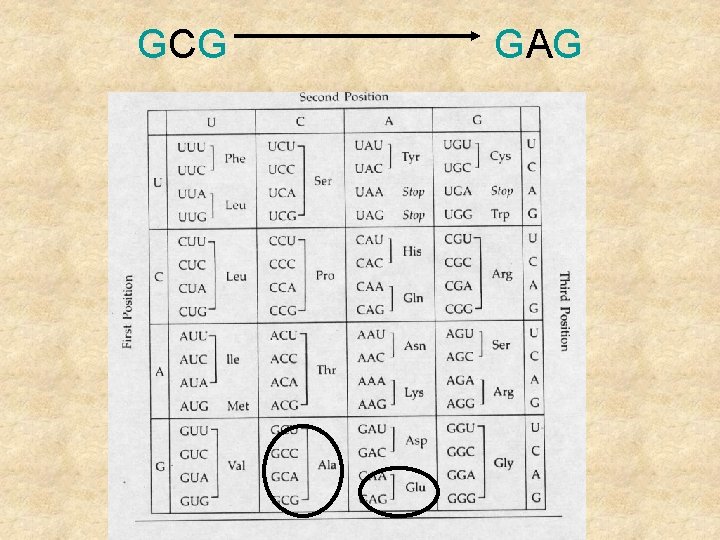
GCG GAG
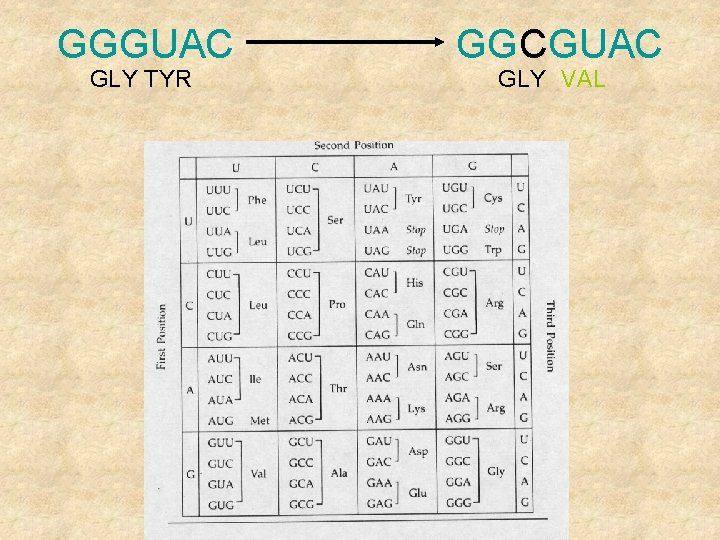
GGGUAC GLY TYR GGCGUAC GLY VAL
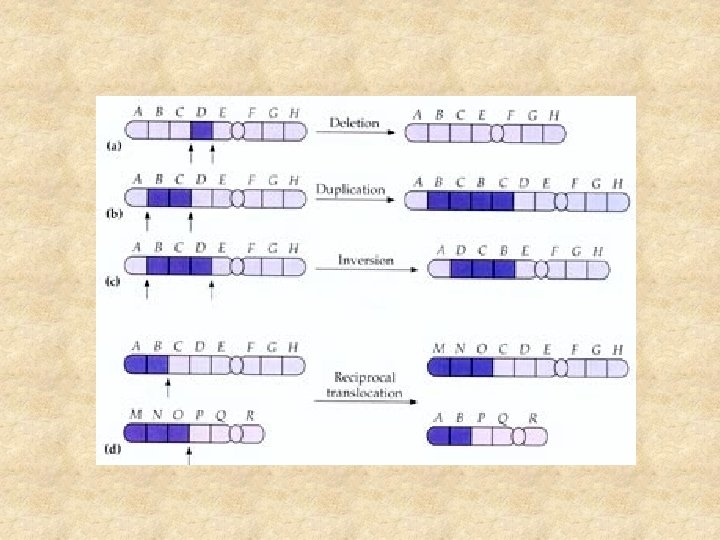
What are whole chromosome mutations? • Mutations: – Duplication • Parts of a chromosome are repeated – Deletion • Parts of a chromosome are lost – Inversion • Part of a chromosome is reversed – Translocation • Part of a chromosome is attached to a nonhomologous chromosome
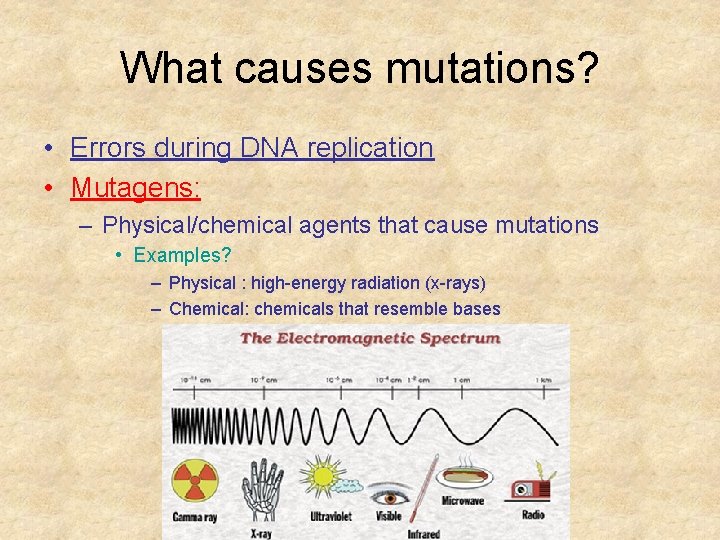
What causes mutations? • Errors during DNA replication • Mutagens: – Physical/chemical agents that cause mutations • Examples? – Physical : high-energy radiation (x-rays) – Chemical: chemicals that resemble bases
- Slides: 8