
Lecture 4 Chemical Engineering for MicroNano Fabrication Ch

Lecture 4 Chemical Engineering for Micro/Nano Fabrication Ch. E 384 T / 323
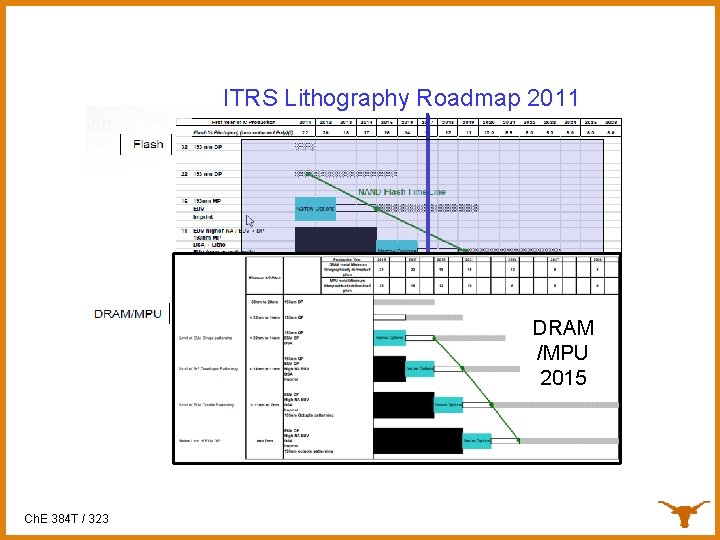
ITRS Lithography Roadmap 2011 DRAM /MPU 2015 Ch. E 384 T / 323
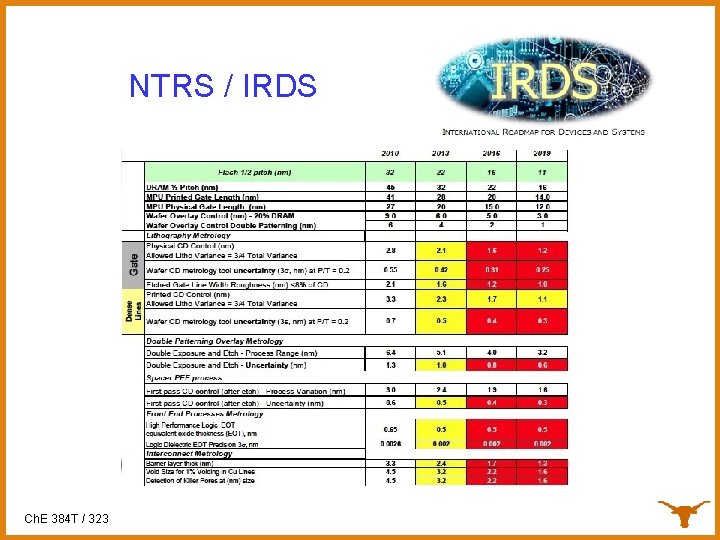
NTRS / IRDS Ch. E 384 T / 323

Hole Type Patterns 2018 draft This includes contacts, vias and cut patterns Ch. E 384 T / 323

From the NTRS NBHFA MPU ½ Pitch (nm) (uncontacted gate) Overlay (nm) MPU gate in resist (nm) MPU gate length after etch (nm) Gate CD control (nm, 3 -sigma) 2010 2013 2016 2018 45 18 25 18 1. 6 32 12. 8 18 13 1. 2 22 8. 8 13 9 0. 8 18 7. 2 10 7 0. 6 Manufacturable solutions exist and are being optimized 4 1 r 12= 8. 69 Å Manufacturable solutions are known 2 Manufacturable solutions are NOT known 3 r 34=4. 32 Å Ch. E 384 T / 323
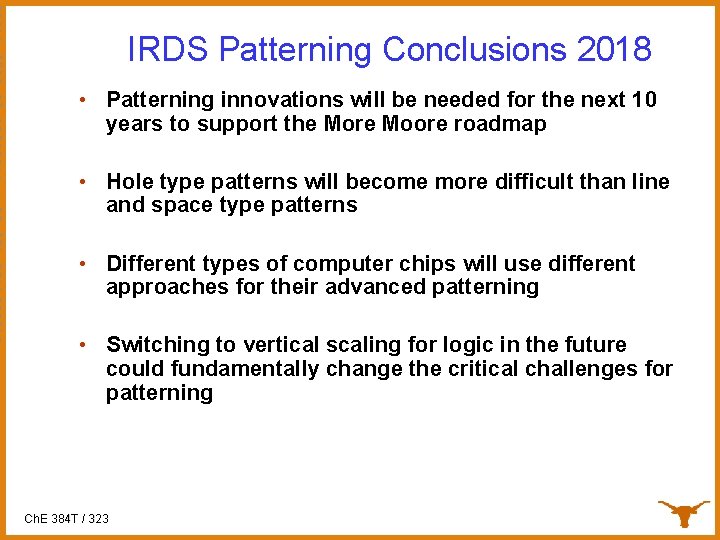
D R A F T IRDS Patterning Conclusions 2018 W O R K I N P R O G R E S S – D O N O T D I S T R I B U T E • Patterning innovations will be needed for the next 10 years to support the More Moore roadmap • Hole type patterns will become more difficult than line and space type patterns • Different types of computer chips will use different approaches for their advanced patterning • Switching to vertical scaling for logic in the future could fundamentally change the critical challenges for patterning Ch. E 384 T / 323

The Basic Components of a Generic Optical Projection System Mask Lens Light Source Condenser Lens Illumination system Ch. E 384 T / 323 Projection Lens Resist Coated Wafer
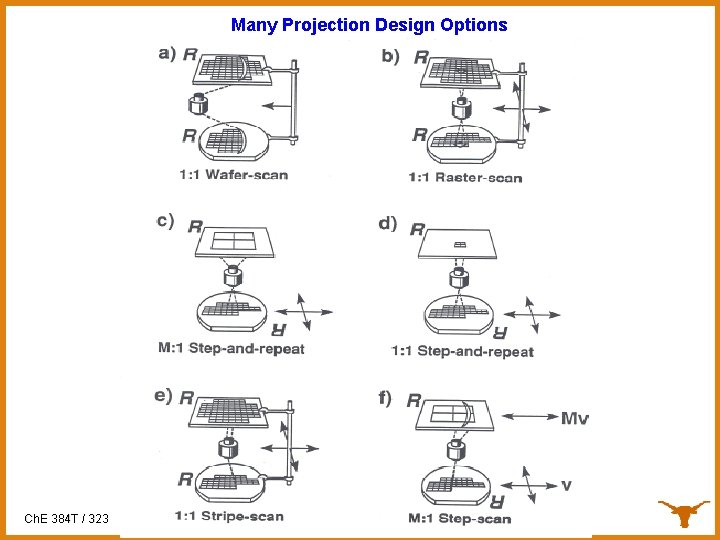
Many Projection Design Options Ch. E 384 T / 323
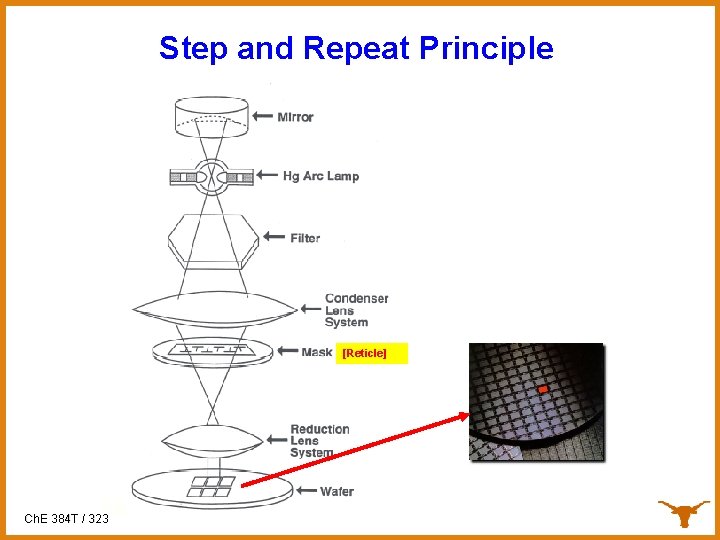
Step and Repeat Principle [Reticle] Ch. E 384 T / 323

Principle of the Micralign® Scanner System Ch. E 384 T / 323
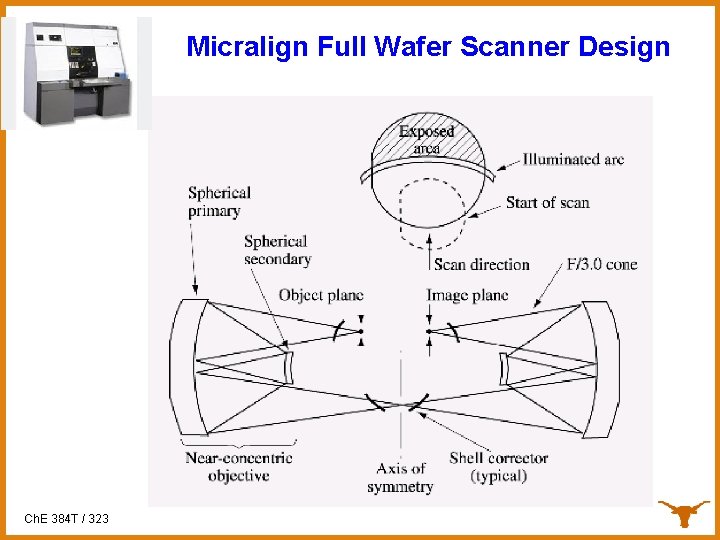
Micralign Full Wafer Scanner Design Ch. E 384 T / 323
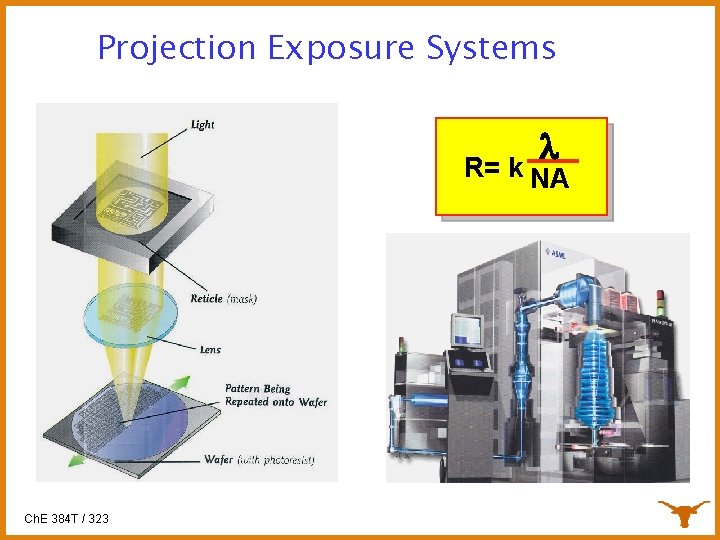
Projection Exposure Systems l R= k NA Ch. E 384 T / 323
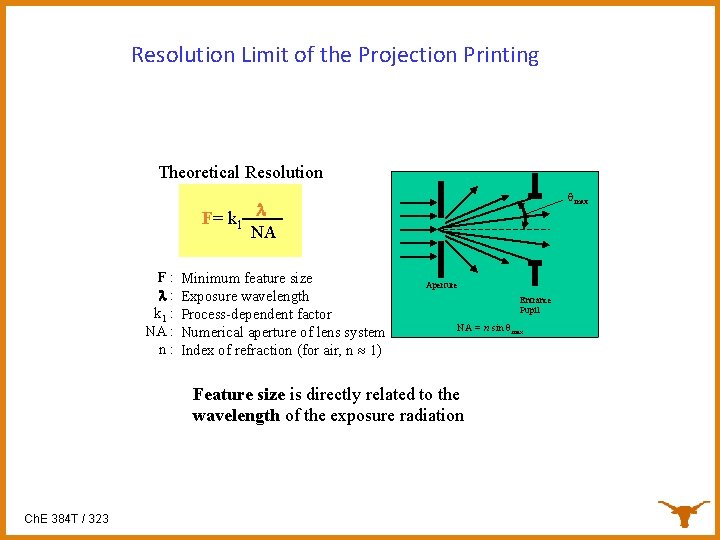
Resolution Limit of the Projection Printing Theoretical Resolution qmax F= k 1 l NA F: l: k 1 : NA : n: Minimum feature size Exposure wavelength Process-dependent factor Numerical aperture of lens system Index of refraction (for air, n 1) Aperture Entrance Pupil NA = n sin qmax Feature size is directly related to the wavelength of the exposure radiation Ch. E 384 T / 323
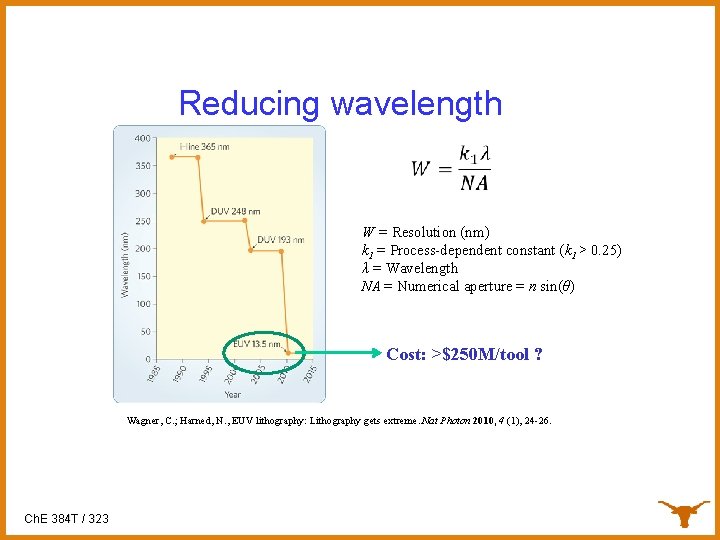
Reducing wavelength W = Resolution (nm) k 1 = Process-dependent constant (k 1 > 0. 25) λ = Wavelength NA = Numerical aperture = n sin(θ) Cost: >$250 M/tool ? Wagner, C. ; Harned, N. , EUV lithography: Lithography gets extreme. Nat Photon 2010, 4 (1), 24 -26. Ch. E 384 T / 323
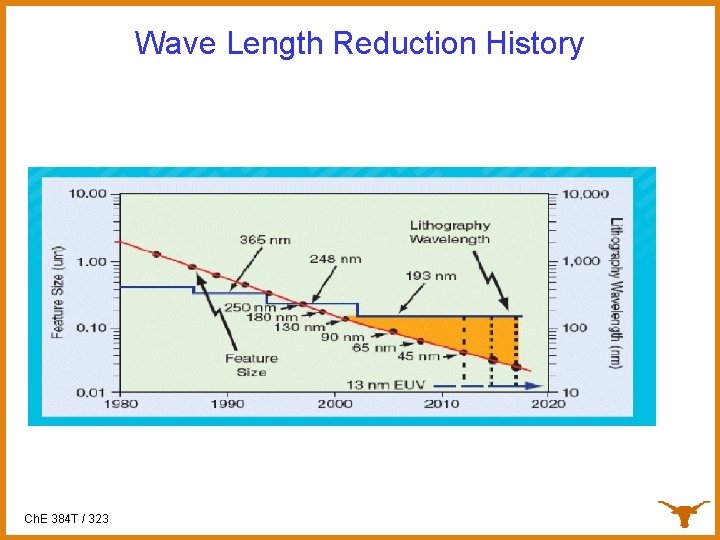
Wave Length Reduction History Ch. E 384 T / 323
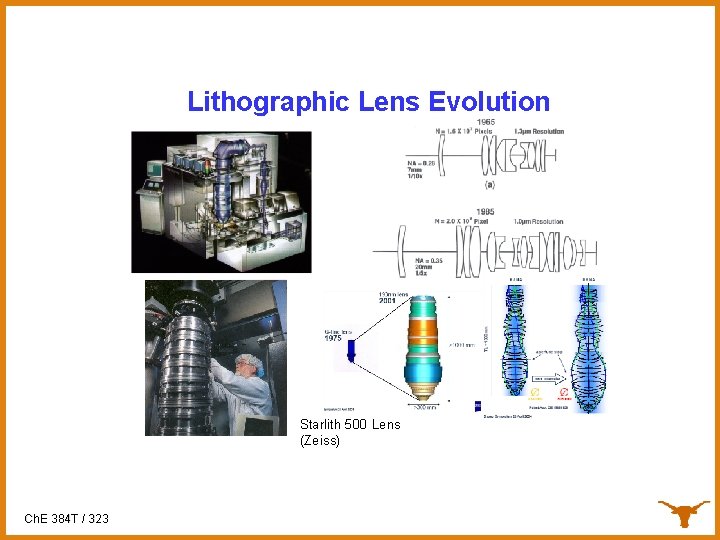
Lithographic Lens Evolution Starlith 500 Lens (Zeiss) Ch. E 384 T / 323
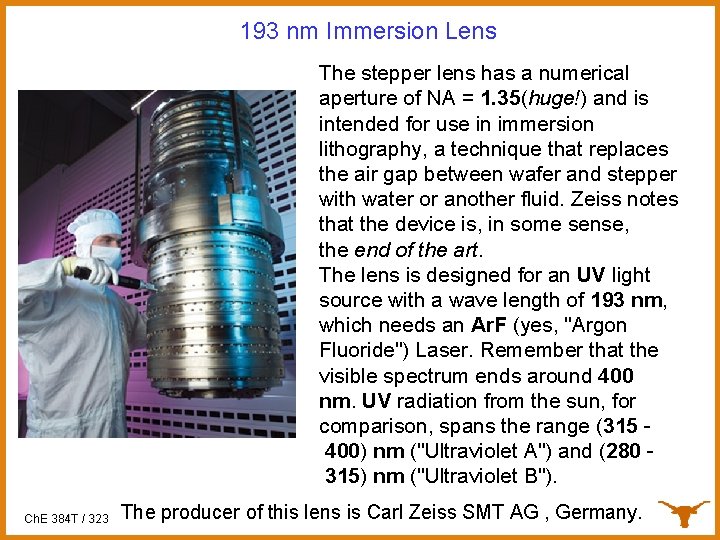
193 nm Immersion Lens The stepper lens has a numerical aperture of NA = 1. 35(huge!) and is intended for use in immersion lithography, a technique that replaces the air gap between wafer and stepper with water or another fluid. Zeiss notes that the device is, in some sense, the end of the art. The lens is designed for an UV light source with a wave length of 193 nm, which needs an Ar. F (yes, "Argon Fluoride") Laser. Remember that the visible spectrum ends around 400 nm. UV radiation from the sun, for comparison, spans the range (315 400) nm ("Ultraviolet A") and (280 315) nm ("Ultraviolet B"). Ch. E 384 T / 323 The producer of this lens is Carl Zeiss SMT AG , Germany.

A Prophetic Advertisement? ? Size Matters? ? Ch. E 384 T / 323
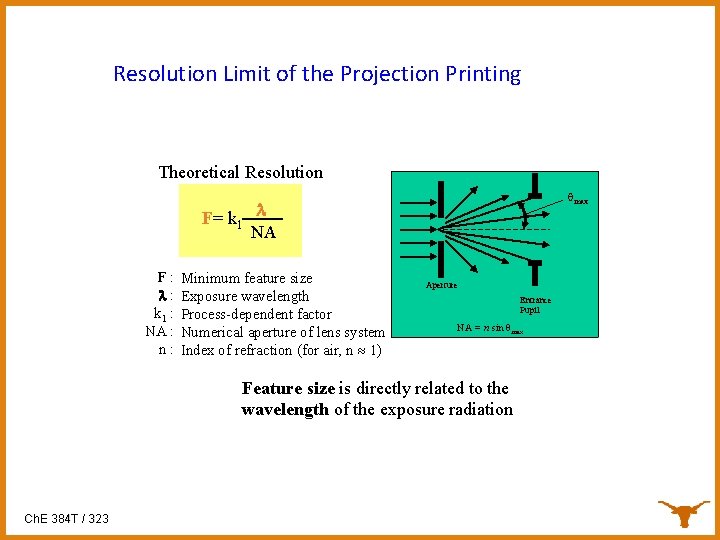
Resolution Limit of the Projection Printing Theoretical Resolution qmax F= k 1 l NA F: l: k 1 : NA : n: Minimum feature size Exposure wavelength Process-dependent factor Numerical aperture of lens system Index of refraction (for air, n 1) Aperture Entrance Pupil NA = n sin qmax Feature size is directly related to the wavelength of the exposure radiation Ch. E 384 T / 323
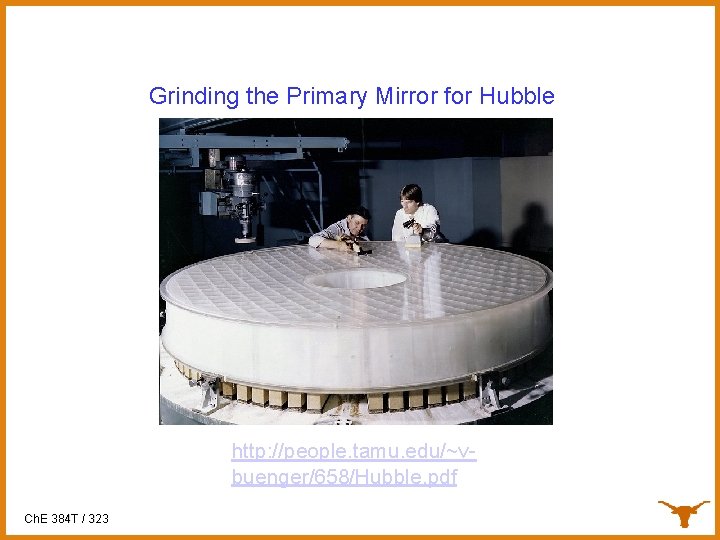
Grinding the Primary Mirror for Hubble http: //people. tamu. edu/~vbuenger/658/Hubble. pdf Ch. E 384 T / 323
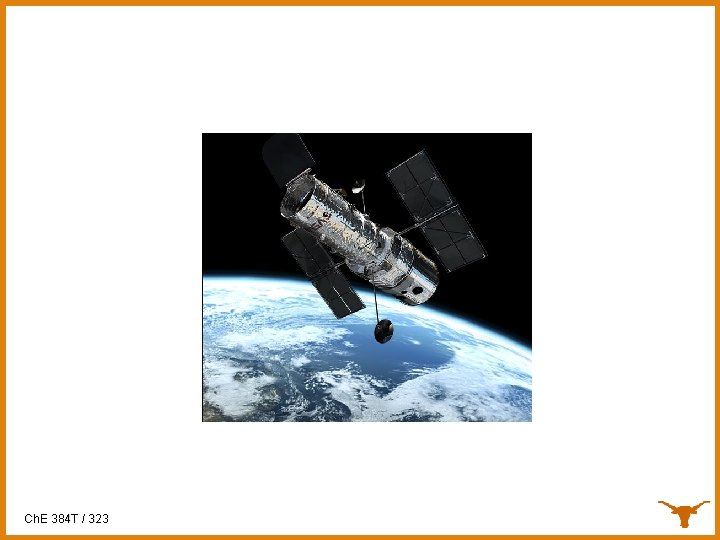
Hubble Telescope Cost $1. 5 Billion Ch. E 384 T / 323
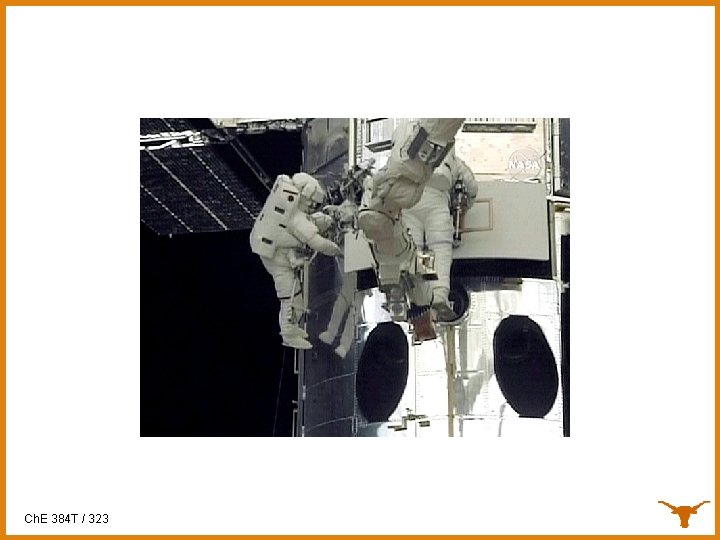
Repairing the Telescope Ch. E 384 T / 323
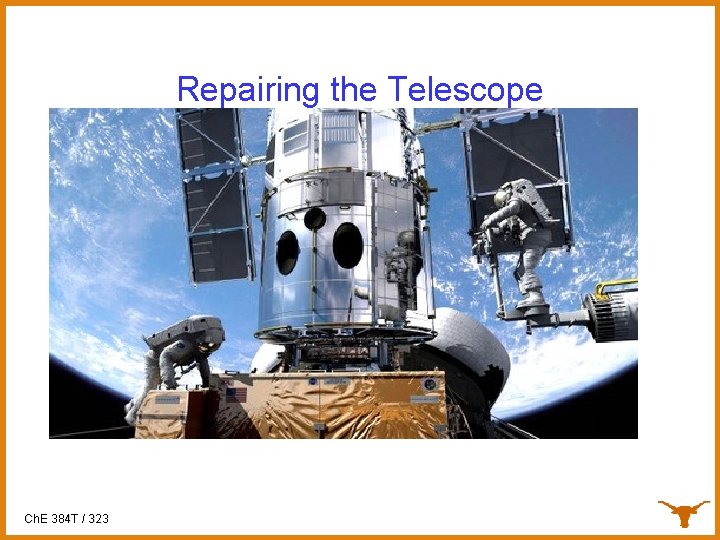
Repairing the Telescope Ch. E 384 T / 323
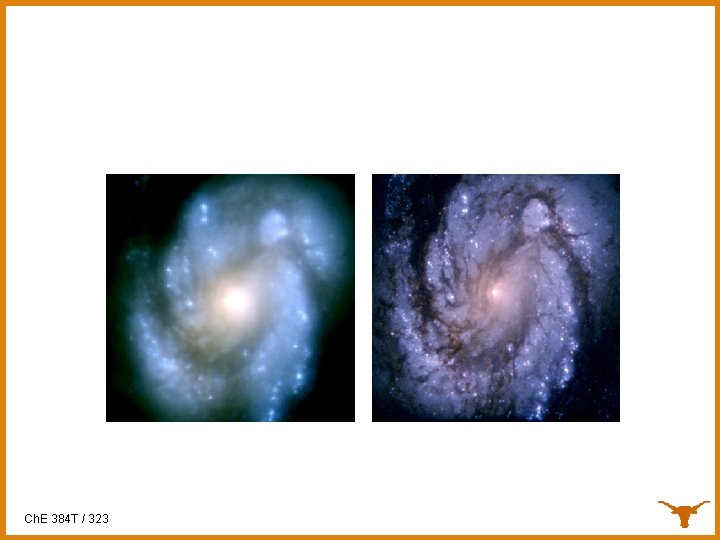
Spiral Galaxy Before and After Ch. E 384 T / 323
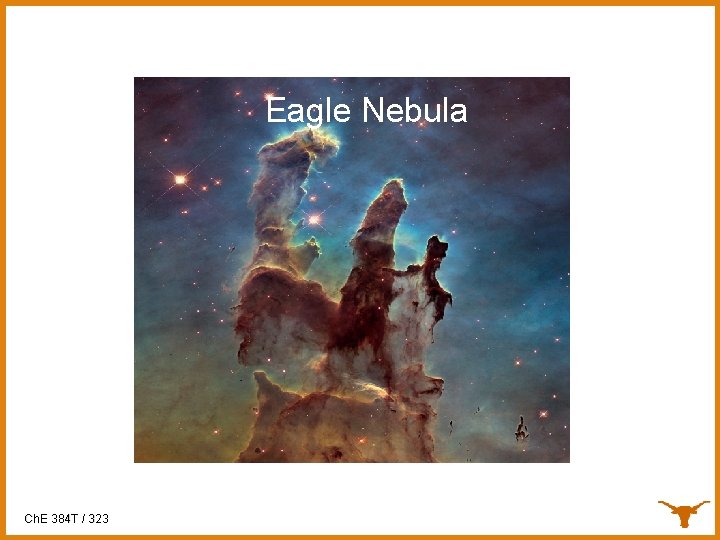
Eagle Nebula Ch. E 384 T / 323
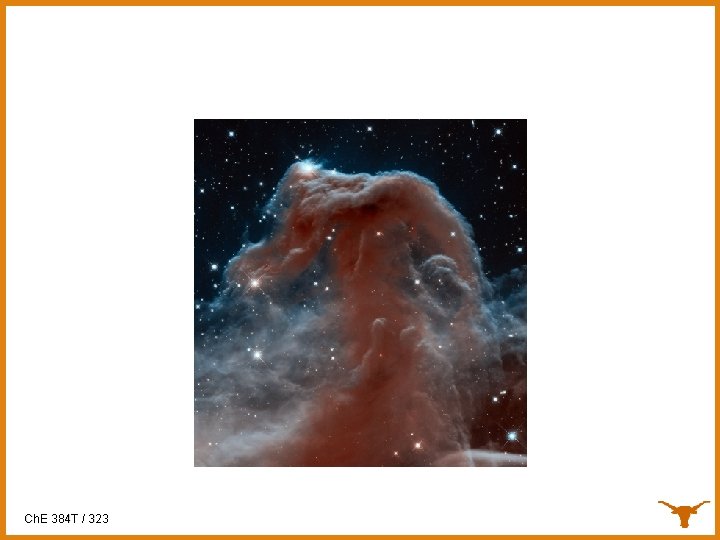
Horse Head Nebula Ch. E 384 T / 323
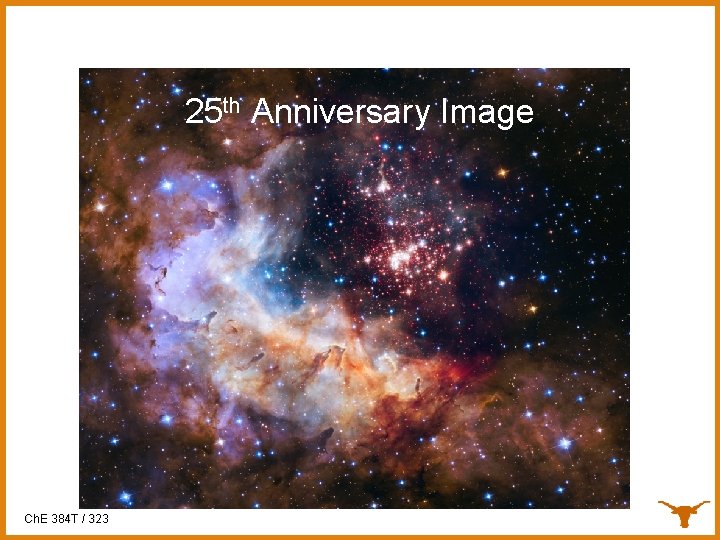
25 th Anniversary Image Ch. E 384 T / 323
- Slides: 27