
Lecture 4 Advanced Pipelines Data hazards control hazards
- Slides: 21
Lecture 4: Advanced Pipelines • Data hazards, control hazards, multi-cycle in-order pipelines (Appendix C. 4 -C. 8) 1
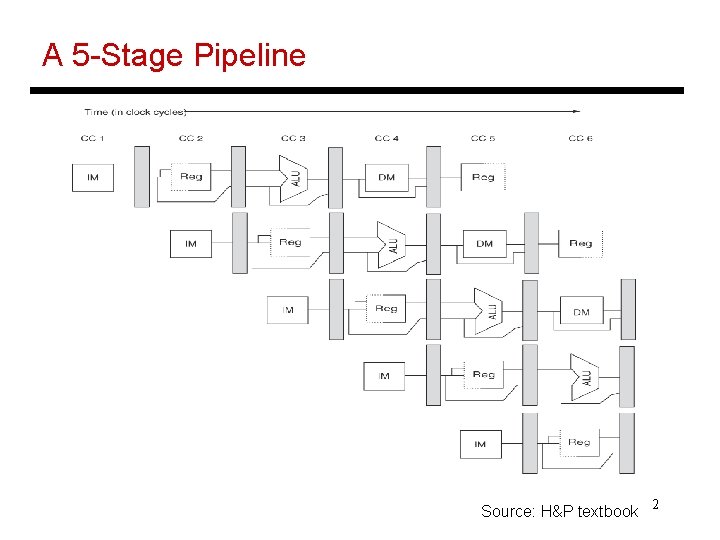
A 5 -Stage Pipeline Source: H&P textbook 2
Hazards • Structural hazards: different instructions in different stages (or the same stage) conflicting for the same resource • Data hazards: an instruction cannot continue because it needs a value that has not yet been generated by an earlier instruction • Control hazard: fetch cannot continue because it does not know the outcome of an earlier branch – special case of a data hazard – separate category because they are treated in different ways 3
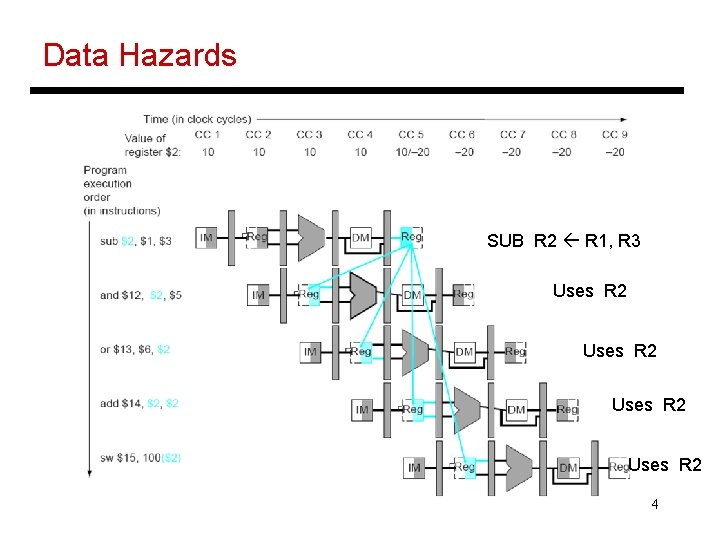
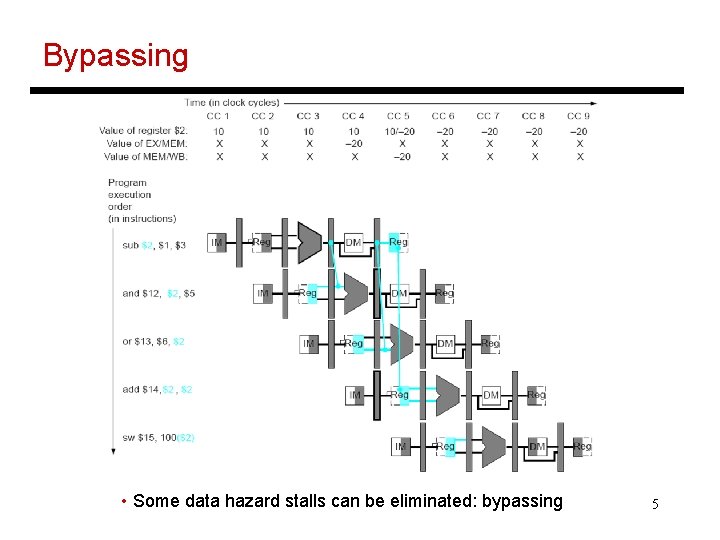
Data Hazards SUB R 2 R 1, R 3 Uses R 2 4
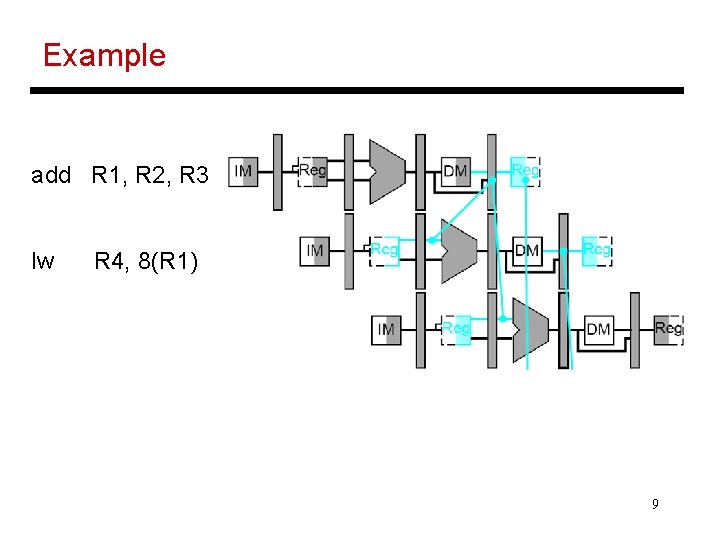
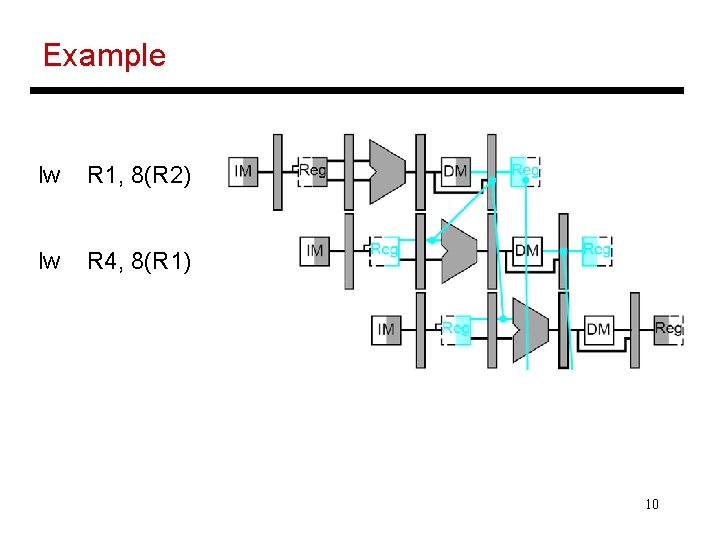
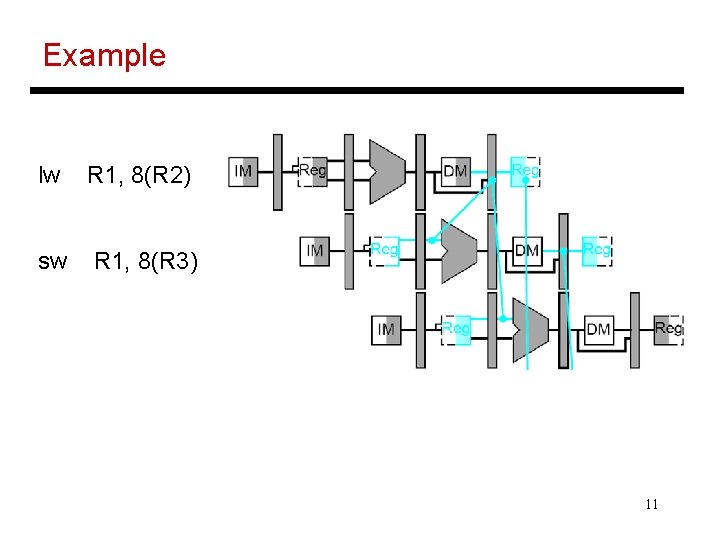
Bypassing • Some data hazard stalls can be eliminated: bypassing 5
Bypassing 6
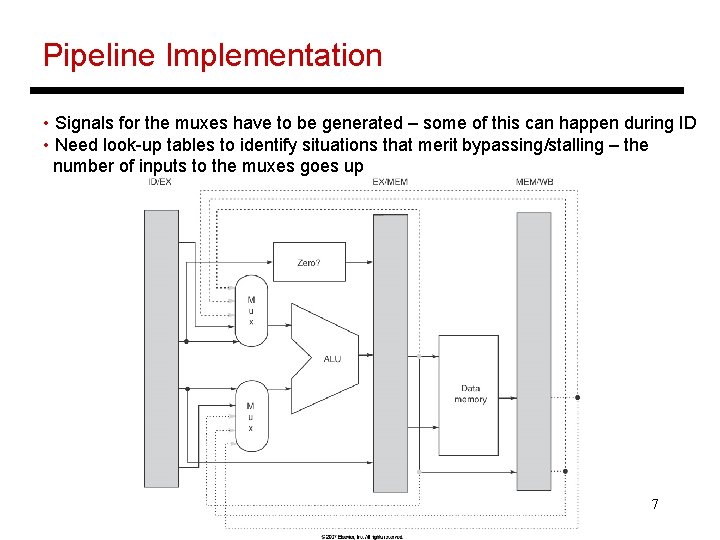
Pipeline Implementation • Signals for the muxes have to be generated – some of this can happen during ID • Need look-up tables to identify situations that merit bypassing/stalling – the number of inputs to the muxes goes up 7
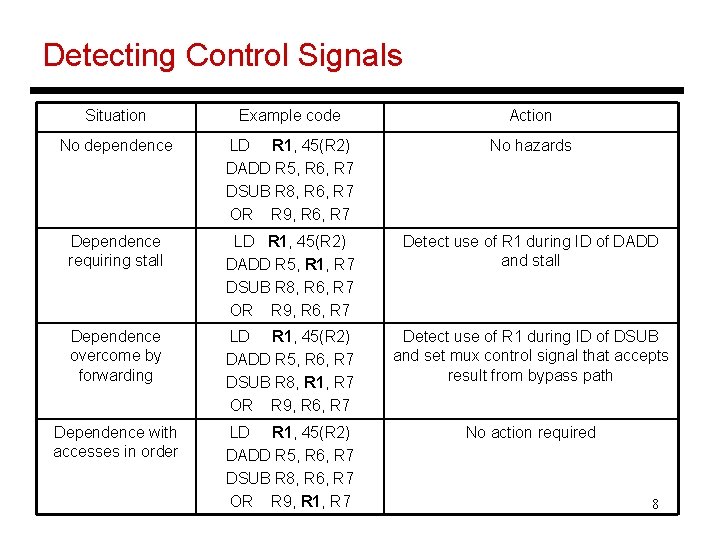
Detecting Control Signals Situation Example code Action No dependence LD R 1, 45(R 2) DADD R 5, R 6, R 7 DSUB R 8, R 6, R 7 OR R 9, R 6, R 7 No hazards Dependence requiring stall LD R 1, 45(R 2) DADD R 5, R 1, R 7 DSUB R 8, R 6, R 7 OR R 9, R 6, R 7 Detect use of R 1 during ID of DADD and stall Dependence overcome by forwarding LD R 1, 45(R 2) DADD R 5, R 6, R 7 DSUB R 8, R 1, R 7 OR R 9, R 6, R 7 Detect use of R 1 during ID of DSUB and set mux control signal that accepts result from bypass path Dependence with accesses in order LD R 1, 45(R 2) DADD R 5, R 6, R 7 DSUB R 8, R 6, R 7 OR R 9, R 1, R 7 No action required 8
Example add R 1, R 2, R 3 lw R 4, 8(R 1) 9
Example lw R 1, 8(R 2) lw R 4, 8(R 1) 10
Example lw R 1, 8(R 2) sw R 1, 8(R 3) 11
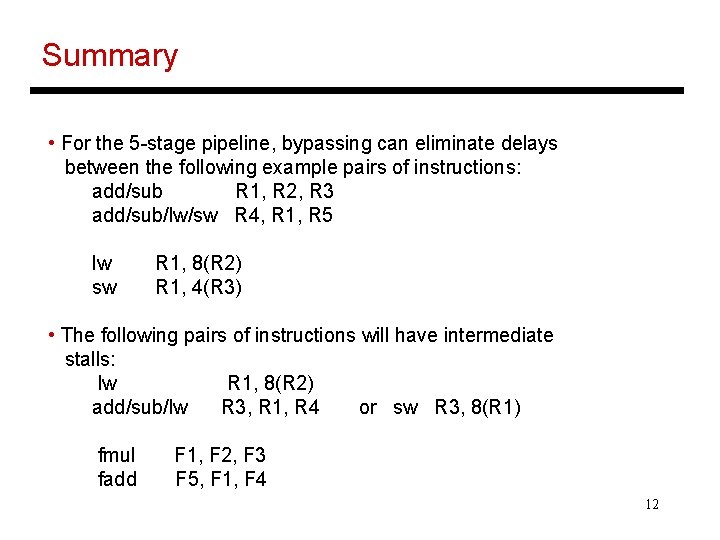
Summary • For the 5 -stage pipeline, bypassing can eliminate delays between the following example pairs of instructions: add/sub R 1, R 2, R 3 add/sub/lw/sw R 4, R 1, R 5 lw sw R 1, 8(R 2) R 1, 4(R 3) • The following pairs of instructions will have intermediate stalls: lw R 1, 8(R 2) add/sub/lw R 3, R 1, R 4 or sw R 3, 8(R 1) fmul fadd F 1, F 2, F 3 F 5, F 1, F 4 12
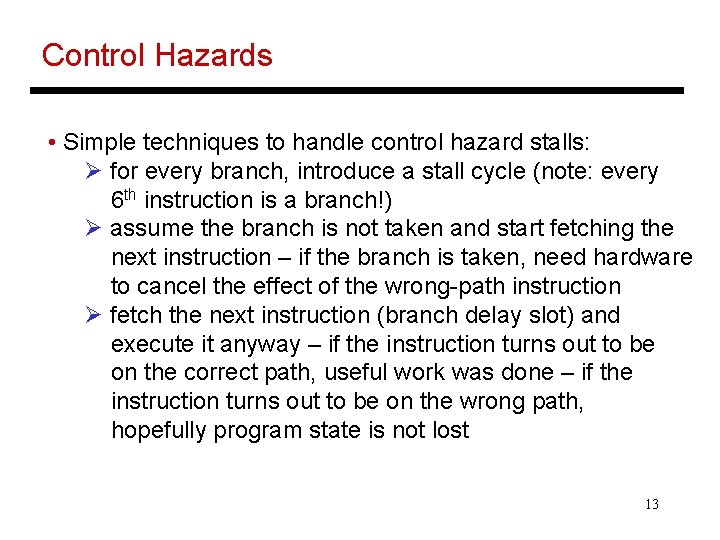
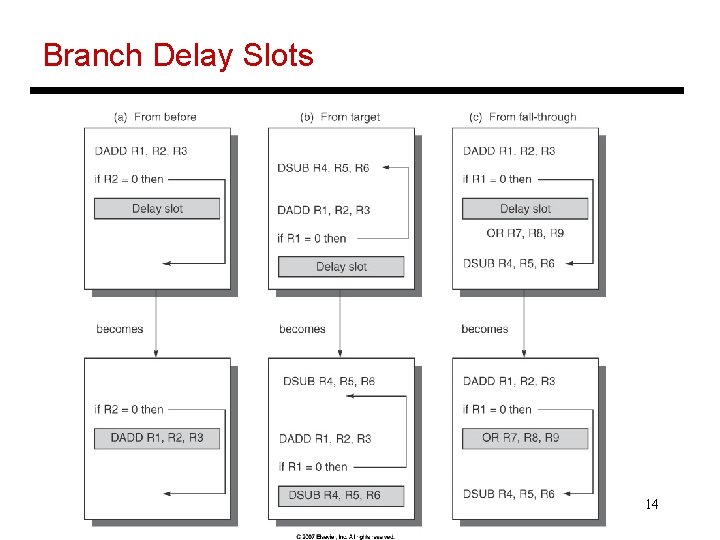
Control Hazards • Simple techniques to handle control hazard stalls: Ø for every branch, introduce a stall cycle (note: every 6 th instruction is a branch!) Ø assume the branch is not taken and start fetching the next instruction – if the branch is taken, need hardware to cancel the effect of the wrong-path instruction Ø fetch the next instruction (branch delay slot) and execute it anyway – if the instruction turns out to be on the correct path, useful work was done – if the instruction turns out to be on the wrong path, hopefully program state is not lost 13
Branch Delay Slots 14
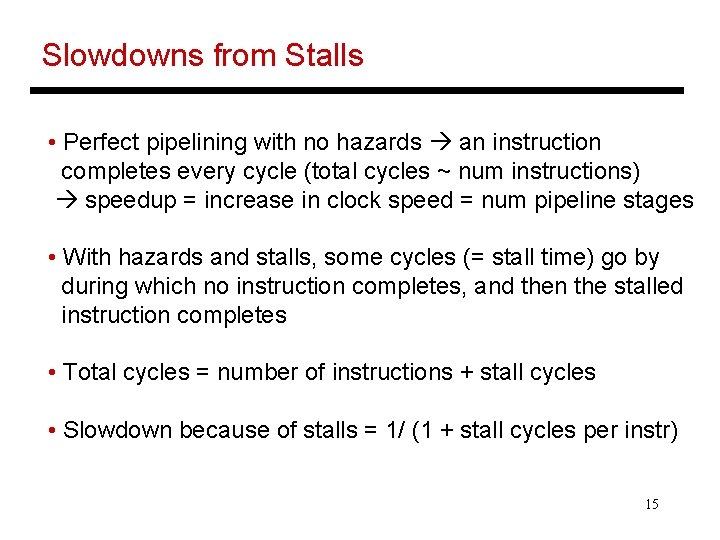
Slowdowns from Stalls • Perfect pipelining with no hazards an instruction completes every cycle (total cycles ~ num instructions) speedup = increase in clock speed = num pipeline stages • With hazards and stalls, some cycles (= stall time) go by during which no instruction completes, and then the stalled instruction completes • Total cycles = number of instructions + stall cycles • Slowdown because of stalls = 1/ (1 + stall cycles per instr) 15
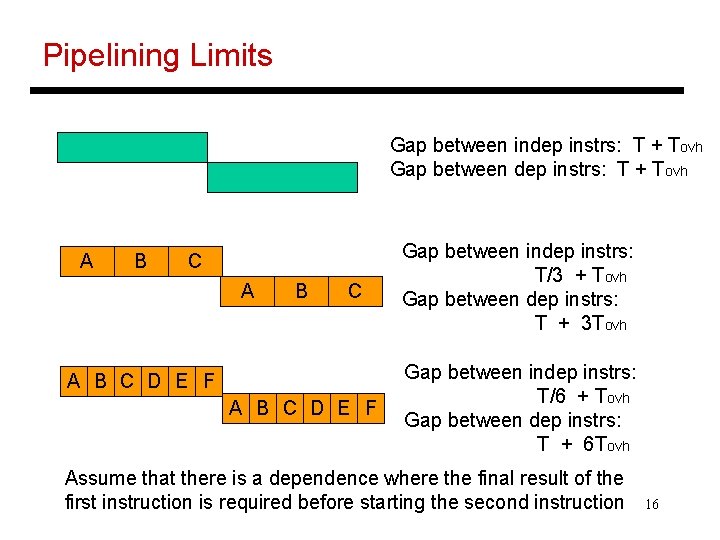
Pipelining Limits Gap between indep instrs: T + Tovh Gap between dep instrs: T + Tovh A B C D E F Gap between indep instrs: T/3 + Tovh Gap between dep instrs: T + 3 Tovh Gap between indep instrs: T/6 + Tovh Gap between dep instrs: T + 6 Tovh Assume that there is a dependence where the final result of the first instruction is required before starting the second instruction 16
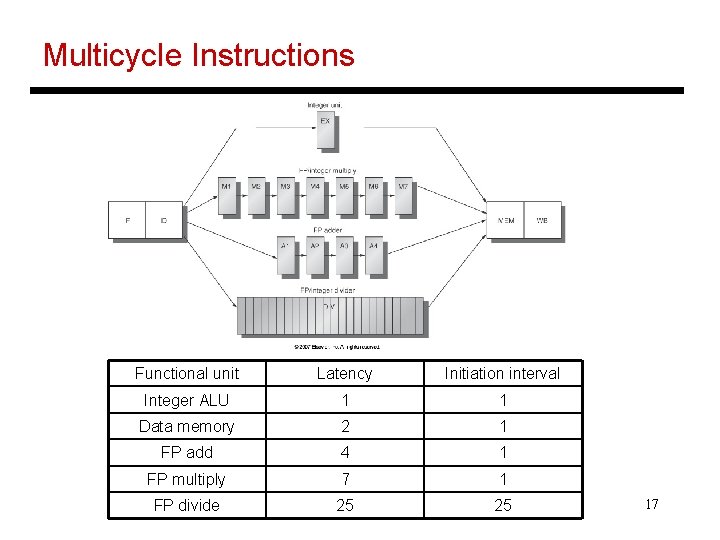
Multicycle Instructions Functional unit Latency Initiation interval Integer ALU 1 1 Data memory 2 1 FP add 4 1 FP multiply 7 1 FP divide 25 25 17
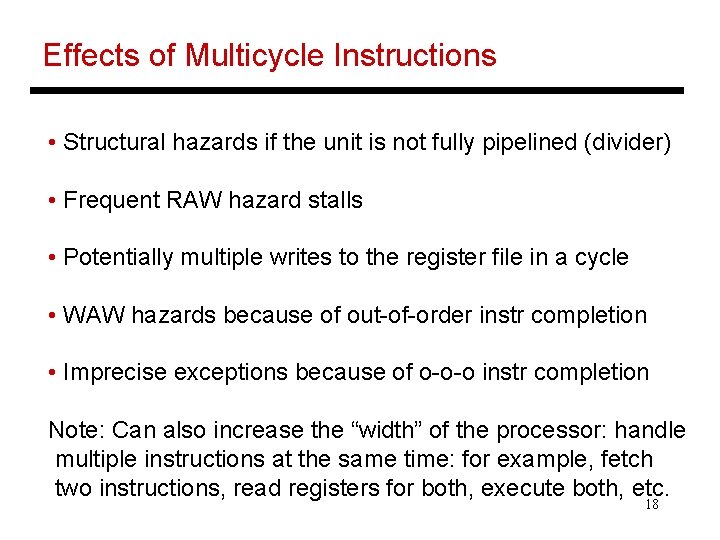
Effects of Multicycle Instructions • Structural hazards if the unit is not fully pipelined (divider) • Frequent RAW hazard stalls • Potentially multiple writes to the register file in a cycle • WAW hazards because of out-of-order instr completion • Imprecise exceptions because of o-o-o instr completion Note: Can also increase the “width” of the processor: handle multiple instructions at the same time: for example, fetch two instructions, read registers for both, execute both, etc. 18
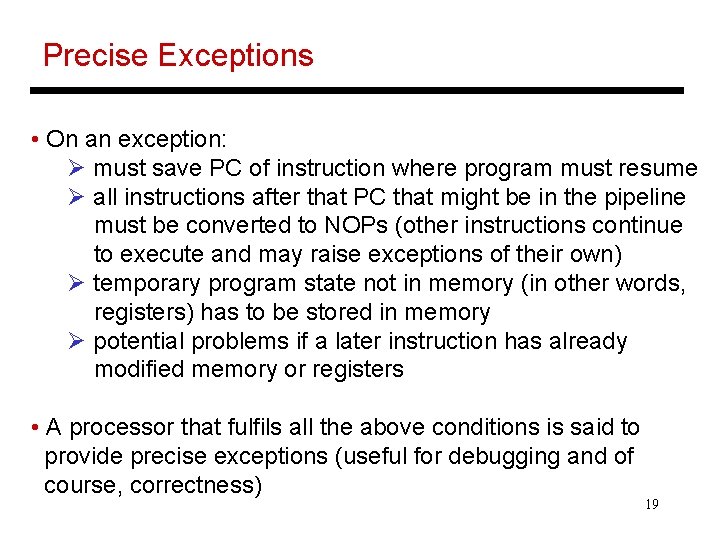
Precise Exceptions • On an exception: Ø must save PC of instruction where program must resume Ø all instructions after that PC that might be in the pipeline must be converted to NOPs (other instructions continue to execute and may raise exceptions of their own) Ø temporary program state not in memory (in other words, registers) has to be stored in memory Ø potential problems if a later instruction has already modified memory or registers • A processor that fulfils all the above conditions is said to provide precise exceptions (useful for debugging and of course, correctness) 19
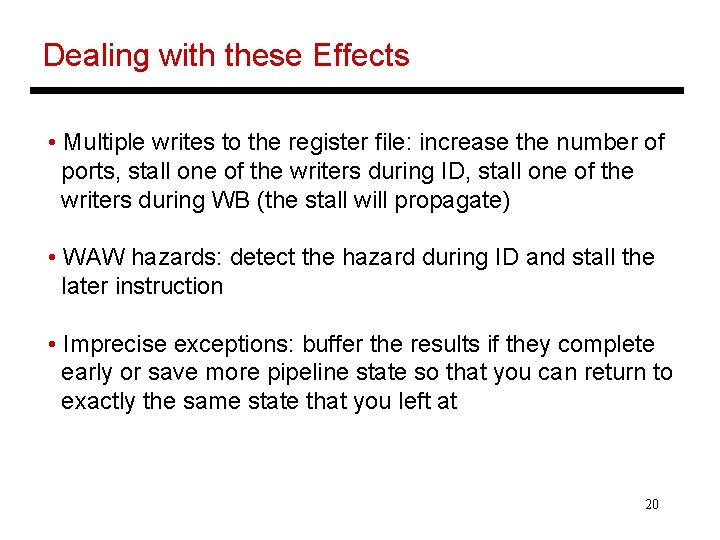
Dealing with these Effects • Multiple writes to the register file: increase the number of ports, stall one of the writers during ID, stall one of the writers during WB (the stall will propagate) • WAW hazards: detect the hazard during ID and stall the later instruction • Imprecise exceptions: buffer the results if they complete early or save more pipeline state so that you can return to exactly the same state that you left at 20
Title • Bullet 21