
Lecture 4 Activation of Adaptive Immunity Overview n
- Slides: 19
Lecture 4 Activation of Adaptive Immunity
Overview n n In order to initiate an immune response antigen must be recognized. Antigen recognition depends on detection of antigen by special receptors. Antigen recognition depends on cellular cooperation. Cellular cooperation is controlled by recognition of MHC-encoded receptors.
Clonal Selection Theory (F. Macfarlane Burnet) n n n Pre-existence of of many different potential antibody producing cells Each cell displays surface receptors for specific antigens Antigen encounter selects cells
Postulates of the Clonal Selection Hypothesis n n Each lymphocyte bears a single type of receptor of a unique specificity Interaction between a foreign molecule and a lymphocyte receptor capable of binding that molecule with high affinity leads to lymphocyte activation The differentiated effector cells derived from an activated lymphocyte will bear receptors of identical specificity to those of the parental cell from which that lymphocyte was derived Lymphocytes bearing receptors specific for self molecules are deleted at an early stage in lymphocyte development and are therefore absent from the repertoire
First a Word About “Cluster of Differentiation/Designation” (CD) Antigens n What are they? n Differentiation antigens n Expressed by cells at distinct stages of differentiation n Expressed by cells having different functions n How are they detected?
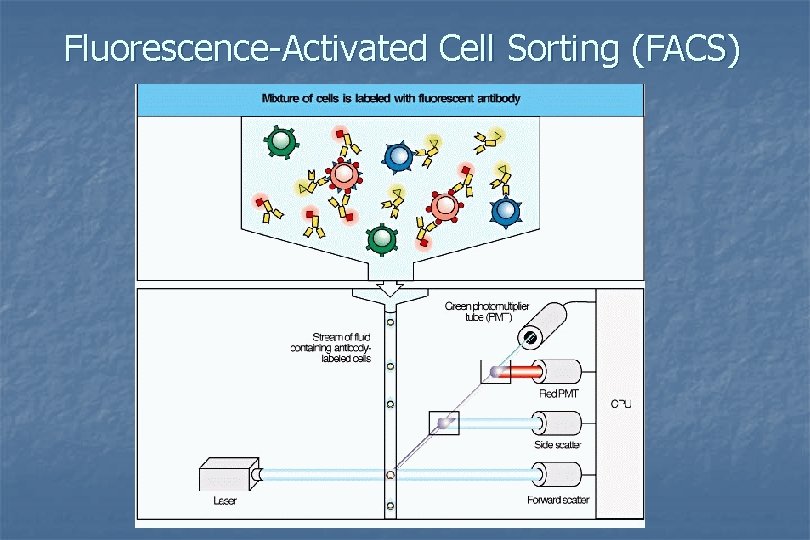
Fluorescence-Activated Cell Sorting (FACS)
Major Lymphocyte Populations n. B lymphocytes and plasma cells n T lymphocytes n Helper/Inducer (CD 4) n Suppressor (CD 8)
T Cell Recognition of Antigen n n n Recognize antigen peptide fragments bound to specialize cell surface molecules on antigen-presenting cells (APC). Molecules are encoded by major histocompatibility complex Peptides are displayed to T cells as peptide: MHC complexes T cell antigen receptors recognize peptide: MHC complexes Each MHC molecule can bind numerous different peptides Two classes of MHC molecules
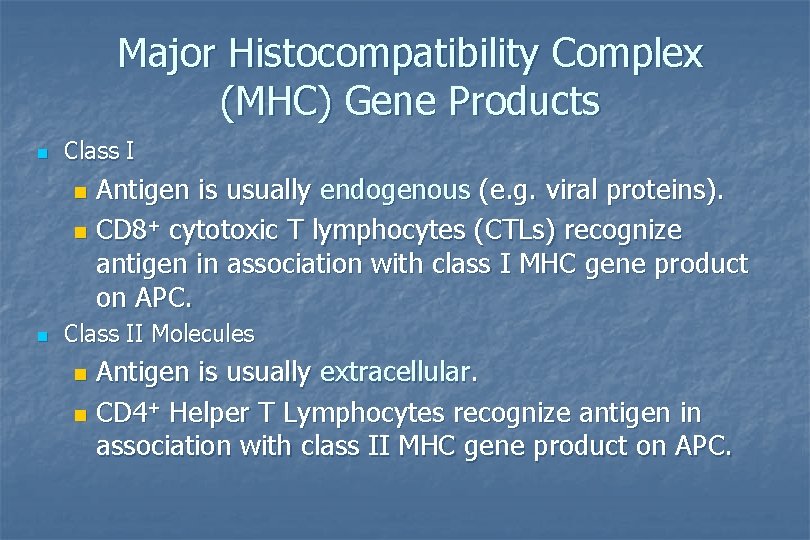
Major Histocompatibility Complex (MHC) Gene Products n Class I Antigen is usually endogenous (e. g. viral proteins). n CD 8+ cytotoxic T lymphocytes (CTLs) recognize antigen in association with class I MHC gene product on APC. n n Class II Molecules Antigen is usually extracellular. n CD 4+ Helper T Lymphocytes recognize antigen in association with class II MHC gene product on APC. n
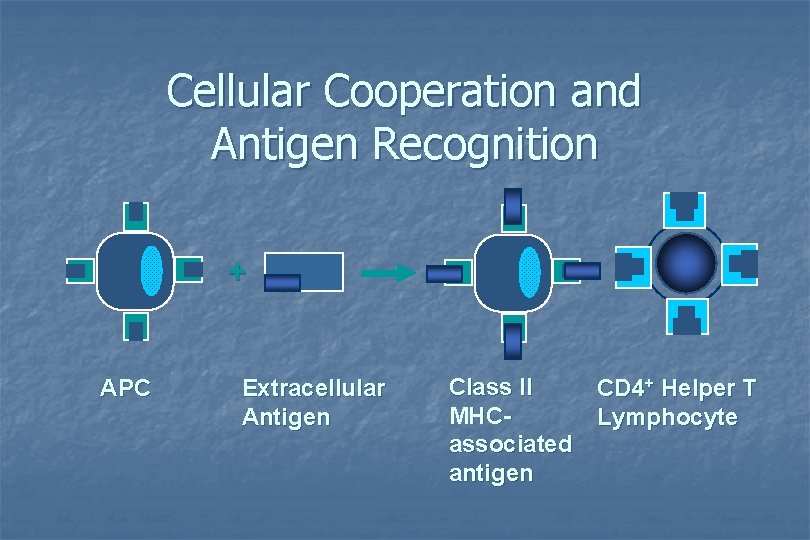
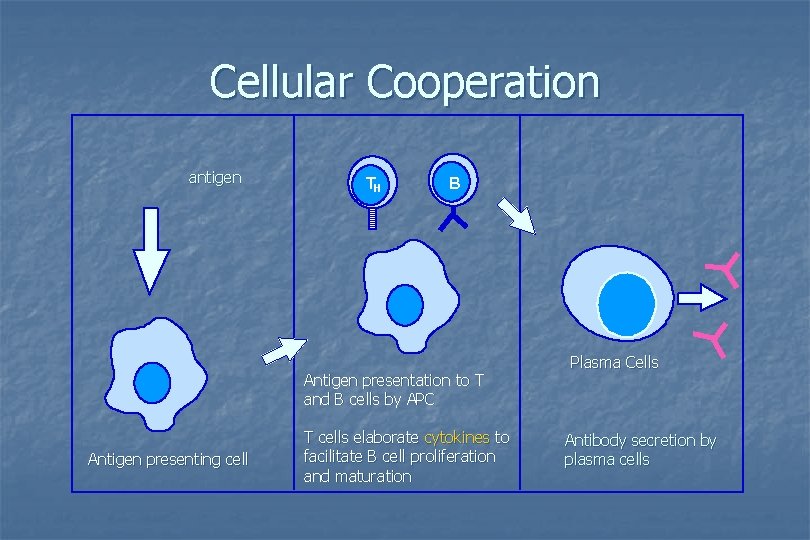
Cellular Cooperation and Antigen Recognition + APC Extracellular Antigen Class II CD 4+ Helper T MHCLymphocyte associated antigen
B Cell Antigen Recognition n Cell surface immunoglobulin receptor or B-cell receptor (Ig. M and Ig. D) Antigen contact initiates B-cell activation, clonal expansion, maturation to plasma cell Antigen receptor is identical to immunoglobulin that will ultimately be produced
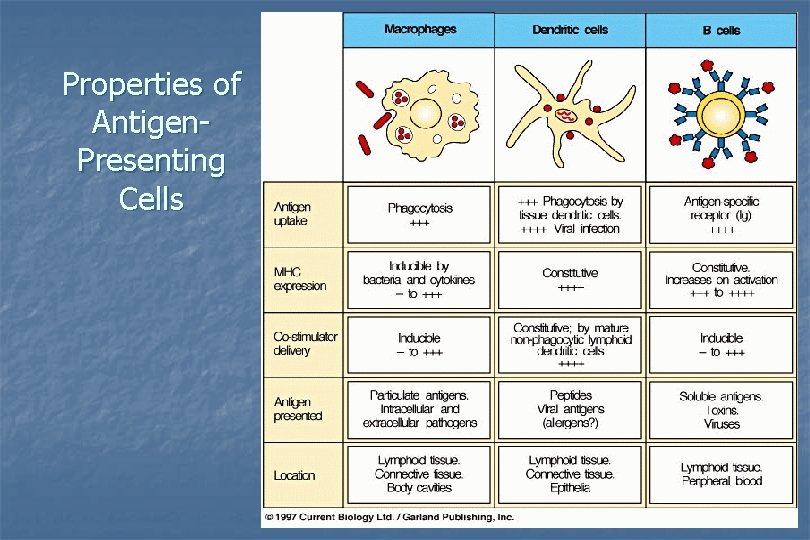
Antigen Presenting Cells n Macrophages/monocytes n Dendritic n. B cells (e. g. , Langerhan’s cells)
Properties of Antigen. Presenting Cells
Cellular Cooperation antigen TH B Antigen presentation to T and B cells by APC Antigen presenting cell T cells elaborate cytokines to facilitate B cell proliferation and maturation Plasma Cells Antibody secretion by plasma cells
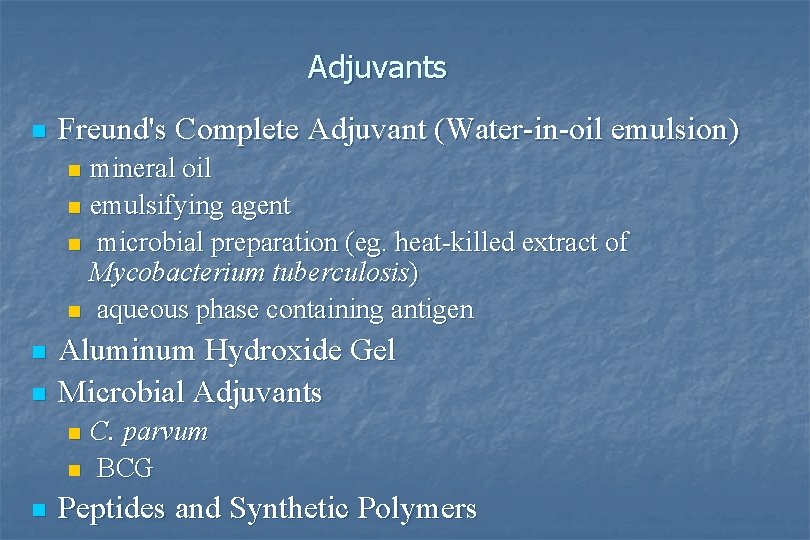
Adjuvants n Freund's Complete Adjuvant (Water-in-oil emulsion) mineral oil n emulsifying agent n microbial preparation (eg. heat-killed extract of Mycobacterium tuberculosis) n aqueous phase containing antigen n Aluminum Hydroxide Gel Microbial Adjuvants C. parvum n BCG n n Peptides and Synthetic Polymers
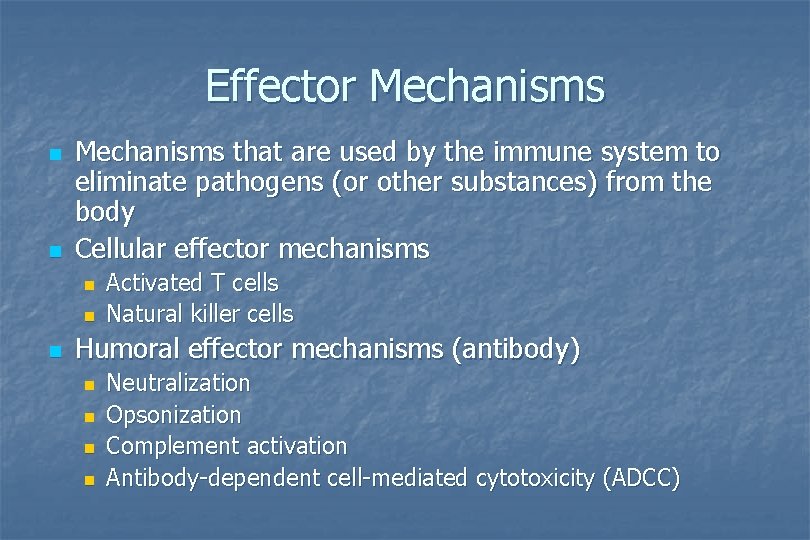
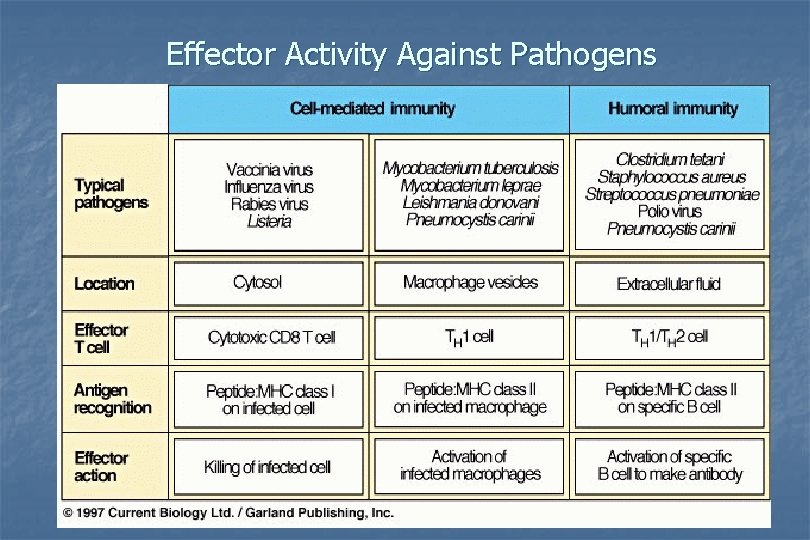
Effector Mechanisms n n Mechanisms that are used by the immune system to eliminate pathogens (or other substances) from the body Cellular effector mechanisms n n n Activated T cells Natural killer cells Humoral effector mechanisms (antibody) n n Neutralization Opsonization Complement activation Antibody-dependent cell-mediated cytotoxicity (ADCC)
Effector Activity Against Pathogens
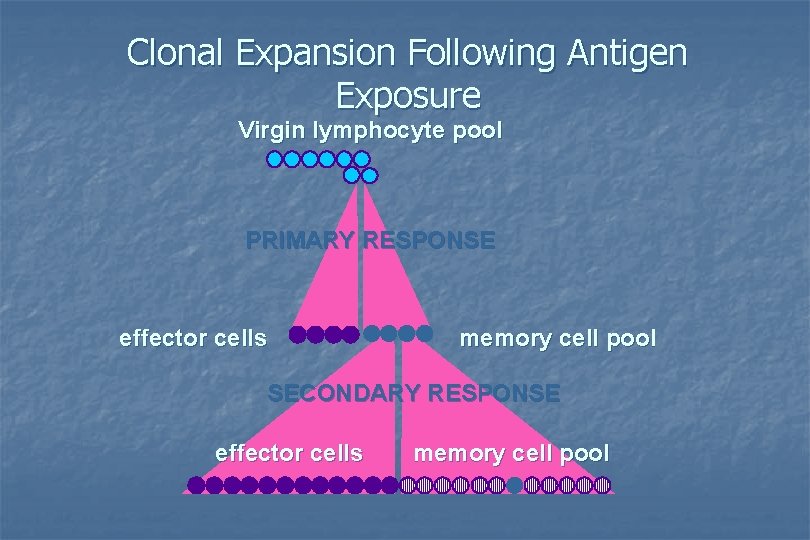
Clonal Expansion Following Antigen Exposure Virgin lymphocyte pool PRIMARY RESPONSE effector cells memory cell pool SECONDARY RESPONSE effector cells memory cell pool
The Bottom Line n n n In order to initiate an immune response antigen must be recognized. Antigen recognition depends on detection of antigen by special receptors. Antigen recognition depends on cellular cooperation. Cellular cooperation is controlled by recognition of MHC-encoded receptors. Antigen “drives” the process resulting in “effector” cells and “memory” cells.