
Lecture 4 Absorption Emission Equilibrium SEASONS Radiative Equilibrium
Lecture 4 Absorption Emission Equilibrium & SEASONS

Radiative Equilibrium Temperature for the Earth • • • Use Stefan-Boltzman Law We know that earth emits 240 Watts m-2 Using E = s Te 4 then Te = (E/s)1/4 So, for the simplified case of no atmosphere, then Te = 255 K
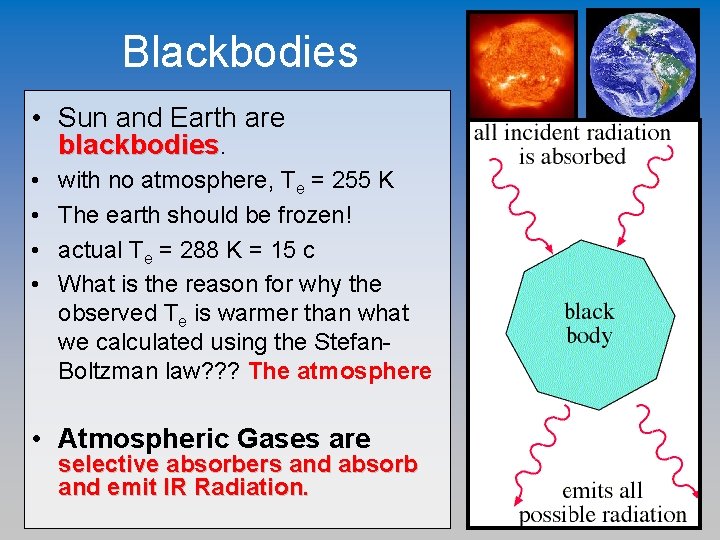
Blackbodies • Sun and Earth are blackbodies • • with no atmosphere, Te = 255 K The earth should be frozen! actual Te = 288 K = 15 c What is the reason for why the observed Te is warmer than what we calculated using the Stefan. Boltzman law? ? ? The atmosphere • Atmospheric Gases are selective absorbers and absorb and emit IR Radiation.
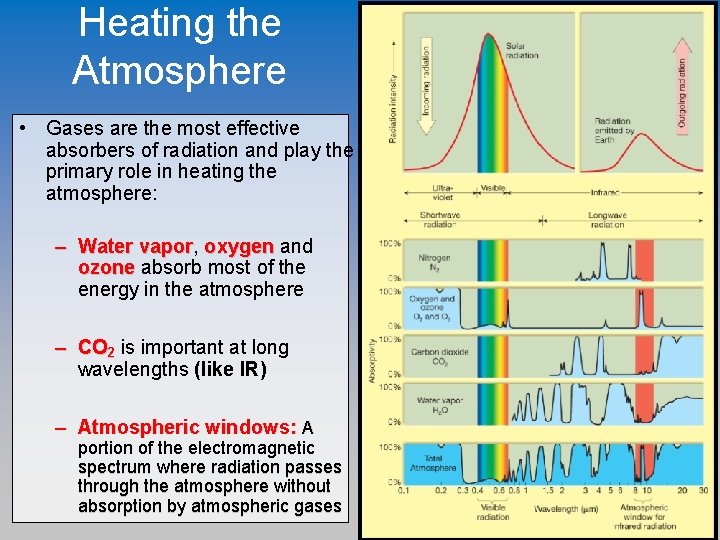
Heating the Atmosphere • Gases are the most effective absorbers of radiation and play the primary role in heating the atmosphere: – Water vapor, vapor oxygen and ozone absorb most of the energy in the atmosphere – CO 2 is important at long wavelengths (like IR) – Atmospheric windows: A portion of the electromagnetic spectrum where radiation passes through the atmosphere without absorption by atmospheric gases
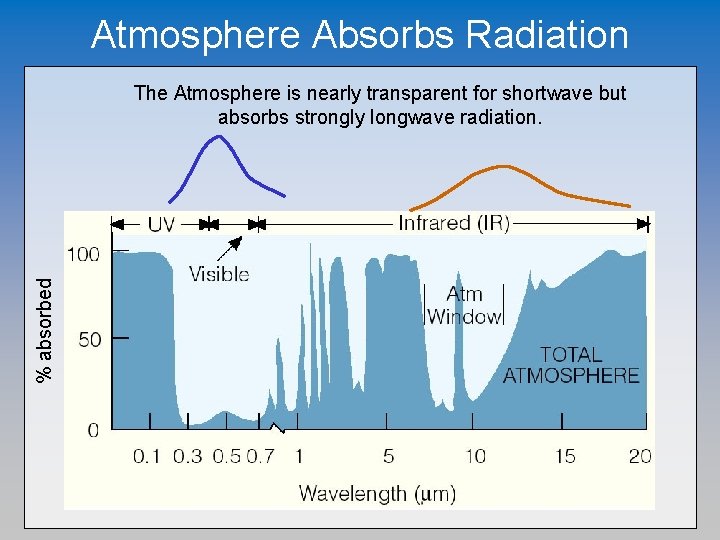
Atmosphere Absorbs Radiation % absorbed The Atmosphere is nearly transparent for shortwave but absorbs strongly longwave radiation.
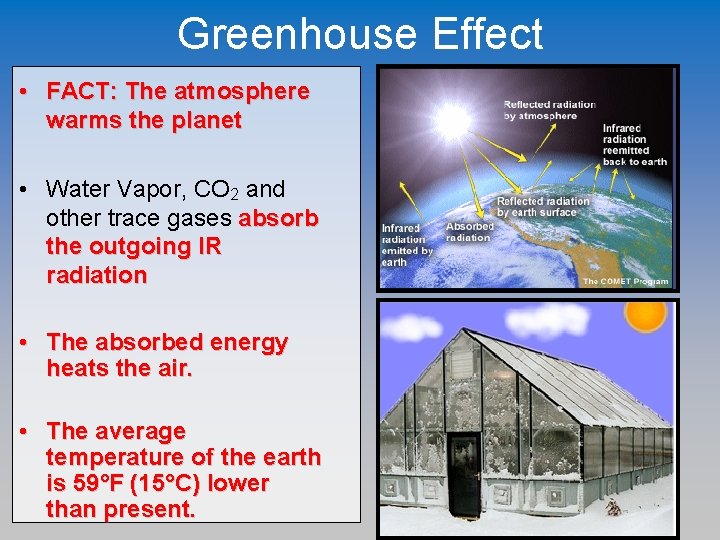
Greenhouse Effect • FACT: The atmosphere warms the planet • Water Vapor, CO 2 and other trace gases absorb the outgoing IR radiation • The absorbed energy heats the air. • The average temperature of the earth is 59°F (15°C) lower than present.
Greenhouse Effect • Greenhouse Gases (GHGs) are the “villian” in the Global Warming Debate. • The Greenhouse Effect and Global Warming are NOT the same thing • Without the Greenhouse Effect Earth would be uninhabitable!!!!! • Human activity may be making the atmosphere more efficient at retaining long wave emissions from the Earth.
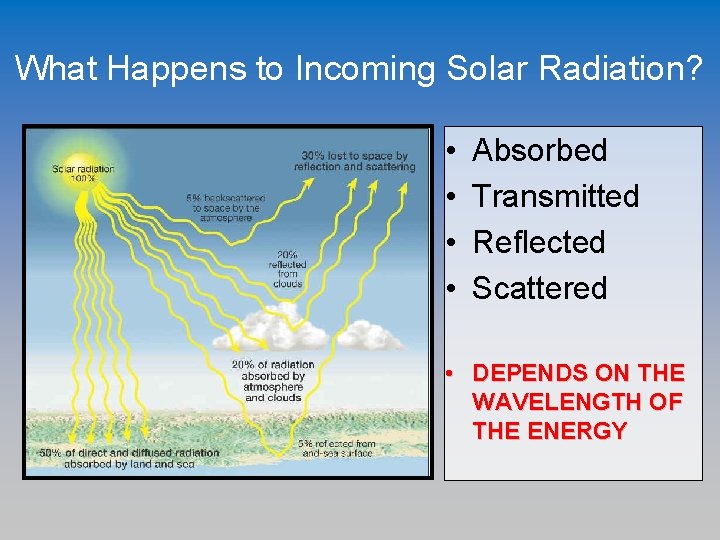
What Happens to Incoming Solar Radiation? • • Absorbed Transmitted Reflected Scattered • DEPENDS ON THE WAVELENGTH OF THE ENERGY
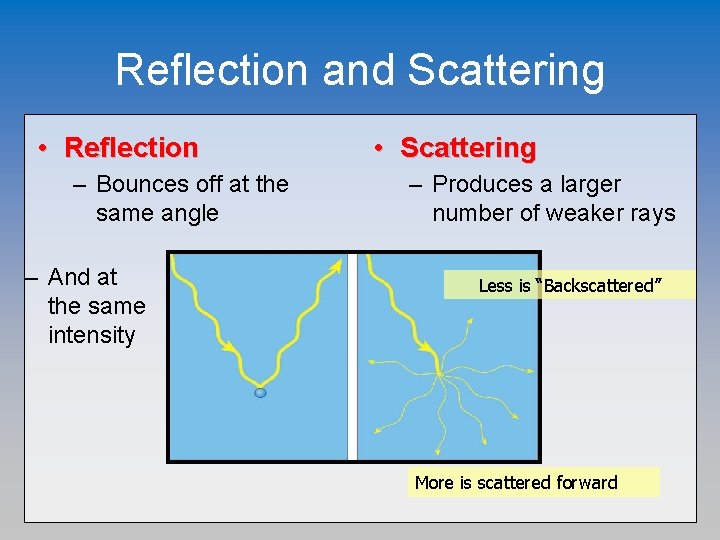
Reflection and Scattering • Reflection – Bounces off at the same angle – And at the same intensity • Scattering – Produces a larger number of weaker rays Less is “Backscattered” More is scattered forward
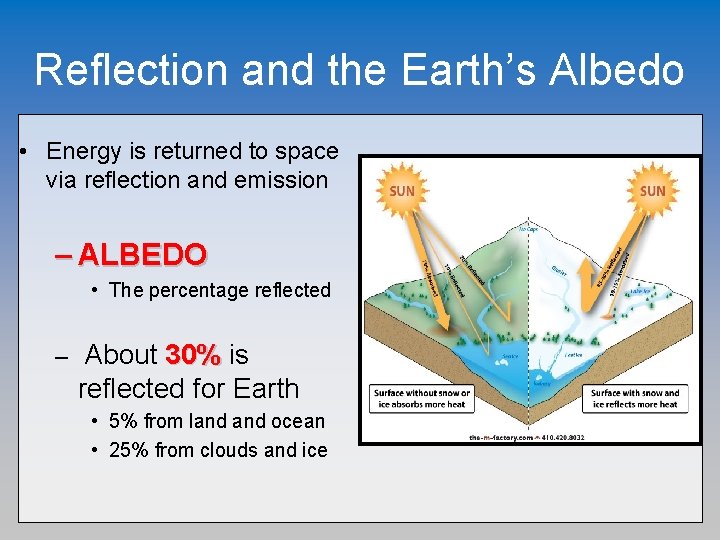
Reflection and the Earth’s Albedo • Energy is returned to space via reflection and emission – ALBEDO • The percentage reflected – About 30% is reflected for Earth • 5% from land ocean • 25% from clouds and ice
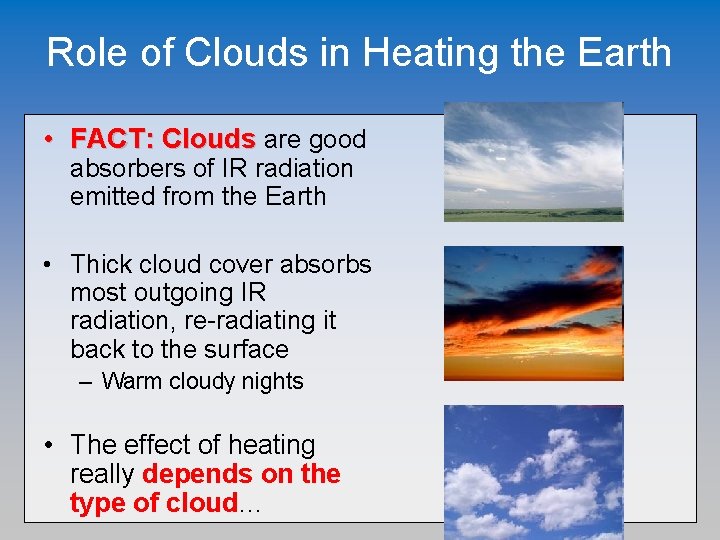
Role of Clouds in Heating the Earth • FACT: Clouds are good absorbers of IR radiation emitted from the Earth • Thick cloud cover absorbs most outgoing IR radiation, re-radiating it back to the surface – Warm cloudy nights • The effect of heating really depends on the type of cloud…
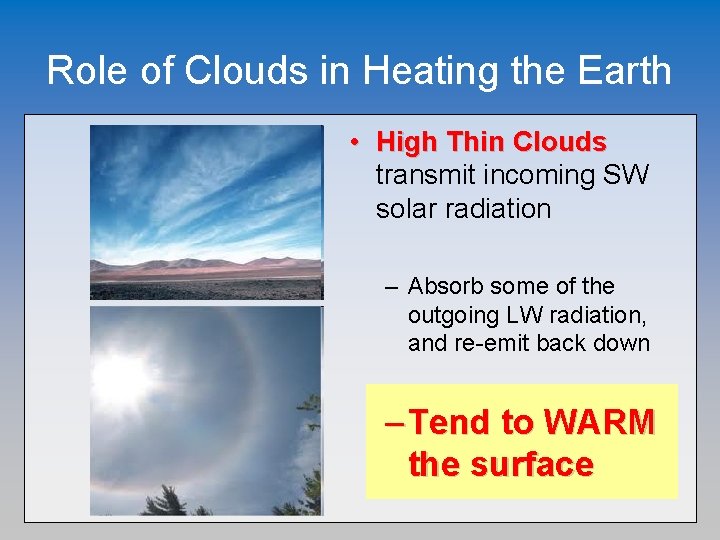
Role of Clouds in Heating the Earth • High Thin Clouds transmit incoming SW solar radiation – Absorb some of the outgoing LW radiation, and re-emit back down – Tend to WARM the surface
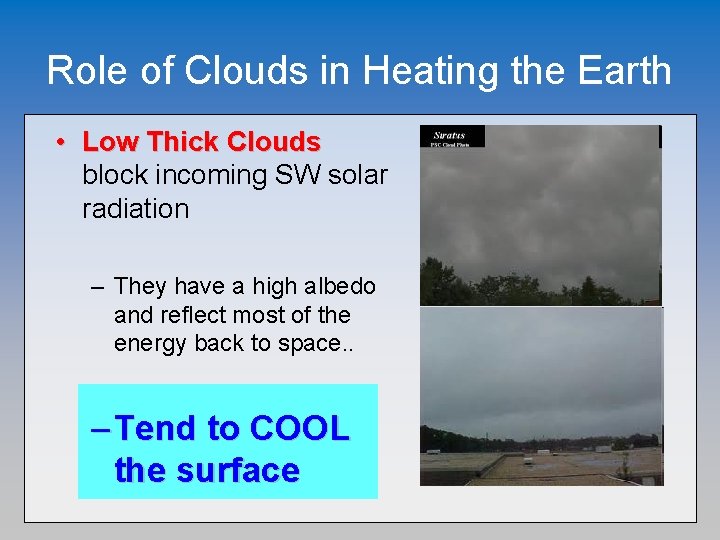
Role of Clouds in Heating the Earth • Low Thick Clouds block incoming SW solar radiation – They have a high albedo and reflect most of the energy back to space. . – Tend to COOL the surface
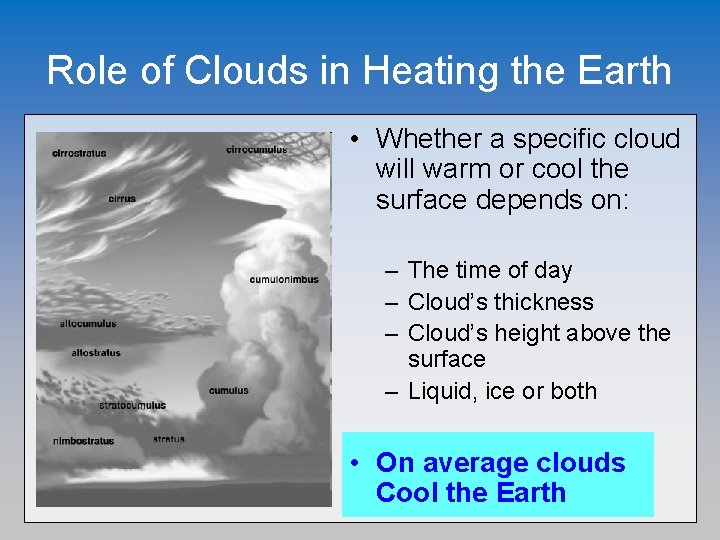
Role of Clouds in Heating the Earth • Whether a specific cloud will warm or cool the surface depends on: – The time of day – Cloud’s thickness – Cloud’s height above the surface – Liquid, ice or both • On average clouds Cool the Earth
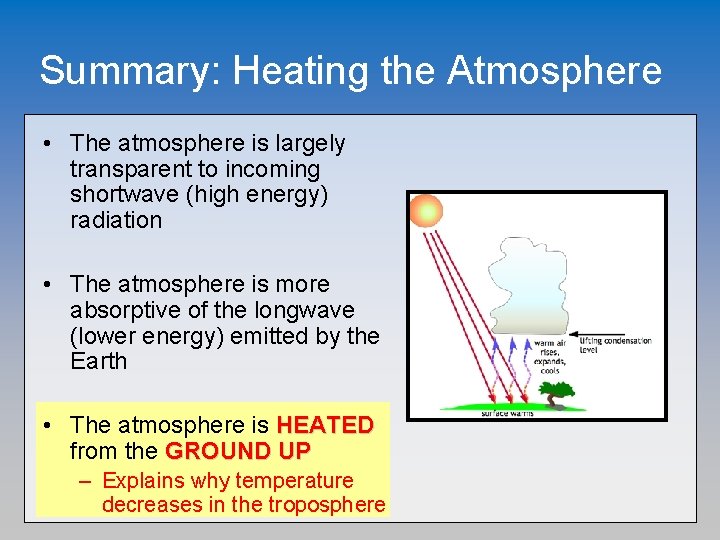
Summary: Heating the Atmosphere • The atmosphere is largely transparent to incoming shortwave (high energy) radiation • The atmosphere is more absorptive of the longwave (lower energy) emitted by the Earth • The atmosphere is HEATED from the GROUND UP – Explains why temperature decreases in the troposphere
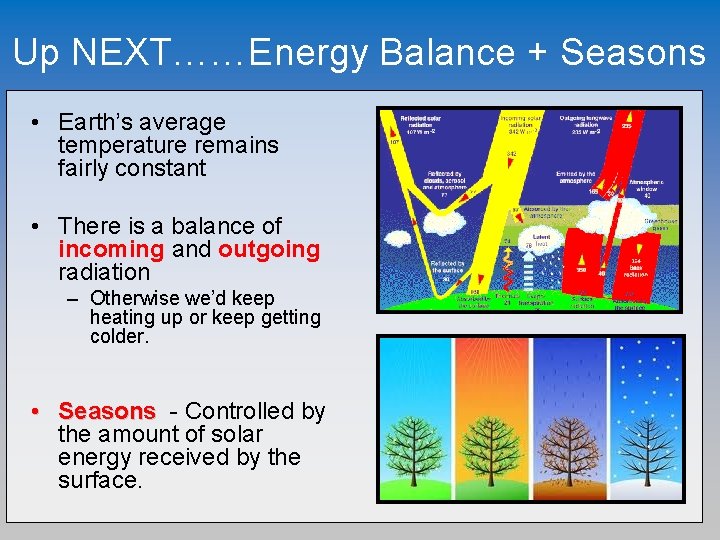
Up NEXT……Energy Balance + Seasons • Earth’s average temperature remains fairly constant • There is a balance of incoming and outgoing radiation – Otherwise we’d keep heating up or keep getting colder. • Seasons - Controlled by the amount of solar energy received by the surface.
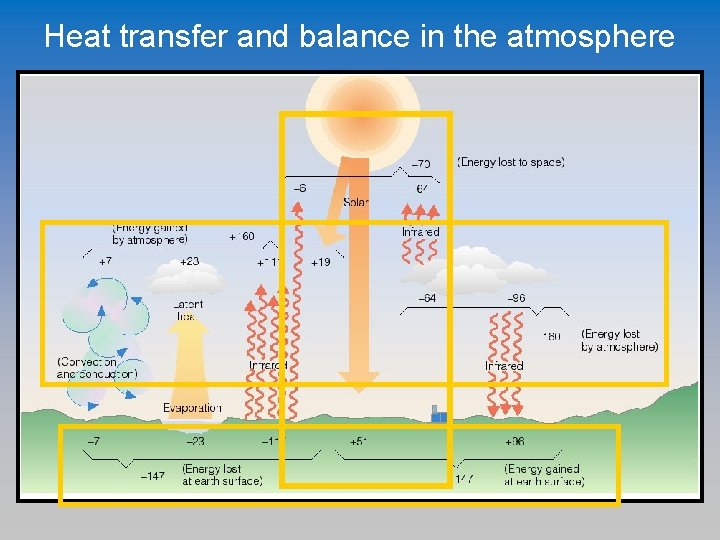
Heat transfer and balance in the atmosphere
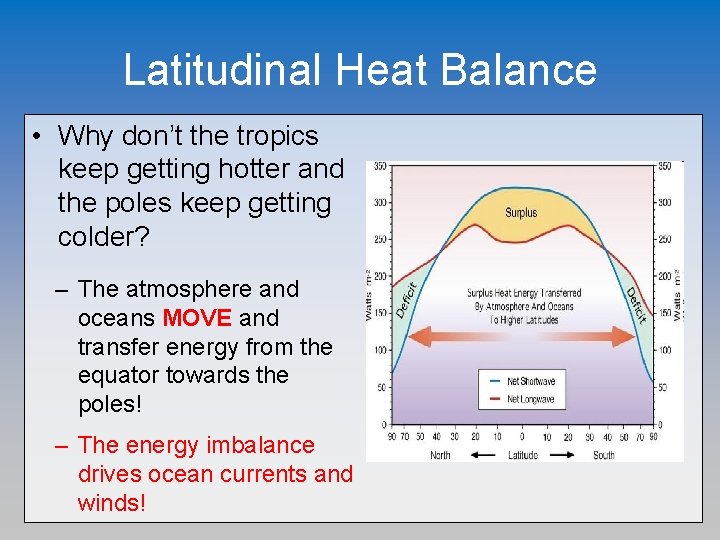
Latitudinal Heat Balance • Why don’t the tropics keep getting hotter and the poles keep getting colder? – The atmosphere and oceans MOVE and transfer energy from the equator towards the poles! – The energy imbalance drives ocean currents and winds!
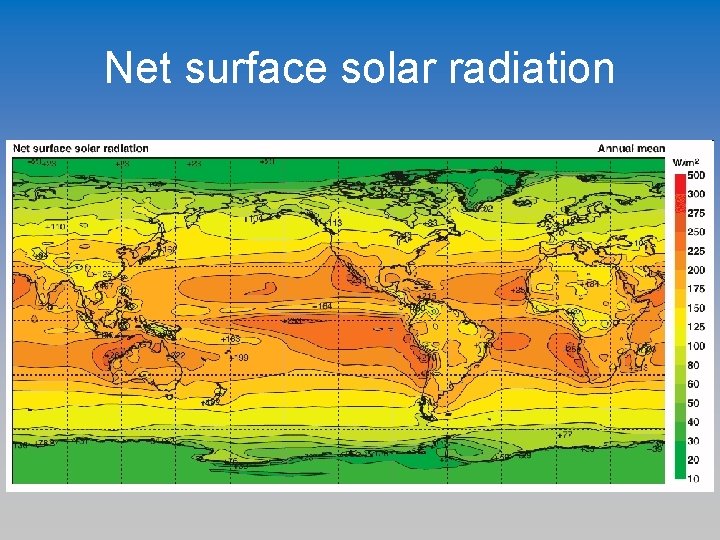
Net surface solar radiation
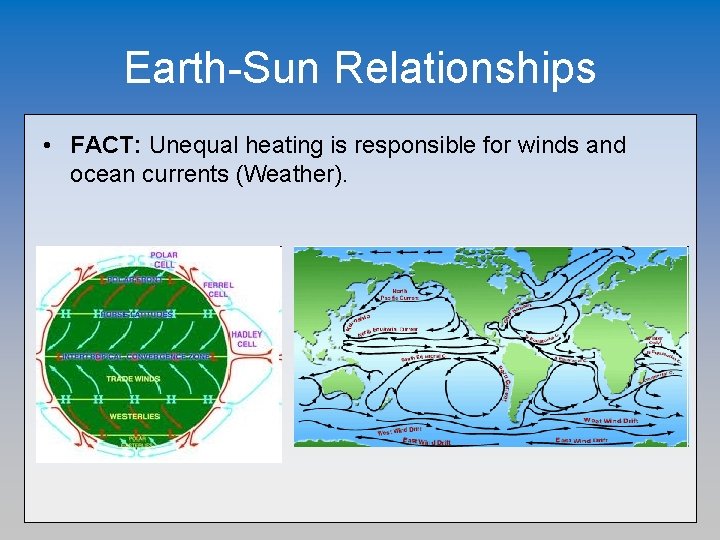
Earth-Sun Relationships • FACT: Unequal heating is responsible for winds and ocean currents (Weather).
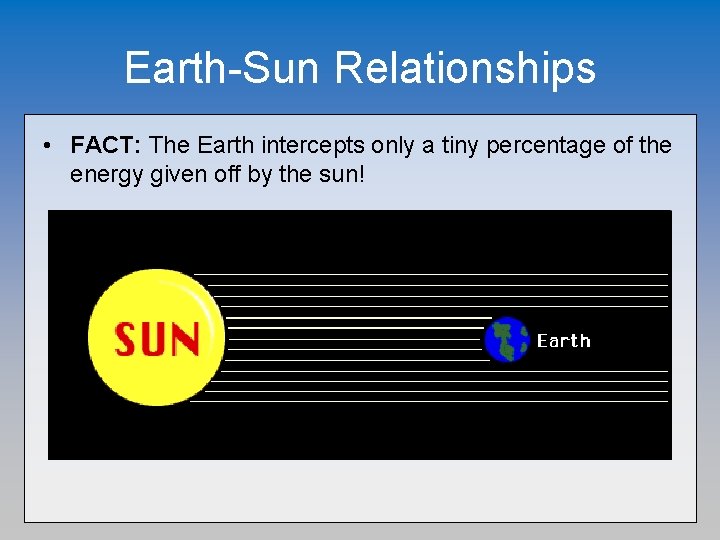
Earth-Sun Relationships • FACT: The Earth intercepts only a tiny percentage of the energy given off by the sun!
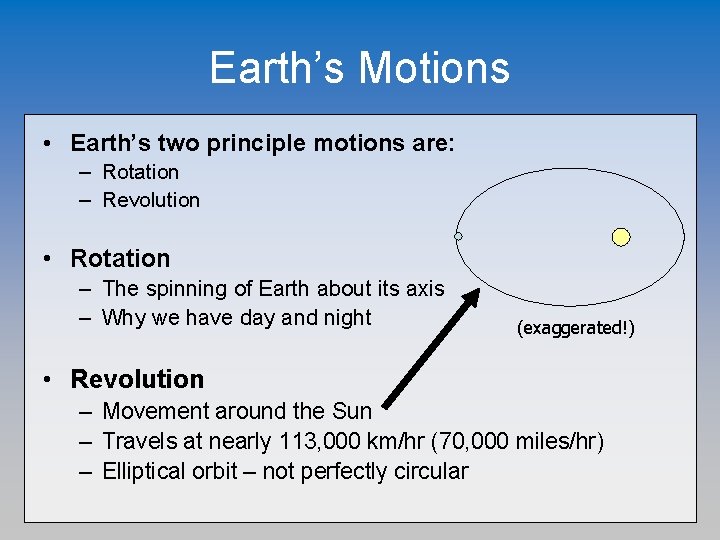
Earth’s Motions • Earth’s two principle motions are: – Rotation – Revolution • Rotation – The spinning of Earth about its axis – Why we have day and night (exaggerated!) • Revolution – Movement around the Sun – Travels at nearly 113, 000 km/hr (70, 000 miles/hr) – Elliptical orbit – not perfectly circular
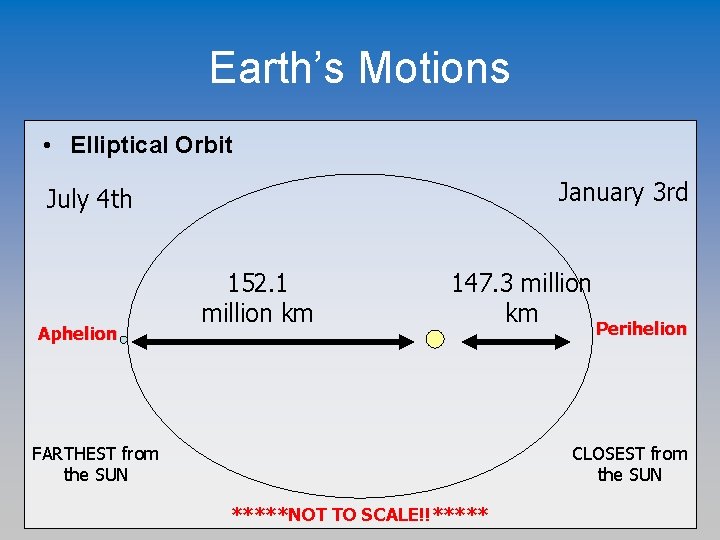
Earth’s Motions • Elliptical Orbit January 3 rd July 4 th Aphelion 152. 1 million km 147. 3 million km Perihelion FARTHEST from the SUN Perihelion CLOSEST from the SUN *****NOT TO SCALE!!*****
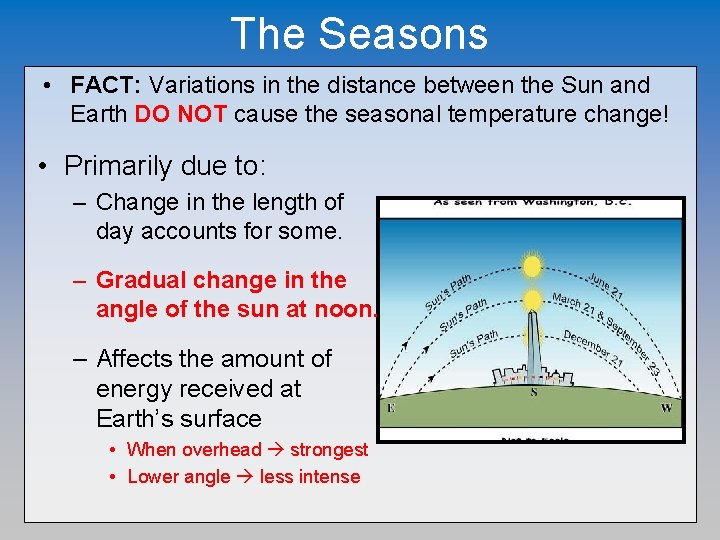
The Seasons • FACT: Variations in the distance between the Sun and Earth DO NOT cause the seasonal temperature change! • Primarily due to: – Change in the length of day accounts for some. – Gradual change in the angle of the sun at noon. – Affects the amount of energy received at Earth’s surface • When overhead strongest • Lower angle less intense
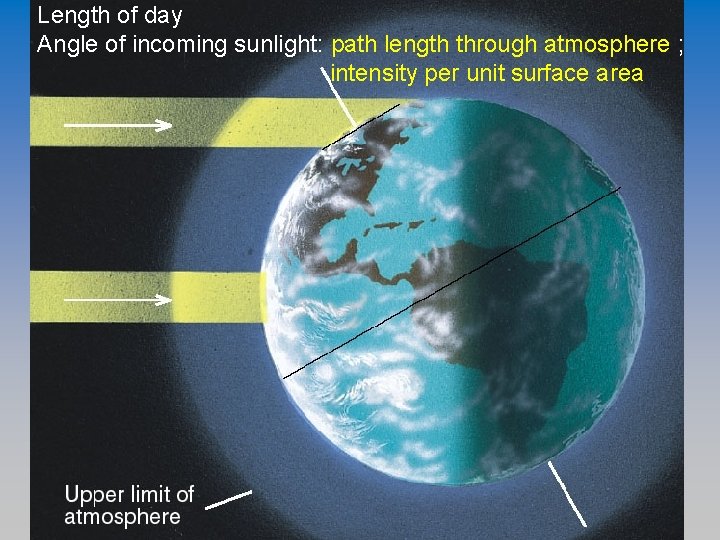
Length of day Angle of incoming sunlight: path length through atmosphere ; intensity per unit surface area
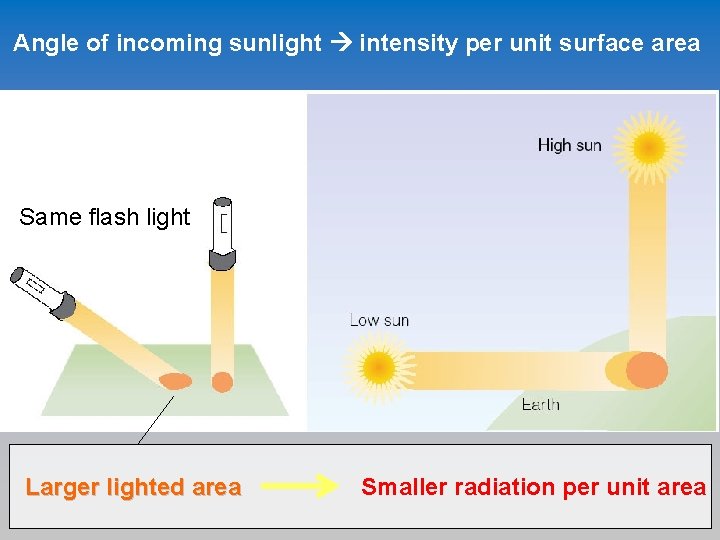
Angle of incoming sunlight intensity per unit surface area Same flash light Larger lighted area Smaller radiation per unit area
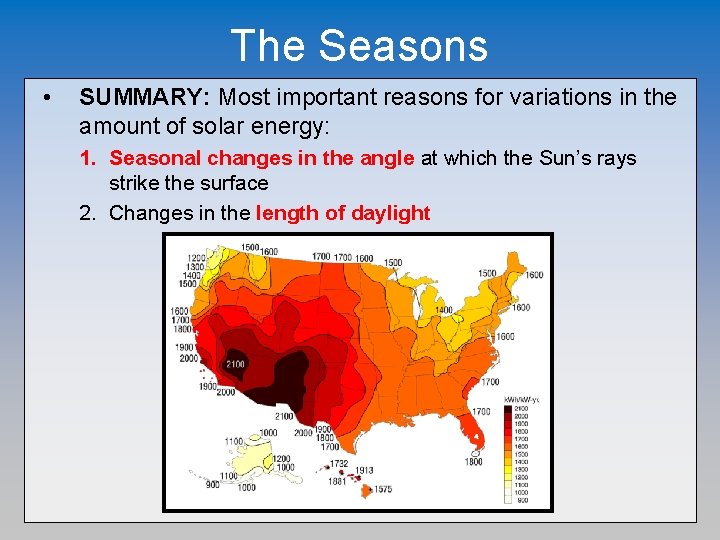
The Seasons • SUMMARY: Most important reasons for variations in the amount of solar energy: 1. Seasonal changes in the angle at which the Sun’s rays strike the surface 2. Changes in the length of daylight
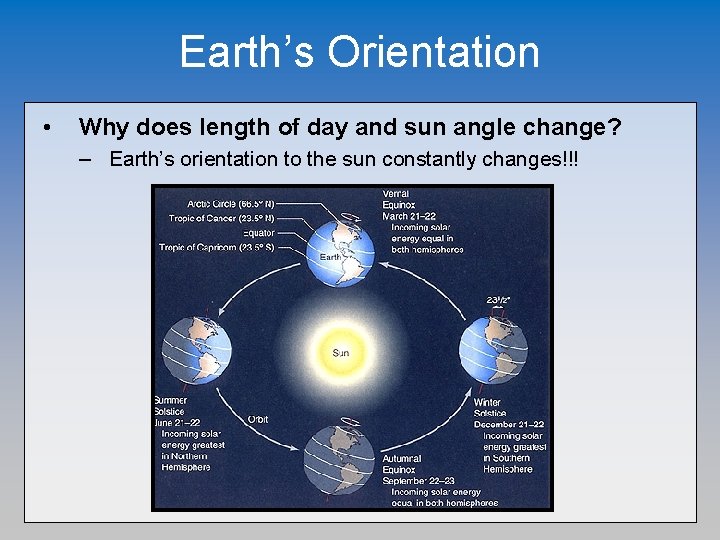
Earth’s Orientation • Why does length of day and sun angle change? – Earth’s orientation to the sun constantly changes!!!
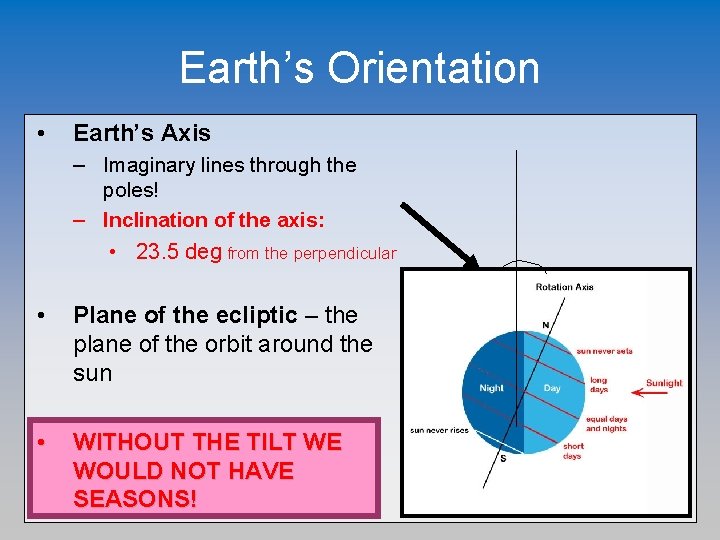
Earth’s Orientation • Earth’s Axis – Imaginary lines through the poles! – Inclination of the axis: • 23. 5 deg from the perpendicular • Plane of the ecliptic – the plane of the orbit around the sun • WITHOUT THE TILT WE WOULD NOT HAVE SEASONS!
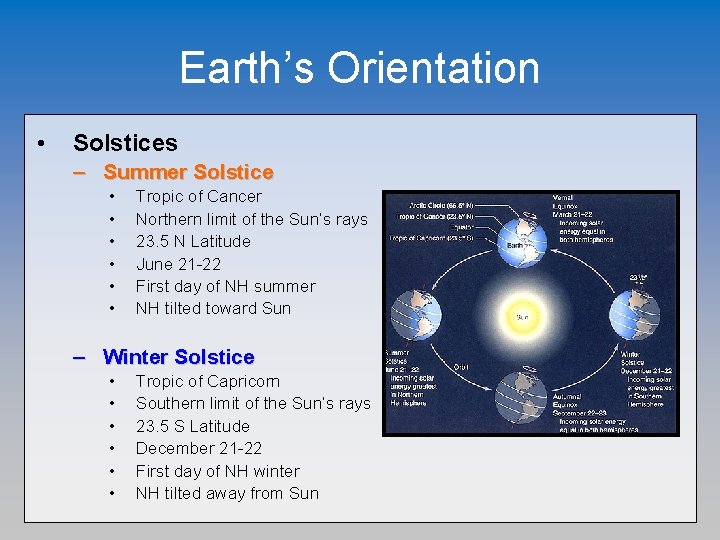
Earth’s Orientation • Solstices – Summer Solstice • • • Tropic of Cancer Northern limit of the Sun’s rays 23. 5 N Latitude June 21 -22 First day of NH summer NH tilted toward Sun – Winter Solstice • • • Tropic of Capricorn Southern limit of the Sun’s rays 23. 5 S Latitude December 21 -22 First day of NH winter NH tilted away from Sun

Earth’s Orientation • Equinoxes – Occur mid way between the Solstices – Vertical rays strike along the equator (0 deg latitude) – Earth not tilted toward or away • Autumnal Equinox – September 22 or 23 • Spring Equinox – March 21 or 22 – Also called Vernal Equinox
Earth’s Orientation • Summer Solstice Review – – – Occurs on June 21 or 22 Vertical rays of the Sun strike the Tropic of CANCER (23. 5 deg N) NH location experience their LONGEST day • (SH location experience their SHORTEST day) – NH locations experiences their HIGHEST Sun angle • – (SH location experience their LOWEST Sun angle) Farther from the equator the longer period of daylight (i. e. Arctic Circle has 24 hours of SUN)
Earth’s Orientation • Winter Solstice Review – – – Occurs on December 21 or 22 Vertical rays of the Sun strike the Tropic of CAPRICORN (23. 5 deg S) SH location experience their LONGEST day • (NH location experience their SHORTEST day) – SH locations experiences their HIGHEST Sun angle • – (NH location experience their LOWEST Sun angle) Farther from the equator the longer the period of daylight (i. e. Antarctic Circle has 24 hours of SUN)
• More Tilt (> 23. 5) • Less Tilt (<23. 5) • • More extreme seasons • • Colder winters Warmer summers More mild seasons • • • Milder winters Cooler summers No Seasons if Tilt = 0
Next class on Sunday Air Temperature
- Slides: 35