
Lecture 37 word 2 vec and word similarity




- Slides: 31
Lecture 37: word 2 vec and word similarity Mark Hasegawa-Johnson CC-BY 4. 0: you may remix or redistribute if you cite the source
Outline • What is a word? Lemmas, wordforms, and word sense • Synonymy, similarity, and relatedness • Word 2 vec • Visualizations • Bias
What is a word?
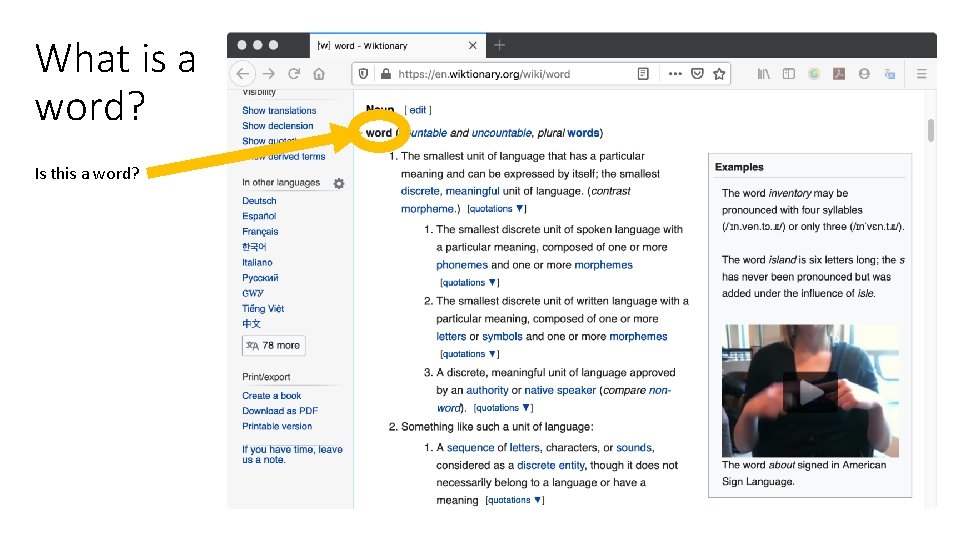
What is a word? Is this a word?
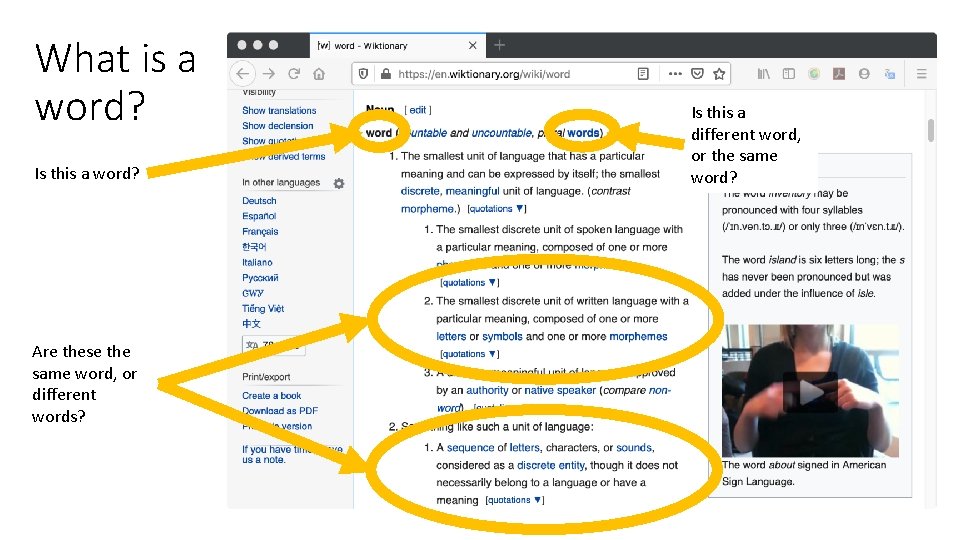
What is a word? Is this a word? Is this a different word, or the same word?
What is a word? Is this a word? Are these the same word, or different words? Is this a different word, or the same word?
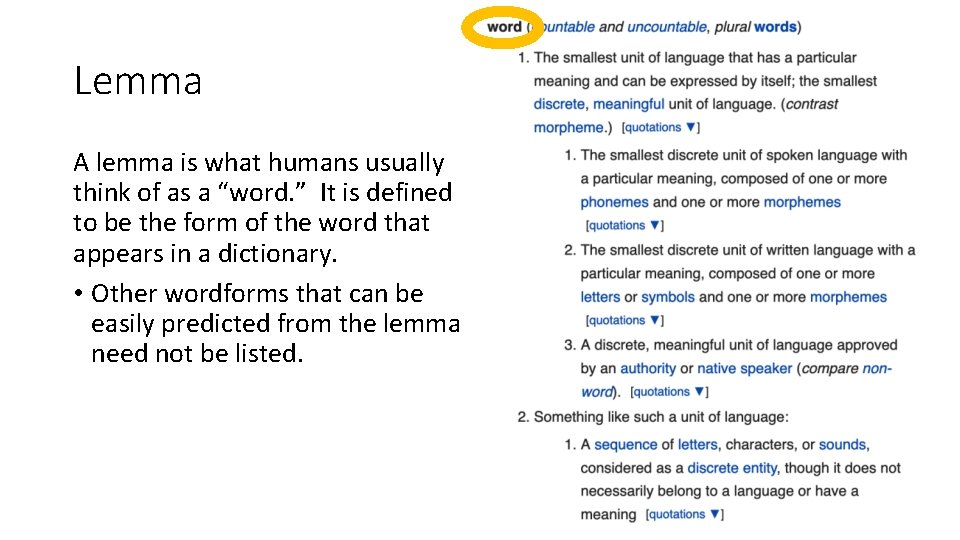
Lemma A lemma is what humans usually think of as a “word. ” It is defined to be the form of the word that appears in a dictionary. • Other wordforms that can be easily predicted from the lemma need not be listed.
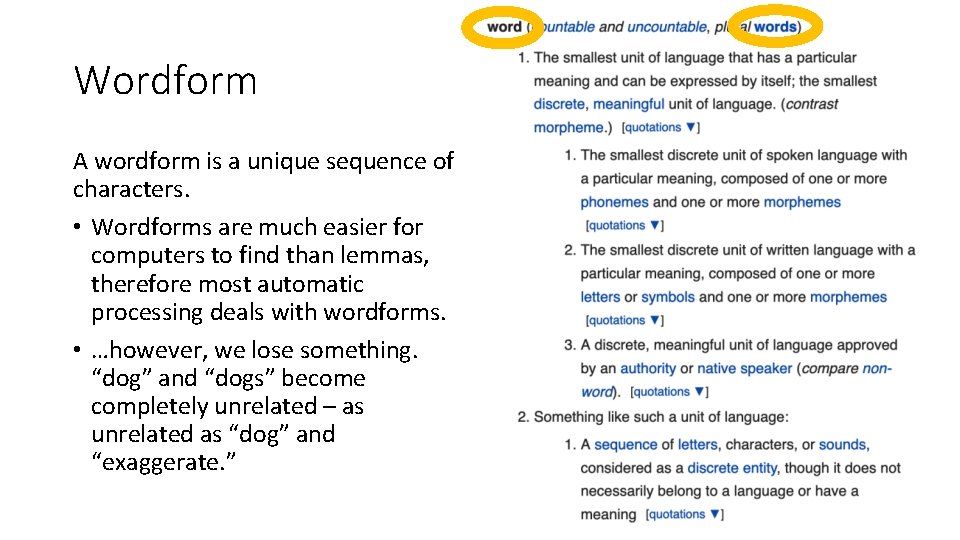
Wordform A wordform is a unique sequence of characters. • Wordforms are much easier for computers to find than lemmas, therefore most automatic processing deals with wordforms. • …however, we lose something. “dog” and “dogs” become completely unrelated – as unrelated as “dog” and “exaggerate. ”
Word sense Often, a word has different meanings that are completely unrelated. We think of them as different words, that just happen to be spelled and pronounced the same way. We say that these are different “senses” of the same word. The Bank of England. By Diliff - Own work, CC BY-SA 3. 0, https: //commons. wikimedia. org/w/index. php? curid=40912212 The Bank of the Thames. By Diliff - Own work, CC BY 3. 0, https: //commons. wikimedia. org/w/index. php? curid=3639626
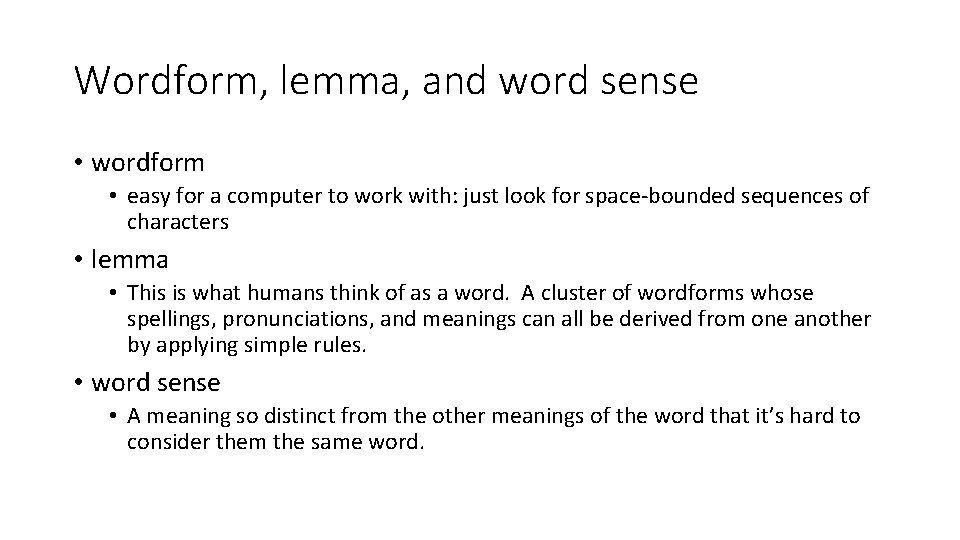
Wordform, lemma, and word sense • wordform • easy for a computer to work with: just look for space-bounded sequences of characters • lemma • This is what humans think of as a word. A cluster of wordforms whose spellings, pronunciations, and meanings can all be derived from one another by applying simple rules. • word sense • A meaning so distinct from the other meanings of the word that it’s hard to consider them the same word.
Outline • What is a word? Lemmas, wordforms, and word sense • Synonymy, similarity, and relatedness • Word 2 vec • Visualizations • Bias
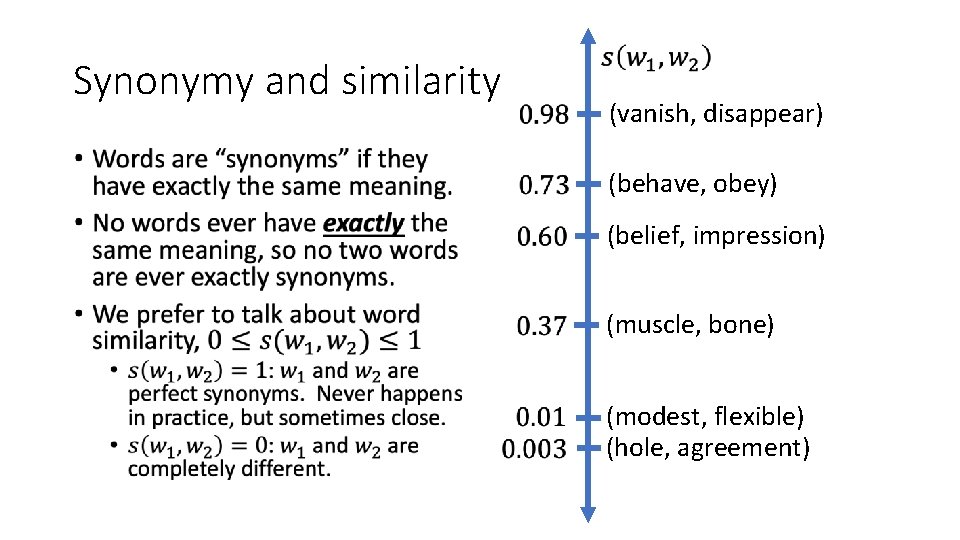
Synonymy and similarity • (vanish, disappear) (behave, obey) (belief, impression) (muscle, bone) (modest, flexible) (hole, agreement)
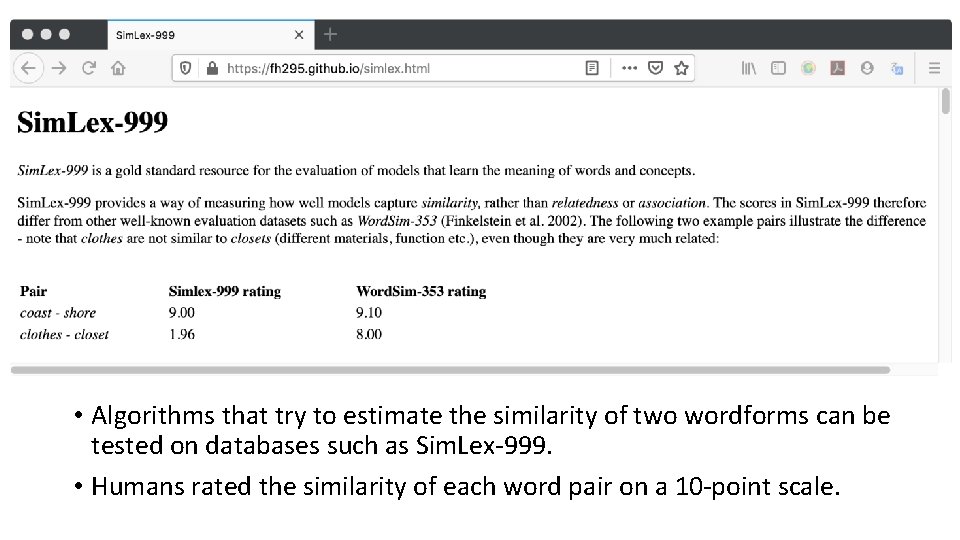
• Algorithms that try to estimate the similarity of two wordforms can be tested on databases such as Sim. Lex-999. • Humans rated the similarity of each word pair on a 10 -point scale.
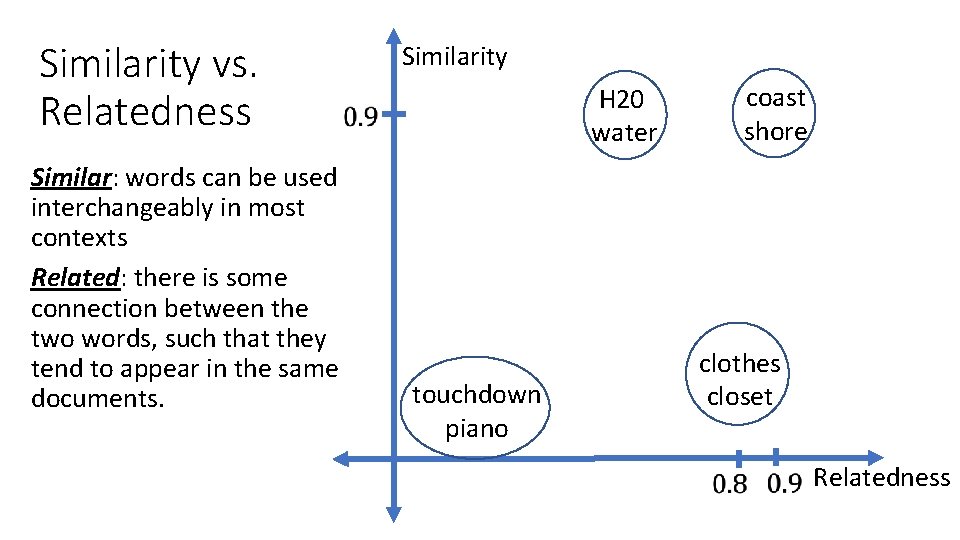
Similarity vs. Relatedness Similar: words can be used interchangeably in most contexts Related: there is some connection between the two words, such that they tend to appear in the same documents. Similarity H 20 water touchdown piano coast shore clothes closet Relatedness
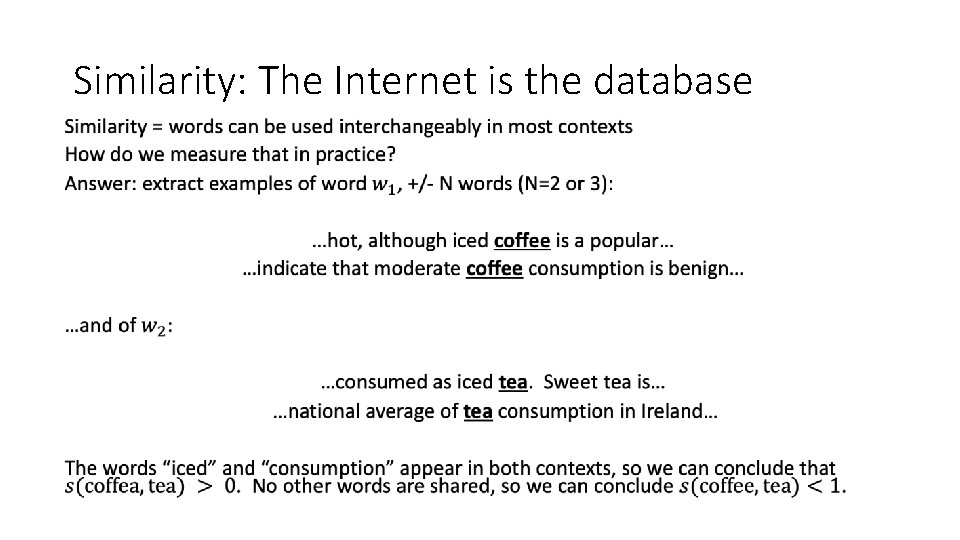
Similarity: The Internet is the database •
Outline • What is a word? Lemmas, wordforms, and word sense • Synonymy, similarity, and relatedness • Word 2 vec • Visualizations • Bias
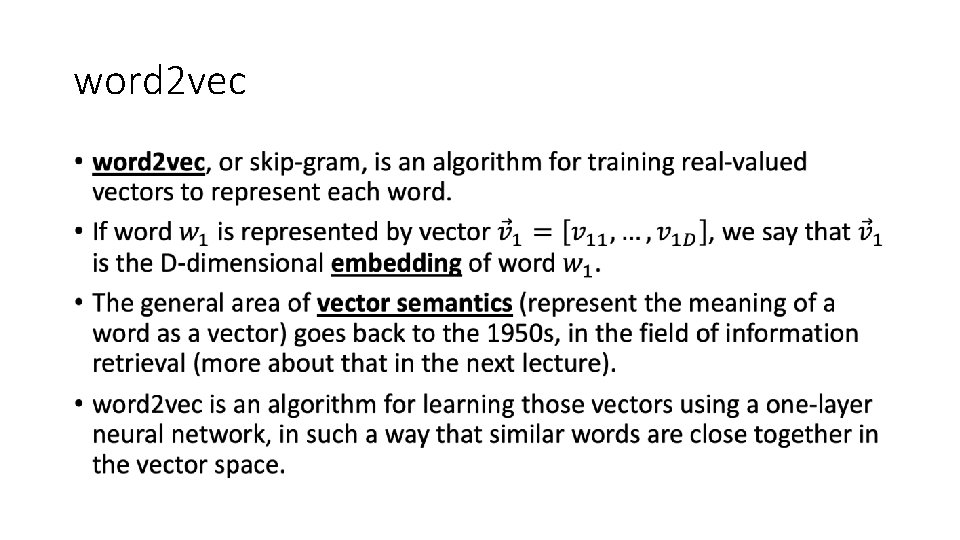
word 2 vec •
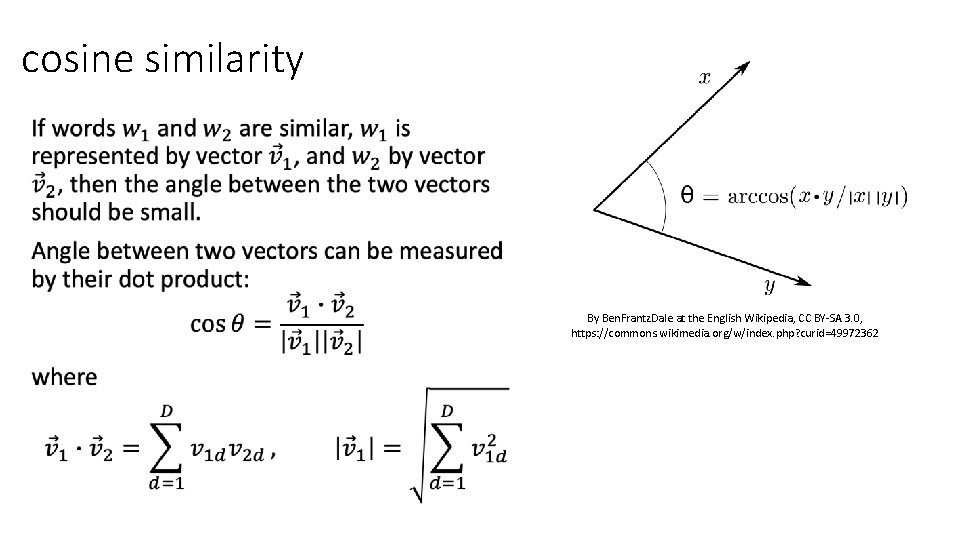
cosine similarity • By Ben. Frantz. Dale at the English Wikipedia, CC BY-SA 3. 0, https: //commons. wikimedia. org/w/index. php? curid=49972362
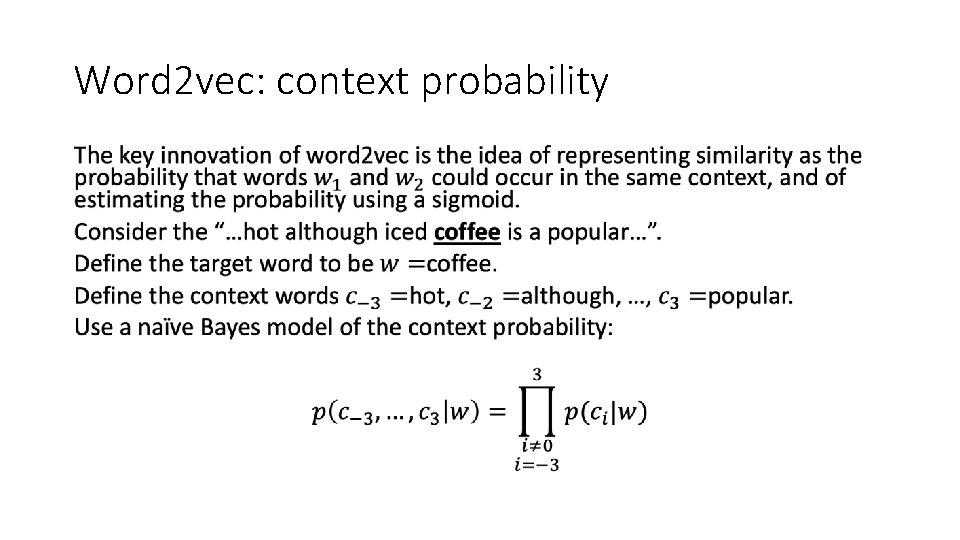
Word 2 vec: context probability •
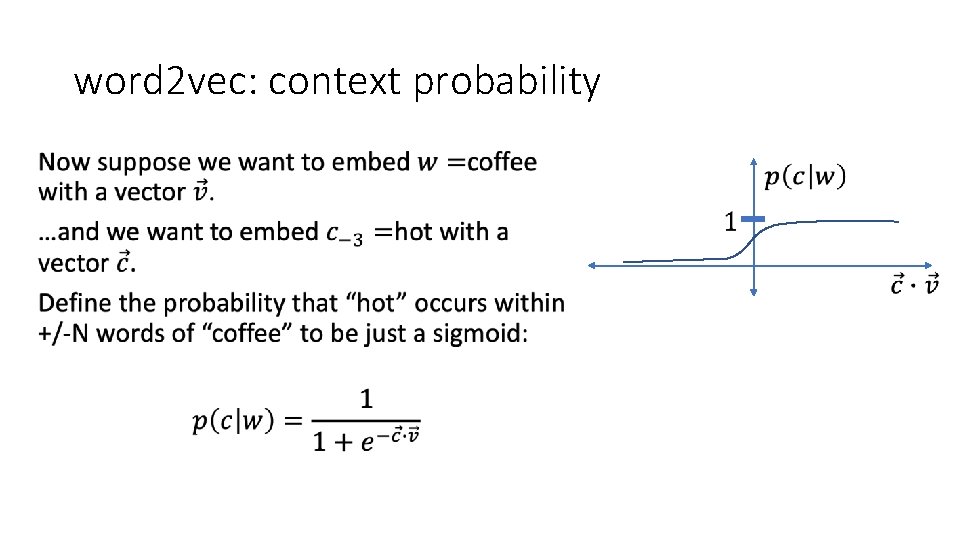
word 2 vec: context probability •
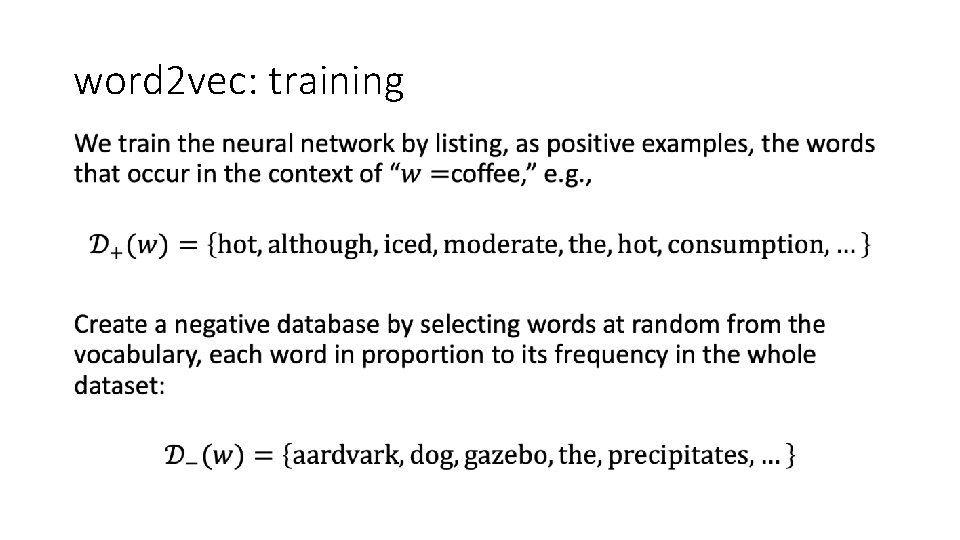
word 2 vec: training •
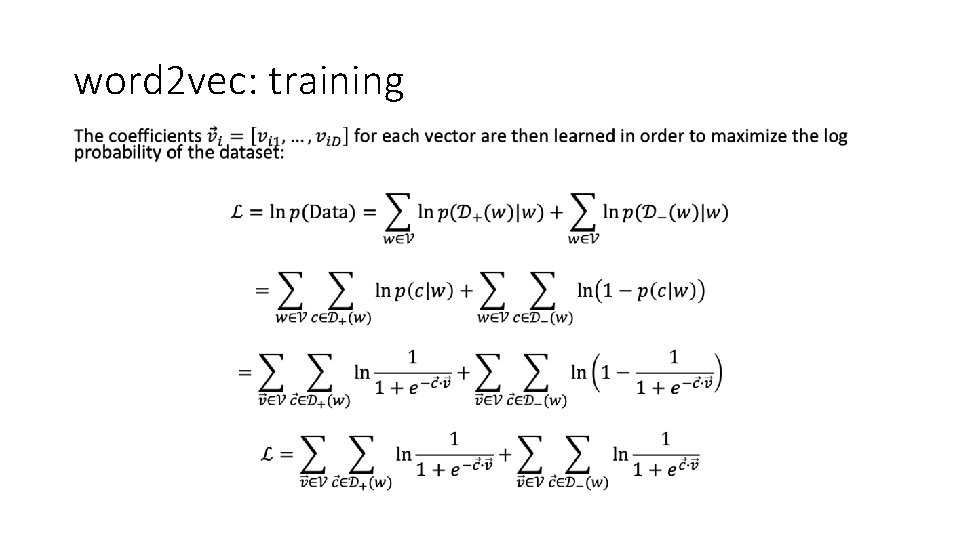
word 2 vec: training •
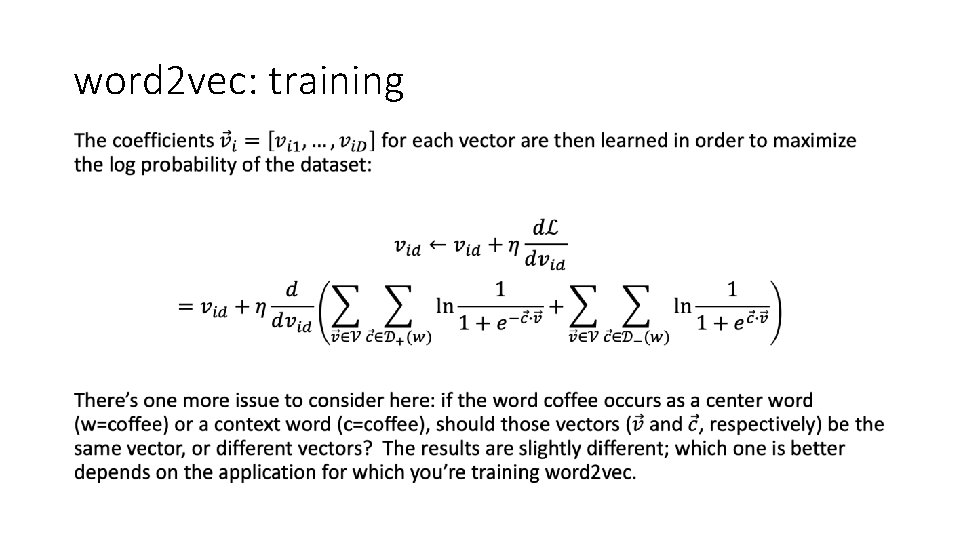
word 2 vec: training •
Outline • What is a word? Lemmas, wordforms, and word sense • Synonymy, similarity, and relatedness • Word 2 vec • Visualizations • Bias
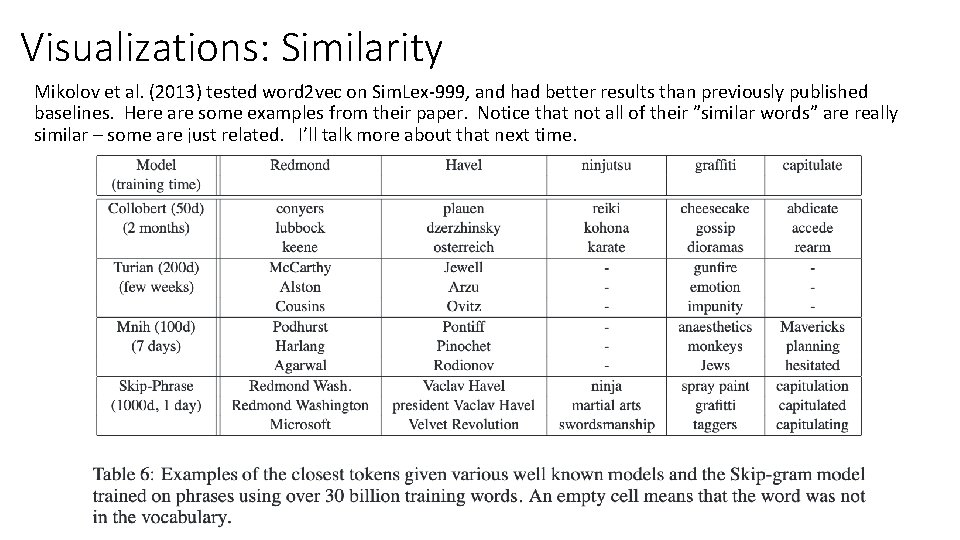
Visualizations: Similarity Mikolov et al. (2013) tested word 2 vec on Sim. Lex-999, and had better results than previously published baselines. Here are some examples from their paper. Notice that not all of their ”similar words” are really similar – some are just related. I’ll talk more about that next time.
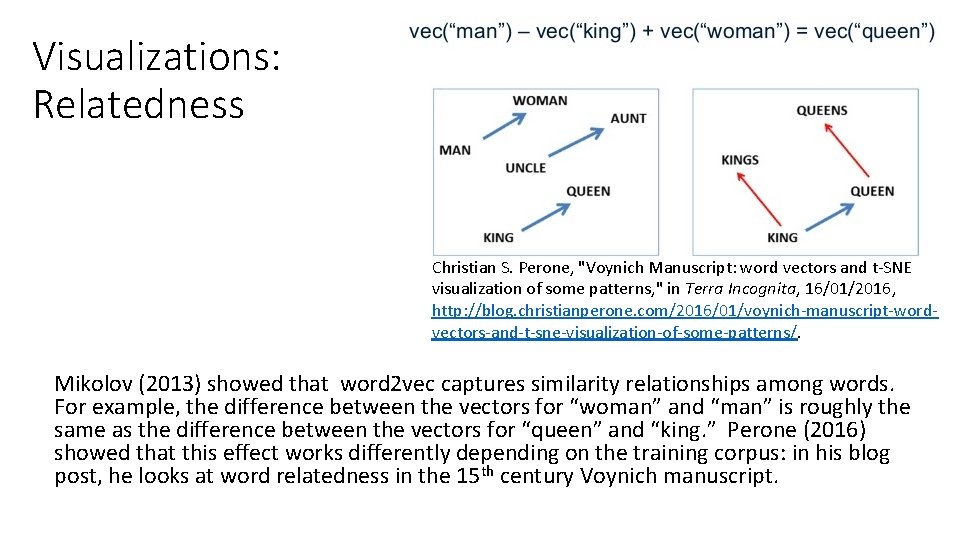
Visualizations: Relatedness Christian S. Perone, "Voynich Manuscript: word vectors and t-SNE visualization of some patterns, " in Terra Incognita, 16/01/2016, http: //blog. christianperone. com/2016/01/voynich-manuscript-wordvectors-and-t-sne-visualization-of-some-patterns/. Mikolov (2013) showed that word 2 vec captures similarity relationships among words. For example, the difference between the vectors for “woman” and “man” is roughly the same as the difference between the vectors for “queen” and “king. ” Perone (2016) showed that this effect works differently depending on the training corpus: in his blog post, he looks at word relatedness in the 15 th century Voynich manuscript.
Outline • What is a word? Lemmas, wordforms, and word sense • Synonymy, similarity, and relatedness • Word 2 vec • Visualizations • Bias
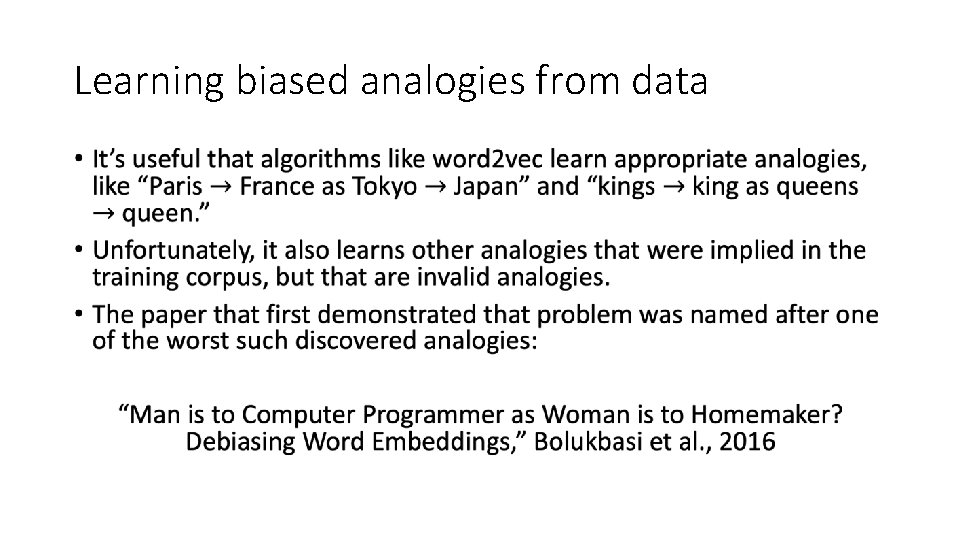
Learning biased analogies from data •
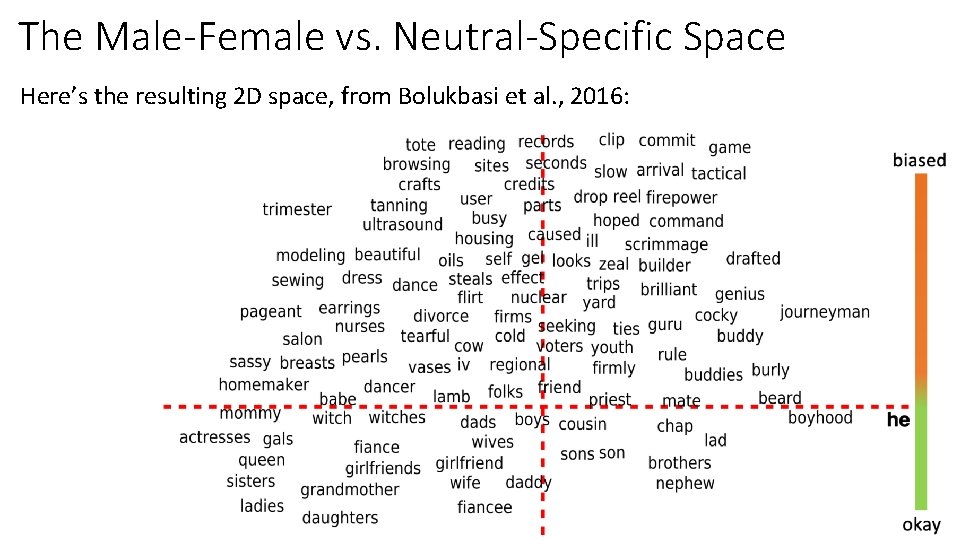
Biased analogies Bolukbasi et al. defined a “male-female” continuum by subtracting vec(female)-vec(male), vec(woman)-vec(man), and so on, then averaging these difference vectors. They then took all of the words whose dictionary definitions included gender-specific language (man, woman), and considered those to be the gender-specific words (words for which a gender difference is appropriate). All other words were considered gender-neutral (any difference on the male-female dimension is inappropriate). The result is a second dimension: the appropriateness of a gender bias.
The Male-Female vs. Neutral-Specific Space Here’s the resulting 2 D space, from Bolukbasi et al. , 2016:
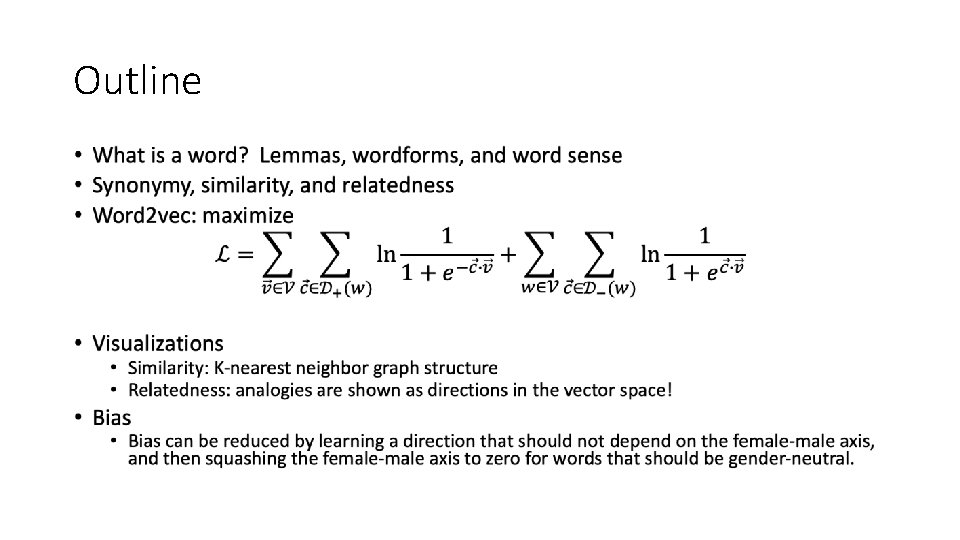
Outline •