
Lecture 33 Longitudinal and transverse wave diffraction Longitudinal
- Slides: 15
Lecture 33 Longitudinal and transverse wave, diffraction • Longitudinal and transverse wave • Diffraction • X-ray crystallography 1
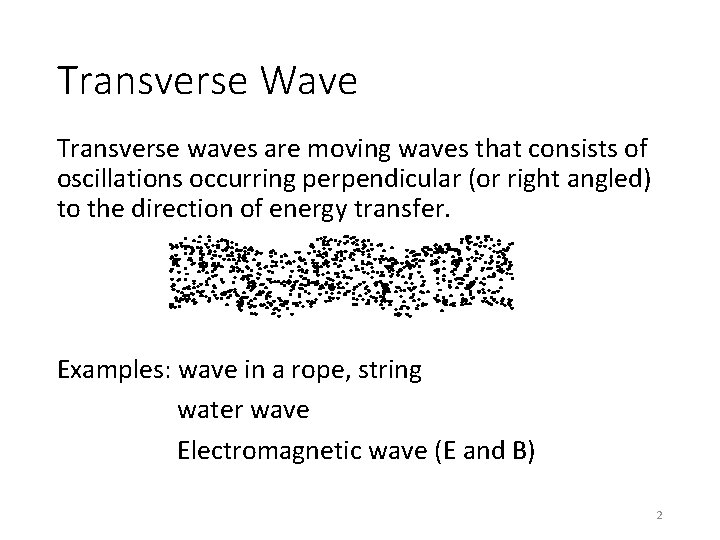
Transverse Wave Transverse waves are moving waves that consists of oscillations occurring perpendicular (or right angled) to the direction of energy transfer. Examples: wave in a rope, string water wave Electromagnetic wave (E and B) 2
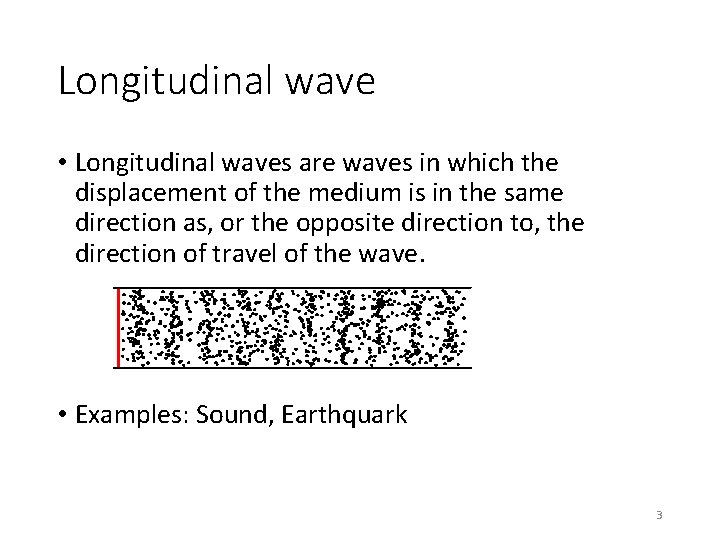
Longitudinal wave • Longitudinal waves are waves in which the displacement of the medium is in the same direction as, or the opposite direction to, the direction of travel of the wave. • Examples: Sound, Earthquark 3
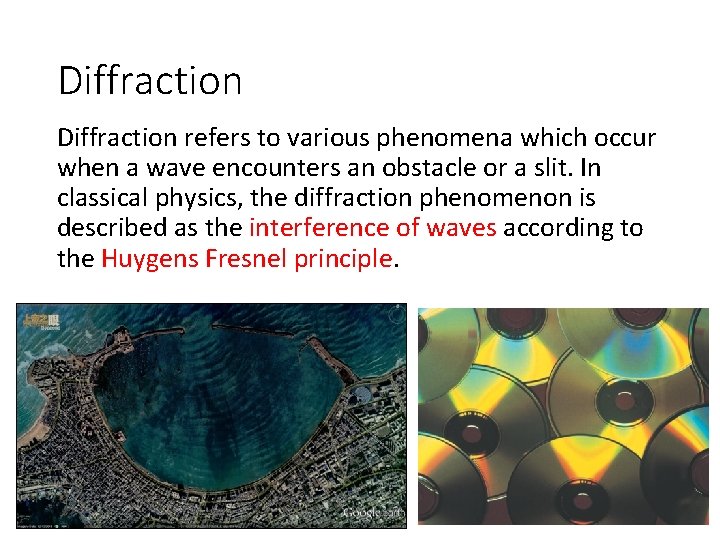
Diffraction refers to various phenomena which occur when a wave encounters an obstacle or a slit. In classical physics, the diffraction phenomenon is described as the interference of waves according to the Huygens Fresnel principle. 4
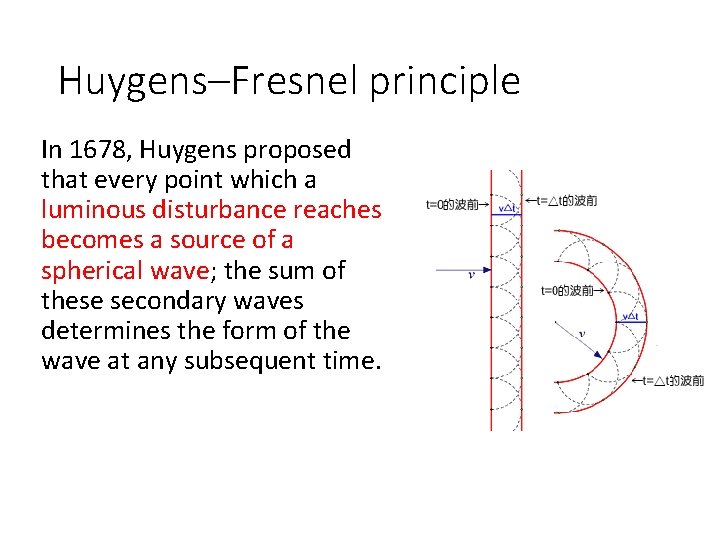
Huygens–Fresnel principle In 1678, Huygens proposed that every point which a luminous disturbance reaches becomes a source of a spherical wave; the sum of these secondary waves determines the form of the wave at any subsequent time.
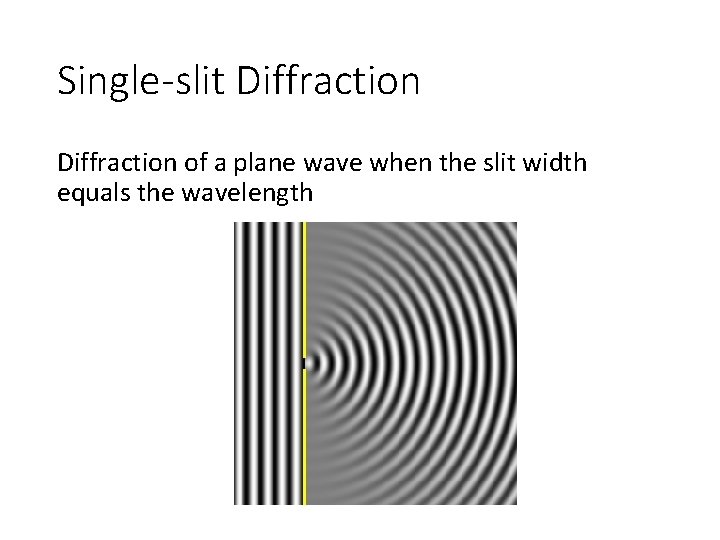
Single-slit Diffraction of a plane wave when the slit width equals the wavelength
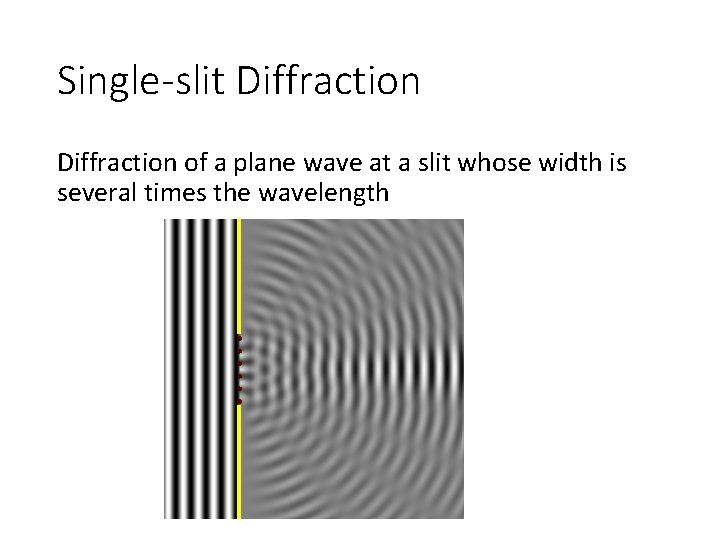
Single-slit Diffraction of a plane wave at a slit whose width is several times the wavelength
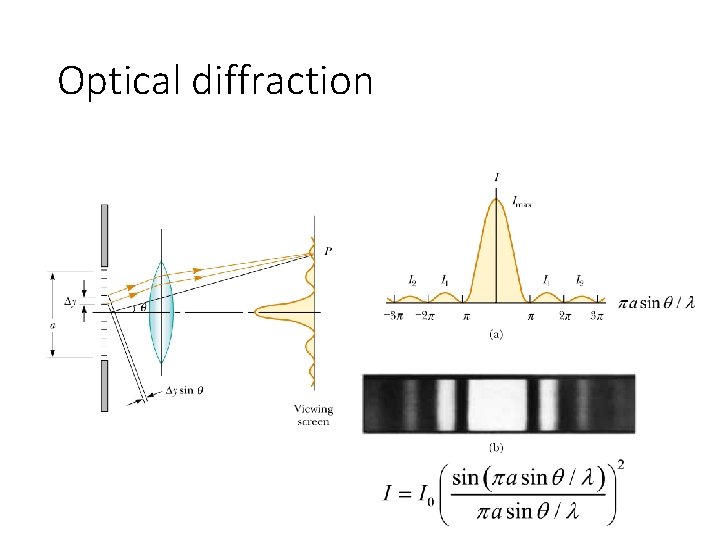
Optical diffraction
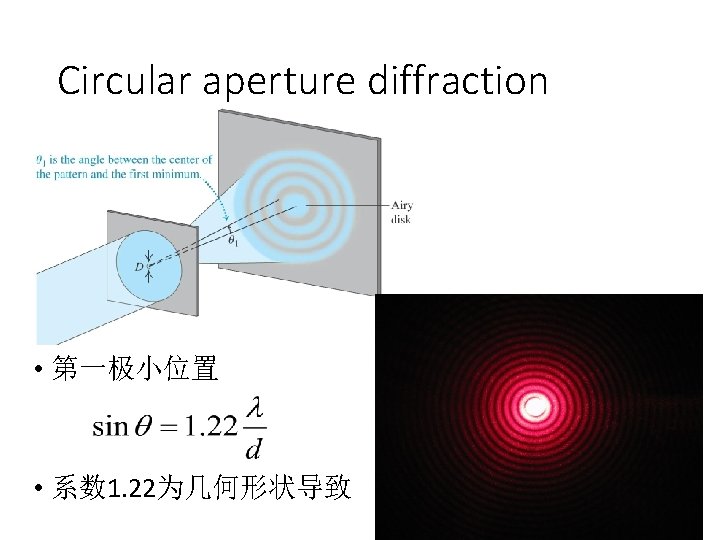
Circular aperture diffraction • 第一极小位置 • 系数 1. 22为几何形状导致 9
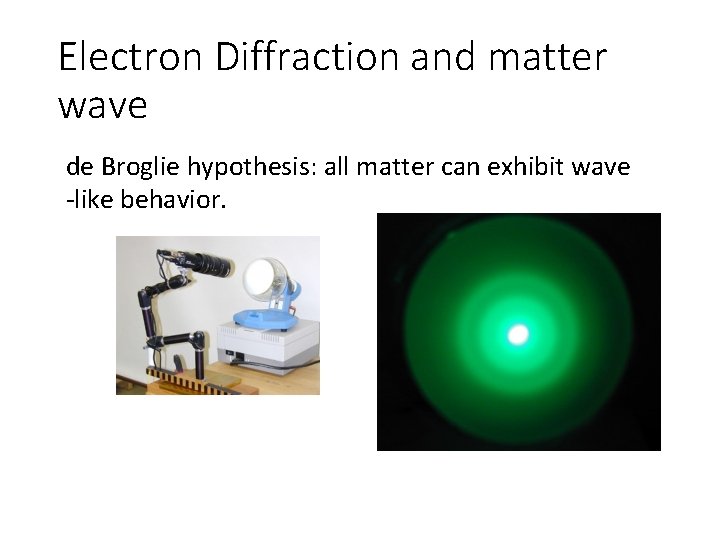
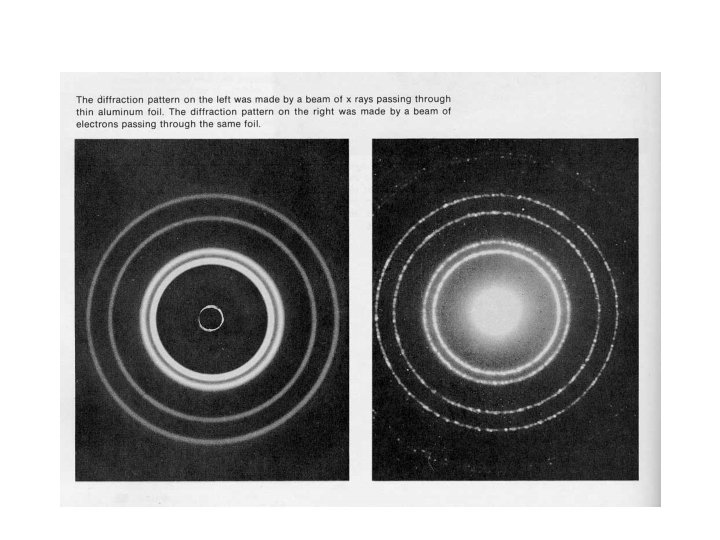
Electron Diffraction and matter wave de Broglie hypothesis: all matter can exhibit wave -like behavior.
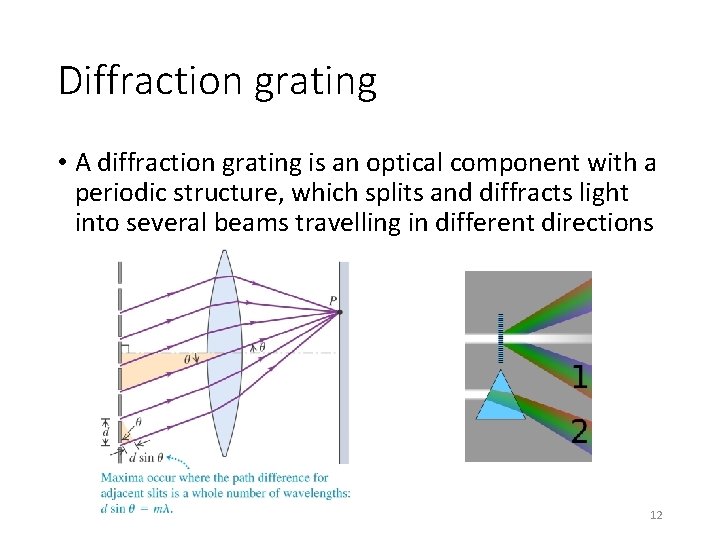
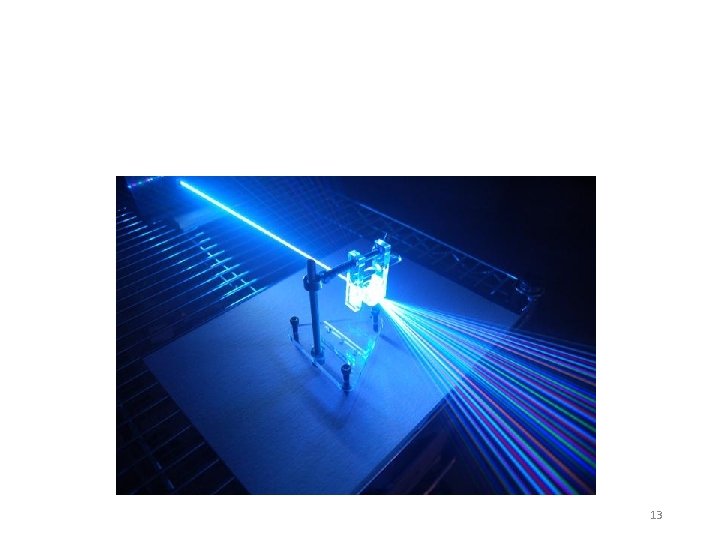
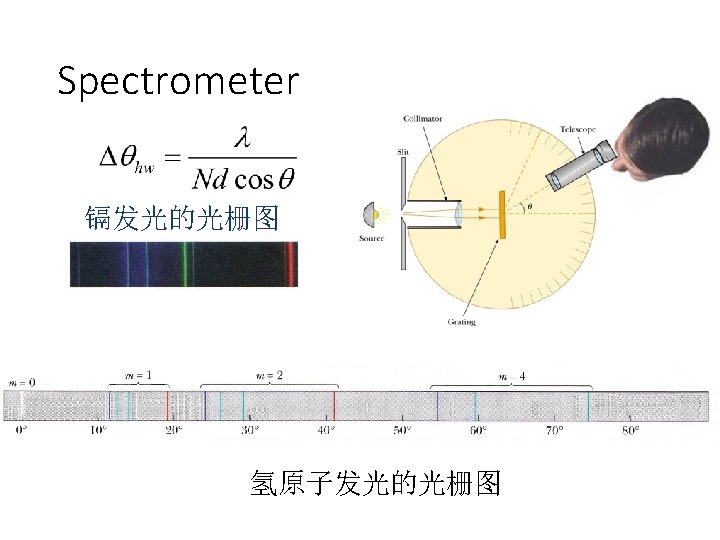
Diffraction grating • A diffraction grating is an optical component with a periodic structure, which splits and diffracts light into several beams travelling in different directions 12
13
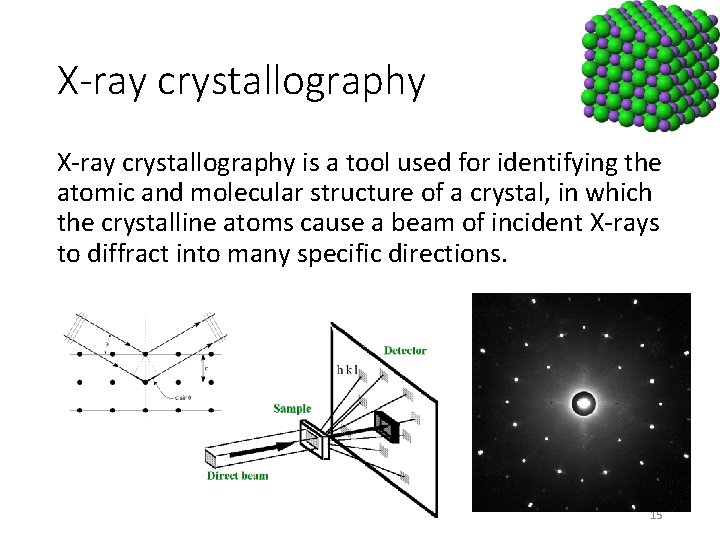
X-ray crystallography is a tool used for identifying the atomic and molecular structure of a crystal, in which the crystalline atoms cause a beam of incident X-rays to diffract into many specific directions. 15