
Lecture 3 The Cell Theory In 1838 the






- Slides: 16
Lecture 3: The Cell Theory In 1838, the German botanist Matthias Schleiden concluded that all plants were composed of cells In 1839, Theodor Schwann concluded the same thing for animals In 1855, Rudolf Virchow noted that all cells come from other cells The cell theory states that: 1) 2) 3) all living organisms are made of one or more cells, cells are the basic units of structure and function, and cells come only from pre-existing cells. A cell is the smallest unit that can carry on all of the processes of life
The Cellulae (Small room) The Organism’s Basic Unit of Structure and Function Types of cells ﺑﺪﺍﺋﻴﺔ Prokaryotic Micro-organisms ﺍﻟﻜﺎﺋﻨﺎﺕ ﺍﻟﺪﻗﻴﻘﺔ ﻣﺘﻘﺪﻣﺔ Eukaryotic All other forms of life
1). Prokaryotic and eukaryotic cells differ in size and complexity Similarities ﺃﻮﺟﻪ ﺍﻟﺘﺸﺎﺑﻪ All cells are surrounded by a plasma membrane ﻏﺸﺎﺀ ﺑﻼﺯﻣﻰ. The semi-fluid substance ﺍﻟﻤﺎﺩﺓ ﺍﻟﻨﺼﻒ ﺳﺎﺋﻠﺔ within the cell is called “cytosol”, ﺍﻟﺴﻴﺘﻮﺑﻼﺯﻡ containing the cell organelles ﺿﻴﺎﺕ ﺍﻟﺨﻠﻴﺔ. All cells contain chromosomes which have genes in the form of DNA. All cells have tiny organelles ﻋﻀﻴﺎﺕ ﺻﻐﻴﺮﺓ called “Ribosomes” that make proteins.
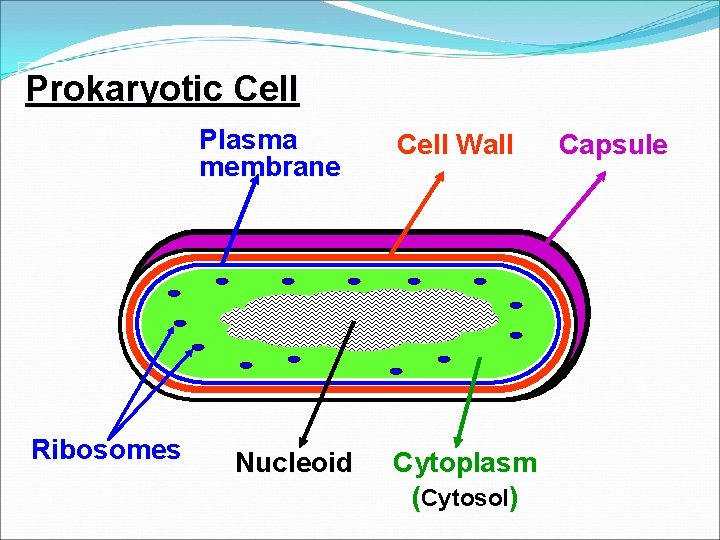
1). Prokaryotic and eukaryotic cells differ in size and complexity Differences ﺃﻮﺟﻪ ﺍﻹﺧﺘﻼﻑ A major difference ﺍﻟﻔﺮﻕ ﺍﻷﺴﺎﺳﻰ between prokaryotic and eukaryotic cells is the location of chromosomes ﻣﻮﺿﻊ ﺍﻟﺼﺒﻐﻴﺎﺕ. In an eukaryotic cell, chromosomes are contained in a true nucleus ( ) ﺍﻟﻨﻮﺍﺓ. In a prokaryotic cell, the DNA is concentrated in the nucleoid ( )ﺷـﺒﻪ ﻧﻮﺍﺓ without a membrane ( ) ﺑﺪﻭﻥ ﻏـﺸﺎﺀ separating it from the rest of the cell. In prokaryotic cell, DNA is a single strand ( )ﺃﺤﺎﺩﻯ ﺍﻟﺸﺮﻳﻂ or double strand ( ﺛﻨﺎﺋﻰ )ﺍﻟﺸﺮﻳﻂ DNA. But in eukaryotic cell, DNA is double strand.
Types of Prokaryotes Bacteria - Exist in most environments Archaea - Exist in extreme environments ( ﺍﻟﺒﻴﺌﺎﺕ ﺍﻟﻘﺎﺳﻴﺔ hot and salty) They are differing in some other structural, biochemical and physiological characteristics ﺻﻔﺎﺕ
A)-Prokaryotes Bacteria
ﺷﺒﻪ ﻧﻮﺍﺓ ﺍﻟﺮﻳﺒﻮﺯﻭﻣﺎﺕ ﻏﺸﺎﺀ ﺑﻼﺯﻣﻰ ﺍﻟﺠﺪﺍﺭ ﺍﻟﺨﻠﻮﻯ ﺍﻟﻜﺒﺴﻮﻟﺔ ﺍﻷﺴﻮﺍﻁ Fig. 7. 4 The prokaryotic cell is much simpler in structure, lacking a nucleus and the other membrane-enclosed organelles of the eukaryotic cell.
Prokaryotic Cell Plasma membrane Ribosomes Nucleoid Cell Wall Cytoplasm (Cytosol) Capsule
B- Eukaryotes An eukaryotic cell has internal membranes, which partition ﺗﻗﺳــﻢ the cell into compartments ﺃﻌﻀﺎﺀ ﻭﻇﻴﻔﻴﺔ. ﺃﻌﻀﺎﺀ These membranes also participate in metabolism as many enzymes are built into membranes. The general structure of a biological membrane is a double layer ﺛﻨﺎﺋﻰ ﺍﻟﻄﺒﻘﺎﺕ of phospholipids and diverse proteins ﺑﺮﻭﺗﻴﻨﺎﺕ ﻣﺘﻨﻮﻋﺔ. ﺑﺮﻭﺗﻴﻨﺎﺕ Each type of membrane has a unique combination ﺗﺮﻛﻴﺐ ﻣﻣﻳﺯ of lipids and proteins for its specific functions. For example, those in the membranes of mitochondria function in cellular respiration.
B- Eukaryotic Cell Eu: True Karyon: Nucleus Animal Cell Plant Cell Compare between Animal and Plant cell? What are the functions of cell organelles ?
1. The nucleus: Contains the cell’s genetic library ﺍﻟﻤﺤﺘﻮﻯ ﺍﻟـﭽﻴﻨﻰ The nucleus contains most of the genes in an eukaryotic cell. The nucleus is separated from the cytoplasm by a double membrane ﻏﺸﺎﺀ ﻣﺰﺩﻭﺝ called nuclear membrane. The nuclear membrane contains pores ﺛﻘﻮﺏ that allow large macromolecules and particles to pass through. The nuclear membrane ﺍﻟﻐﻼﻑ ﺍﻟﻨﻮﻭﻯ is maintaining the shape of the nucleus
The nucleus contains “chromatin fiber” ﺍﻟﺨﻴﻮﻁ ﺍﻟﻜﺮﻭﻣﺎﺗﻴﻨﻴﺔ which is the DNA associated with proteins. When the cell prepares to divide, the chromatin fibers coil up ﺗﻠﺘﻒ to be seen as “chromosomes”. Each eukaryotic species has a characteristic number of chromosomes ﺭﻗﻢ ﻳﺯ ﻣﻦ ﺍﻟﻜﺮﻭﻣﻮﺳﻮﻣﺎﺕ. - A typical human cell has 46 chromosomes, but sex cells (eggs and sperm) have only 23 chromosomes. The nucleus directs protein synthesis by synthesizing messenger RNA (m. RNA). The m. RNA travels to the cytoplasm and combines with ribosomes to translate its genetic message into the primary structure of a specific protein. Nucleolus is a dark region involved in production of ribosomes.