
Lecture 3 Symmetric encryption INDCPA CTR CBC TEK
Lecture 3 – Symmetric encryption, IND-CPA, CTR, CBC TEK 4500 08. 09. 2020 Håkon Jacobsen hakon. jacobsen@its. uio. no
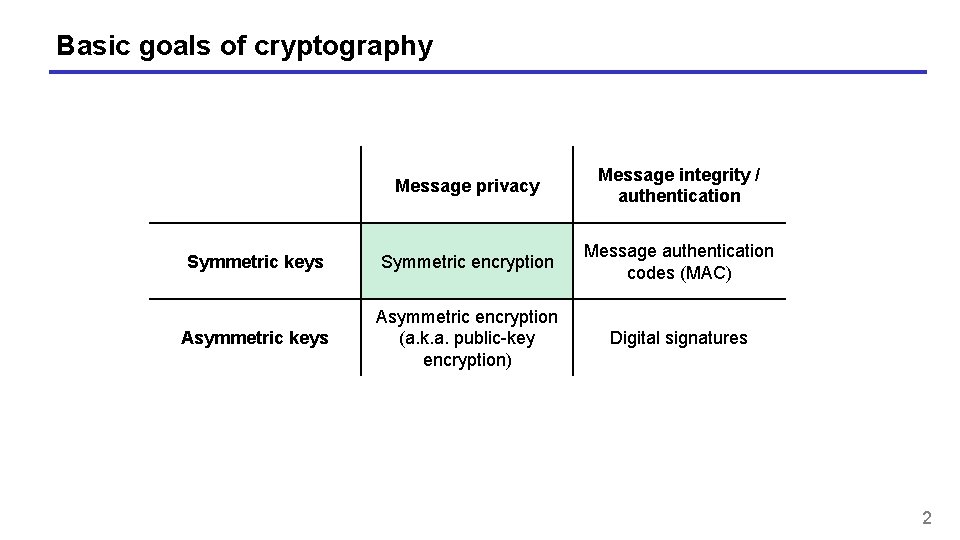
Basic goals of cryptography Message privacy Message integrity / authentication Symmetric keys Symmetric encryption Message authentication codes (MAC) Asymmetric keys Asymmetric encryption (a. k. a. public-key encryption) Digital signatures 2
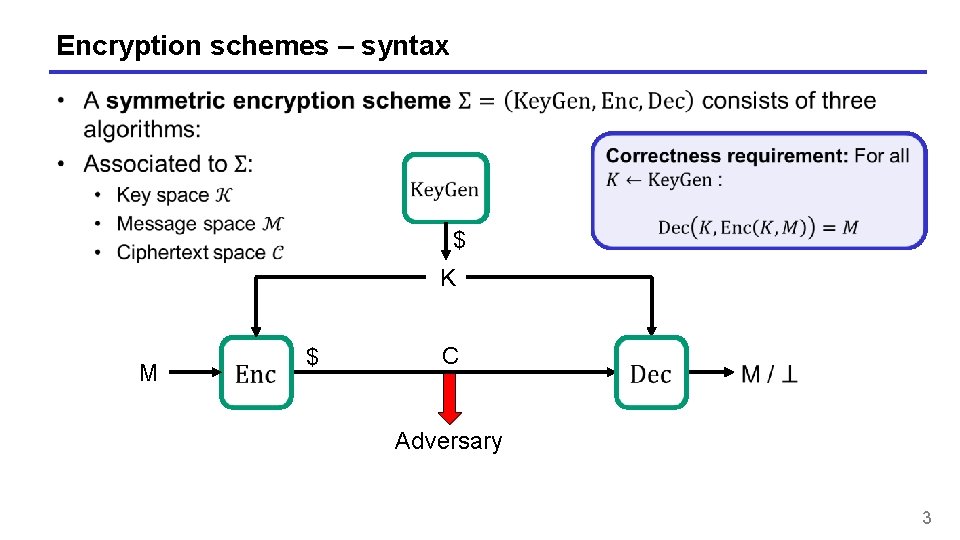
Encryption schemes – syntax $ K M $ C Adversary 3
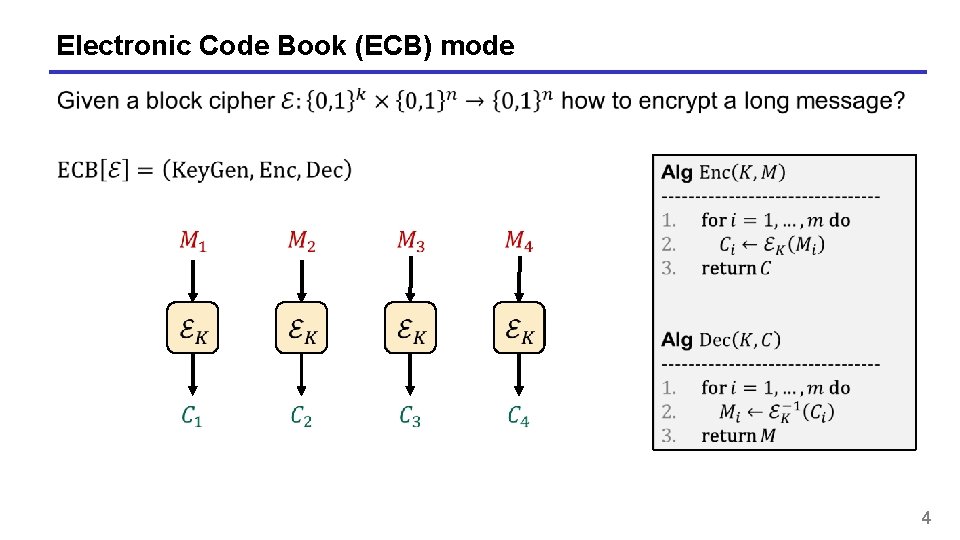
Electronic Code Book (ECB) mode 4
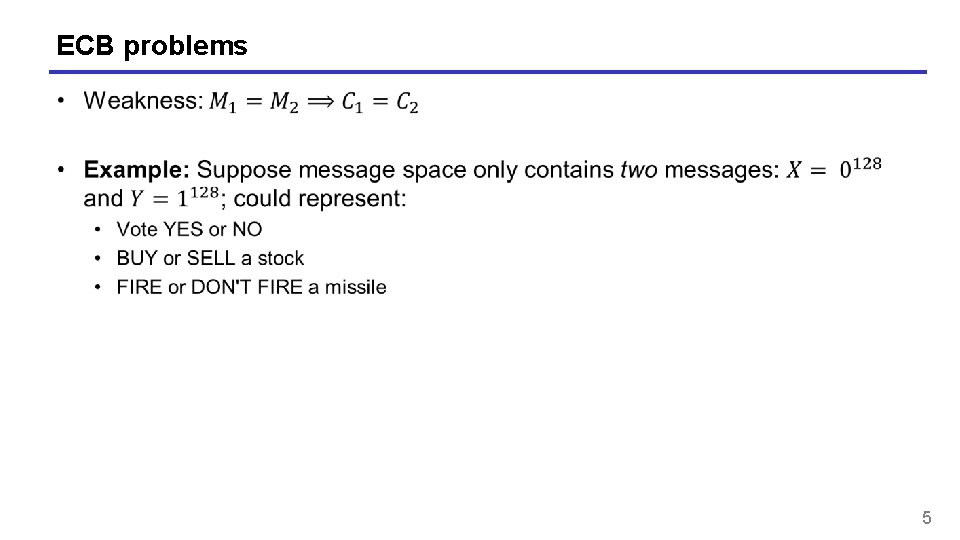
ECB problems 5
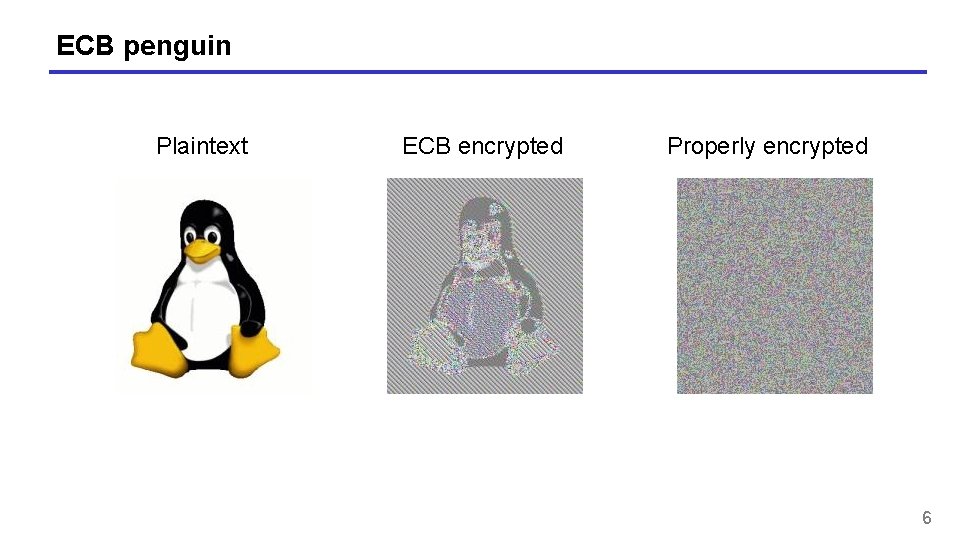
ECB penguin Plaintext ECB encrypted Properly encrypted 6
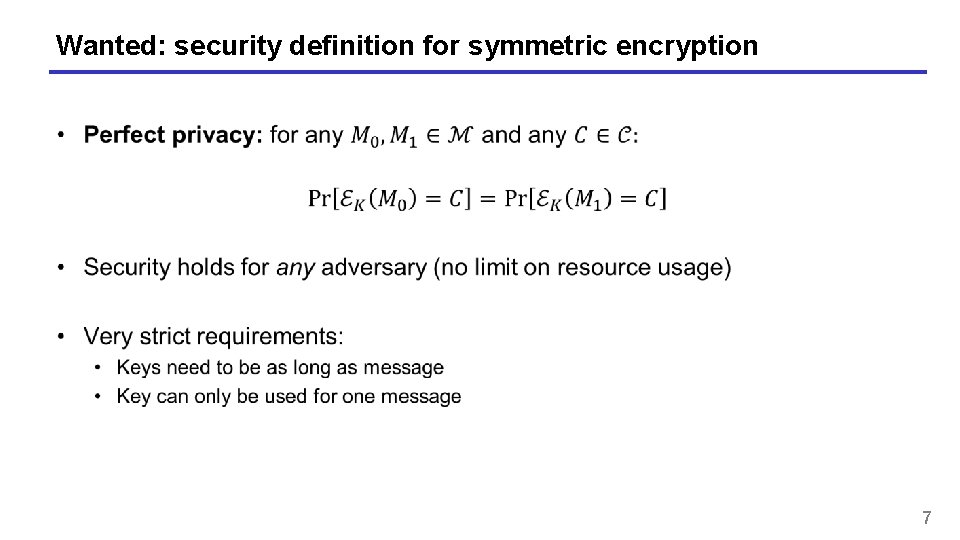
Wanted: security definition for symmetric encryption 7
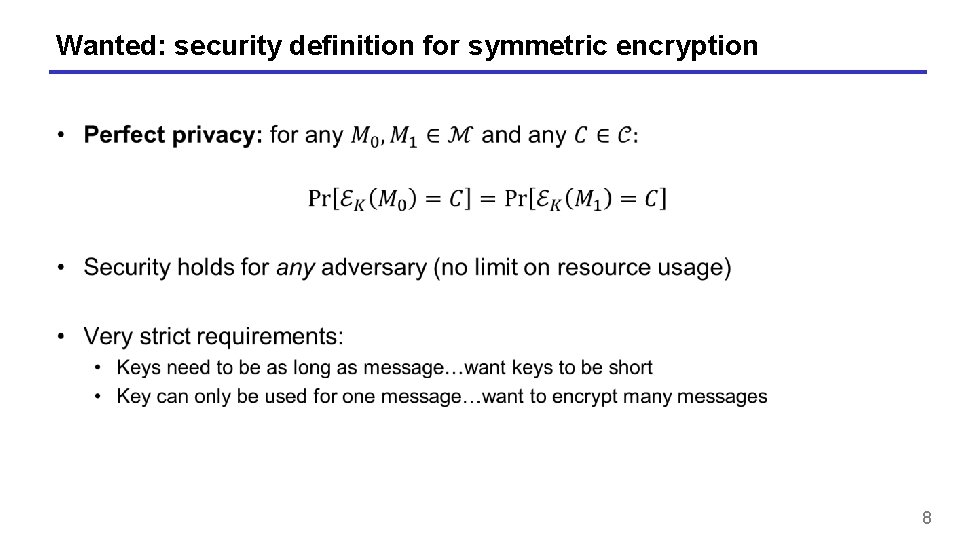
Wanted: security definition for symmetric encryption 8
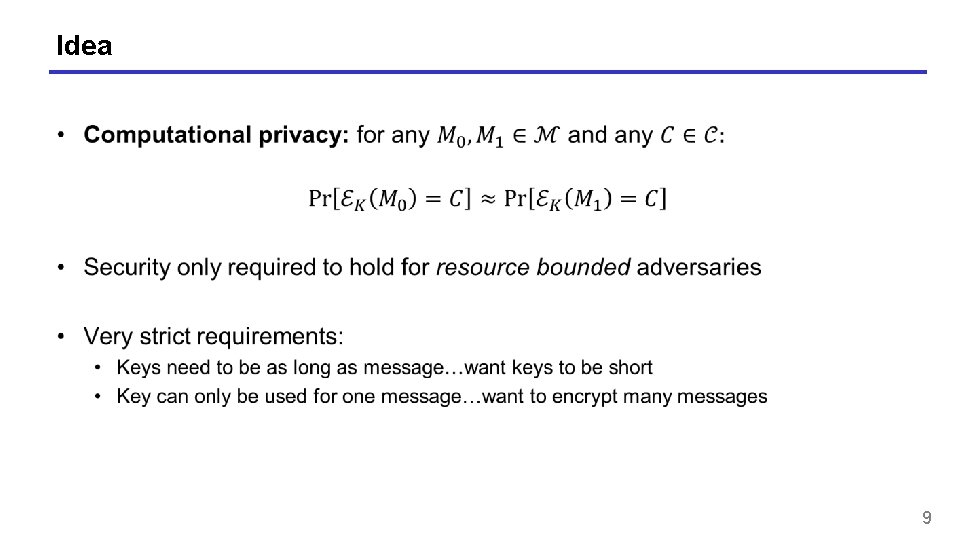
Idea 9
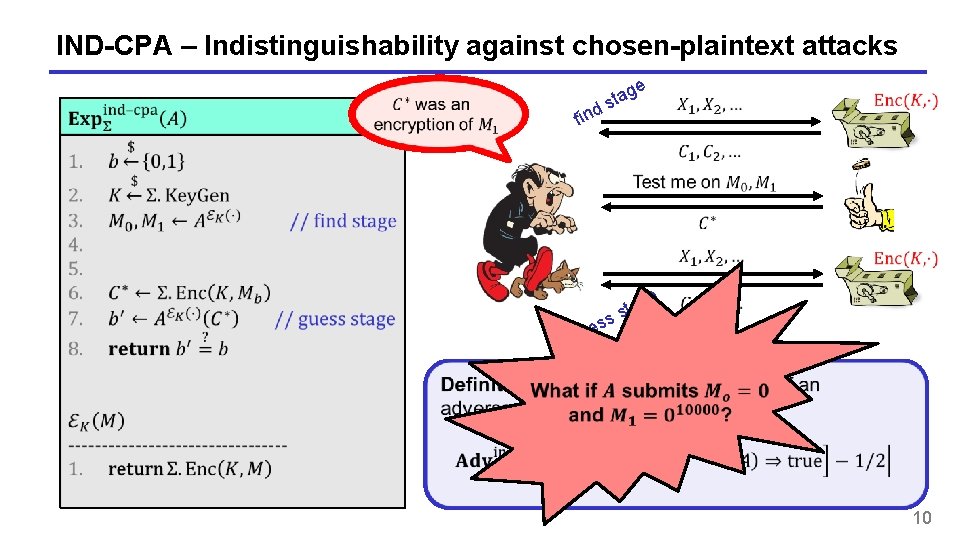
IND-CPA – Indistinguishability against chosen-plaintext attacks find g sta e e e gu tag s s s 10
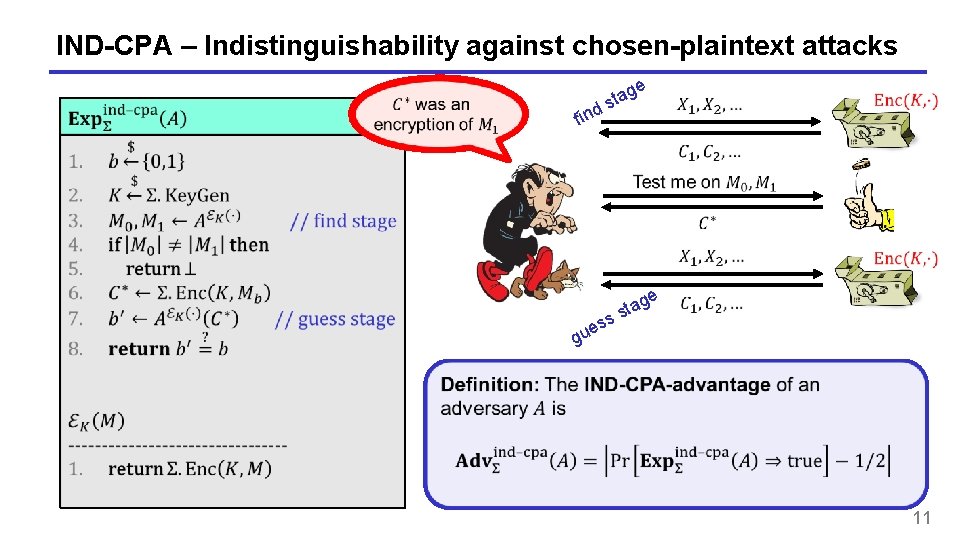
IND-CPA – Indistinguishability against chosen-plaintext attacks find g sta e e e gu tag s s s 11
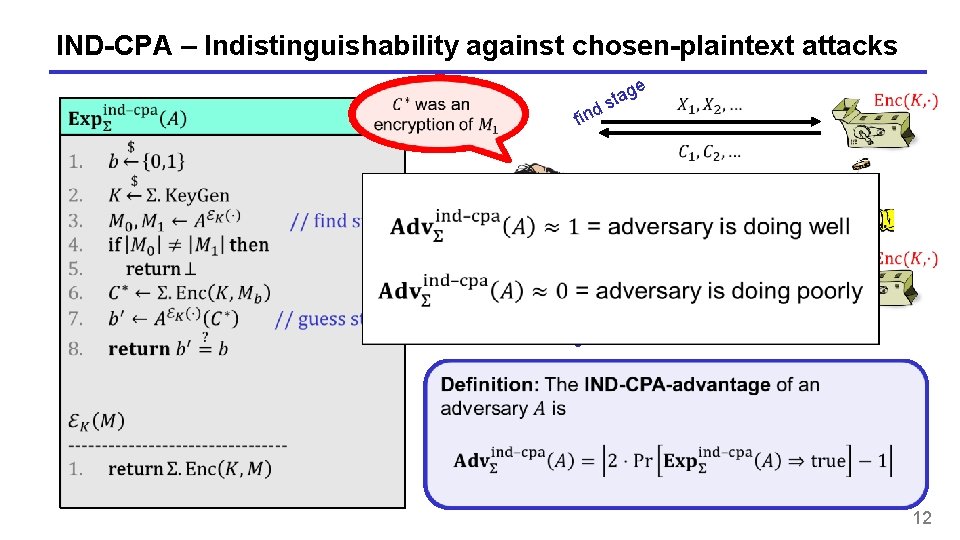
IND-CPA – Indistinguishability against chosen-plaintext attacks find g sta e e e gu tag s s s 12
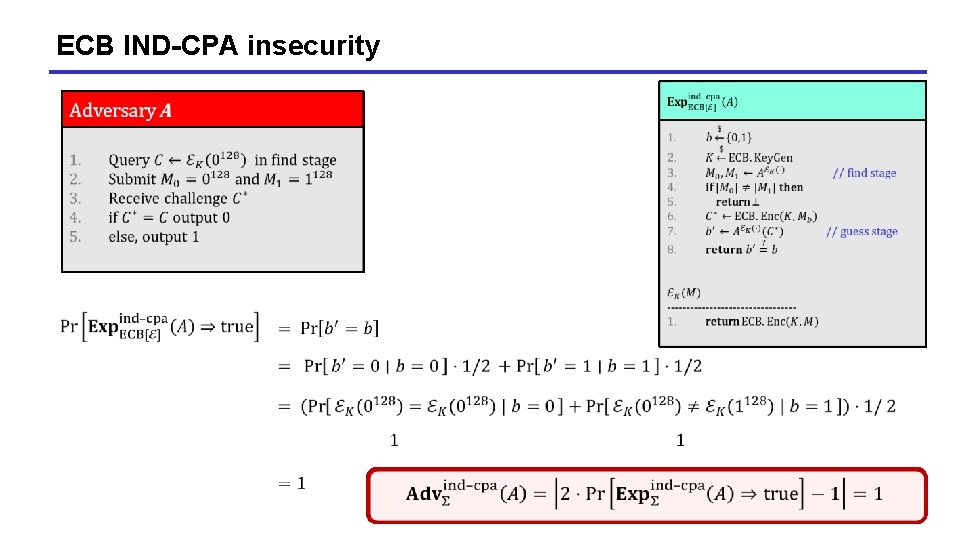
ECB IND-CPA insecurity 13
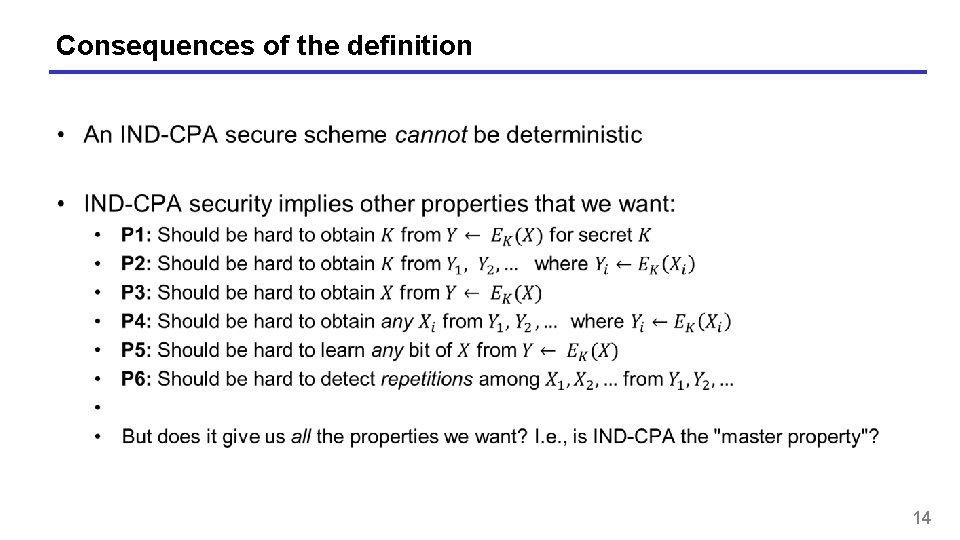
Consequences of the definition 14

Semantic security 15
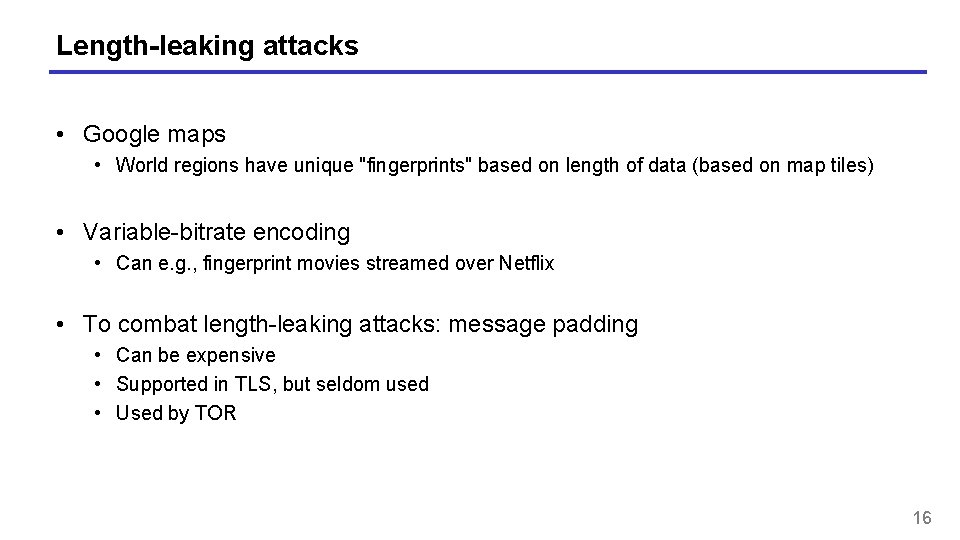
Length-leaking attacks • Google maps • World regions have unique "fingerprints" based on length of data (based on map tiles) • Variable-bitrate encoding • Can e. g. , fingerprint movies streamed over Netflix • To combat length-leaking attacks: message padding • Can be expensive • Supported in TLS, but seldom used • Used by TOR 16
CONSTRUCTING SYMMETRIC ENCRYPTION SCHEMES 17
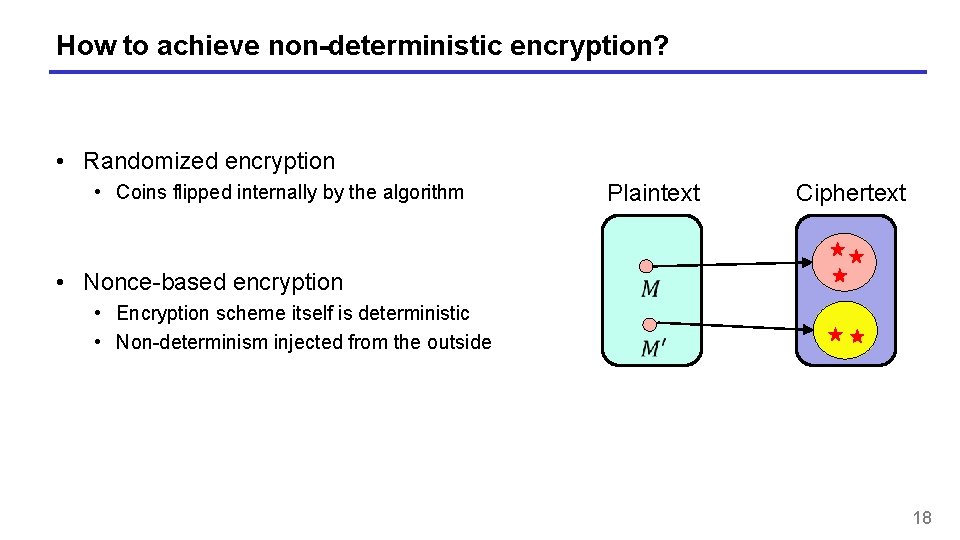
How to achieve non-deterministic encryption? • Randomized encryption • Coins flipped internally by the algorithm Plaintext Ciphertext • Nonce-based encryption • Encryption scheme itself is deterministic • Non-determinism injected from the outside 18
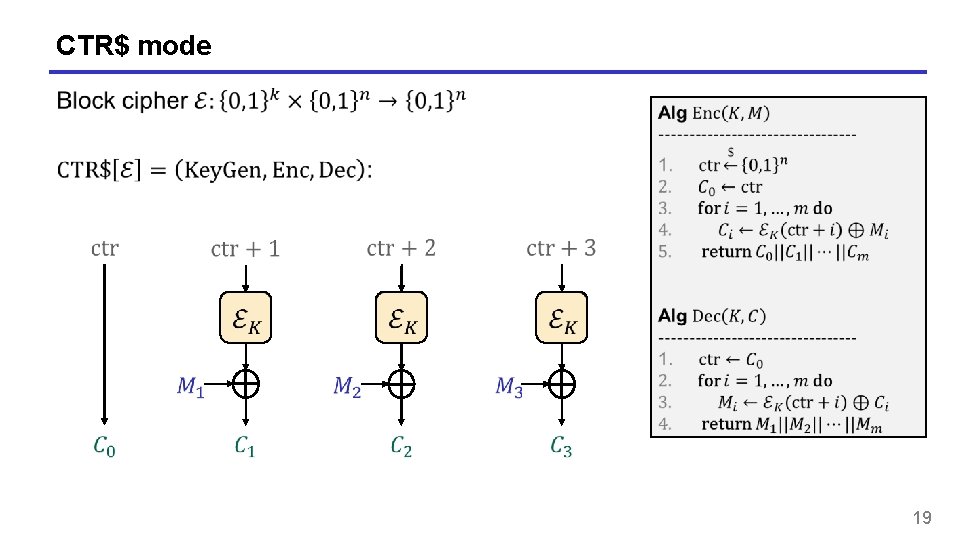
CTR$ mode 19
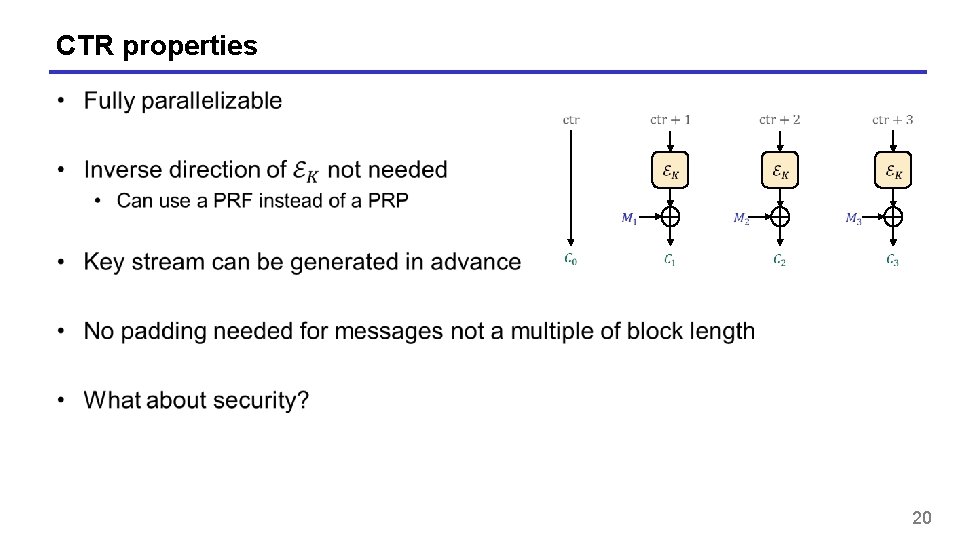
CTR properties 20
Modern approach to cryptography • Trying to make cryptography more a science than an art • Focus on formal definitions of security (and insecurity) • Clearly stated assumptions • Analysis supported by mathematical proofs 21
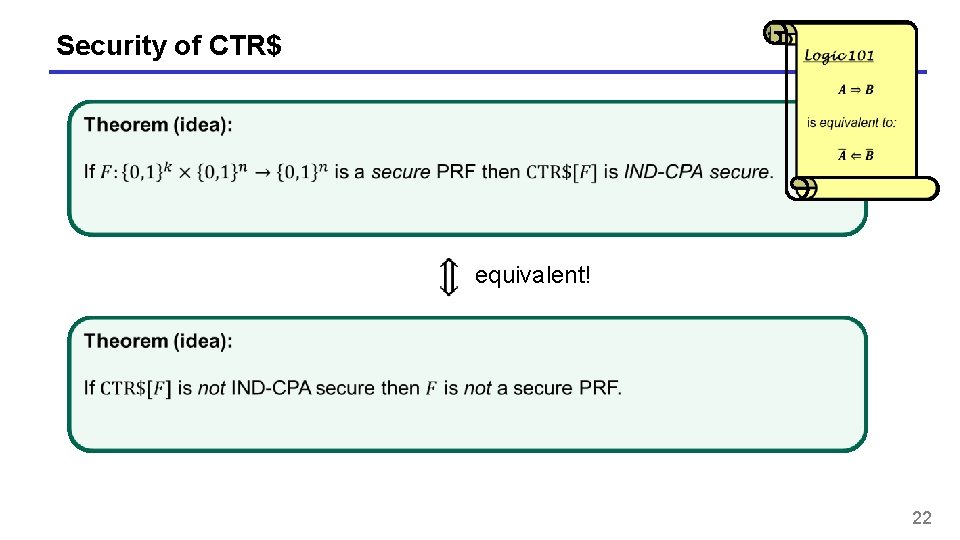
Security of CTR$ equivalent! 22
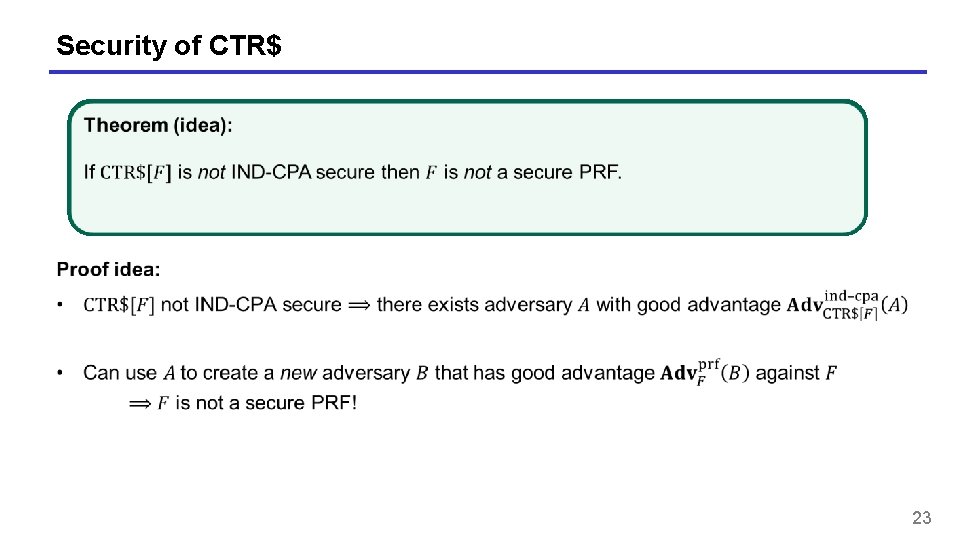
Security of CTR$ 23
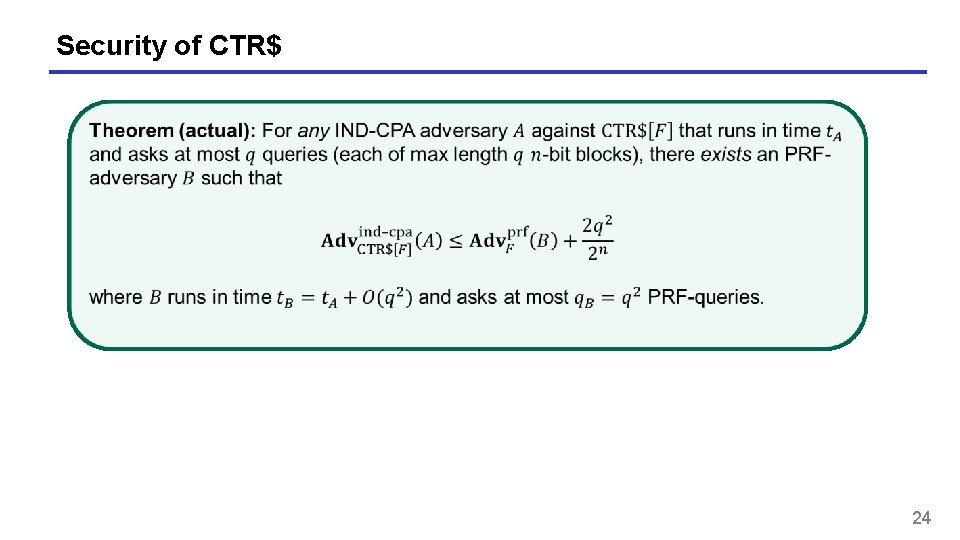
Security of CTR$ 24
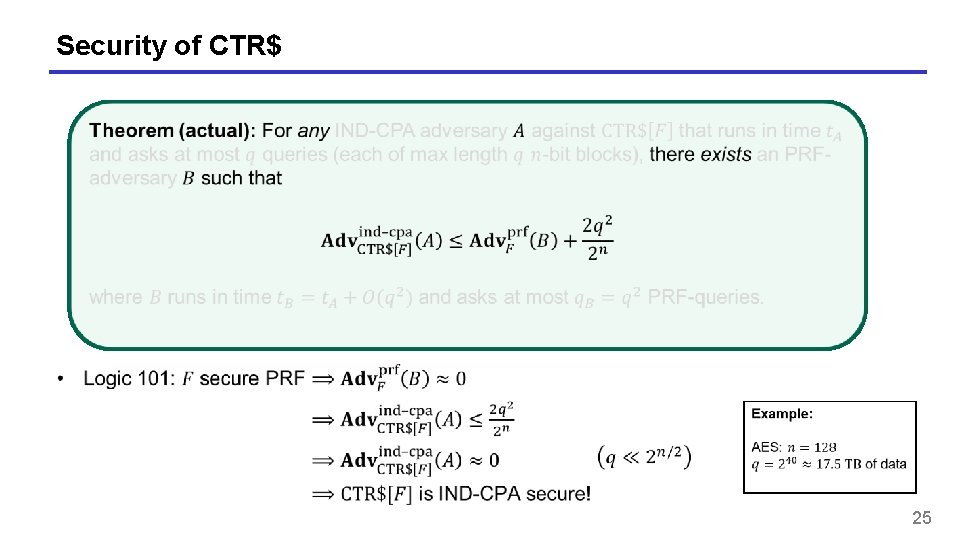
Security of CTR$ 25
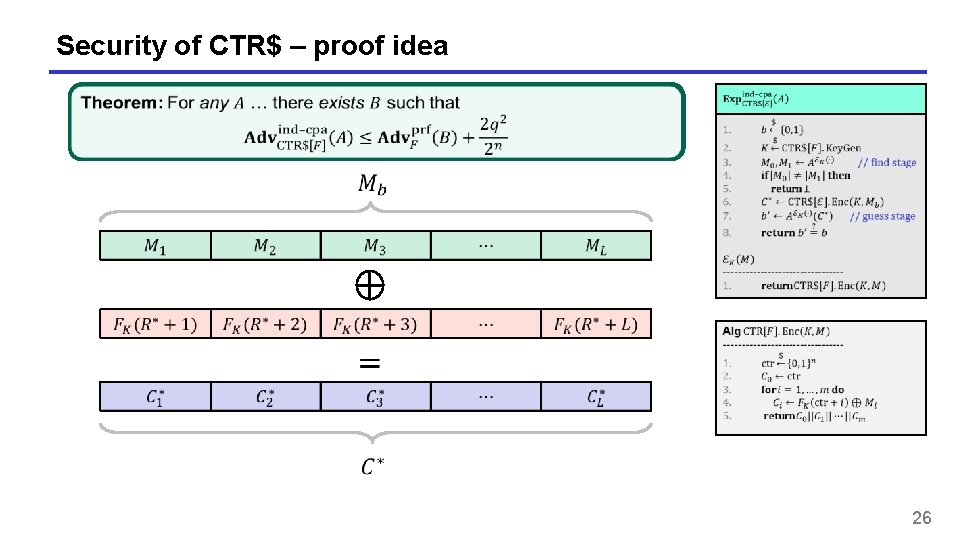
Security of CTR$ – proof idea 26
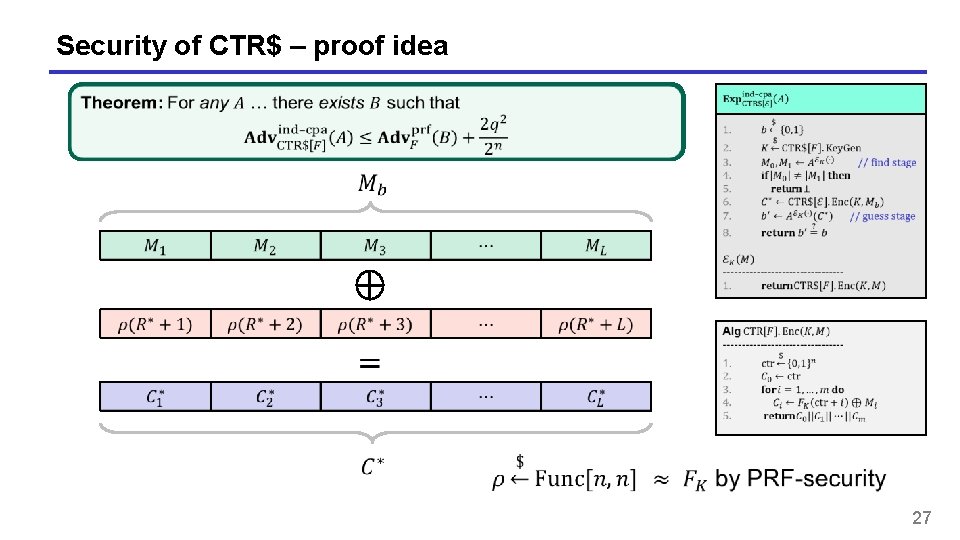
Security of CTR$ – proof idea 27
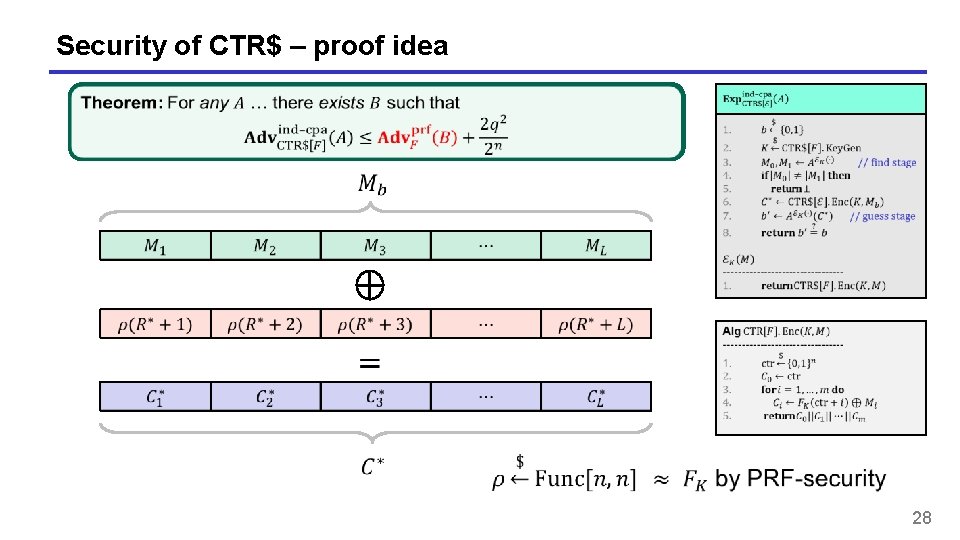
Security of CTR$ – proof idea 28
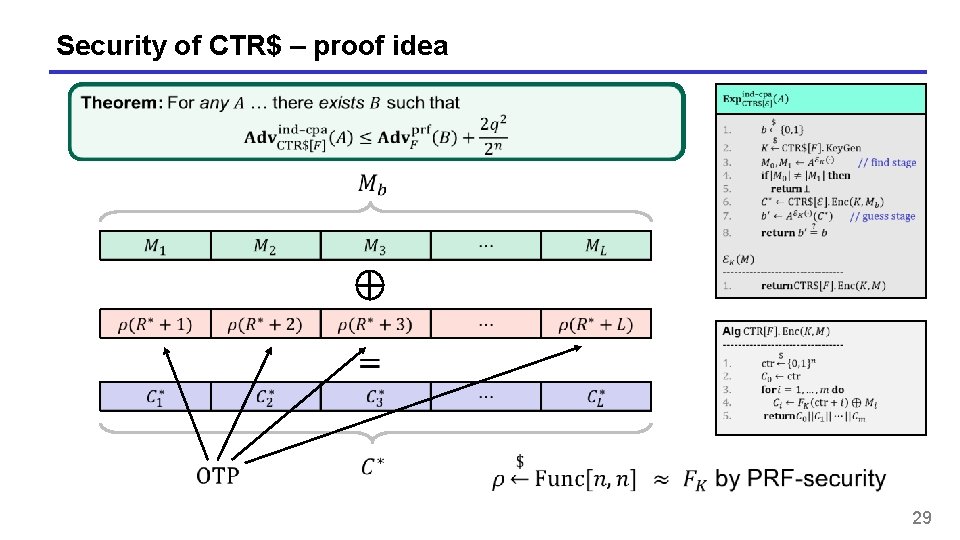
Security of CTR$ – proof idea 29
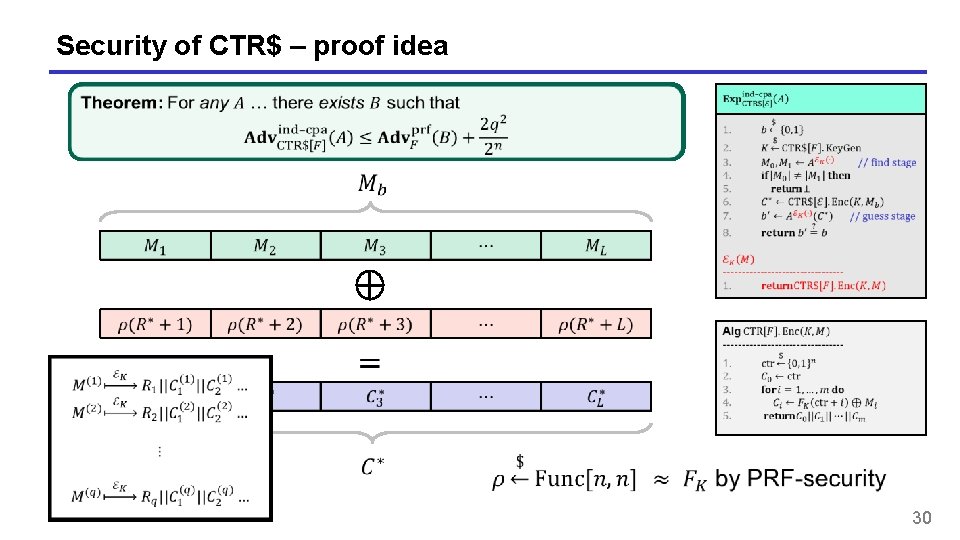
Security of CTR$ – proof idea 30
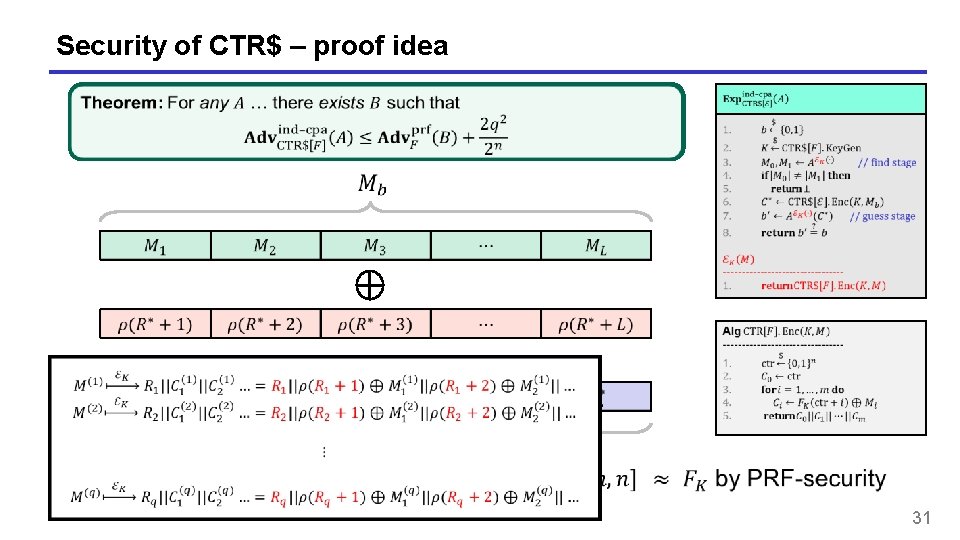
Security of CTR$ – proof idea 31
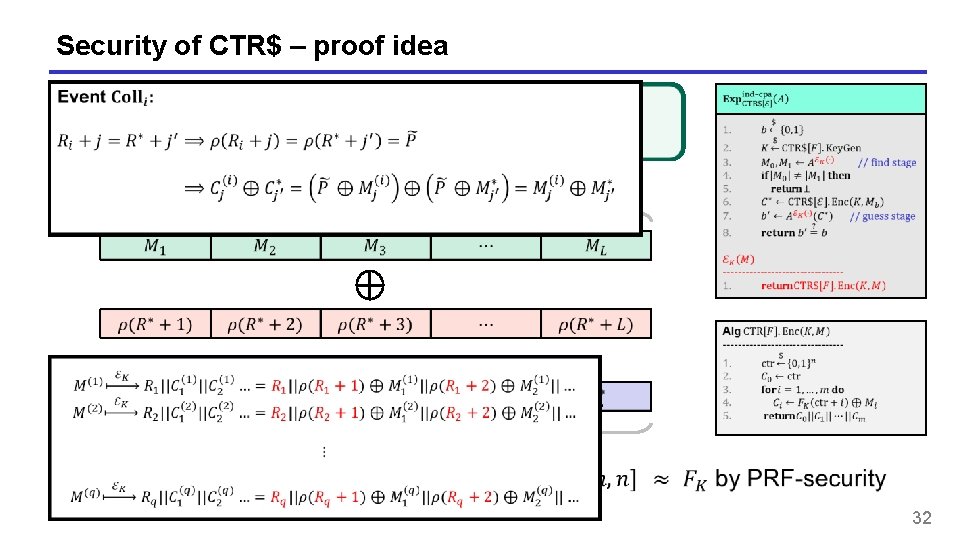
Security of CTR$ – proof idea 32
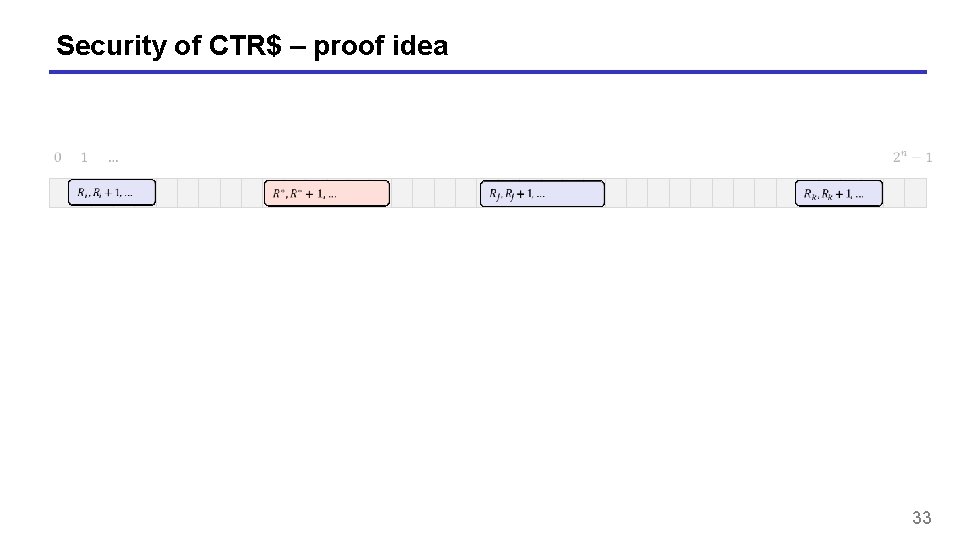
Security of CTR$ – proof idea 33
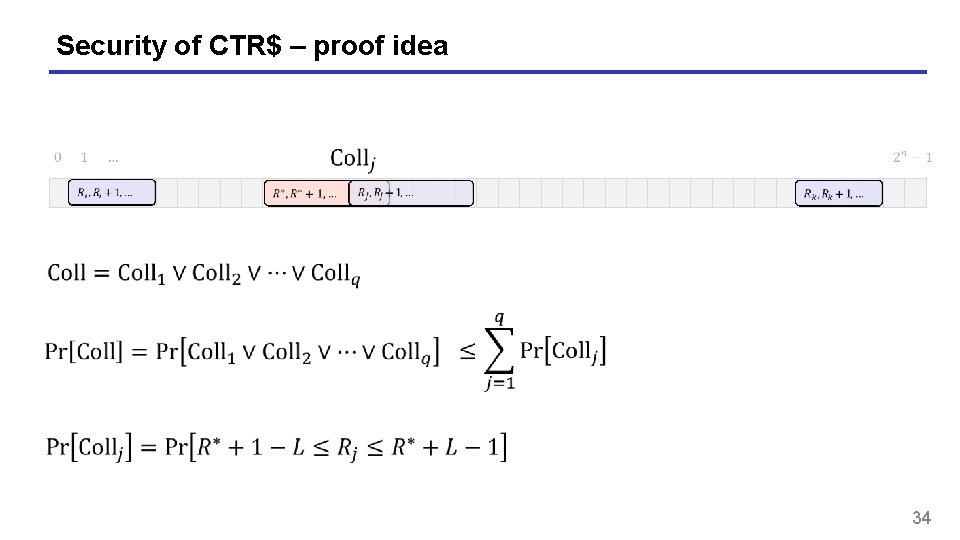
Security of CTR$ – proof idea 34
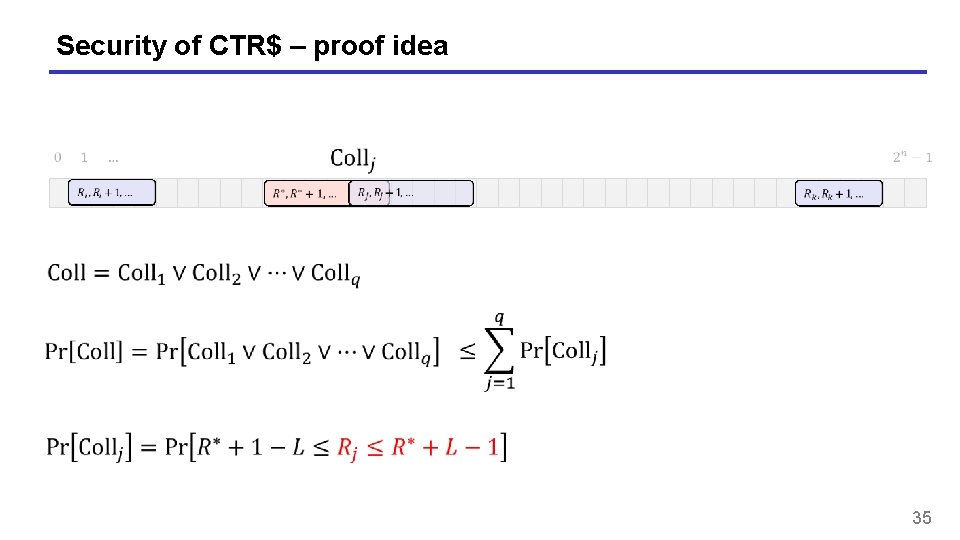
Security of CTR$ – proof idea 35
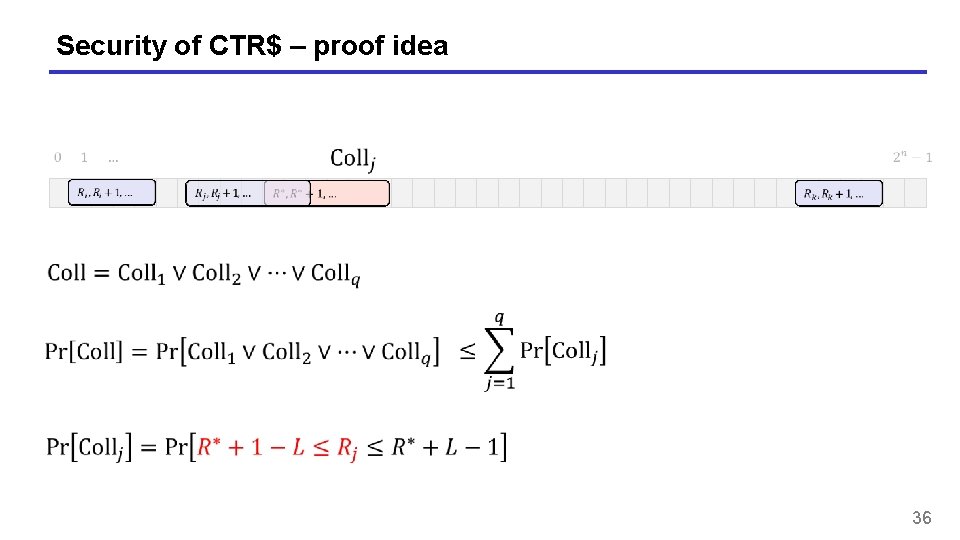
Security of CTR$ – proof idea 36
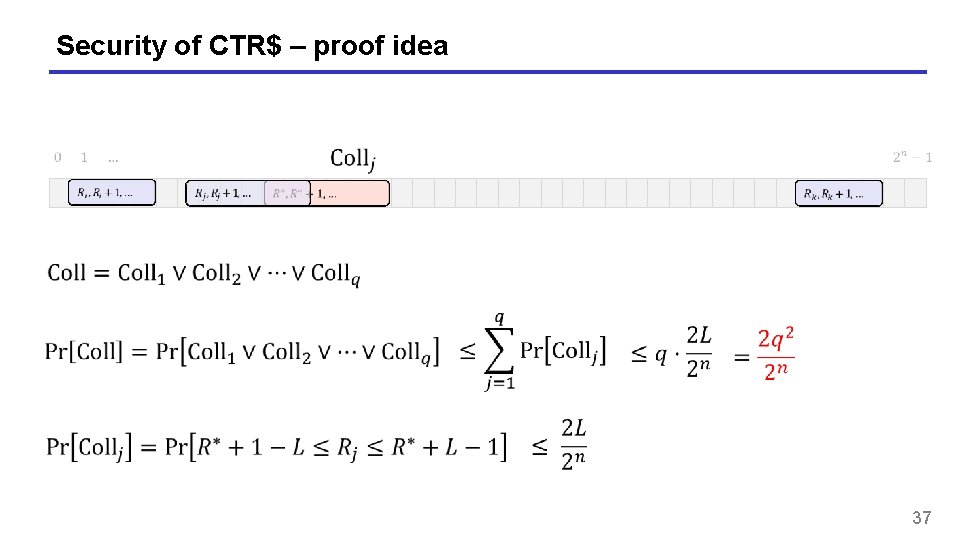
Security of CTR$ – proof idea 37
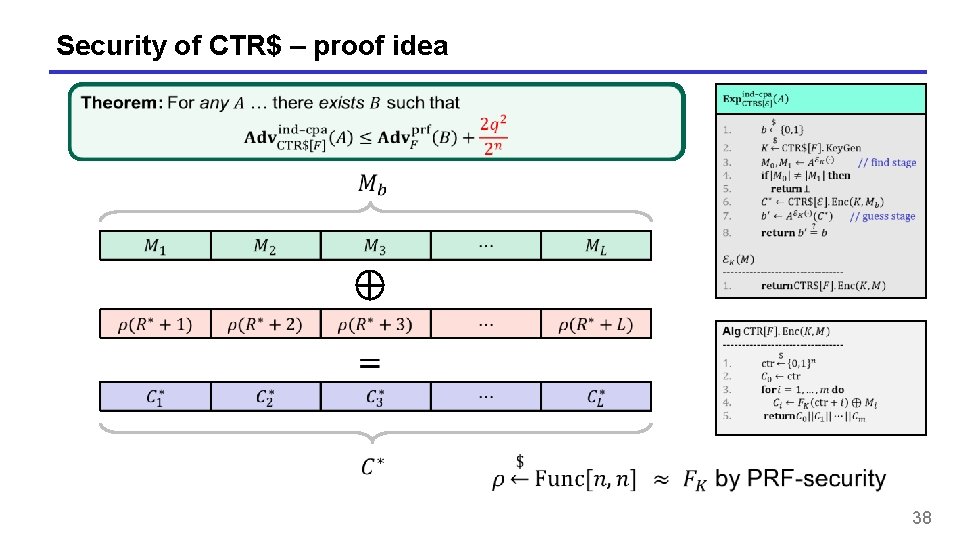
Security of CTR$ – proof idea 38
Nonce-based encryption • Initial value in CTR$ chosen at random • Not actually neccessary; sufficient that no inputs to underlying PRF/PRP repeat • A simple counter works • More generally: any number not used more than once – a nonce (number used once) • CTR: nonce-based counter-mode 39
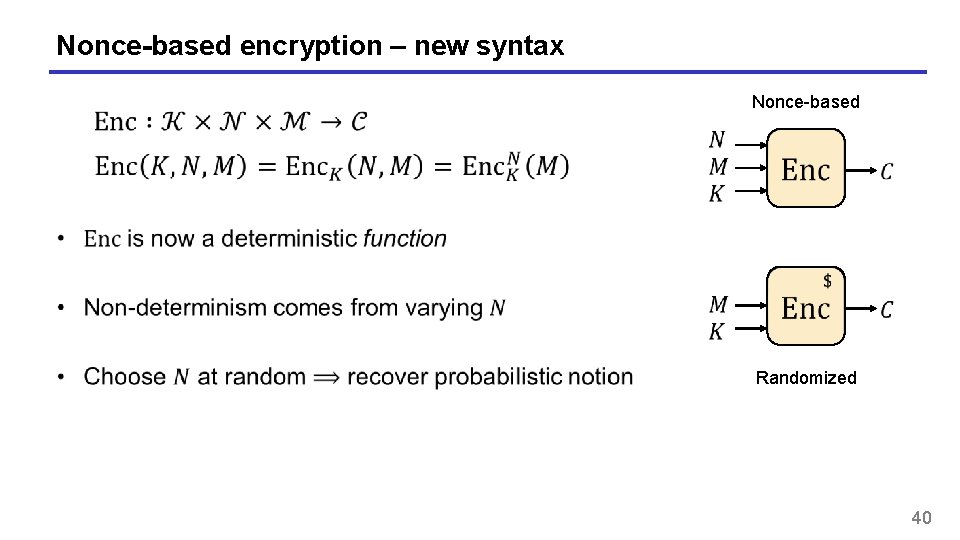
Nonce-based encryption – new syntax Nonce-based Randomized 40
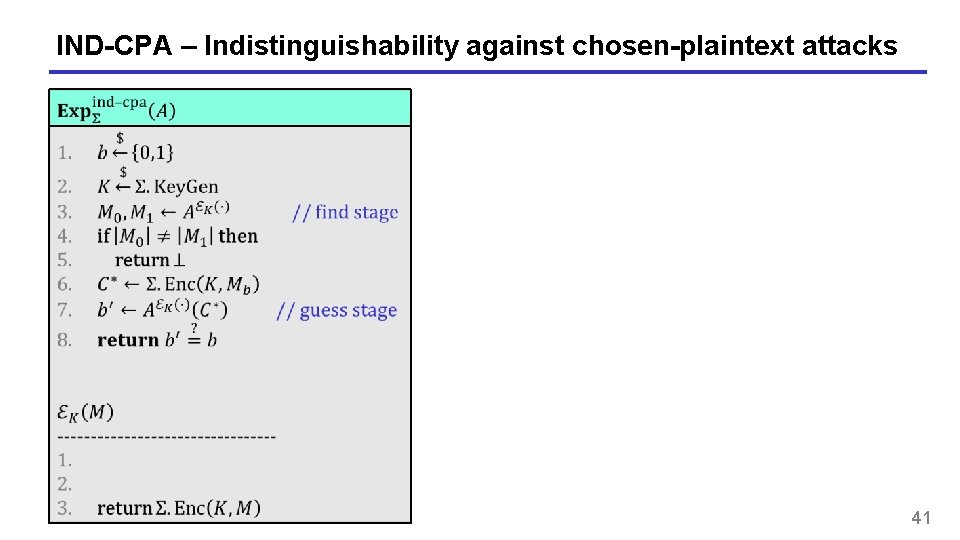
IND-CPA – Indistinguishability against chosen-plaintext attacks 41
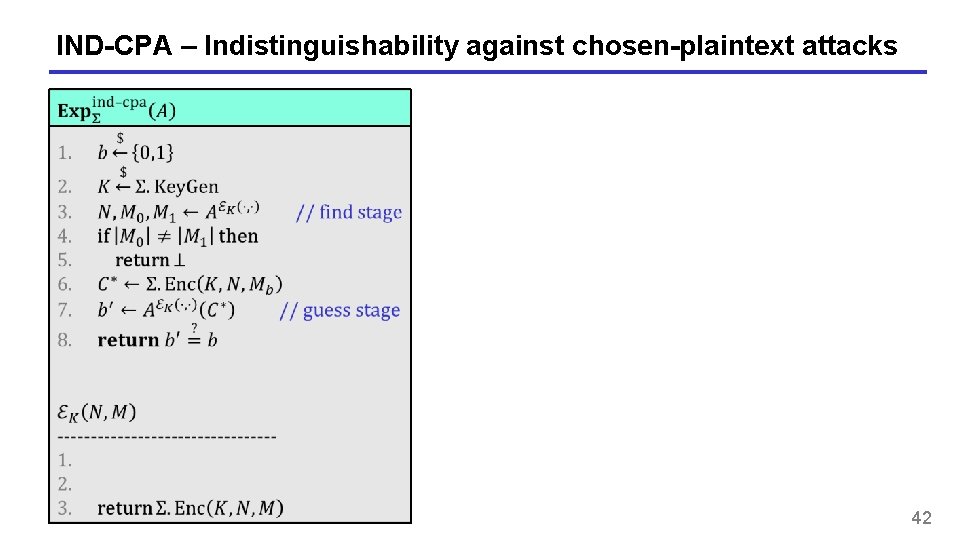
IND-CPA – Indistinguishability against chosen-plaintext attacks 42
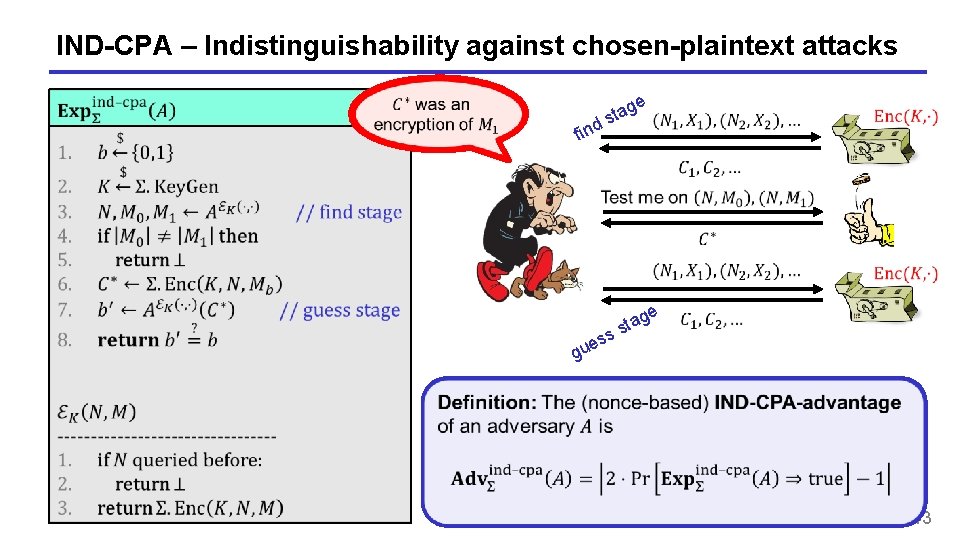
IND-CPA – Indistinguishability against chosen-plaintext attacks find g sta e e e gu tag s s s 43
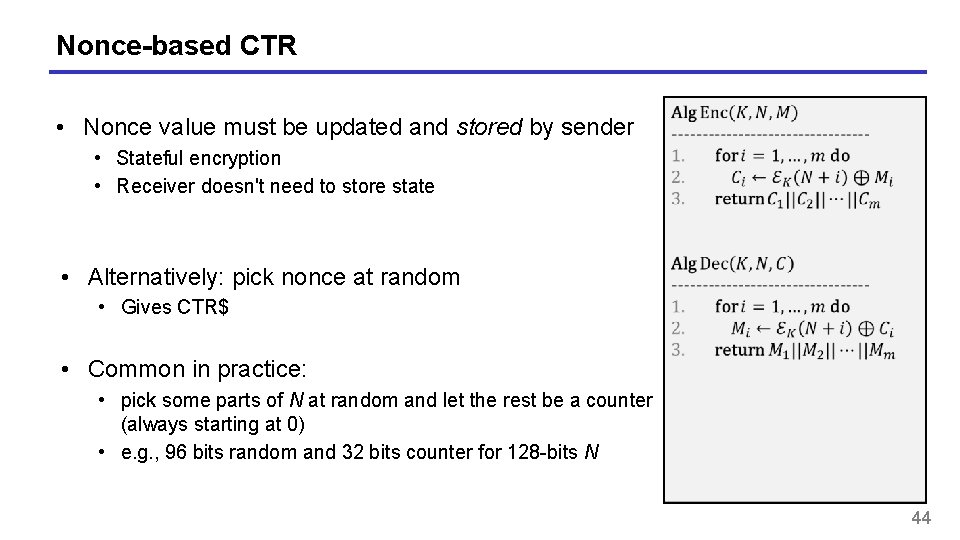
Nonce-based CTR • Nonce value must be updated and stored by sender • Stateful encryption • Receiver doesn't need to store state • Alternatively: pick nonce at random • Gives CTR$ • Common in practice: • pick some parts of N at random and let the rest be a counter (always starting at 0) • e. g. , 96 bits random and 32 bits counter for 128 -bits N 44
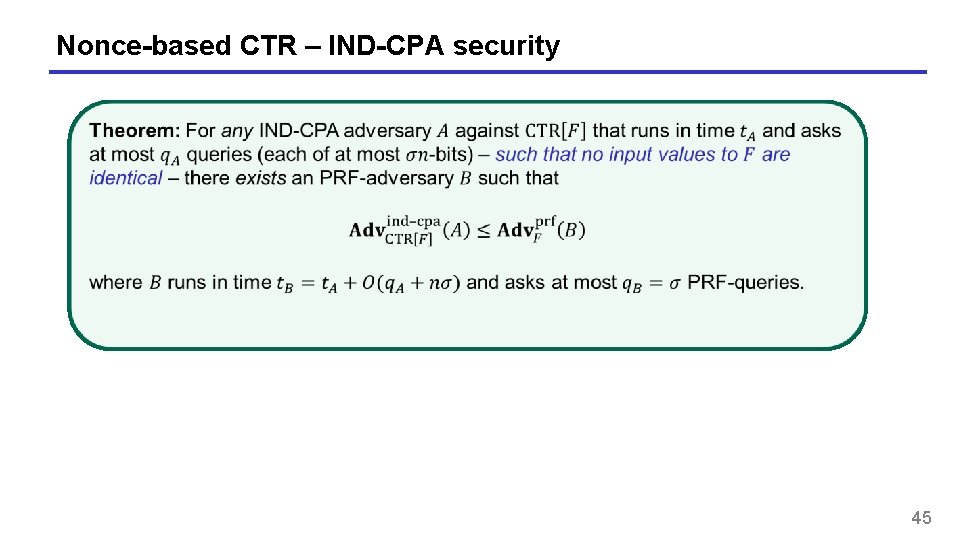
Nonce-based CTR – IND-CPA security 45
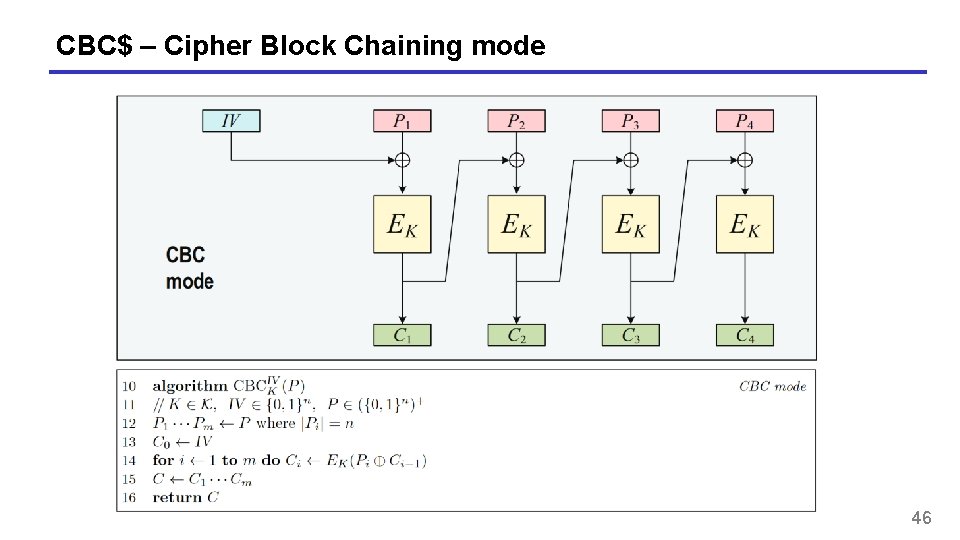
CBC$ – Cipher Block Chaining mode 46
CBC 47
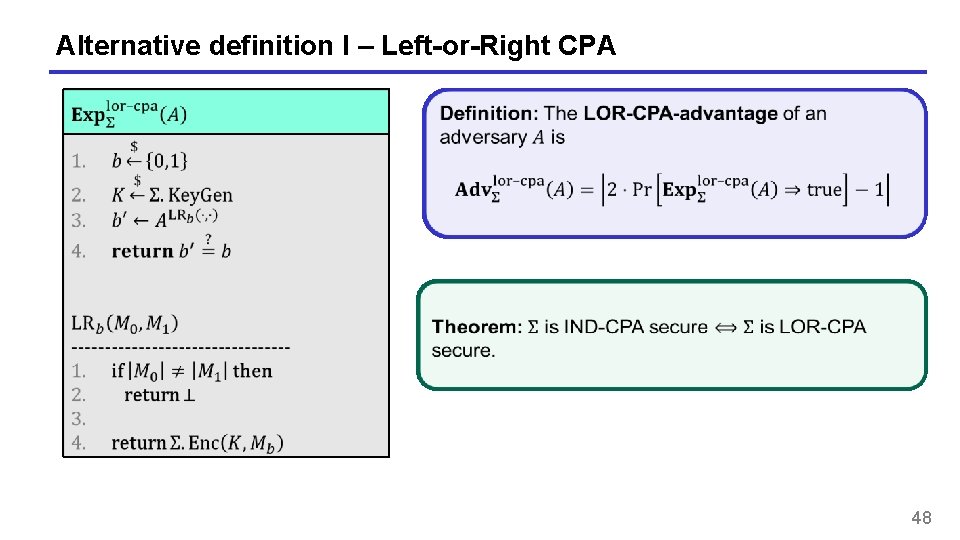
Alternative definition I – Left-or-Right CPA 48
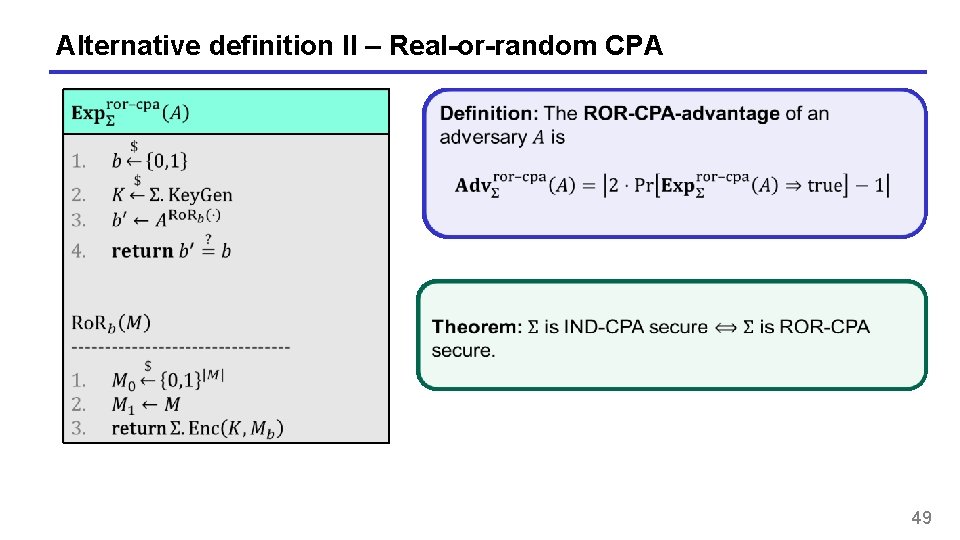
Alternative definition II – Real-or-random CPA 49
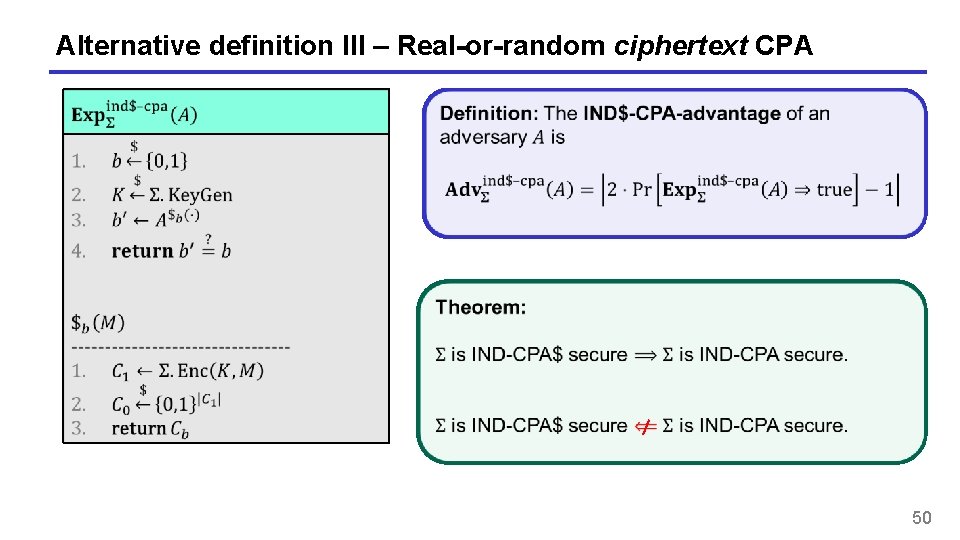
Alternative definition III – Real-or-random ciphertext CPA 50
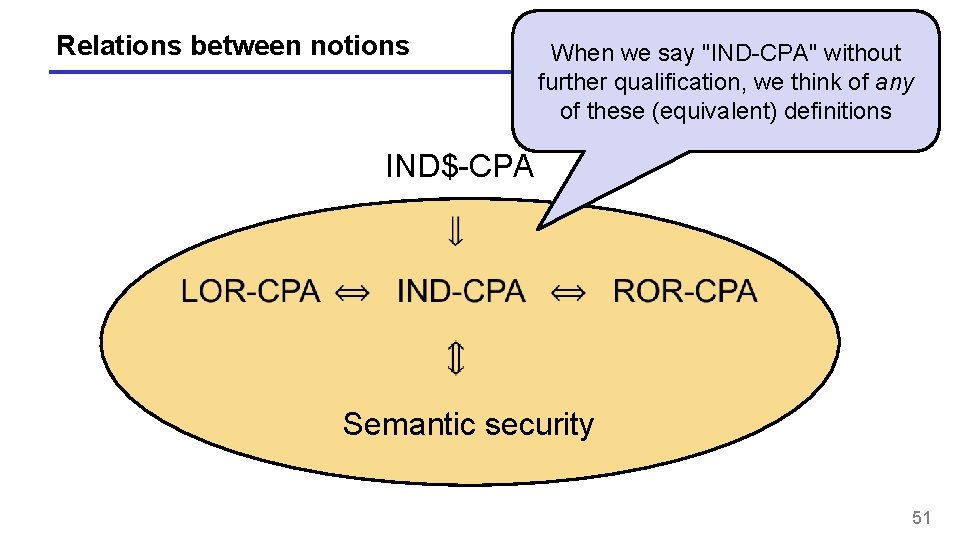
Relations between notions When we say "IND-CPA" without further qualification, we think of any of these (equivalent) definitions IND$-CPA Semantic security 51
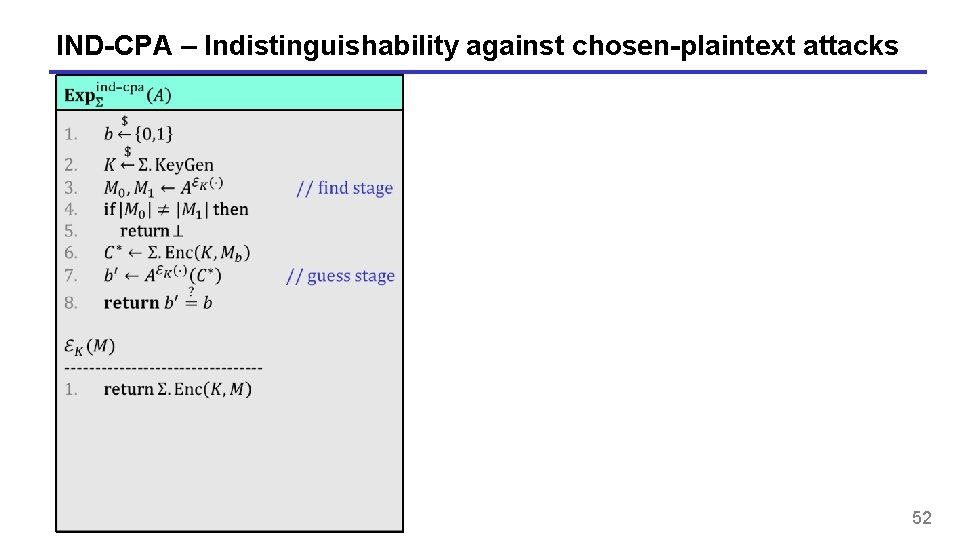
IND-CPA – Indistinguishability against chosen-plaintext attacks 52
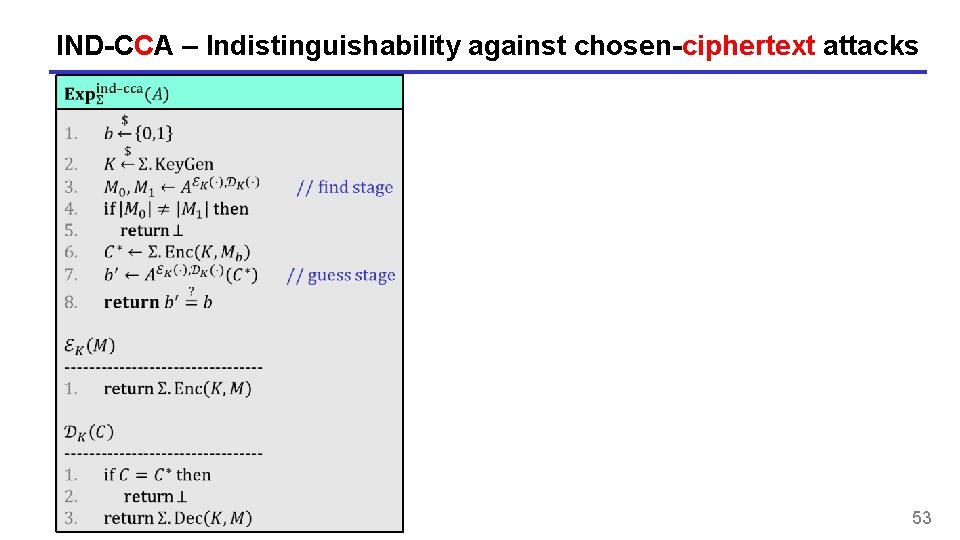
IND-CCA – Indistinguishability against chosen-ciphertext attacks 53
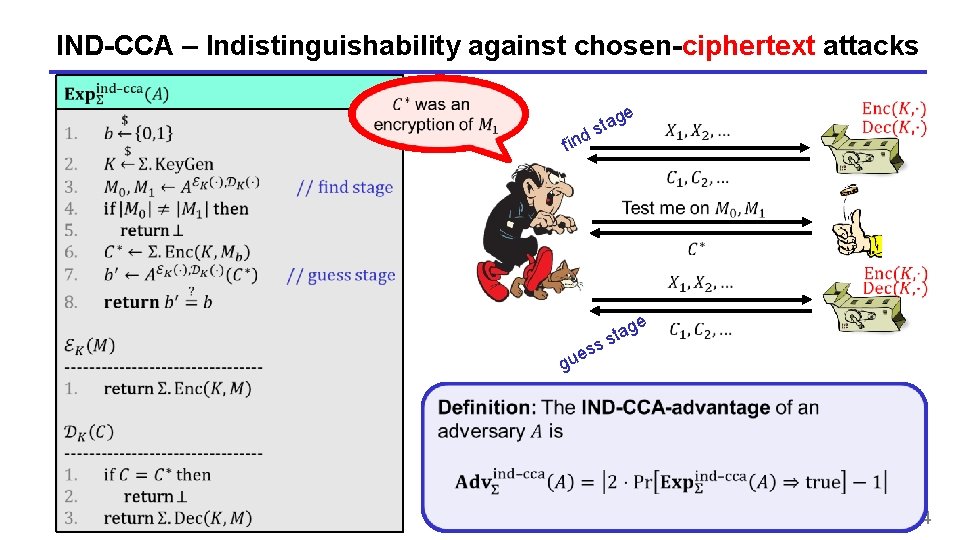
IND-CCA – Indistinguishability against chosen-ciphertext attacks e find g sta e e gu ss g sta 54
IND-CCA • None of the schemes we have looked at today are IND-CCA secure • Attacks are easy to demonstrate (exercise) • New techniques are needed • Next week: message authentication codes 55
- Slides: 55