
Lecture 3 Physical and chemical properties of proteins


- Slides: 36
Lecture 3. Physical and chemical properties of proteins. Denaturation.
Physical properties Ø Size Ø Colloidal solutions Ø Charge Ø UV absorption Ø Solubility
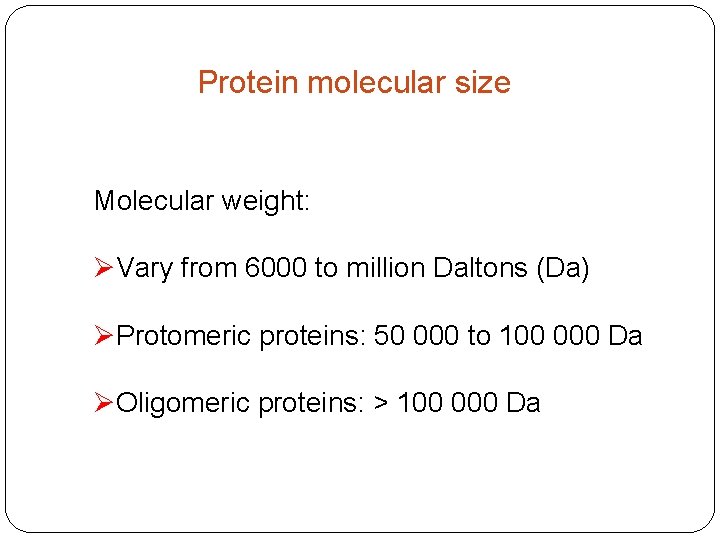
Protein molecular size Molecular weight: ØVary from 6000 to million Daltons (Da) ØProtomeric proteins: 50 000 to 100 000 Da ØOligomeric proteins: > 100 000 Da
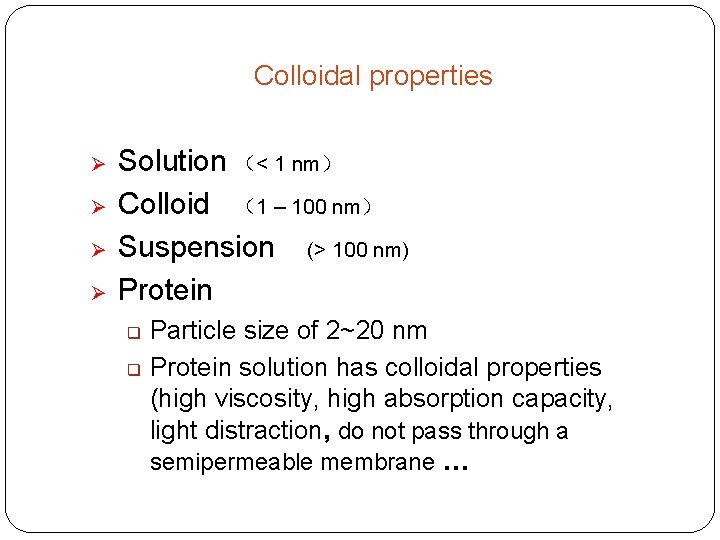
Colloidal properties Ø Ø Solution (< 1 nm) Colloid (1 – 100 nm) Suspension (> 100 nm) Protein q q Particle size of 2~20 nm Protein solution has colloidal properties (high viscosity, high absorption capacity, light distraction, do not pass through a semipermeable membrane …
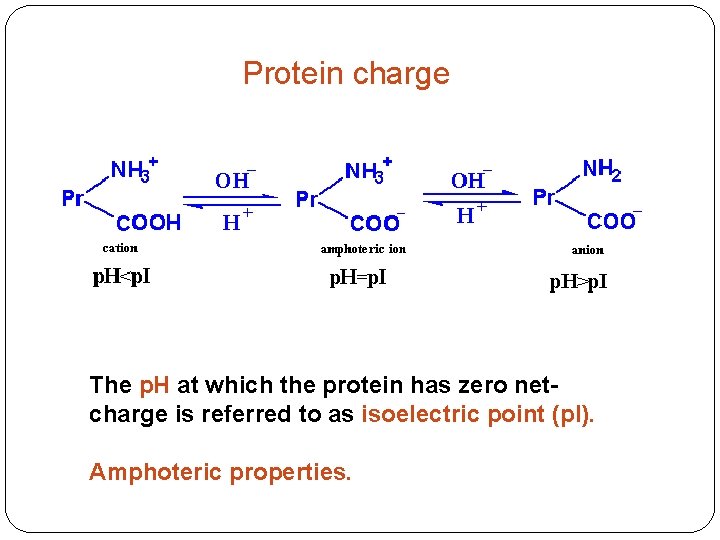
Protein charge The p. H at which the protein has zero netcharge is referred to as isoelectric point (p. I). Amphoteric properties.
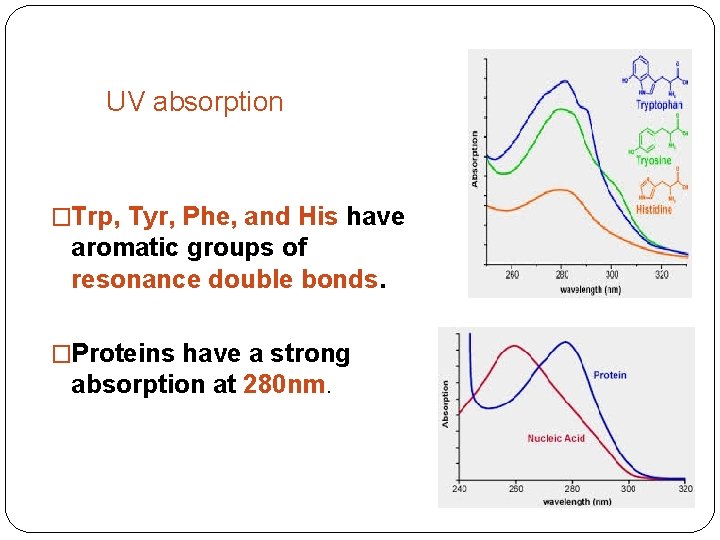
UV absorption �Trp, Tyr, Phe, and His have aromatic groups of resonance double bonds. �Proteins have a strong absorption at 280 nm.
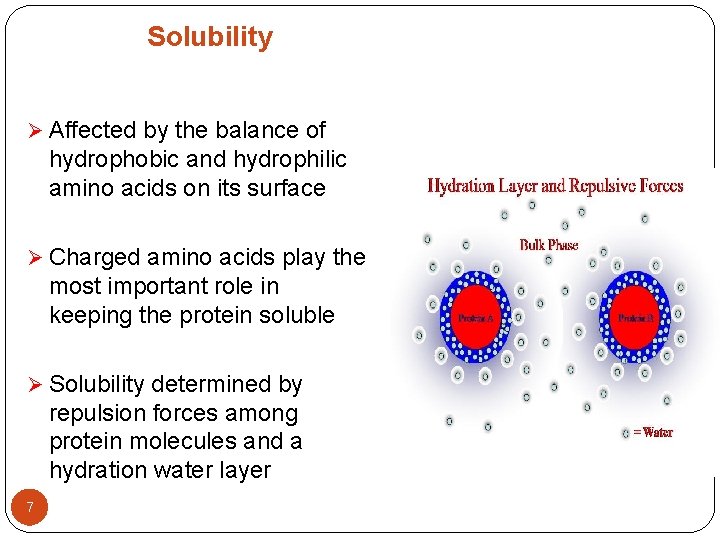
Solubility Ø Affected by the balance of hydrophobic and hydrophilic amino acids on its surface Ø Charged amino acids play the most important role in keeping the protein soluble Ø Solubility determined by repulsion forces among protein molecules and a hydration water layer 7
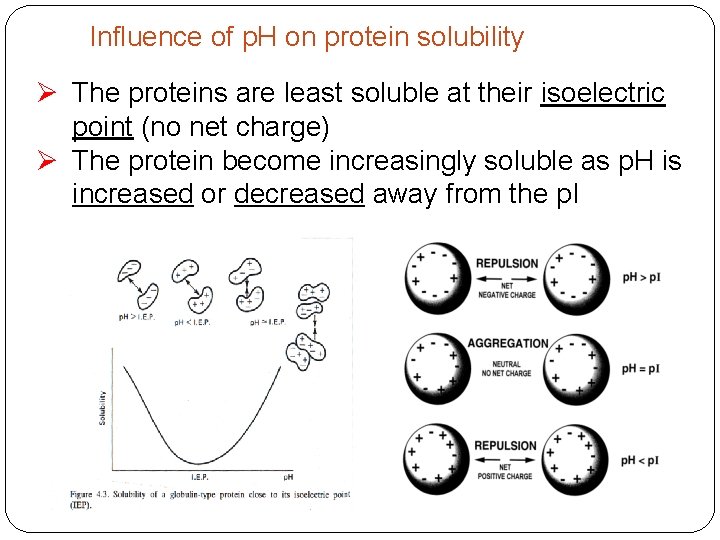
Influence of p. H on protein solubility Ø The proteins are least soluble at their isoelectric point (no net charge) Ø The protein become increasingly soluble as p. H is increased or decreased away from the p. I
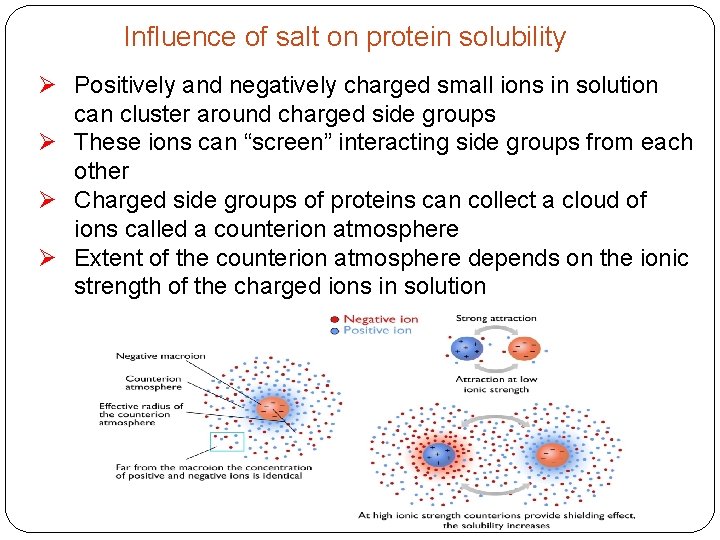
Influence of salt on protein solubility Ø Positively and negatively charged small ions in solution can cluster around charged side groups Ø These ions can “screen” interacting side groups from each other Ø Charged side groups of proteins can collect a cloud of ions called a counterion atmosphere Ø Extent of the counterion atmosphere depends on the ionic strength of the charged ions in solution
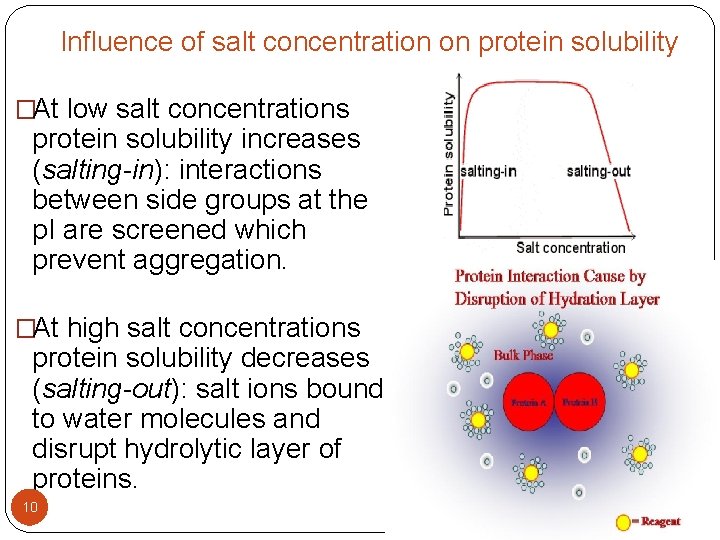
Influence of salt concentration on protein solubility �At low salt concentrations protein solubility increases (salting-in): interactions between side groups at the p. I are screened which prevent aggregation. �At high salt concentrations protein solubility decreases (salting-out): salt ions bound to water molecules and disrupt hydrolytic layer of proteins. 10
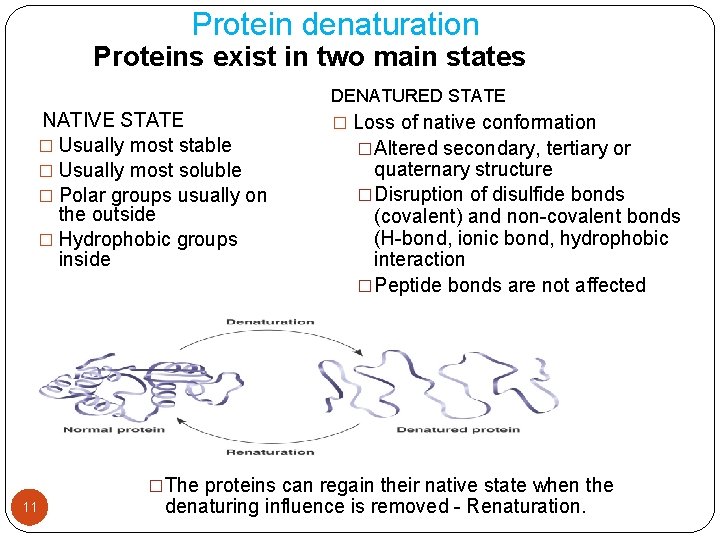
Protein denaturation Proteins exist in two main states NATIVE STATE � Usually most stable � Usually most soluble � Polar groups usually on the outside � Hydrophobic groups inside DENATURED STATE � Loss of native conformation �Altered secondary, tertiary or quaternary structure �Disruption of disulfide bonds (covalent) and non-covalent bonds (H-bond, ionic bond, hydrophobic interaction �Peptide bonds are not affected �The proteins can regain their native state when the 11 denaturing influence is removed - Renaturation.
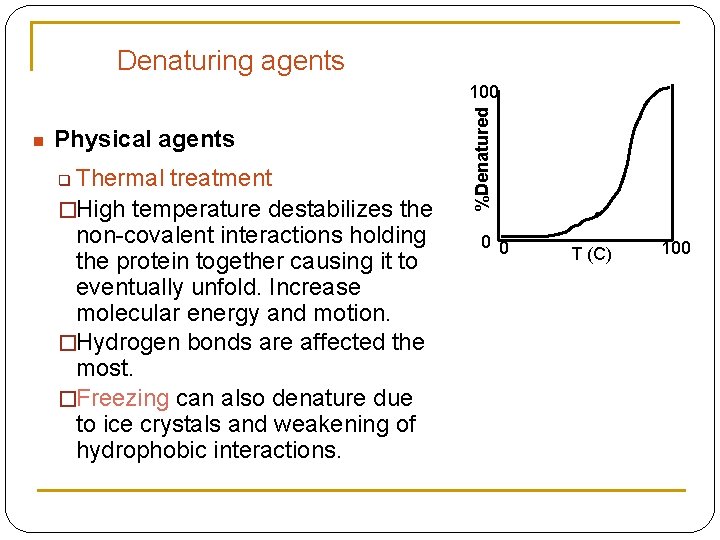
Denaturing agents n Physical agents Thermal treatment �High temperature destabilizes the non-covalent interactions holding the protein together causing it to eventually unfold. Increase molecular energy and motion. �Hydrogen bonds are affected the most. �Freezing can also denature due to ice crystals and weakening of hydrophobic interactions. q %Denatured 100 0 0 T (C) 100
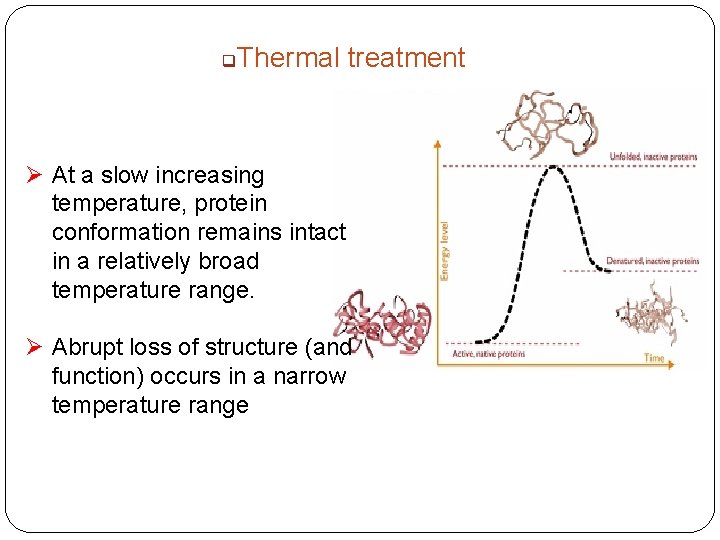
q Thermal treatment Ø At a slow increasing temperature, protein conformation remains intact in a relatively broad temperature range. Ø Abrupt loss of structure (and function) occurs in a narrow temperature range
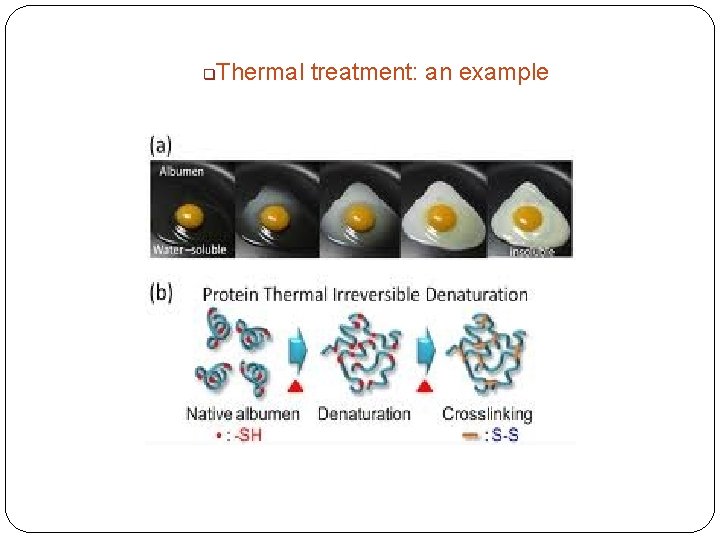
q Thermal treatment: an example
Denaturing agents: Physical agents Hydrostatic pressure (5 000 to 10 000 atm): Destabilize hydrophobic interactions; Water molecules can penetrate hydrophobic protein core. q http: //www. researchgate. net/profile/Vadim_Mozhaev/publication/227836660_High_pressure_e ffects_on_protein_structure_and_function/links/0 f 31752 e 01 a 8 a 03 a 30000000. pdf UV radiation: similar to high temperature treatment effect: higher kinetic energy increases the vibration of molecules thus disrupting H-bonds. q
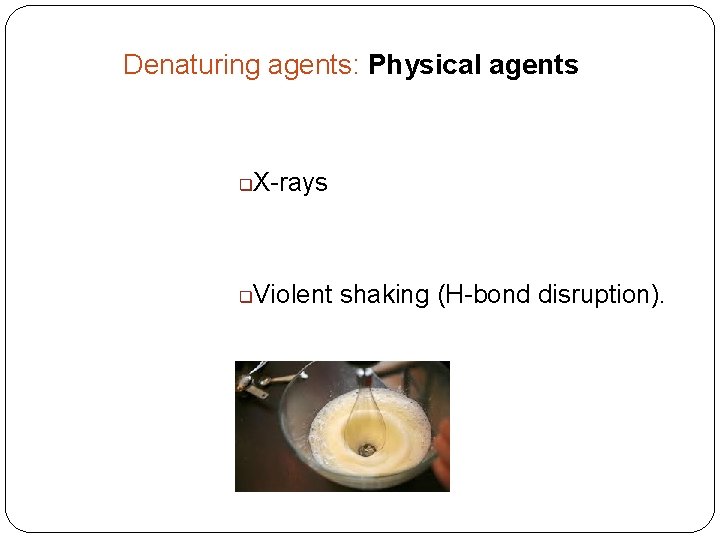
Denaturing agents: Physical agents q X-rays q Violent shaking (H-bond disruption).
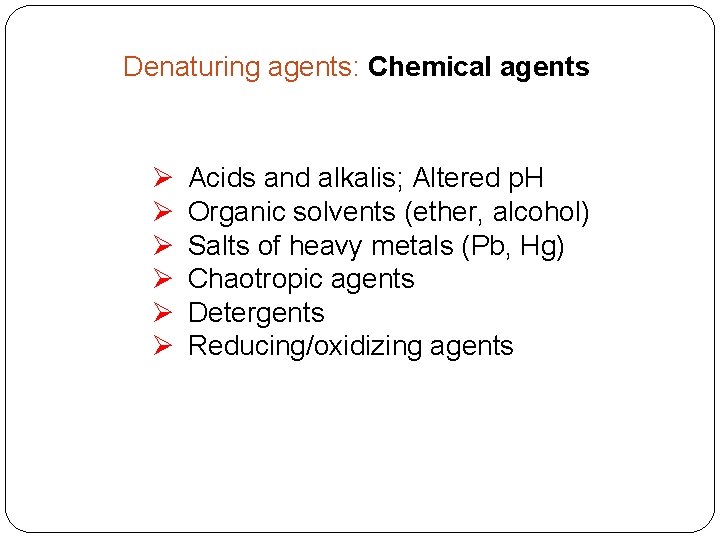
Denaturing agents: Chemical agents Ø Ø Ø Acids and alkalis; Altered p. H Organic solvents (ether, alcohol) Salts of heavy metals (Pb, Hg) Chaotropic agents Detergents Reducing/oxidizing agents
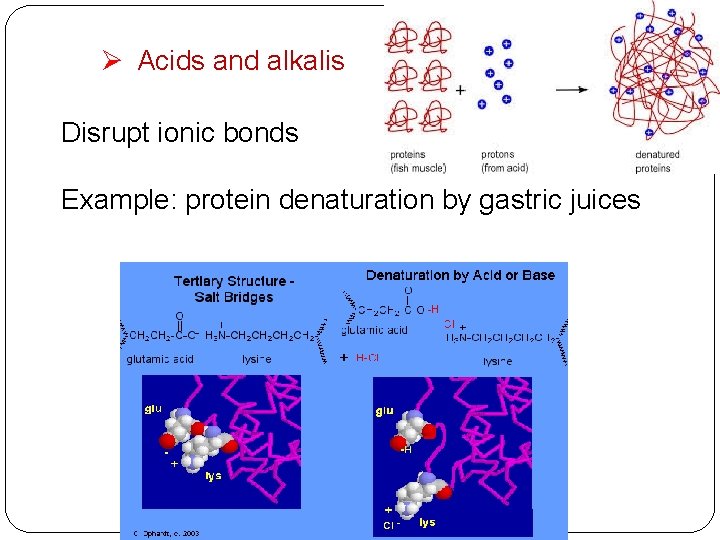
Ø Acids and alkalis Disrupt ionic bonds Example: protein denaturation by gastric juices
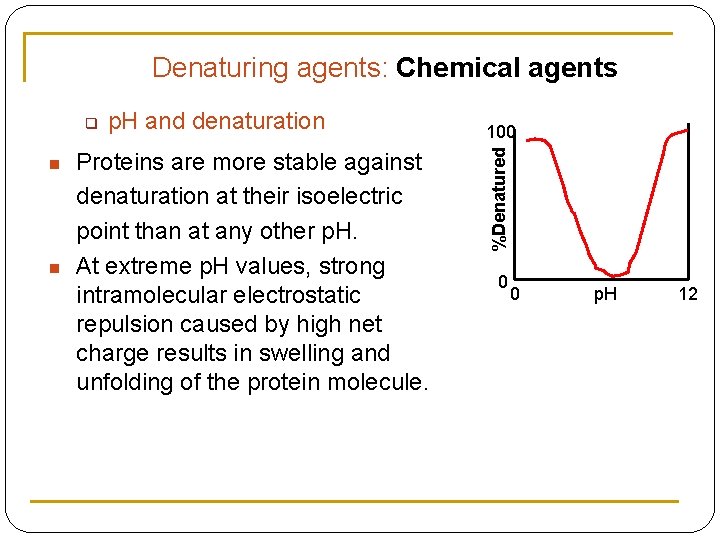
Denaturing agents: Chemical agents n n p. H and denaturation Proteins are more stable against denaturation at their isoelectric point than at any other p. H. At extreme p. H values, strong intramolecular electrostatic repulsion caused by high net charge results in swelling and unfolding of the protein molecule. 100 %Denatured q 0 0 p. H 12
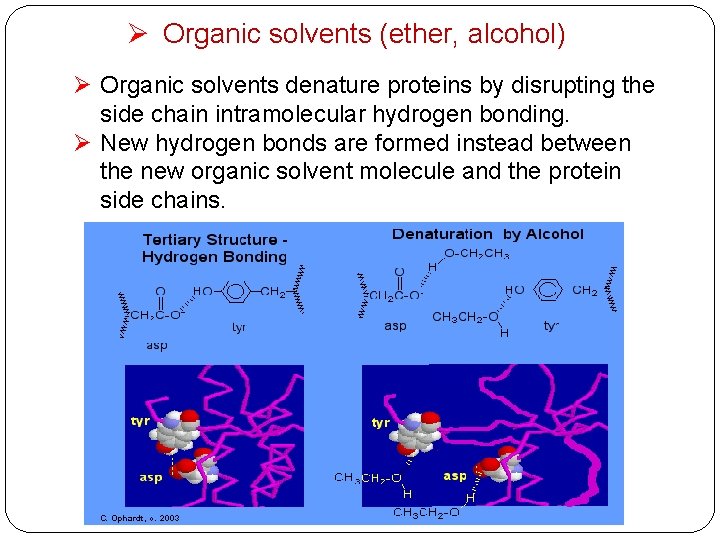
Ø Organic solvents (ether, alcohol) Ø Organic solvents denature proteins by disrupting the side chain intramolecular hydrogen bonding. Ø New hydrogen bonds are formed instead between the new organic solvent molecule and the protein side chains.
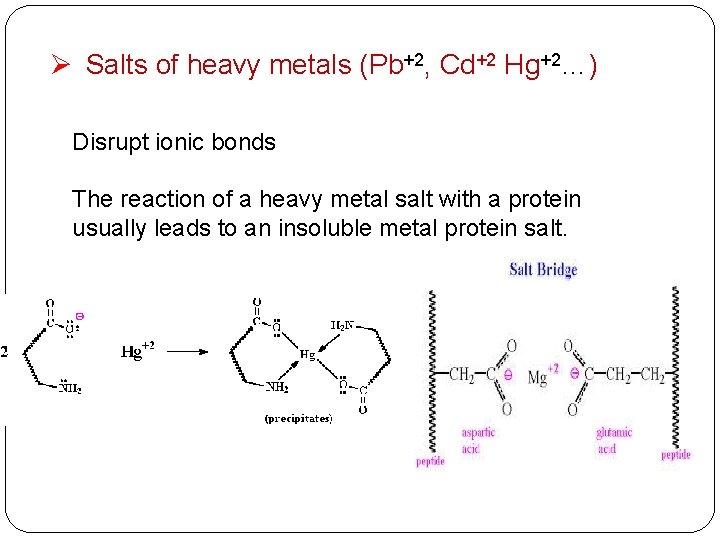
Ø Salts of heavy metals (Pb+2, Cd+2 Hg+2…) Disrupt ionic bonds The reaction of a heavy metal salt with a protein usually leads to an insoluble metal protein salt.
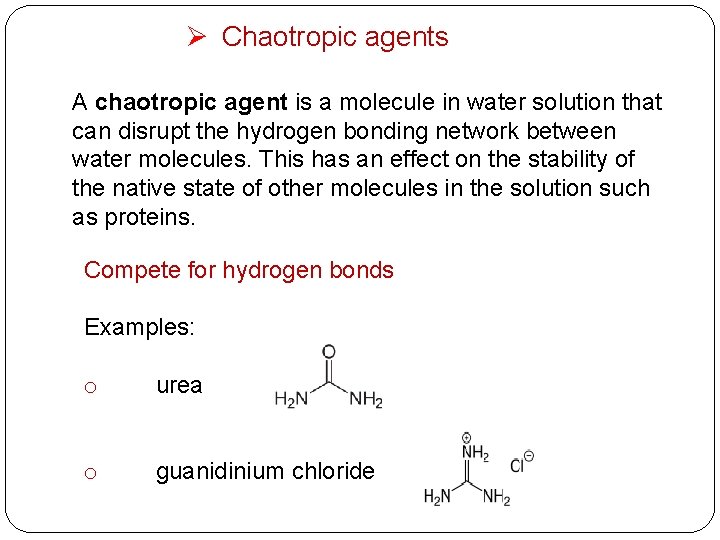
Ø Chaotropic agents A chaotropic agent is a molecule in water solution that can disrupt the hydrogen bonding network between water molecules. This has an effect on the stability of the native state of other molecules in the solution such as proteins. Compete for hydrogen bonds Examples: o urea o guanidinium chloride
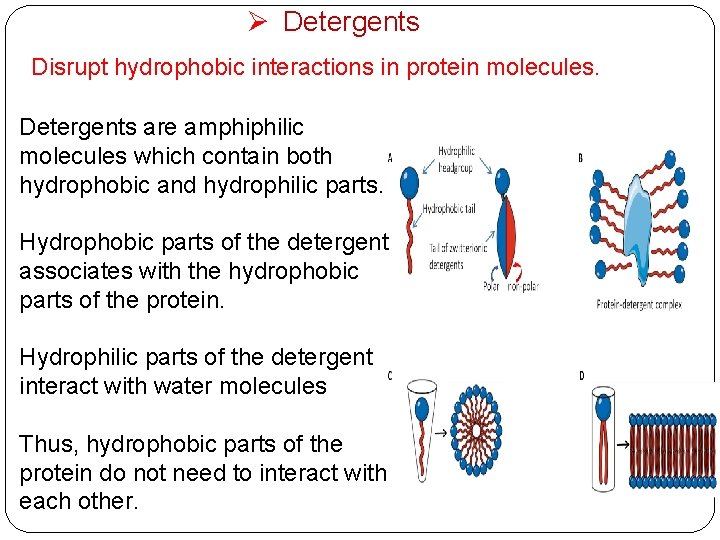
Ø Detergents Disrupt hydrophobic interactions in protein molecules. Detergents are amphiphilic molecules which contain both hydrophobic and hydrophilic parts. Hydrophobic parts of the detergent associates with the hydrophobic parts of the protein. Hydrophilic parts of the detergent interact with water molecules Thus, hydrophobic parts of the protein do not need to interact with each other.
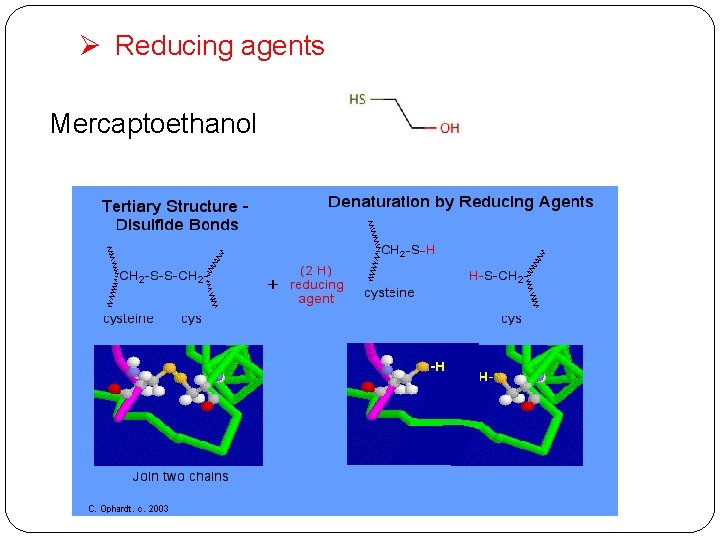
Ø Reducing agents Mercaptoethanol
Protein denaturation: consequences Change in physical, chemical and biological properties of proteins. Ø Increased viscosity Ø Altered functional properties Ø Loss of enzymatic activity
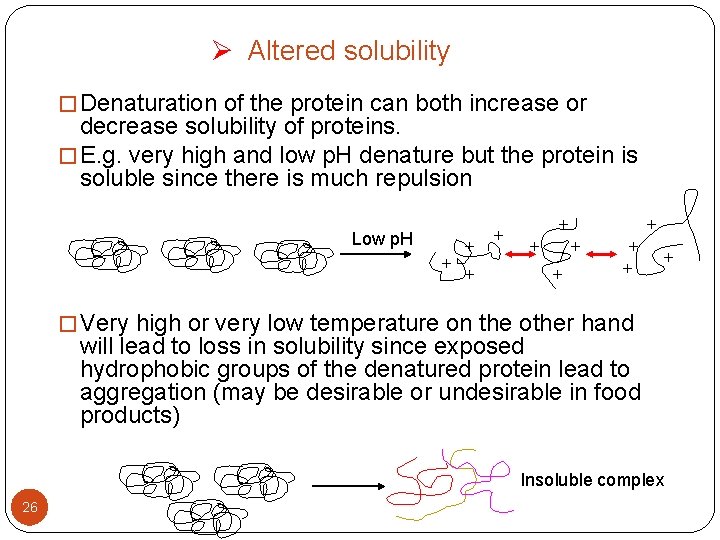
Ø Altered solubility � Denaturation of the protein can both increase or decrease solubility of proteins. � E. g. very high and low p. H denature but the protein is soluble since there is much repulsion Low p. H + + + � Very high or very low temperature on the other hand will lead to loss in solubility since exposed hydrophobic groups of the denatured protein lead to aggregation (may be desirable or undesirable in food products) Insoluble complex 26
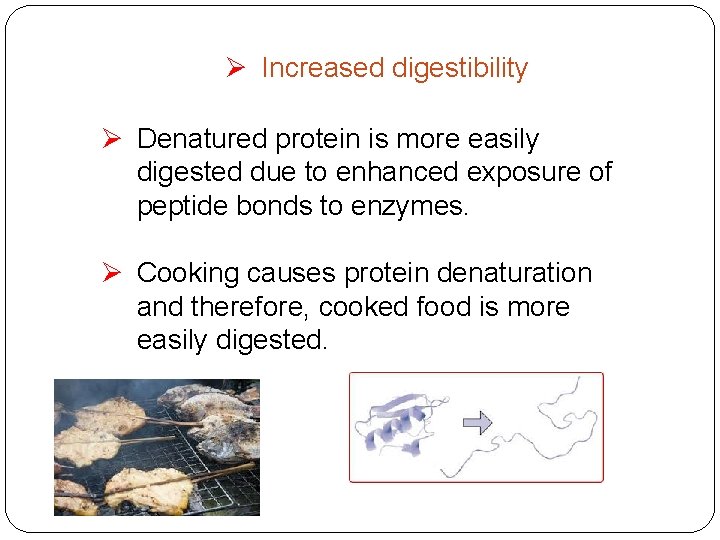
Ø Increased digestibility Ø Denatured protein is more easily digested due to enhanced exposure of peptide bonds to enzymes. Ø Cooking causes protein denaturation and therefore, cooked food is more easily digested.
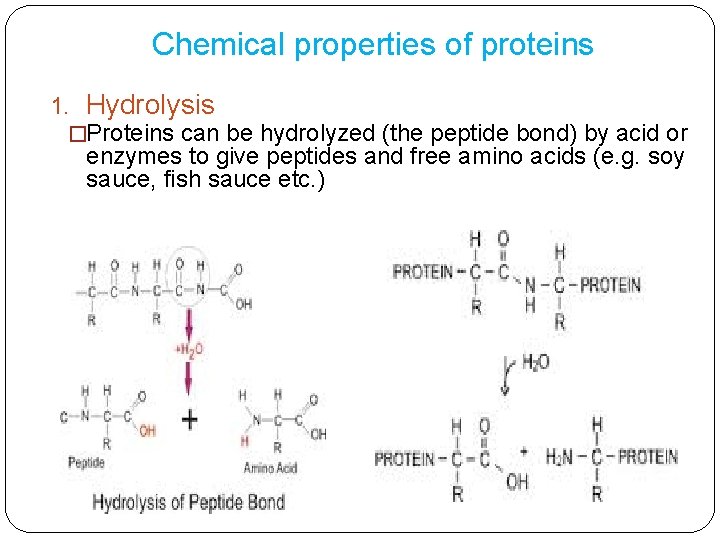
Chemical properties of proteins 1. Hydrolysis �Proteins can be hydrolyzed (the peptide bond) by acid or enzymes to give peptides and free amino acids (e. g. soy sauce, fish sauce etc. )
Chemical properties of proteins: consequences Ø Modifies protein functional properties E. g. increased solubility Ø Increases bioavailability of amino acids Excessive consumption of free amino acids is not good however
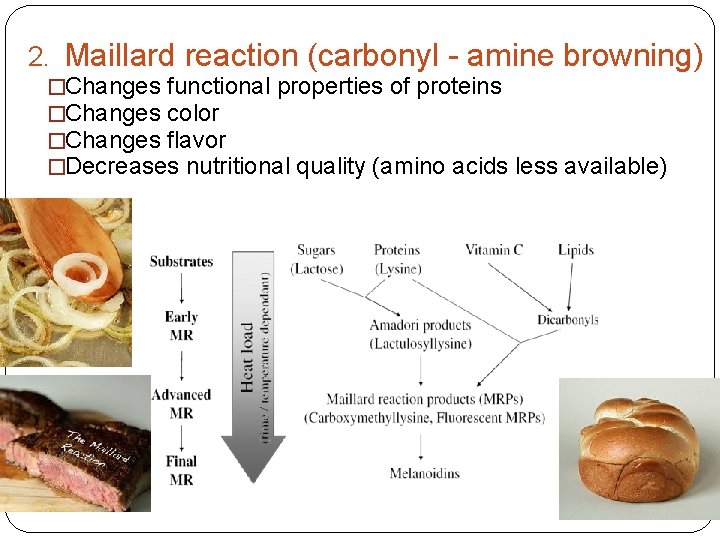
2. Maillard reaction (carbonyl - amine browning) �Changes functional properties of proteins �Changes color �Changes flavor �Decreases nutritional quality (amino acids less available)
3. Alkaline reactions �Soy processing (textured vegetable protein) � 0. 1 M Na. OH for 1 hr @ 60°C �Denatures proteins �Opens up its structure due to electrostatic repulsion �The peptide bond may also be hydrolyzed
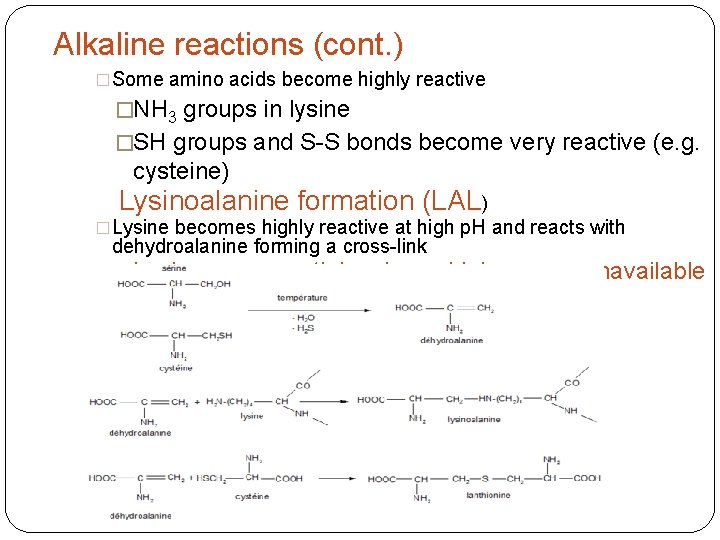
Alkaline reactions (cont. ) �Some amino acids become highly reactive �NH 3 groups in lysine �SH groups and S-S bonds become very reactive (e. g. cysteine) Lysinoalanine formation (LAL) �Lysine becomes highly reactive at high p. H and reacts with dehydroalanine forming a cross-link �Lysine, an essential amino acid, becomes unavailable
Lysinoalanine formation (LAL) Problem: Lysine is the limiting amino acid in cereal foods. Limiting amino acid: Essential amino acid of least quantity. Lysinoalanine can lead to kidney toxicity in rats, and possibly humans.
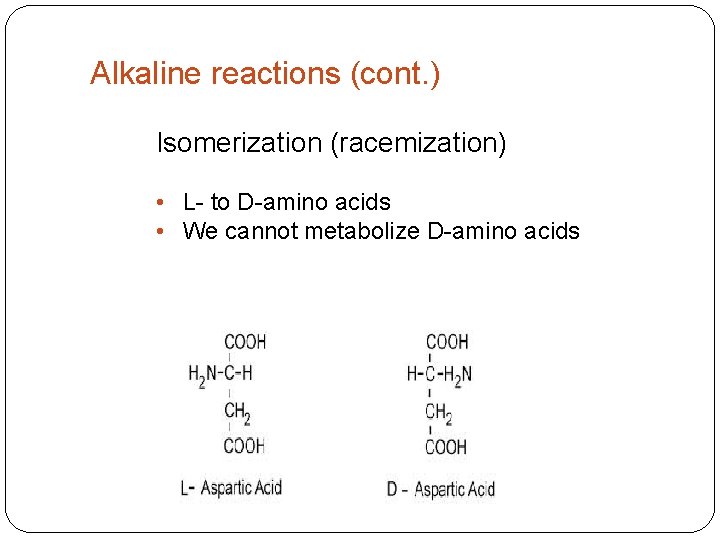
Alkaline reactions (cont. ) Isomerization (racemization) • L- to D-amino acids • We cannot metabolize D-amino acids
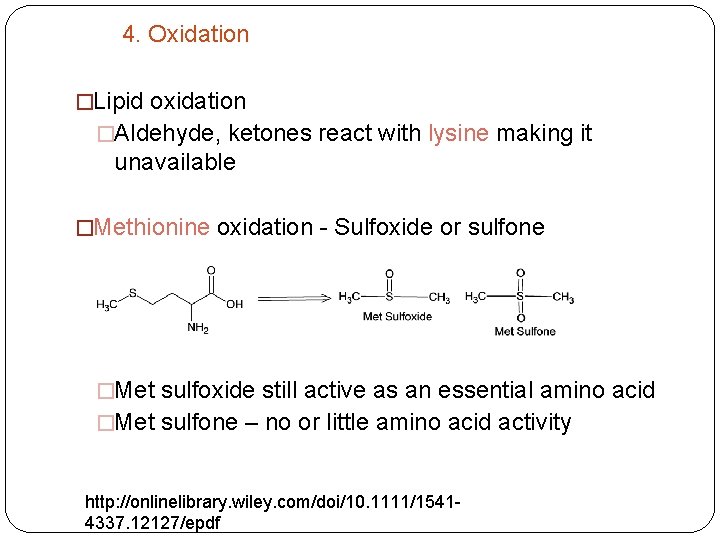
4. Oxidation �Lipid oxidation �Aldehyde, ketones react with lysine making it unavailable �Methionine oxidation - Sulfoxide or sulfone �Met sulfoxide still active as an essential amino acid �Met sulfone – no or little amino acid activity http: //onlinelibrary. wiley. com/doi/10. 1111/15414337. 12127/epdf