
Lecture 3 PERCEPTION ATTITUDE FORMATION For use with
- Slides: 19
Lecture 3 PERCEPTION & ATTITUDE FORMATION For use with MARTIN, ORGANIZATIONAL BEHAVIOUR AND MANAGEMENT 3 e ISBN 1 -86152 -948 -1 Copyright © 2005 Cengage Learning 1
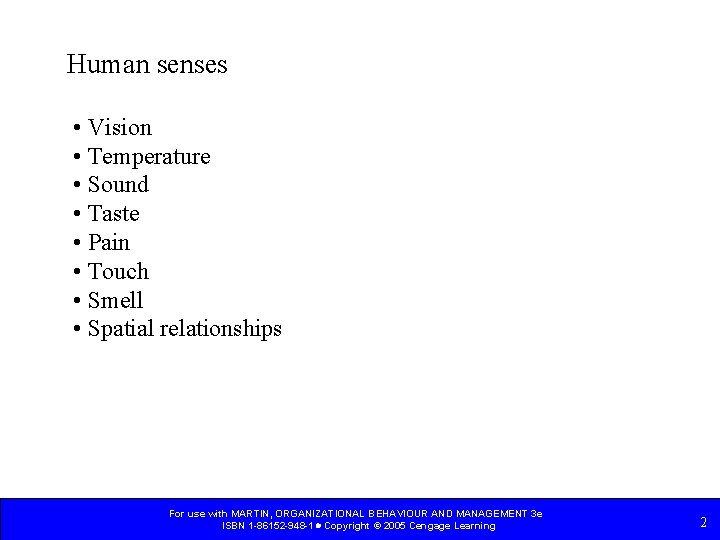
Human senses • Vision • Temperature • Sound • Taste • Pain • Touch • Smell • Spatial relationships For use with MARTIN, ORGANIZATIONAL BEHAVIOUR AND MANAGEMENT 3 e ISBN 1 -86152 -948 -1 Copyright © 2005 Cengage Learning 2
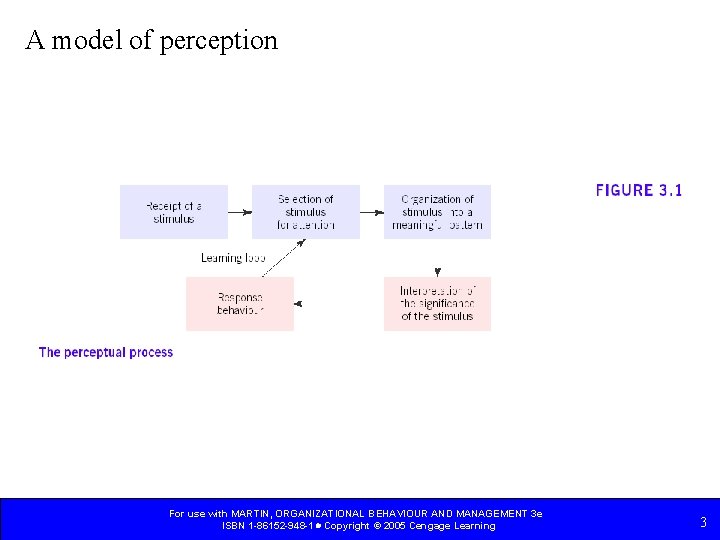
A model of perception For use with MARTIN, ORGANIZATIONAL BEHAVIOUR AND MANAGEMENT 3 e ISBN 1 -86152 -948 -1 Copyright © 2005 Cengage Learning 3
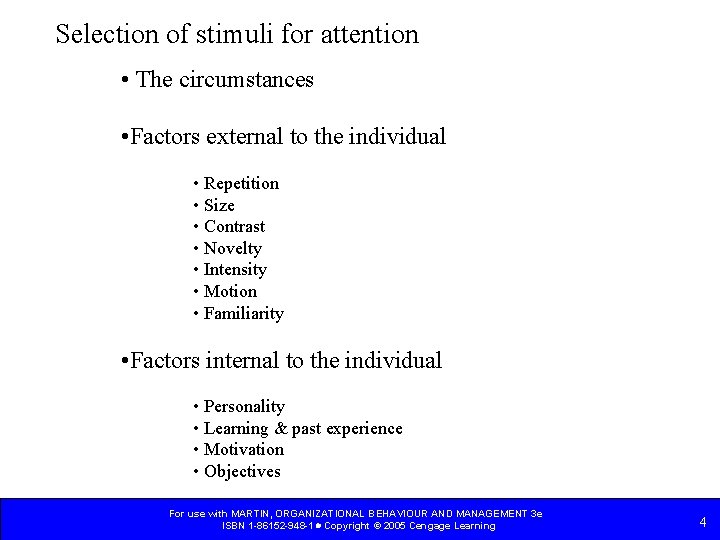
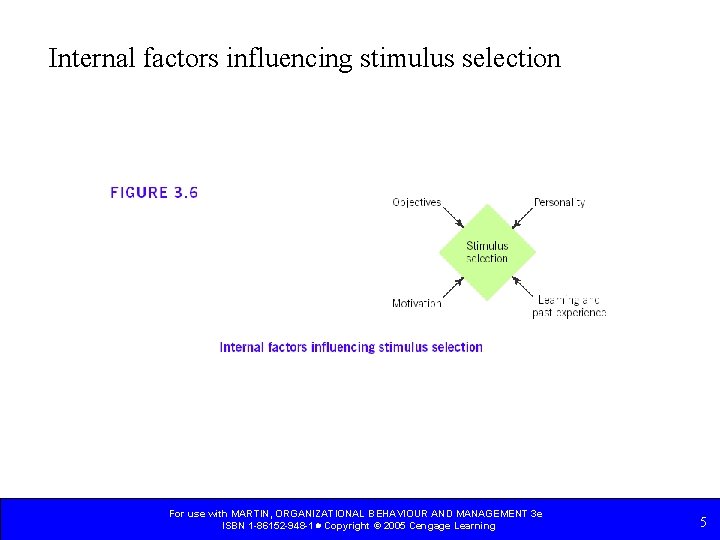
Selection of stimuli for attention • The circumstances • Factors external to the individual • Repetition • Size • Contrast • Novelty • Intensity • Motion • Familiarity • Factors internal to the individual • Personality • Learning & past experience • Motivation • Objectives For use with MARTIN, ORGANIZATIONAL BEHAVIOUR AND MANAGEMENT 3 e ISBN 1 -86152 -948 -1 Copyright © 2005 Cengage Learning 4
Internal factors influencing stimulus selection For use with MARTIN, ORGANIZATIONAL BEHAVIOUR AND MANAGEMENT 3 e ISBN 1 -86152 -948 -1 Copyright © 2005 Cengage Learning 5
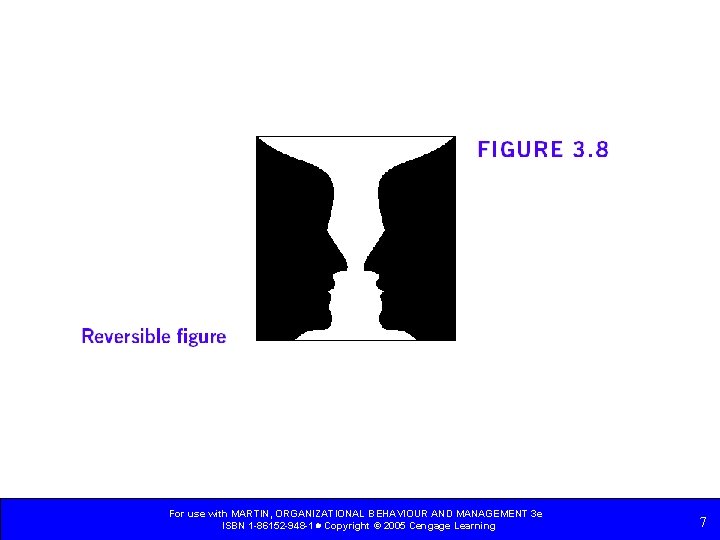
Organizing stimuli into meaningful patterns • The figure ground principle • The principle of continuity • The principle of proximity • The principle of closure • The principle of similarity For use with MARTIN, ORGANIZATIONAL BEHAVIOUR AND MANAGEMENT 3 e ISBN 1 -86152 -948 -1 Copyright © 2005 Cengage Learning 6
For use with MARTIN, ORGANIZATIONAL BEHAVIOUR AND MANAGEMENT 3 e ISBN 1 -86152 -948 -1 Copyright © 2005 Cengage Learning 7
Interpreting the significance of a stimulus • Language & perception shaping • Perceptual errors • Halo & Horns effect • Attribution and perception For use with MARTIN, ORGANIZATIONAL BEHAVIOUR AND MANAGEMENT 3 e ISBN 1 -86152 -948 -1 Copyright © 2005 Cengage Learning 8
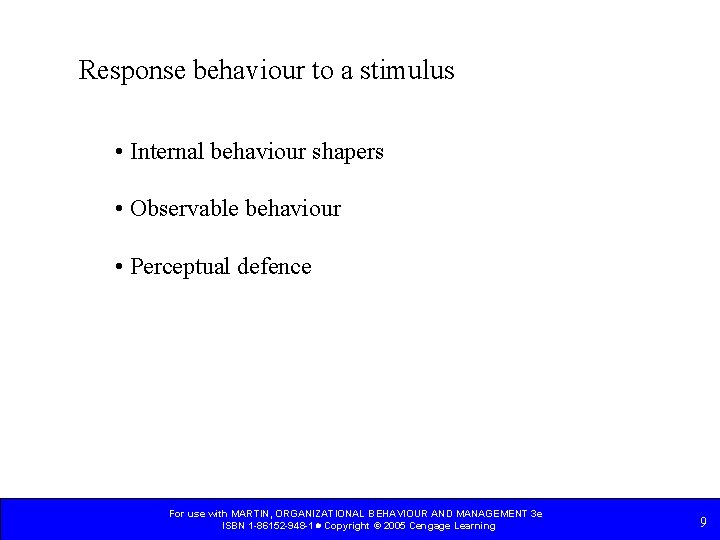
Response behaviour to a stimulus • Internal behaviour shapers • Observable behaviour • Perceptual defence For use with MARTIN, ORGANIZATIONAL BEHAVIOUR AND MANAGEMENT 3 e ISBN 1 -86152 -948 -1 Copyright © 2005 Cengage Learning 9
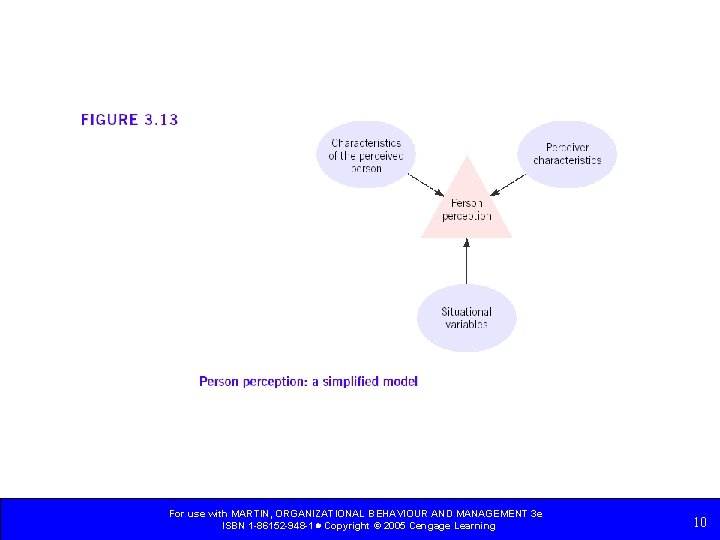
For use with MARTIN, ORGANIZATIONAL BEHAVIOUR AND MANAGEMENT 3 e ISBN 1 -86152 -948 -1 Copyright © 2005 Cengage Learning 10
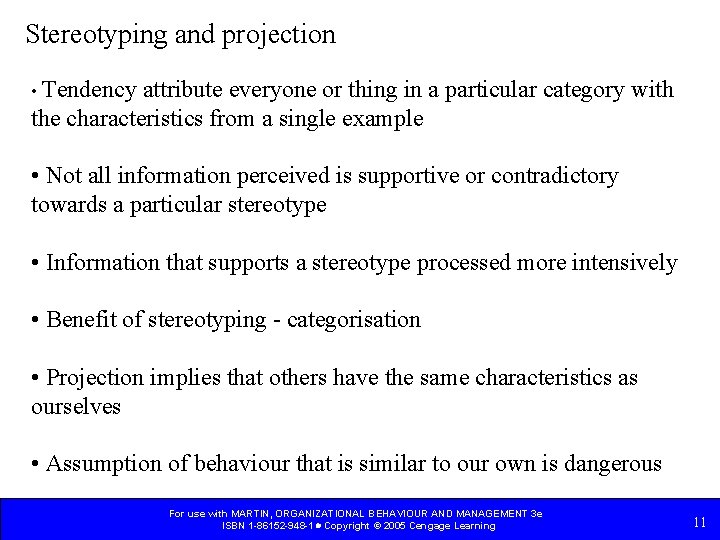
Stereotyping and projection • Tendency attribute everyone or thing in a particular category with the characteristics from a single example • Not all information perceived is supportive or contradictory towards a particular stereotype • Information that supports a stereotype processed more intensively • Benefit of stereotyping - categorisation • Projection implies that others have the same characteristics as ourselves • Assumption of behaviour that is similar to our own is dangerous For use with MARTIN, ORGANIZATIONAL BEHAVIOUR AND MANAGEMENT 3 e ISBN 1 -86152 -948 -1 Copyright © 2005 Cengage Learning 11
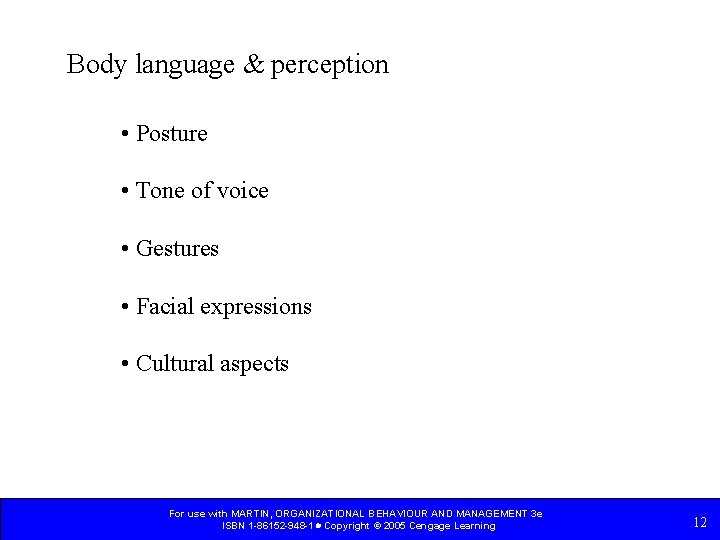
Body language & perception • Posture • Tone of voice • Gestures • Facial expressions • Cultural aspects For use with MARTIN, ORGANIZATIONAL BEHAVIOUR AND MANAGEMENT 3 e ISBN 1 -86152 -948 -1 Copyright © 2005 Cengage Learning 12
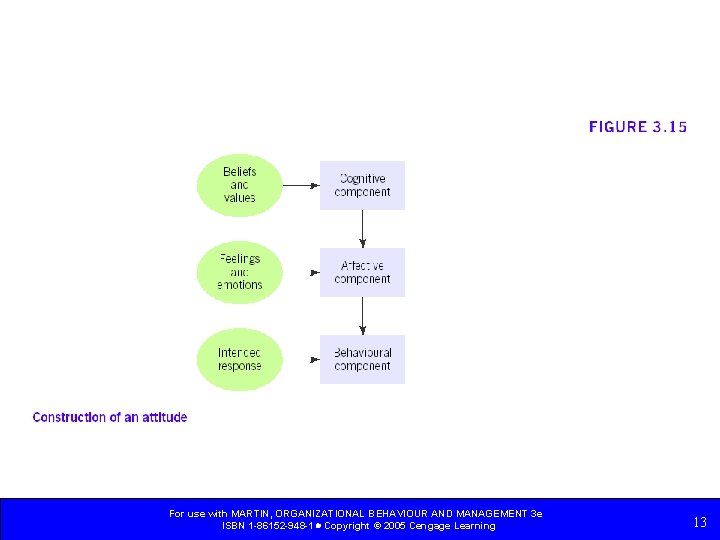
For use with MARTIN, ORGANIZATIONAL BEHAVIOUR AND MANAGEMENT 3 e ISBN 1 -86152 -948 -1 Copyright © 2005 Cengage Learning 13
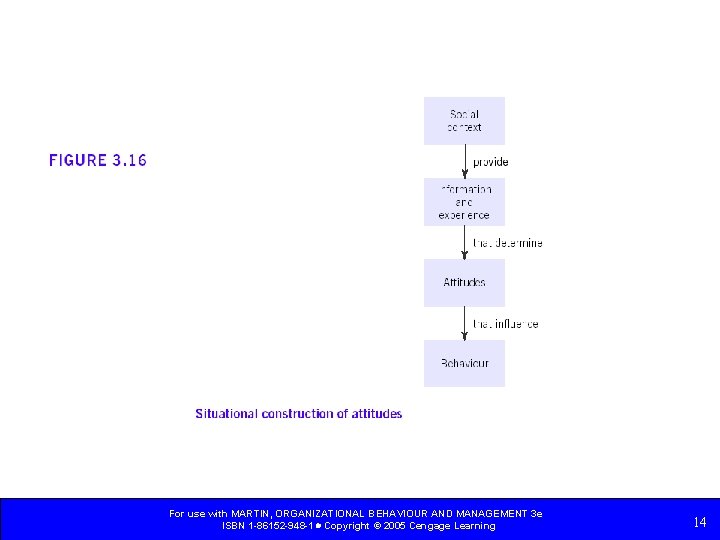
For use with MARTIN, ORGANIZATIONAL BEHAVIOUR AND MANAGEMENT 3 e ISBN 1 -86152 -948 -1 Copyright © 2005 Cengage Learning 14
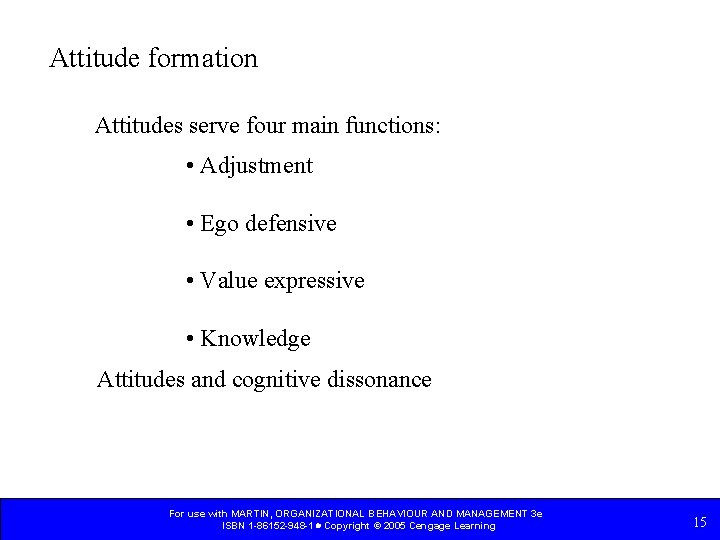
Attitude formation Attitudes serve four main functions: • Adjustment • Ego defensive • Value expressive • Knowledge Attitudes and cognitive dissonance For use with MARTIN, ORGANIZATIONAL BEHAVIOUR AND MANAGEMENT 3 e ISBN 1 -86152 -948 -1 Copyright © 2005 Cengage Learning 15
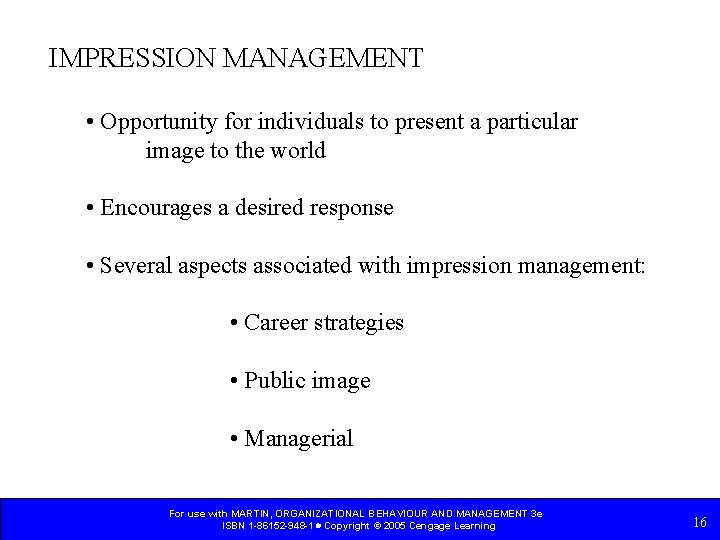
IMPRESSION MANAGEMENT • Opportunity for individuals to present a particular image to the world • Encourages a desired response • Several aspects associated with impression management: • Career strategies • Public image • Managerial For use with MARTIN, ORGANIZATIONAL BEHAVIOUR AND MANAGEMENT 3 e ISBN 1 -86152 -948 -1 Copyright © 2005 Cengage Learning 16
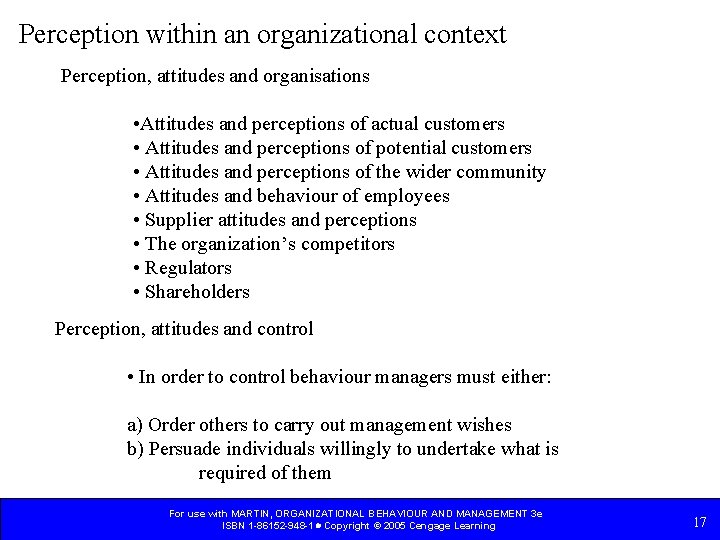
Perception within an organizational context Perception, attitudes and organisations • Attitudes and perceptions of actual customers • Attitudes and perceptions of potential customers • Attitudes and perceptions of the wider community • Attitudes and behaviour of employees • Supplier attitudes and perceptions • The organization’s competitors • Regulators • Shareholders Perception, attitudes and control • In order to control behaviour managers must either: a) Order others to carry out management wishes b) Persuade individuals willingly to undertake what is required of them For use with MARTIN, ORGANIZATIONAL BEHAVIOUR AND MANAGEMENT 3 e ISBN 1 -86152 -948 -1 Copyright © 2005 Cengage Learning 17
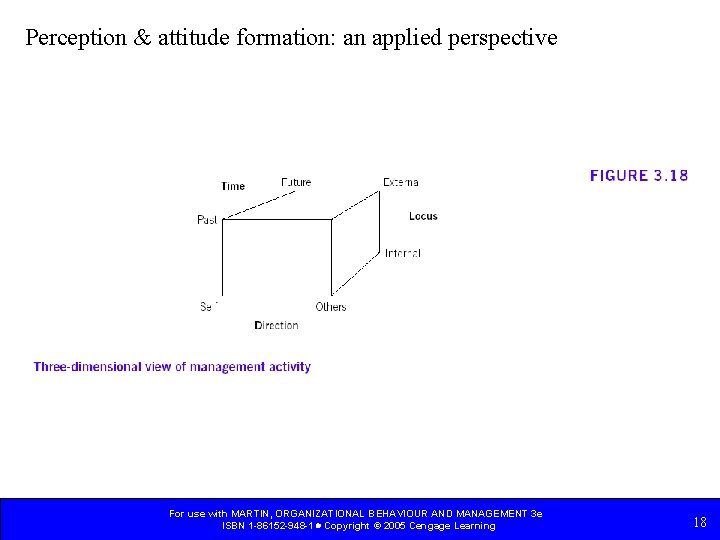
Perception & attitude formation: an applied perspective For use with MARTIN, ORGANIZATIONAL BEHAVIOUR AND MANAGEMENT 3 e ISBN 1 -86152 -948 -1 Copyright © 2005 Cengage Learning 18
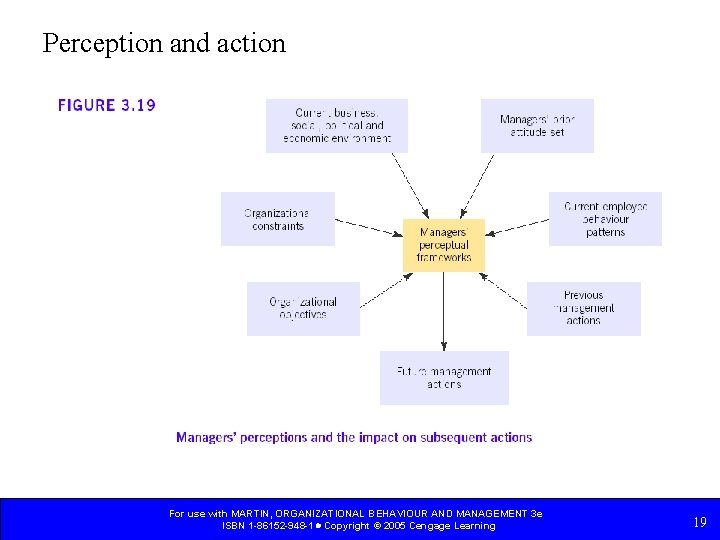
Perception and action For use with MARTIN, ORGANIZATIONAL BEHAVIOUR AND MANAGEMENT 3 e ISBN 1 -86152 -948 -1 Copyright © 2005 Cengage Learning 19