
Lecture 3 Newtons Three Laws of Motion Origins
- Slides: 51
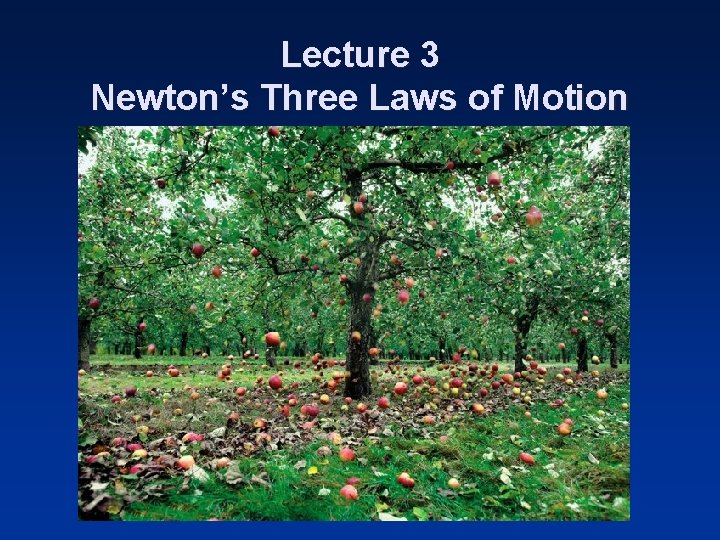
Lecture 3 Newton’s Three Laws of Motion
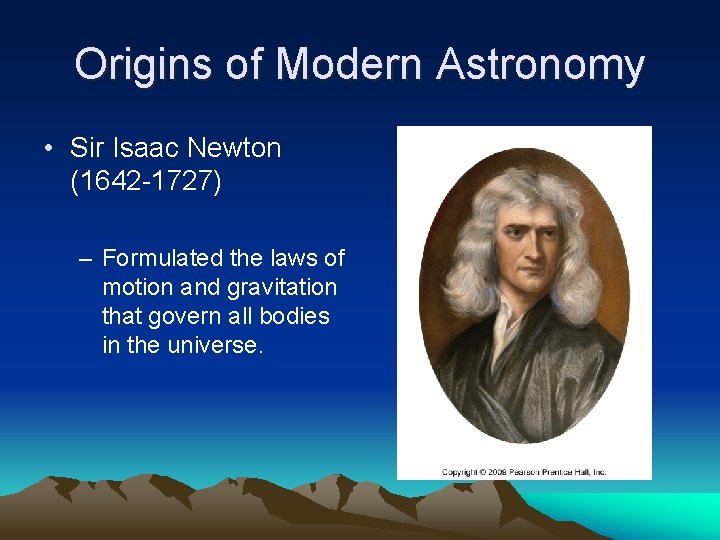
Origins of Modern Astronomy • Sir Isaac Newton (1642 -1727) – Formulated the laws of motion and gravitation that govern all bodies in the universe.
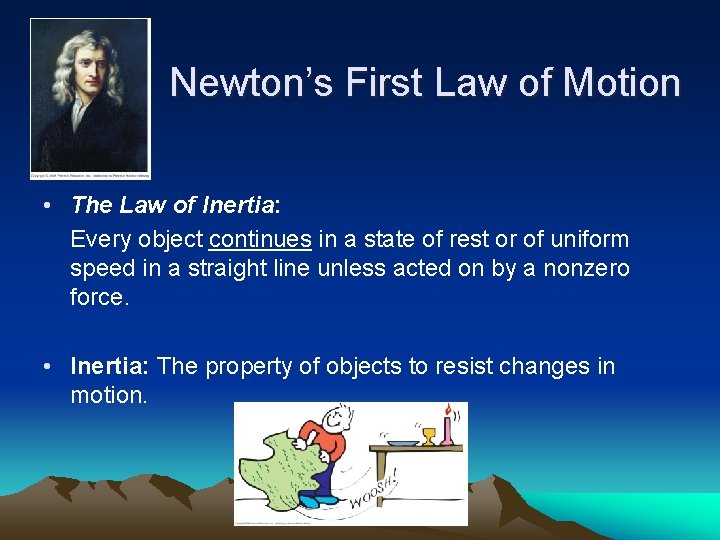
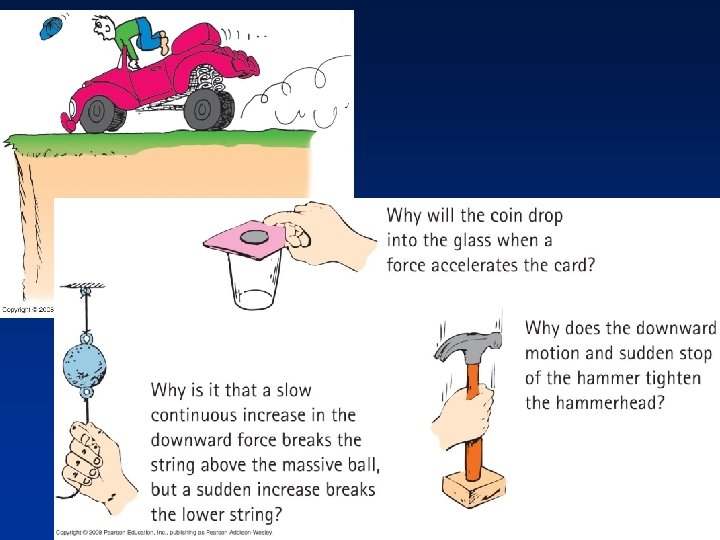
Newton’s First Law of Motion • The Law of Inertia: Every object continues in a state of rest or of uniform speed in a straight line unless acted on by a nonzero force. • Inertia: The property of objects to resist changes in motion.
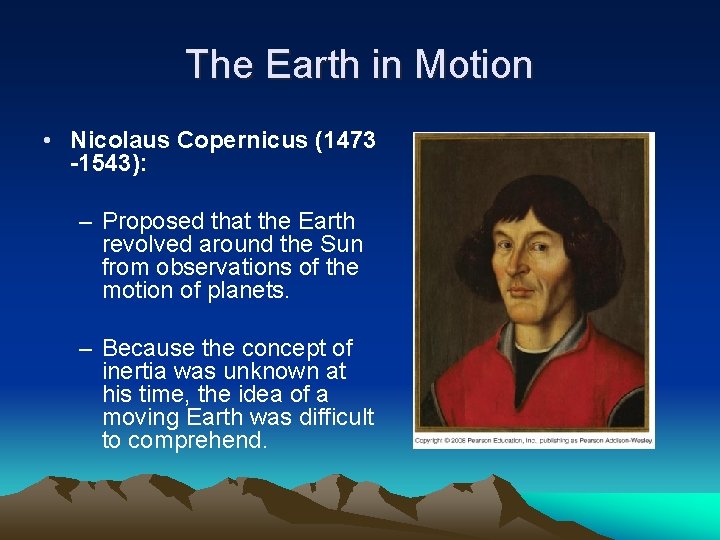
The Earth in Motion • Nicolaus Copernicus (1473 -1543): – Proposed that the Earth revolved around the Sun from observations of the motion of planets. – Because the concept of inertia was unknown at his time, the idea of a moving Earth was difficult to comprehend.
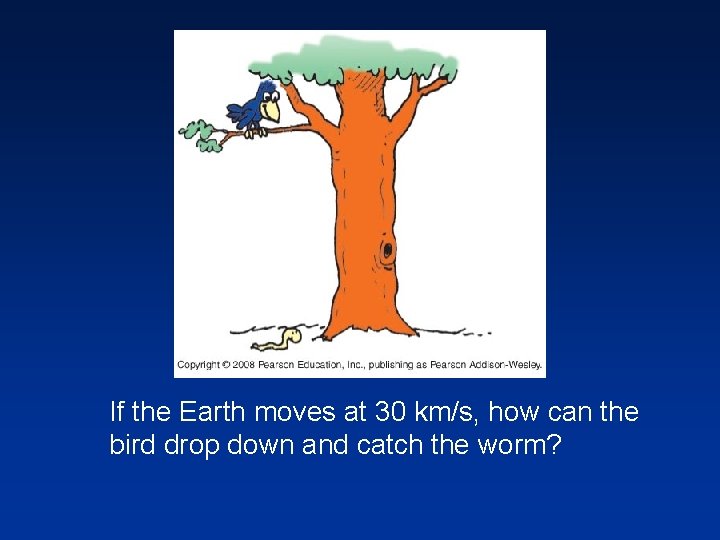
If the Earth moves at 30 km/s, how can the bird drop down and catch the worm?
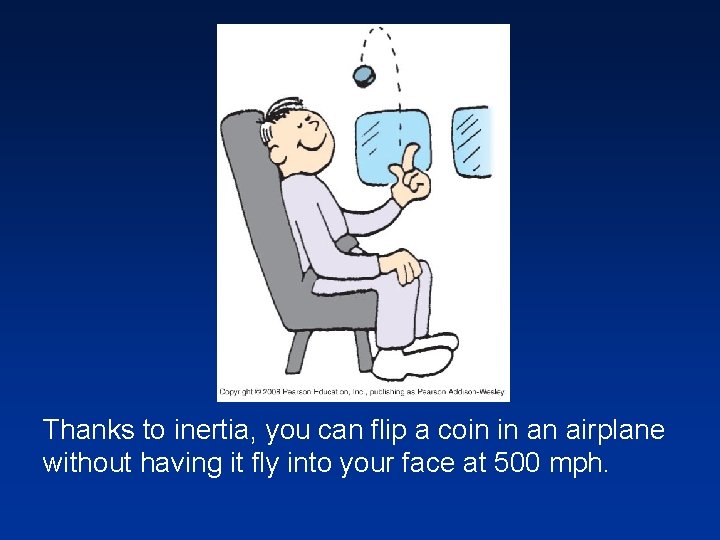
Thanks to inertia, you can flip a coin in an airplane without having it fly into your face at 500 mph.
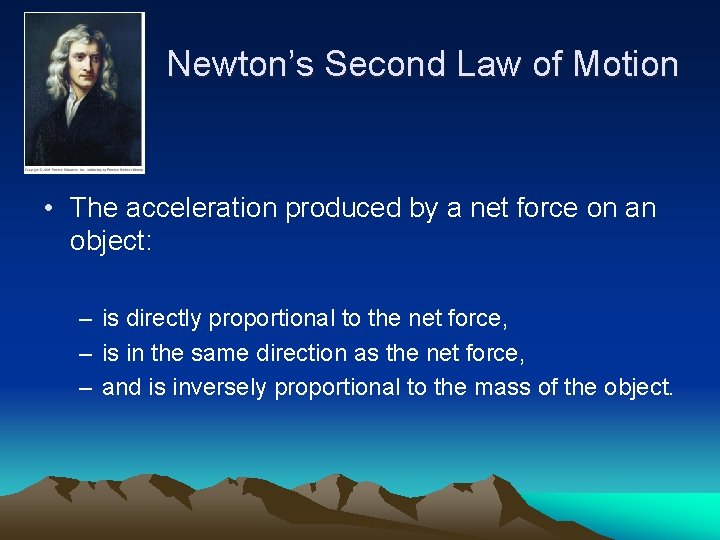
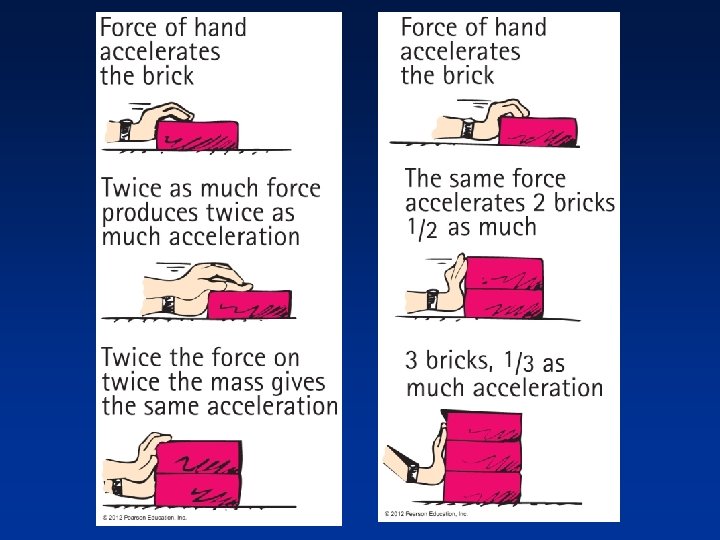
Newton’s Second Law of Motion • The acceleration produced by a net force on an object: – is directly proportional to the net force, – is in the same direction as the net force, – and is inversely proportional to the mass of the object.
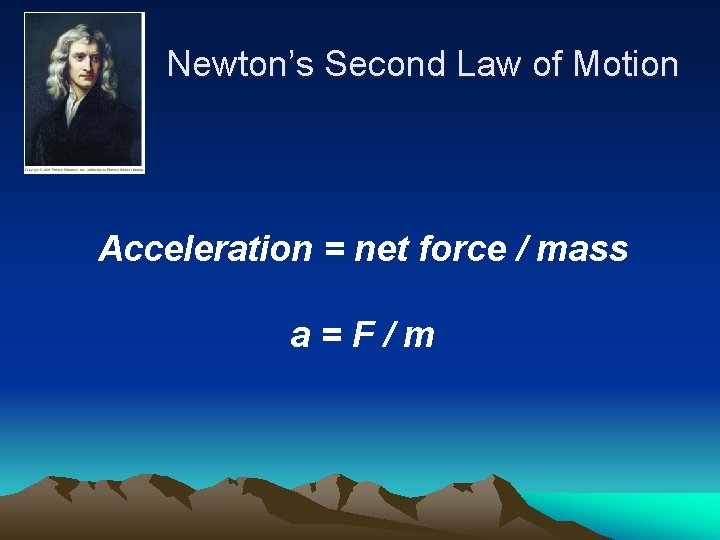
Newton’s Second Law of Motion Acceleration = net force / mass a=F/m
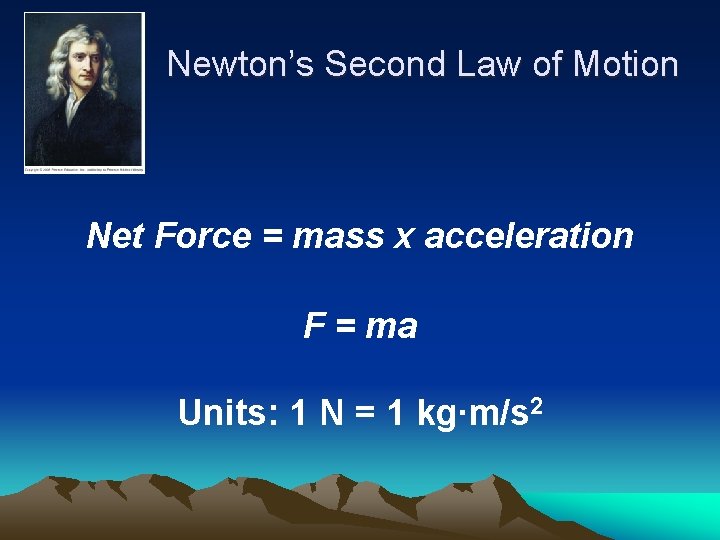
Newton’s Second Law of Motion Net Force = mass x acceleration F = ma Units: 1 N = 1 kg∙m/s 2
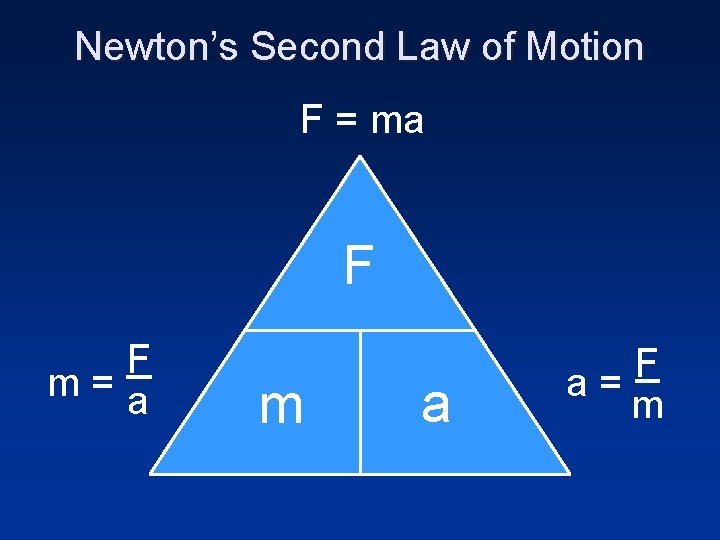
Newton’s Second Law of Motion F = ma F F m=a m a F a= m
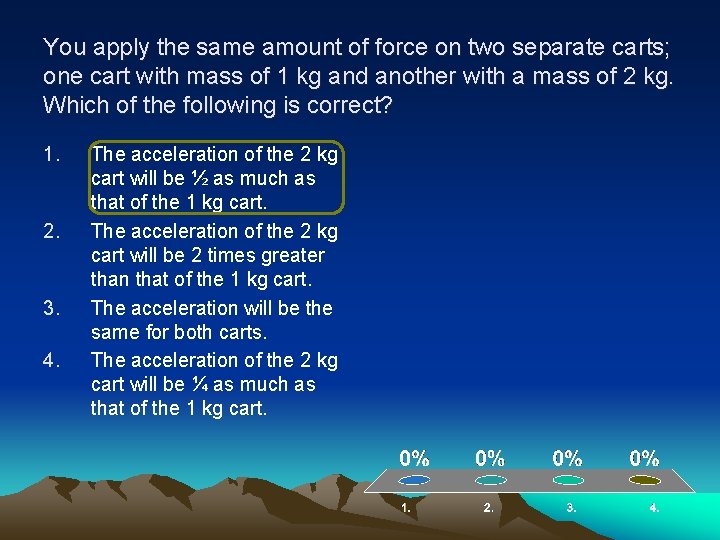
You apply the same amount of force on two separate carts; one cart with mass of 1 kg and another with a mass of 2 kg. Which of the following is correct? 1. 2. 3. 4. The acceleration of the 2 kg cart will be ½ as much as that of the 1 kg cart. The acceleration of the 2 kg cart will be 2 times greater than that of the 1 kg cart. The acceleration will be the same for both carts. The acceleration of the 2 kg cart will be ¼ as much as that of the 1 kg cart.
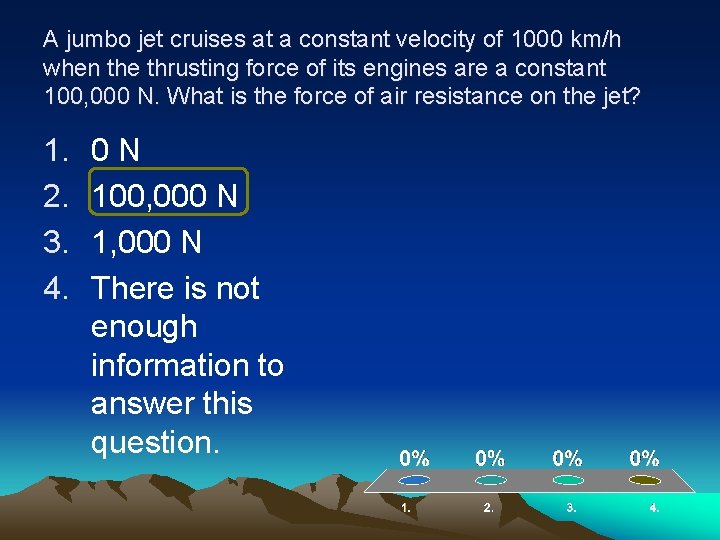
A jumbo jet cruises at a constant velocity of 1000 km/h when the thrusting force of its engines are a constant 100, 000 N. What is the force of air resistance on the jet? 1. 2. 3. 4. 0 N 100, 000 N 1, 000 N There is not enough information to answer this question.
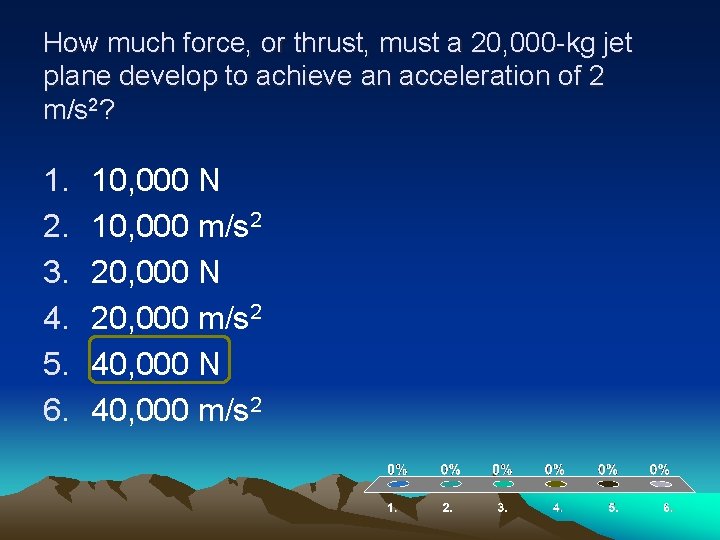
How much force, or thrust, must a 20, 000 -kg jet plane develop to achieve an acceleration of 2 m/s 2? 1. 2. 3. 4. 5. 6. 10, 000 N 10, 000 m/s 2 20, 000 N 20, 000 m/s 2 40, 000 N 40, 000 m/s 2
Homework Assignment 2 • A few rules to remember: – At rest or constant velocity = no change in motion – No change in motion = no acceleration = No Net Force (ΣF= 0)
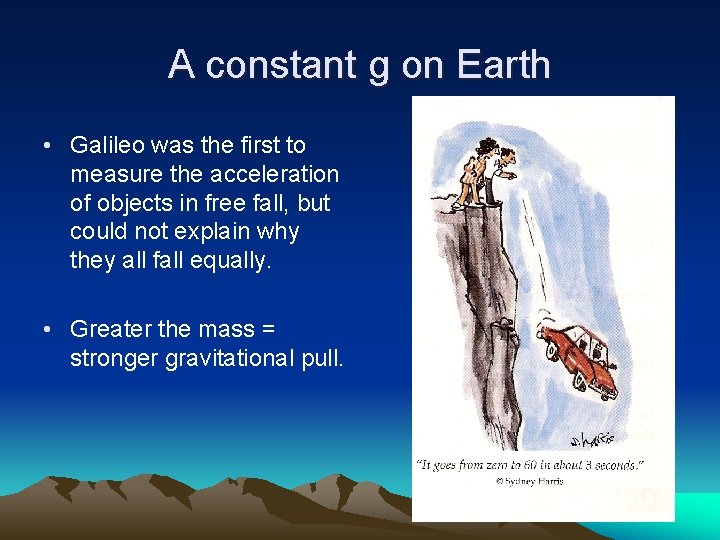
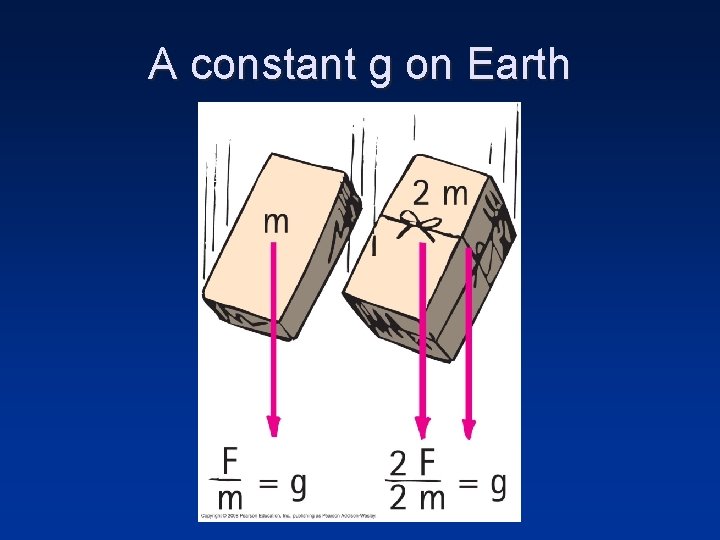
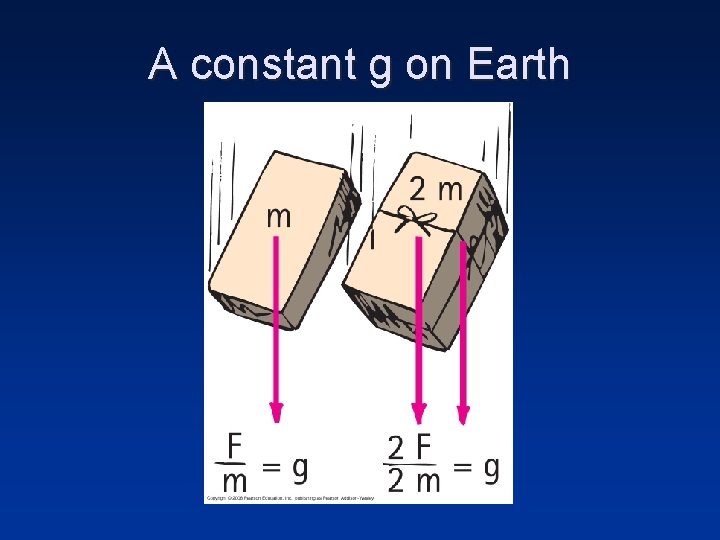
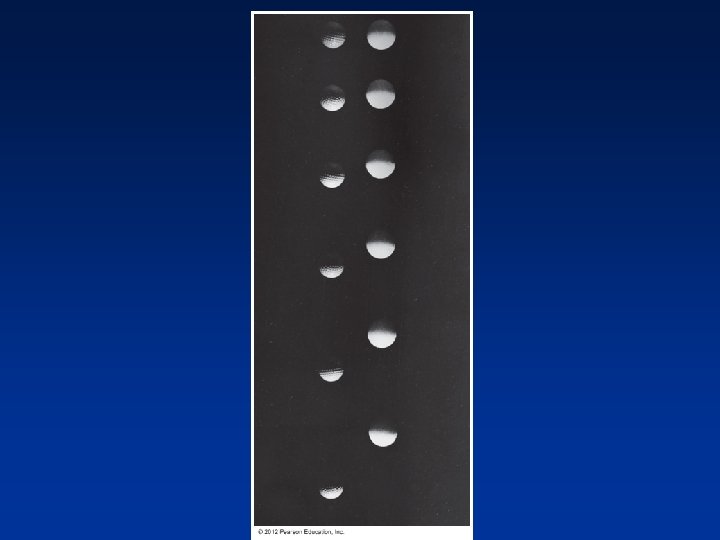
A constant g on Earth • Galileo was the first to measure the acceleration of objects in free fall, but could not explain why they all fall equally. • Greater the mass = stronger gravitational pull.
A constant g on Earth
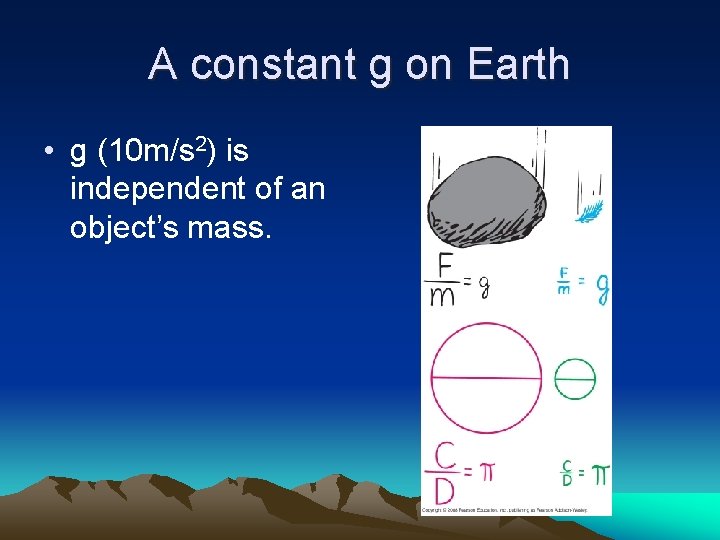
A constant g on Earth • g (10 m/s 2) is independent of an object’s mass.
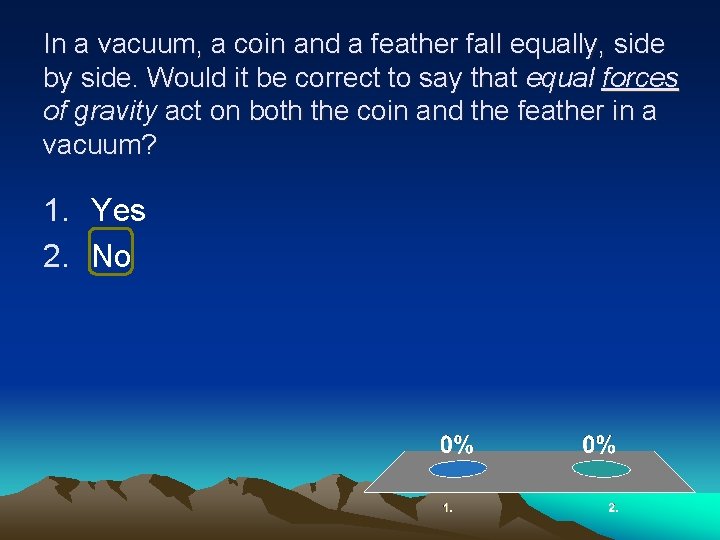
In a vacuum, a coin and a feather fall equally, side by side. Would it be correct to say that equal forces of gravity act on both the coin and the feather in a vacuum? 1. Yes 2. No
A constant g on Earth
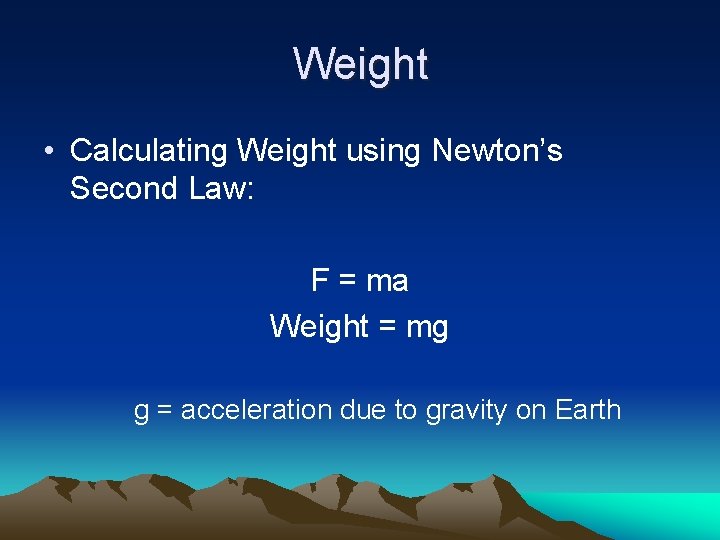
Weight • Calculating Weight using Newton’s Second Law: F = ma Weight = mg g = acceleration due to gravity on Earth
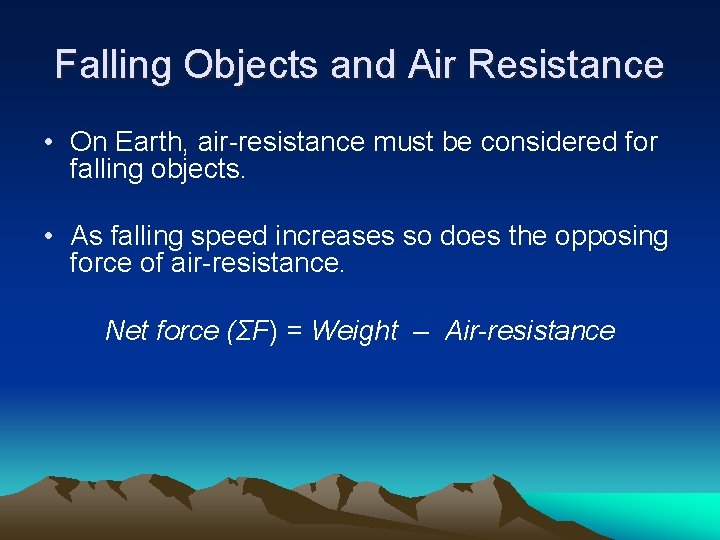
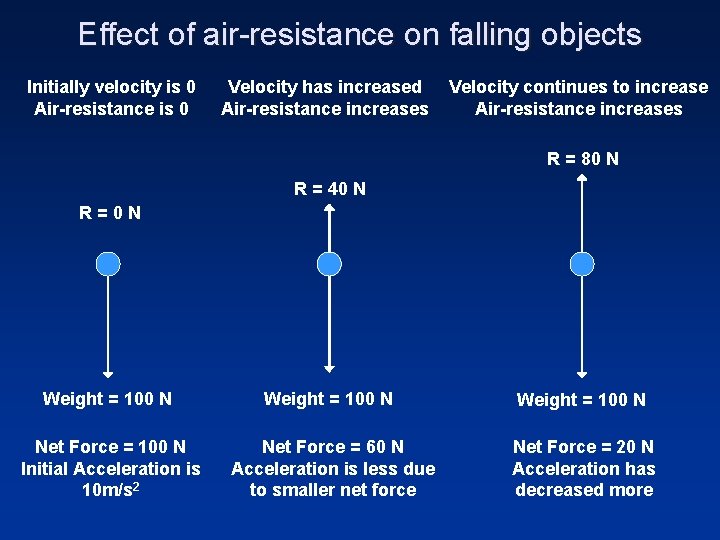
Falling Objects and Air Resistance • On Earth, air-resistance must be considered for falling objects. • As falling speed increases so does the opposing force of air-resistance. Net force (ΣF) = Weight – Air-resistance
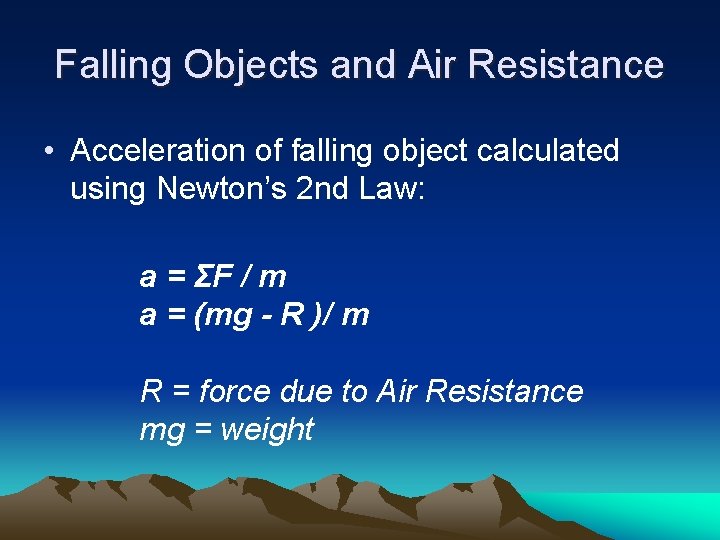
Falling Objects and Air Resistance • Acceleration of falling object calculated using Newton’s 2 nd Law: a = ΣF / m a = (mg - R )/ m R = force due to Air Resistance mg = weight
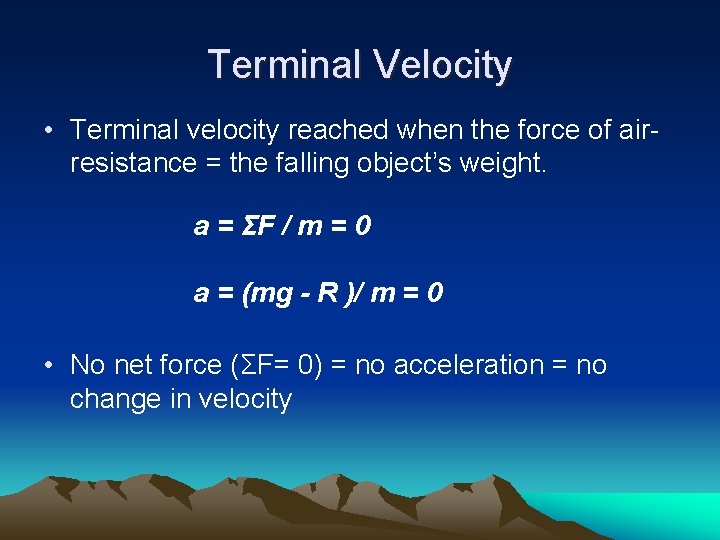
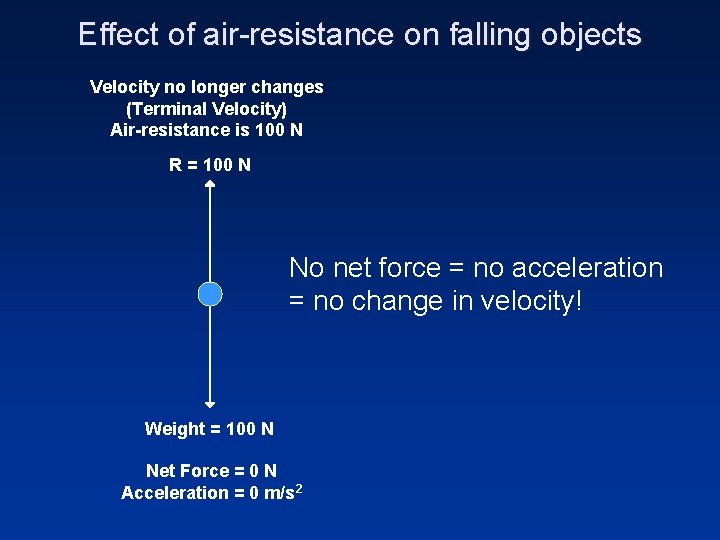
Terminal Velocity • Terminal velocity reached when the force of airresistance = the falling object’s weight. a = ΣF / m = 0 a = (mg - R )/ m = 0 • No net force (ΣF= 0) = no acceleration = no change in velocity
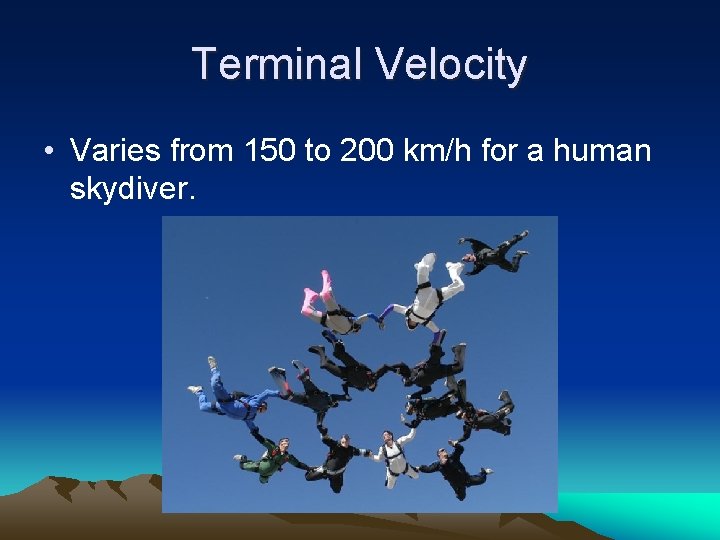
Terminal Velocity • Varies from 150 to 200 km/h for a human skydiver.
A bowling ball and a feather are dropped from the same height at the same time. Which reaches terminal velocity first? 1. Bowling Ball 2. Feather
A bowling ball and a feather are dropped from the same height at the same time. Which has the greater terminal velocity? 1. Bowling Ball 2. Feather
Terminal Velocity • Greater force of air resistance (R) needed to cancel out the weight (mg) of heavier objects in free fall • Greater R requires a greater velocity which requires acceleration for a longer period of time.
Effect of air-resistance on falling objects Initially velocity is 0 Air-resistance is 0 Velocity has increased Air-resistance increases Velocity continues to increase Air-resistance increases R = 80 N R = 40 N R=0 N Weight = 100 N Net Force = 100 N Initial Acceleration is 10 m/s 2 Net Force = 60 N Acceleration is less due to smaller net force Net Force = 20 N Acceleration has decreased more
Effect of air-resistance on falling objects Velocity no longer changes (Terminal Velocity) Air-resistance is 100 N R = 100 N No net force = no acceleration = no change in velocity! Weight = 100 N Net Force = 0 N Acceleration = 0 m/s 2
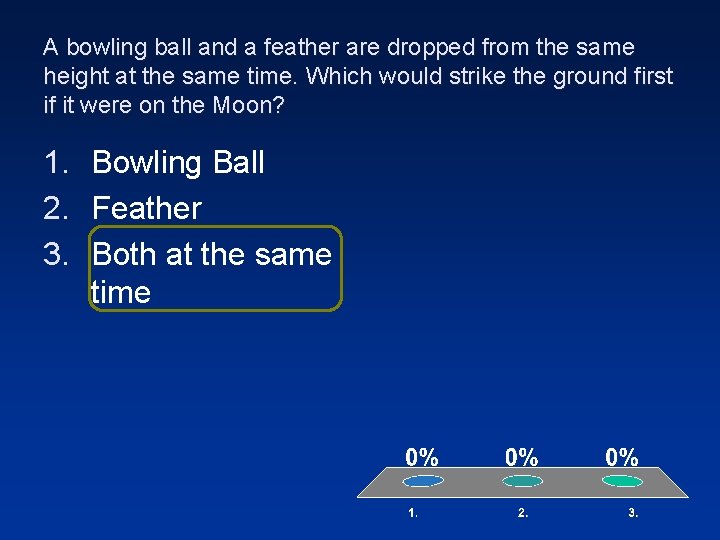
A bowling ball and a feather are dropped from the same height at the same time. Which would strike the ground first if it were on the Moon? 1. Bowling Ball 2. Feather 3. Both at the same time
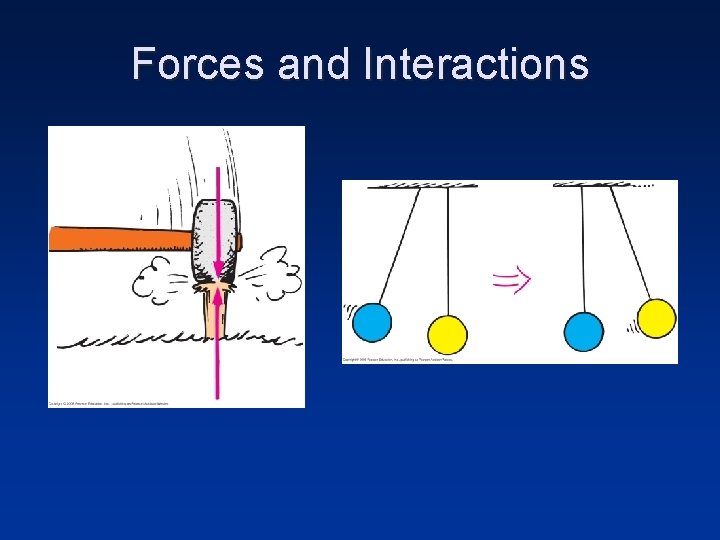
Forces and Interactions • A force is not a thing in itself but makes up an interaction between one thing and another. • Force Pair: two forces that are equal in magnitude and opposite in direction. – Constitutes a single interaction.
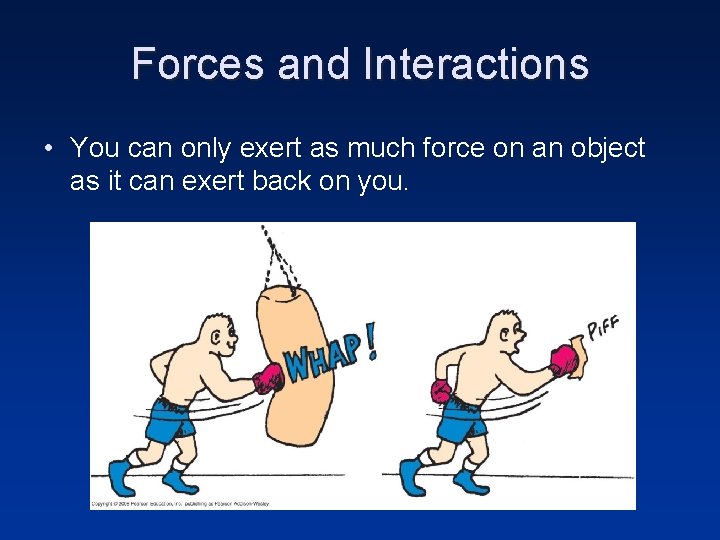
Forces and Interactions • You can only exert as much force on an object as it can exert back on you.
Forces and Interactions
Newton’s Third Law of Motion • Whenever one object exerts a force on a second object, the second object exerts an equal and opposite force on the first. • Action force and reaction force
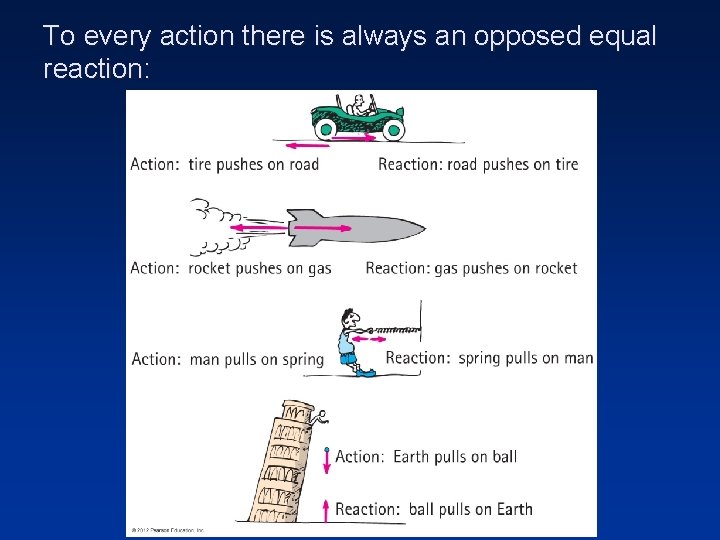
To every action there is always an opposed equal reaction:
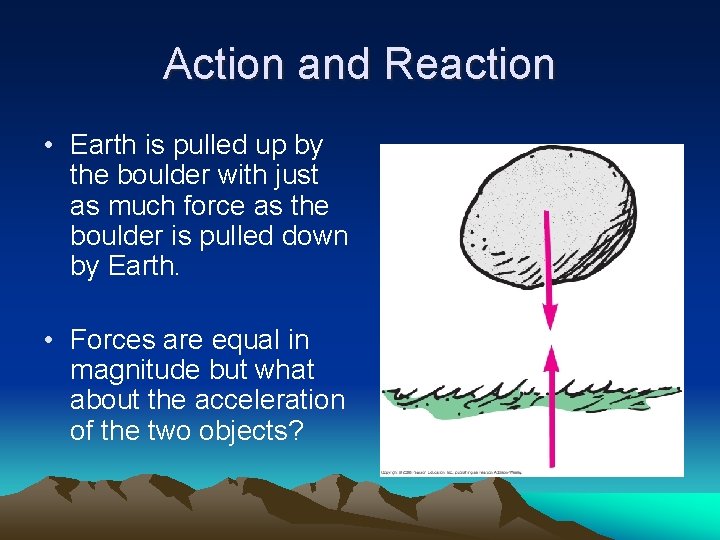
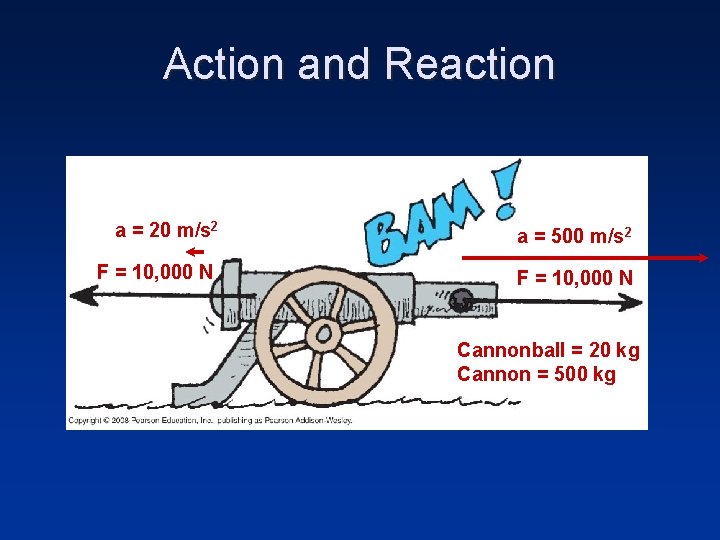
Action and Reaction • Earth is pulled up by the boulder with just as much force as the boulder is pulled down by Earth. • Forces are equal in magnitude but what about the acceleration of the two objects?
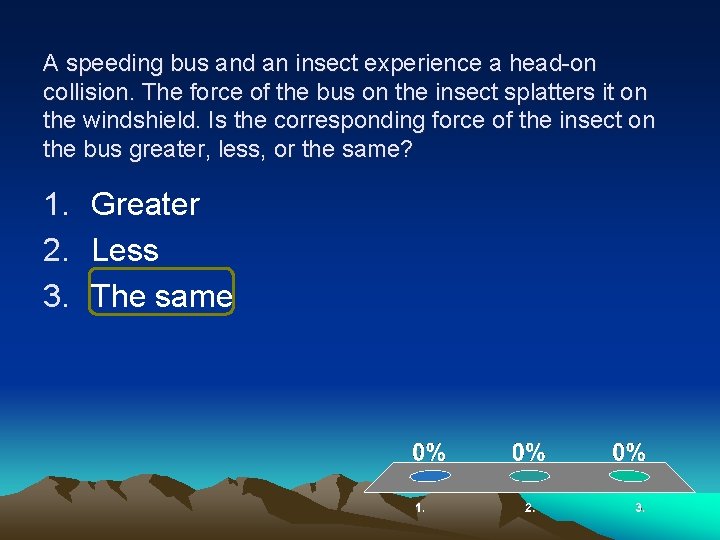
A speeding bus and an insect experience a head-on collision. The force of the bus on the insect splatters it on the windshield. Is the corresponding force of the insect on the bus greater, less, or the same? 1. Greater 2. Less 3. The same
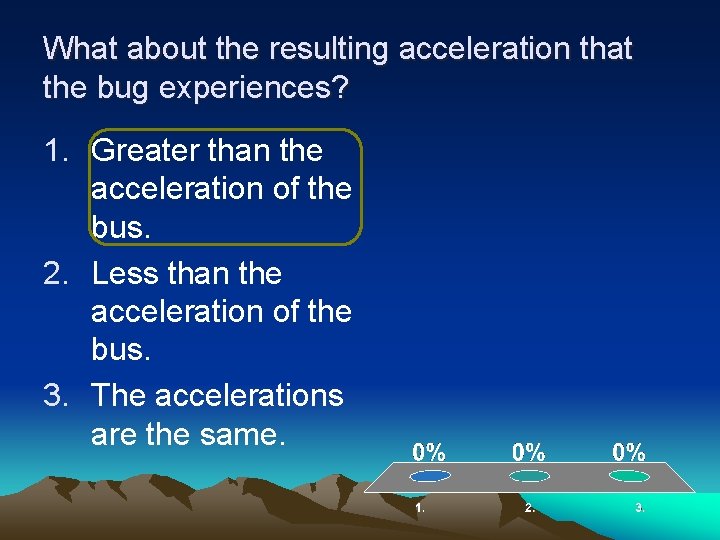
What about the resulting acceleration that the bug experiences? 1. Greater than the acceleration of the bus. 2. Less than the acceleration of the bus. 3. The accelerations are the same.
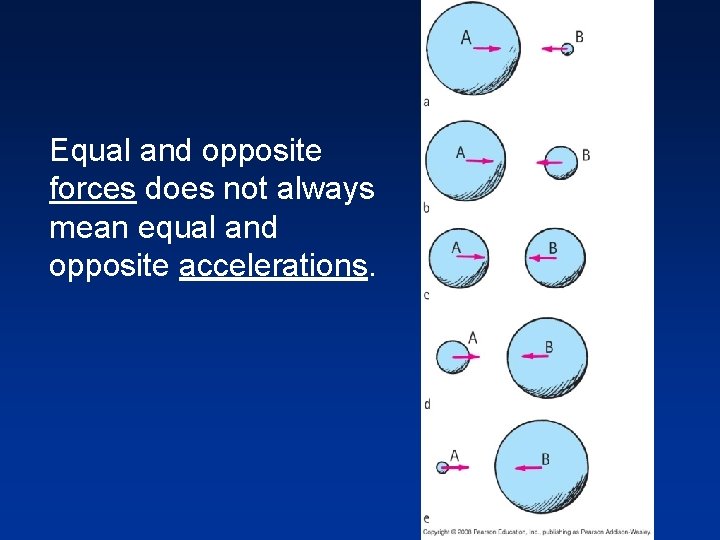
Equal and opposite forces does not always mean equal and opposite accelerations.
Action and Reaction a = 20 m/s 2 a = 500 m/s 2 F = 10, 000 N Cannonball = 20 kg Cannon = 500 kg
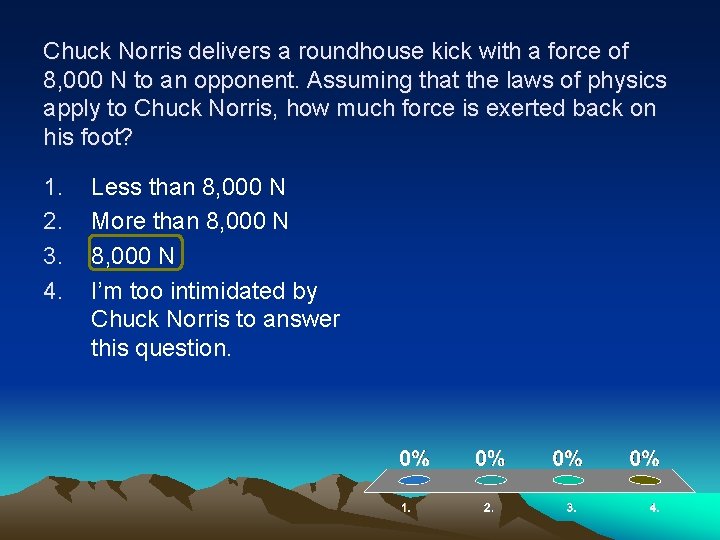
Chuck Norris delivers a roundhouse kick with a force of 8, 000 N to an opponent. Assuming that the laws of physics apply to Chuck Norris, how much force is exerted back on his foot? 1. 2. 3. 4. Less than 8, 000 N More than 8, 000 N I’m too intimidated by Chuck Norris to answer this question.
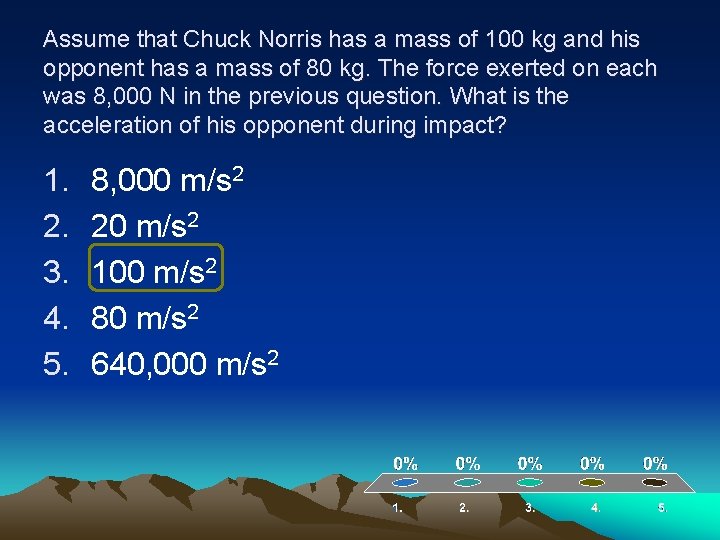
Assume that Chuck Norris has a mass of 100 kg and his opponent has a mass of 80 kg. The force exerted on each was 8, 000 N in the previous question. What is the acceleration of his opponent during impact? 1. 2. 3. 4. 5. 8, 000 m/s 2 20 m/s 2 100 m/s 2 80 m/s 2 640, 000 m/s 2
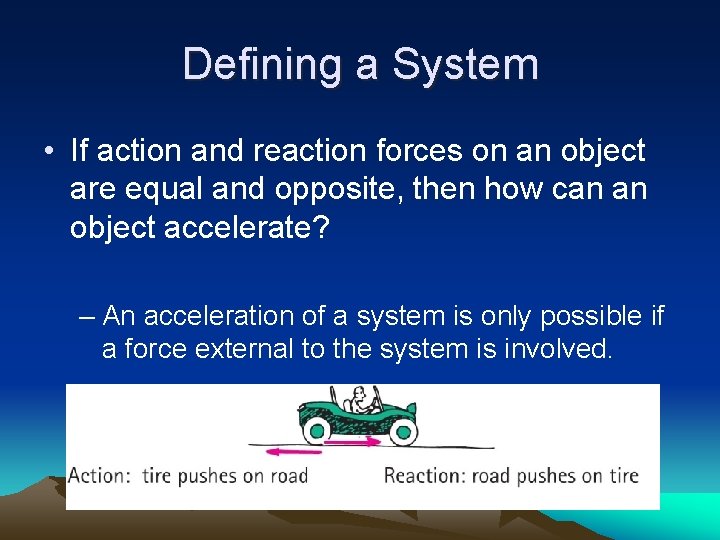
Defining a System • If action and reaction forces on an object are equal and opposite, then how can an object accelerate? – An acceleration of a system is only possible if a force external to the system is involved.
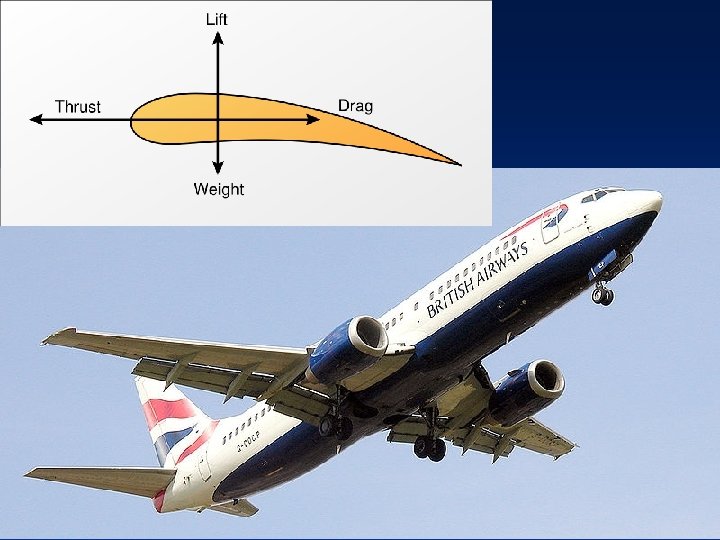
Flight • Lift: an upward reaction force that allows for flight. • When the force of lift exceeds an object’s weight it will accelerate upward. – A helicopter’s whirling blades are shaped to force air downward and the air forces the blades up.
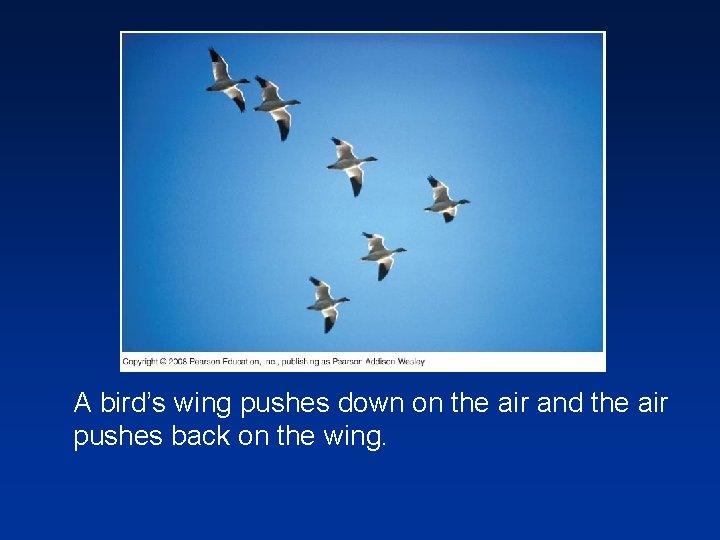
A bird’s wing pushes down on the air and the air pushes back on the wing.