
Lecture 3 Ligands and Bonding and Electron Counting
Lecture 3 Ligands and Bonding and Electron Counting in Organo-Transition Metal Compounds Stable electronic configurations: MO Energy Level Diagrams Reviewed Electron count preference Electron count and Oxidation States u Stable electronic configurations: MO Energy Level Diagrams Reviewed u Electron count preference u Electron count and Oxidation States u Ligands • Carbon Monoxide • Phosphines • Cyclopentadienide and arenes • Hydrides and dihydrogen
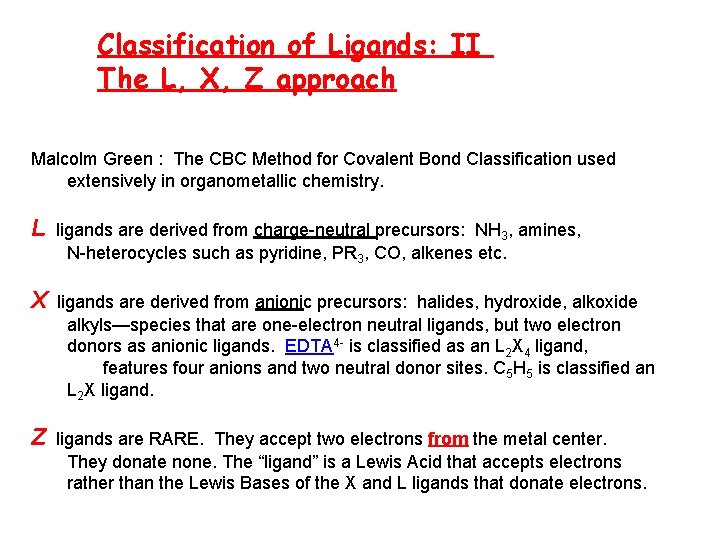
Classification of Ligands: II The L, X, Z approach Malcolm Green : The CBC Method for Covalent Bond Classification used extensively in organometallic chemistry. L ligands are derived from charge-neutral precursors: NH 3, amines, N-heterocycles such as pyridine, PR 3, CO, alkenes etc. X ligands are derived from anionic precursors: halides, hydroxide, alkoxide alkyls—species that are one-electron neutral ligands, but two electron donors as anionic ligands. EDTA 4 - is classified as an L 2 X 4 ligand, features four anions and two neutral donor sites. C 5 H 5 is classified an L 2 X ligand. Z ligands are RARE. They accept two electrons from the metal center. They donate none. The “ligand” is a Lewis Acid that accepts electrons rather than the Lewis Bases of the X and L ligands that donate electrons.
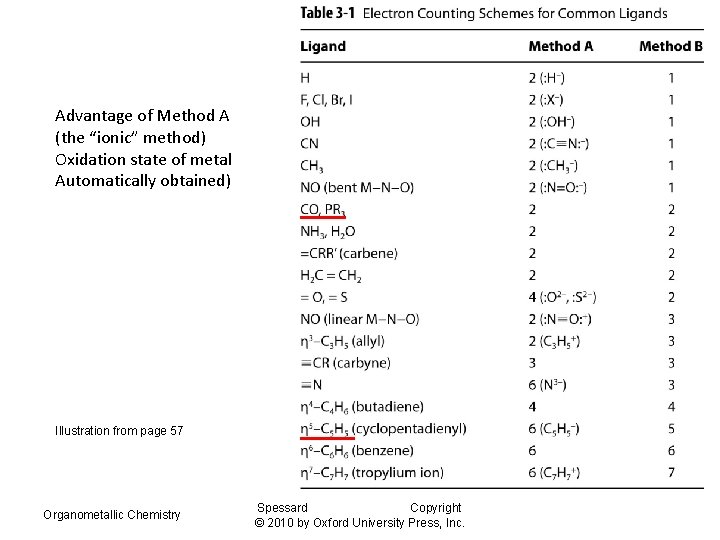
Advantage of Method A (the “ionic” method) Oxidation state of metal Automatically obtained) Illustration from page 57 Organometallic Chemistry Spessard Copyright © 2010 by Oxford University Press, Inc.
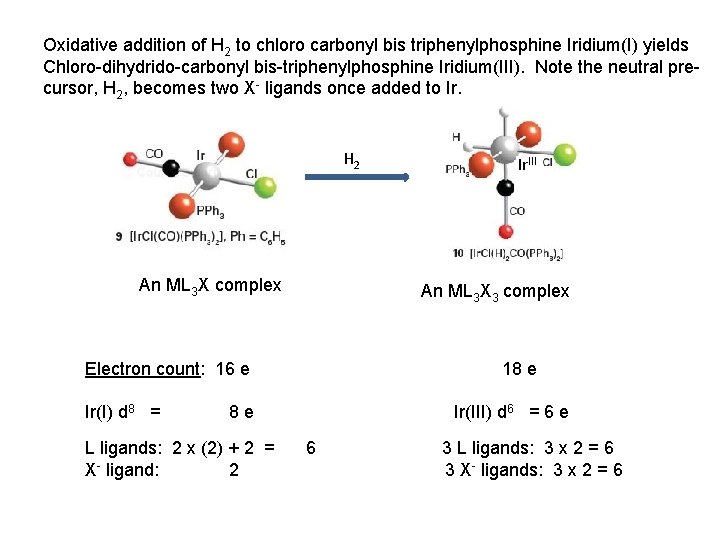
Oxidative addition of H 2 to chloro carbonyl bis triphenylphosphine Iridium(I) yields Chloro-dihydrido-carbonyl bis-triphenylphosphine Iridium(III). Note the neutral precursor, H 2, becomes two X- ligands once added to Ir. H 2 An ML 3 X complex An ML 3 X 3 complex Electron count: 16 e Ir(I) d 8 = 18 e 8 e L ligands: 2 x (2) + 2 = X- ligand: 2 Ir. III Ir(III) d 6 = 6 e 6 3 L ligands: 3 x 2 = 6 3 X- ligands: 3 x 2 = 6
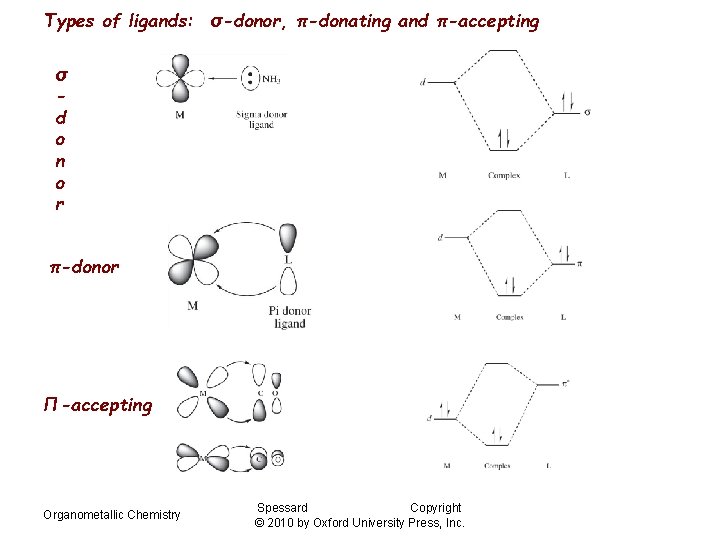
Types of ligands: σ-donor, π-donating and π-accepting σ d o n o r π-donor Π-accepting Organometallic Chemistry Spessard Copyright © 2010 by Oxford University Press, Inc.
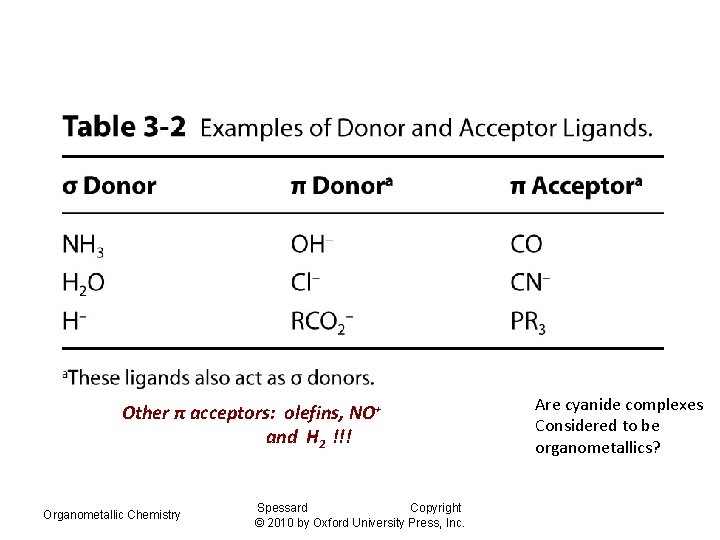
Other π acceptors: olefins, NO+ and H 2 !!! Organometallic Chemistry Spessard Copyright © 2010 by Oxford University Press, Inc. Are cyanide complexes Considered to be organometallics?
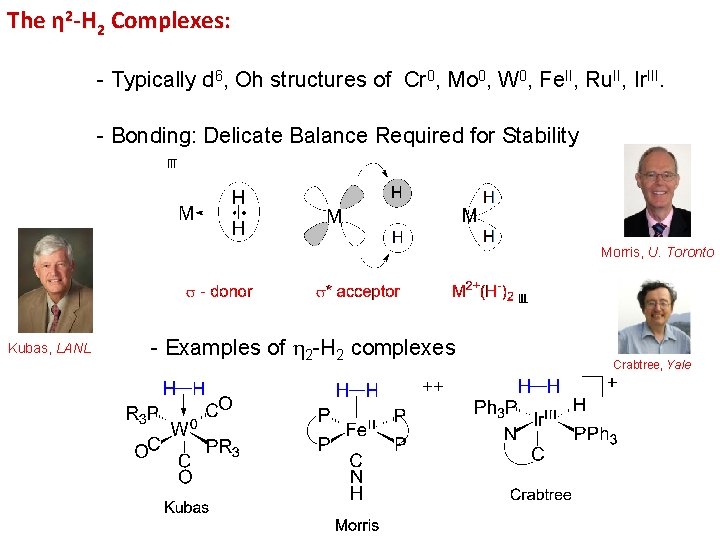
The η 2 -H 2 Complexes: - Typically d 6, Oh structures of Cr 0, Mo 0, W 0, Fe. II, Ru. II, Ir. III. - Bonding: Delicate Balance Required for Stability Morris, U. Toronto Kubas, LANL - Examples of 2 -H 2 complexes Crabtree, Yale
Where are the electrons? Show me the electrons!! Electron counting and the 18 -electron “Rule” (Guide is better. It is the “octet” rule for transition metals—but not so rigorously obeyed. )
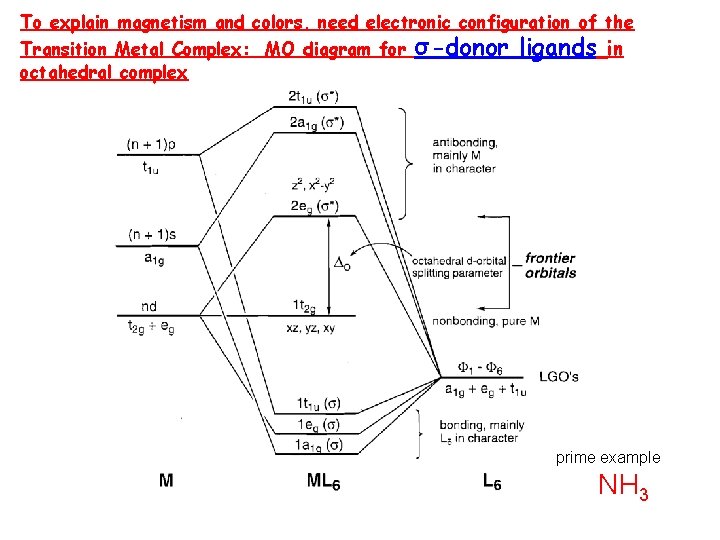
To explain magnetism and colors, need electronic configuration of the Transition Metal Complex: MO diagram for octahedral complex σ-donor ligands in prime example NH 3
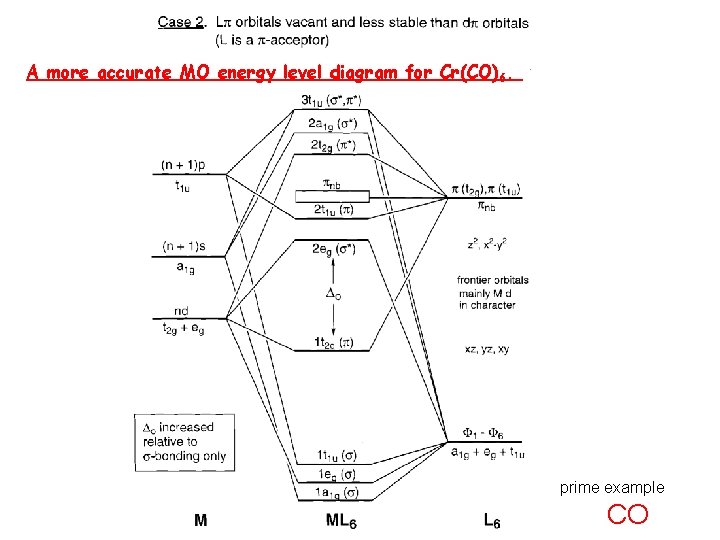
A more accurate MO energy level diagram for Cr(CO)6. prime example CO
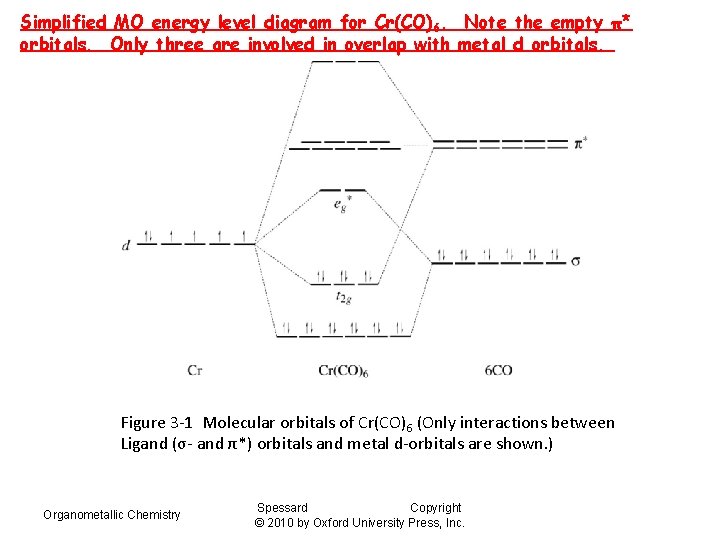
Simplified MO energy level diagram for Cr(CO)6. Note the empty π* orbitals. Only three are involved in overlap with metal d orbitals. Figure 3 -1 Molecular orbitals of Cr(CO)6 (Only interactions between Ligand (σ- and π*) orbitals and metal d-orbitals are shown. ) Organometallic Chemistry Spessard Copyright © 2010 by Oxford University Press, Inc.
Other 18 electron Metal Carbonyls • V(CO)6 • Mn(CO)6+
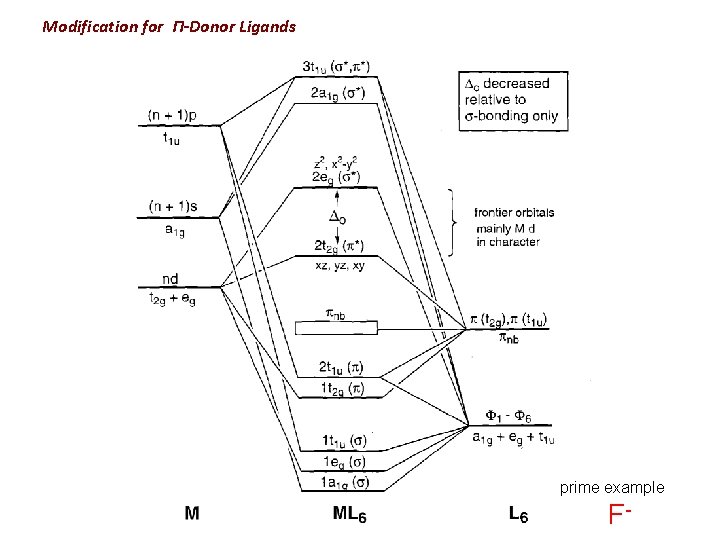
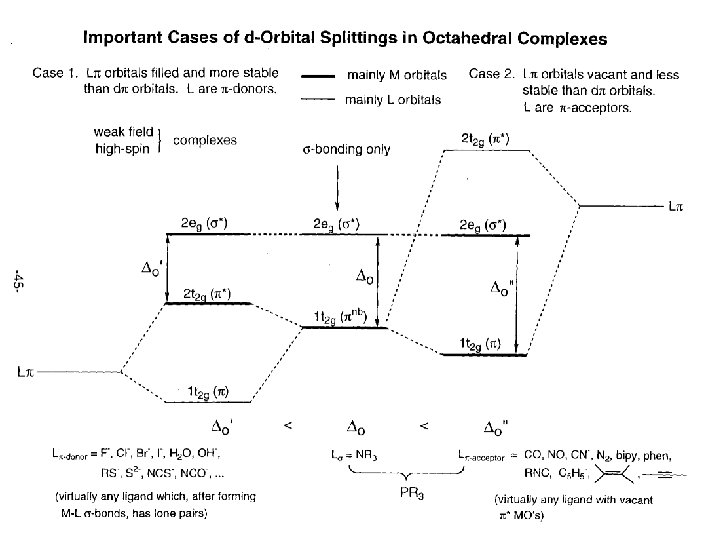
Modification for Π-Donor Ligands prime example F-
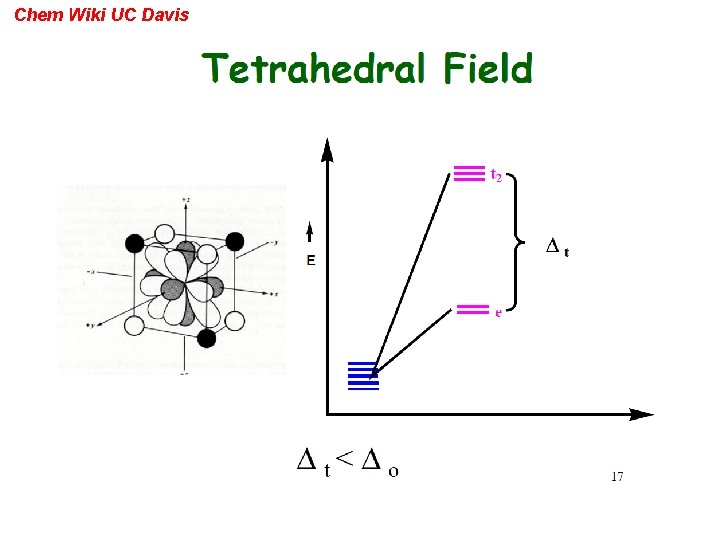
Chem Wiki UC Davis
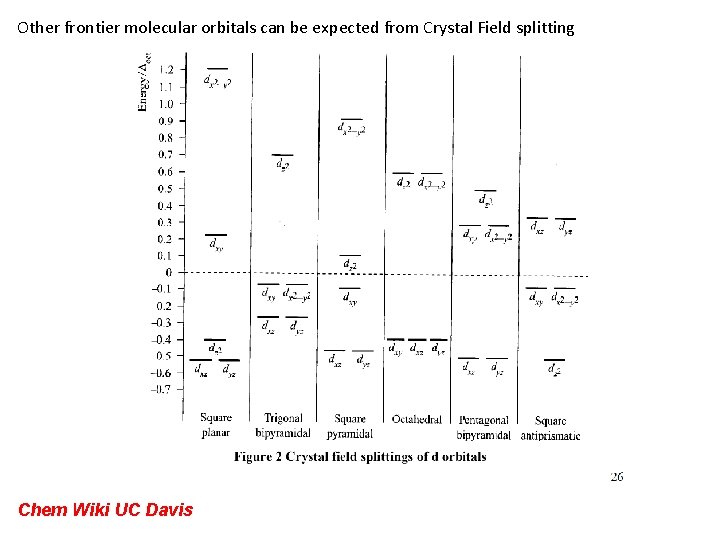
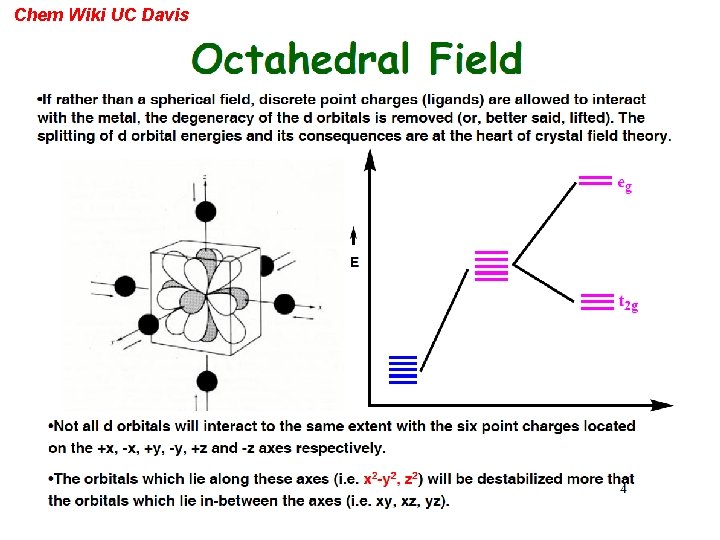
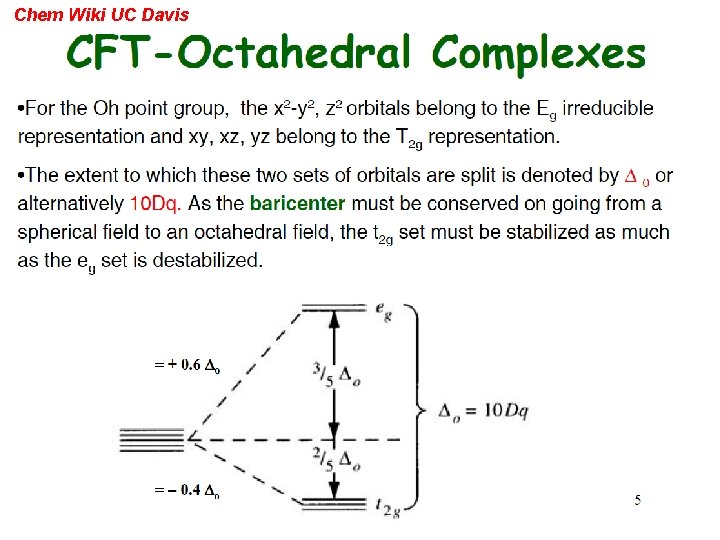
Other frontier molecular orbitals can be expected from Crystal Field splitting Chem Wiki UC Davis
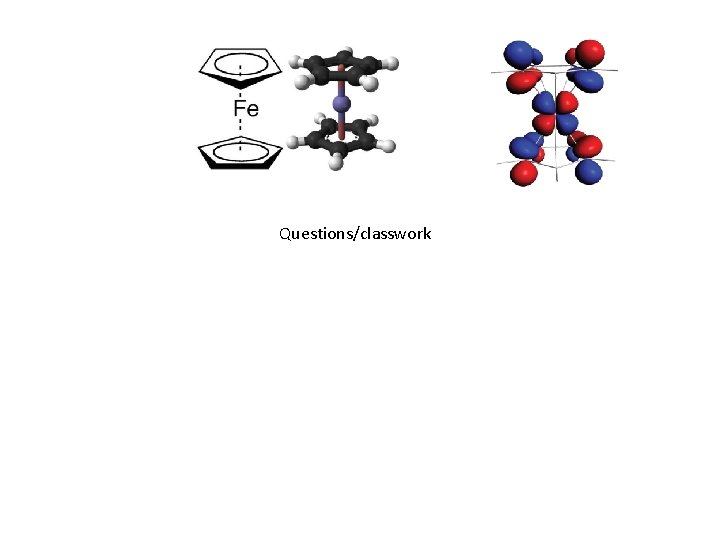
Questions/classwork
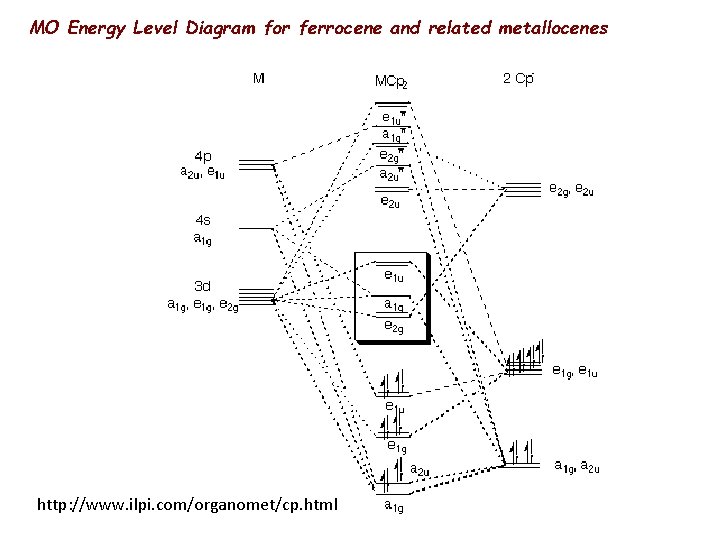
MO Energy Level Diagram for ferrocene and related metallocenes http: //www. ilpi. com/organomet/cp. html
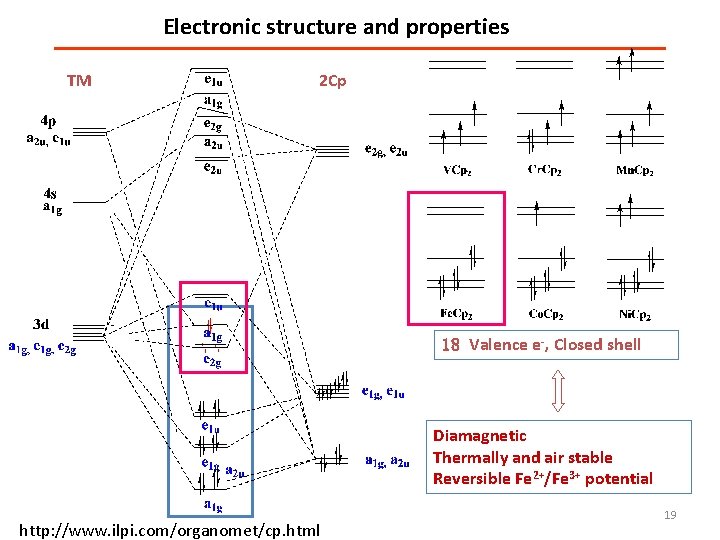
Electronic structure and properties TM 2 Cp 18 Valence e-, Closed shell Diamagnetic Thermally and air stable Reversible Fe 2+/Fe 3+ potential http: //www. ilpi. com/organomet/cp. html 19
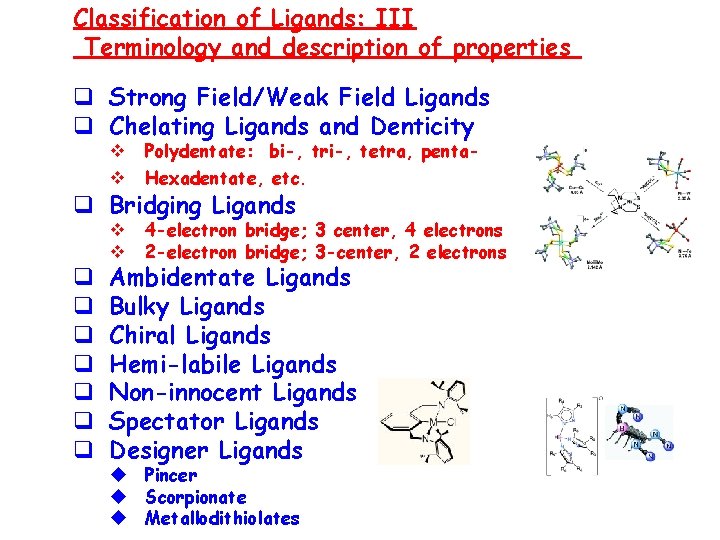
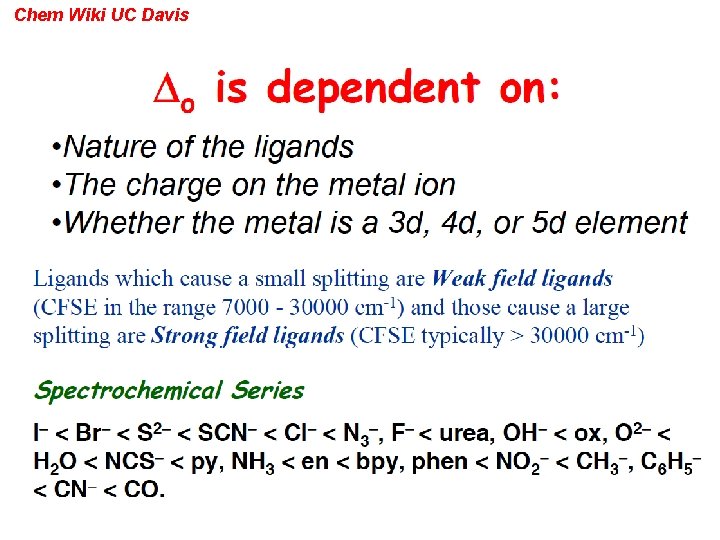
Classification of Ligands: III Terminology and description of properties q Strong Field/Weak Field Ligands q Chelating Ligands and Denticity v v Polydentate: bi-, tri-, tetra, penta- v v 4 -electron bridge; 3 center, 4 electrons 2 -electron bridge; 3 -center, 2 electrons Hexadentate, etc. q Bridging Ligands q q q q Ambidentate Ligands Bulky Ligands Chiral Ligands Hemi-labile Ligands Non-innocent Ligands Spectator Ligands Designer Ligands u Pincer u Scorpionate u Metallodithiolates
So, how do we mix and match these ligands and metals with their various oxidation states to get stable molecules? 1. Hard/Soft Acid Base approach to stability 2. Knowledge of preferred coordination numbers and geometries The Chemical Bond: a) The sharing of an electron pair between two atoms. b) A mixture of electrostatic and covalent interactions. Together these interactions lead to stable molecules.
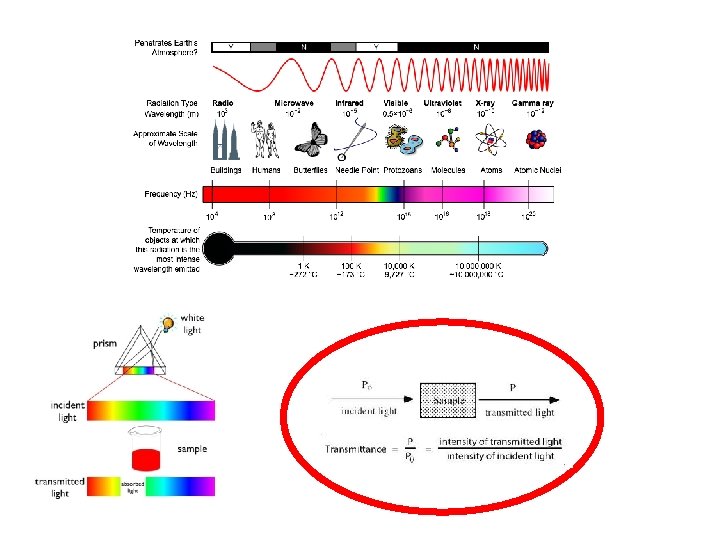
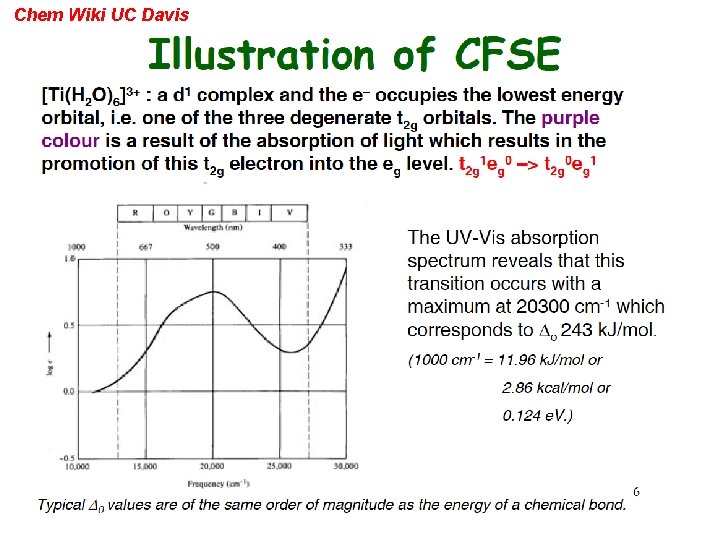
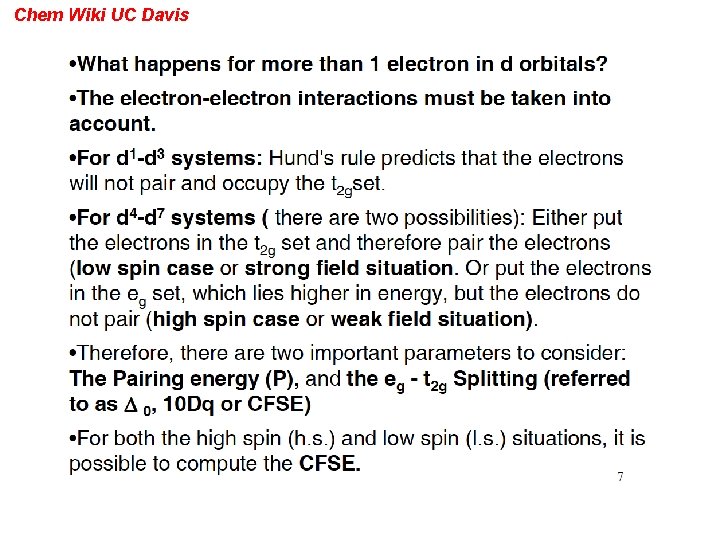
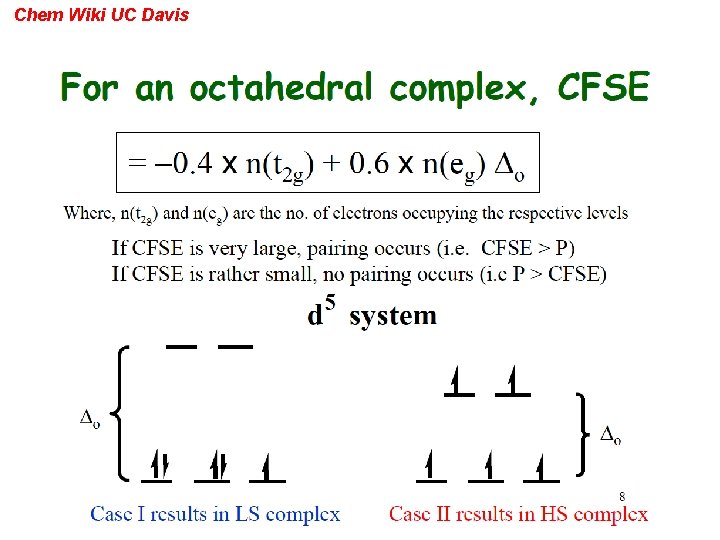
Now, How about those colors and the magnetism in Werner type complexes? Where are the electrons? Show me the electrons!! Color: Electronic transitions due to energy levels whose gaps are in the visible range of the electromagnetic spectrum. Magnetism: partially filled orbitals, unpaired electrons. high spin: maximum no. of d electrons unpaired low spin: electrons paired up in d orbitals. WHY? ? Bonding models: Valence bond (coordinate covalent bond needs empty orbitals on metal) Crystal Field Theory (originally from ionic crystals; influence of ligand lone pair repulsion on d-orbitals) Molecular Orbital Theory (all orbitals defined)
Chem Wiki UC Davis
Chem Wiki UC Davis
Chem Wiki UC Davis
Chem Wiki UC Davis
Chem Wiki UC Davis
Chem Wiki UC Davis
Chem Wiki UC Davis
Chem Wiki UC Davis
Chem Wiki UC Davis
Chem Wiki UC Davis
Chem Wiki UC Davis
Chem Wiki UC Davis
Chem Wiki UC Davis
- Slides: 37