
Lecture 3 Formation of the Terrestrial Planets and
- Slides: 21
Lecture 3 Formation of the Terrestrial Planets and Origin of Earth’s water • The basics of terrestrial planet formation • The origin of water 1798 engraving, Pass
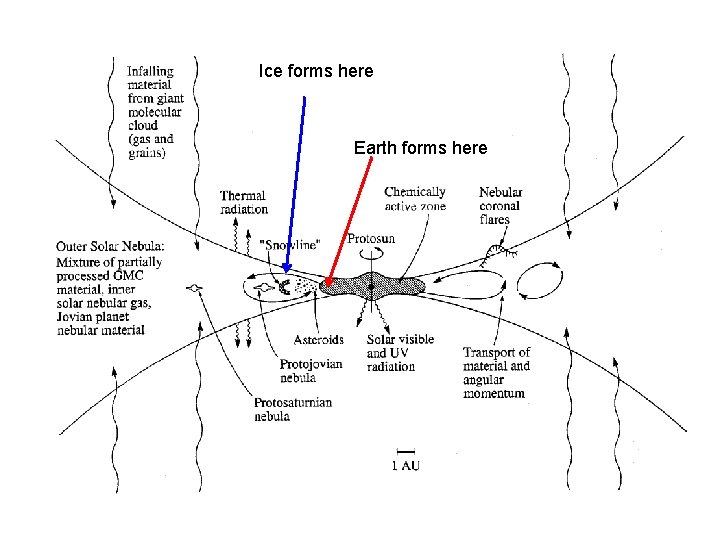
Ice forms here Earth forms here
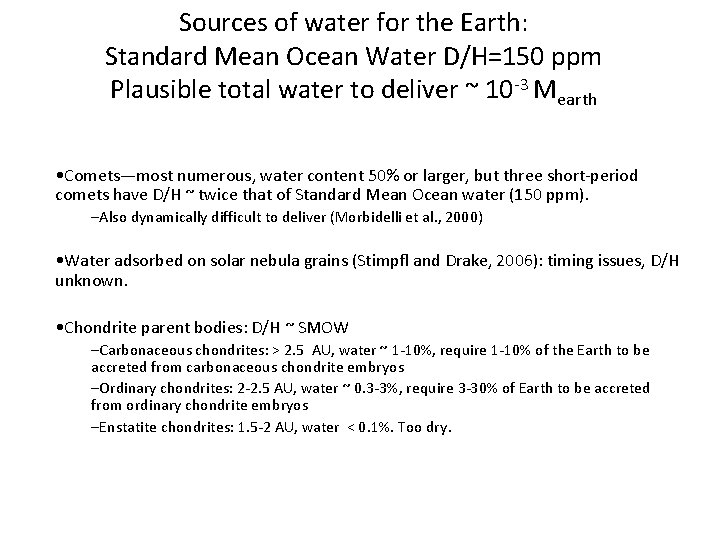
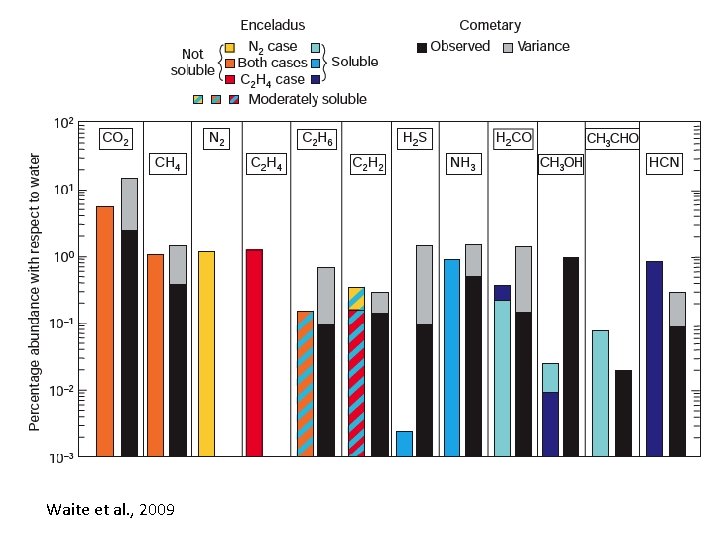
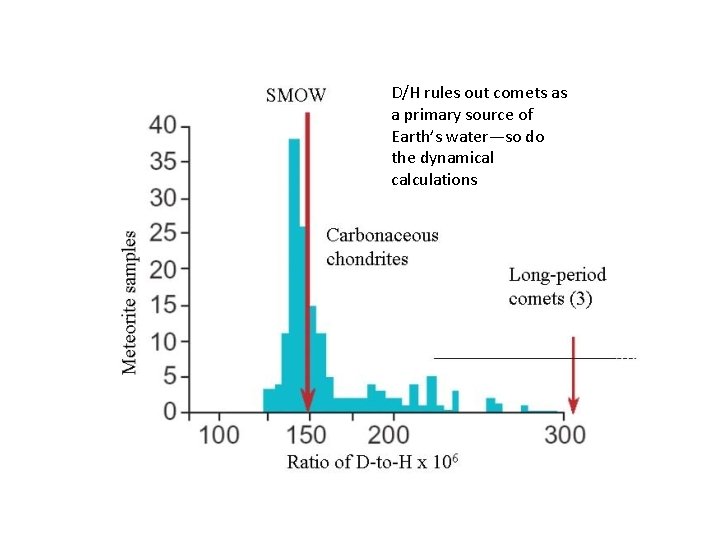
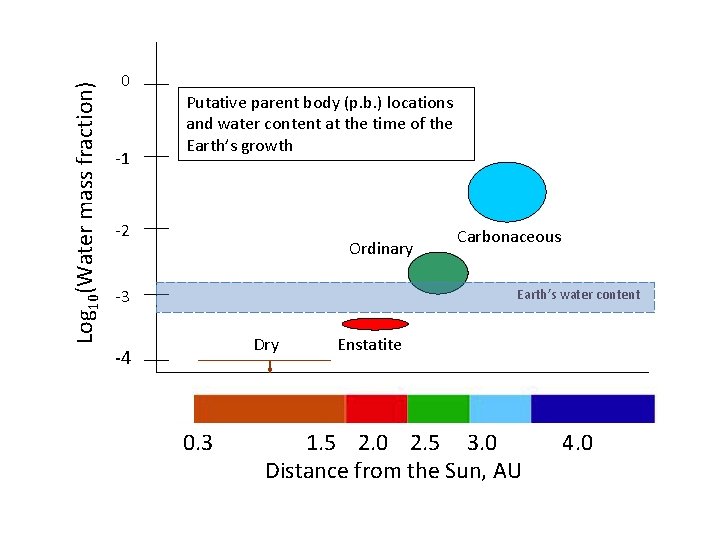
Sources of water for the Earth: Standard Mean Ocean Water D/H=150 ppm Plausible total water to deliver ~ 10 -3 Mearth • Comets—most numerous, water content 50% or larger, but three short-period comets have D/H ~ twice that of Standard Mean Ocean water (150 ppm). –Also dynamically difficult to deliver (Morbidelli et al. , 2000) • Water adsorbed on solar nebula grains (Stimpfl and Drake, 2006): timing issues, D/H unknown. • Chondrite parent bodies: D/H ~ SMOW –Carbonaceous chondrites: > 2. 5 AU, water ~ 1 -10%, require 1 -10% of the Earth to be accreted from carbonaceous chondrite embryos –Ordinary chondrites: 2 -2. 5 AU, water ~ 0. 3 -3%, require 3 -30% of Earth to be accreted from ordinary chondrite embryos –Enstatite chondrites: 1. 5 -2 AU, water < 0. 1%. Too dry.
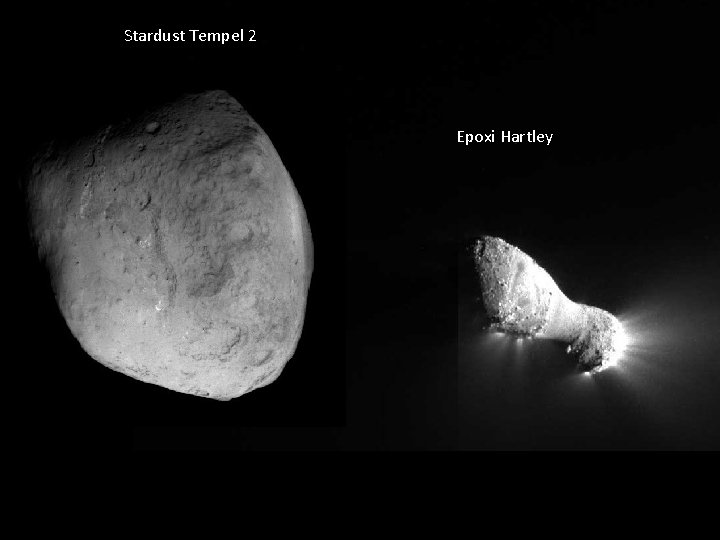
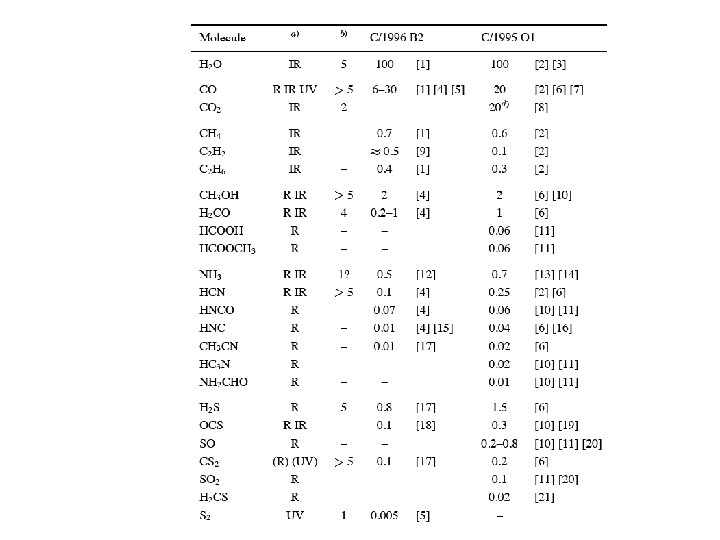
Stardust Tempel 2 Epoxi Hartley
Waite et al. , 2009
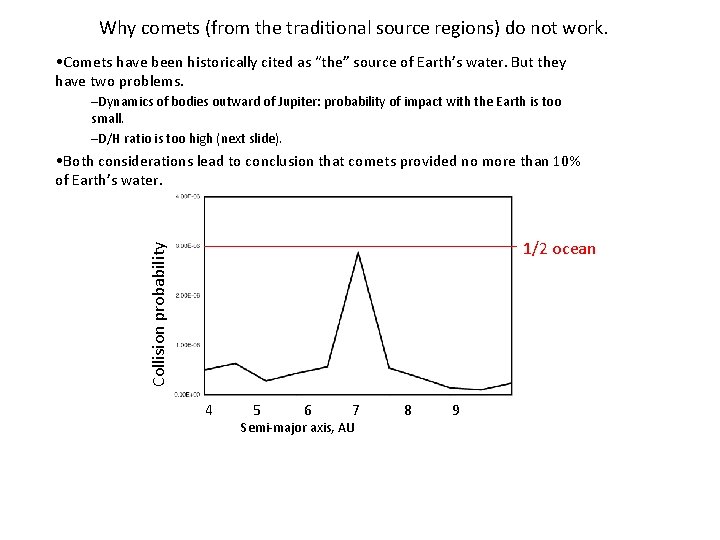
Why comets (from the traditional source regions) do not work. • Comets have been historically cited as “the” source of Earth’s water. But they have two problems. –Dynamics of bodies outward of Jupiter: probability of impact with the Earth is too small. –D/H ratio is too high (next slide). • Both considerations lead to conclusion that comets provided no more than 10% of Earth’s water. Collision probability 1/2 ocean 4 5 6 7 Semi-major axis, AU 8 9
D/H rules out comets as a primary source of Earth’s water—so do the dynamical calculations
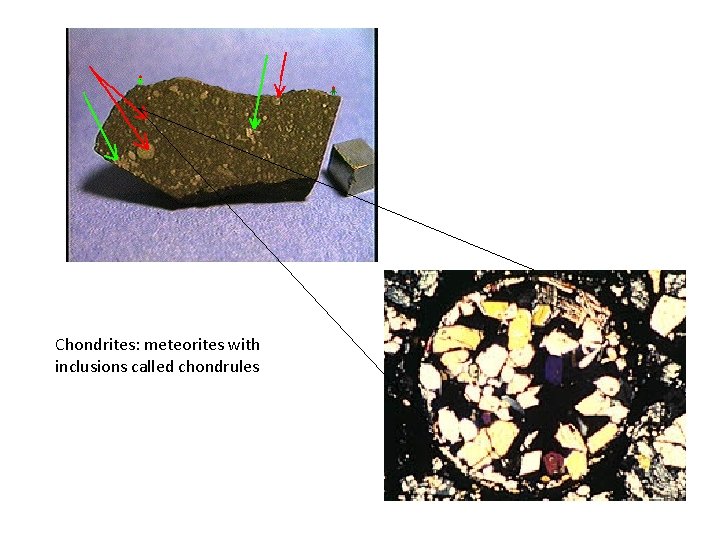
Chondrites: meteorites with inclusions called chondrules
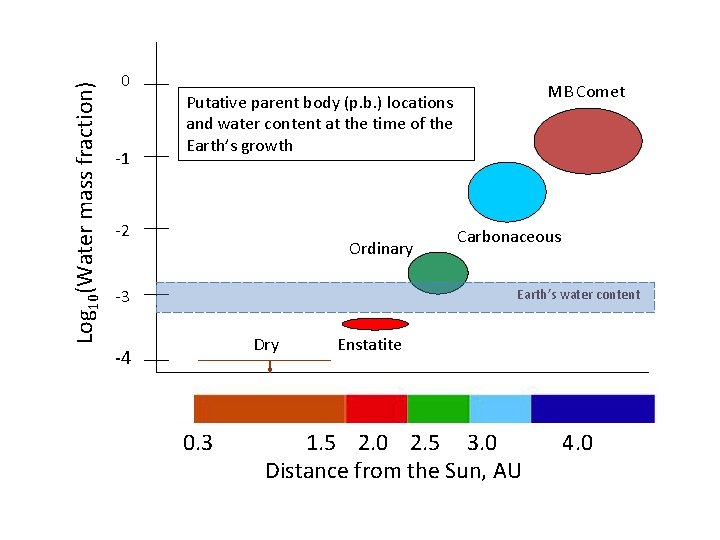
Log 10(Water mass fraction) 0 -1 Putative parent body (p. b. ) locations and water content at the time of the Earth’s growth -2 Ordinary -3 Carbonaceous Earth’s water content Dry -4 0. 3 Enstatite 1. 5 2. 0 2. 5 3. 0 Distance from the Sun, AU 4. 0
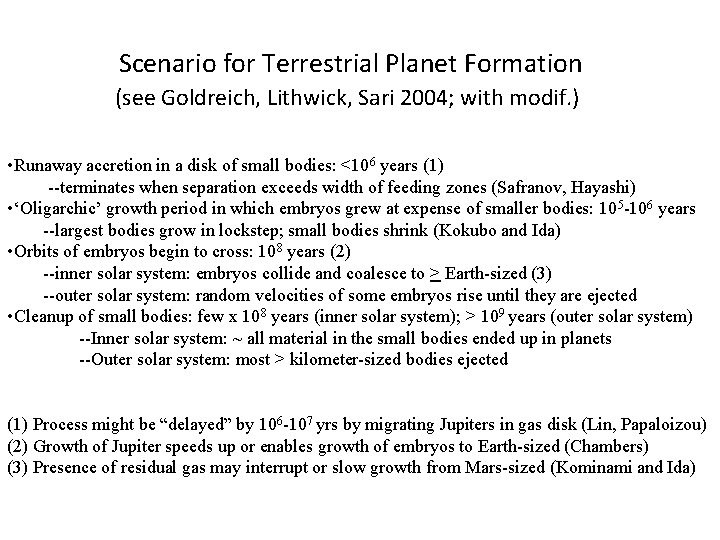
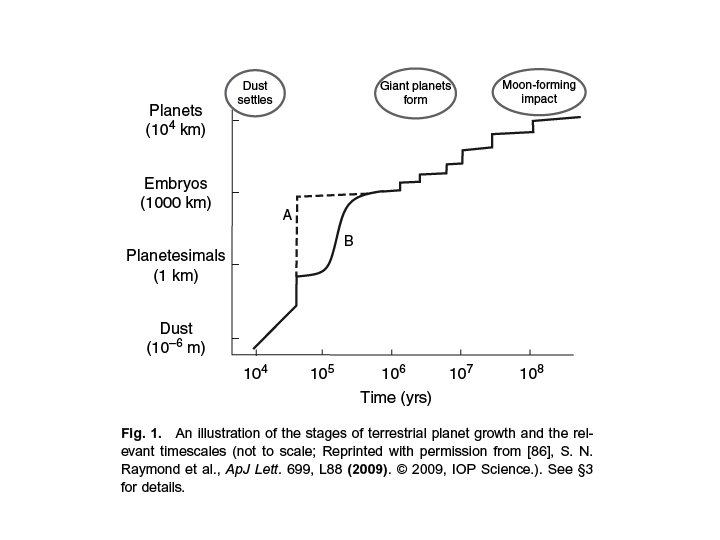
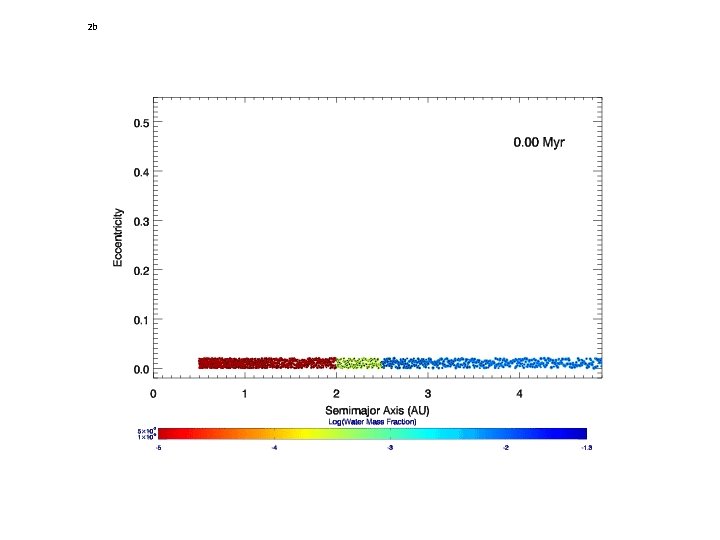
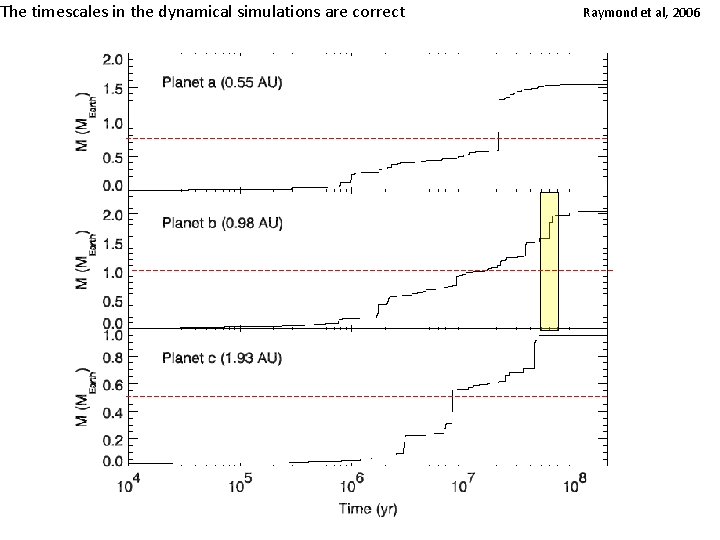
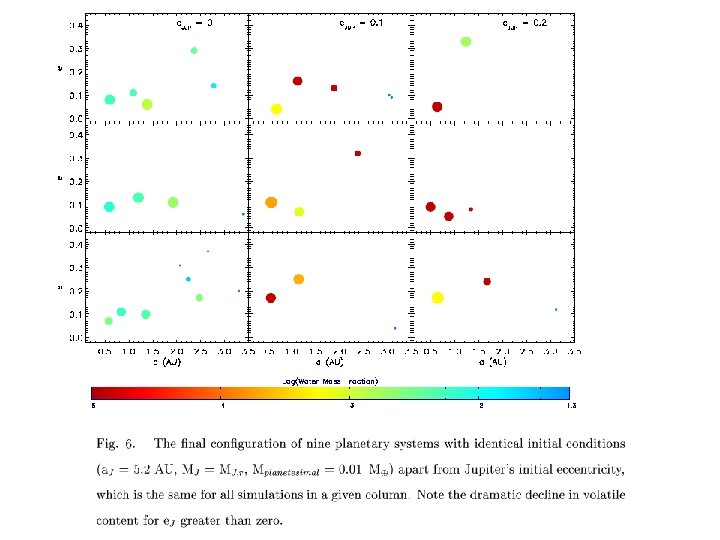
Scenario for Terrestrial Planet Formation (see Goldreich, Lithwick, Sari 2004; with modif. ) • Runaway accretion in a disk of small bodies: <106 years (1) --terminates when separation exceeds width of feeding zones (Safranov, Hayashi) • ‘Oligarchic’ growth period in which embryos grew at expense of smaller bodies: 105 -106 years --largest bodies grow in lockstep; small bodies shrink (Kokubo and Ida) • Orbits of embryos begin to cross: 108 years (2) --inner solar system: embryos collide and coalesce to > Earth-sized (3) --outer solar system: random velocities of some embryos rise until they are ejected • Cleanup of small bodies: few x 108 years (inner solar system); > 109 years (outer solar system) --Inner solar system: ~ all material in the small bodies ended up in planets --Outer solar system: most > kilometer-sized bodies ejected (1) Process might be “delayed” by 106 -107 yrs by migrating Jupiters in gas disk (Lin, Papaloizou) (2) Growth of Jupiter speeds up or enables growth of embryos to Earth-sized (Chambers) (3) Presence of residual gas may interrupt or slow growth from Mars-sized (Kominami and Ida)
2 b
The timescales in the dynamical simulations are correct Raymond et al, 2006
Problem • The Earth is not a carbonaceous chondrite. • Even 1% carbonaceous, by some reckonings, is too much. • Need to consider other material that was in the asteroid belt but is no longer.
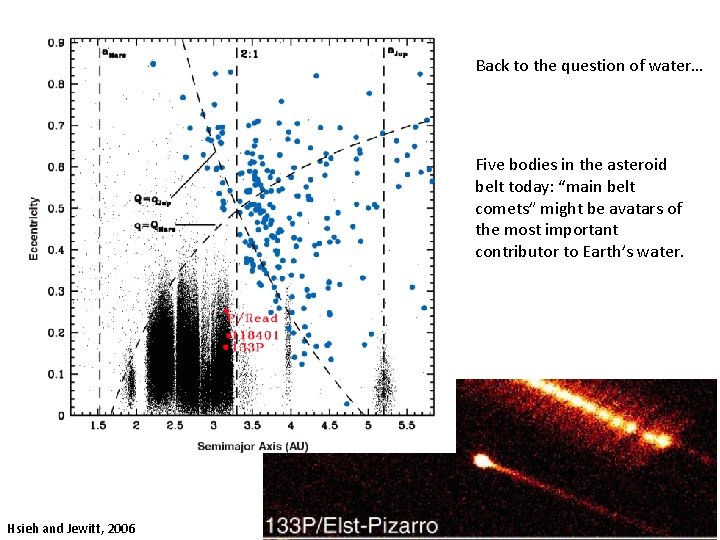
Back to the question of water… Five bodies in the asteroid belt today: “main belt comets” might be avatars of the most important contributor to Earth’s water. Hsieh and Jewitt, 2006
Log 10(Water mass fraction) 0 -1 MB Comet Putative parent body (p. b. ) locations and water content at the time of the Earth’s growth -2 Ordinary -3 Carbonaceous Earth’s water content Dry -4 0. 3 Enstatite 1. 5 2. 0 2. 5 3. 0 Distance from the Sun, AU 4. 0
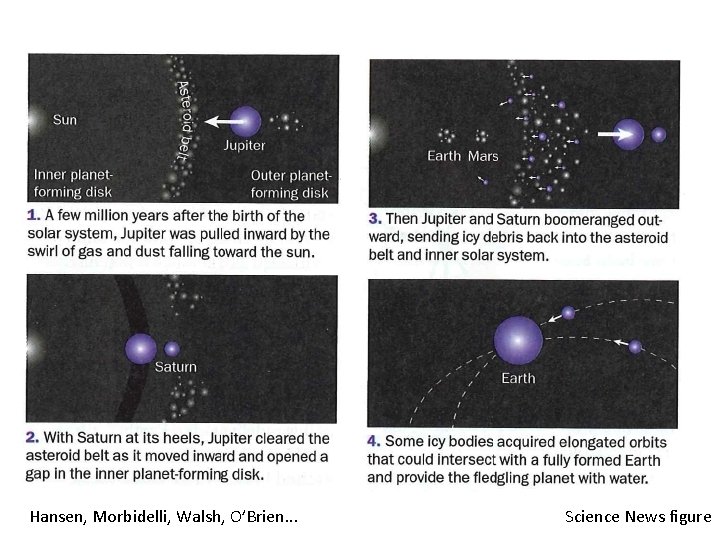
Hansen, Morbidelli, Walsh, O’Brien. . . Science News figure
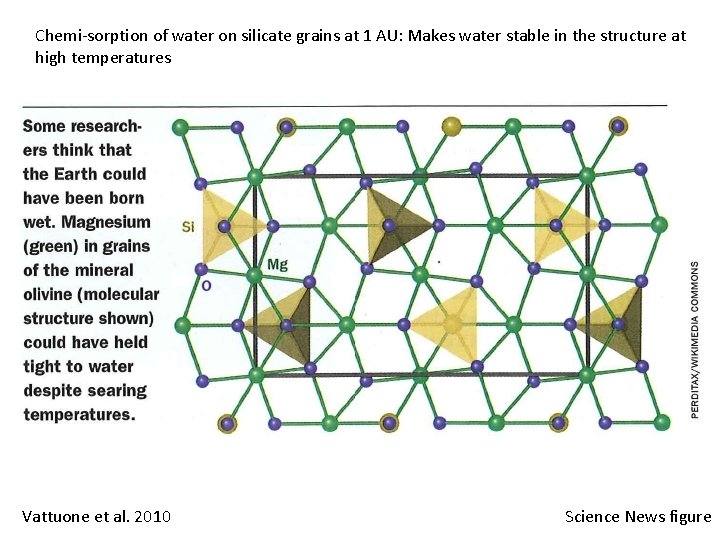
Chemi-sorption of water on silicate grains at 1 AU: Makes water stable in the structure at high temperatures Vattuone et al. 2010 Science News figure
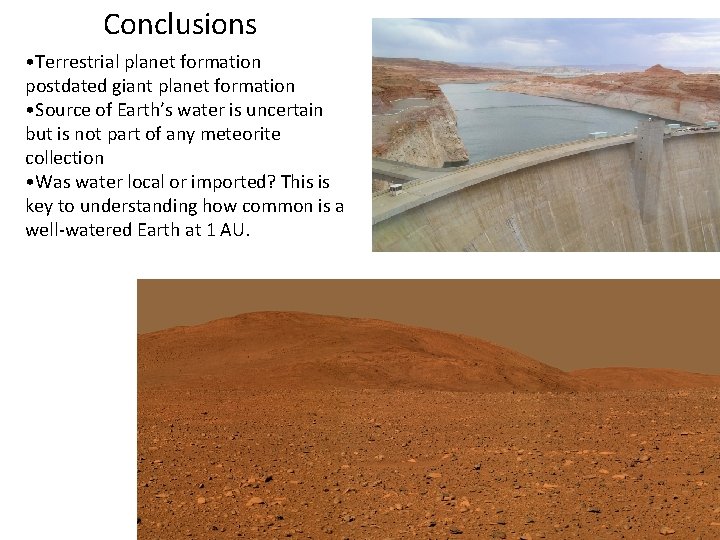
Conclusions • Terrestrial planet formation postdated giant planet formation • Source of Earth’s water is uncertain but is not part of any meteorite collection • Was water local or imported? This is key to understanding how common is a well-watered Earth at 1 AU.