
Lecture 3 Emergence and Evolution of the Novel

- Slides: 14
Lecture 3: Emergence and Evolution of the Novel Definitions and Distinctions - Throughout the West, and in other parts of the world as well, the novel has been the most popular literary form of the last 250 years. - The novel is also an especially significant form, in that it has shaped Western understandings of human society and human psychology. - Novel (from the Italian novella, Spanish novela, French nouvelle for "new", "news", or "short story of something new") is today a fictional prose narrative of considerable length and some complexity that deals imaginatively with human experience. Novel usually has a plot that is unfolded by the actions, speech, and thoughts of the characters through a specific setting. ﻋﻤﺎﺩﺓ ﺍﻟﺘﻌﻠﻢ ﺍﻹﻟﻜﺘﺮﻭﻧﻲ ﻭﺍﻟﺘﻌﻠﻴﻢ ﻋﻦ ﺑﻌﺪ Deanship of E-Learning and Distance Education [ ] ﺟﺎﻣﻌﺔ ﺍﻟﻤﻠﻚ ﻓﻴﺼﻞ King Faisal University 2
Definitions and Distinctions - The genre has historical roots both in the fields of the medieval and early modern romance and in the tradition of the novella. - The genre encompasses a wide range of types and styles, including picaresque, epistolary, gothic, romantic, realist, and historical novels. - Though forerunners of the novel appeared in a number of places, including Classical Rome and 11 th-century Japan, the European novel is usually said to have begun with Miguel de Cervantes’ Don Quixote (1605). - The novel was established as a literary form in England in the 18 th century through the work of Daniel Defoe, Samuel Richardson, and Henry Fielding. - The typical elements of a conventional novel are plot, character, setting, narrative method and point of view, scope, and myth or symbolism. ﻋﻤﺎﺩﺓ ﺍﻟﺘﻌﻠﻢ ﺍﻹﻟﻜﺘﺮﻭﻧﻲ ﻭﺍﻟﺘﻌﻠﻴﻢ ﻋﻦ ﺑﻌﺪ Deanship of E-Learning and Distance Education [ 3 ] ﺟﺎﻣﻌﺔ ﺍﻟﻤﻠﻚ ﻓﻴﺼﻞ King Faisal University
The English Novel: A Form with Two Major Dimensions - The English novel as a literary form has two major dimensions: one sociological, the other psychological. - The sociological dimension of the novel is crucially important, because novels are usually concerned with social distinctions, hierarchies, and values. - Psychologically speaking, the novel also delves into human psychology, providing vivid images of how individuals think and feel. - The sociological and psychological dimensions of the novel form are closely related. - Having considered the novel in this way, as a form preoccupied with the relationship between self and society, we can appreciate the most distinctive features of the English novel tradition. ﻋﻤﺎﺩﺓ ﺍﻟﺘﻌﻠﻢ ﺍﻹﻟﻜﺘﺮﻭﻧﻲ ﻭﺍﻟﺘﻌﻠﻴﻢ ﻋﻦ ﺑﻌﺪ Deanship of E-Learning and Distance Education [ 4 ] ﺟﺎﻣﻌﺔ ﺍﻟﻤﻠﻚ ﻓﻴﺼﻞ King Faisal University
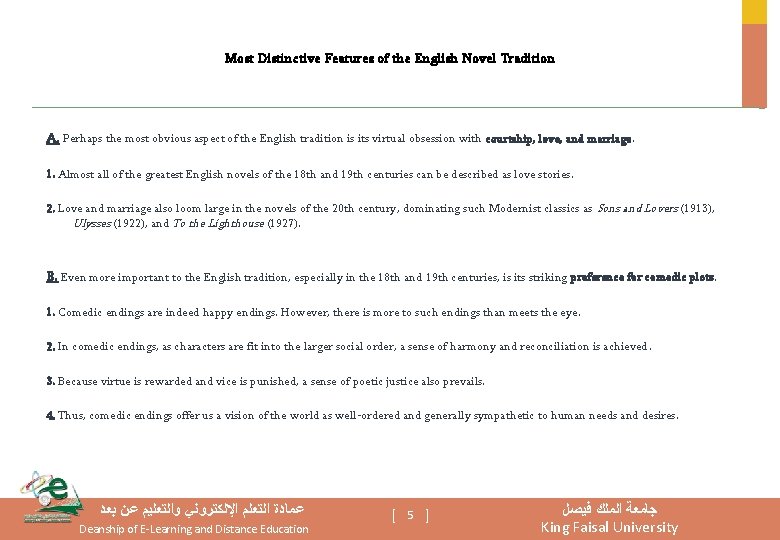
Most Distinctive Features of the English Novel Tradition A. Perhaps the most obvious aspect of the English tradition is its virtual obsession with courtship, love, and marriage. 1. Almost all of the greatest English novels of the 18 th and 19 th centuries can be described as love stories. 2. Love and marriage also loom large in the novels of the 20 th century, dominating such Modernist classics as Sons and Lovers (1913), Ulysses (1922), and To the Lighthouse (1927). B. Even more important to the English tradition, especially in the 18 th and 19 th centuries, is its striking preference for comedic plots. 1. Comedic endings are indeed happy endings. However, there is more to such endings than meets the eye. 2. In comedic endings, as characters are fit into the larger social order, a sense of harmony and reconciliation is achieved. 3. Because virtue is rewarded and vice is punished, a sense of poetic justice also prevails. 4. Thus, comedic endings offer us a vision of the world as well-ordered and generally sympathetic to human needs and desires. ﻋﻤﺎﺩﺓ ﺍﻟﺘﻌﻠﻢ ﺍﻹﻟﻜﺘﺮﻭﻧﻲ ﻭﺍﻟﺘﻌﻠﻴﻢ ﻋﻦ ﺑﻌﺪ Deanship of E-Learning and Distance Education [ 5 ] ﺟﺎﻣﻌﺔ ﺍﻟﻤﻠﻚ ﻓﻴﺼﻞ King Faisal University
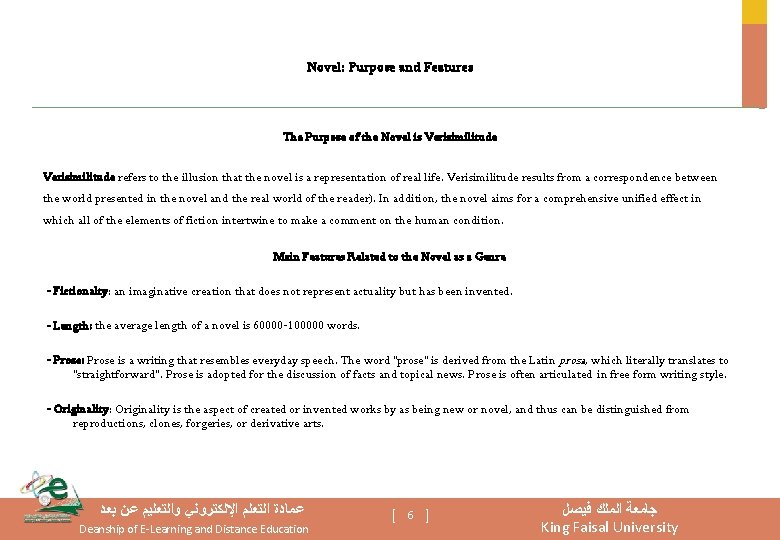
Novel: Purpose and Features The Purpose of the Novel is Verisimilitude refers to the illusion that the novel is a representation of real life. Verisimilitude results from a correspondence between the world presented in the novel and the real world of the reader). In addition, the novel aims for a comprehensive unified effect in which all of the elements of fiction intertwine to make a comment on the human condition. Main Features Related to the Novel as a Genre - Fictionalty: an imaginative creation that does not represent actuality but has been invented. - Length: the average length of a novel is 60000 -100000 words. - Prose: Prose is a writing that resembles everyday speech. The word "prose" is derived from the Latin prosa, which literally translates to "straightforward". Prose is adopted for the discussion of facts and topical news. Prose is often articulated in free form writing style. - Originality: Originality is the aspect of created or invented works by as being new or novel, and thus can be distinguished from reproductions, clones, forgeries, or derivative arts. ﻋﻤﺎﺩﺓ ﺍﻟﺘﻌﻠﻢ ﺍﻹﻟﻜﺘﺮﻭﻧﻲ ﻭﺍﻟﺘﻌﻠﻴﻢ ﻋﻦ ﺑﻌﺪ Deanship of E-Learning and Distance Education [ 6 ] ﺟﺎﻣﻌﺔ ﺍﻟﻤﻠﻚ ﻓﻴﺼﻞ King Faisal University
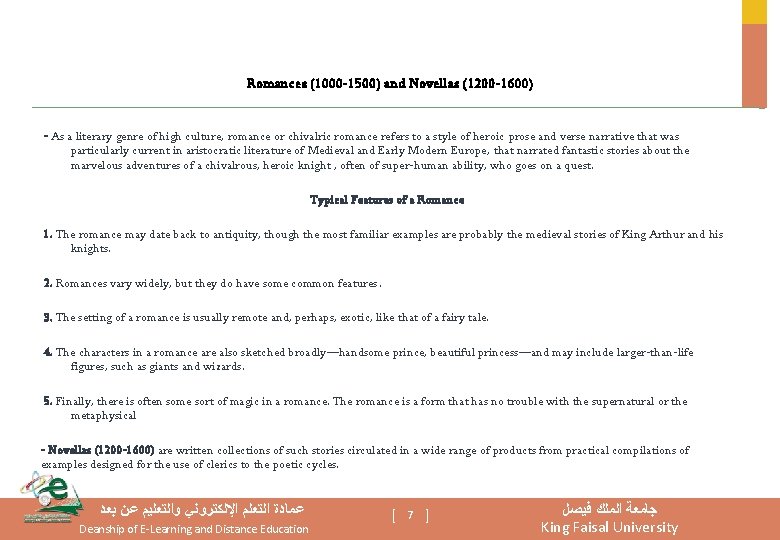
Romances (1000 -1500) and Novellas (1200 -1600) - As a literary genre of high culture, romance or chivalric romance refers to a style of heroic prose and verse narrative that was particularly current in aristocratic literature of Medieval and Early Modern Europe, that narrated fantastic stories about the marvelous adventures of a chivalrous, heroic knight , often of super-human ability, who goes on a quest. Typical Features of a Romance 1. The romance may date back to antiquity, though the most familiar examples are probably the medieval stories of King Arthur and his knights. 2. Romances vary widely, but they do have some common features. 3. The setting of a romance is usually remote and, perhaps, exotic, like that of a fairy tale. 4. The characters in a romance are also sketched broadly—handsome prince, beautiful princess—and may include larger-than-life figures, such as giants and wizards. 5. Finally, there is often some sort of magic in a romance. The romance is a form that has no trouble with the supernatural or the metaphysical - Novellas (1200 -1600) are written collections of such stories circulated in a wide range of products from practical compilations of examples designed for the use of clerics to the poetic cycles. ﻋﻤﺎﺩﺓ ﺍﻟﺘﻌﻠﻢ ﺍﻹﻟﻜﺘﺮﻭﻧﻲ ﻭﺍﻟﺘﻌﻠﻴﻢ ﻋﻦ ﺑﻌﺪ Deanship of E-Learning and Distance Education [ 7 ] ﺟﺎﻣﻌﺔ ﺍﻟﻤﻠﻚ ﻓﻴﺼﻞ King Faisal University
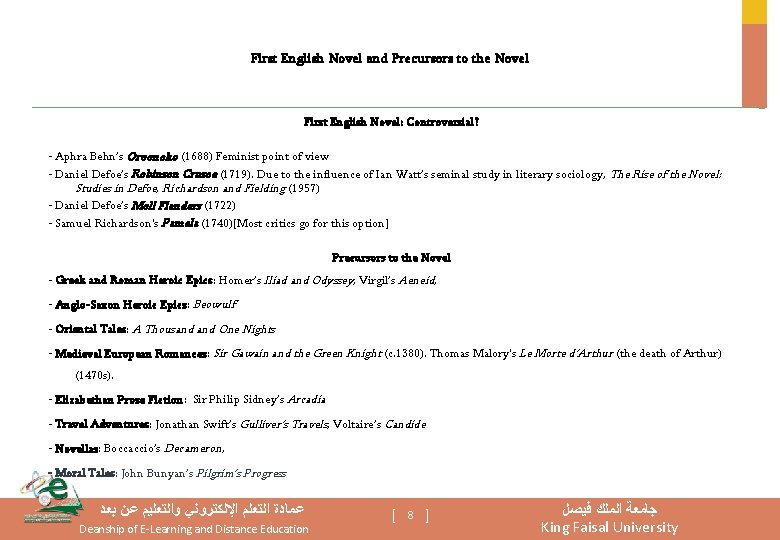
First English Novel and Precursors to the Novel First English Novel: Controversial? - Aphra Behn’s Oroonoko (1688) Feminist point of view - Daniel Defoe’s Robinson Crusoe (1719). Due to the influence of Ian Watt’s seminal study in literary sociology, The Rise of the Novel: Studies in Defoe, Richardson and Fielding (1957) - Daniel Defoe’s Moll Flanders (1722) - Samuel Richardson's Pamela (1740)[Most critics go for this option] Precursors to the Novel - Greek and Roman Heroic Epics: Homer’s Iliad and Odyssey, Virgil’s Aeneid, - Anglo-Saxon Heroic Epics: Beowulf - Oriental Tales: A Thousand One Nights - Medieval European Romances: Sir Gawain and the Green Knight (c. 1380). Thomas Malory's Le Morte d’Arthur (the death of Arthur) (1470 s). - Elizabethan Prose Fiction: Sir Philip Sidney’s Arcadia - Travel Adventures: Jonathan Swift’s Gulliver’s Travels, Voltaire’s Candide - Novellas: Boccaccio’s Decameron, - Moral Tales: John Bunyan’s Pilgrim’s Progress ﻋﻤﺎﺩﺓ ﺍﻟﺘﻌﻠﻢ ﺍﻹﻟﻜﺘﺮﻭﻧﻲ ﻭﺍﻟﺘﻌﻠﻴﻢ ﻋﻦ ﺑﻌﺪ Deanship of E-Learning and Distance Education [ 8 ] ﺟﺎﻣﻌﺔ ﺍﻟﻤﻠﻚ ﻓﻴﺼﻞ King Faisal University
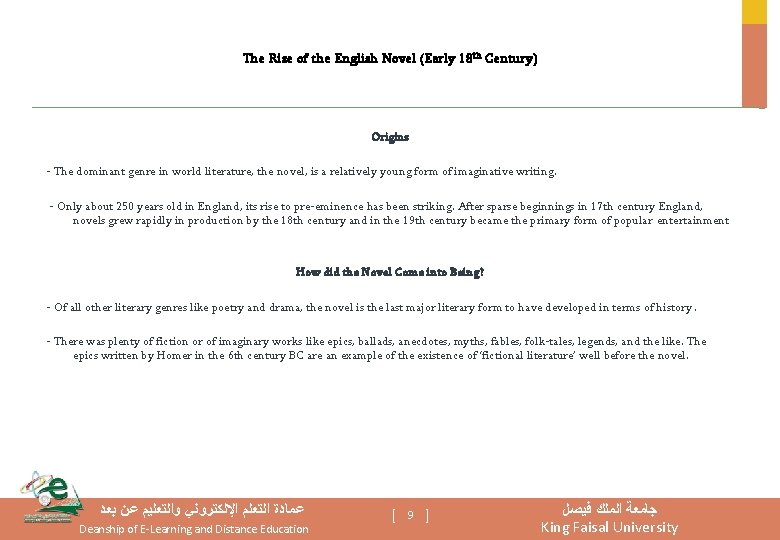
The Rise of the English Novel (Early 18 th Century) Origins - The dominant genre in world literature, the novel, is a relatively young form of imaginative writing. - Only about 250 years old in England, its rise to pre-eminence has been striking. After sparse beginnings in 17 th century England, novels grew rapidly in production by the 18 th century and in the 19 th century became the primary form of popular entertainment How did the Novel Come into Being? - Of all other literary genres like poetry and drama, the novel is the last major literary form to have developed in terms of history. - There was plenty of fiction or of imaginary works like epics, ballads, anecdotes, myths, fables, folk-tales, legends, and the like. The epics written by Homer in the 6 th century BC are an example of the existence of ‘fictional literature’ well before the novel. ﻋﻤﺎﺩﺓ ﺍﻟﺘﻌﻠﻢ ﺍﻹﻟﻜﺘﺮﻭﻧﻲ ﻭﺍﻟﺘﻌﻠﻴﻢ ﻋﻦ ﺑﻌﺪ Deanship of E-Learning and Distance Education [ 9 ] ﺟﺎﻣﻌﺔ ﺍﻟﻤﻠﻚ ﻓﻴﺼﻞ King Faisal University
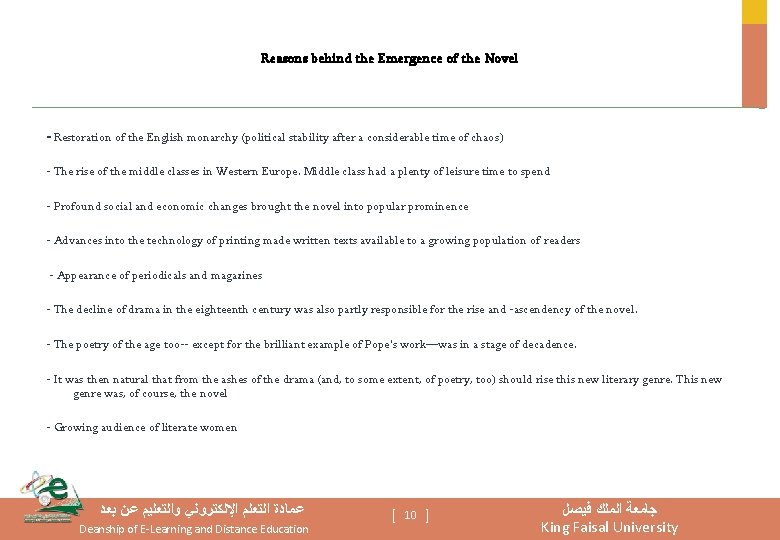
Reasons behind the Emergence of the Novel - Restoration of the English monarchy (political stability after a considerable time of chaos) - The rise of the middle classes in Western Europe. Middle class had a plenty of leisure time to spend - Profound social and economic changes brought the novel into popular prominence - Advances into the technology of printing made written texts available to a growing population of readers - Appearance of periodicals and magazines - The decline of drama in the eighteenth century was also partly responsible for the rise and -ascendency of the novel. - The poetry of the age too-- except for the brilliant example of Pope's work—was in a stage of decadence. - It was then natural that from the ashes of the drama (and, to some extent, of poetry, too) should rise this new literary genre. This new genre was, of course, the novel - Growing audience of literate women ﻋﻤﺎﺩﺓ ﺍﻟﺘﻌﻠﻢ ﺍﻹﻟﻜﺘﺮﻭﻧﻲ ﻭﺍﻟﺘﻌﻠﻴﻢ ﻋﻦ ﺑﻌﺪ Deanship of E-Learning and Distance Education [ 10 ] ﺟﺎﻣﻌﺔ ﺍﻟﻤﻠﻚ ﻓﻴﺼﻞ King Faisal University
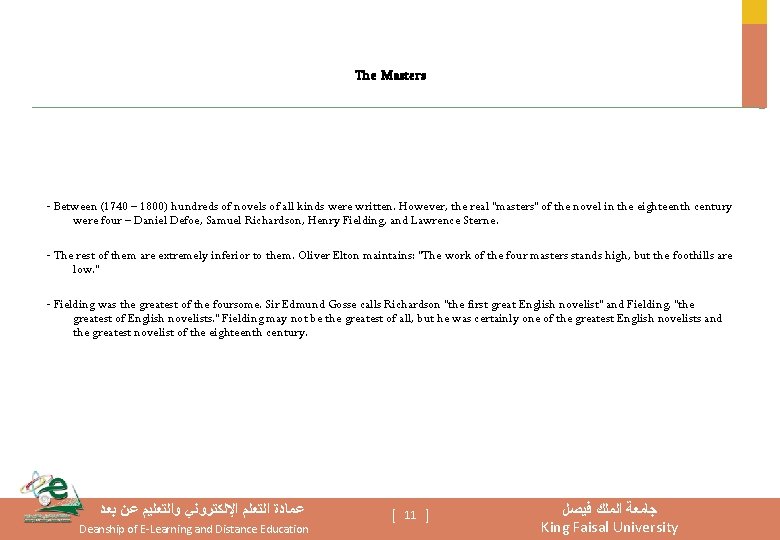
The Masters - Between (1740 – 1800) hundreds of novels of all kinds were written. However, the real "masters" of the novel in the eighteenth century were four – Daniel Defoe, Samuel Richardson, Henry Fielding, and Lawrence Sterne. - The rest of them are extremely inferior to them. Oliver Elton maintains: "The work of the four masters stands high, but the foothills are low. " - Fielding was the greatest of the foursome. Sir Edmund Gosse calls Richardson "the first great English novelist" and Fielding, "the greatest of English novelists. " Fielding may not be the greatest of all, but he was certainly one of the greatest English novelists and the greatest novelist of the eighteenth century. ﻋﻤﺎﺩﺓ ﺍﻟﺘﻌﻠﻢ ﺍﻹﻟﻜﺘﺮﻭﻧﻲ ﻭﺍﻟﺘﻌﻠﻴﻢ ﻋﻦ ﺑﻌﺪ Deanship of E-Learning and Distance Education [ 11 ] ﺟﺎﻣﻌﺔ ﺍﻟﻤﻠﻚ ﻓﻴﺼﻞ King Faisal University
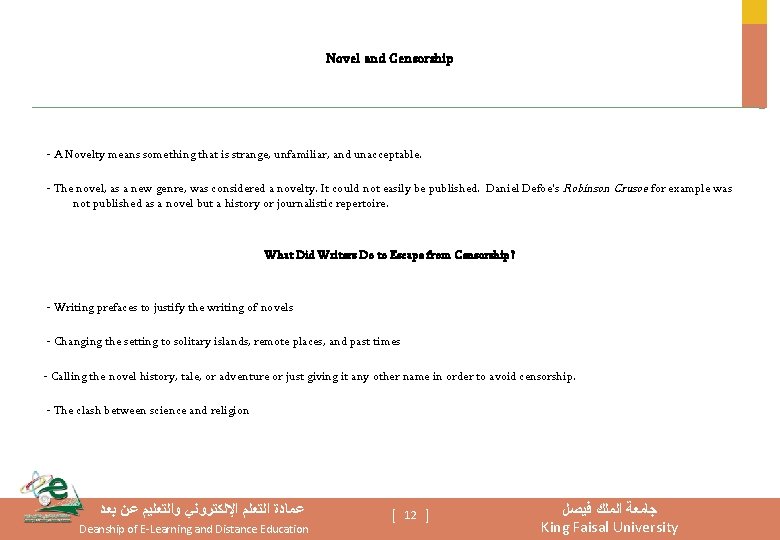
Novel and Censorship - A Novelty means something that is strange, unfamiliar, and unacceptable. - The novel, as a new genre, was considered a novelty. It could not easily be published. Daniel Defoe's Robinson Crusoe for example was not published as a novel but a history or journalistic repertoire. What Did Writers Do to Escape from Censorship ? - Writing prefaces to justify the writing of novels - Changing the setting to solitary islands, remote places, and past times - Calling the novel history, tale, or adventure or just giving it any other name in order to avoid censorship. - The clash between science and religion ﻋﻤﺎﺩﺓ ﺍﻟﺘﻌﻠﻢ ﺍﻹﻟﻜﺘﺮﻭﻧﻲ ﻭﺍﻟﺘﻌﻠﻴﻢ ﻋﻦ ﺑﻌﺪ Deanship of E-Learning and Distance Education [ 12 ] ﺟﺎﻣﻌﺔ ﺍﻟﻤﻠﻚ ﻓﻴﺼﻞ King Faisal University
Daniel Defoe: Writer of the Age - Defoe worked as a journalist most of the time. - This made his style and language easier than those of other writers who did not work as journalists. - He got interested in stories full of action and adventure - He knew how to create suspense and excitement in readers. - He liked to refer to facts and data in all he wrote. - He came to novel- writing at the age of 59; this means that the novels he wrote suffered from certain technical problems What Did Defoe Write about? - Individuals in search of fortune, dreaming of wealth - Adventures of all sorts -Remote places like islands and African nations. - Stories of exotic people (different from the British) ﻋﻤﺎﺩﺓ ﺍﻟﺘﻌﻠﻢ ﺍﻹﻟﻜﺘﺮﻭﻧﻲ ﻭﺍﻟﺘﻌﻠﻴﻢ ﻋﻦ ﺑﻌﺪ Deanship of E-Learning and Distance Education [ 13 ] ﺟﺎﻣﻌﺔ ﺍﻟﻤﻠﻚ ﻓﻴﺼﻞ King Faisal University