
Lecture 3 ELECTROCHEMICAL ENGINEERING CORROSION Code CHE 311
- Slides: 8
Lecture 3 ELECTROCHEMICAL ENGINEERING & CORROSION Code : CHE 311 THIRD YEAR BY Dr. OLFAT A. FADALI
CORROSION CELLS Types of electrochemical corrosion cells: 1. Galvanic cells 2. Concentration cells 3. Electrolytic cells
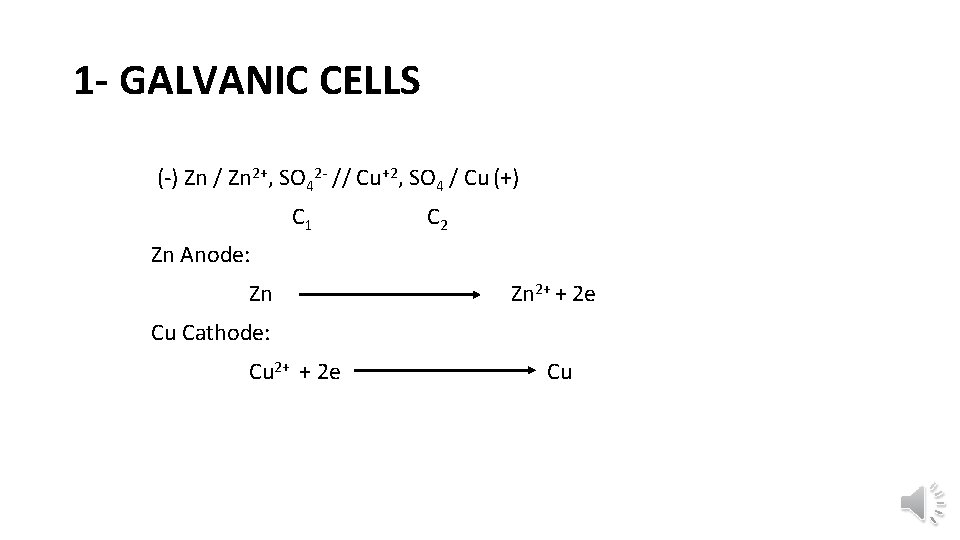
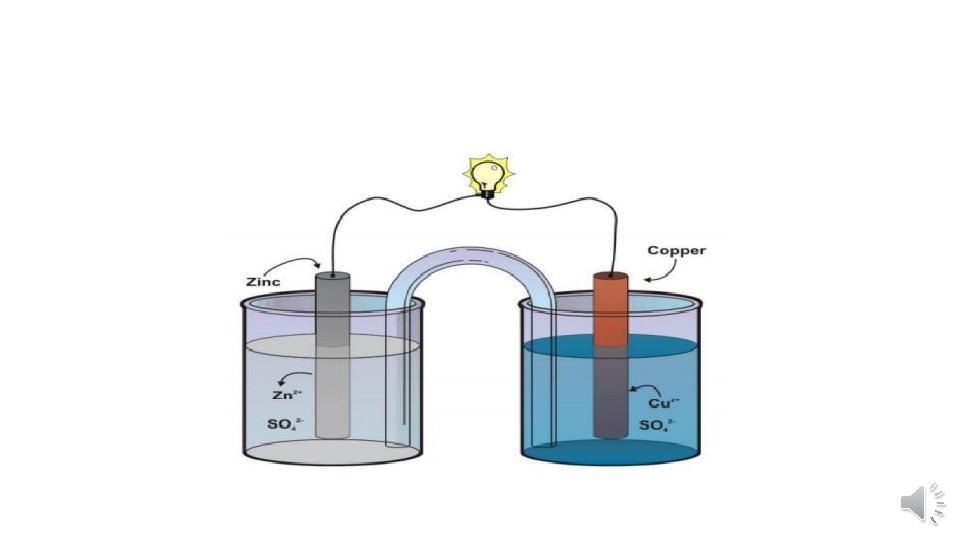
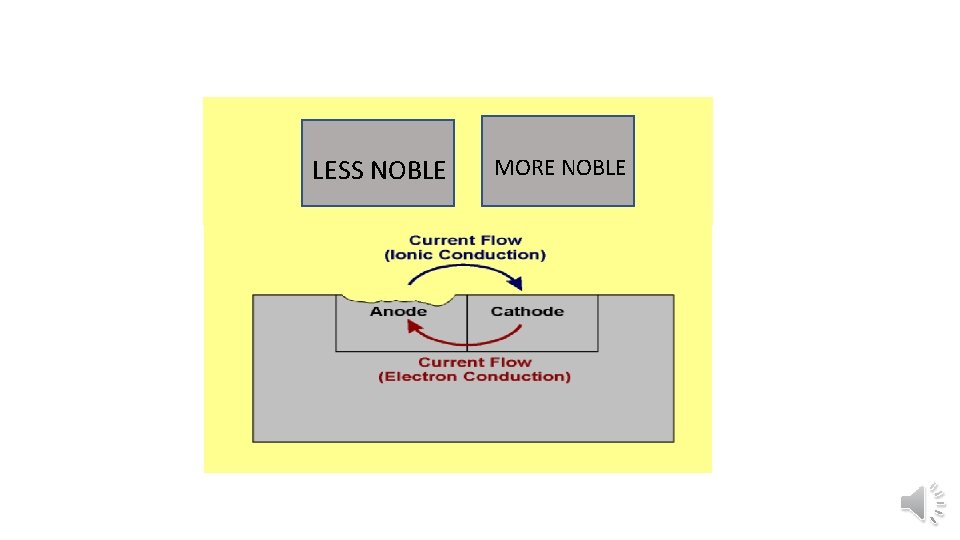
1 - GALVANIC CELLS (-) Zn / Zn 2+, SO 42 - // Cu+2, SO 4 / Cu (+) C 1 C 2 Zn Anode: Zn Zn 2+ + 2 e Cu Cathode: Cu 2+ + 2 e Cu
LESS NOBLE MORE NOBLE
Two metals in contact may be entirely different in composition: Example, iron pipe carrying water is anodic to copper pipe Galvanic corrosion: Example; Couple between steel and brass
Different heat treatment: Behavior of metals depend on the type of heat treatment, e. g. Tempered steel is anode to the annealed steel. Tempered: increase the hardness and strength of a metal by quenching or heat treatment. Annealed: heat of metal and then gradually cooling. Scratching or Abrasion The scratched or abraded area will be anodic to the remaining portion. Differential Strain A strained area is usually anodic to an unstrained area. Differential Grain and Matrix Composition Alloys may consist of heterogeneous phases, which may have a potential difference e. g. In case of Al – Cu alloy, Cu. Al 2 precipitate at the grain boundary is cathode to alpha matrix.
Different Grain Size Usually the smaller grains are anodic to large ones. Surface Conditions Different surface condition may also create a potential difference. This explained why a new section of pipe when welded in old line becomes anodic and corrodes. Differential curvature If the metal has a curved surface, the more highly convex surface is anodic to the less convex surface.