
Lecture 3 b Synchronous Machines Analysis of SteadyState
Lecture 3 b Synchronous Machines Analysis of Steady-State Operation Professor: Ali Keyhani
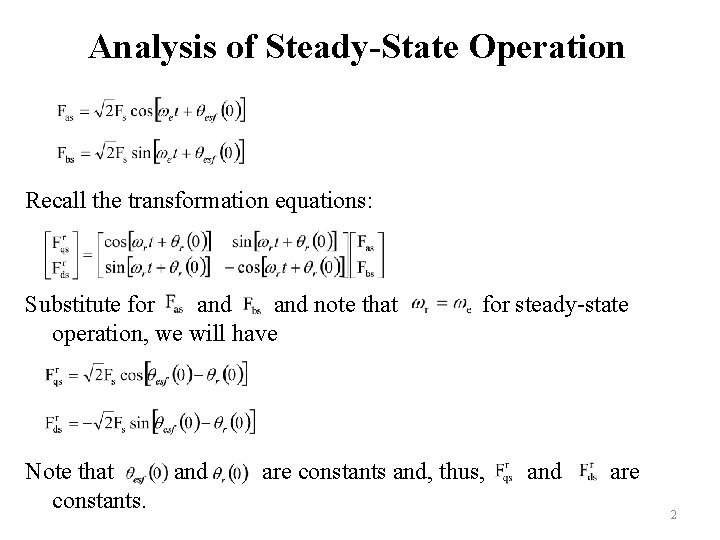
Analysis of Steady-State Operation Recall the transformation equations: Substitute for and note that operation, we will have Note that constants. and for steady-state are constants and, thus, and are 2
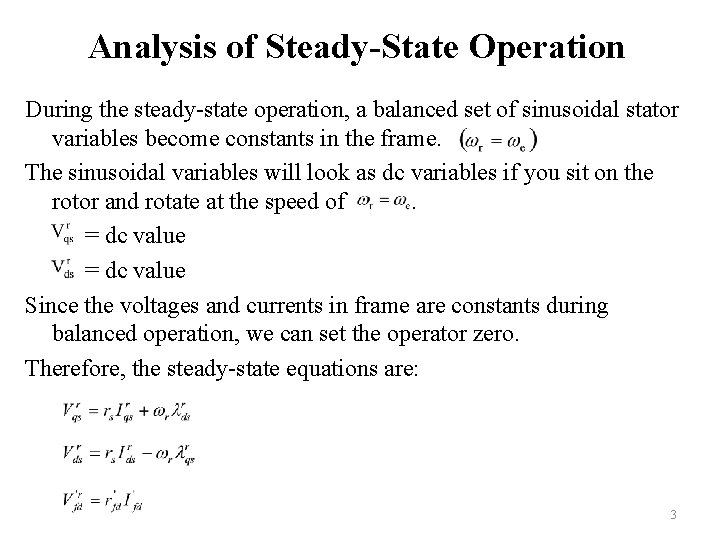
Analysis of Steady-State Operation During the steady-state operation, a balanced set of sinusoidal stator variables become constants in the frame. The sinusoidal variables will look as dc variables if you sit on the rotor and rotate at the speed of. = dc value Since the voltages and currents in frame are constants during balanced operation, we can set the operator zero. Therefore, the steady-state equations are: 3
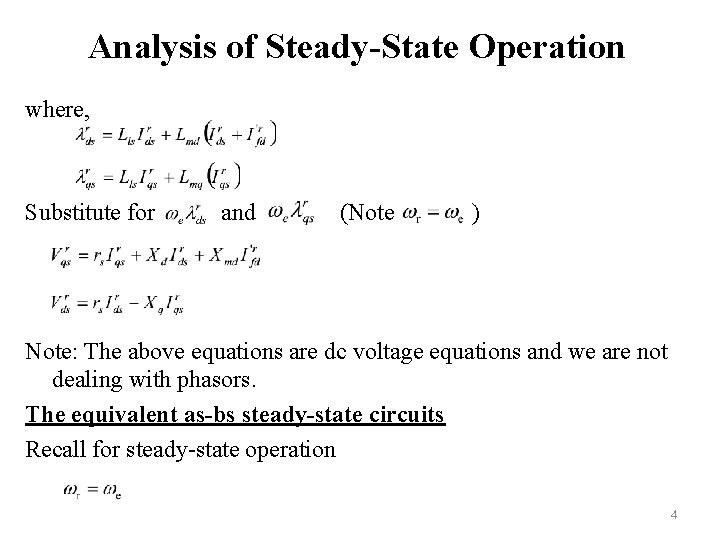
Analysis of Steady-State Operation where, Substitute for and (Note ) Note: The above equations are dc voltage equations and we are not dealing with phasors. The equivalent as-bs steady-state circuits Recall for steady-state operation 4
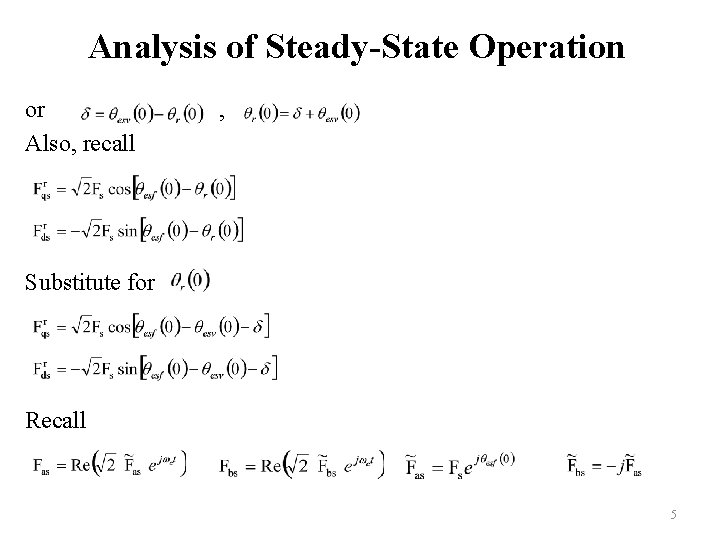
Analysis of Steady-State Operation or Also, recall , Substitute for Recall 5
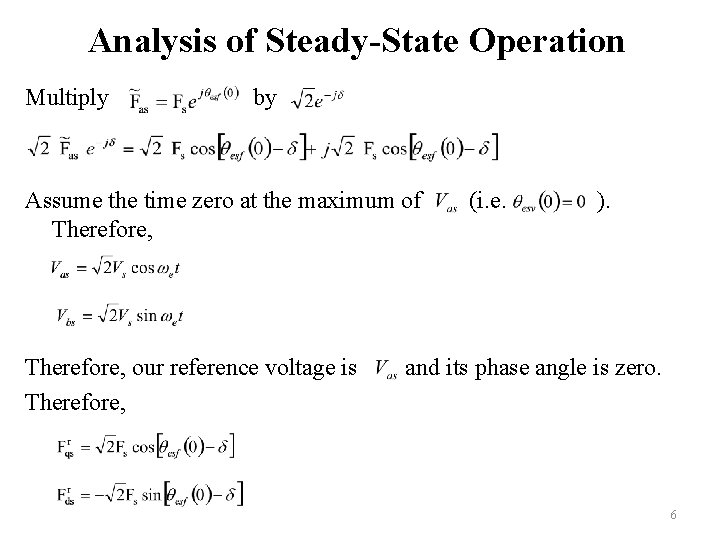
Analysis of Steady-State Operation Multiply by Assume the time zero at the maximum of Therefore, our reference voltage is Therefore, (i. e. ). and its phase angle is zero. 6
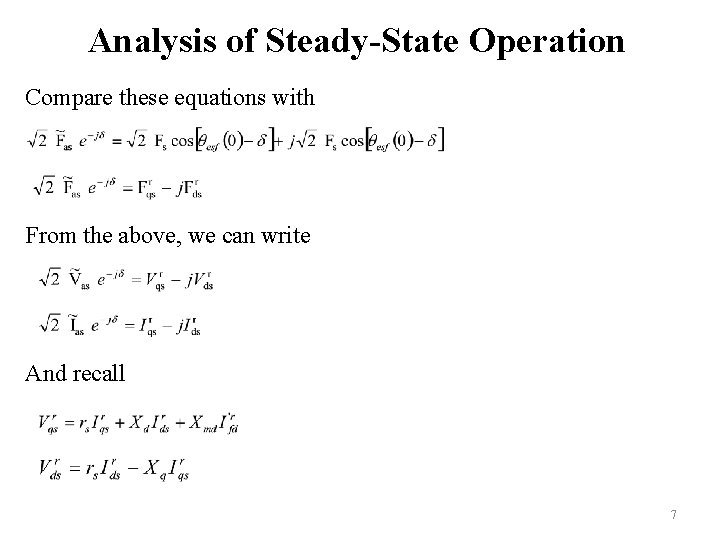
Analysis of Steady-State Operation Compare these equations with From the above, we can write And recall 7
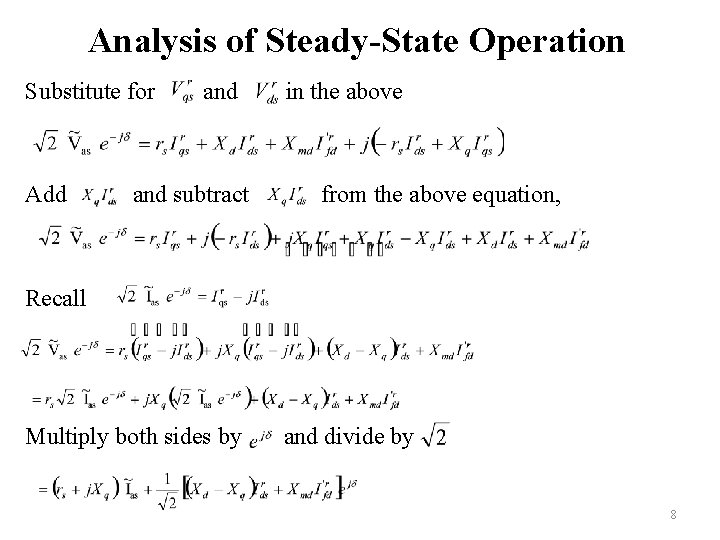
Analysis of Steady-State Operation Substitute for Add and subtract in the above from the above equation, Recall Multiply both sides by and divide by 8
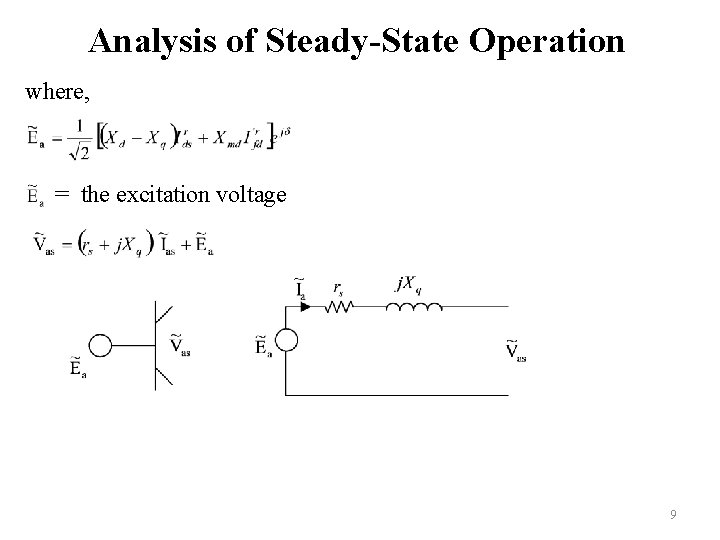
Analysis of Steady-State Operation where, = the excitation voltage 9
- Slides: 9