
LECTURE 3 AND 4 HUMAN THERAPEUTICS A PRODUCTION


- Slides: 22
LECTURE 3 AND 4
HUMAN THERAPEUTICS
A- PRODUCTION OF HETEROLOGOUS PROTEINS • One of the most dramatic and immediate impacts of genetic engineering was the production in bacteria of large a mounts of proteins encoded by human genes. • Heterologous protein means that is experimentally put into a cell that does not normally make. • 1 - In 1982, insulin, expressed from human insulin genes on plasmids inserted into Escherichia coli, was the first genetically engineered therapeutic agent to be approved for clinical use in humans. • Bacterially produced insulin, used widely in the treatment of diabetes, is indistinguishable in its structure and clinical effects from natural insulin. • 2 - Human growth hormone (h. GH), a protein made naturally by the pituitary gland, was the second such product. Inadequate secretion of h. GH in children results in dwarfism. • Before the advent of recombinant DNA technology, h. GH was prepared from pituitaries removed from human cadavers. The supply of such preparations was limited and the cost prohibitive.
• Furthermore, there were dangers in their a dministration that led to withdrawal from the market. • Some patients treated with injections of pituitary h. GH developed a disease caused by a contaminating slow virus, Jakob–Creutzfeldt syndrome, which leads to dementia and death. • h. GH can be produced in genetically engineered E. coli in large amounts, at relatively little cost, and free from such contaminants. • 3 - Human tissue plasminogen activator (t. PA), a proteolytic enzyme (a“serine” protease) with an affinity for fibrin clots, is anotherapeutic agent made available in large amounts as a consequence of recombinant DNA technology. • At the surface of fibrin clots, Tpa cleaves a single peptide bond in plasminogen to form an other serine protease, plasmin, which then degrades the clots. • This clot-degrading property of t. PA makes it a life-saving drug in the treatment of patients with a cute myocardial infarction (damage to heart muscle due to a rterial blockage). • Recombinant human insulin and h. GH offered impressive proof of the clinical efficacy and safety of human proteins made by engineered microorganisms
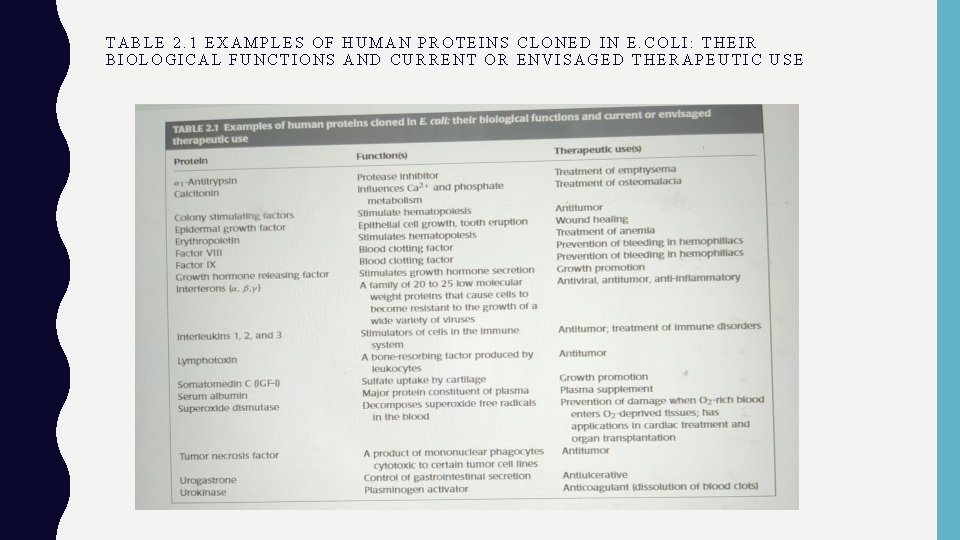
TABLE 2. 1 EXAMPLES OF HUMAN PROTEINS CLONED IN E. COLI: THEIR BIOLOGICAL FUNCTIONS AND CURRENT OR ENVISAGED THERAPEUTIC USE
B- DNA VACCINES • In the early 1990 s, attention focused on the potential wide-ranging opportunities offered by DNA vaccines. • DNA vaccines consist of appropriately engineered plasmid DNA prepared on a large scale in E. coli. • The obvious advantages of DNA plasmid vaccines are that they are not infectious, do not replicate, and encode only the protein(s) of interest. • Unlike other types of vaccines, there is no protein component, and hence induction of an immune response against subsequence immunizations is minimized. • A vaccine plasmid includes the following major components: a strong promoter system for expression in eukaryotic cells of an antigenic protein (e. g. , aviral coat protein), the immediate early promoter of cytomegalo virus is frequently used; a cloning site for the insertion of the gene encoding the antigenic protein; and an appropriately located polyadenylation termination sequence.
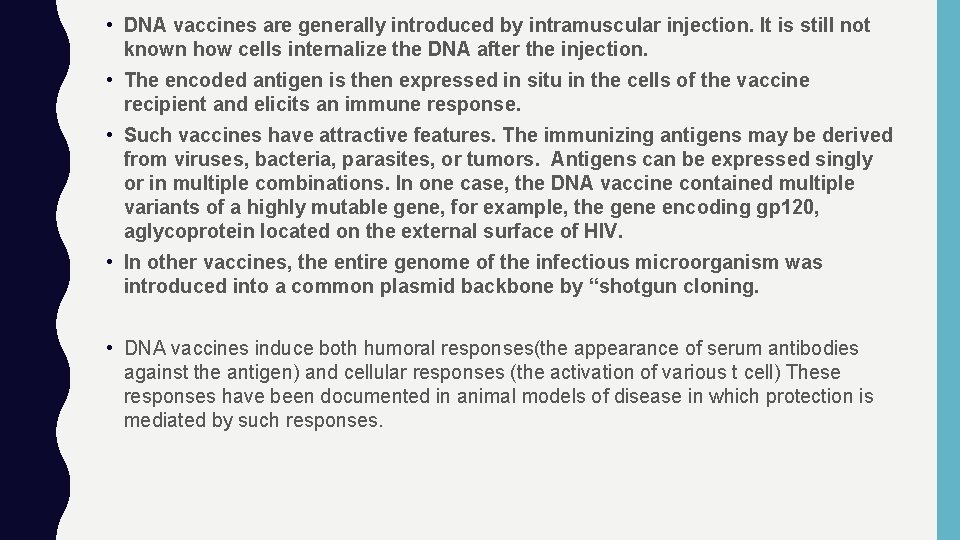
• DNA vaccines are generally introduced by intramuscular injection. It is still not known how cells internalize the DNA after the injection. • The encoded antigen is then expressed in situ in the cells of the vaccine recipient and elicits an immune response. • Such vaccines have attractive features. The immunizing antigens may be derived from viruses, bacteria, parasites, or tumors. Antigens can be expressed singly or in multiple combinations. In one case, the DNA vaccine contained multiple variants of a highly mutable gene, for example, the gene encoding gp 120, aglycoprotein located on the external surface of HIV. • In other vaccines, the entire genome of the infectious microorganism was introduced into a common plasmid backbone by “shotgun cloning. • DNA vaccines induce both humoral responses(the appearance of serum antibodies against the antigen) and cellular responses (the activation of various t cell) These responses have been documented in animal models of disease in which protection is mediated by such responses.
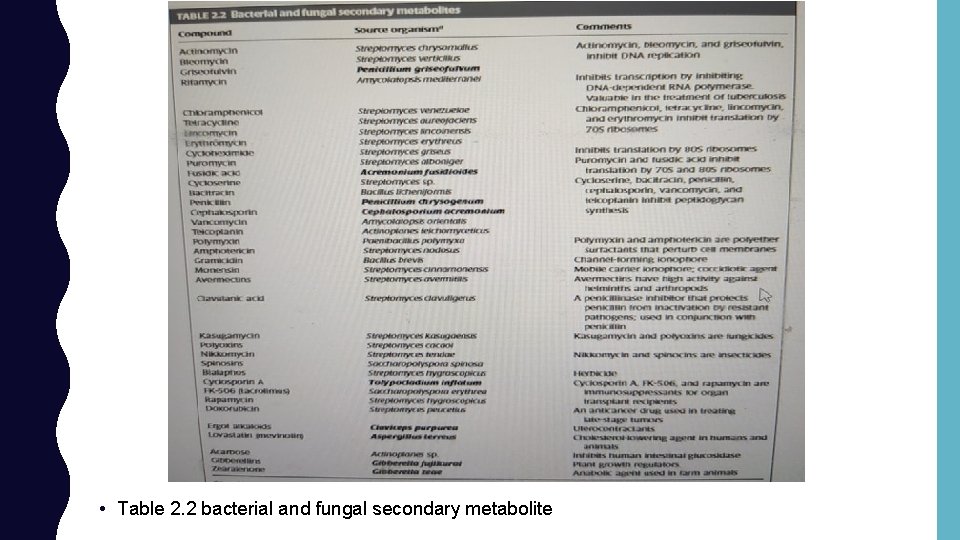
C- SECONDARY METABOLITES AS A SOURCE OF DRUGS • Microorganisms produce a huge number of small molecular weight compounds that are broadly described as secondary metabolites. • Tens of thousands of secondary metabolites and other compounds have been examined for biological activity in various organisms and many have proved invaluable as antibacterial or antifungal agents, anticancer drugs, immunosuppressants, herbicides. • Genetically modified microorganisms have been engineered to produce such compounds in large amounts. Among these, antibiotics are the secondary metabolites considered among the most important to human therapeutics, and the most extensive use of screens is in the search for compounds with selective toxicity for bacteria, fungi, or protozoa.
• Table 2. 2 bacterial and fungal secondary metabolite
D- AVERMECTINS • Many microorganisms indigenous to the soil, especially actinomycete bacteria and many fungi, produce biologically active secondary metabolites. • Intensive screening of culture supernatants (usually called “fermentation broths”), rich in secondary metabolites, has led to the discovery of numerous clinically valuable antibiotics, with penicillin as the most famous example, but of many other types of valuable compounds as well. • The structures of newly characterized compounds with herbicidal, insecticidal, and nematocidal activities from soil microorganisms are described in the scientific literature at a rate of several hundred each year. • The avermectins were discovered in the early 1980 s as a result of a deliberates each for antihelminthic compounds produced by soil microorganisms. • Helminths are parasitic worms that infect the intestines of any animal unfortunate enough to ingest their eggs.
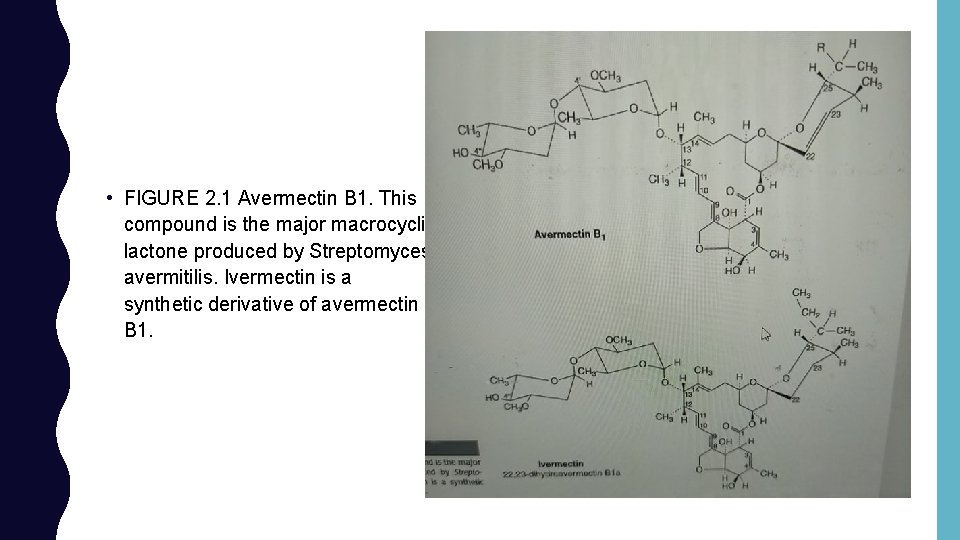
• There were two particularly notable features of the screening program. First, the microbial fermentation broths were tested by being administered in the diet to mice infested with the nematode Nemato spiroidesdubius • Nematodes are a subclass of helminths that includes round worms or thread worms. it simultaneously tested for efficacy of the preparation against the nematode and toxicity to the host. • Second, to increase the chance of discovering new types of compounds, the selection of microorganisms for testing was biased toward those with unusual morphological traits and nutritional requirements. • The morphological characteristics of Streptomyces avermitilis, the producer of avermectins, were unlike those of other known Streptomyces species. • S. avermitilis produces a family of closely related macrocyclic lactones (Figure 2. 1), compounds that are active against certain nematodes and arthropods at extremely low doses, but have relatively low toxicity to mammals. These avermectins and their derivatives, as the compounds came to be called, are highly effective in veterinary use and in treating infestations in humans
• Avermectins act on invertebrates by activating glutamate-gated chloride channels in their nerves and muscles, disrupting pharyngeal function and locomotion. The paralyzed parasite most likely starves to death. Their selective toxicity – they do not harm vertebrates – has led to the conclusion that avermectins affect aspecific cellular target either absent or inaccessible in the resistant organisms. • The avermectins do not migrate in soils from the site of application and are subject to both rapid photodegradation and microbial decomposition. Consequently, avermectins are not expected to persist for along time in the feces of treated animals. The biological activity and selective toxicity of the avermectins could not have been anticipated even if the structures of these compounds had been known.
• FIGURE 2. 1 Avermectin B 1. This compound is the major macrocyclic lactone produced by Streptomyces avermitilis. Ivermectin is a synthetic derivative of avermectin B 1.
E- ZARAGOZIC ACIDS (SQUALESTATINS) • Over 93% of the cholesterol in the human body is located in cells, where it performs indispensable structural and metabolic roles. The remaining 7% circulates in the plasma, where it contributes to atherosclerosis (formation of plaques on the walls of the arteries supplying the heart, the brain, and other vital organs). For delivery to tissues, plasma cholesterol is packaged in lipoprotein particles; two thirds is associated with low-density lipoprotein (LDL) and the balance with high-density lipoprotein. • The disorder familial hypercholesterolemia occurs in one in 500 of the population and results in elevated plasma levels of cholesterol-bearing LDL. Male heterozygotes with dominant familial hypercholesterolemia have an 85% chance of occurrence of heart attacks (myocardial infarction) before the age of 60. • The goal of therapy in these subjects is to reduce the level of LDL without impairing cholesterol delivery to cells. This is achieved by partial inhibition of cholesterol biosynthesis
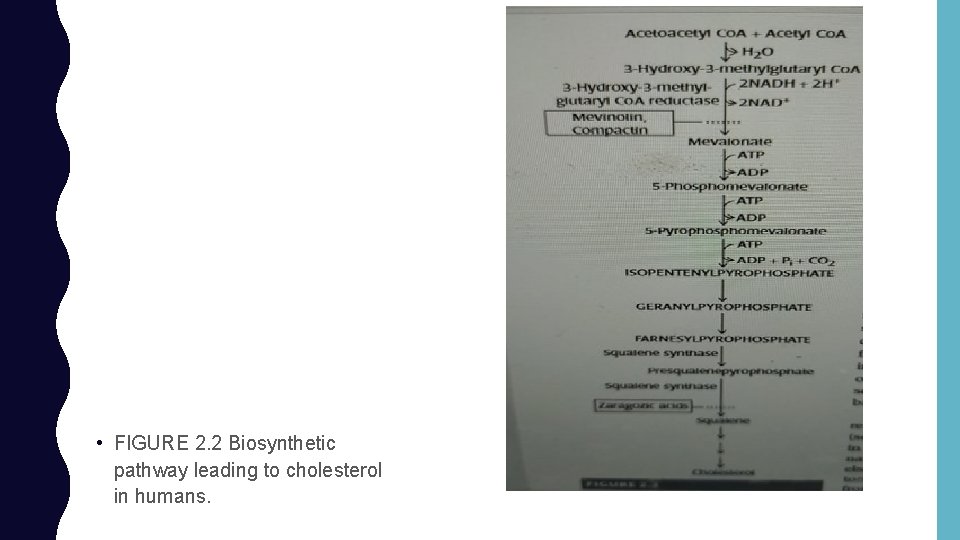
• Cholesterol is a product of the isoprenoid pathway in mammals. In addition to cholesterol and other steroids, this pathway produces several key metabolic intermediates essential to cells–dolichol, ubiquinone, the farnesyl and geranyl moieties of prenylated proteins, and the isopentenyl side chain of isopentenyl adenine. • The pathways for the synthesis of these compounds diverge from the synthesis of cholesterol either at or before the farnesyl diphosphate branch point (Figure 2. 2). The first committed step in cholesterol biosynthesis is the squalene synthase–catalyzed conversion of two moles of farnesyl pyrophosphate to one mole of squalene. Therefore, squalene synthase is an attractive target for selective inhibition of cholesterol biosynthesis.
• FIGURE 2. 2 Biosynthetic pathway leading to cholesterol in humans.
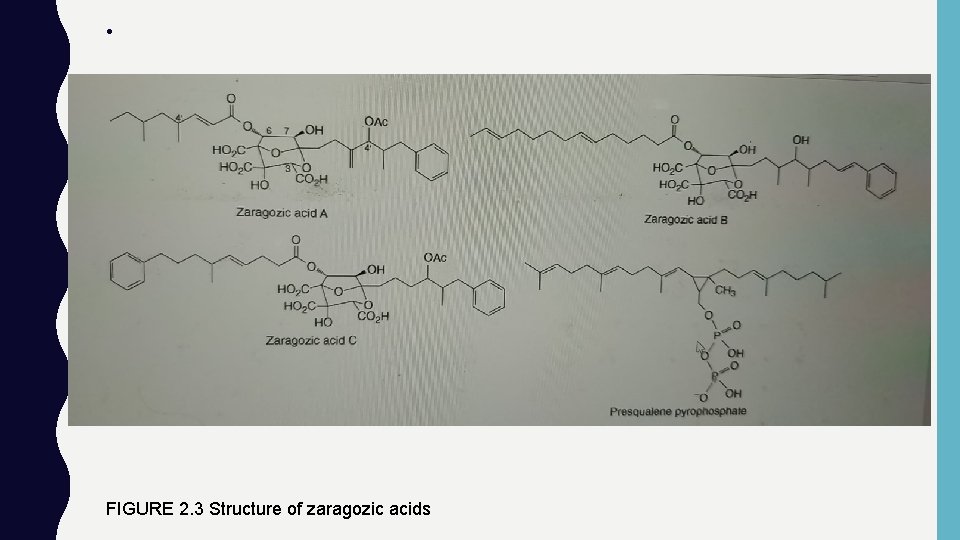
• Screening of fungal cultures led to the discovery of three structurally related and very potent inhibitors of squalene synthase. Zaragozic acid A (squalestatin. S 1; Figure 2. 3) was obtained from an un identified fungus found in a water sample taken from the Jalon River in Zaragoza, Spain, hence the name. Soon after, zaragozic acids Band C were obtained from fungi isolated else where: Sporomiella intermedia, acoprophilous fungus isolated from cottontail rabbit dung in Tucson, Arizona, and Leptodontium elatius, isolated from wood in a forest in North Carolina, respectively. • Squalene synthase catalyzesa two-step reaction. Farnesyl pyrophosphate is converted to presqualene diphosphate and then to squalene. The zaragozic acids are potent inhibitors of squalene synthase competitive with farnesyl pyrophosphate. • Experiments in laboratory animals indicate that zaragozic acids are promising therapeutic agents for hyper cholesterolemia. They have also proved valuable as specific inhibitors of squalene synthase in studies of the regulation of hydroxy methyl glutaryl–coenzyme A (Co. A) reductase and of other aspects of lipoprotein metabolism.
• FIGURE 2. 3 Structure of zaragozic acids
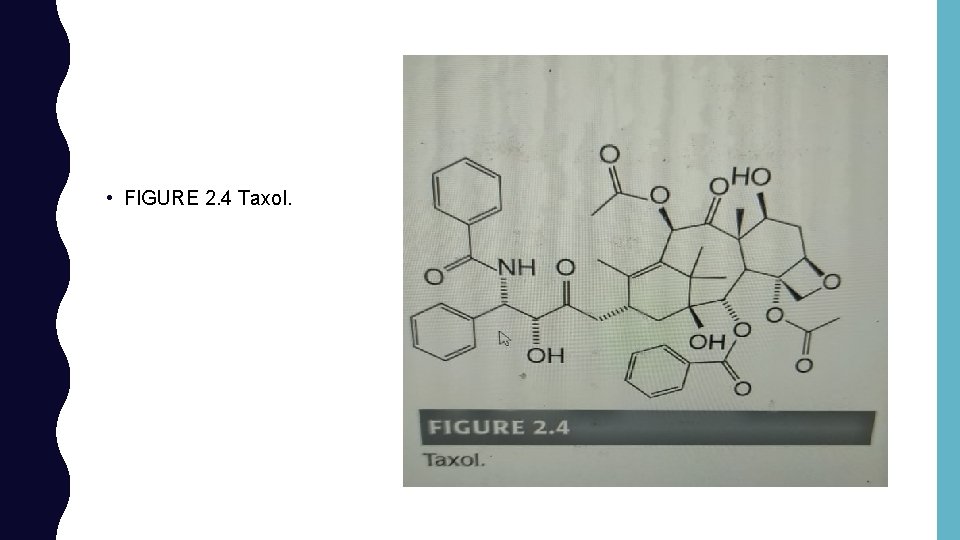
F- TAXOL • Microbial endophytes (bacteria and fungi) are an enormous, highly diverse component of the microbial world. Plant endophytes live in plant tissues between living plant cells but generally can be isolated and cultured independent of the host. • For some endophytes, there is evidence that genetic exchange takes place in both directions between the plant and the endophyte. Such exchange raises the possibility that higher plant pathways for the synthesis of complex organic molecules that have desirable biological activities might be transferred to their endophytes. • The story of the highly effective anticancer drug taxol provides proof of the validity of this notion. Taxol, ahighly substitute edit erpenoid with multiple asymmetric centers (Figure 2. 4) was isolated in 1965 from the Pacific yew (Taxusbrevifolia). • In human cells, taxol prevents the depolymerization of microtubules during cell division. It has the same effect in fungi. Consequently, in nature, taxol is afungicide.
• Taxol proved to be an exceptionally effective anticancer drug, and demand far exceeded the amount that could be produced from the Pacific yew • Even so, it would be advantageous if taxol could be produced by an in expensive microbial fermentation. The Pacific yew is not the only tree that produces taxol. This compound is in fact found in each of the world’s. Taxus species. • The possibility was then explored that a taxol-producing endophyte might be discovered in a Taxus species. In 1993, a taxol-producing endophytic fungus, Taxomyces and reanae, was discovered in T. brevifolia. Subsequently, fungal endophytes in a wide variety of higher plants were found to make taxol. • . In culture, these endophytes make taxol in sub microgram per liter amounts.
• FIGURE 2. 4 Taxol.
• For you: • What is other human theraputics compounds that microbes produce by using genetic engineering?