
Lecture 3 Algorithmic Methods for MM1 type models


- Slides: 35
Lecture 3: Algorithmic Methods for M/M/1 -type models Dr. Ahmad Al Hanbali Department of Industrial Engineering University of Twente a. alhanbali@utwente. nl 1
Lecture 3 q q This Lecture deals with continuous time Markov chains with infinite state space as opposed to finite space Markov chains in Lectures 1 and 2 Objective: To find equilibrium distribution of the Markov chain Lecture 3: M/M/1 type models 2
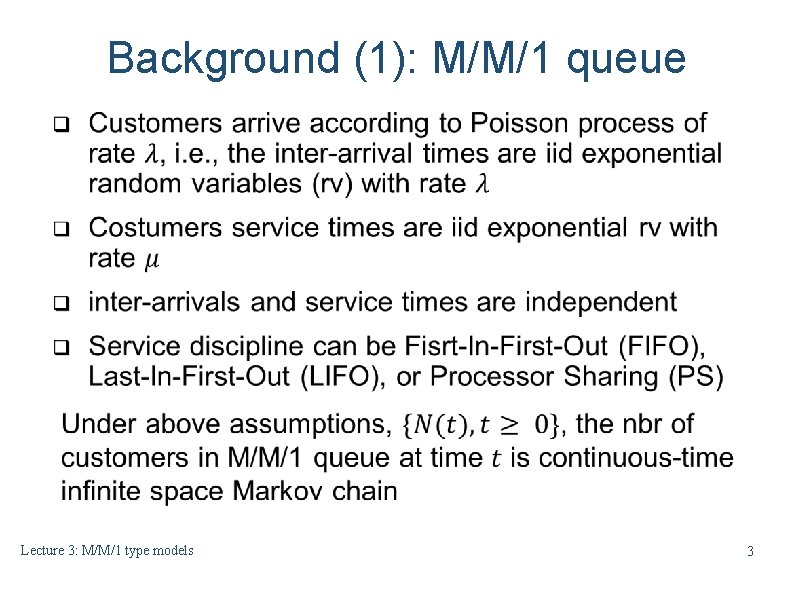
Background (1): M/M/1 queue Lecture 3: M/M/1 type models 3
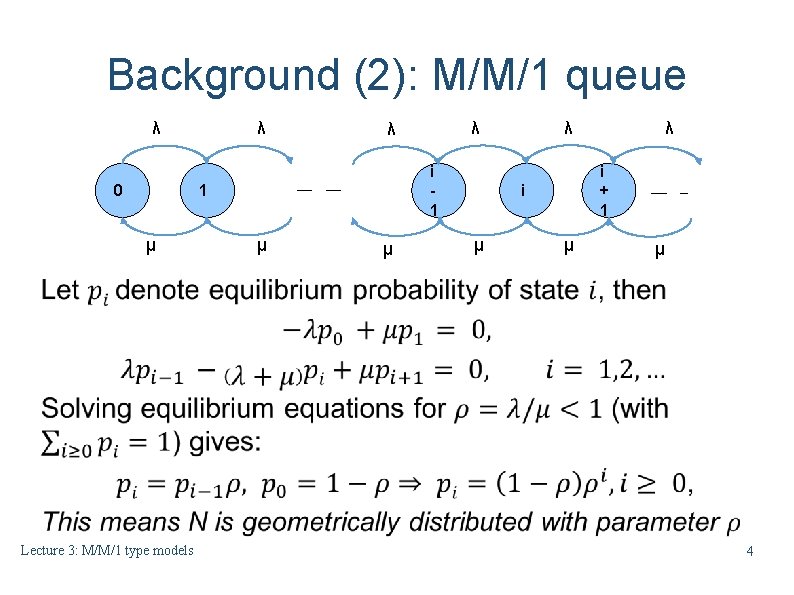
Background (2): M/M/1 queue λ 0 λ i 1 1 µ Lecture 3: M/M/1 type models λ λ µ µ λ i + 1 i µ λ µ µ 4
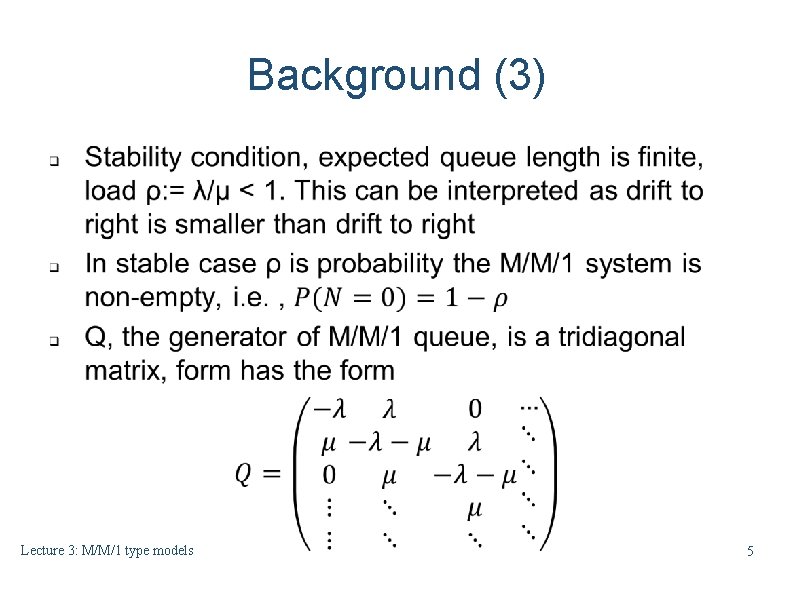
Background (3) Lecture 3: M/M/1 type models 5
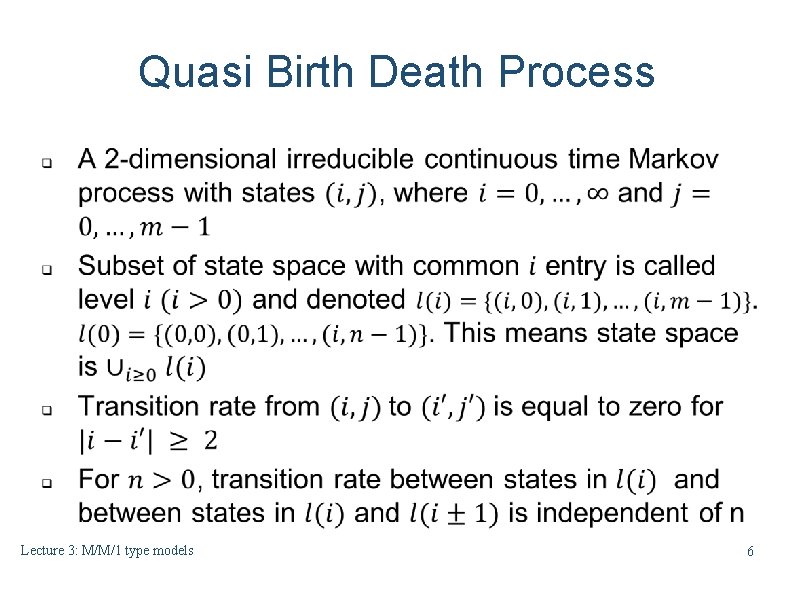
Quasi Birth Death Process Lecture 3: M/M/1 type models 6
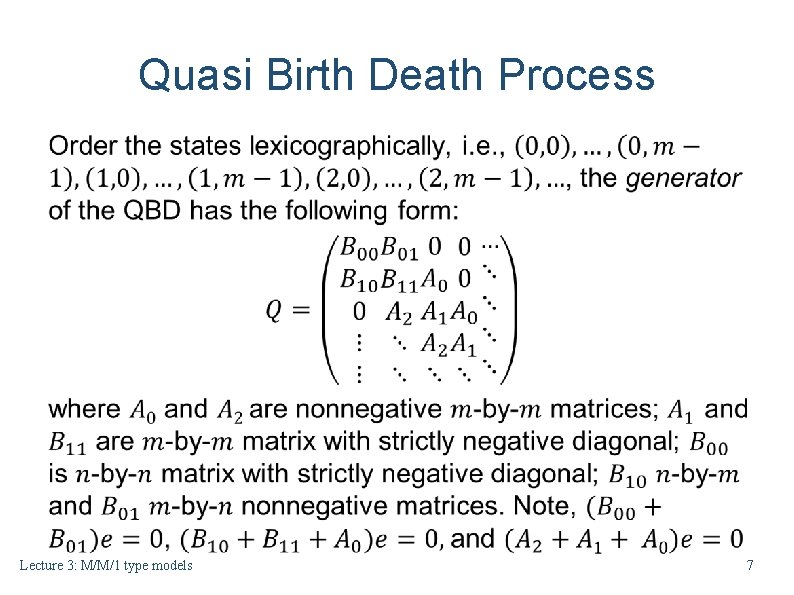
Quasi Birth Death Process Lecture 3: M/M/1 type models 7
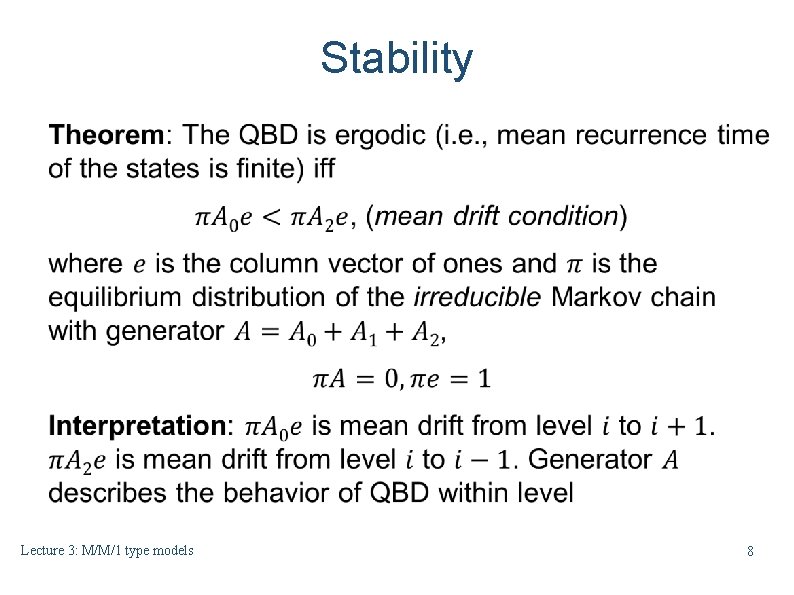
Stability Lecture 3: M/M/1 type models 8
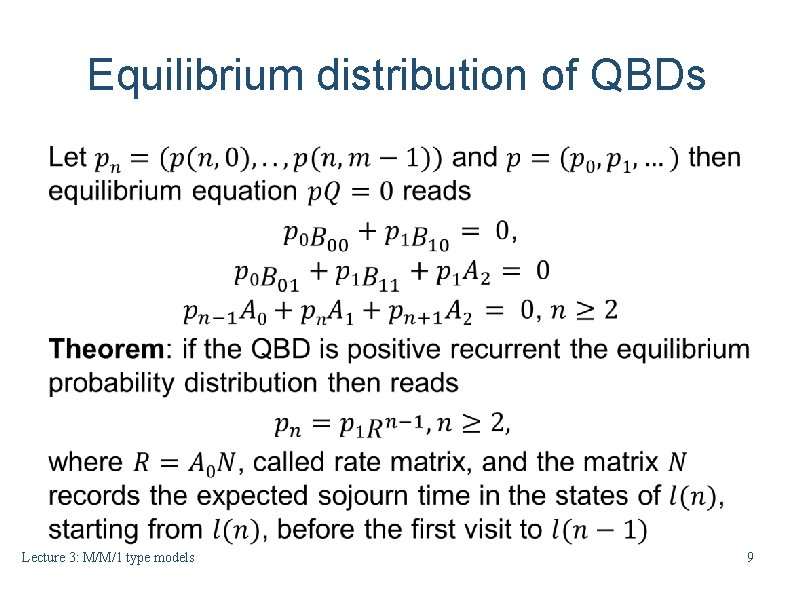
Equilibrium distribution of QBDs Lecture 3: M/M/1 type models 9
Proof Lecture 3: M/M/1 type models 10
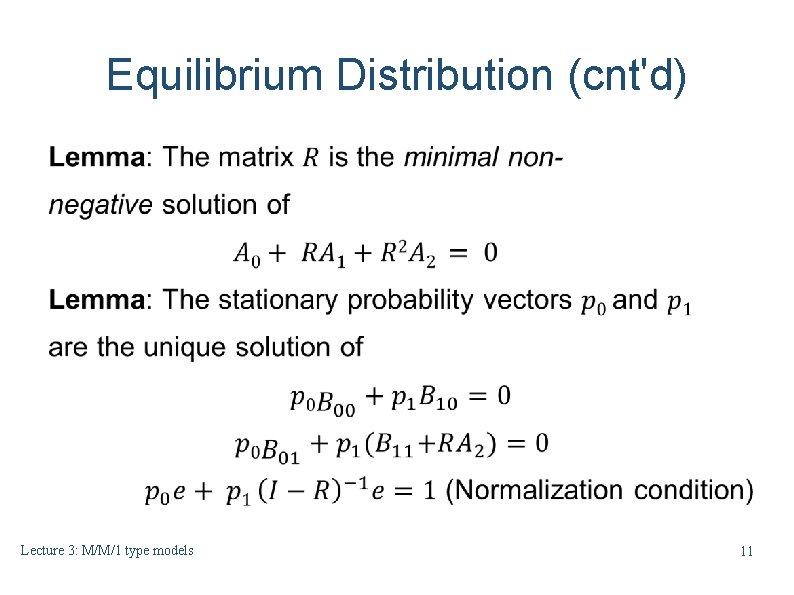
Equilibrium Distribution (cnt'd) Lecture 3: M/M/1 type models 11
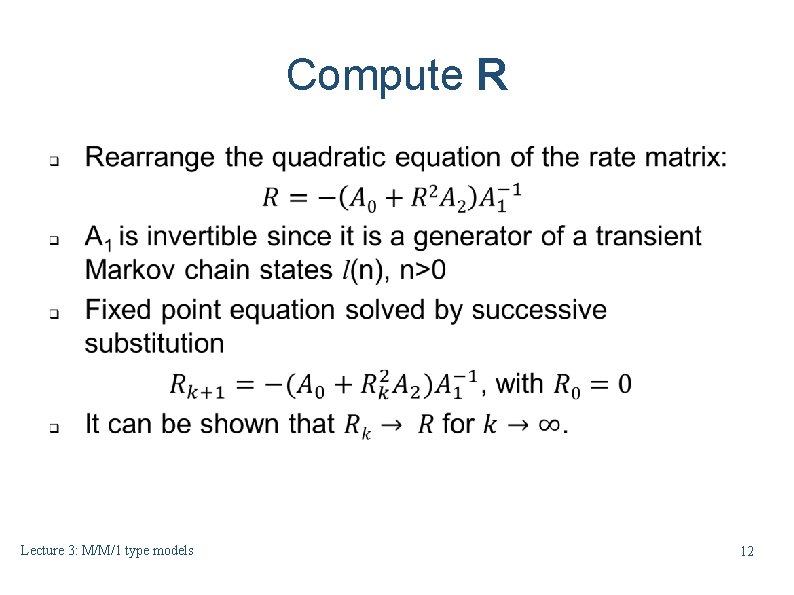
Compute R Lecture 3: M/M/1 type models 12
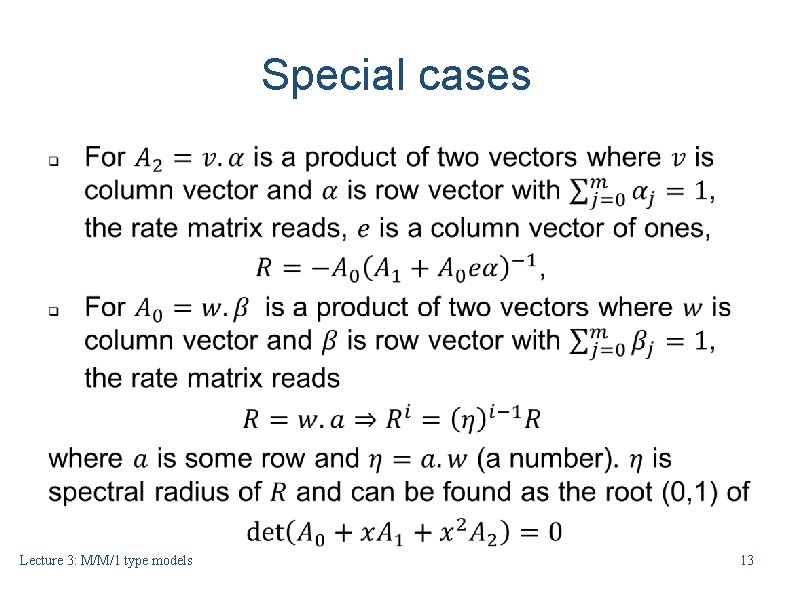
Special cases Lecture 3: M/M/1 type models 13
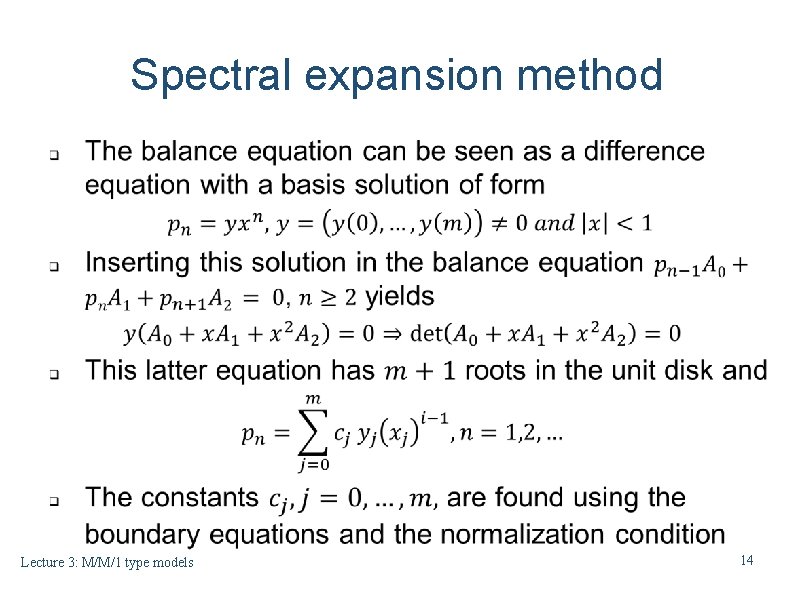
Spectral expansion method Lecture 3: M/M/1 type models 14
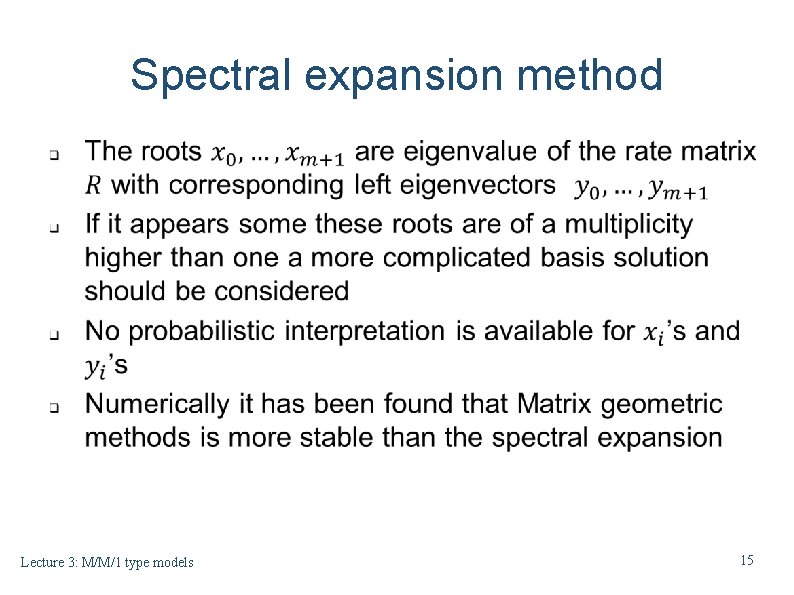
Spectral expansion method Lecture 3: M/M/1 type models 15
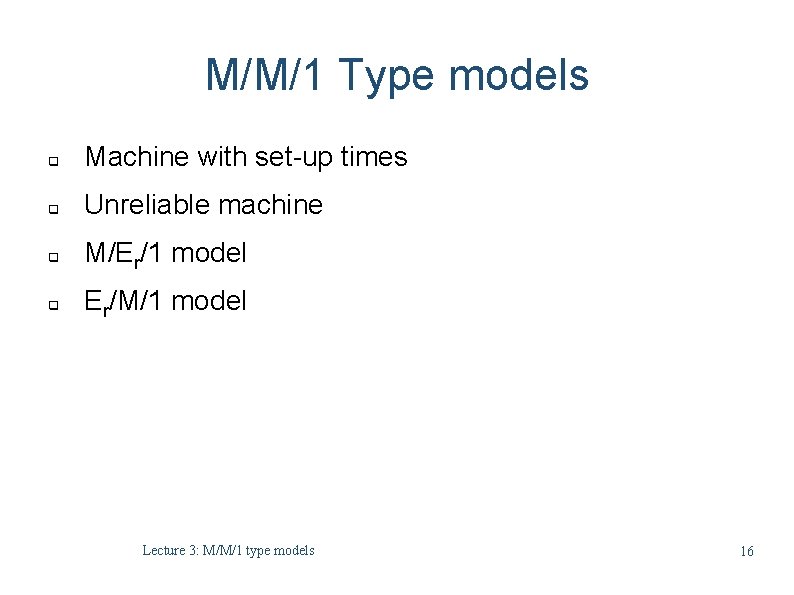
M/M/1 Type models q Machine with set-up times q Unreliable machine q M/Er/1 model q Er/M/1 model Lecture 3: M/M/1 type models 16
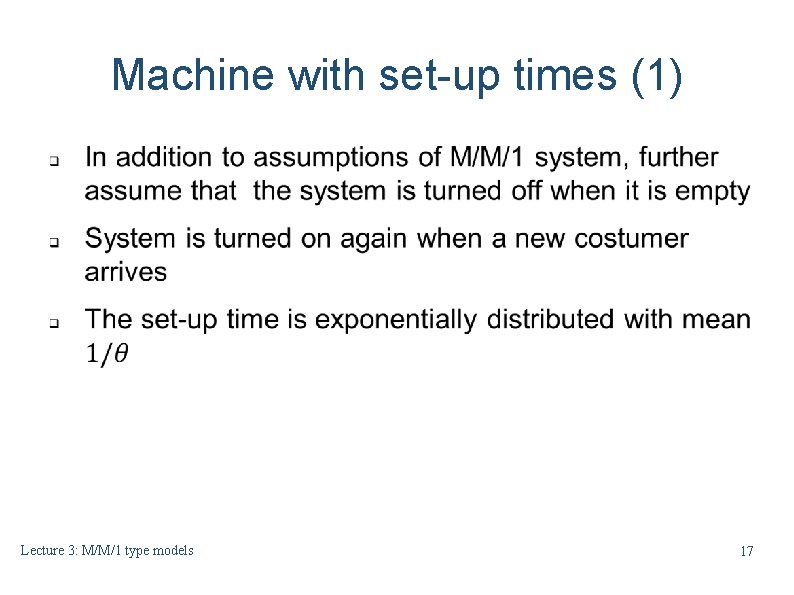
Machine with set-up times (1) Lecture 3: M/M/1 type models 17
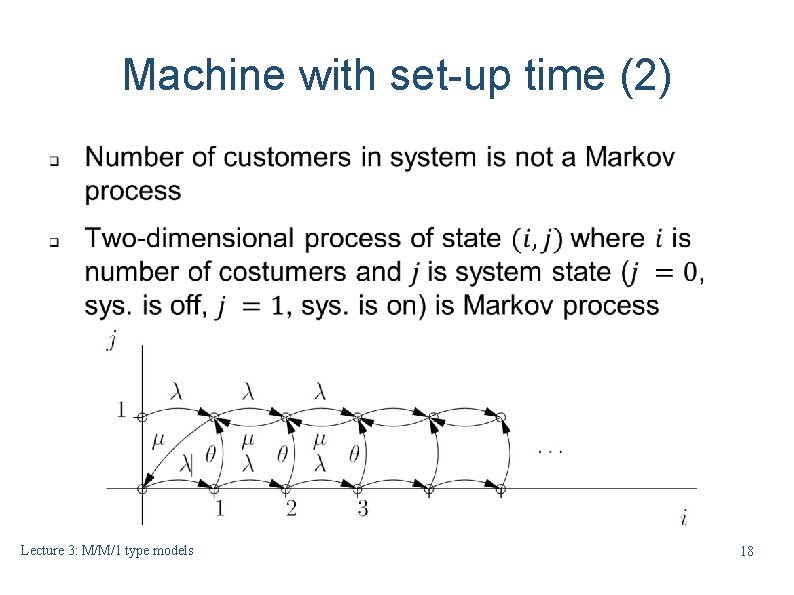
Machine with set-up time (2) Lecture 3: M/M/1 type models 18
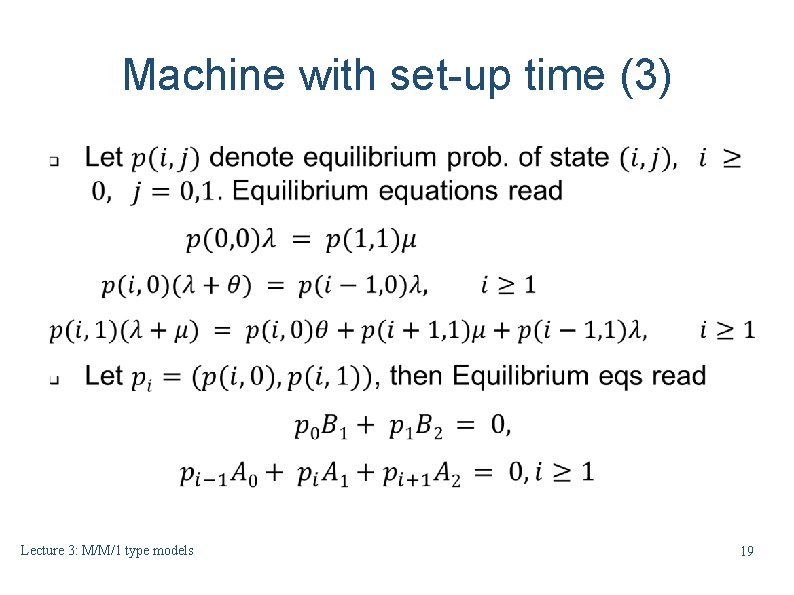
Machine with set-up time (3) Lecture 3: M/M/1 type models 19
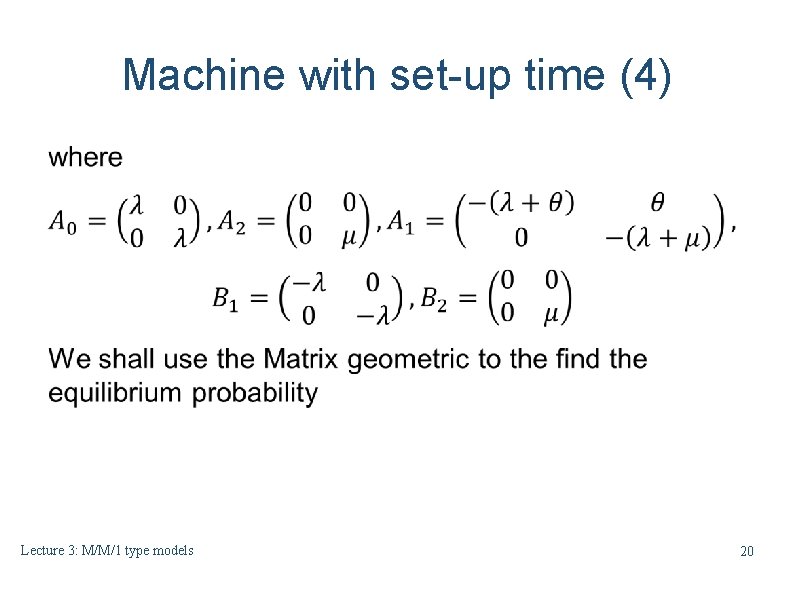
Machine with set-up time (4) Lecture 3: M/M/1 type models 20
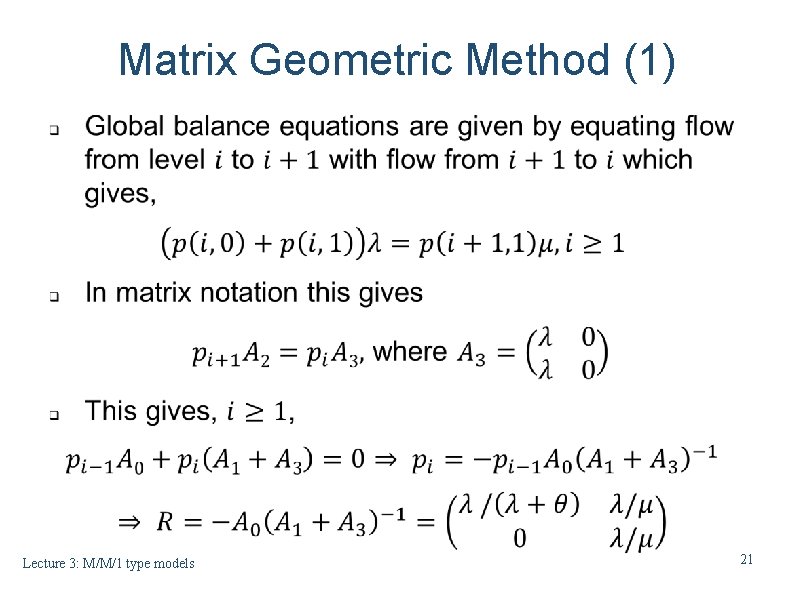
Matrix Geometric Method (1) Lecture 3: M/M/1 type models 21
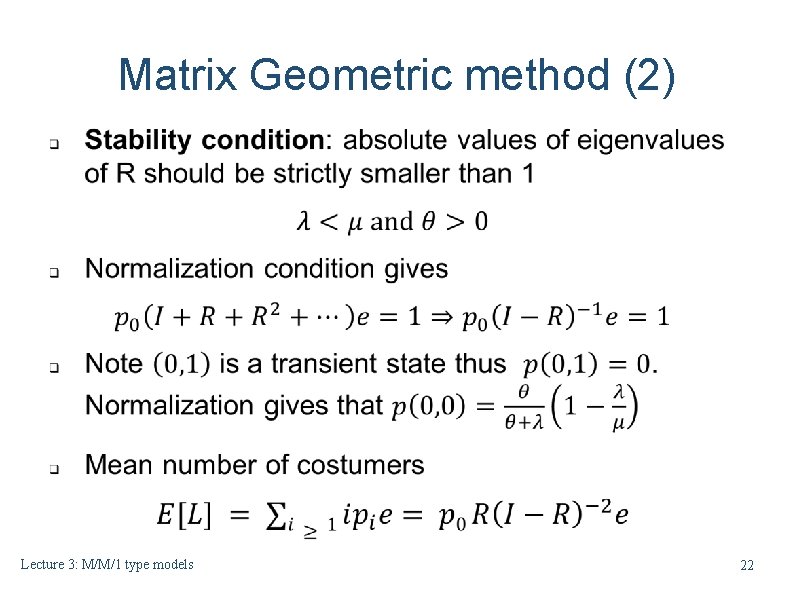
Matrix Geometric method (2) Lecture 3: M/M/1 type models 22
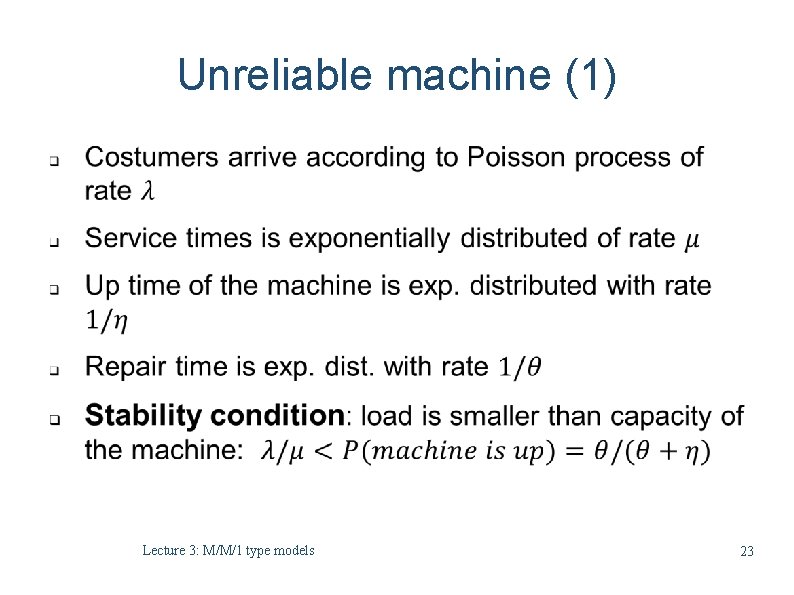
Unreliable machine (1) Lecture 3: M/M/1 type models 23
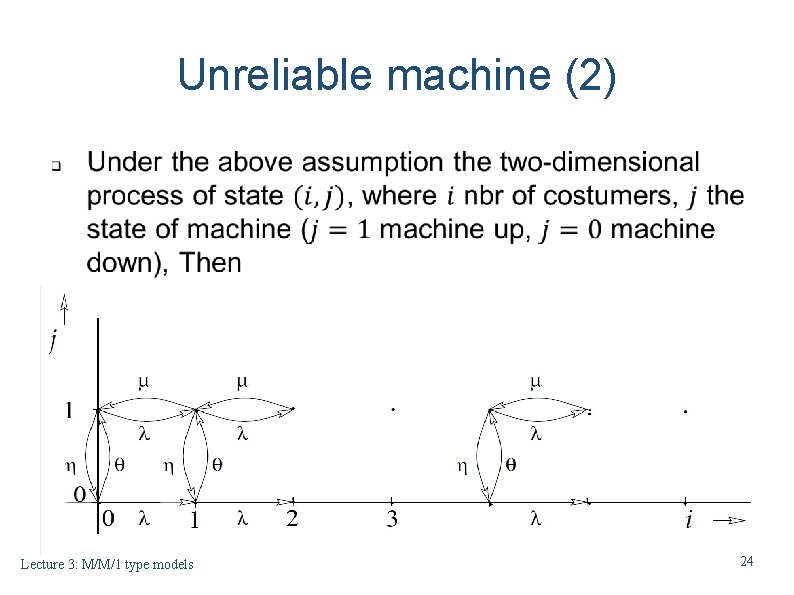
Unreliable machine (2) Lecture 3: M/M/1 type models 24
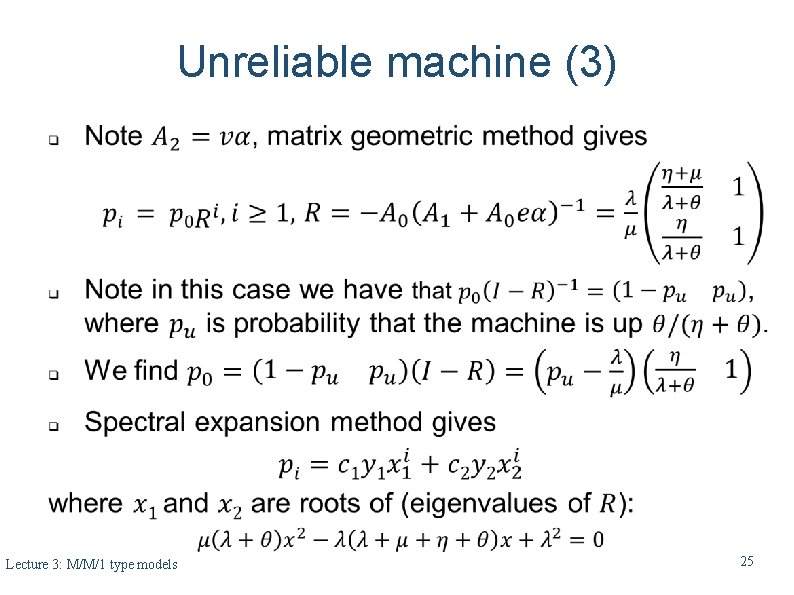
Unreliable machine (3) Lecture 3: M/M/1 type models 25
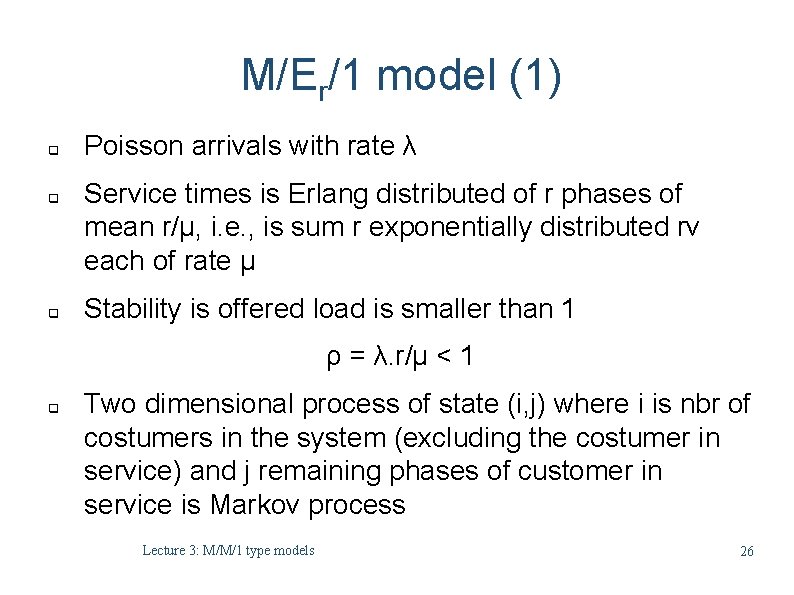
M/Er/1 model (1) q q q Poisson arrivals with rate λ Service times is Erlang distributed of r phases of mean r/μ, i. e. , is sum r exponentially distributed rv each of rate μ Stability is offered load is smaller than 1 ρ = λ. r/μ < 1 q Two dimensional process of state (i, j) where i is nbr of costumers in the system (excluding the costumer in service) and j remaining phases of customer in service is Markov process Lecture 3: M/M/1 type models 26
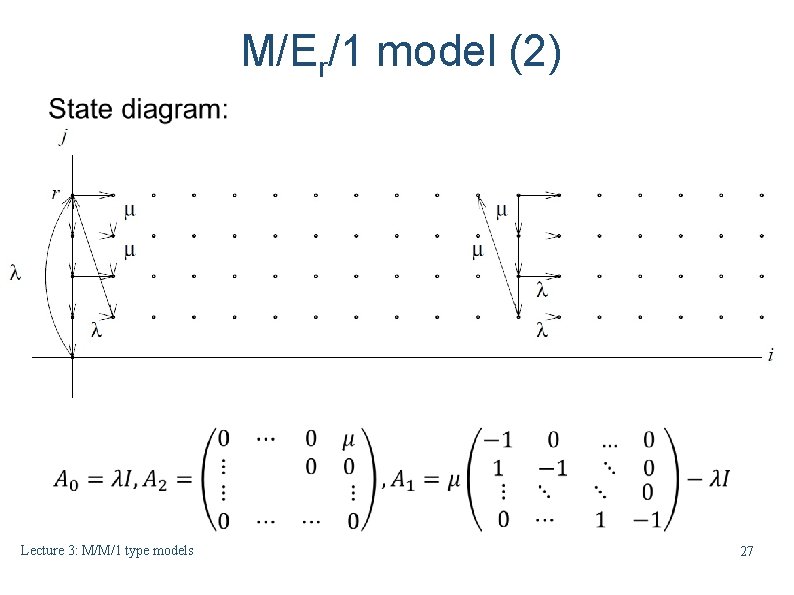
M/Er/1 model (2) Lecture 3: M/M/1 type models 27
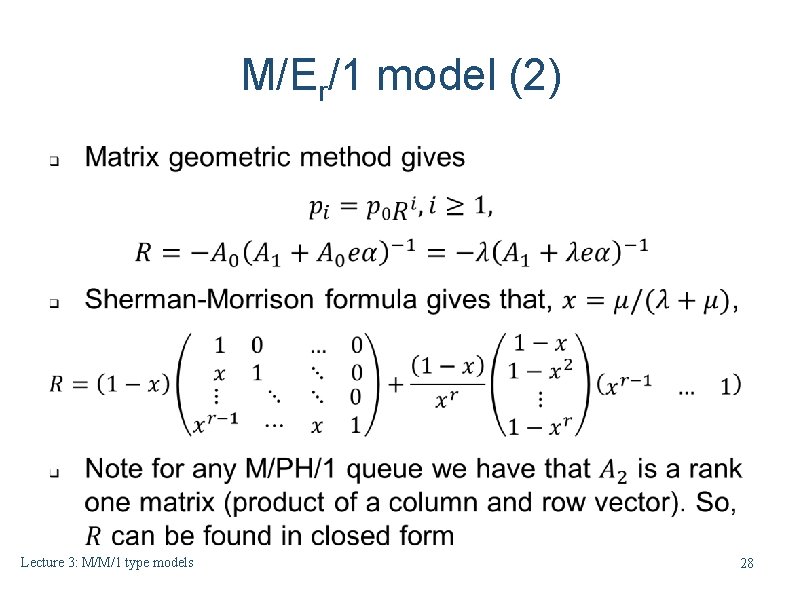
M/Er/1 model (2) Lecture 3: M/M/1 type models 28
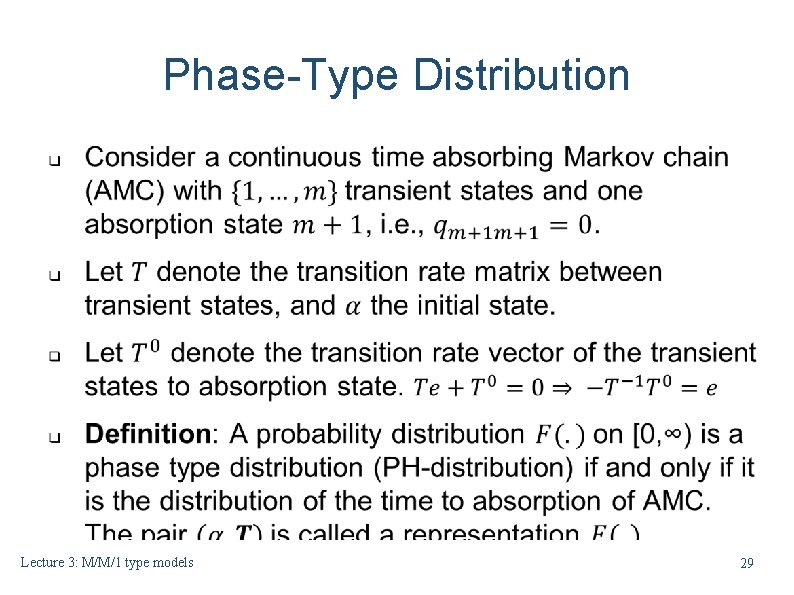
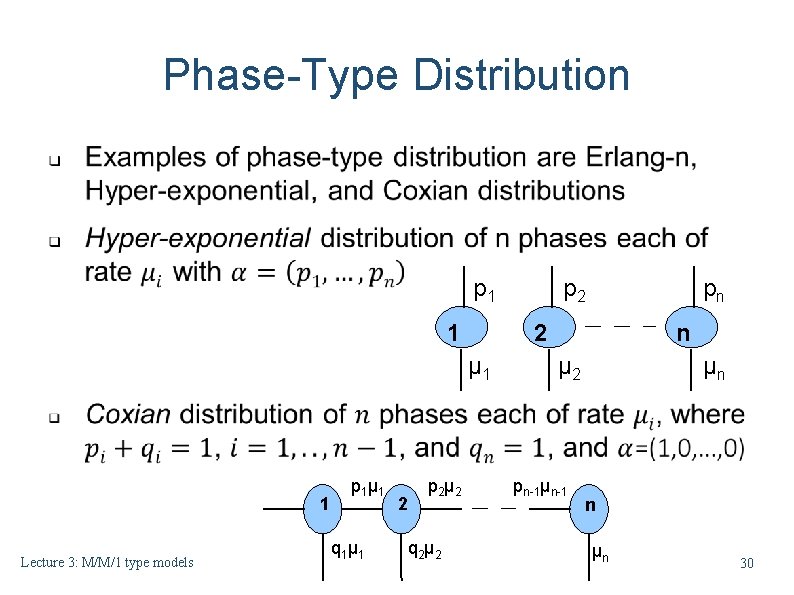
Phase-Type Distribution Lecture 3: M/M/1 type models 29
Phase-Type Distribution 1 2 μ 1 1 Lecture 3: M/M/1 type models p 1 μ 1 q 1 μ 1 2 p 2 μ 2 q 2 μ 2 pn p 2 p 1 n μ 2 pn-1μn-1 μn n μn 30
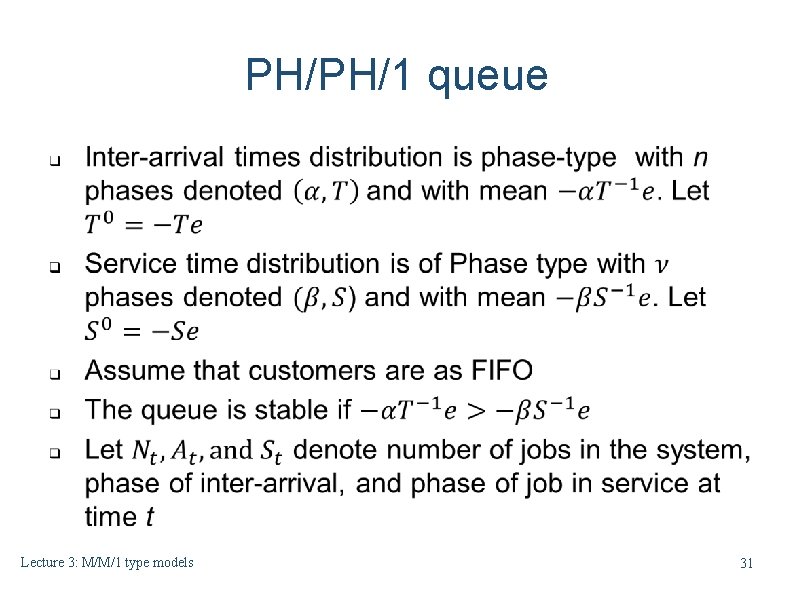
PH/PH/1 queue Lecture 3: M/M/1 type models 31
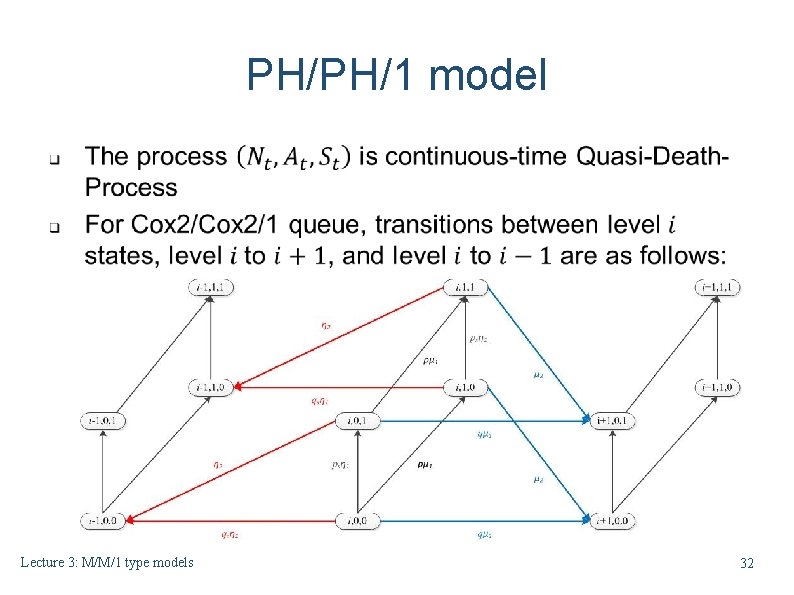
PH/PH/1 model Lecture 3: M/M/1 type models 32
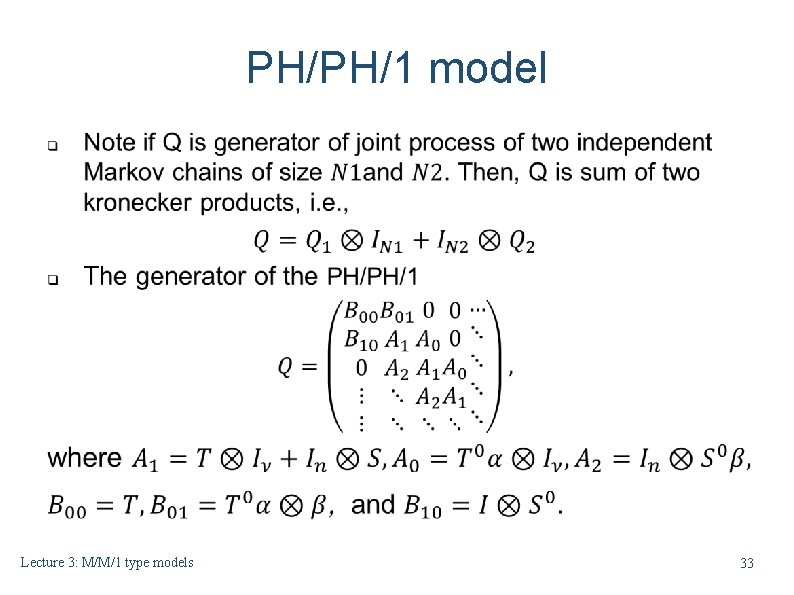
PH/PH/1 model Lecture 3: M/M/1 type models 33
PH/PH/1 model Lecture 3: M/M/1 type models 34
References q q R. Nelson. Matrix geometric solutions in Markov models: a mathematical tutorial. IBM Technical Report 1991. G. Latouche and V. Ramaswami (1999), Introduction to Matrix Analytic Methods in Stochastic Modeling. SIAM. I. Mitrani and D. Mitra, A spectral expansion method for random walks on semi-infinite strips, in: R. Beauwens and P. de Groen (eds. ), Iterative methods in linear algebra. North-Holland, Amsterdam (1992), 141– 149. M. F. Neuts (1981), Matrix-geometric solutions in stochastic models. The John Hopkins University Press, Baltimore. Lecture 3: M/M/1 type models 35