
Lecture 3 a Synchronous Machine Modeling Turnratio Transformation
- Slides: 14
Lecture 3 a Synchronous Machine Modeling Turn-ratio Transformation Professor: Ali Keyhani
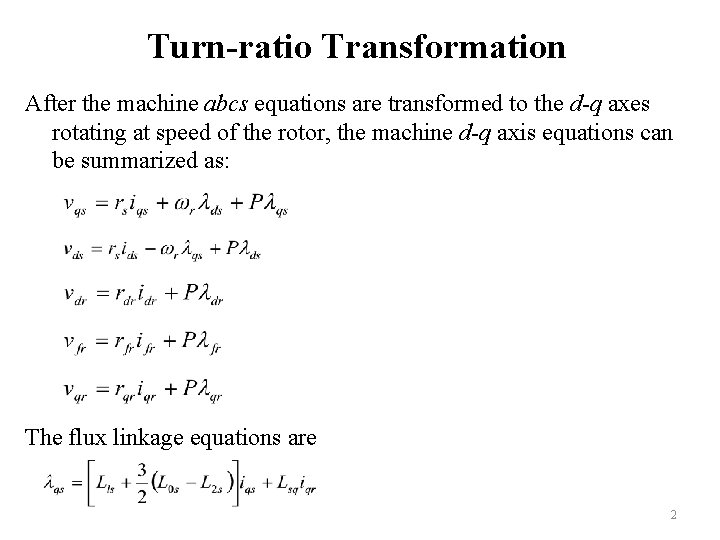
Turn-ratio Transformation After the machine abcs equations are transformed to the d-q axes rotating at speed of the rotor, the machine d-q axis equations can be summarized as: The flux linkage equations are 2
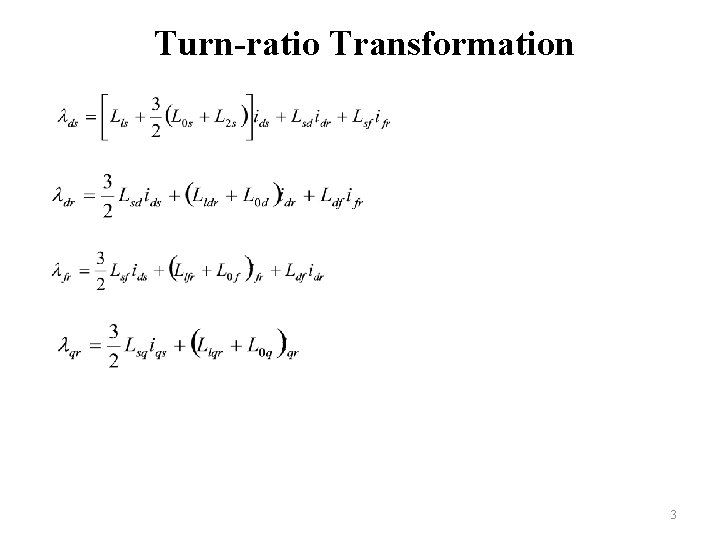
Turn-ratio Transformation 3
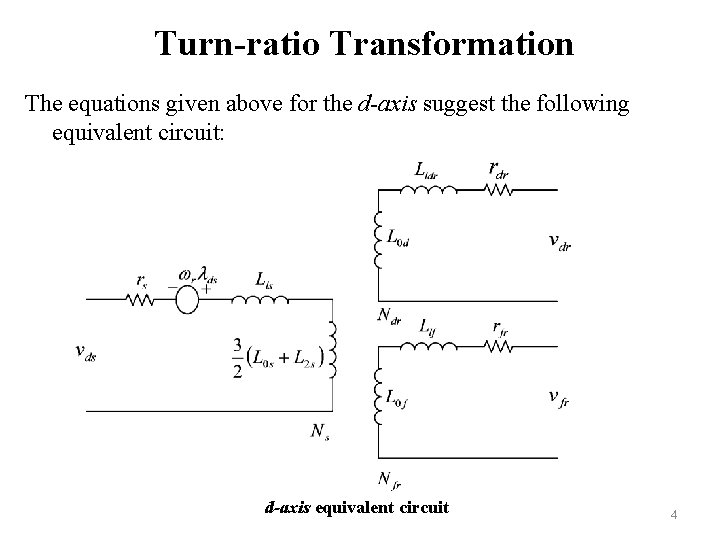
Turn-ratio Transformation The equations given above for the d-axis suggest the following equivalent circuit: d-axis equivalent circuit 4
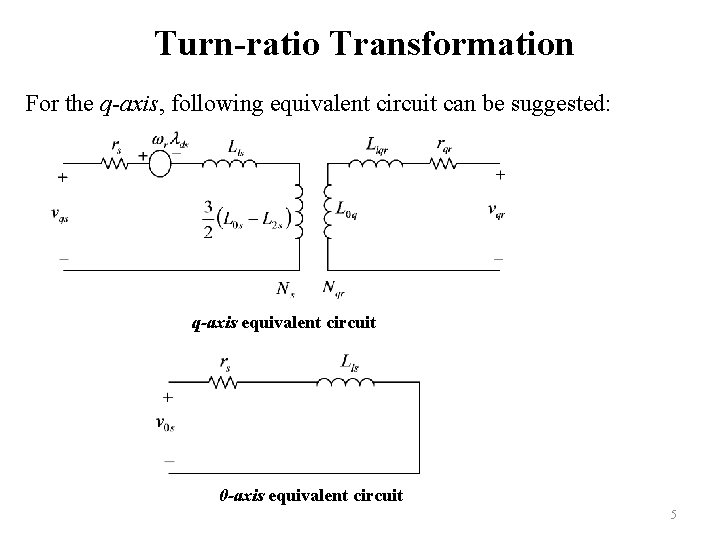
Turn-ratio Transformation For the q-axis, following equivalent circuit can be suggested: q-axis equivalent circuit 0 -axis equivalent circuit 5
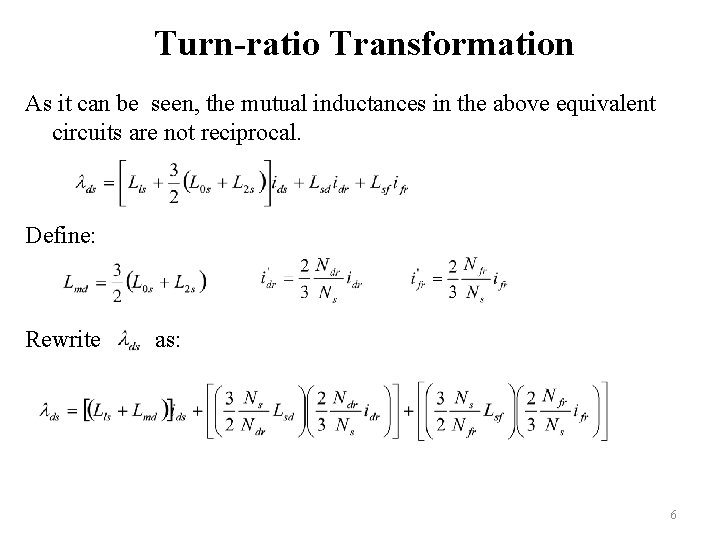
Turn-ratio Transformation As it can be seen, the mutual inductances in the above equivalent circuits are not reciprocal. Define: Rewrite as: 6
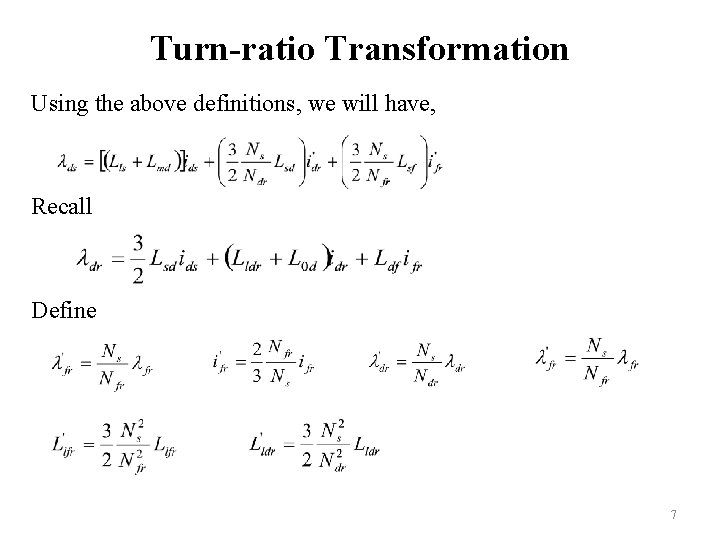
Turn-ratio Transformation Using the above definitions, we will have, Recall Define 7
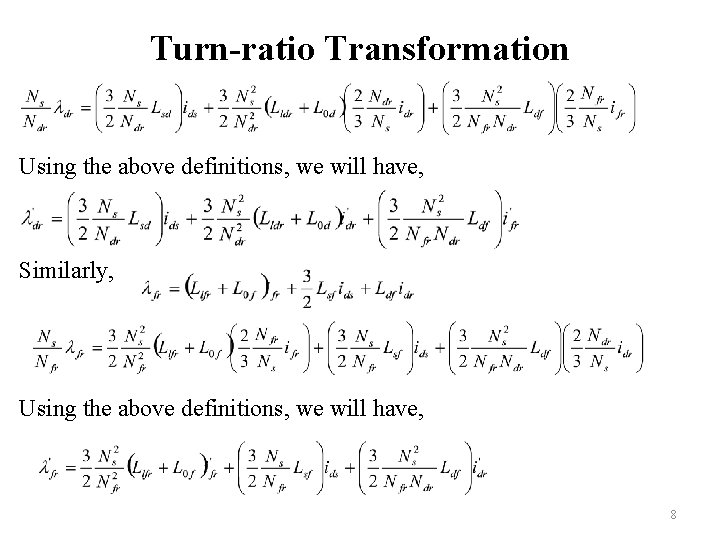
Turn-ratio Transformation Using the above definitions, we will have, Similarly, Using the above definitions, we will have, 8
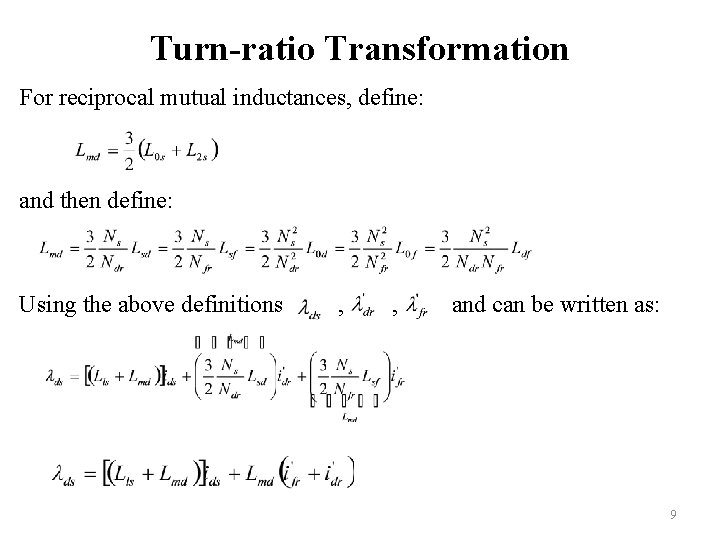
Turn-ratio Transformation For reciprocal mutual inductances, define: and then define: Using the above definitions , , and can be written as: 9
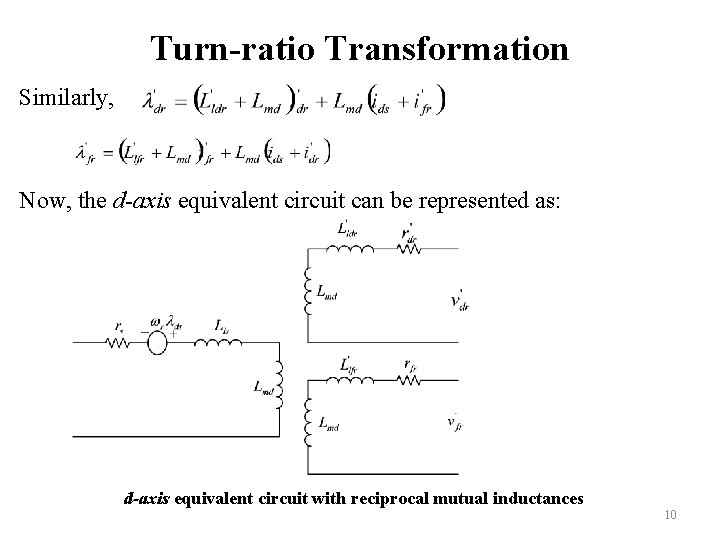
Turn-ratio Transformation Similarly, Now, the d-axis equivalent circuit can be represented as: d-axis equivalent circuit with reciprocal mutual inductances 10
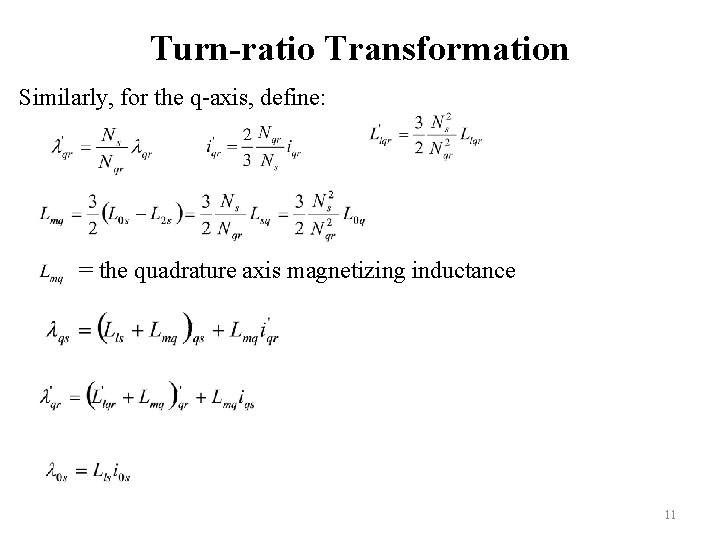
Turn-ratio Transformation Similarly, for the q-axis, define: = the quadrature axis magnetizing inductance 11
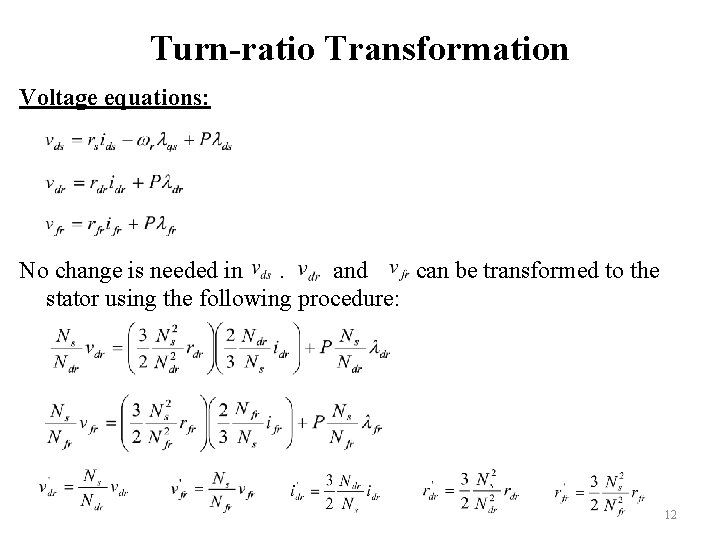
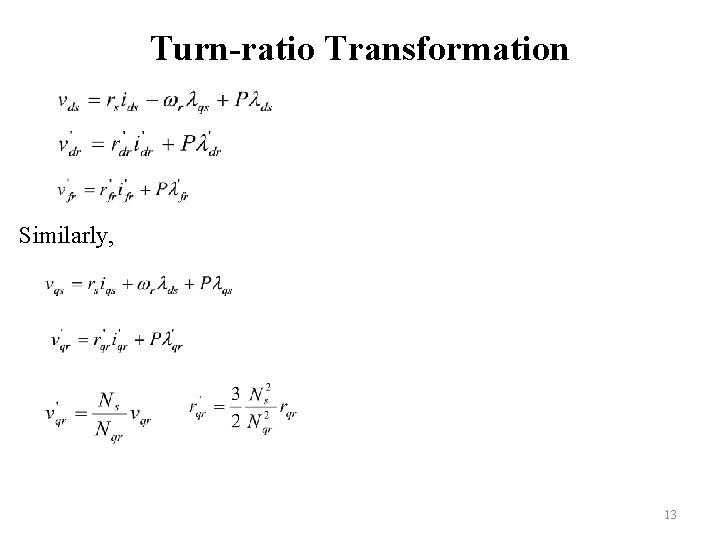
Turn-ratio Transformation Voltage equations: No change is needed in. and can be transformed to the stator using the following procedure: 12
Turn-ratio Transformation Similarly, 13
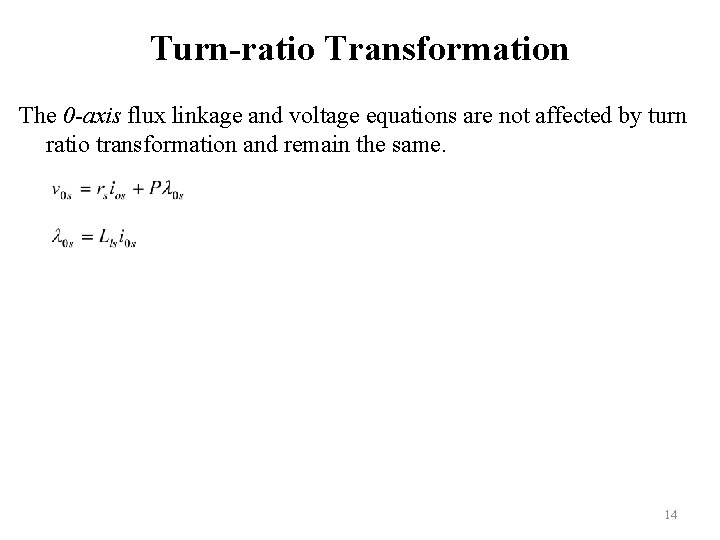
Turn-ratio Transformation The 0 -axis flux linkage and voltage equations are not affected by turn ratio transformation and remain the same. 14