
Lecture 27 Twoport Network Hungyi Lee Reference Chapter

- Slides: 34
Lecture 27 Two-port Network Hung-yi Lee
Reference • Chapter 14. 1, 14. 2, 14. 3 (out of the scope)
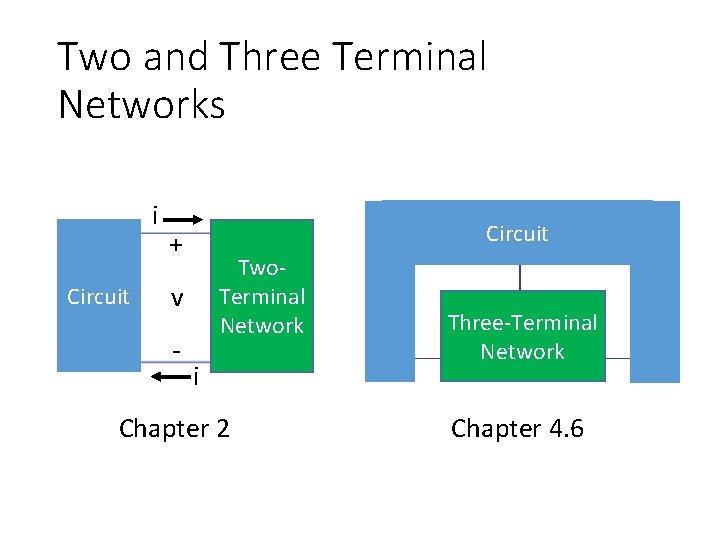
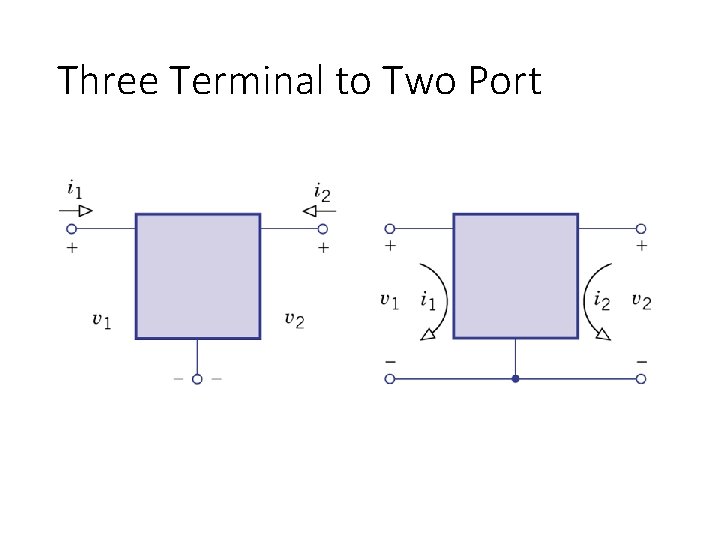
Two and Three Terminal Networks i Circuit + Two. Terminal Network v - i Chapter 2 Three-Terminal Network Chapter 4. 6
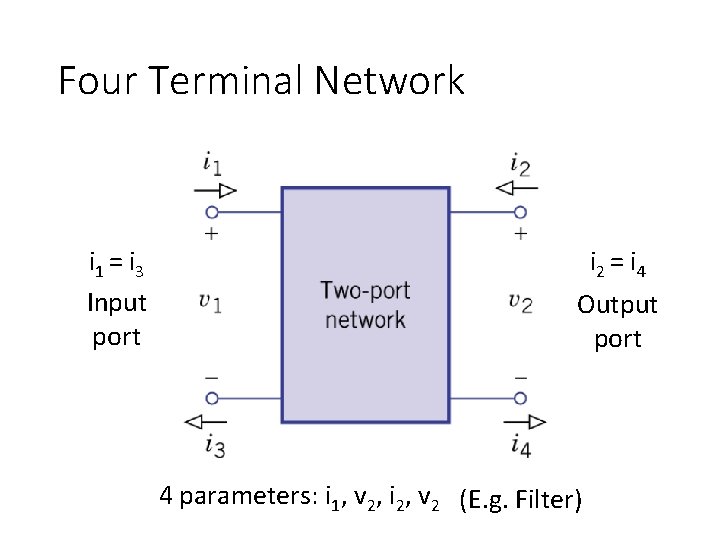
Four Terminal Network i 1 = i 3 Input port i 2 = i 4 Output port 4 parameters: i 1, v 2, i 2, v 2 (E. g. Filter)
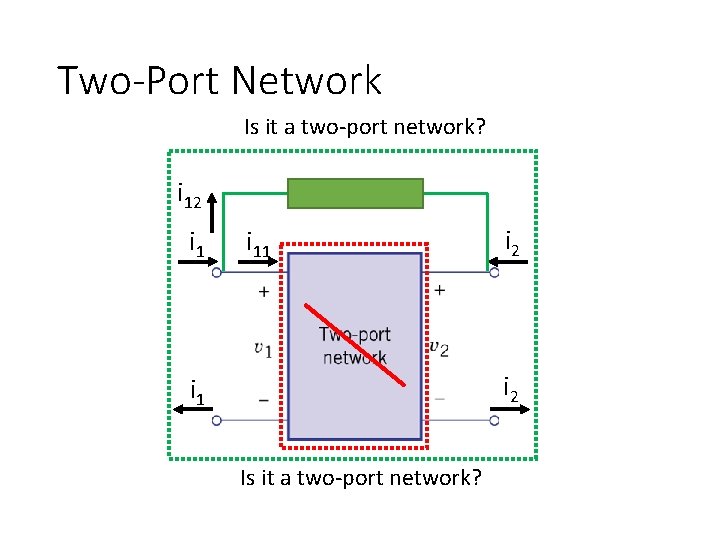
Two-Port Network Is it a two-port network? i 12 i 11 i 2 i 1 Is it a two-port network?
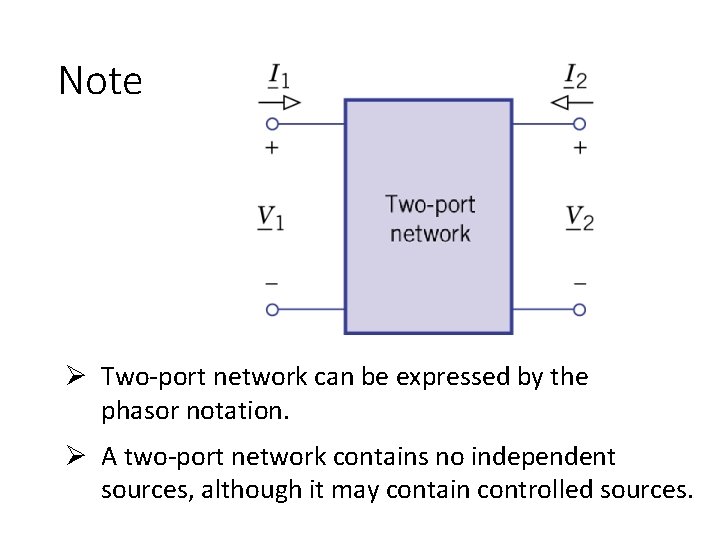
Note Ø Two-port network can be expressed by the phasor notation. Ø A two-port network contains no independent sources, although it may contain controlled sources.
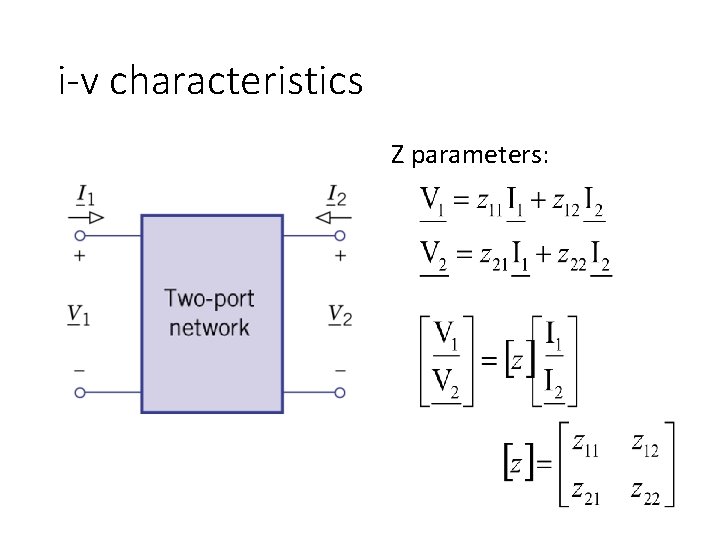
i-v characteristics Z parameters:
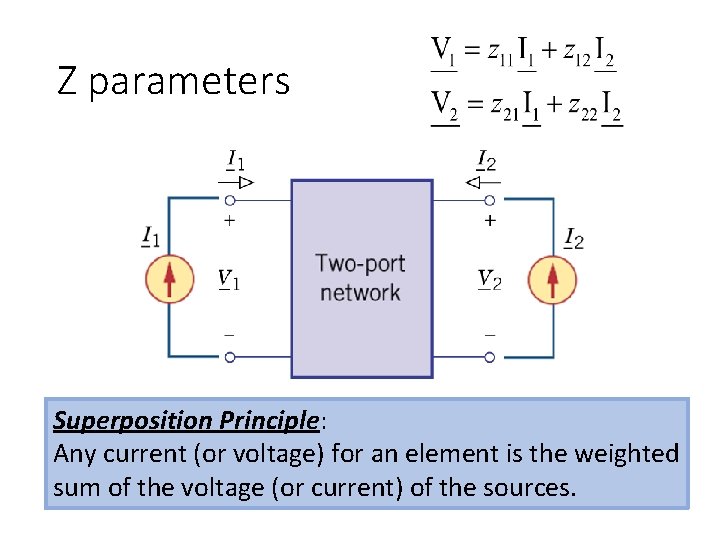
Z parameters Superposition Principle: Any current (or voltage) for an element is the weighted sum of the voltage (or current) of the sources.
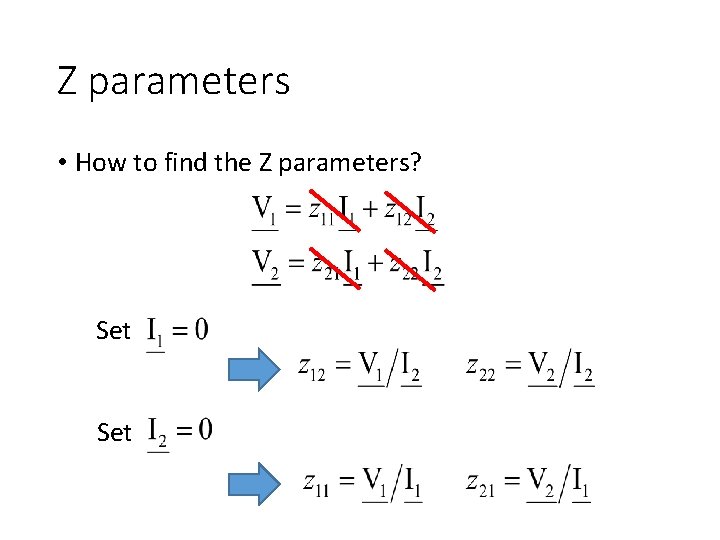
Z parameters • How to find the Z parameters? Set
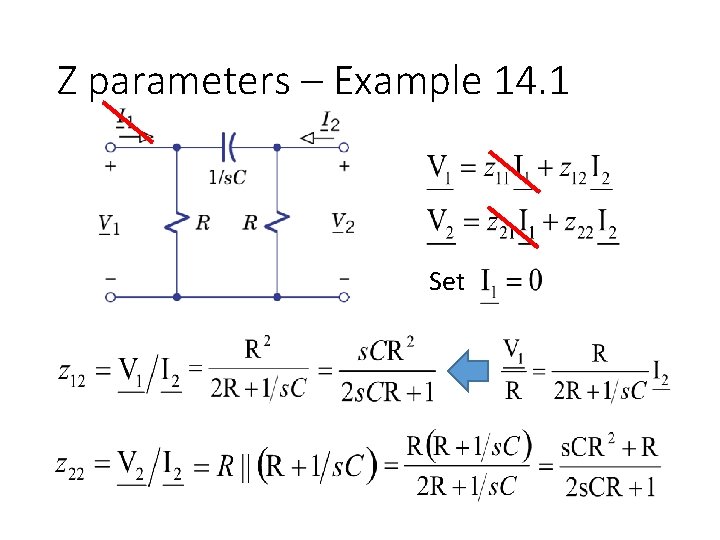
Z parameters – Example 14. 1 Set
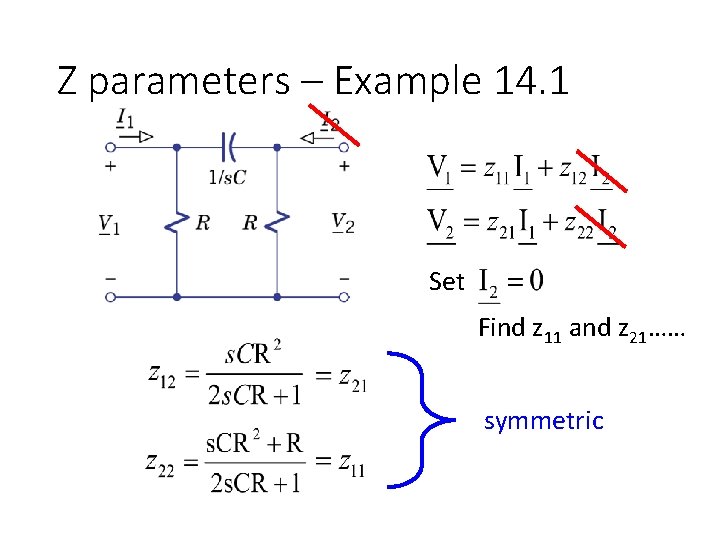
Z parameters – Example 14. 1 Set Find z 11 and z 21…… symmetric
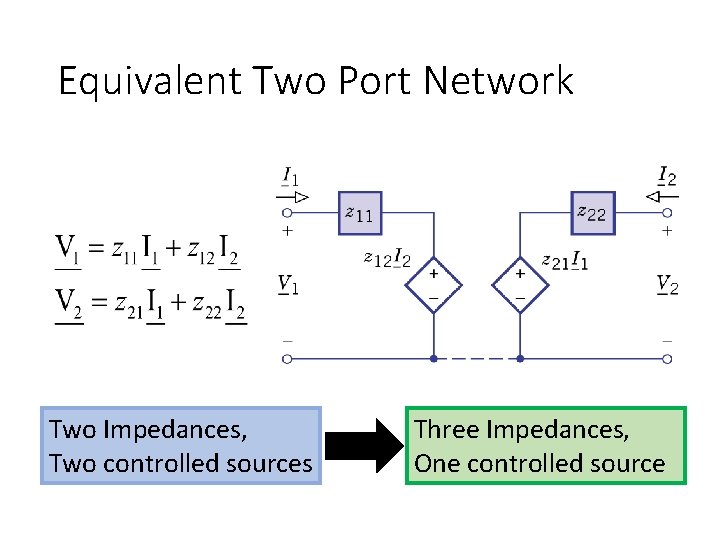
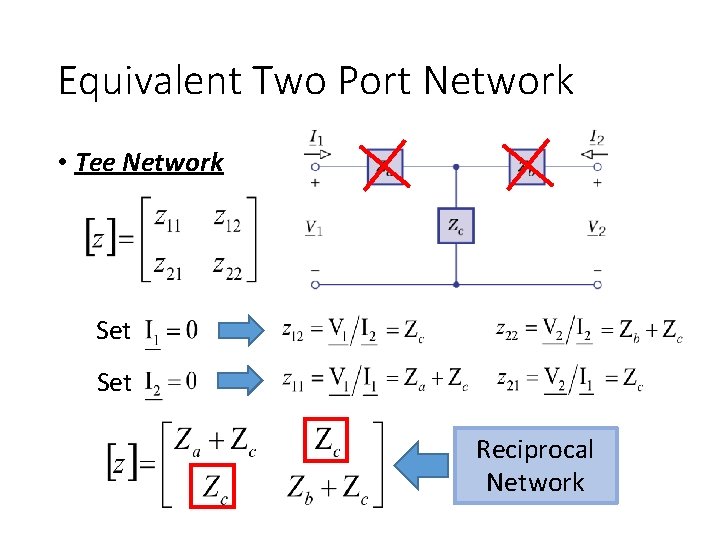
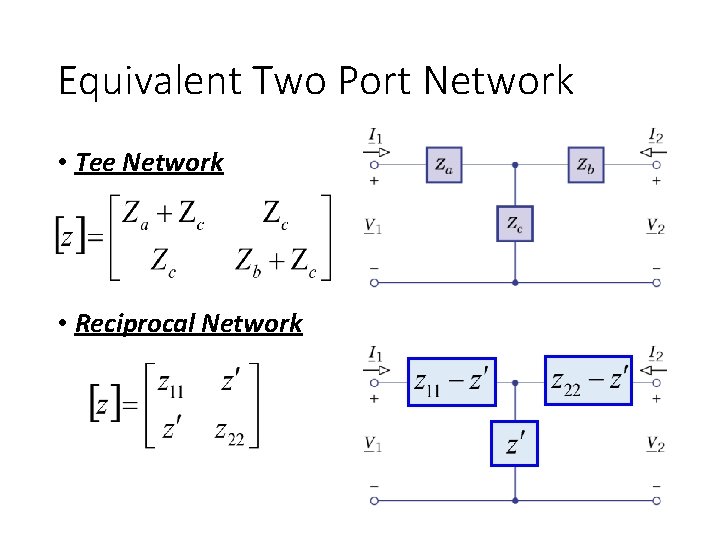
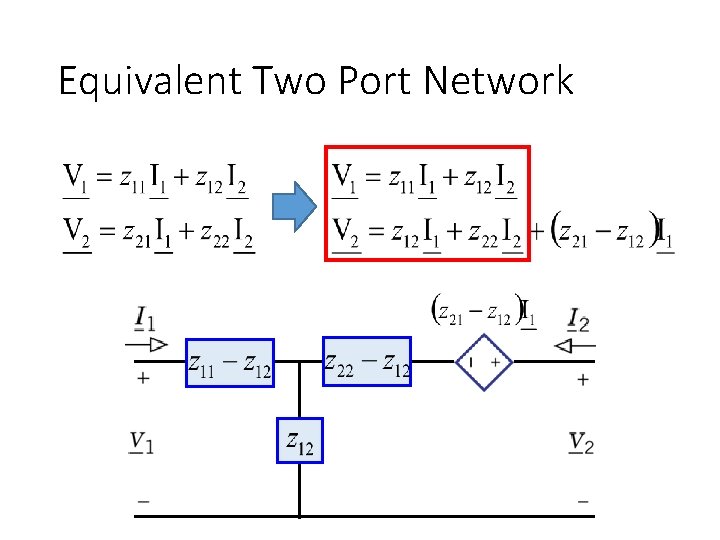
Equivalent Two Port Network Two Impedances, Two controlled sources Three Impedances, One controlled source
Equivalent Two Port Network • Tee Network Set Reciprocal Network
Equivalent Two Port Network • Tee Network • Reciprocal Network
Equivalent Two Port Network
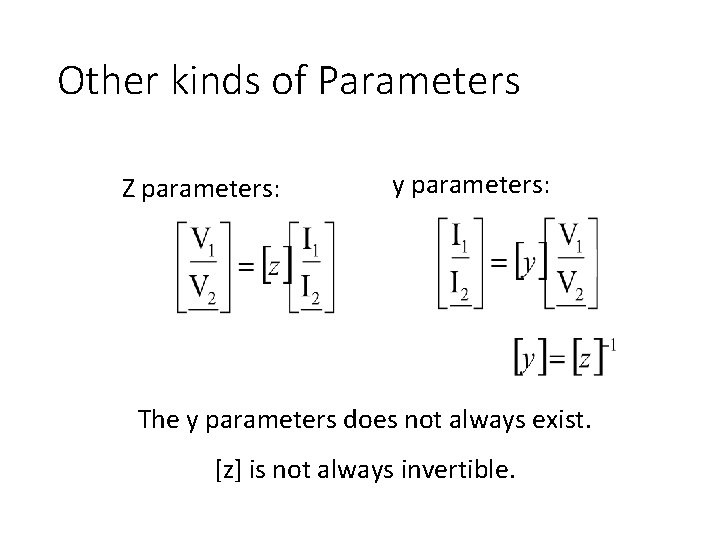
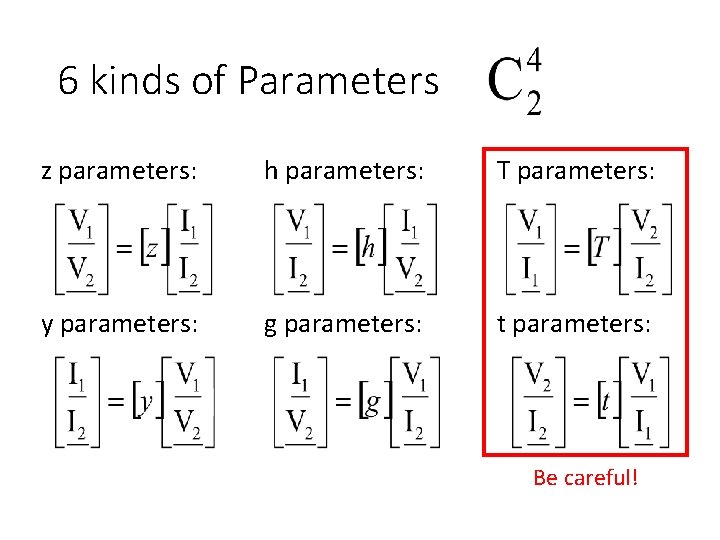
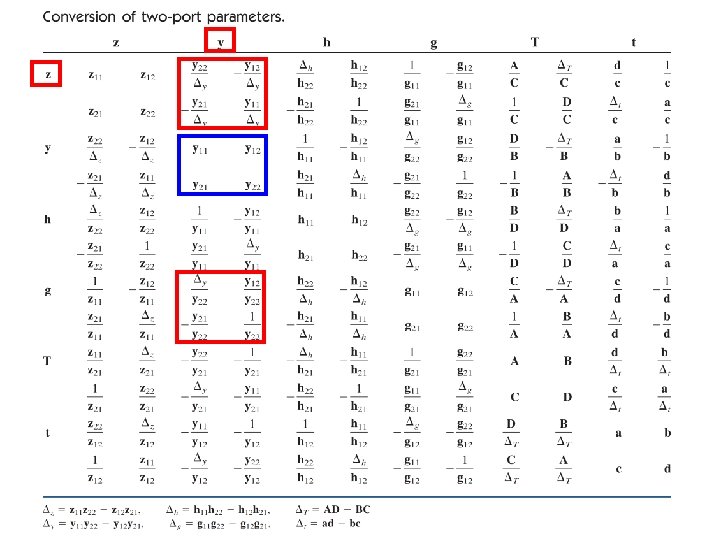
Other kinds of Parameters Z parameters: y parameters: The y parameters does not always exist. [z] is not always invertible.
6 kinds of Parameters z parameters: h parameters: T parameters: y parameters: g parameters: t parameters: Be careful!
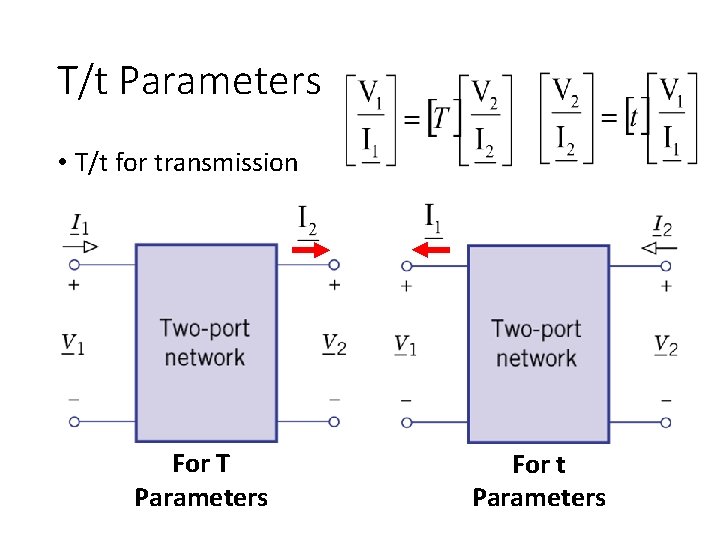
T/t Parameters • T/t for transmission For T Parameters For t Parameters
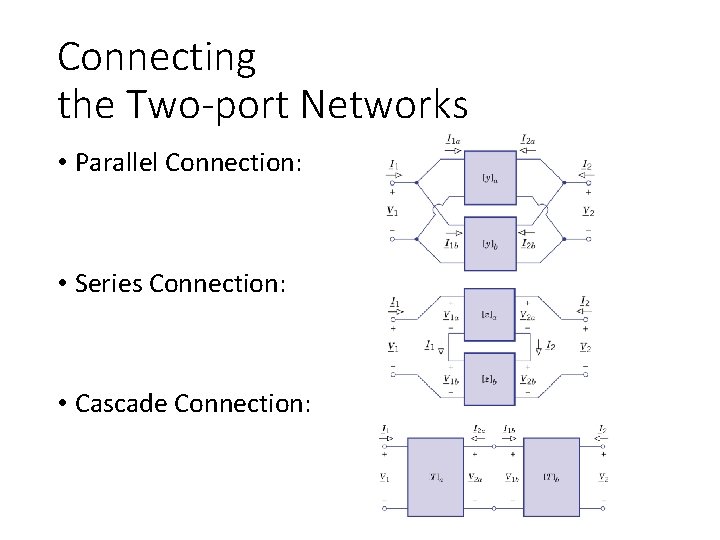
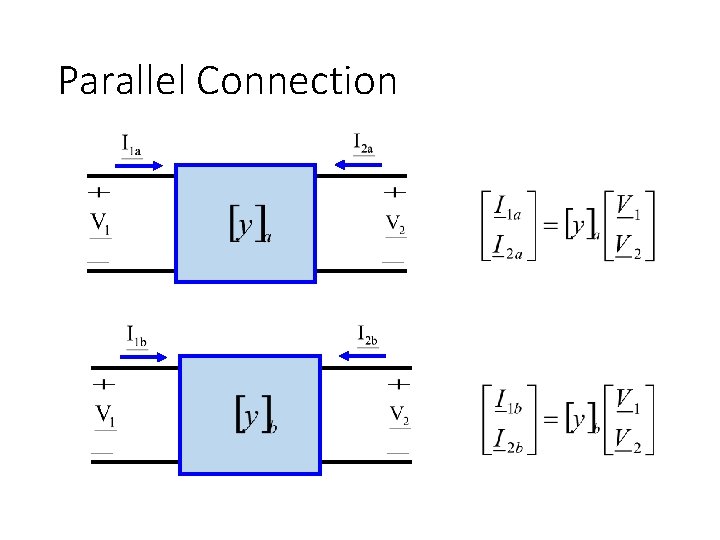
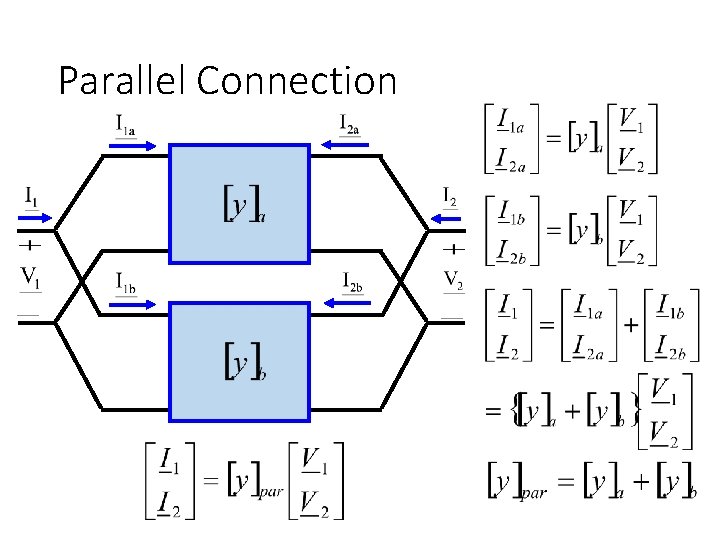
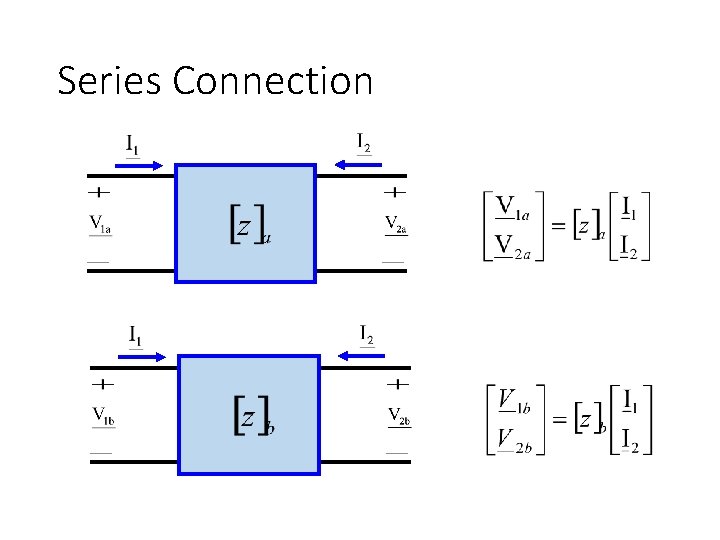
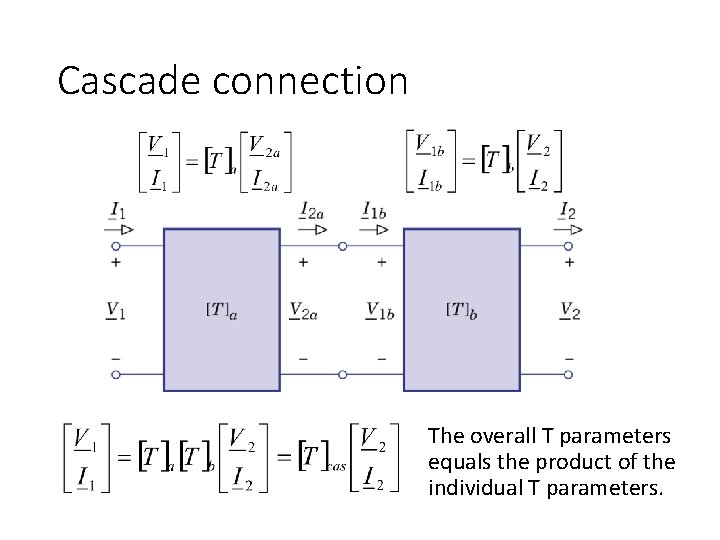
Connecting the Two-port Networks • Parallel Connection: • Series Connection: • Cascade Connection:
Parallel Connection
Parallel Connection
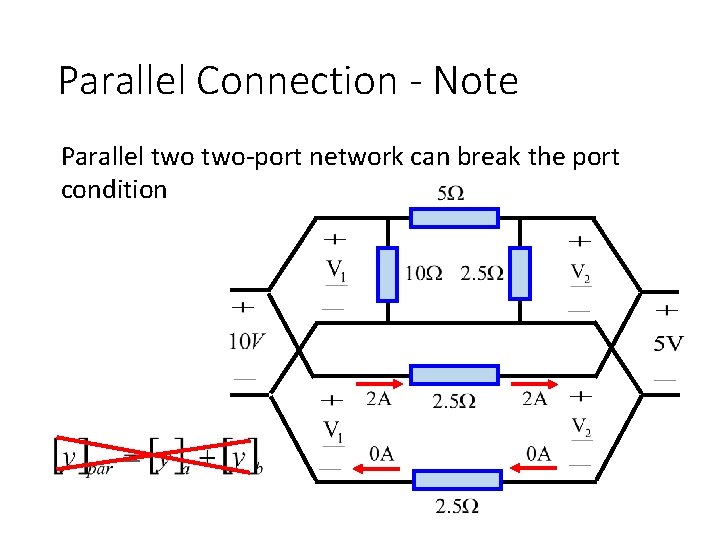
Parallel Connection - Note Parallel two-port network can break the port condition
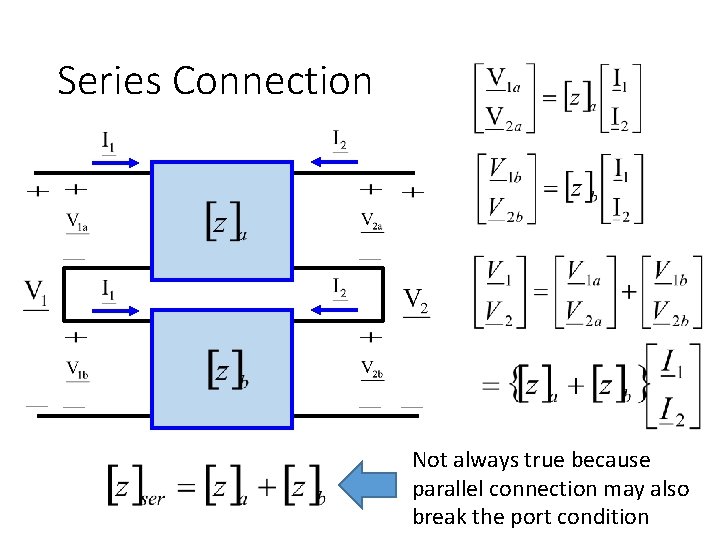
Series Connection
Series Connection Not always true because parallel connection may also break the port condition
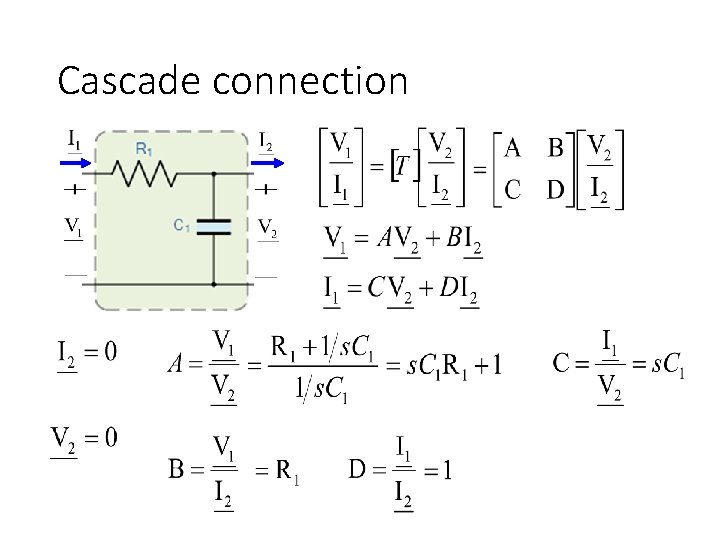
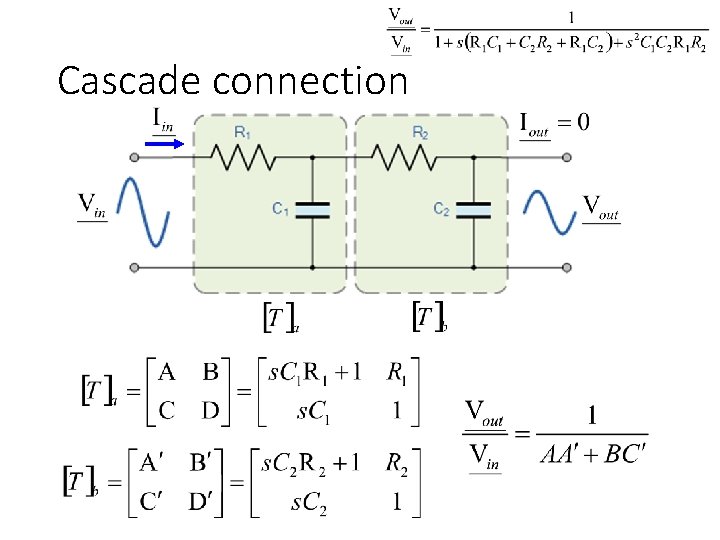
Cascade connection The overall T parameters equals the product of the individual T parameters.
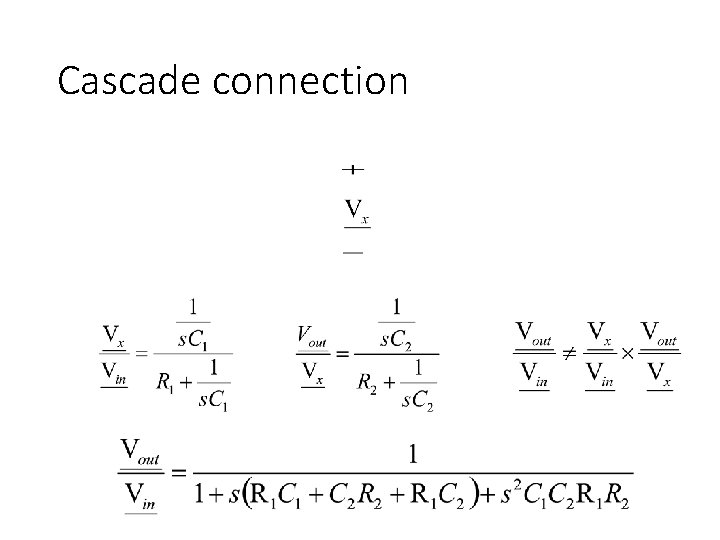
Cascade connection
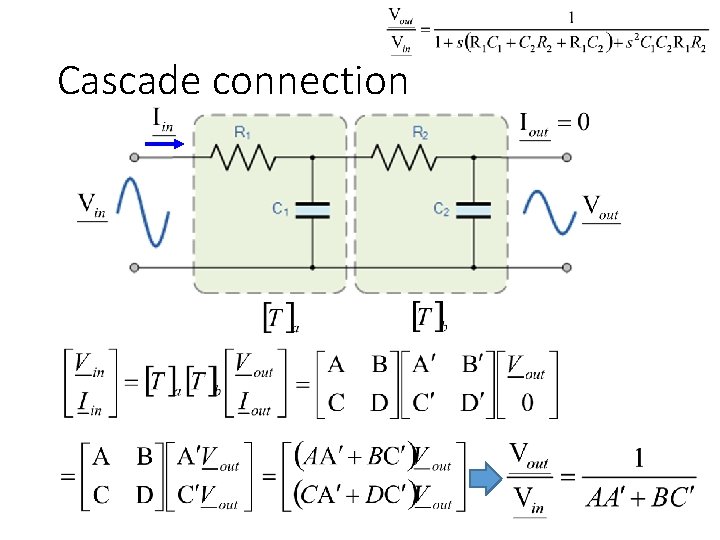
Cascade connection
Cascade connection
Cascade connection
Thank you!
Three Terminal to Two Port