
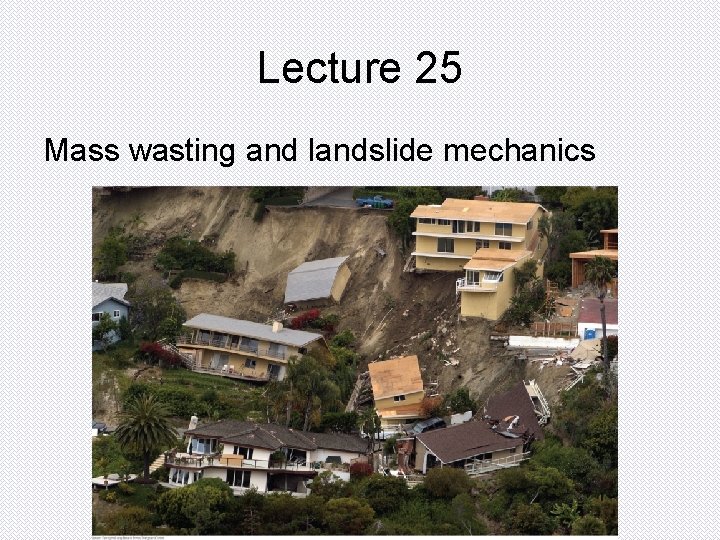
Lecture 25 Mass wasting and landslide mechanics Mass

- Slides: 33
Lecture 25 Mass wasting and landslide mechanics
Mass Wasting ● Mass wasting includes all processes by which masses of rock and soil move downslope. ● Mass movement occurs when the force of gravity exceeds the strength of the material and it moves downslope.
Mass Wasting ● Three primary factors ● nature of slope materials (angle of repose) ● amount of water ● steepness and stability
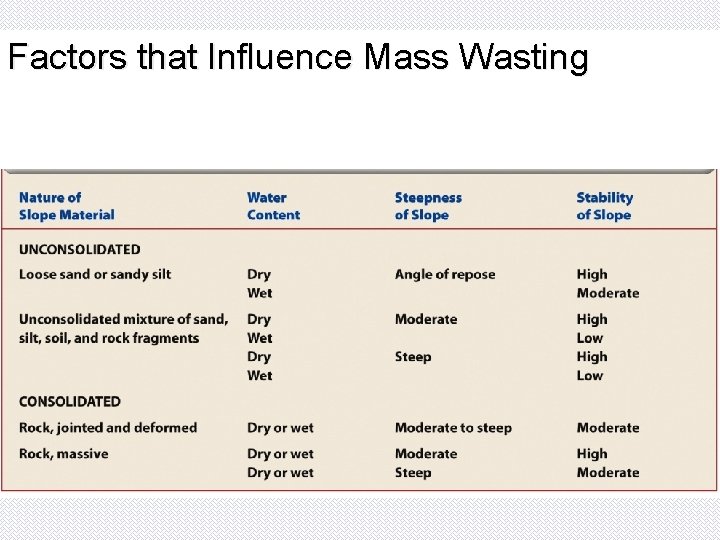
Factors that Influence Mass Wasting
Mass Wasting ● Nature of slope materials ● unconsolidated materials ● sand silt ● rock fragments, sand, silt, and clay
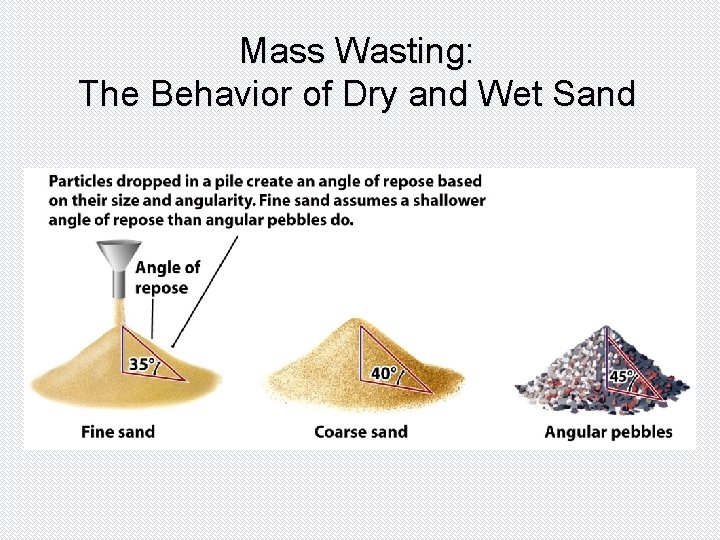
Mass Wasting: The Behavior of Dry and Wet Sand
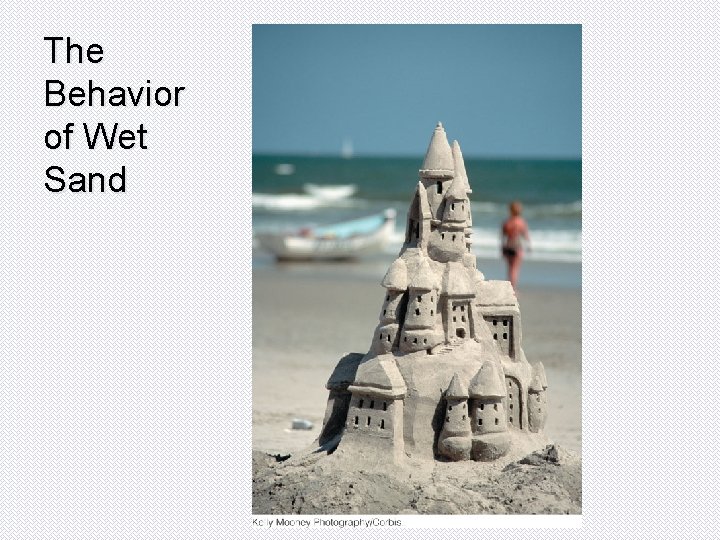
The Behavior of Wet Sand
Once you Get Mass Movements… • Material moves downslope due to the pull of gravity • Can happen almost anywhere • Commonly associated with other events (heavy rainfall or earthquakes, for example) and are therefore under-reported • Movements can either be catastrophic (landslide) or slow and steady (creep) • The rate of the mass movement can be increased by water
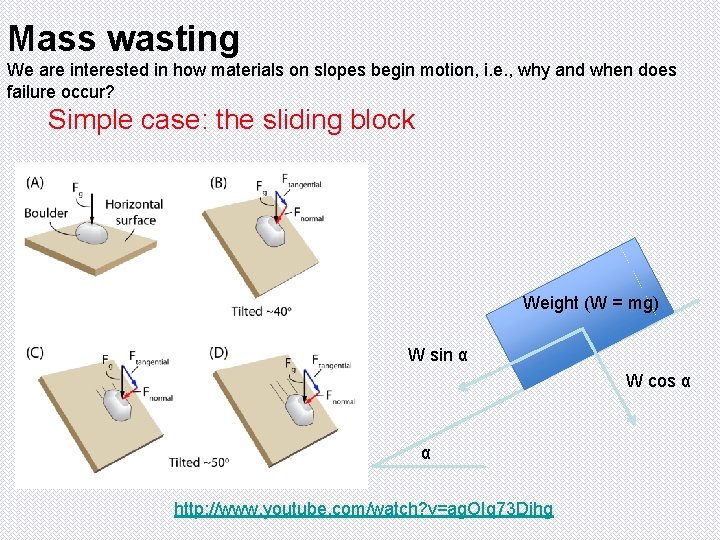
Mass wasting We are interested in how materials on slopes begin motion, i. e. , why and when does failure occur? Simple case: the sliding block Weight (W = mg) W sin α W cos α α http: //www. youtube. com/watch? v=ag. OIq 73 Dihg
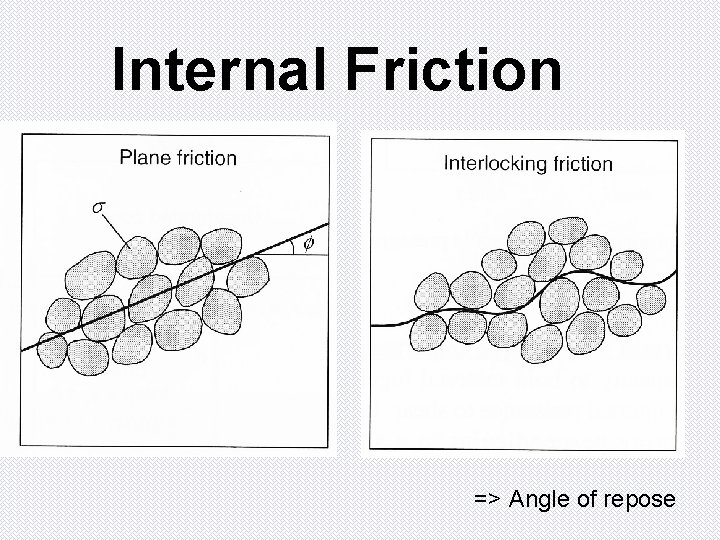
Internal Friction => Angle of repose
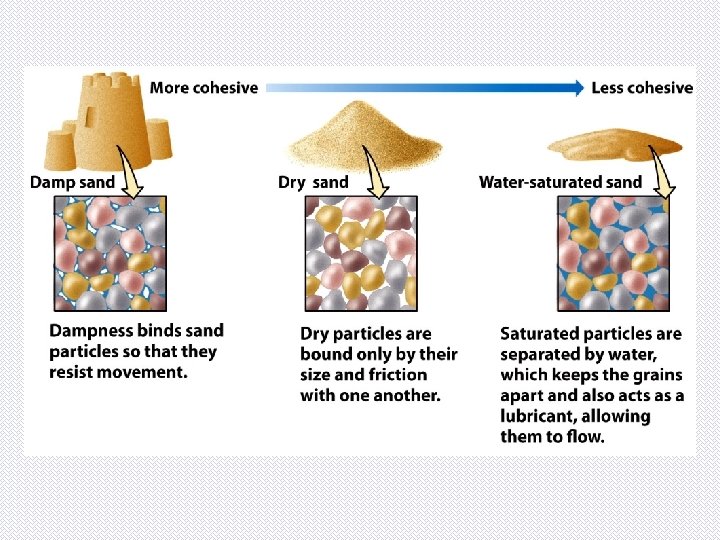
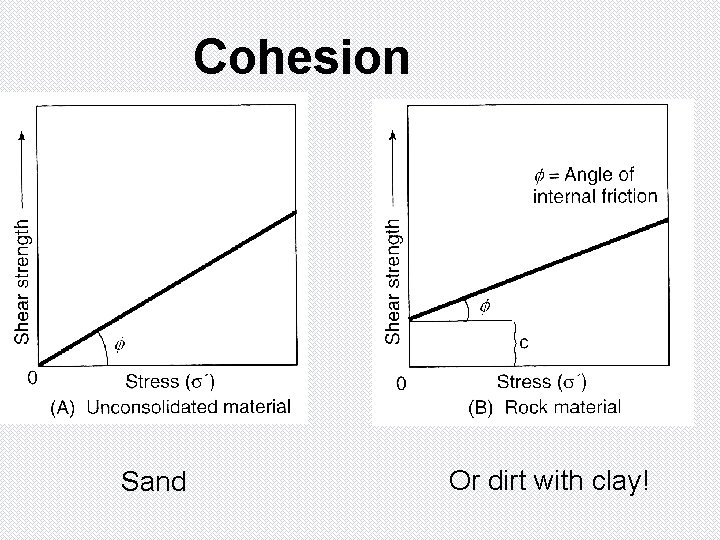
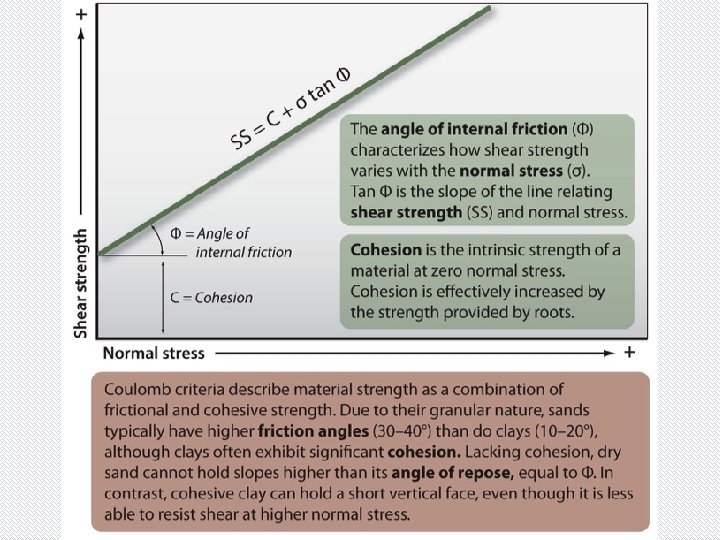
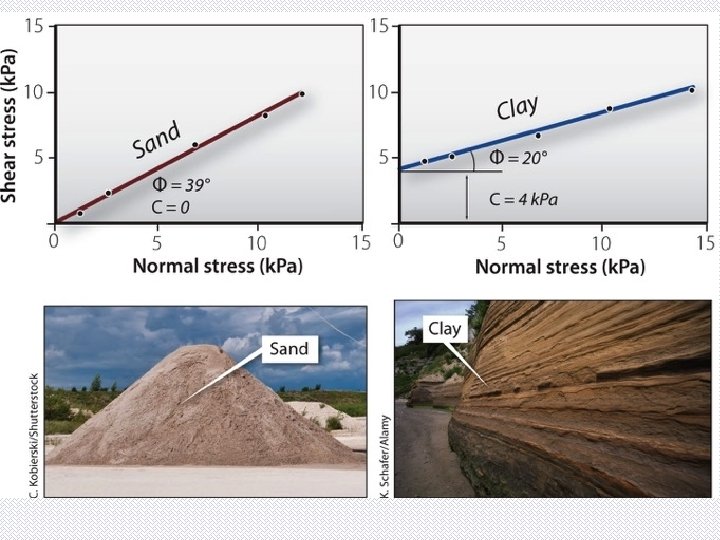
Cohesion Sand Or dirt with clay!
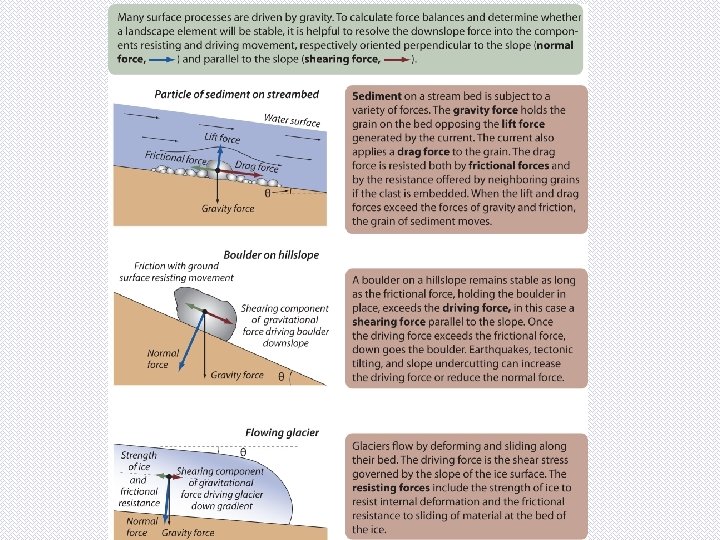
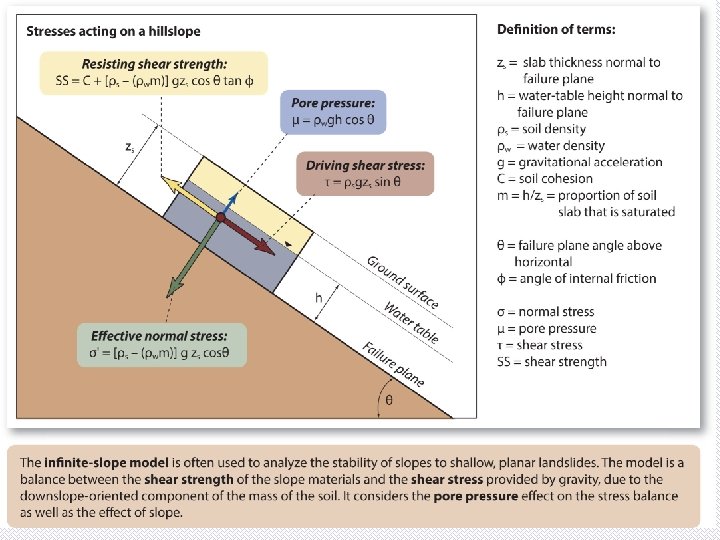
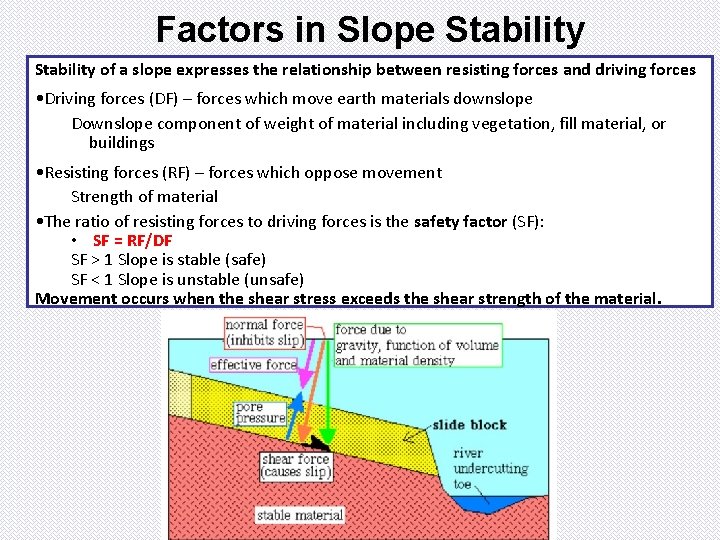
Factors in Slope Stability of a slope expresses the relationship between resisting forces and driving forces • Driving forces (DF) – forces which move earth materials downslope Downslope component of weight of material including vegetation, fill material, or buildings • Resisting forces (RF) – forces which oppose movement Strength of material • The ratio of resisting forces to driving forces is the safety factor (SF): • SF = RF/DF SF > 1 Slope is stable (safe) SF < 1 Slope is unstable (unsafe) Movement occurs when the shear stress exceeds the shear strength of the material.
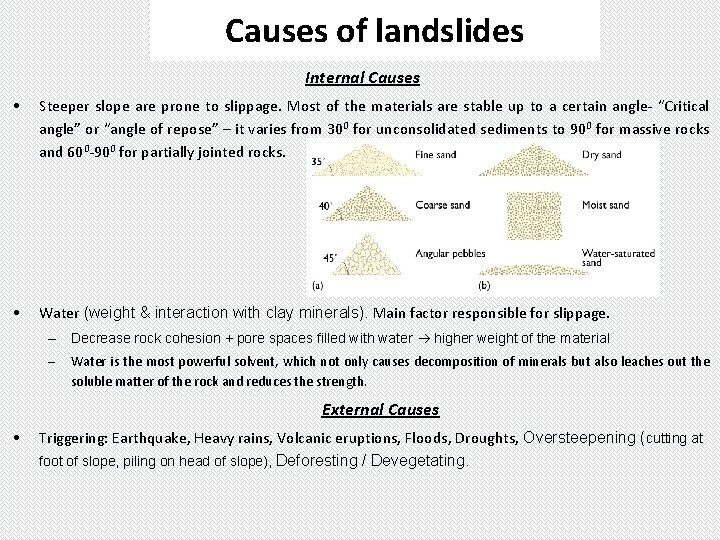
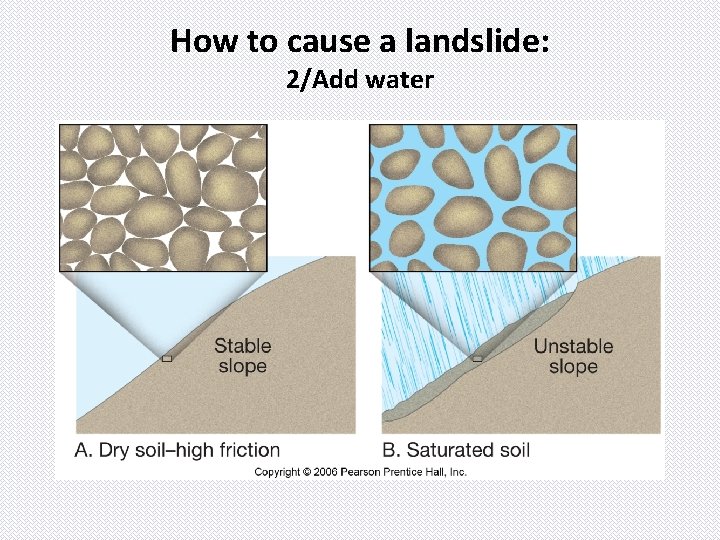
Causes of landslides Internal Causes • Steeper slope are prone to slippage. Most of the materials are stable up to a certain angle- “Critical angle” or “angle of repose” – it varies from 300 for unconsolidated sediments to 900 for massive rocks and 600 -900 for partially jointed rocks. • Water (weight & interaction with clay minerals). Main factor responsible for slippage. – Decrease rock cohesion + pore spaces filled with water higher weight of the material – Water is the most powerful solvent, which not only causes decomposition of minerals but also leaches out the soluble matter of the rock and reduces the strength. External Causes • Triggering: Earthquake, Heavy rains, Volcanic eruptions, Floods, Droughts, Oversteepening (cutting at foot of slope, piling on head of slope), Deforesting / Devegetating.
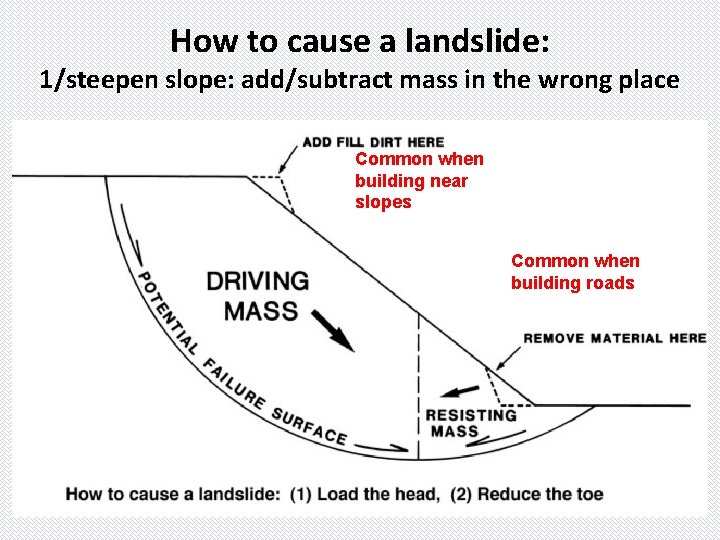
How to cause a landslide: 1/steepen slope: add/subtract mass in the wrong place Common when building near slopes Common when building roads
How to cause a landslide: 2/Add water
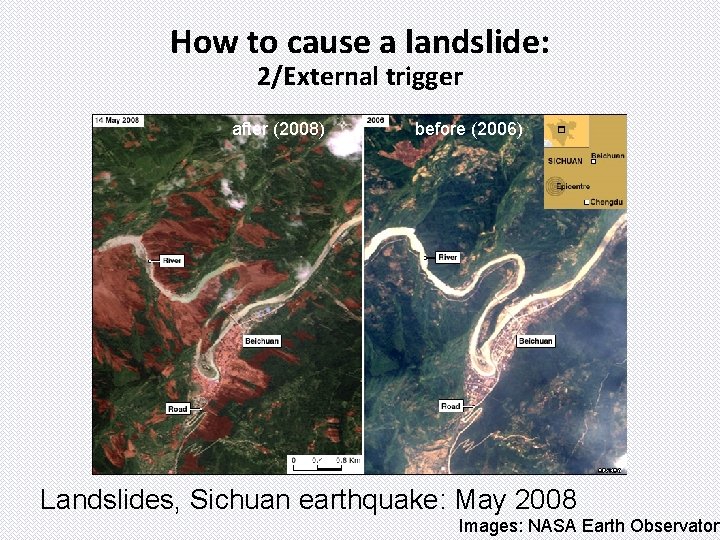
How to cause a landslide: 2/External trigger after (2008) before (2006) Landslides, Sichuan earthquake: May 2008 Images: NASA Earth Observatory
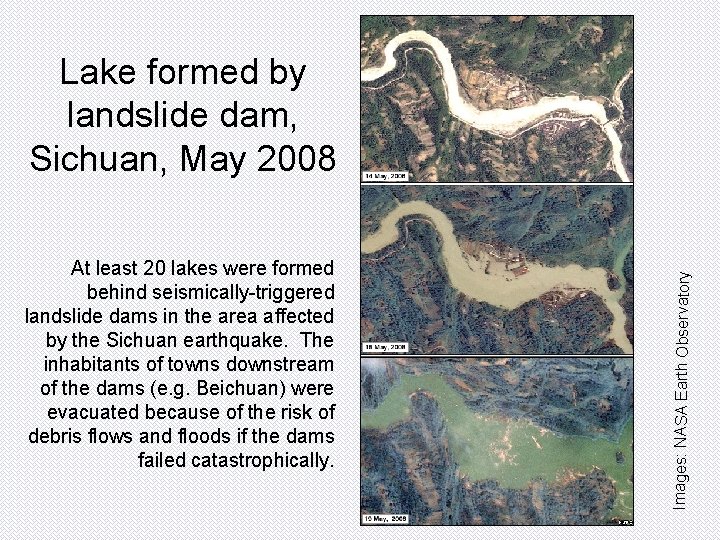
At least 20 lakes were formed behind seismically-triggered landslide dams in the area affected by the Sichuan earthquake. The inhabitants of towns downstream of the dams (e. g. Beichuan) were evacuated because of the risk of debris flows and floods if the dams failed catastrophically. Images: NASA Earth Observatory Lake formed by landslide dam, Sichuan, May 2008
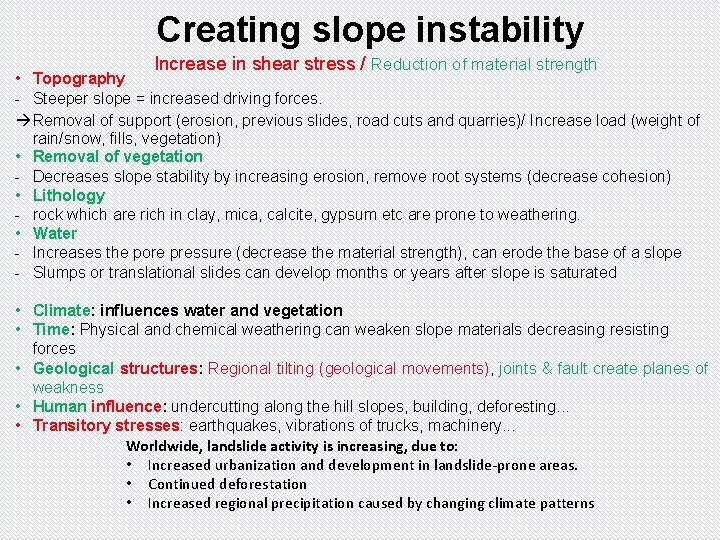
Creating slope instability Increase in shear stress / Reduction of material strength • Topography - Steeper slope = increased driving forces. Removal of support (erosion, previous slides, road cuts and quarries)/ Increase load (weight of rain/snow, fills, vegetation) • Removal of vegetation - Decreases slope stability by increasing erosion, remove root systems (decrease cohesion) • Lithology - rock which are rich in clay, mica, calcite, gypsum etc are prone to weathering. • Water - Increases the pore pressure (decrease the material strength), can erode the base of a slope - Slumps or translational slides can develop months or years after slope is saturated • Climate: influences water and vegetation • Time: Physical and chemical weathering can weaken slope materials decreasing resisting forces • Geological structures: Regional tilting (geological movements), joints & fault create planes of weakness • Human influence: undercutting along the hill slopes, building, deforesting. . . • Transitory stresses: earthquakes, vibrations of trucks, machinery. . . Worldwide, landslide activity is increasing, due to: • Increased urbanization and development in landslide-prone areas. • Continued deforestation • Increased regional precipitation caused by changing climate patterns
Mass Wasting ● Nature of slope materials ● consolidated materials ● rock ● compacted (cohesive) sediments and soils
Mass Wasting ● Steepness and stability ● angle of slope ● accumulation of rubble ● breakage into large blocks
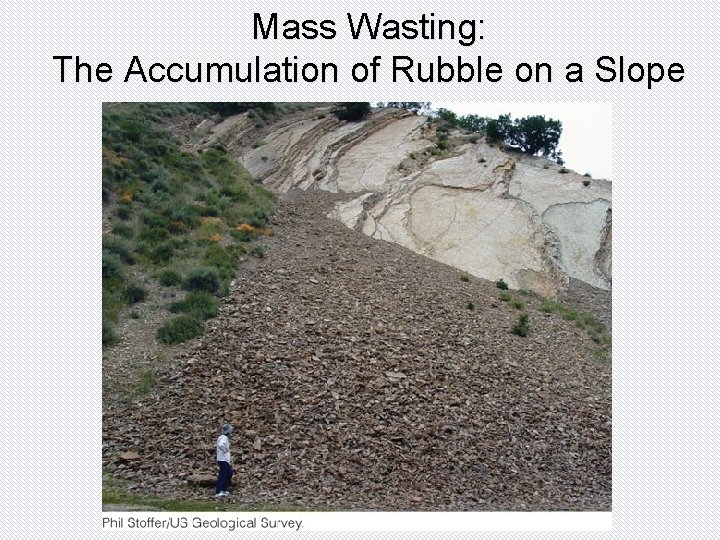
Mass Wasting: The Accumulation of Rubble on a Slope
Mass Wasting ● Water content ● lubrication ● liquefaction
Mass Wasting ● Triggers of mass movements ● earthquake vibrations ● rainfall and water infiltration ● overloading
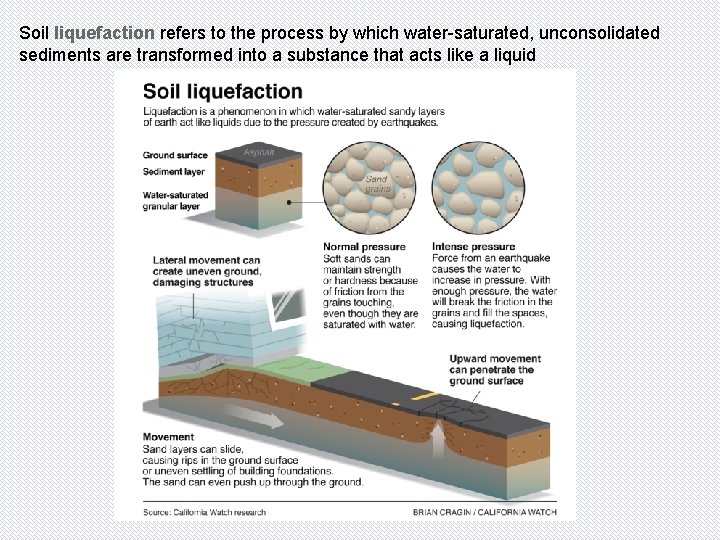
Soil liquefaction refers to the process by which water-saturated, unconsolidated sediments are transformed into a substance that acts like a liquid
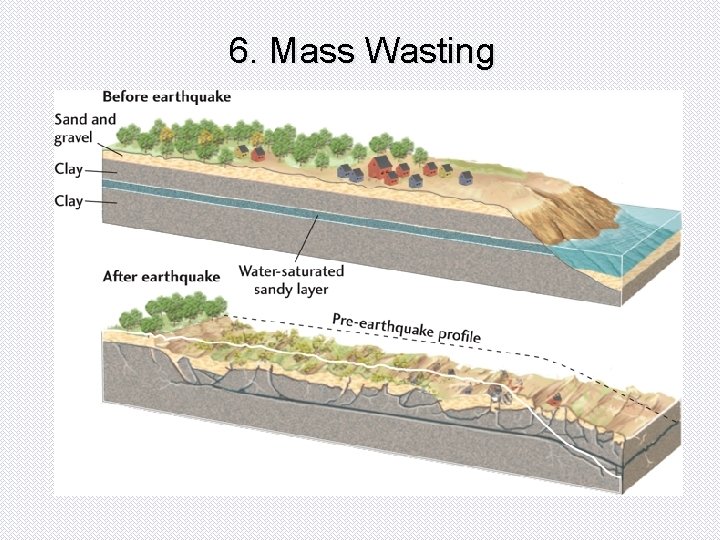
6. Mass Wasting
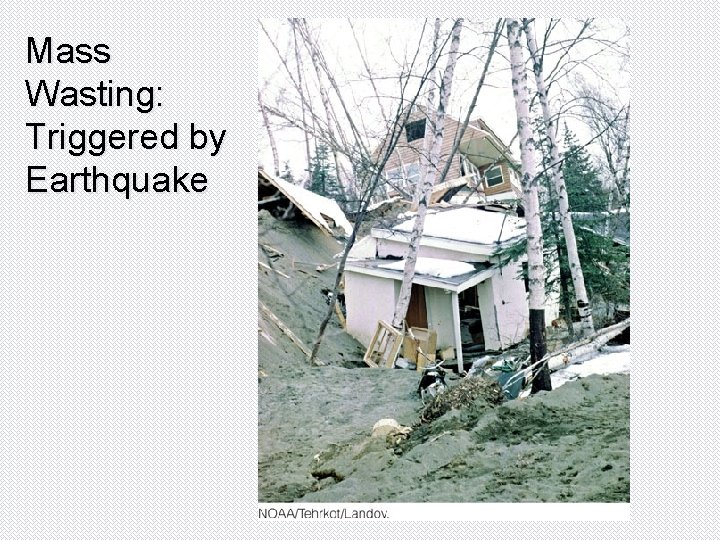
Mass Wasting: Triggered by Earthquake