
Lecture 25 Chemical Reaction Engineering CRE is the



- Slides: 29
Lecture 25 Chemical Reaction Engineering (CRE) is the field that studies the rates and mechanisms of chemical reactions and the design of the reactors in which they take place.
Web Lecture 25 Class Lecture 21 CSI • Ammonium Nitrate Explosion • Monsanto Explosion • T 2 Laboratories Explosion 2
Case 1 – Ammonium Nitrate Explosion Massive blast at Terra plant kills four. 3
Example 1: Safety in Chemical Reactors 4
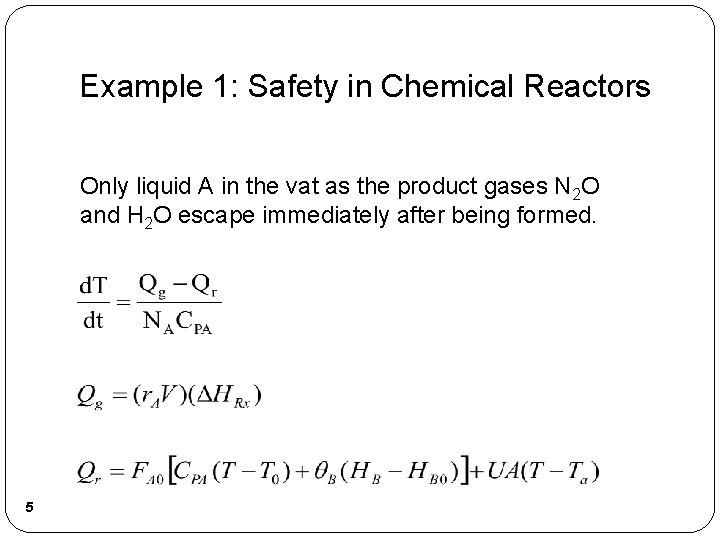
Example 1: Safety in Chemical Reactors Only liquid A in the vat as the product gases N 2 O and H 2 O escape immediately after being formed. 5
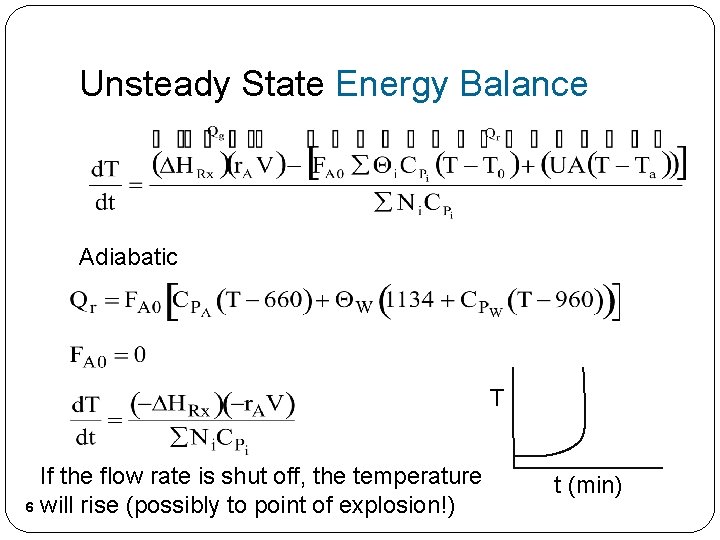
Unsteady State Energy Balance Adiabatic T If the flow rate is shut off, the temperature 6 will rise (possibly to point of explosion!) t (min)
Case 2 – Monsanto Chemical Company � Keeping MBAs away from Chemical Reactors � The process worked for 19 years before “they” showed up! � Why did they come? � What did they want? 7
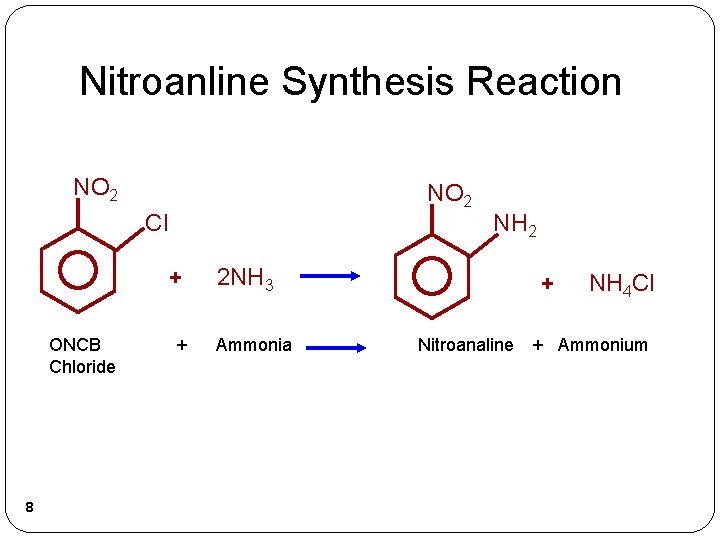
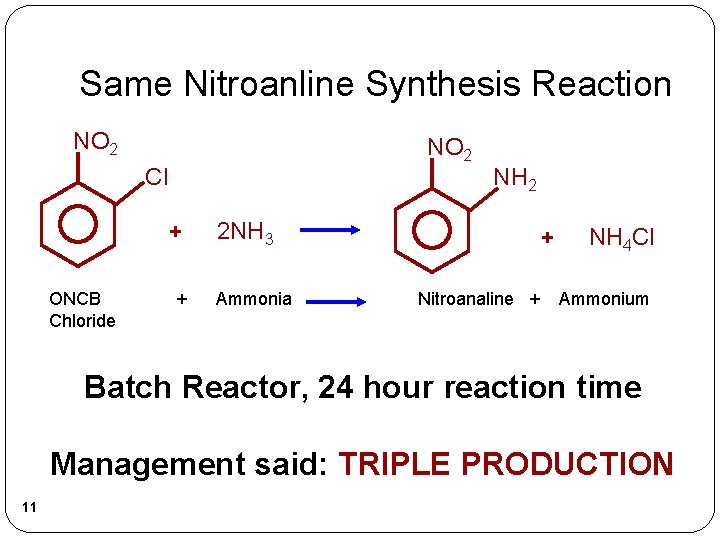
Nitroanline Synthesis Reaction NO 2 Cl + ONCB Chloride 8 + NH 2 2 NH 3 Ammonia + Nitroanaline NH 4 Cl + Ammonium
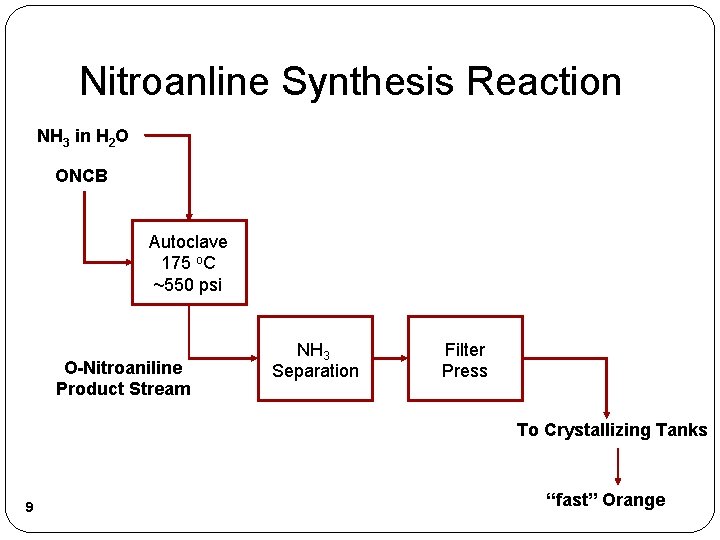
Nitroanline Synthesis Reaction NH 3 in H 2 O ONCB Autoclave 175 o. C ~550 psi O-Nitroaniline Product Stream NH 3 Separation Filter Press To Crystallizing Tanks 9 “fast” Orange
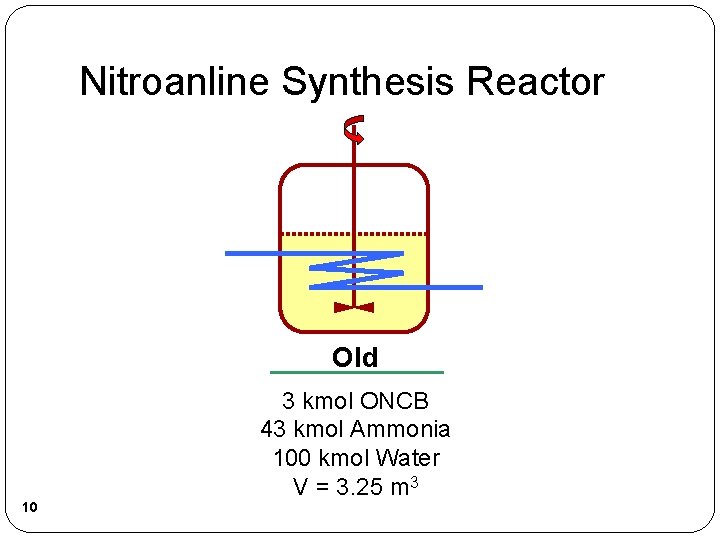
Nitroanline Synthesis Reactor Old 10 3 kmol ONCB 43 kmol Ammonia 100 kmol Water V = 3. 25 m 3
Same Nitroanline Synthesis Reaction NO 2 Cl + ONCB Chloride + NH 2 2 NH 3 Ammonia + Nitroanaline + NH 4 Cl Ammonium Batch Reactor, 24 hour reaction time Management said: TRIPLE PRODUCTION 11
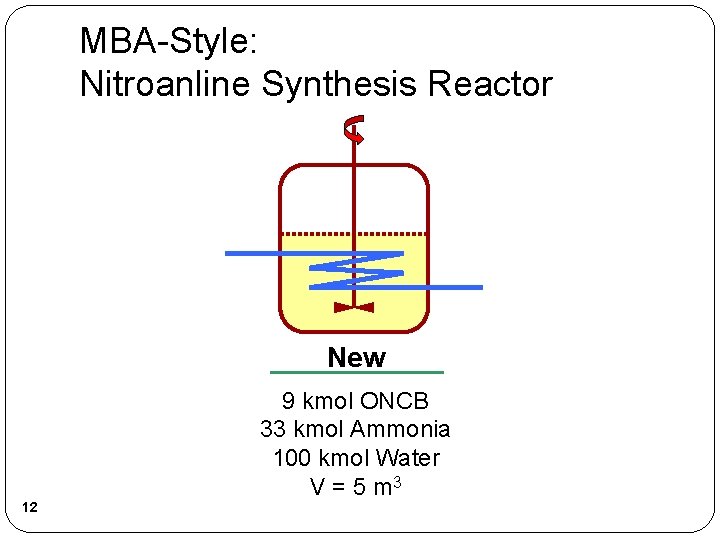
MBA-Style: Nitroanline Synthesis Reactor New 12 9 kmol ONCB 33 kmol Ammonia 100 kmol Water V = 5 m 3
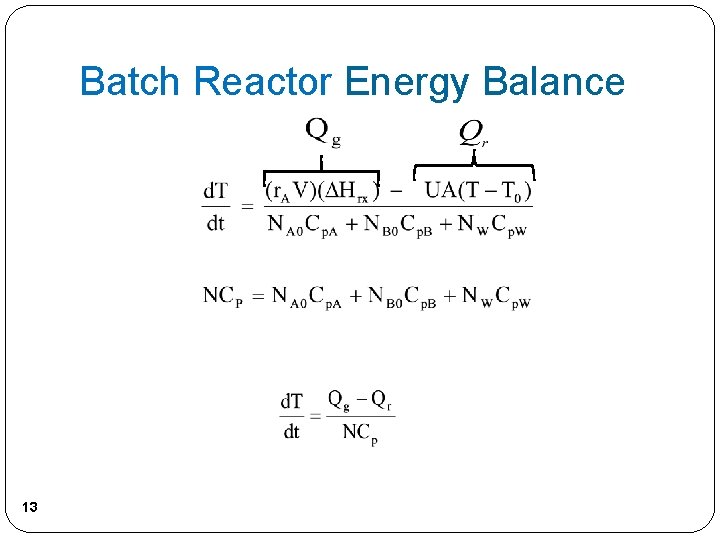
Batch Reactor Energy Balance 13
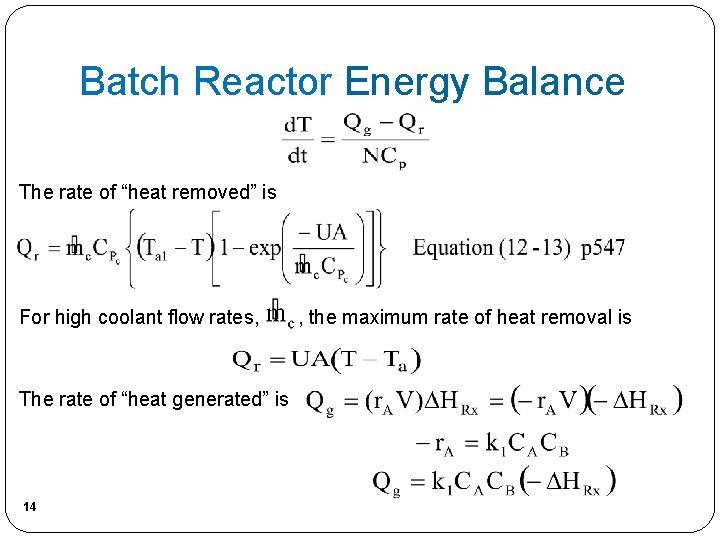
Batch Reactor Energy Balance The rate of “heat removed” is For high coolant flow rates, The rate of “heat generated” is 14 , the maximum rate of heat removal is
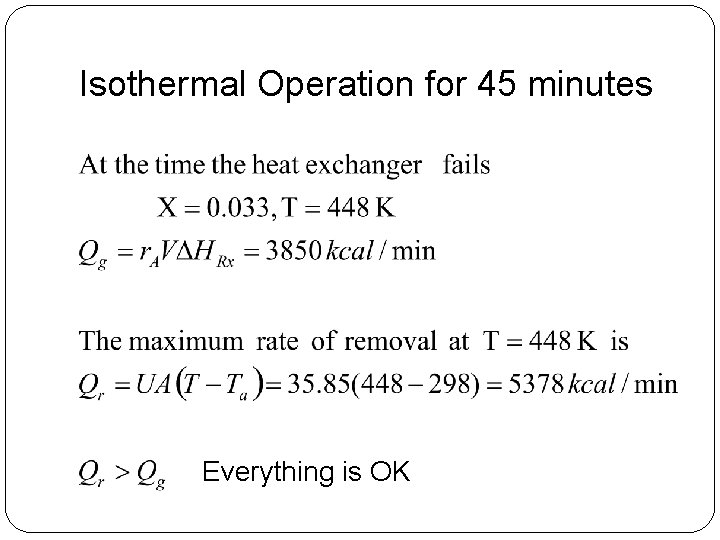
Batch Reactor Energy Balance Recall For isothermal operation at Qr = Qg, T = 448 K Vary 15 to keep “heat removed” equal to “heat generation”
Isothermal Operation for 45 minutes Everything is OK
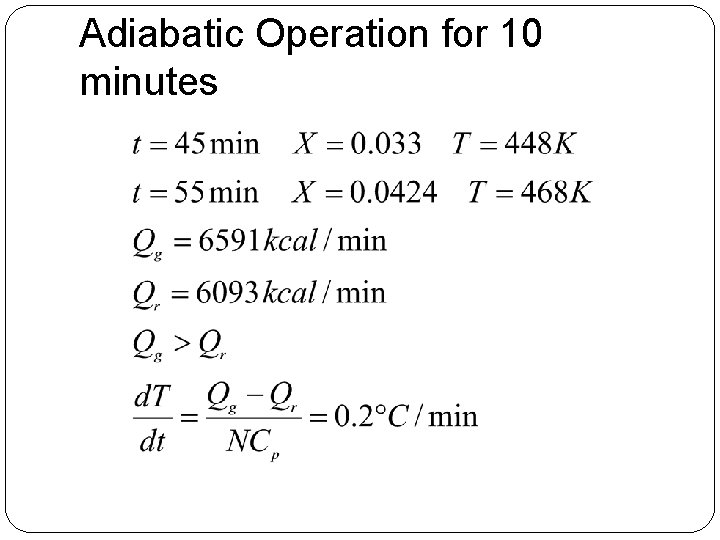
Adiabatic Operation for 10 minutes
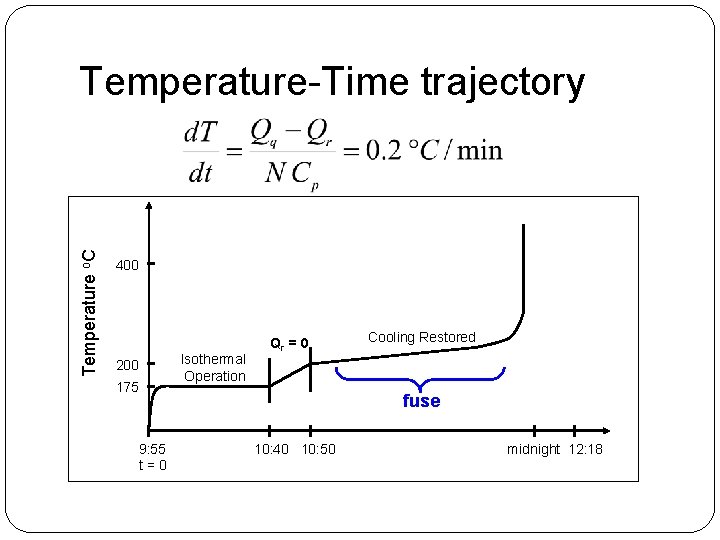
Temperature o. C Temperature-Time trajectory 400 200 175 18 9: 55 t=0 Isothermal Operation Qr = 0 Cooling Restored fuse 10: 40 10: 50 midnight 12: 18
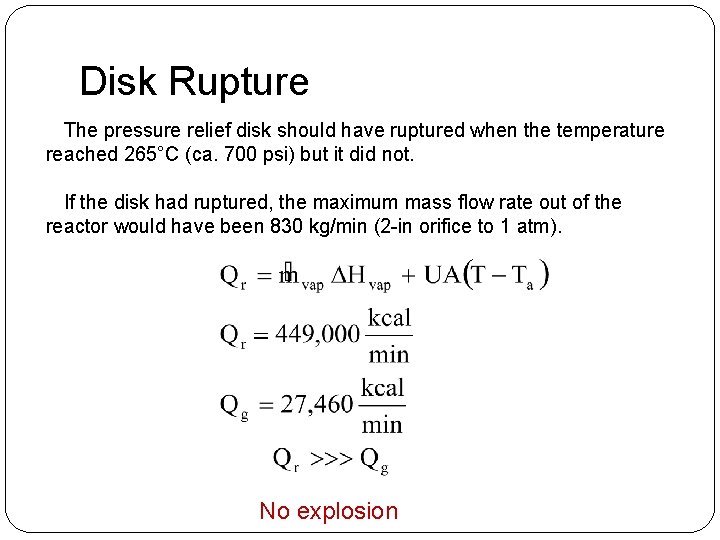
Disk Rupture The pressure relief disk should have ruptured when the temperature reached 265°C (ca. 700 psi) but it did not. If the disk had ruptured, the maximum mass flow rate out of the reactor would have been 830 kg/min (2 -in orifice to 1 atm). No explosion
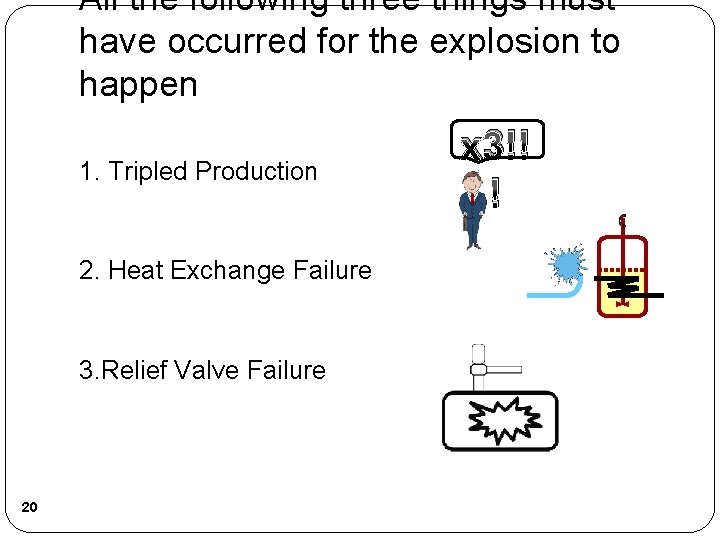
All the following three things must have occurred for the explosion to happen 1. Tripled Production 2. Heat Exchange Failure 3. Relief Valve Failure 20 x 3!! !
Case 3 – Manufacture of Fuel Additive methylcyclopentadiene manganese tricarbonyl (MCMT) 21
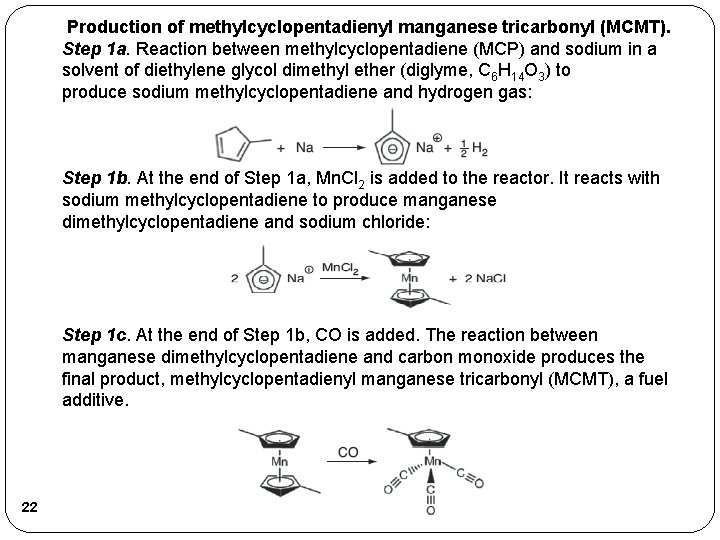
Production of methylcyclopentadienyl manganese tricarbonyl (MCMT). Step 1 a. Reaction between methylcyclopentadiene (MCP) and sodium in a solvent of diethylene glycol dimethyl ether (diglyme, C 6 H 14 O 3) to produce sodium methylcyclopentadiene and hydrogen gas: Step 1 b. At the end of Step 1 a, Mn. Cl 2 is added to the reactor. It reacts with sodium methylcyclopentadiene to produce manganese dimethylcyclopentadiene and sodium chloride: Step 1 c. At the end of Step 1 b, CO is added. The reaction between manganese dimethylcyclopentadiene and carbon monoxide produces the final product, methylcyclopentadienyl manganese tricarbonyl (MCMT), a fuel additive. 22
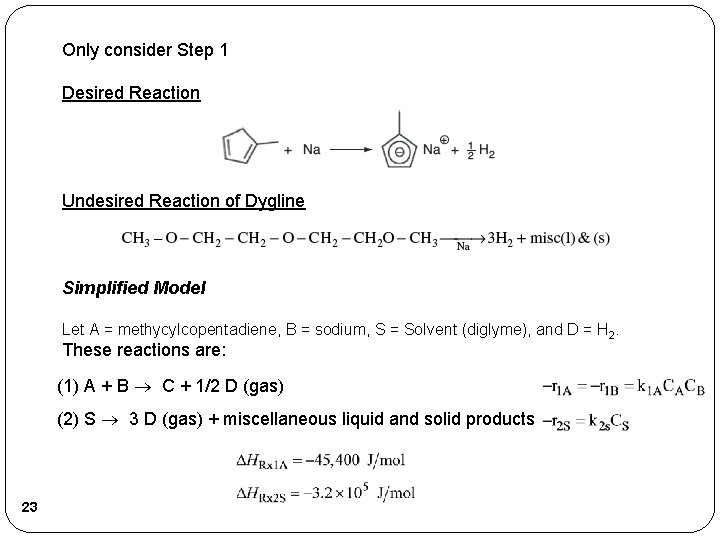
Only consider Step 1 Desired Reaction Undesired Reaction of Dygline Simplified Model Let A = methycylcopentadiene, B = sodium, S = Solvent (diglyme), and D = H 2. These reactions are: (1) A + B C + 1/2 D (gas) (2) S 3 D (gas) + miscellaneous liquid and solid products 23
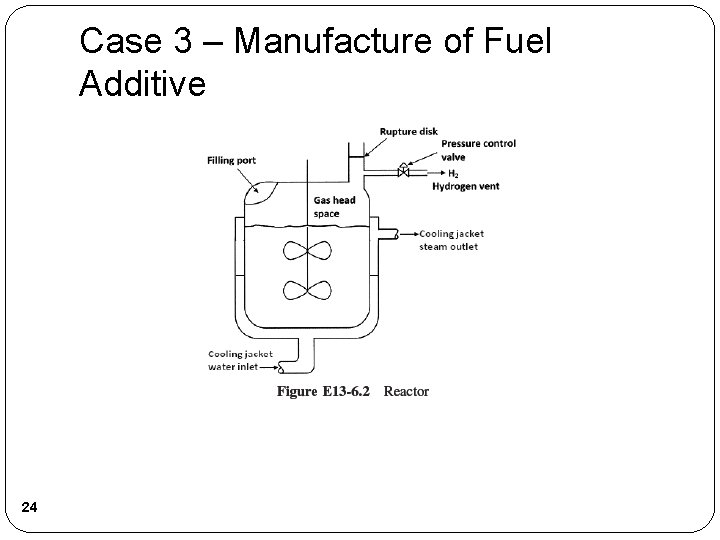
Case 3 – Manufacture of Fuel Additive 24
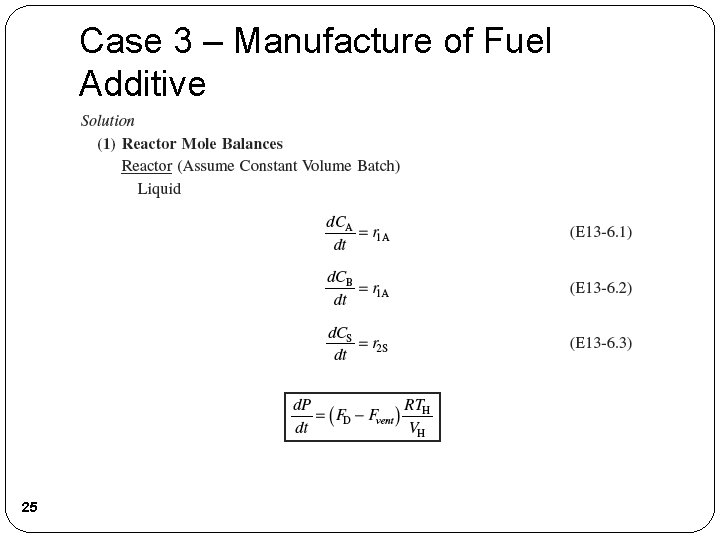
Case 3 – Manufacture of Fuel Additive 25
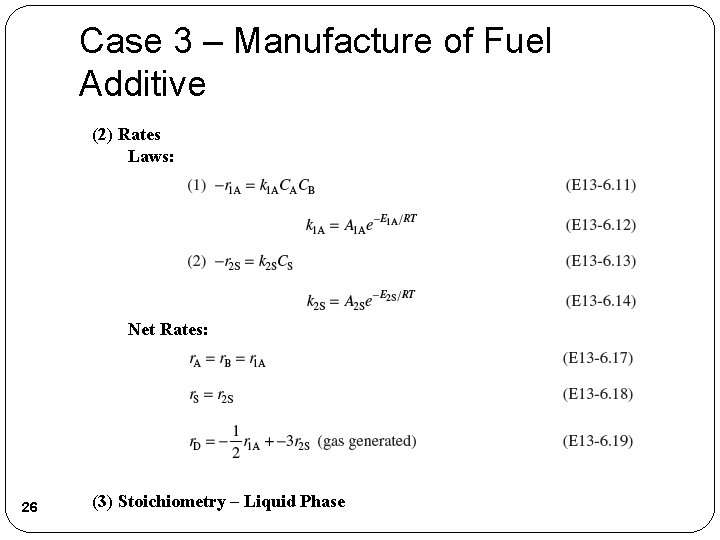
Case 3 – Manufacture of Fuel Additive (2) Rates Laws: Net Rates: 26 (3) Stoichiometry – Liquid Phase
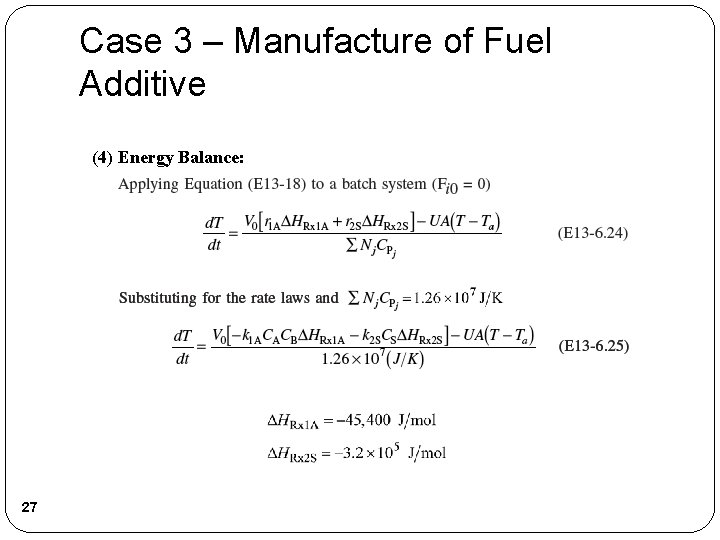
Case 3 – Manufacture of Fuel Additive (4) Energy Balance: 27
28
End of Web Lecture 25 Class Lecture 2 29