
Lecture 24 Periodic Motion Motion of a mass
- Slides: 25
Lecture 24: Periodic Motion • Motion of a mass at the end of a spring • Differential equation for simple harmonic oscillation • Amplitude, period, frequency and angular frequency • Energetics • Simple pendulum • Physical pendulum
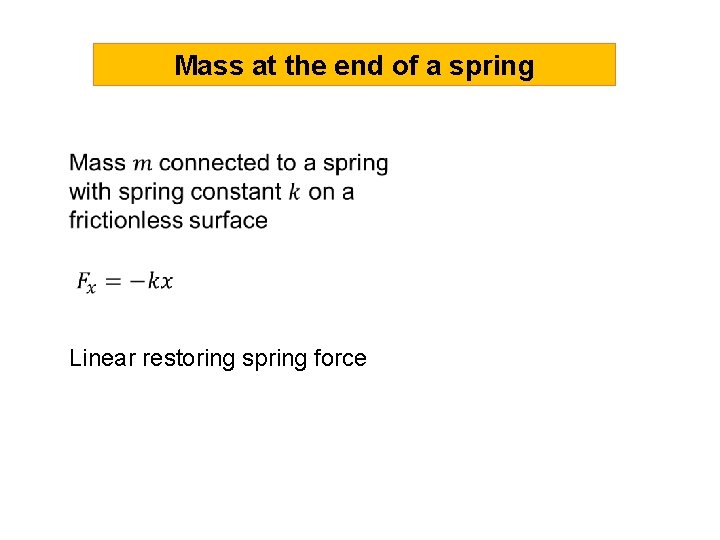
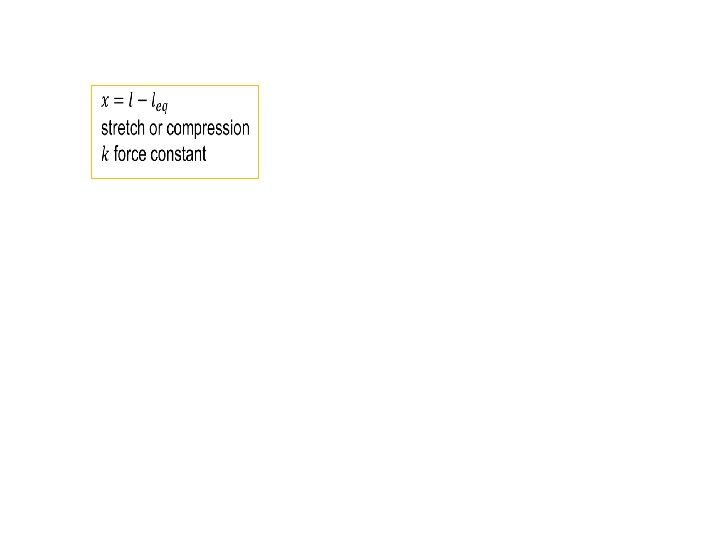
Mass at the end of a spring Linear restoring spring force
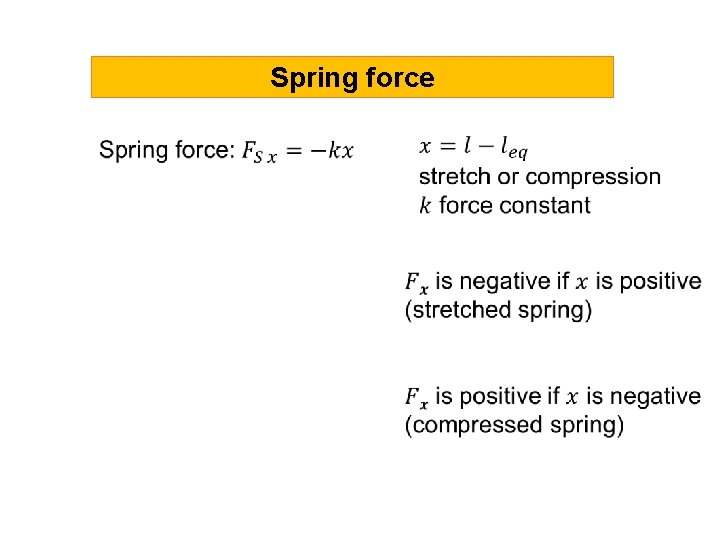
Spring force
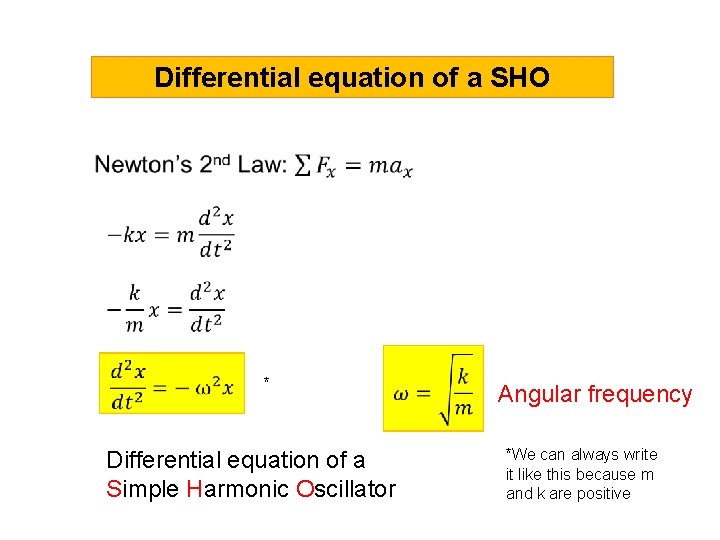
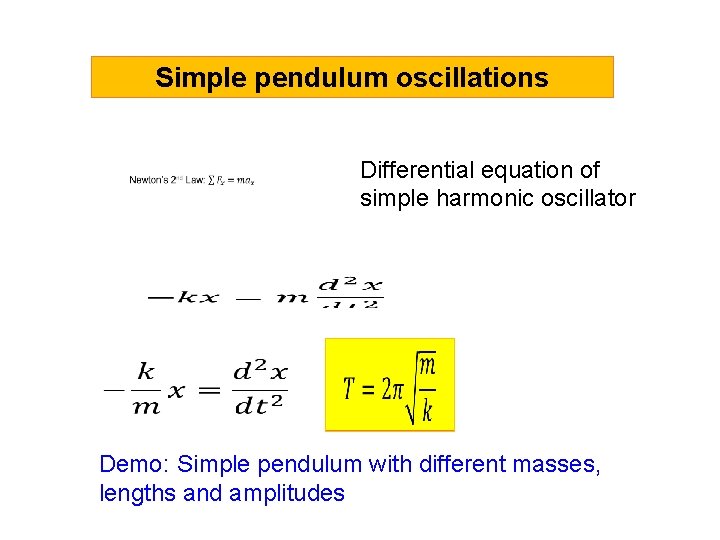
Differential equation of a SHO * Differential equation of a Simple Harmonic Oscillator Angular frequency *We can always write it like this because m and k are positive
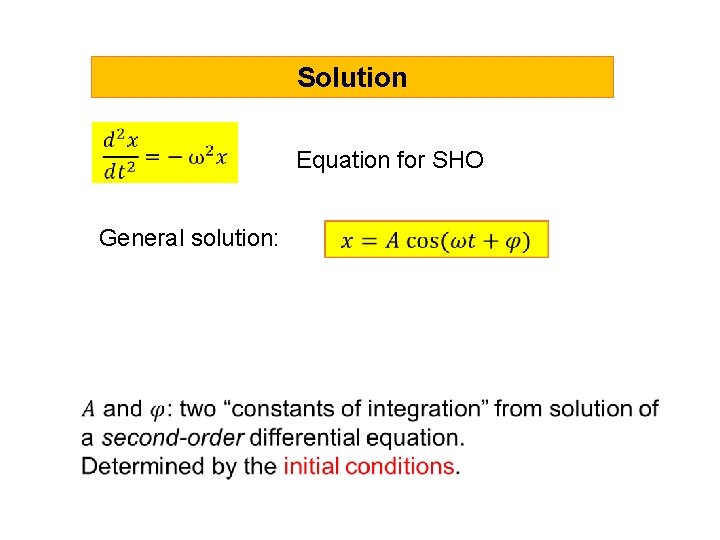
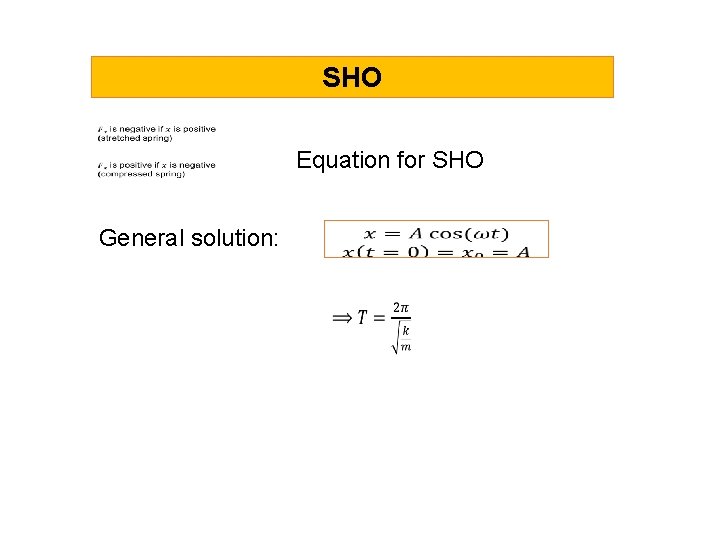
Solution General solution: Equation for SHO
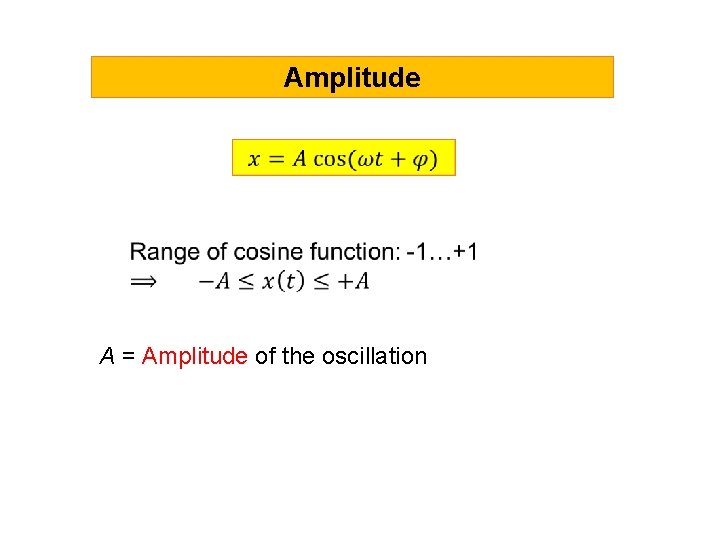
Amplitude A = Amplitude of the oscillation
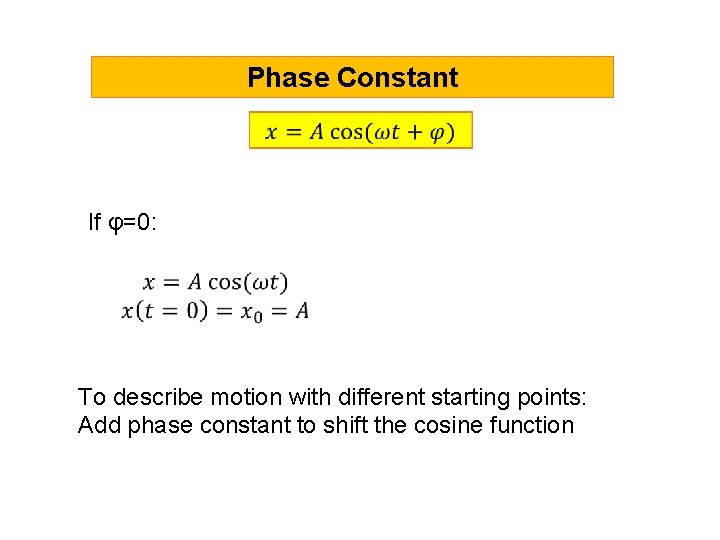
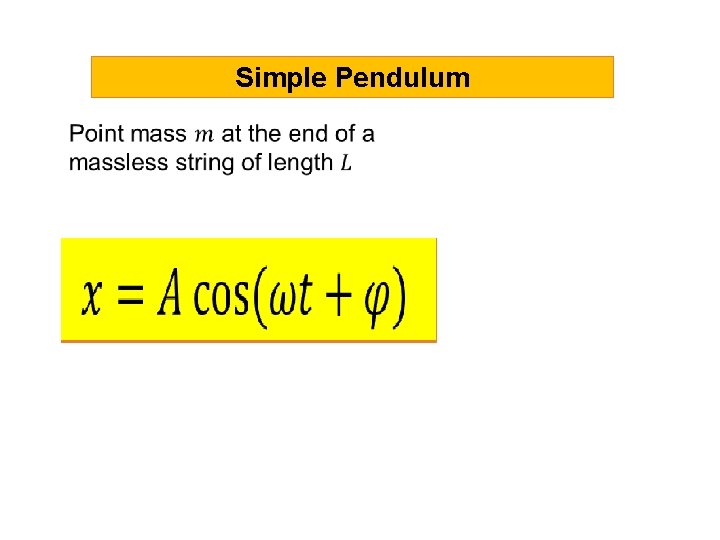
Phase Constant If φ=0: To describe motion with different starting points: Add phase constant to shift the cosine function
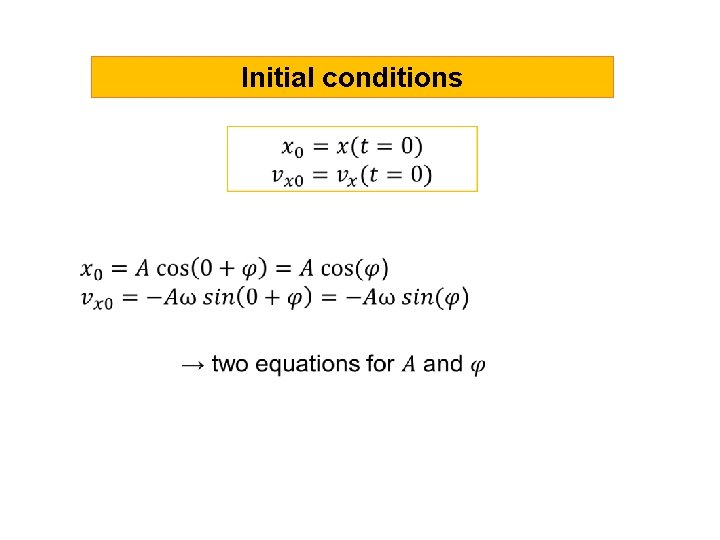
Initial conditions
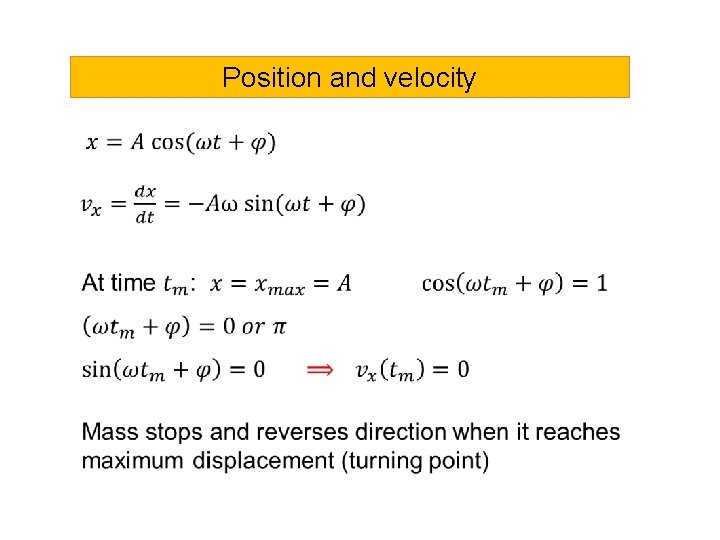
Position and velocity
Simulation http: //www. walter-fendt. de/ph 14 e/springpendulum. htm
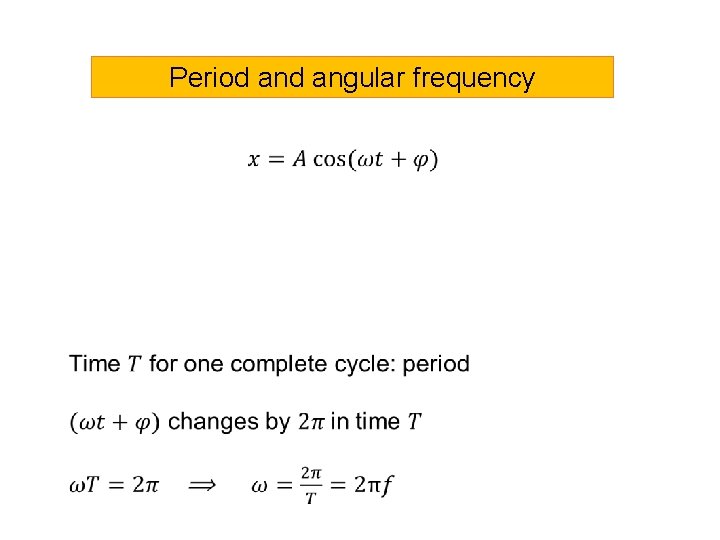
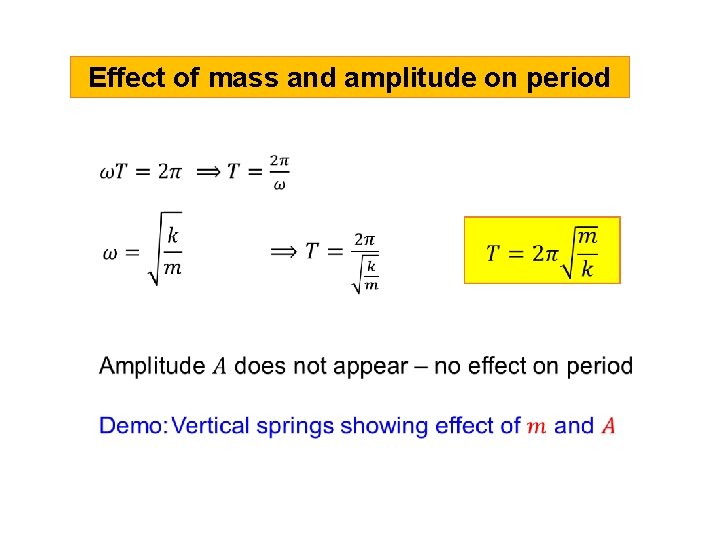
Period angular frequency
Effect of mass and amplitude on period
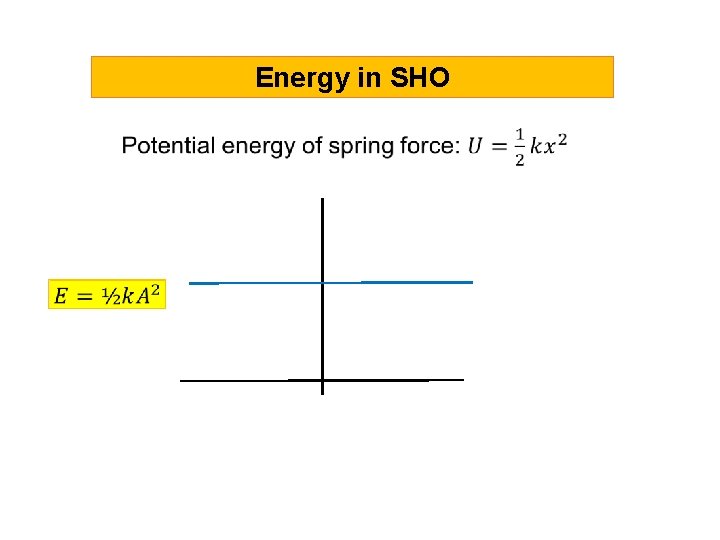
Energy in SHO
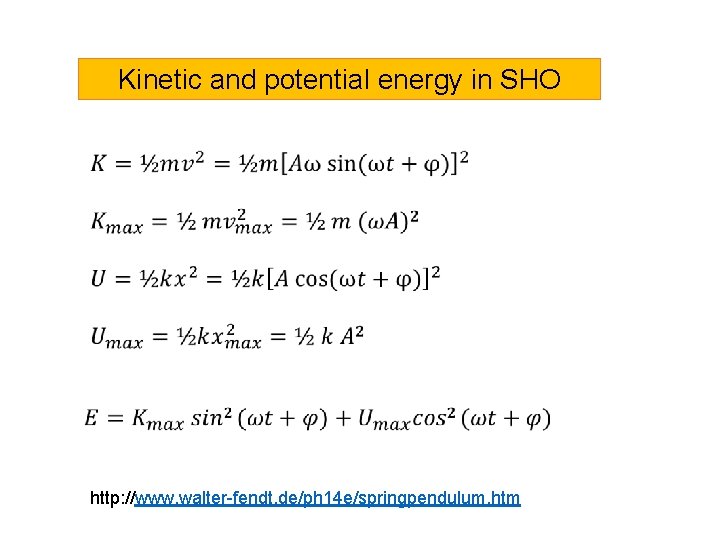
Kinetic and potential energy in SHO http: //www. walter-fendt. de/ph 14 e/springpendulum. htm
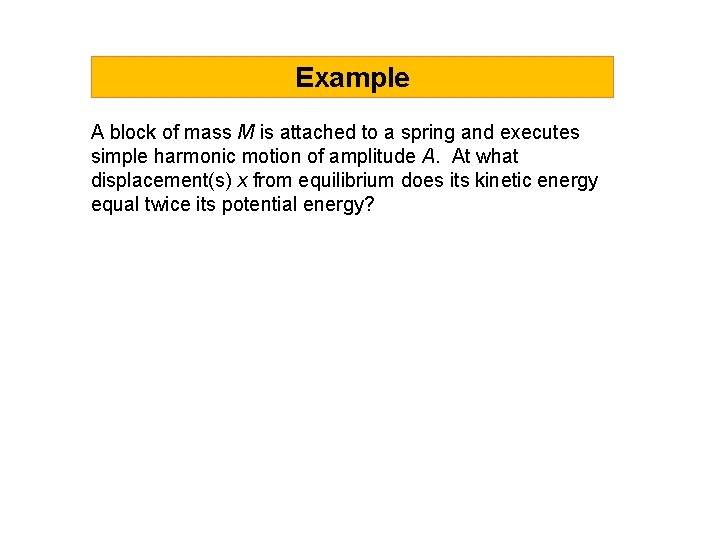
Example A block of mass M is attached to a spring and executes simple harmonic motion of amplitude A. At what displacement(s) x from equilibrium does its kinetic energy equal twice its potential energy?
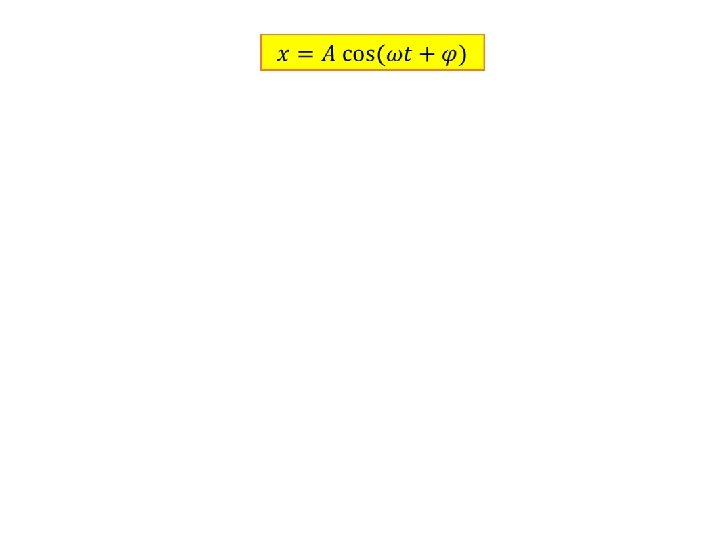
SHO General solution: Equation for SHO
Simple Pendulum
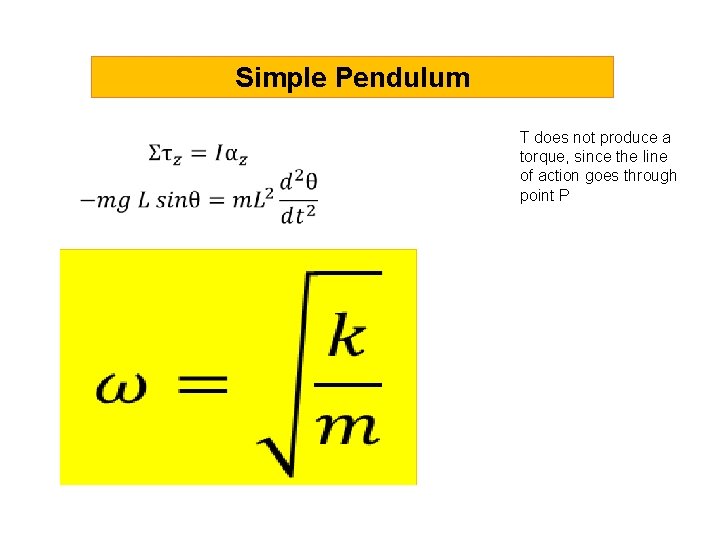
Simple Pendulum T does not produce a torque, since the line of action goes through point P
Simple pendulum oscillations Differential equation of simple harmonic oscillator Demo: Simple pendulum with different masses, lengths and amplitudes
Demo: Simple pendulum with different masses, lengths and amplitudes • Period independent of mass • Period independent of amplitude
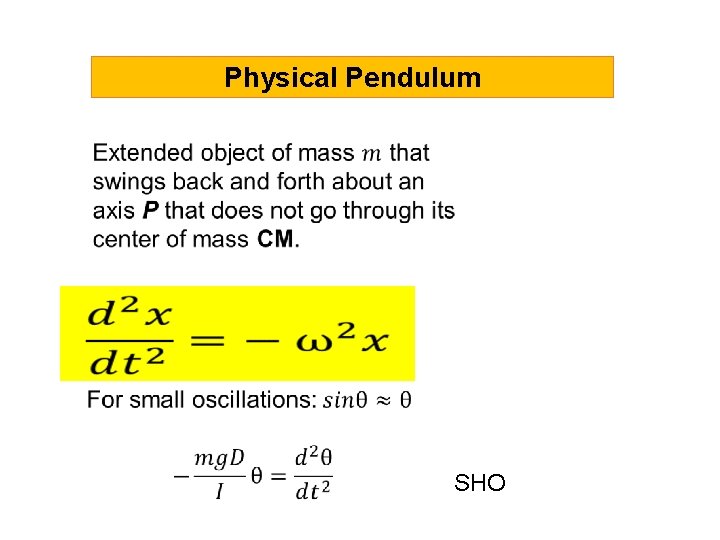
Physical Pendulum SHO
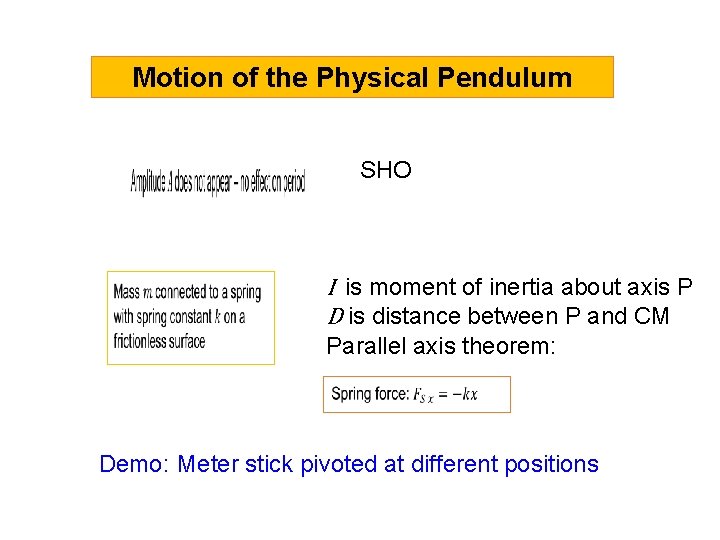
Motion of the Physical Pendulum SHO I is moment of inertia about axis P D is distance between P and CM Parallel axis theorem: Demo: Meter stick pivoted at different positions
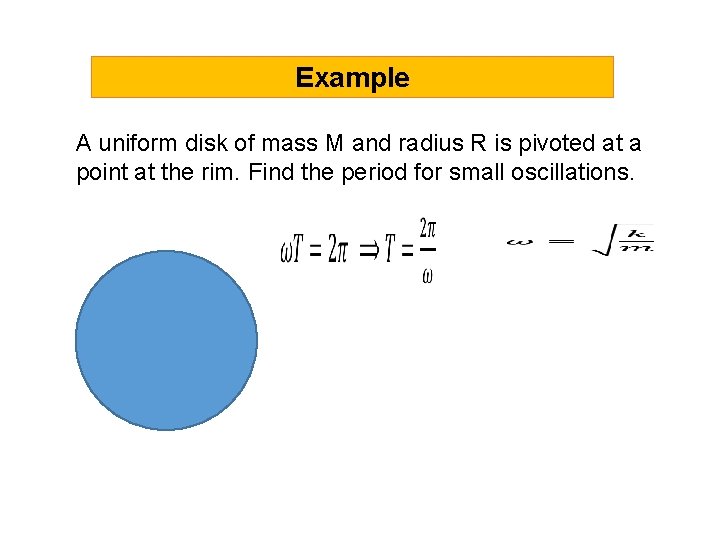
Example A uniform disk of mass M and radius R is pivoted at a point at the rim. Find the period for small oscillations.