
Lecture 23 Chemical Reaction Engineering CRE is the



- Slides: 24
Lecture 23 Chemical Reaction Engineering (CRE) is the field that studies the rates and mechanisms of chemical reactions and the design of the reactors in which they take place.
Web Lecture 23 Class Lecture 19 - Tuesday CSTR With Heat Effects �Multiple Steady States �Ignition and Extinction Temperatures 2
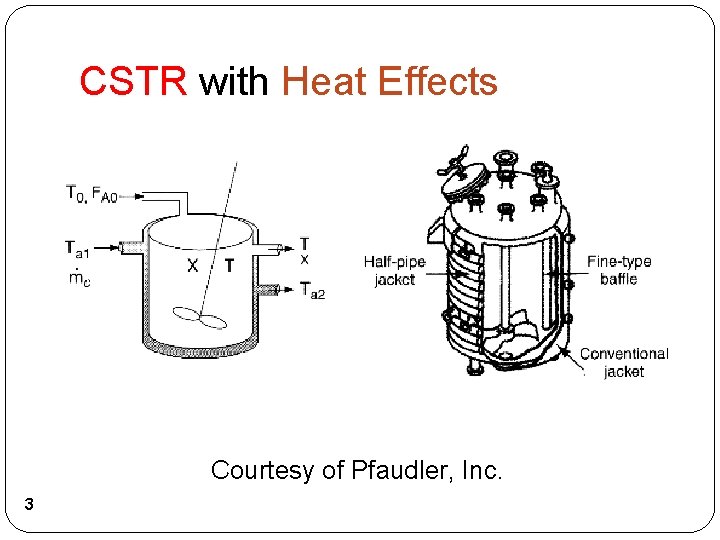
CSTR with Heat Effects Courtesy of Pfaudler, Inc. 3
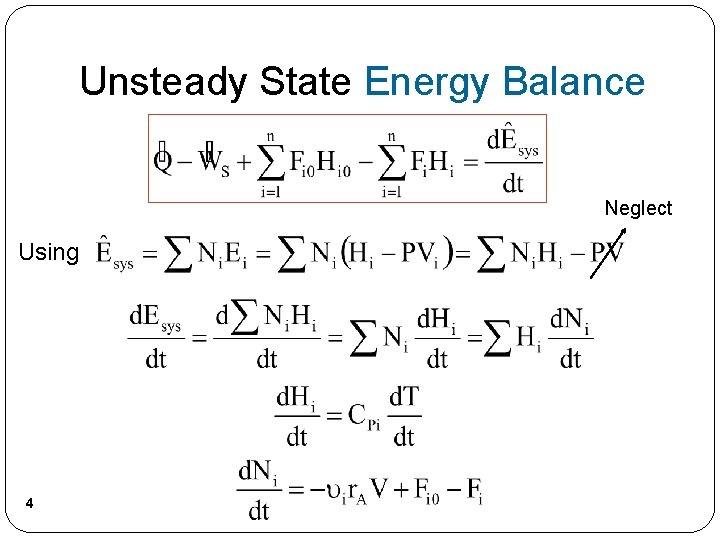
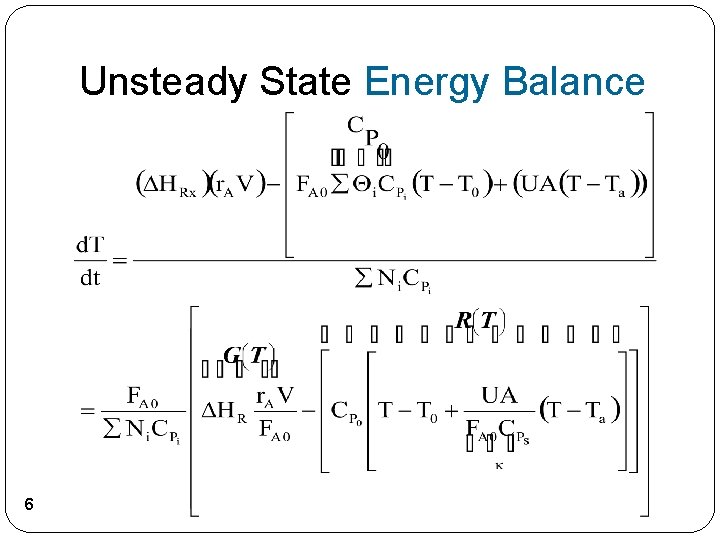
Unsteady State Energy Balance Neglect Using 4
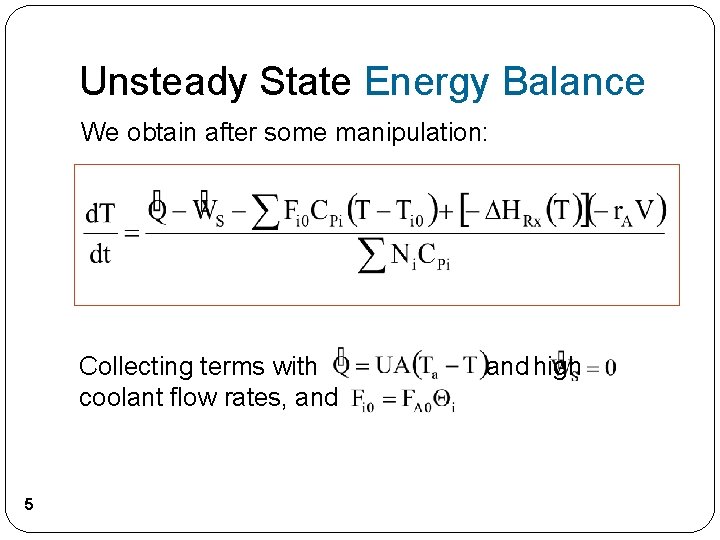
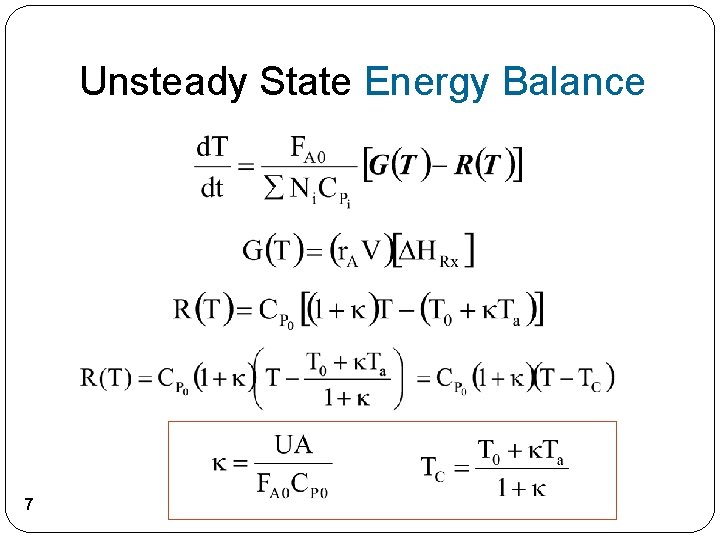
Unsteady State Energy Balance We obtain after some manipulation: Collecting terms with coolant flow rates, and 5 and high
Unsteady State Energy Balance 6
Unsteady State Energy Balance 7
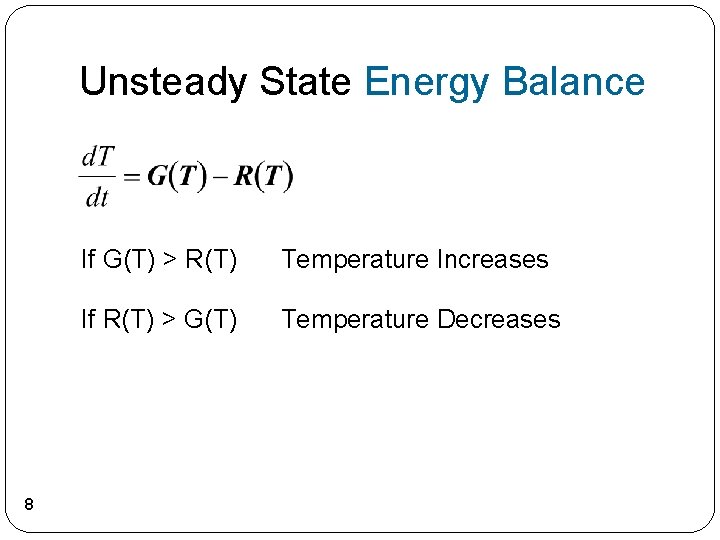
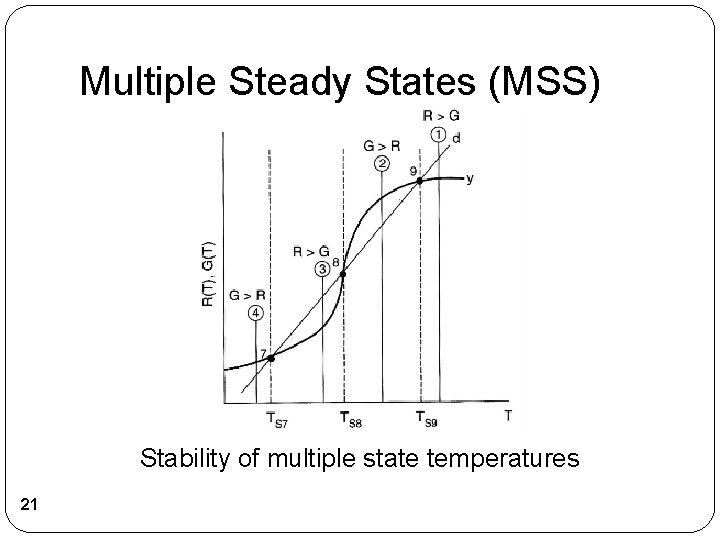
Unsteady State Energy Balance 8 If G(T) > R(T) Temperature Increases If R(T) > G(T) Temperature Decreases
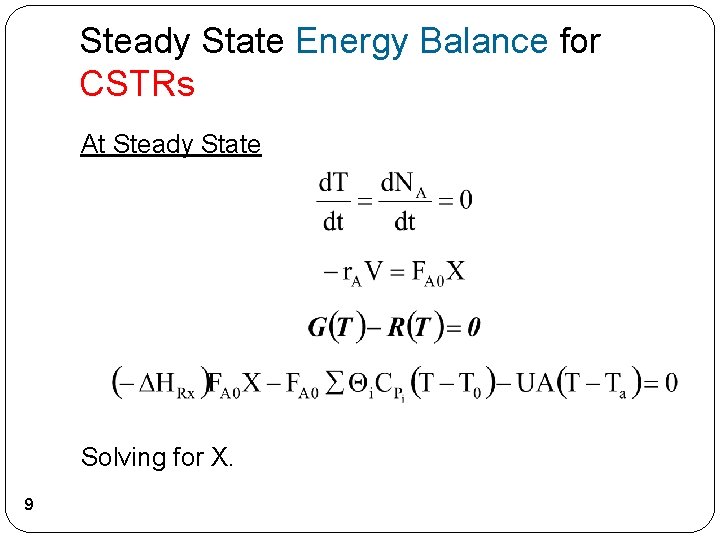
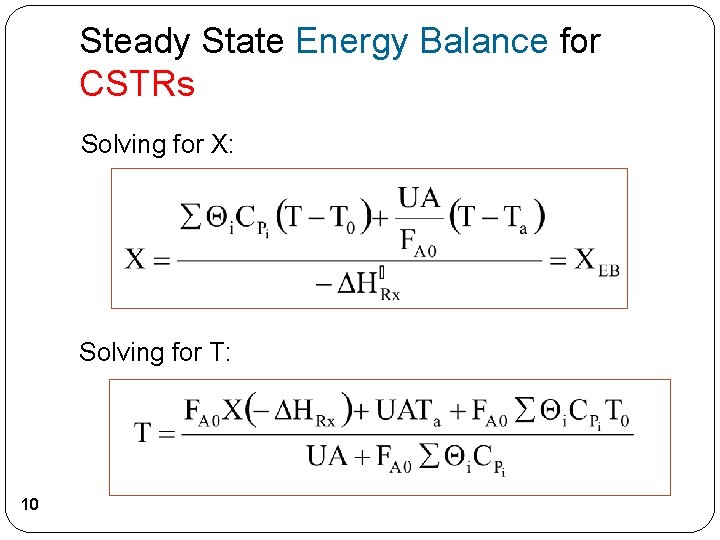
Steady State Energy Balance for CSTRs At Steady State Solving for X. 9
Steady State Energy Balance for CSTRs Solving for X: Solving for T: 10
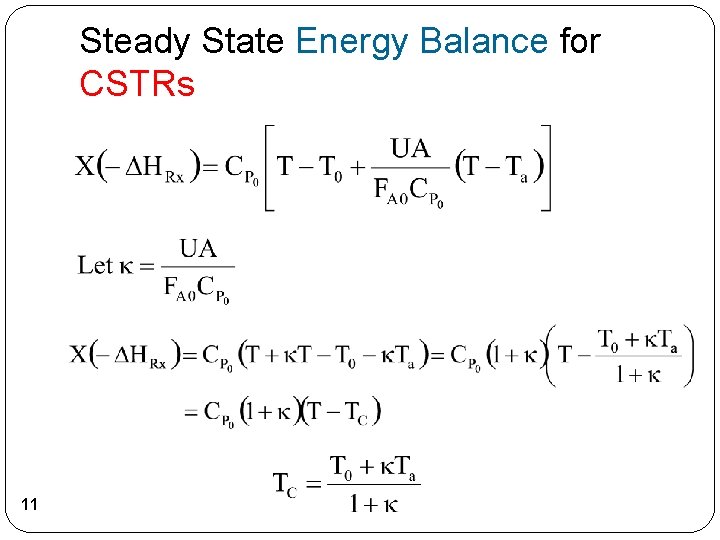
Steady State Energy Balance for CSTRs 11
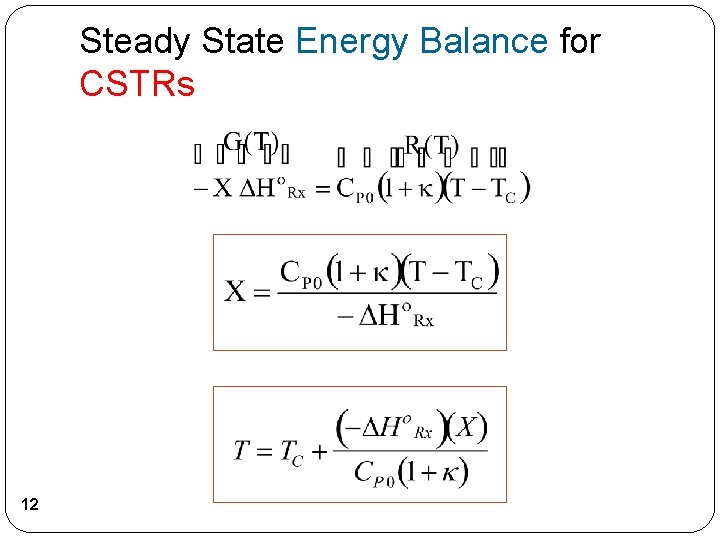
Steady State Energy Balance for CSTRs 12
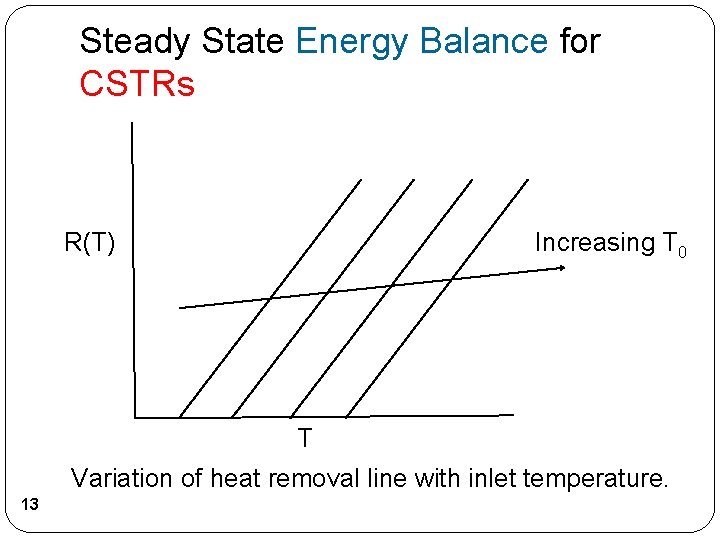
Steady State Energy Balance for CSTRs Increasing T 0 R(T) T Variation of heat removal line with inlet temperature. 13
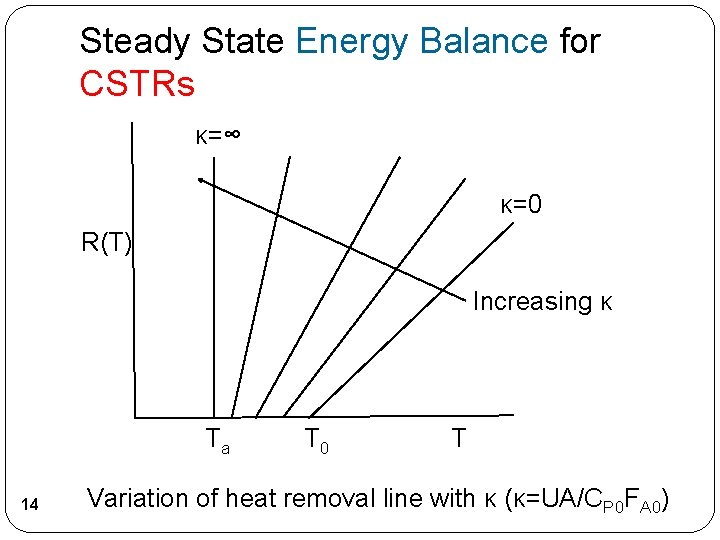
Steady State Energy Balance for CSTRs κ=∞ κ=0 R(T) Increasing κ Ta 14 T 0 T Variation of heat removal line with κ (κ=UA/CP 0 FA 0)
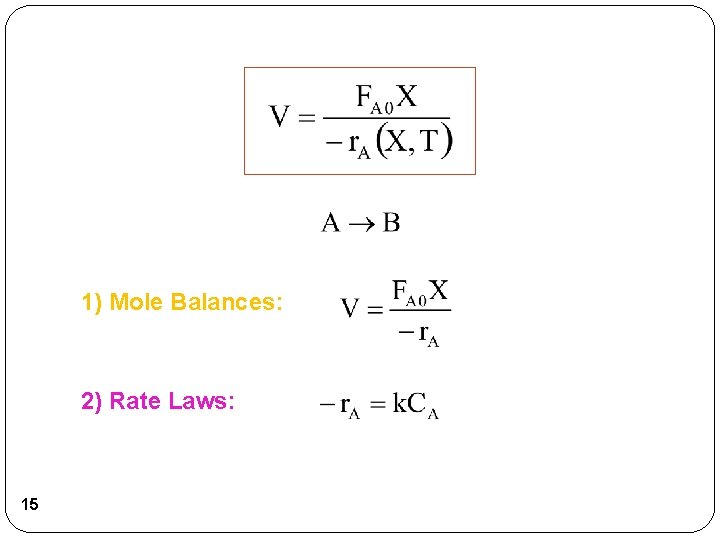
1) Mole Balances: 2) Rate Laws: 15
3) Stoichiometry: 4) Combine: 16
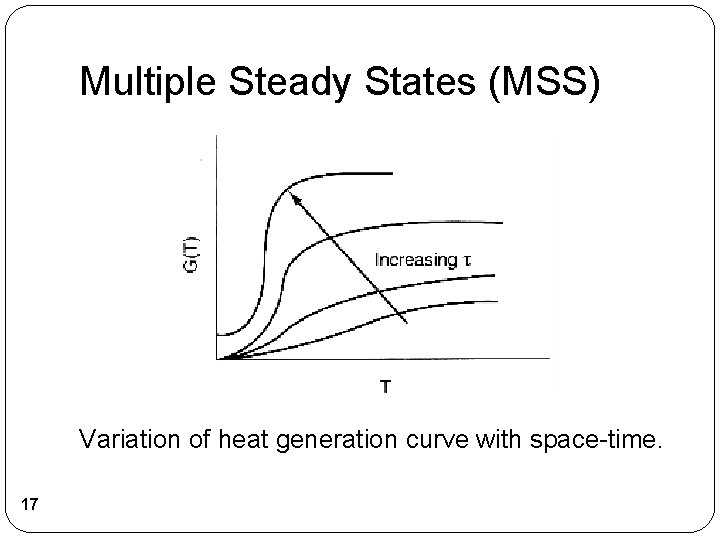
Multiple Steady States (MSS) Variation of heat generation curve with space-time. 17
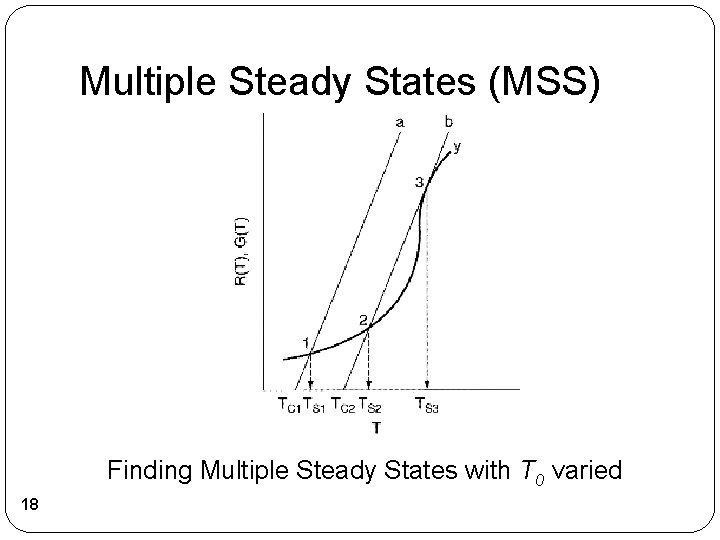
Multiple Steady States (MSS) Finding Multiple Steady States with T 0 varied 18
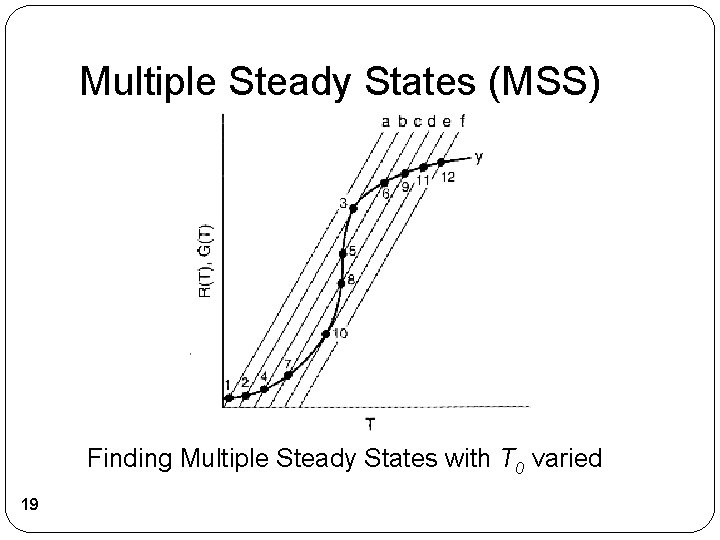
Multiple Steady States (MSS) Finding Multiple Steady States with T 0 varied 19
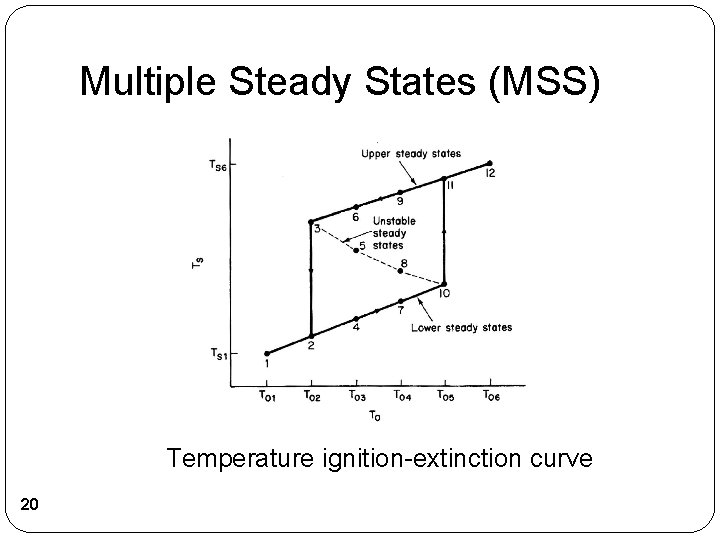
Multiple Steady States (MSS) Temperature ignition-extinction curve 20
Multiple Steady States (MSS) Stability of multiple state temperatures 21
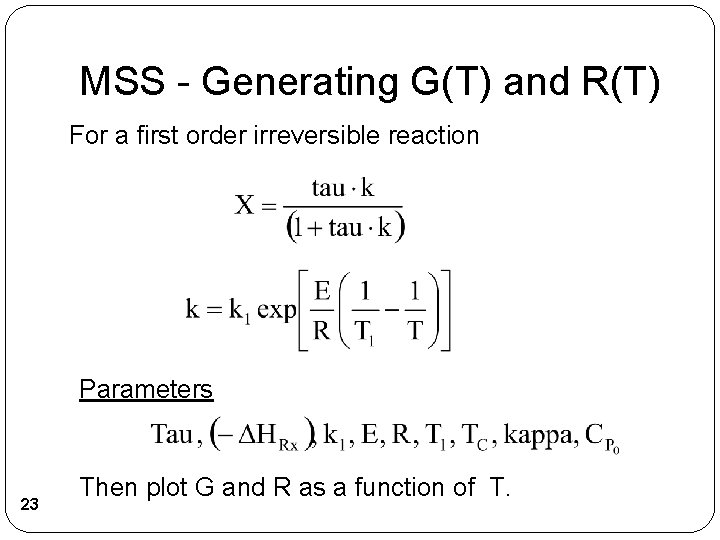
MSS - Generating G(T) and R(T) Need to solve for X after combining mole balance, rate law, and stoichiometry. 22
MSS - Generating G(T) and R(T) For a first order irreversible reaction Parameters 23 Then plot G and R as a function of T.
End of Web Lecture 23 Class Lecture 19 24