
Lecture 22 What is the design and function
- Slides: 12
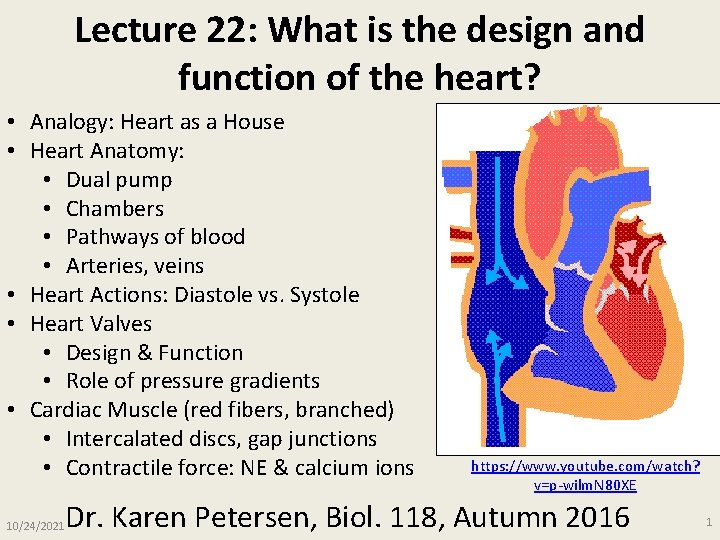
Lecture 22: What is the design and function of the heart? • Analogy: Heart as a House • Heart Anatomy: • Dual pump • Chambers • Pathways of blood • Arteries, veins • Heart Actions: Diastole vs. Systole • Heart Valves • Design & Function • Role of pressure gradients • Cardiac Muscle (red fibers, branched) • Intercalated discs, gap junctions • Contractile force: NE & calcium ions 10/24/2021 https: //www. youtube. com/watch? v=p-wilm. N 80 XE Dr. Karen Petersen, Biol. 118, Autumn 2016 1
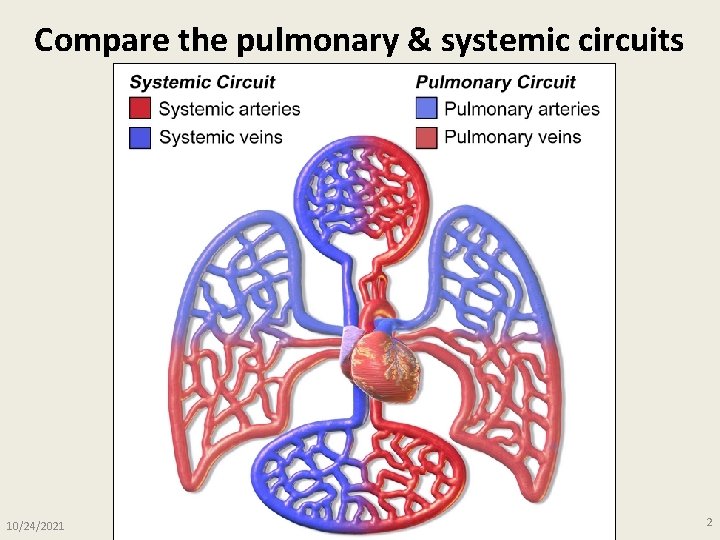
Compare the pulmonary & systemic circuits 10/24/2021 2
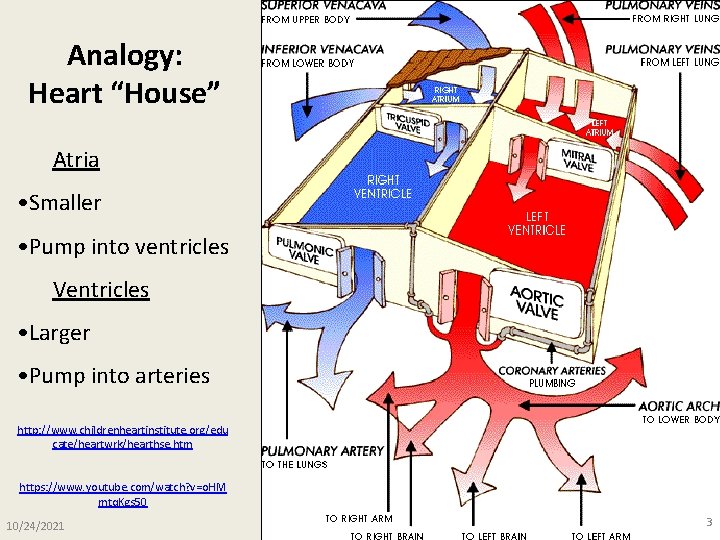
Analogy: Heart “House” Atria • Smaller • Pump into ventricles Ventricles • Larger • Pump into arteries http: //www. childrenheartinstitute. org/edu cate/heartwrk/hearthse. htm https: //www. youtube. com/watch? v=o. HM mtq. Kgs 50 10/24/2021 3
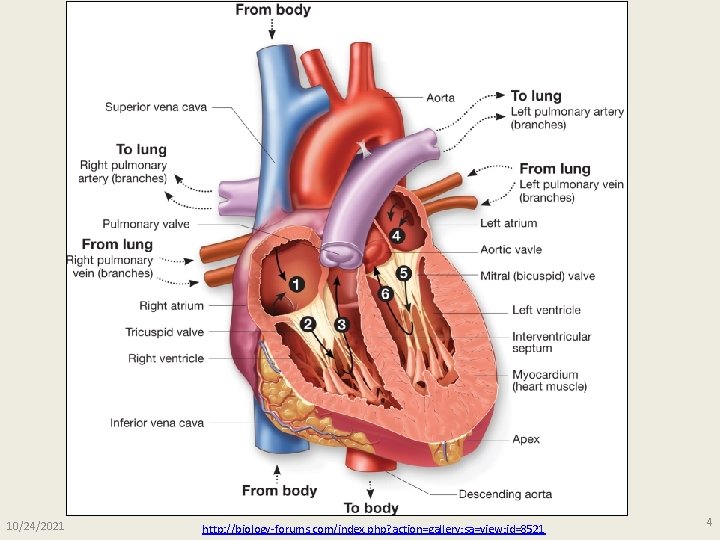
10/24/2021 http: //biology-forums. com/index. php? action=gallery; sa=view; id=8521 4
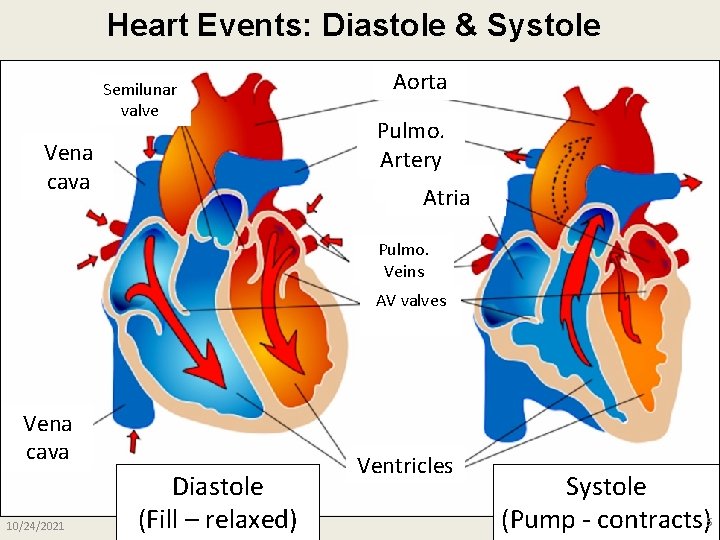
Heart Events: Diastole & Systole Semilunar valve Vena cava Aorta Pulmo. Artery Atria Pulmo. Veins AV valves Vena cava 10/24/2021 Diastole (Fill – relaxed) Ventricles Systole (Pump - contracts)5
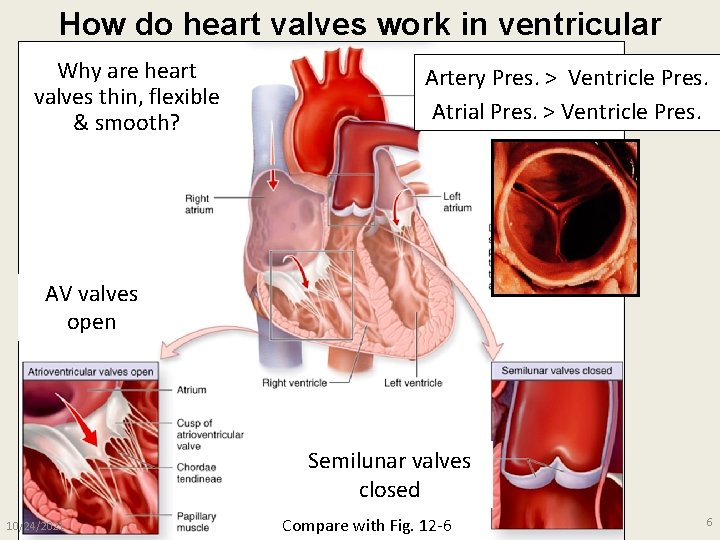
How do heart valves work in ventricular diastole? Artery Pres. > Ventricle Pres. Why are heart valves thin, flexible & smooth? Atrial Pres. > Ventricle Pres. AV valves open Semilunar valves closed 10/24/2021 Compare with Fig. 12 -6 6
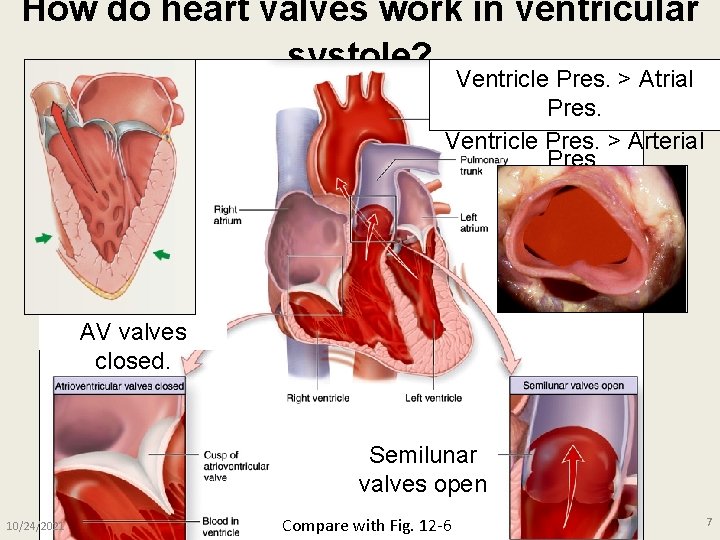
How do heart valves work in ventricular systole? Ventricle Pres. > Atrial Pres. Ventricle Pres. > Arterial Pres. AV valves closed. Semilunar valves open 10/24/2021 Compare with Fig. 12 -6 7
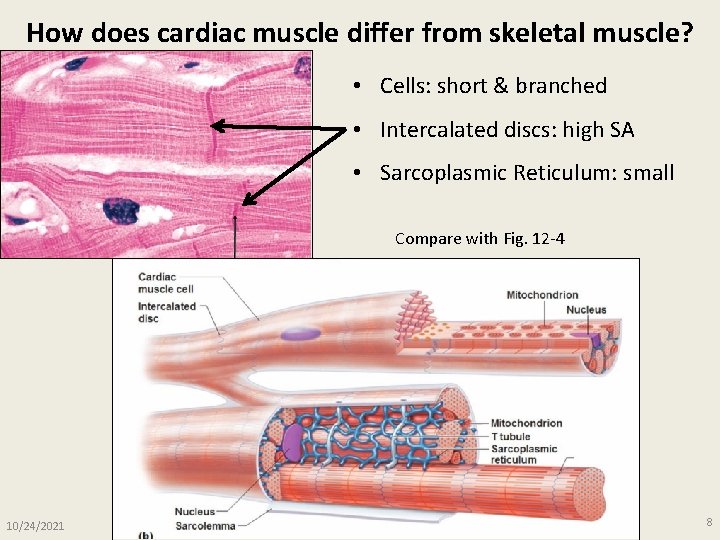
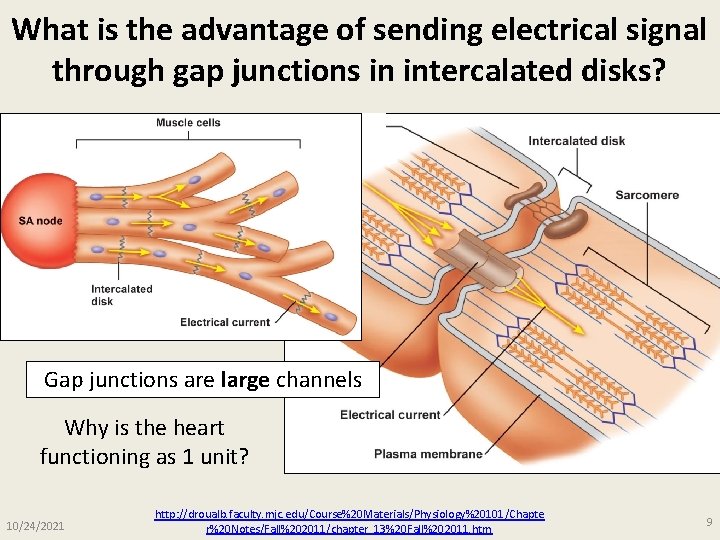
How does cardiac muscle differ from skeletal muscle? • Cells: short & branched • Intercalated discs: high SA • Sarcoplasmic Reticulum: small Compare with Fig. 12 -4 10/24/2021 8
What is the advantage of sending electrical signal through gap junctions in intercalated disks? Gap junctions are large channels Why is the heart functioning as 1 unit? 10/24/2021 http: //droualb. faculty. mjc. edu/Course%20 Materials/Physiology%20101/Chapte r%20 Notes/Fall%202011/chapter_13%20 Fall%202011. htm 9
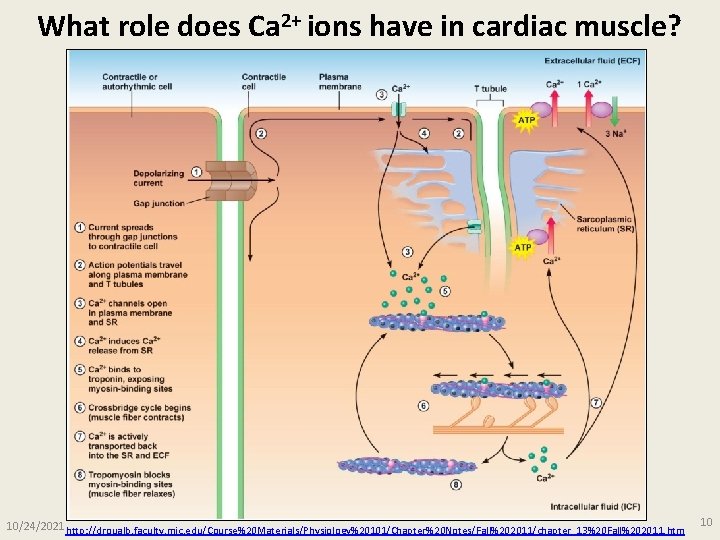
What role does Ca 2+ ions have in cardiac muscle? 10/24/2021 http: //droualb. faculty. mjc. edu/Course%20 Materials/Physiology%20101/Chapter%20 Notes/Fall%202011/chapter_13%20 Fall%202011. htm 10
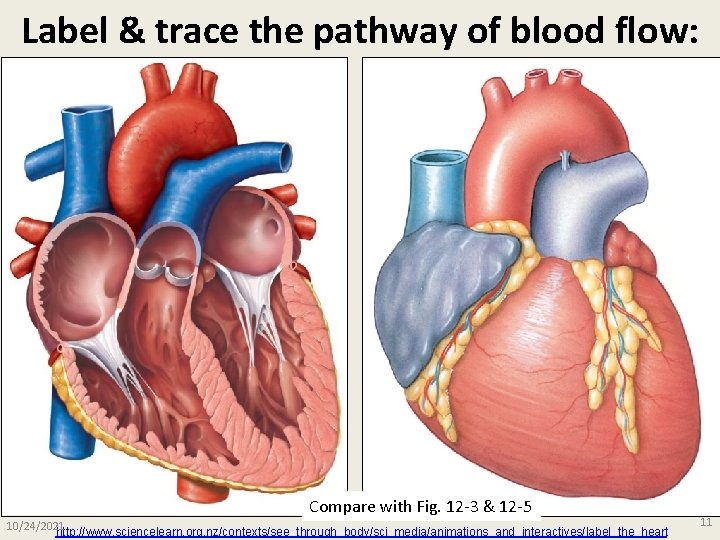
Label & trace the pathway of blood flow: Compare with Fig. 12 -3 & 12 -5 10/24/2021 http: //www. sciencelearn. org. nz/contexts/see_through_body/sci_media/animations_and_interactives/label_the_heart 11
Topics to understand & review: 1. Compare the pathway of blood in the pulmonary vs. systemic circuit. Trace the flow of blood from any starting point through the heart’s chambers & major arteries that exit & veins that enter the heart. Which vessels & heart chambers contain oxygenated blood? 2. Compare the relative size & strength of the atria & ventricles. What is the function of each type of chamber? Why is the heart called a “double-pump”? Explain why the left ventricle is stronger than the right ventricle. 3. Describe the tissue of the heart valves. Where are semilunar valves & AV (atrioventricular) valves located? How do differences in blood pressure on either side of a valve cause it to open or close? Which valves are open during ventricular systole? Which valves are open during ventricular diastole? 4. Compare cardiac vs skeletal muscle cells: cell length, cell branching, # of nuclei, amount of myoglobin, amount of mitochondria, size of SR, presence of intercalated discs & gap junctions. Are cardiac muscle cells “red” or “white” fiber in design? 5. What is the function of gap junctions? What are the benefits of the high surface area at an intercalated disc? 6. Why do cardiac cells depend more on the diffusion of extracellular calcium into the cell than skeletal muscle cells? How is calcium returned into the SR after the excitation ends? How is some of that calcium returned outside of the cell membrane in cardiac muscle? 7. Describe the contraction cycle (formation of cross-bridges) & roles of ATP in those events – ie. review skeletal muscle contraction…. 10/24/2021 12