
Lecture 22 Chemical Reaction Engineering CRE is the
![A. 2. a. Case 1 That is the term in brackets, [ ], would](https://slidetodoc.com/presentation_image_h2/8167f7199e9a0f2e691c2fa7d9264424/image-32.jpg "A. 2. a. Case 1 That is the term in brackets, [ ], would")
- Slides: 39
Lecture 22 Chemical Reaction Engineering (CRE) is the field that studies the rates and mechanisms of chemical reactions and the design of the reactors in which they take place.
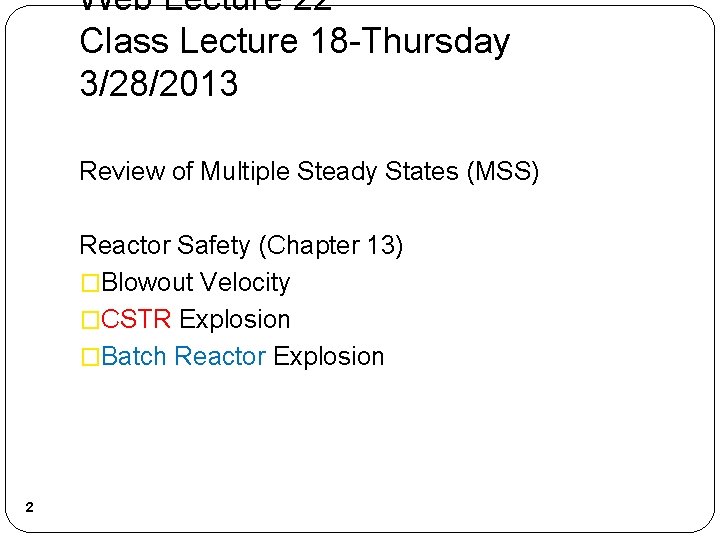
Web Lecture 22 Class Lecture 18 -Thursday 3/28/2013 Review of Multiple Steady States (MSS) Reactor Safety (Chapter 13) �Blowout Velocity �CSTR Explosion �Batch Reactor Explosion 2
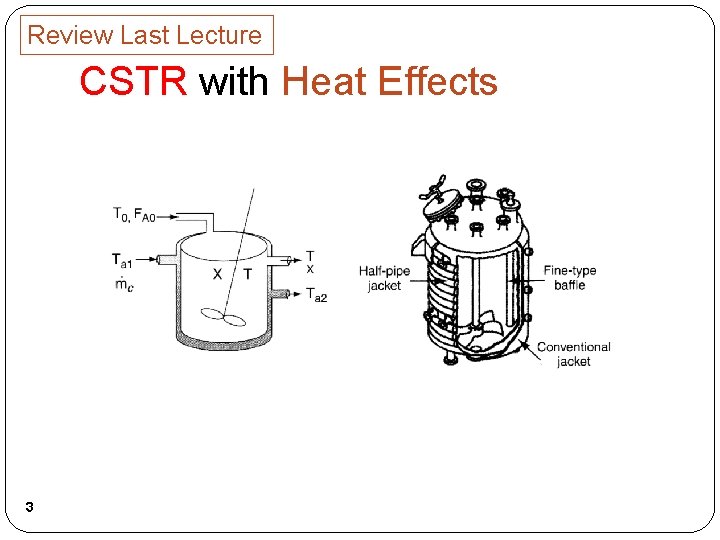
Review Last Lecture CSTR with Heat Effects 3
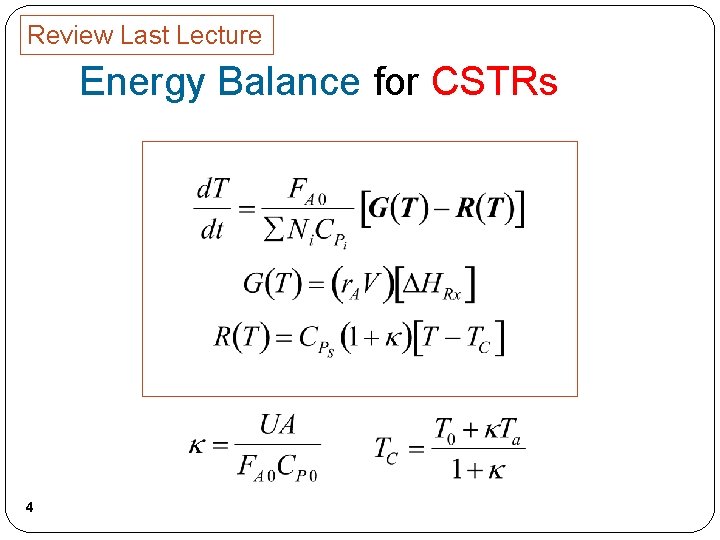
Review Last Lecture Energy Balance for CSTRs 4
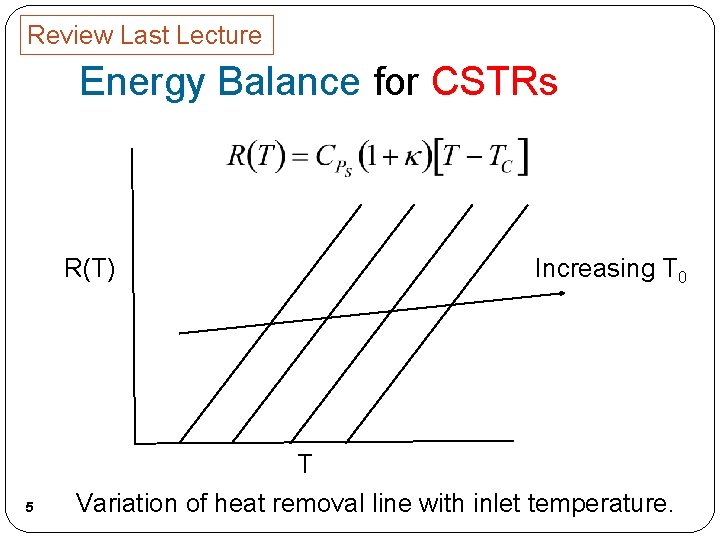
Review Last Lecture Energy Balance for CSTRs Increasing T 0 R(T) T 5 Variation of heat removal line with inlet temperature.
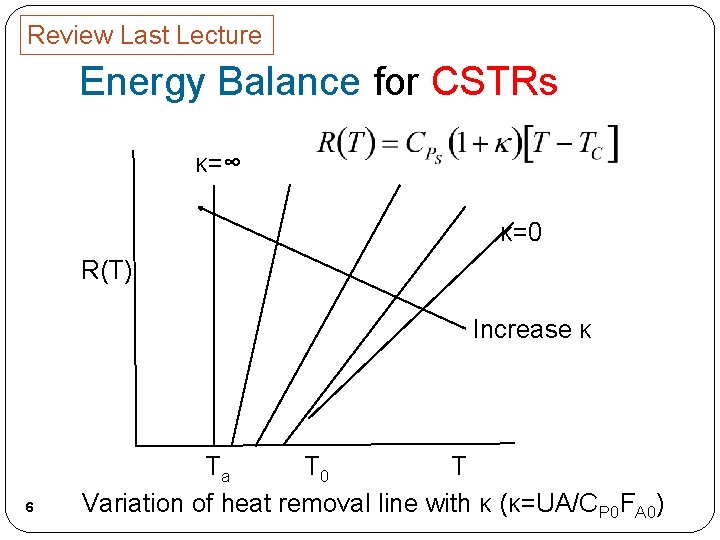
Review Last Lecture Energy Balance for CSTRs κ=∞ κ=0 R(T) Increase κ 6 Ta T 0 T Variation of heat removal line with κ (κ=UA/CP 0 FA 0)
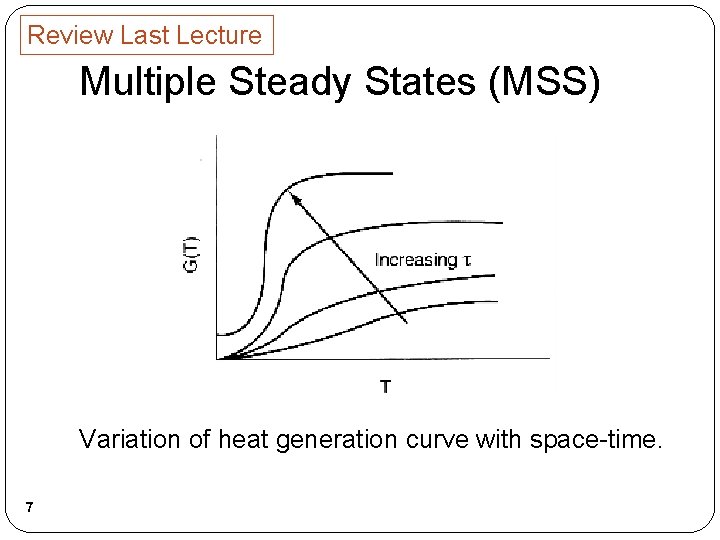
Review Last Lecture Multiple Steady States (MSS) Variation of heat generation curve with space-time. 7
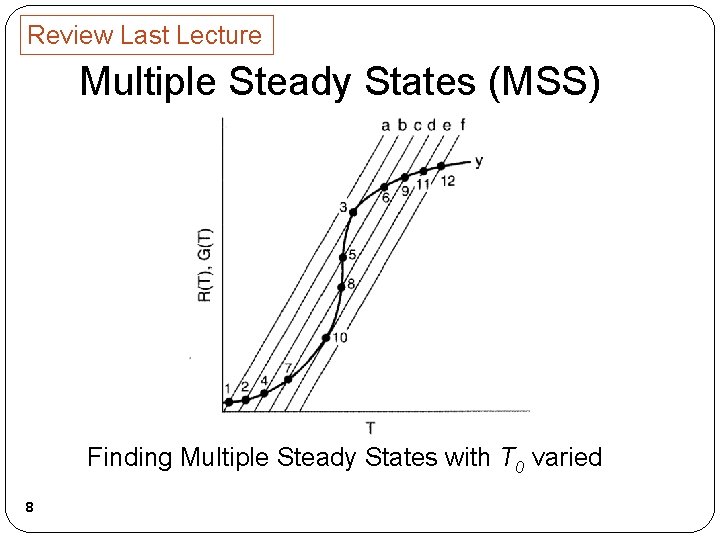
Review Last Lecture Multiple Steady States (MSS) Finding Multiple Steady States with T 0 varied 8
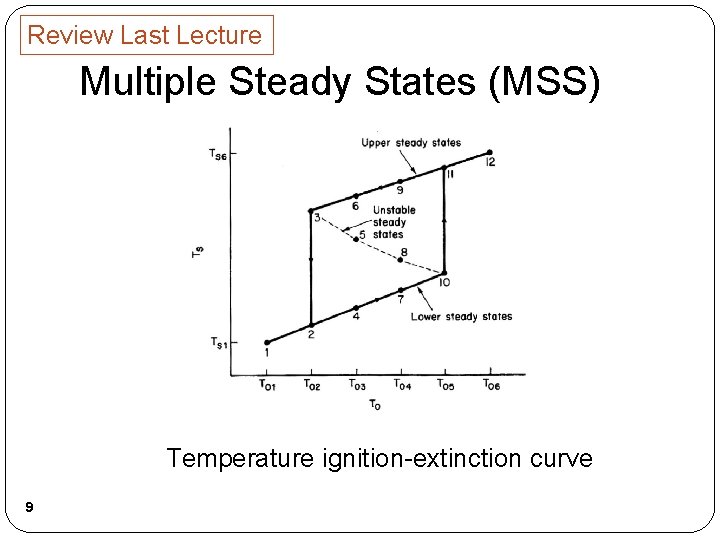
Review Last Lecture Multiple Steady States (MSS) Temperature ignition-extinction curve 9
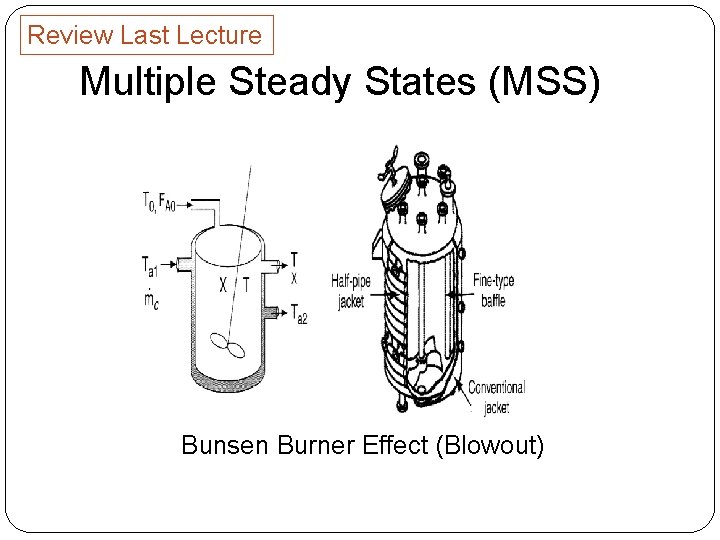
Review Last Lecture Multiple Steady States (MSS) Bunsen Burner Effect (Blowout)
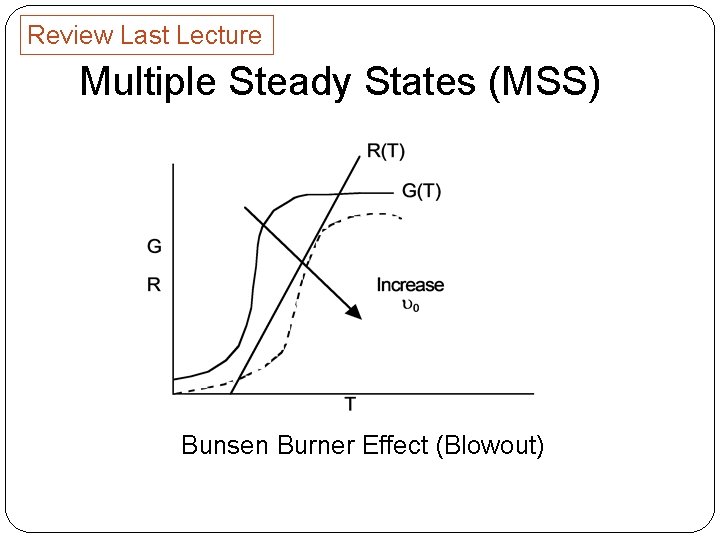
Review Last Lecture Multiple Steady States (MSS) Bunsen Burner Effect (Blowout)
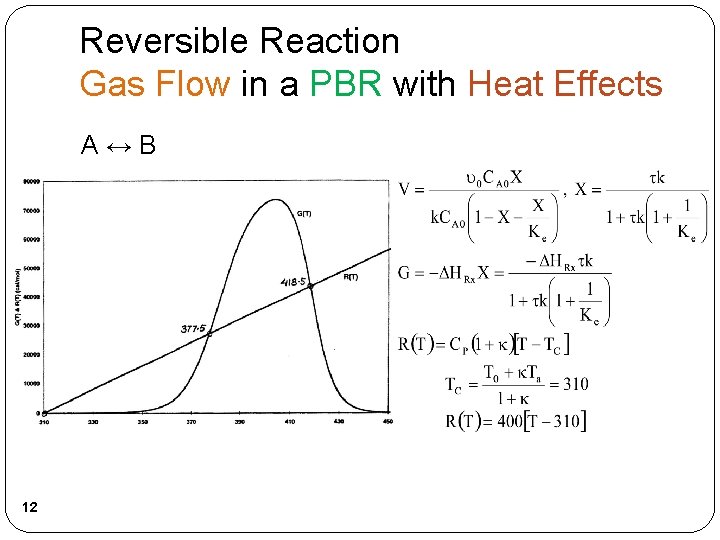
Reversible Reaction Gas Flow in a PBR with Heat Effects A↔B 12
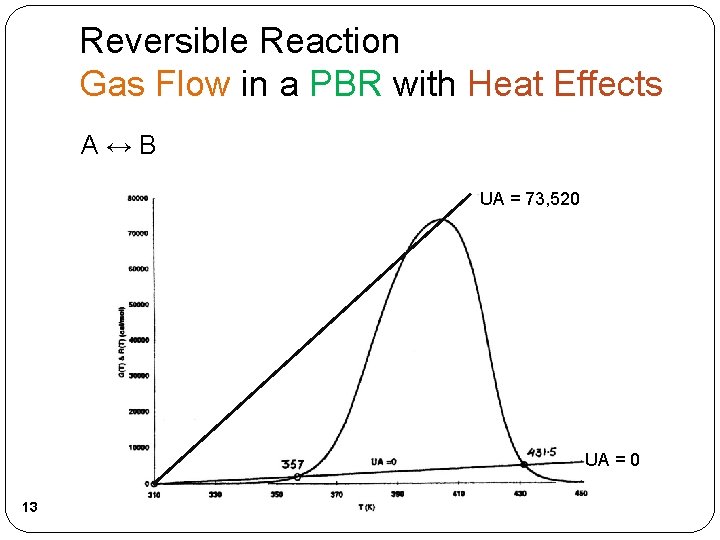
Reversible Reaction Gas Flow in a PBR with Heat Effects A↔B UA = 73, 520 UA = 0 13
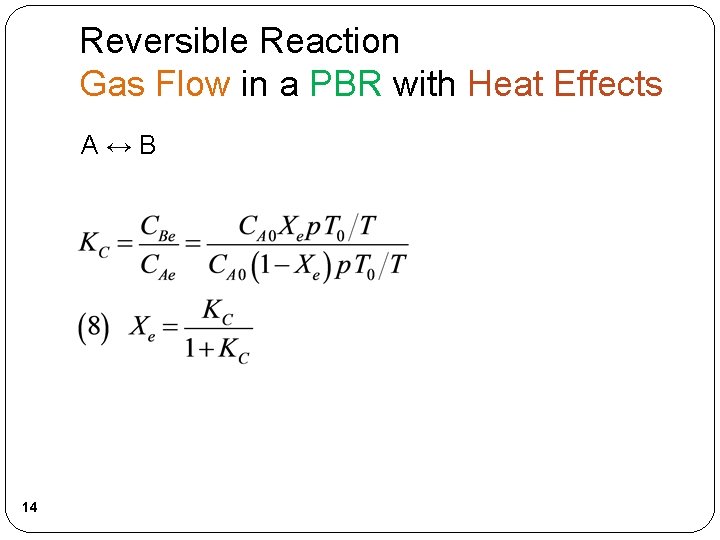
Reversible Reaction Gas Flow in a PBR with Heat Effects A↔B 14
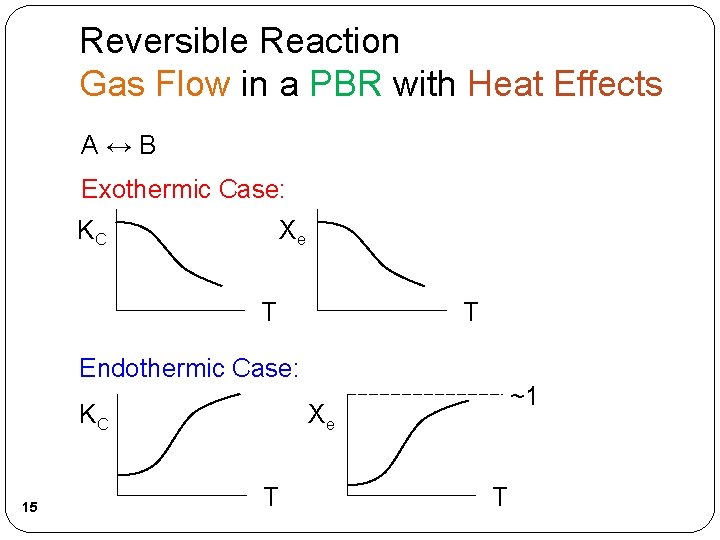
Reversible Reaction Gas Flow in a PBR with Heat Effects A↔B Exothermic Case: KC Xe T T Endothermic Case: KC 15 ~1 Xe T T
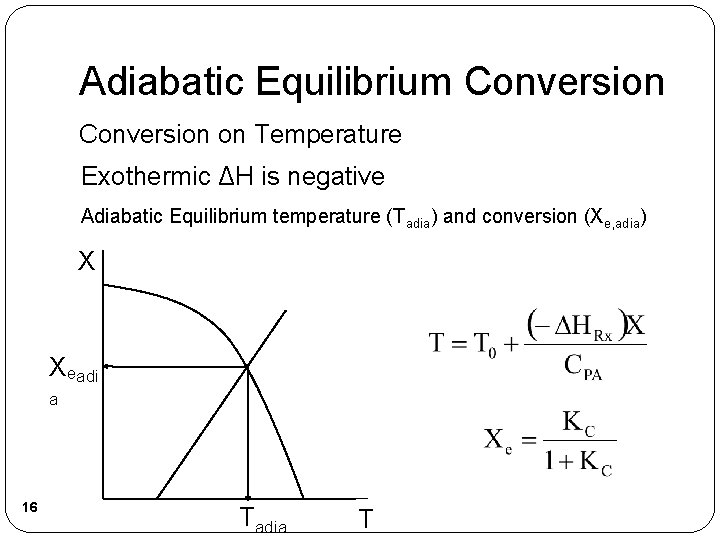
Adiabatic Equilibrium Conversion on Temperature Exothermic ΔH is negative Adiabatic Equilibrium temperature (Tadia) and conversion (Xe, adia) X Xeadi a 16 Tadia T
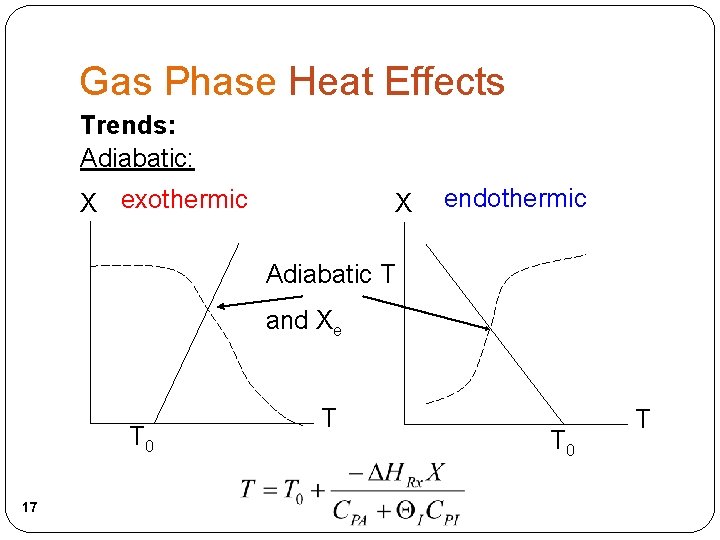
Gas Phase Heat Effects Trends: Adiabatic: X exothermic X endothermic Adiabatic T and Xe T 0 17 T T 0 T
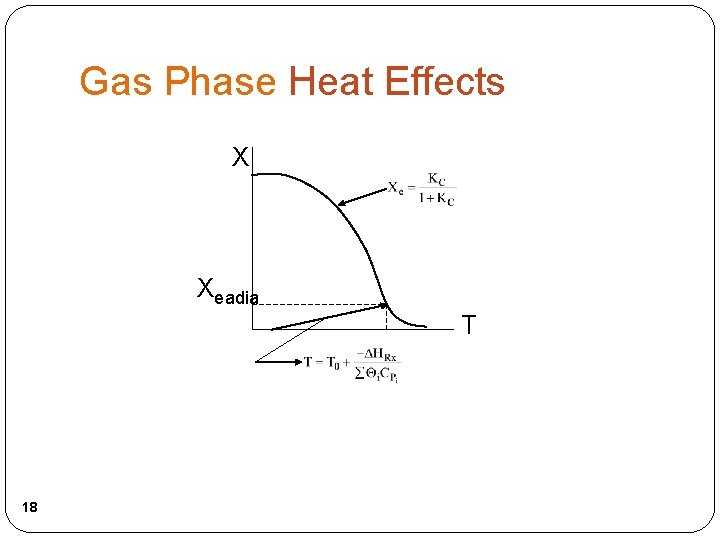
Gas Phase Heat Effects X Xeadia T 18
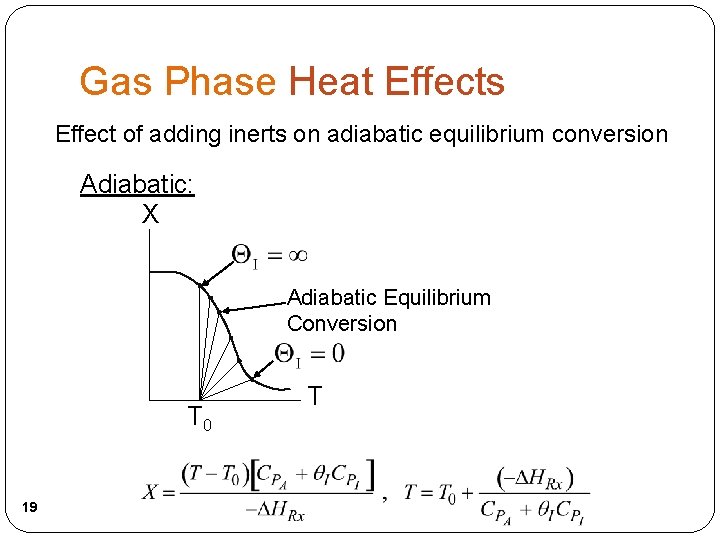
Gas Phase Heat Effects Effect of adding inerts on adiabatic equilibrium conversion Adiabatic: X Adiabatic Equilibrium Conversion T 0 19 T
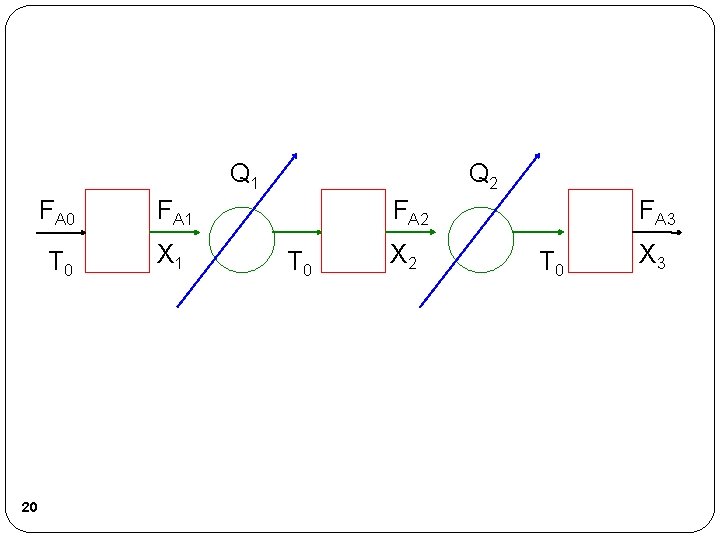
Q 1 20 FA 1 T 0 X 1 Q 2 FA 2 T 0 X 2 FA 3 T 0 X 3
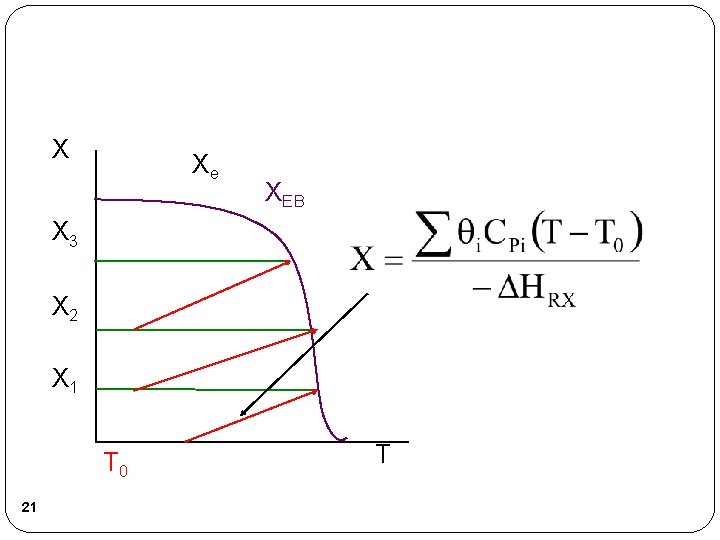
X Xe XEB X 3 X 2 X 1 T 0 21 T
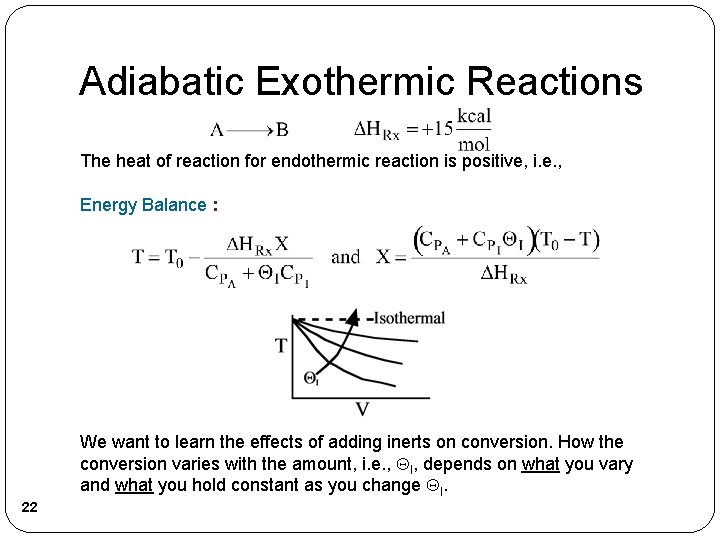
Adiabatic Exothermic Reactions The heat of reaction for endothermic reaction is positive, i. e. , Energy Balance : We want to learn the effects of adding inerts on conversion. How the conversion varies with the amount, i. e. , I, depends on what you vary and what you hold constant as you change I. 22
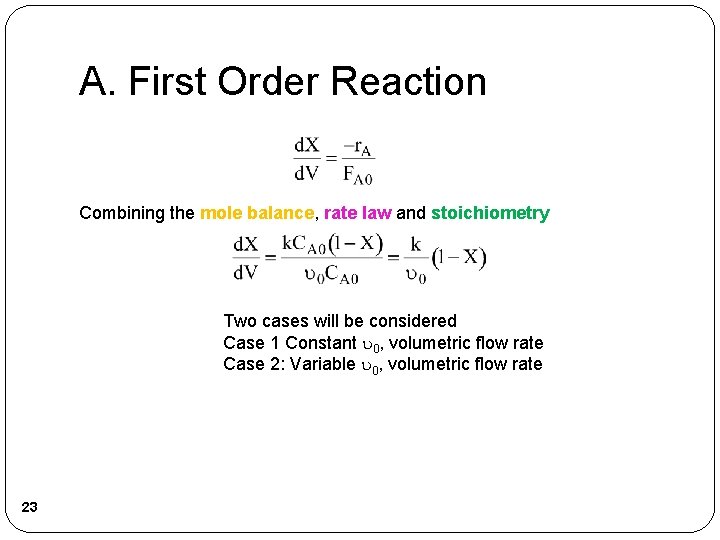
A. First Order Reaction Combining the mole balance, rate law and stoichiometry Two cases will be considered Case 1 Constant 0, volumetric flow rate Case 2: Variable 0, volumetric flow rate 23
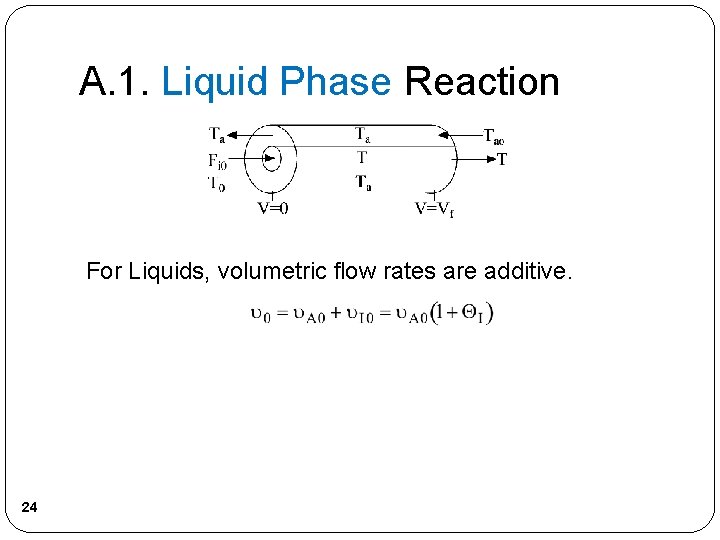
A. 1. Liquid Phase Reaction For Liquids, volumetric flow rates are additive. 24
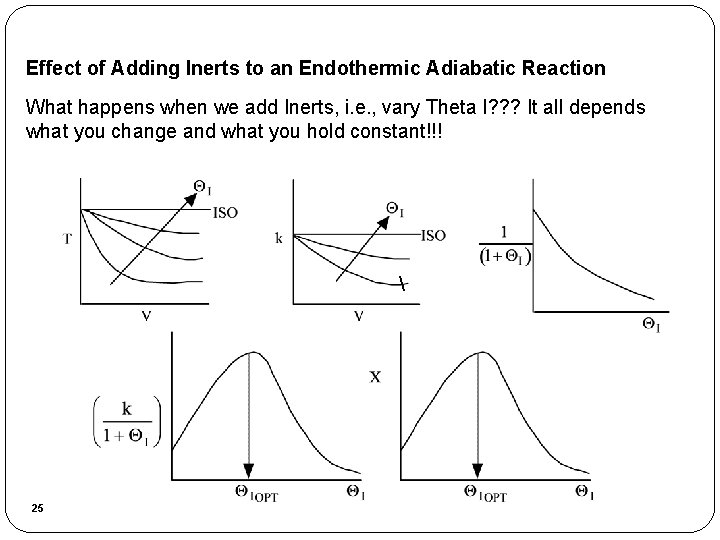
Effect of Adding Inerts to an Endothermic Adiabatic Reaction What happens when we add Inerts, i. e. , vary Theta I? ? ? It all depends what you change and what you hold constant!!! 25
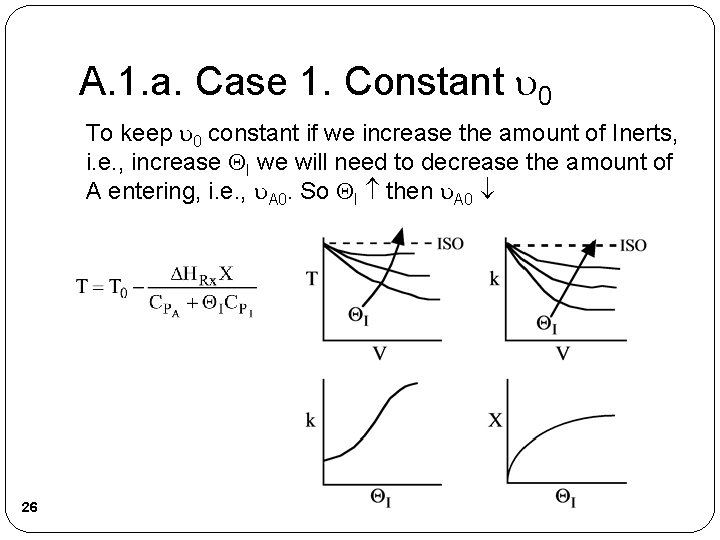
A. 1. a. Case 1. Constant 0 To keep 0 constant if we increase the amount of Inerts, i. e. , increase I we will need to decrease the amount of A entering, i. e. , A 0. So I then A 0 26
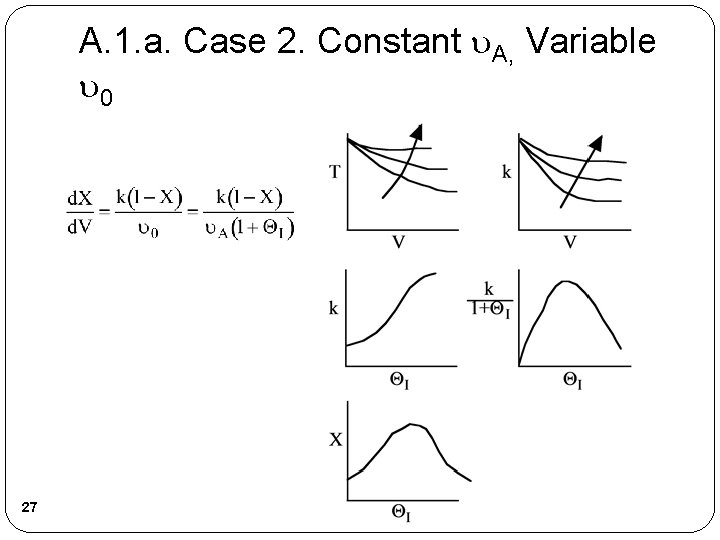
A. 1. a. Case 2. Constant A, Variable 0 27
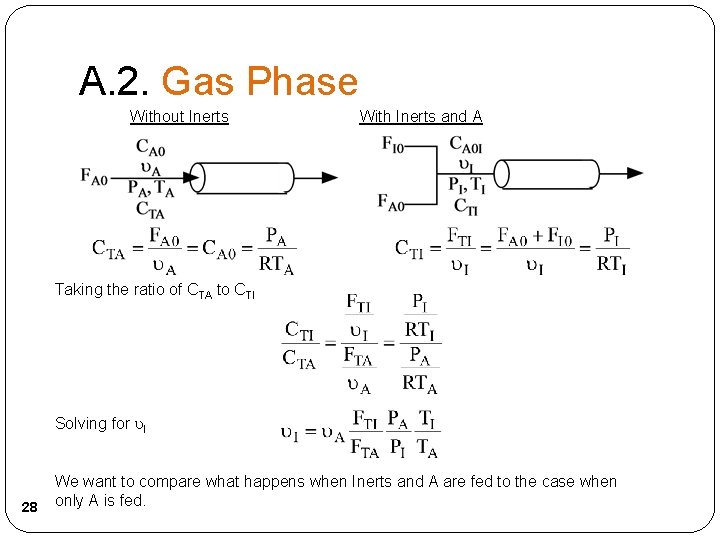
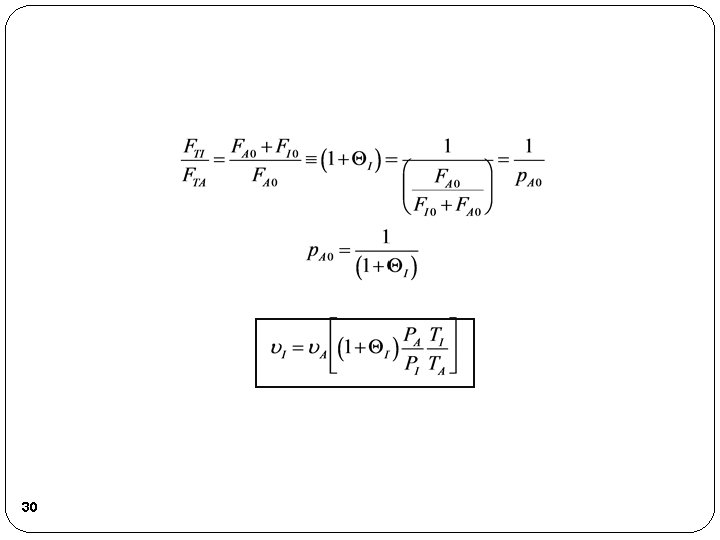
A. 2. Gas Phase Without Inerts With Inerts and A Taking the ratio of CTA to CTI Solving for I 28 We want to compare what happens when Inerts and A are fed to the case when only A is fed.
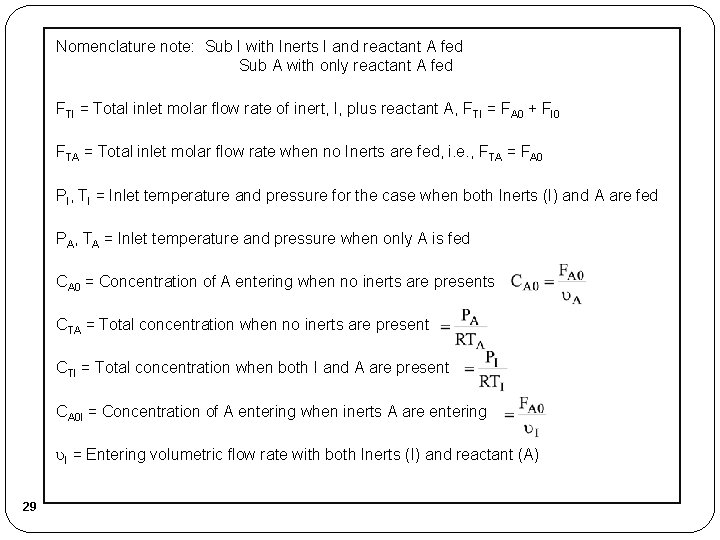
Nomenclature note: Sub I with Inerts I and reactant A fed Sub A with only reactant A fed FTI = Total inlet molar flow rate of inert, I, plus reactant A, FTI = FA 0 + FI 0 FTA = Total inlet molar flow rate when no Inerts are fed, i. e. , FTA = FA 0 PI, TI = Inlet temperature and pressure for the case when both Inerts (I) and A are fed PA, TA = Inlet temperature and pressure when only A is fed CA 0 = Concentration of A entering when no inerts are presents CTA = Total concentration when no inerts are present CTI = Total concentration when both I and A are present CA 0 I = Concentration of A entering when inerts A are entering I = Entering volumetric flow rate with both Inerts (I) and reactant (A) 29
30
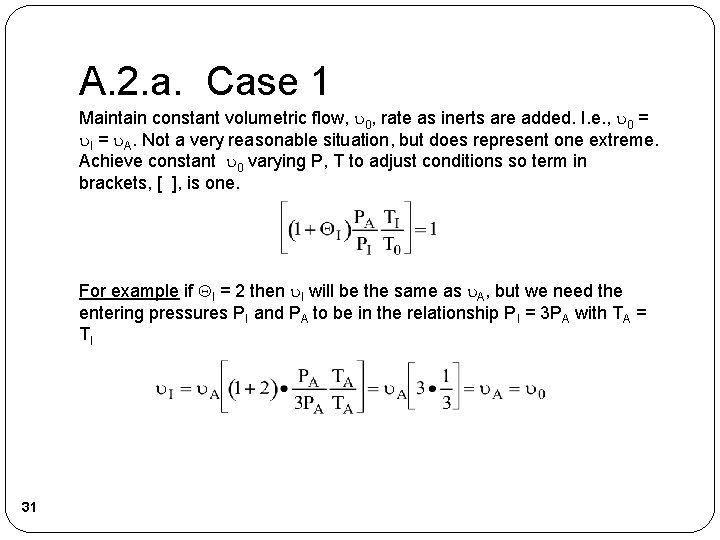
A. 2. a. Case 1 Maintain constant volumetric flow, 0, rate as inerts are added. I. e. , 0 = I = A. Not a very reasonable situation, but does represent one extreme. Achieve constant 0 varying P, T to adjust conditions so term in brackets, [ ], is one. For example if I = 2 then I will be the same as A, but we need the entering pressures PI and PA to be in the relationship PI = 3 PA with TA = TI 31
A. 2. a. Case 1 That is the term in brackets, [ ], would be 1 which would keep 0 constant with I = A = 0. Returning to our combined mole balance, rate law and stoichiometry 32
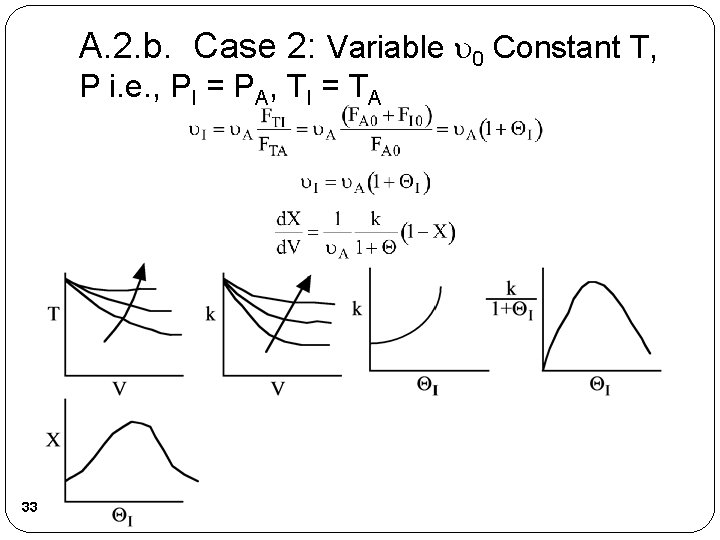
A. 2. b. Case 2: Variable 0 Constant T, P i. e. , PI = PA, TI = TA 33
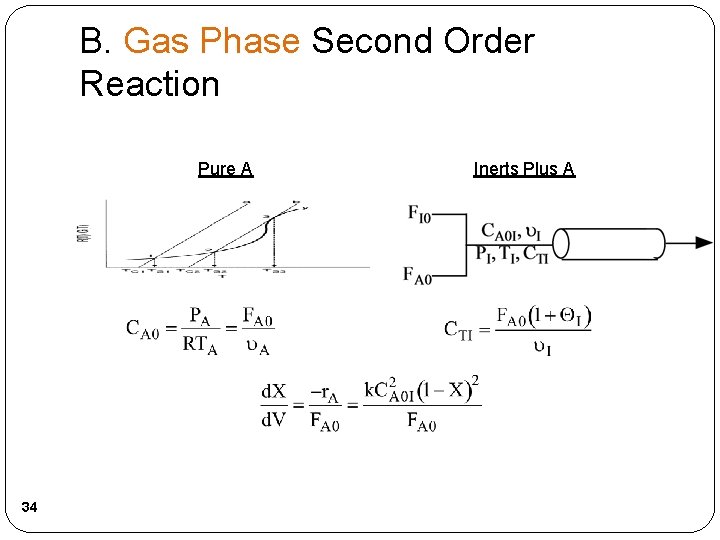
B. Gas Phase Second Order Reaction Pure A 34 Inerts Plus A
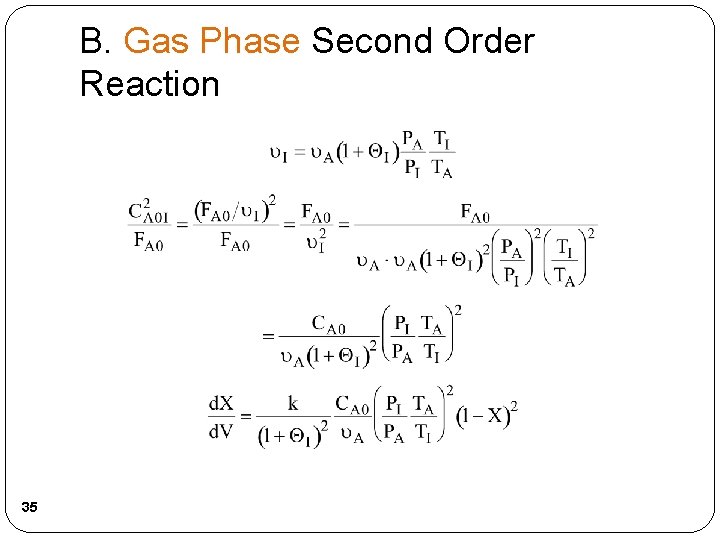
B. Gas Phase Second Order Reaction 35
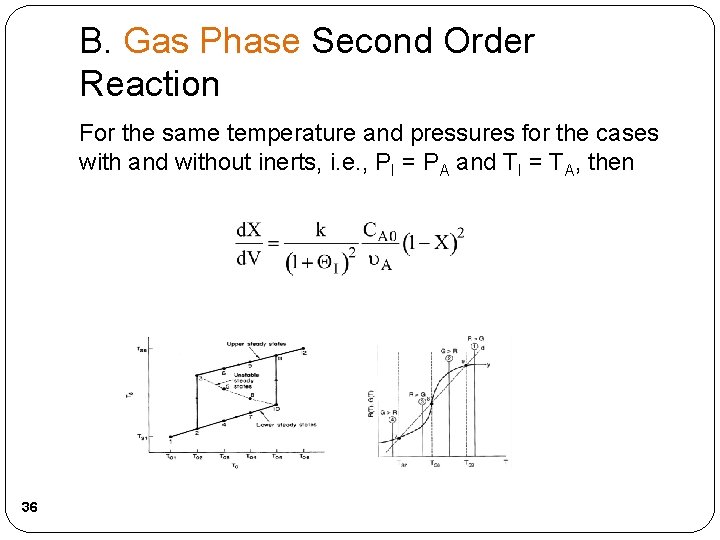
B. Gas Phase Second Order Reaction For the same temperature and pressures for the cases with and without inerts, i. e. , PI = PA and TI = TA, then 36
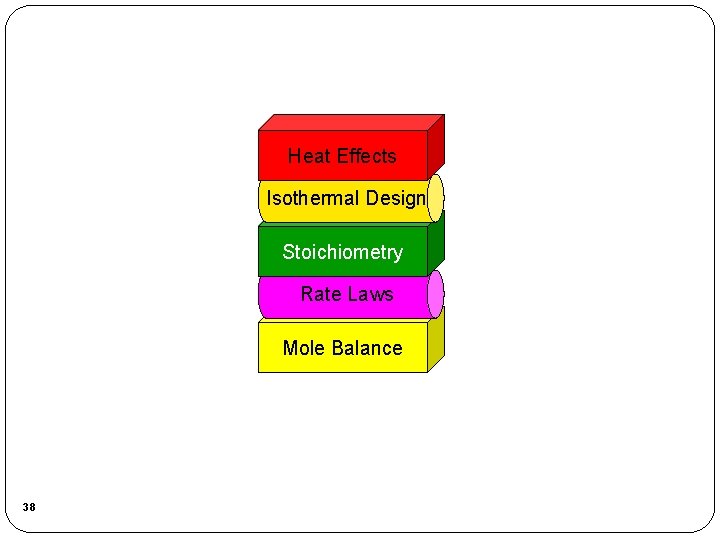
Heat Effects Isothermal Design Stoichiometry Rate Laws Mole Balance 37
Heat Effects Isothermal Design Stoichiometry Rate Laws Mole Balance 38
End of 39 Web Lecture 22 Class Lecture 20