
Lecture 21 Professional Communication Memorandum Writing Summary What
- Slides: 28
Lecture 21 Professional Communication Memorandum Writing
Summary • • • What is an email? Techniques to write effective emails When to use email Effective Subject Lines Email Content and Style Format Signatures Professionalism Email etiquettes
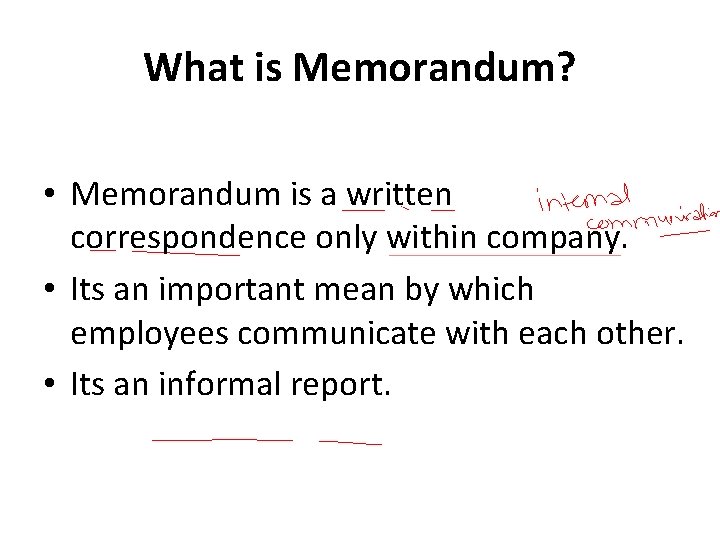
What is Memorandum? • Memorandum is a written correspondence only within company. • Its an important mean by which employees communicate with each other. • Its an informal report.
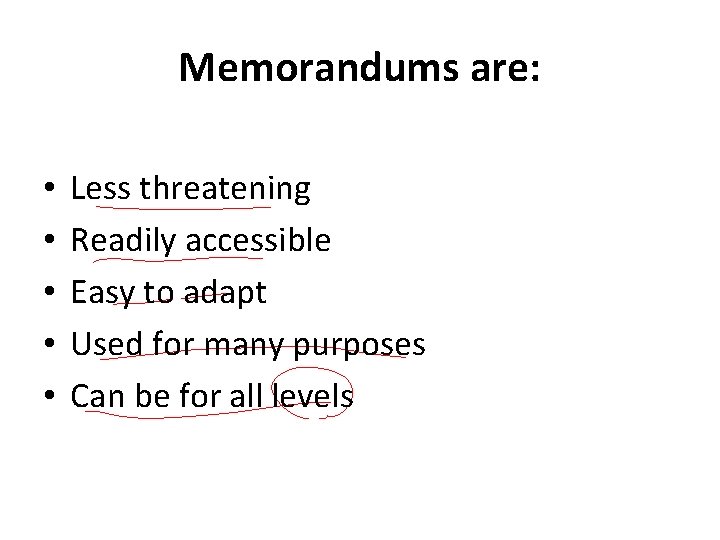
Memorandums are: • • • Less threatening Readily accessible Easy to adapt Used for many purposes Can be for all levels
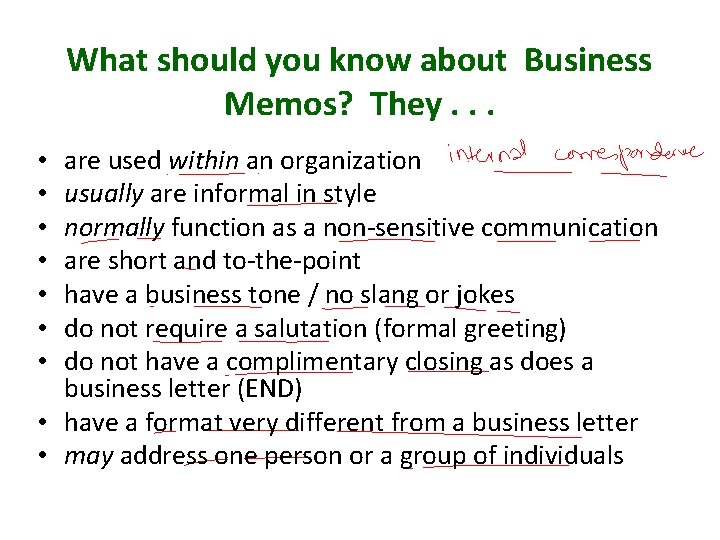
What should you know about Business Memos? They. . . are used within an organization usually are informal in style normally function as a non-sensitive communication are short and to-the-point have a business tone / no slang or jokes do not require a salutation (formal greeting) do not have a complimentary closing as does a business letter (END) • have a format very different from a business letter • may address one person or a group of individuals • •
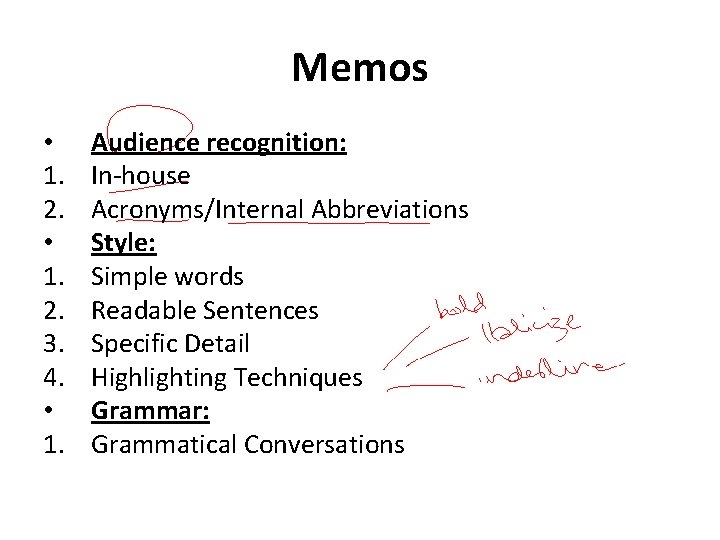
Memos • 1. 2. 3. 4. • 1. Audience recognition: In-house Acronyms/Internal Abbreviations Style: Simple words Readable Sentences Specific Detail Highlighting Techniques Grammar: Grammatical Conversations
Formatting a. . . Business Memo
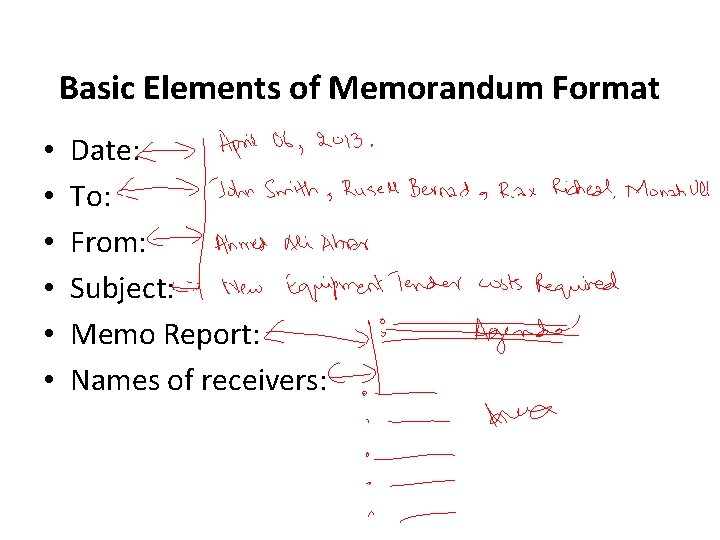
Basic Elements of Memorandum Format • • • Date: To: From: Subject: Memo Report: Names of receivers:
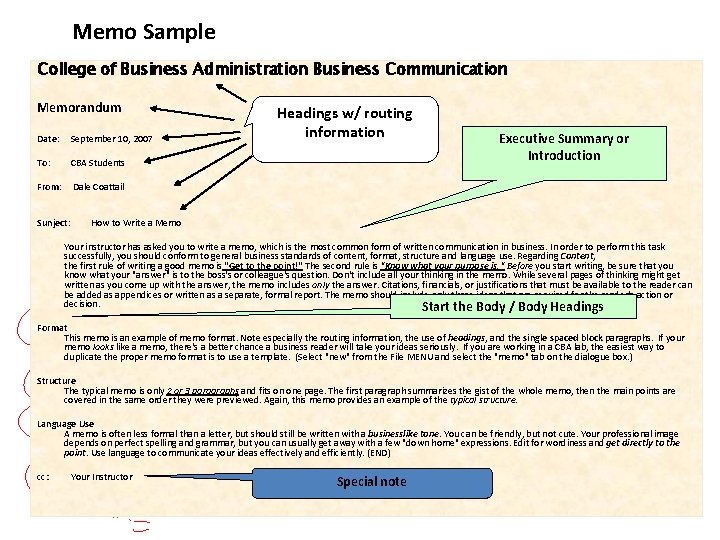
Memo Sample College of Business Administration Business Communication Memorandum Date: September 10, 2007 Headings w/ routing information To: CBA Students From: Dale Coattail Executive Summary or Introduction Sunject: How to Write a Memo Your instructor has asked you to write a memo, which is the most common form of written communication in business. In order to perform this task successfully, you should conform to general business standards of content, format, structure and language use. Regarding Content, the first rule of writing a good memo is "Get to the point!" The second rule is "Know what your purpose is. " Before you start writing, be sure that you know what your "answer" is to the boss's or colleague's question. Don't include all your thinking in the memo. While several pages of thinking might get written as you come up with the answer, the memo includes only the answer. Citations, financials, or justifications that must be available to the reader can be added as appendices or written as a separate, formal report. The memo should include only those ideas that are required for the reader's action or decision. Start the Body / Body Headings Format This memo is an example of memo format. Note especially the routing information, the use of headings, and the single spaced block paragraphs. If your memo looks like a memo, there's a better chance a business reader will take your ideas seriously. If you are working in a CBA lab, the easiest way to duplicate the proper memo format is to use a template. (Select "new" from the File MENU and select the "memo" tab on the dialogue box. ) Structure The typical memo is only 2 or 3 paragraphs and fits on one page. The first paragraph summarizes the gist of the whole memo, then the main points are covered in the same order they were previewed. Again, this memo provides an example of the typical structure. Language Use A memo is often less formal than a letter, but should still be written with a businesslike tone. You can be friendly, but not cute. Your professional image depends on perfect spelling and grammar, but you can usually get away with a few "down home" expressions. Edit for wordiness and get directly to the point. Use language to communicate your ideas effectively and efficiently. (END) cc: Your Instructor Special note
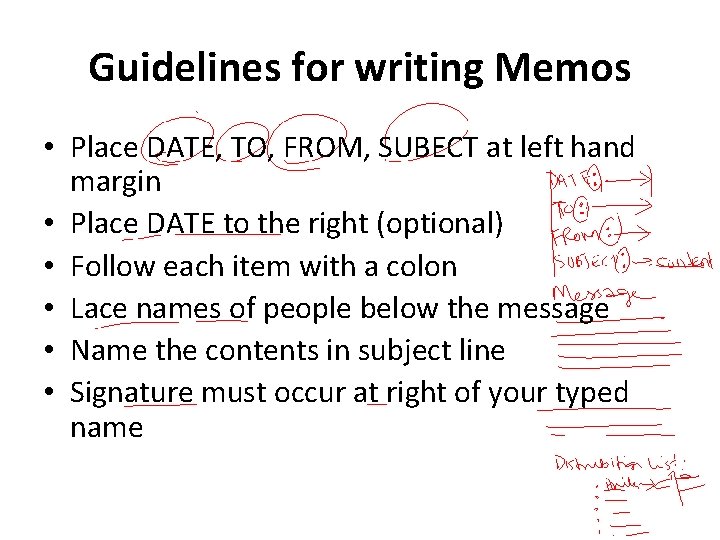
Guidelines for writing Memos • Place DATE, TO, FROM, SUBECT at left hand margin • Place DATE to the right (optional) • Follow each item with a colon • Lace names of people below the message • Name the contents in subject line • Signature must occur at right of your typed name
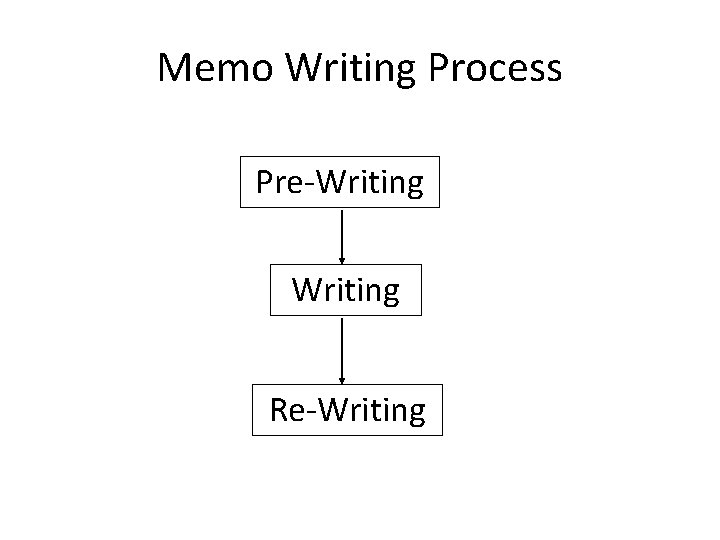
Memo Writing Process Pre-Writing Re-Writing
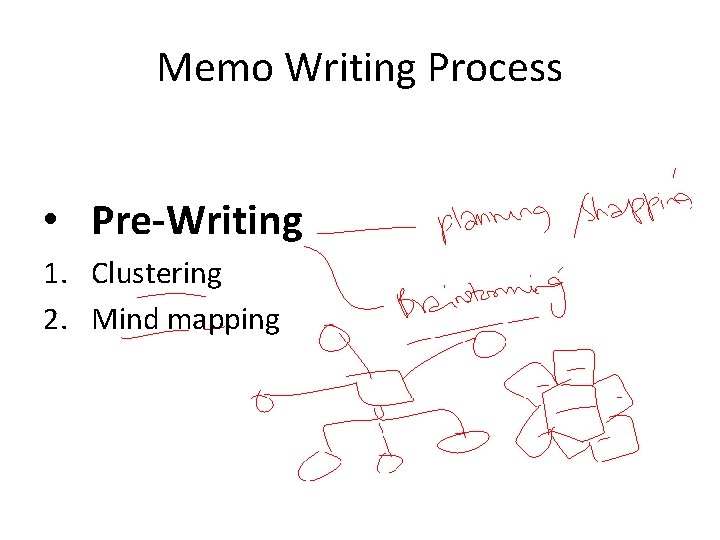
Memo Writing Process • Pre-Writing 1. Clustering 2. Mind mapping
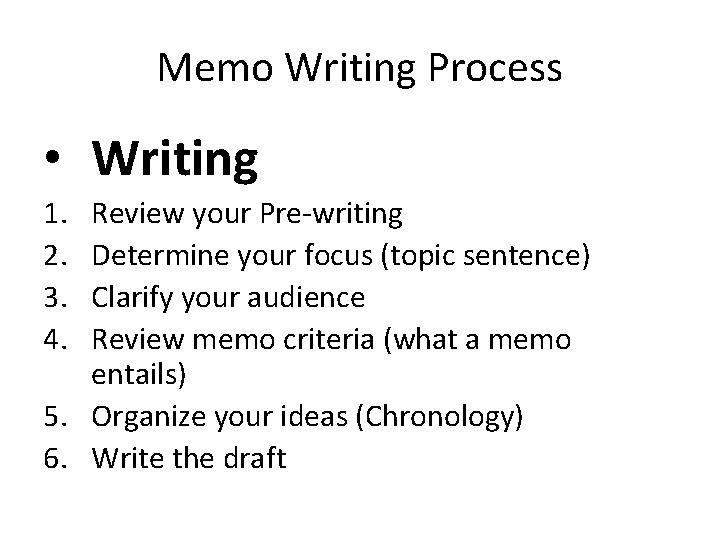
Memo Writing Process • Writing 1. 2. 3. 4. Review your Pre-writing Determine your focus (topic sentence) Clarify your audience Review memo criteria (what a memo entails) 5. Organize your ideas (Chronology) 6. Write the draft
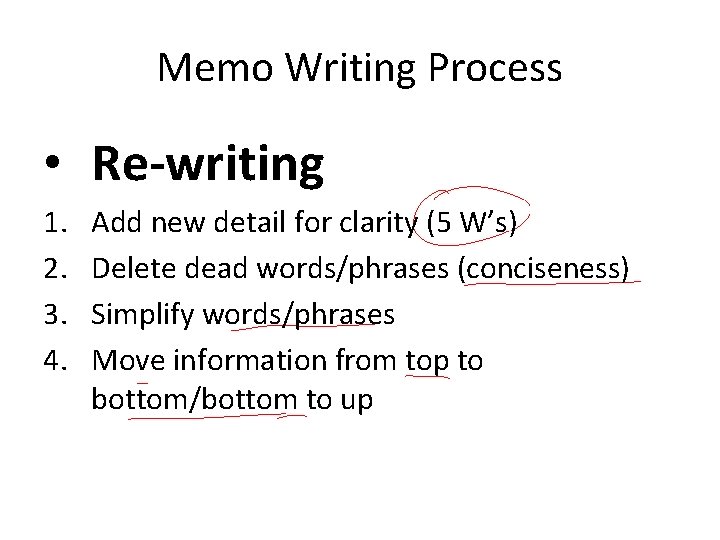
Memo Writing Process • Re-writing 1. 2. 3. 4. Add new detail for clarity (5 W’s) Delete dead words/phrases (conciseness) Simplify words/phrases Move information from top to bottom/bottom to up
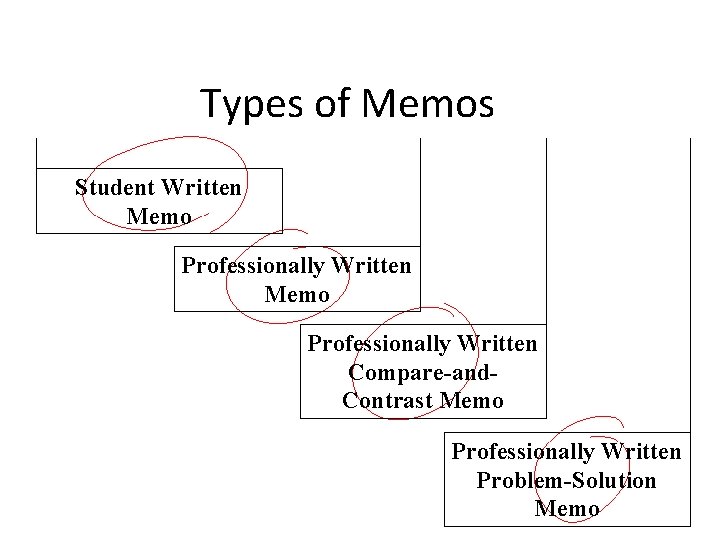
Types of Memos Student Written Memo Professionally Written Compare-and. Contrast Memo Professionally Written Problem-Solution Memo
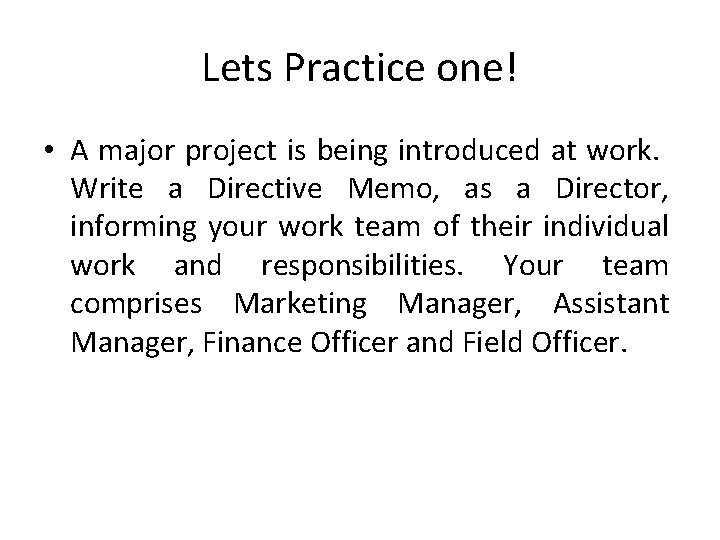
Lets Practice one! • A major project is being introduced at work. Write a Directive Memo, as a Director, informing your work team of their individual work and responsibilities. Your team comprises Marketing Manager, Assistant Manager, Finance Officer and Field Officer.
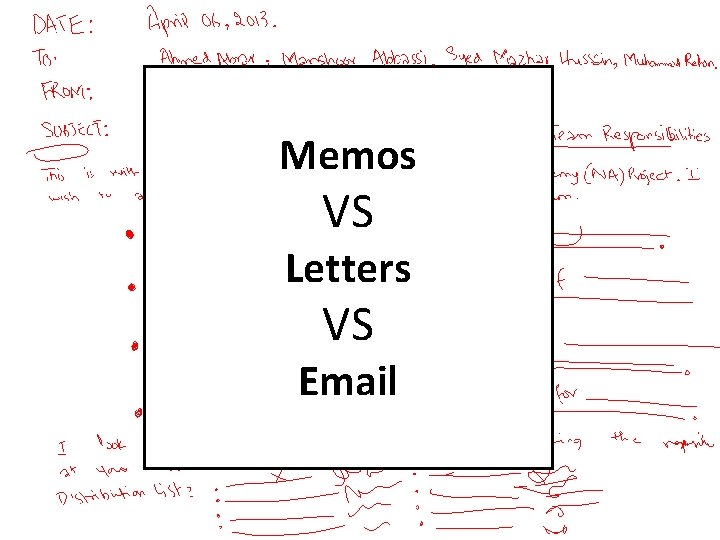
Memos VS Letters VS Email
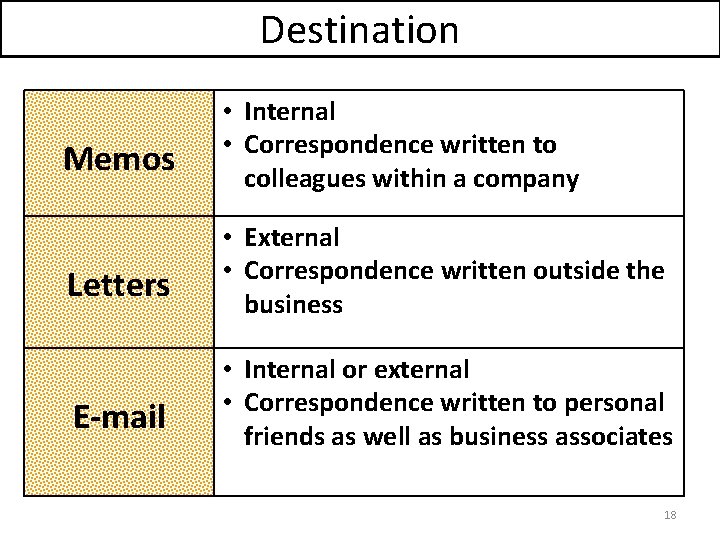
Destination Memos Letters E-mail • Internal • Correspondence written to colleagues within a company • External • Correspondence written outside the business • Internal or external • Correspondence written to personal friends as well as business associates 18
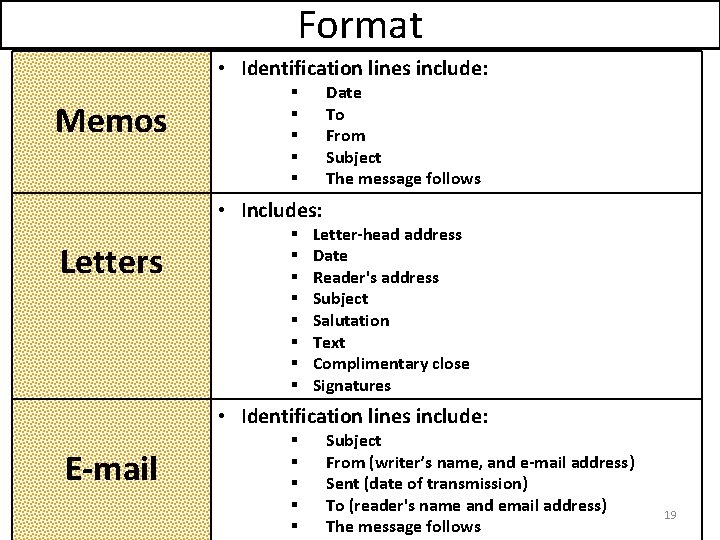
Format • Identification lines include: Memos Date To From Subject The message follows § § § • Includes: Letters § § § § Letter-head address Date Reader's address Subject Salutation Text Complimentary close Signatures • Identification lines include: E-mail § § § Subject From (writer’s name, and e-mail address) Sent (date of transmission) To (reader's name and email address) The message follows 19
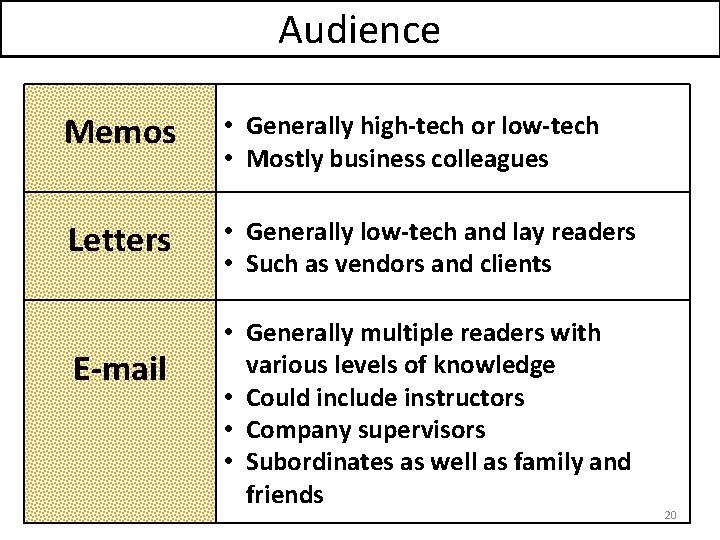
Audience Memos • Generally high-tech or low-tech • Mostly business colleagues Letters • Generally low-tech and lay readers • Such as vendors and clients E-mail • Generally multiple readers with various levels of knowledge • Could include instructors • Company supervisors • Subordinates as well as family and friends 20
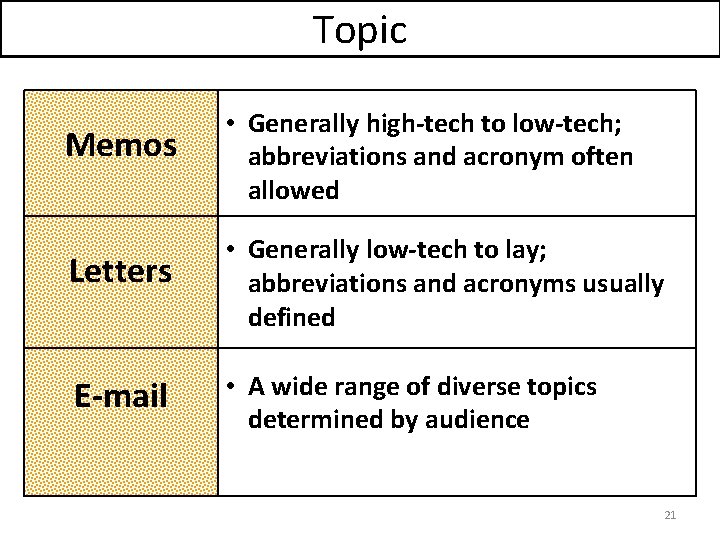
Topic Memos • Generally high-tech to low-tech; abbreviations and acronym often allowed Letters • Generally low-tech to lay; abbreviations and acronyms usually defined E-mail • A wide range of diverse topics determined by audience 21
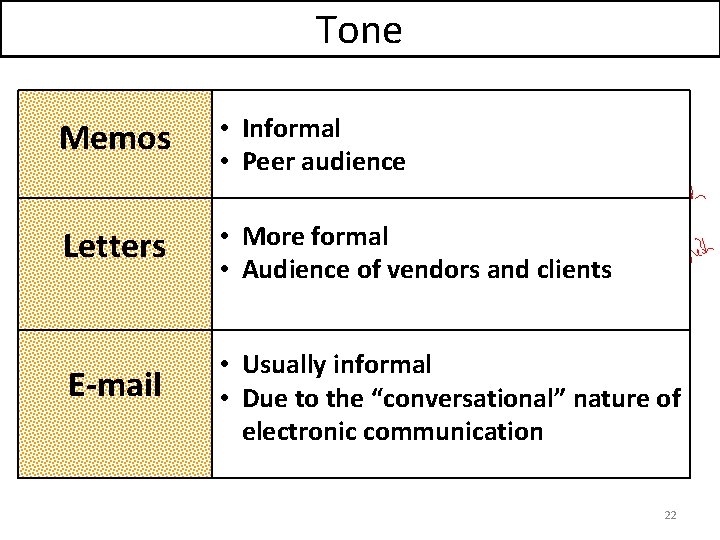
Tone Memos • Informal • Peer audience Letters • More formal • Audience of vendors and clients E-mail • Usually informal • Due to the “conversational” nature of electronic communication 22
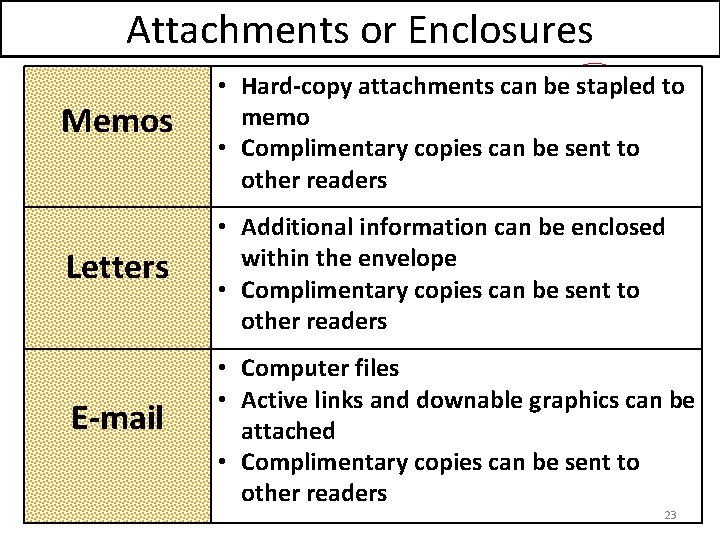
Attachments or Enclosures Memos • Hard-copy attachments can be stapled to memo • Complimentary copies can be sent to other readers Letters • Additional information can be enclosed within the envelope • Complimentary copies can be sent to other readers E-mail • Computer files • Active links and downable graphics can be attached • Complimentary copies can be sent to other readers 23
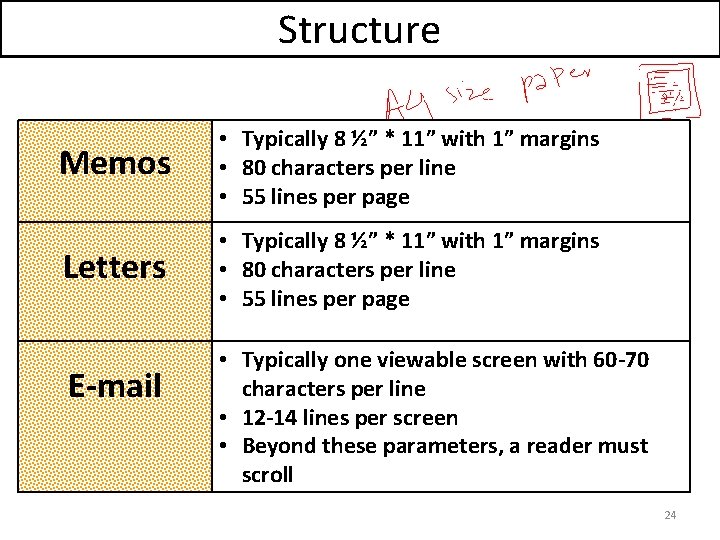
Structure Memos • Typically 8 ½” * 11” with 1” margins • 80 characters per line • 55 lines per page Letters • Typically 8 ½” * 11” with 1” margins • 80 characters per line • 55 lines per page E-mail • Typically one viewable screen with 60 -70 characters per line • 12 -14 lines per screen • Beyond these parameters, a reader must scroll 24
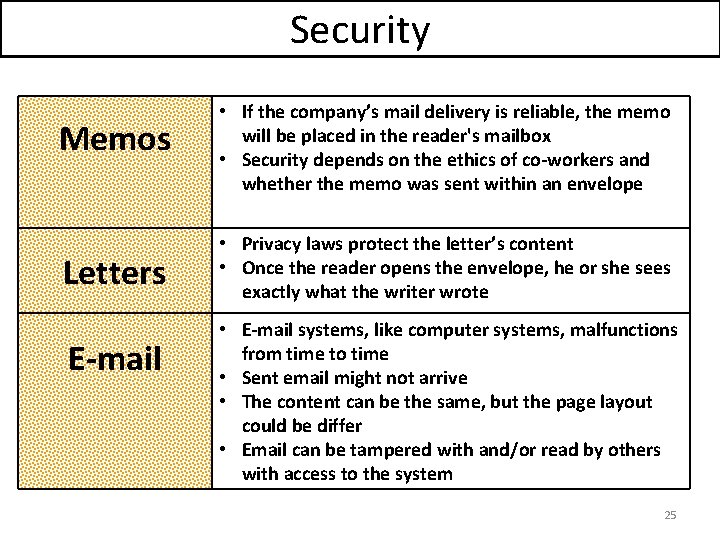
Security Memos • If the company’s mail delivery is reliable, the memo will be placed in the reader's mailbox • Security depends on the ethics of co-workers and whether the memo was sent within an envelope Letters • Privacy laws protect the letter’s content • Once the reader opens the envelope, he or she sees exactly what the writer wrote E-mail • E-mail systems, like computer systems, malfunctions from time to time • Sent email might not arrive • The content can be the same, but the page layout could be differ • Email can be tampered with and/or read by others with access to the system 25
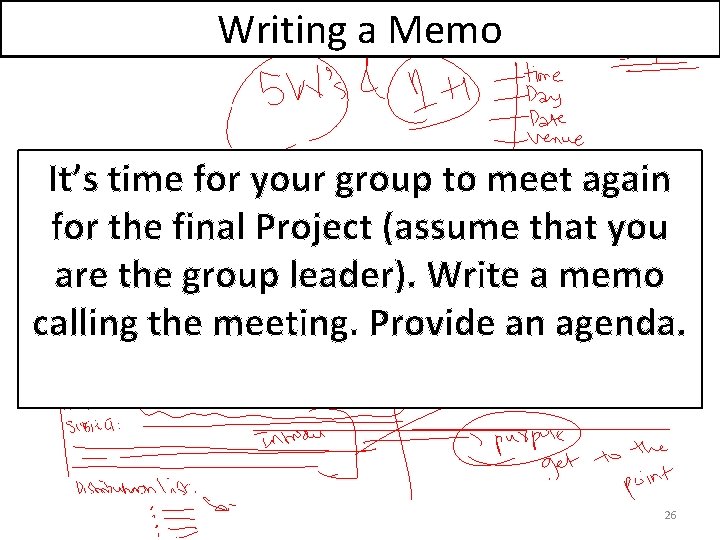
Writing a Memo It’s time for your group to meet again for the final Project (assume that you are the group leader). Write a memo calling the meeting. Provide an agenda. 26
Recap • • What is Memo? Memo Formatting Types of Memos Similarities and Differences between Memo, Letter and Email
References • Source: http: //oregonstate. edu/dept/eli/buswrite/me mos. html