
Lecture 21 EE 743 3 Phase Induction Machines


- Slides: 12
Lecture 21 - EE 743 3 -Phase Induction Machines Steady-state model Professor: Ali Keyhani
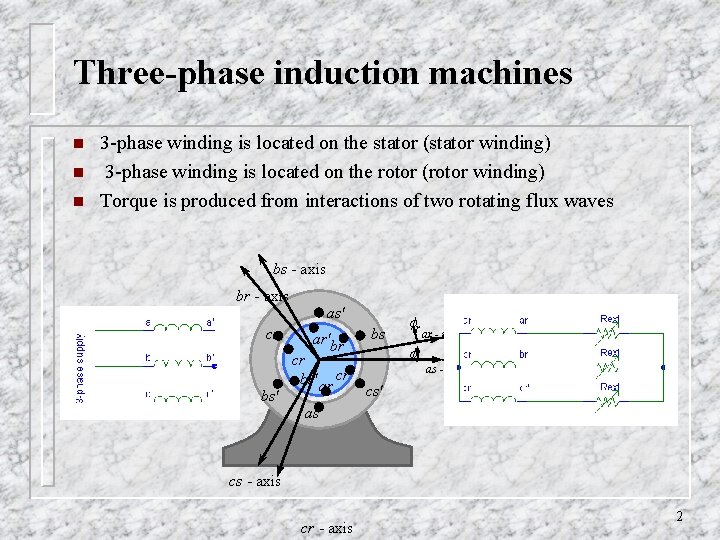
Three-phase induction machines n n n 3 -phase winding is located on the stator (stator winding) 3 -phase winding is located on the rotor (rotor winding) Torque is produced from interactions of two rotating flux waves bs - axis br - axis cs bs' ar'br cr br' ar cr' bs r s T ar - axis e r Tl r as - axis cs' as cs - axis cr - axis 2
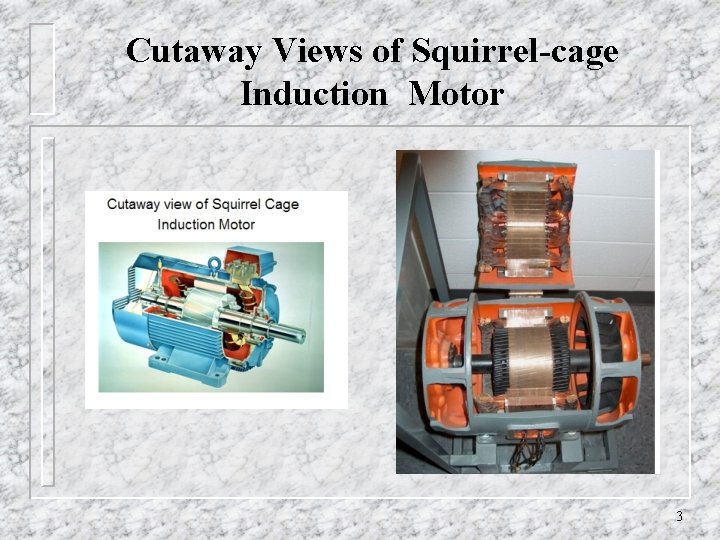
Cutaway Views of Squirrel-cage Induction Motor 3
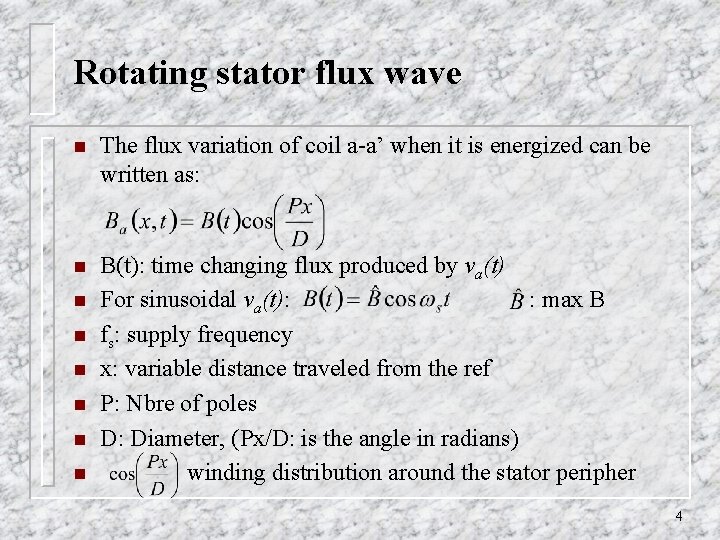
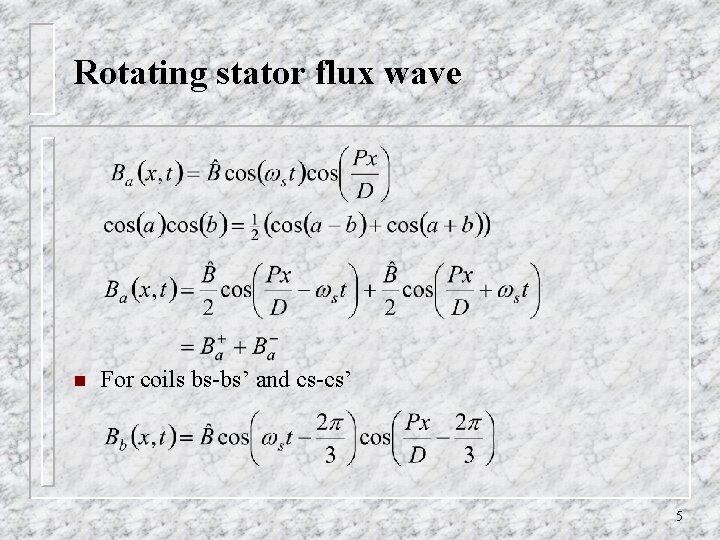
Rotating stator flux wave n The flux variation of coil a-a’ when it is energized can be written as: n B(t): time changing flux produced by va(t) For sinusoidal va(t): : max B fs: supply frequency x: variable distance traveled from the ref P: Nbre of poles D: Diameter, (Px/D: is the angle in radians) winding distribution around the stator peripher n n n 4
Rotating stator flux wave n For coils bs-bs’ and cs-cs’ 5
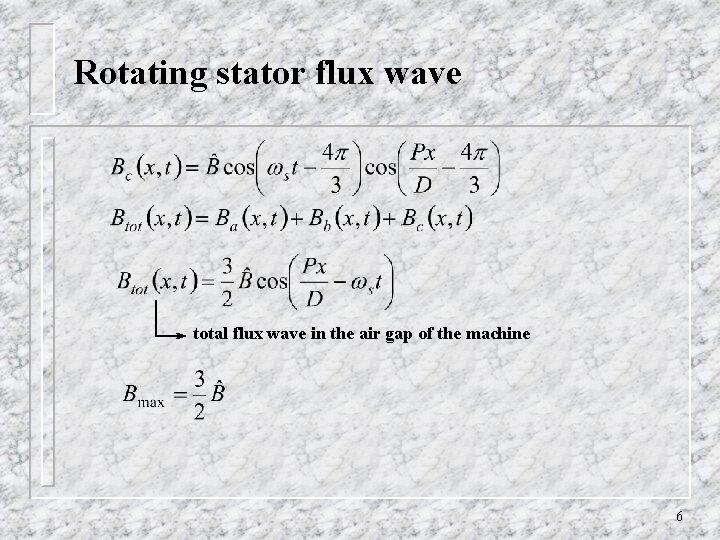
Rotating stator flux wave total flux wave in the air gap of the machine 6
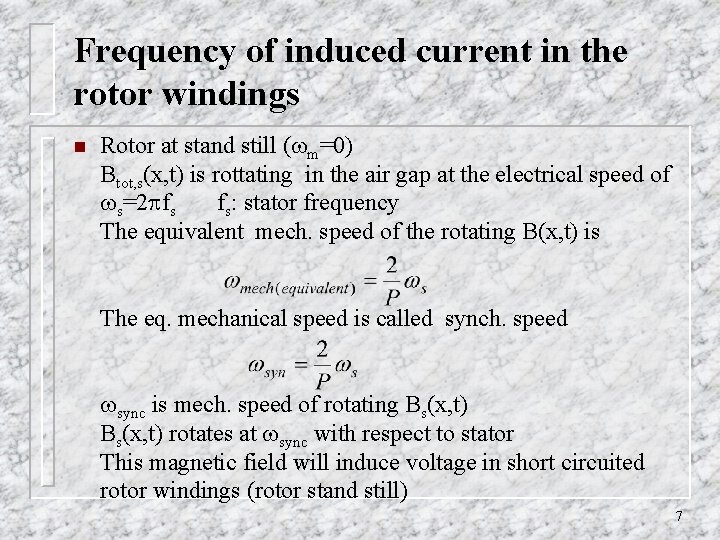
Frequency of induced current in the rotor windings n Rotor at stand still ( m=0) Btot, s(x, t) is rottating in the air gap at the electrical speed of s=2 fs fs: stator frequency The equivalent mech. speed of the rotating B(x, t) is The eq. mechanical speed is called synch. speed sync is mech. speed of rotating Bs(x, t) rotates at sync with respect to stator This magnetic field will induce voltage in short circuited rotor windings (rotor stand still) 7
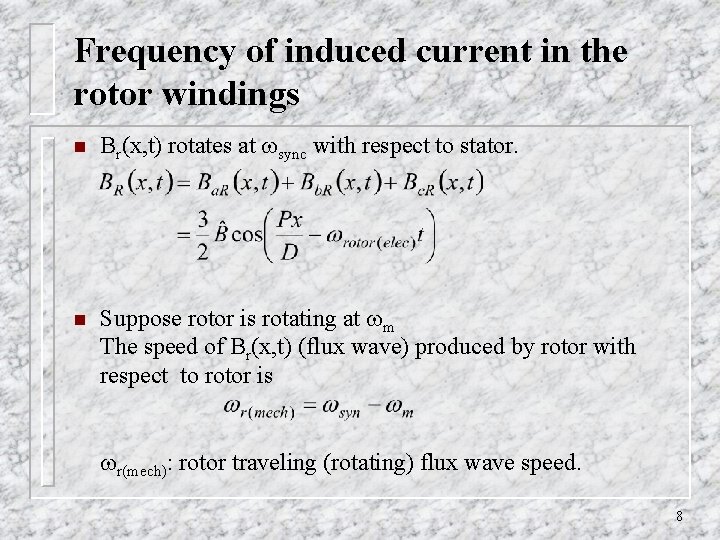
Frequency of induced current in the rotor windings n Br(x, t) rotates at sync with respect to stator. n Suppose rotor is rotating at m The speed of Br(x, t) (flux wave) produced by rotor with respect to rotor is r(mech): rotor traveling (rotating) flux wave speed. 8
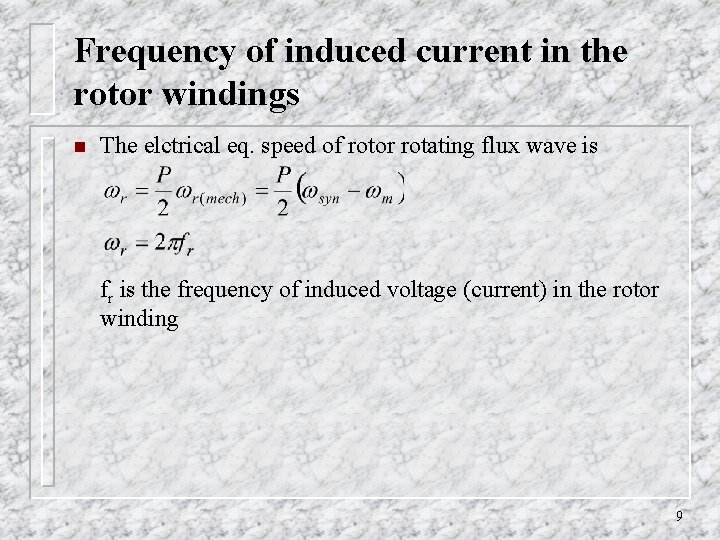
Frequency of induced current in the rotor windings n The elctrical eq. speed of rotor rotating flux wave is fr is the frequency of induced voltage (current) in the rotor winding 9
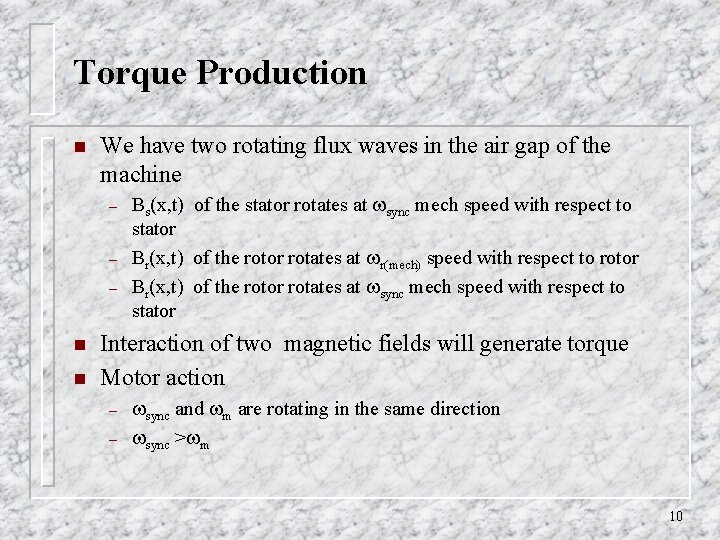
Torque Production n We have two rotating flux waves in the air gap of the machine – – – n n Bs(x, t) of the stator rotates at sync mech speed with respect to stator Br(x, t) of the rotor rotates at r(mech) speed with respect to rotor Br(x, t) of the rotor rotates at sync mech speed with respect to stator Interaction of two magnetic fields will generate torque Motor action – – sync and m are rotating in the same direction sync > m 10
Calculation of slip n Let us multiply and divide by s (stator electric speed N but sync S Tem N sync m Text S 11
Calculation of slip n Let’s define the slip as Note: but in rpm: or fr=sf sync in rad/sec m in rad/sec 12