
Lecture 2 Types of measurement Purposes of measurement

- Slides: 16
Lecture 2: Types of measurement • • • Purposes of measurement Types and sources of data Reliability and validity Levels of measurement Types of scale 1
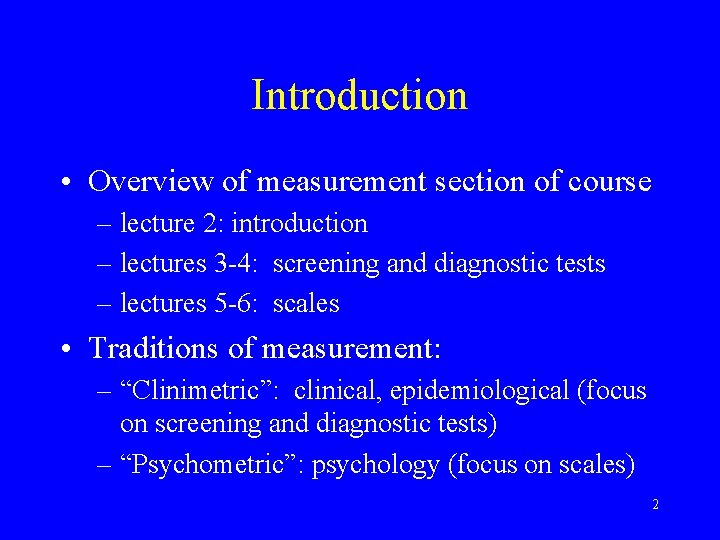
Introduction • Overview of measurement section of course – lecture 2: introduction – lectures 3 -4: screening and diagnostic tests – lectures 5 -6: scales • Traditions of measurement: – “Clinimetric”: clinical, epidemiological (focus on screening and diagnostic tests) – “Psychometric”: psychology (focus on scales) 2
Introduction (cont) • Readings: – Streiner & Norman – Gordis – other 3
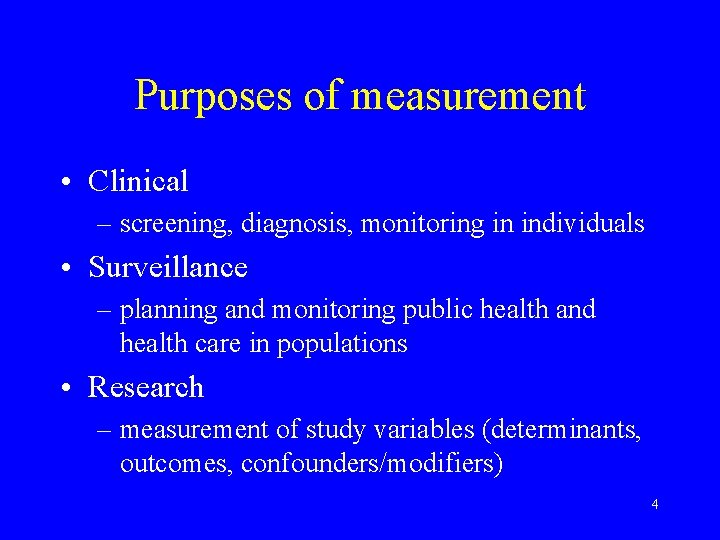
Purposes of measurement • Clinical – screening, diagnosis, monitoring in individuals • Surveillance – planning and monitoring public health and health care in populations • Research – measurement of study variables (determinants, outcomes, confounders/modifiers) 4
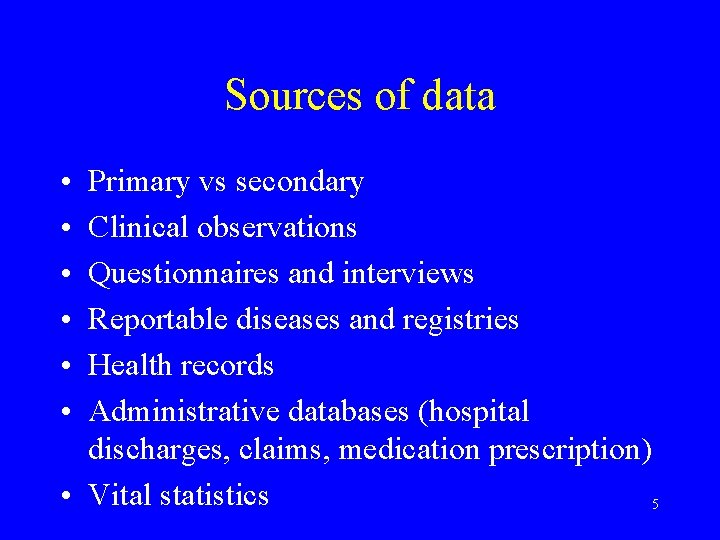
Sources of data • • • Primary vs secondary Clinical observations Questionnaires and interviews Reportable diseases and registries Health records Administrative databases (hospital discharges, claims, medication prescription) • Vital statistics 5
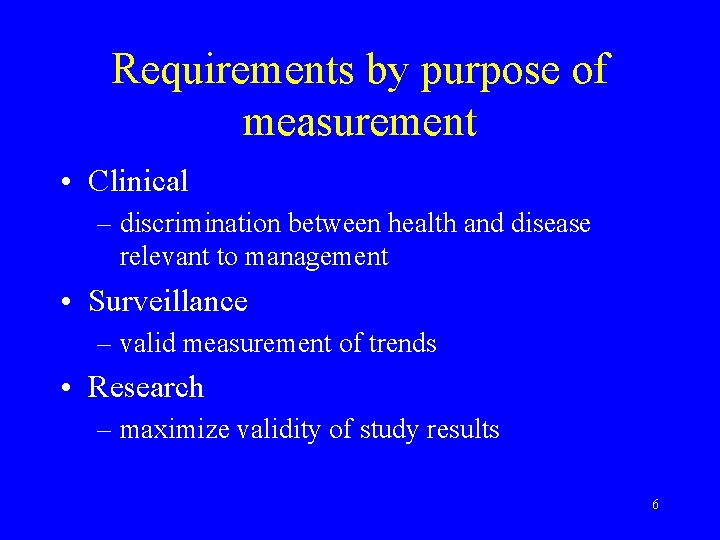
Requirements by purpose of measurement • Clinical – discrimination between health and disease relevant to management • Surveillance – valid measurement of trends • Research – maximize validity of study results 6
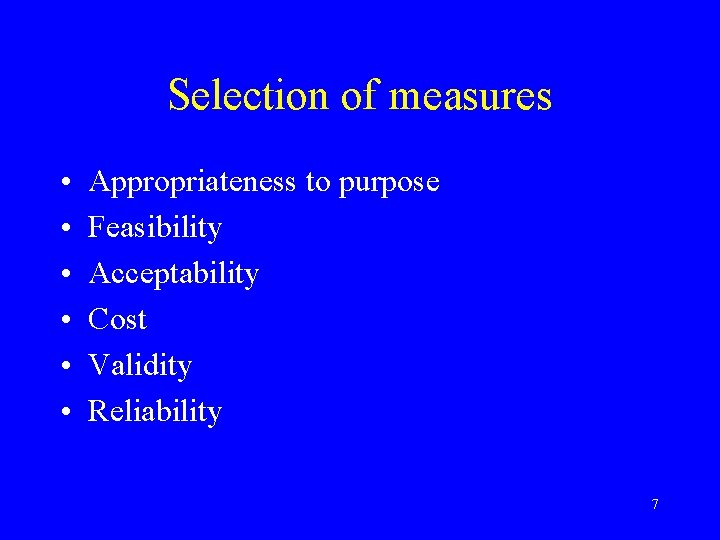
Selection of measures • • • Appropriateness to purpose Feasibility Acceptability Cost Validity Reliability 7
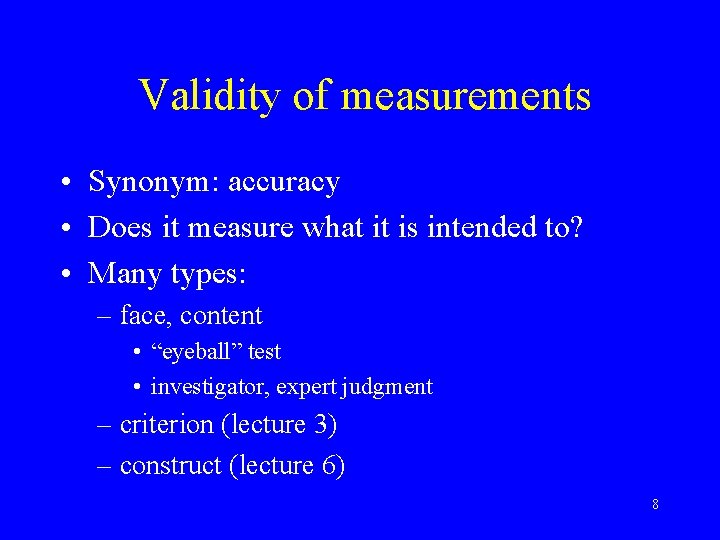
Validity of measurements • Synonym: accuracy • Does it measure what it is intended to? • Many types: – face, content • “eyeball” test • investigator, expert judgment – criterion (lecture 3) – construct (lecture 6) 8
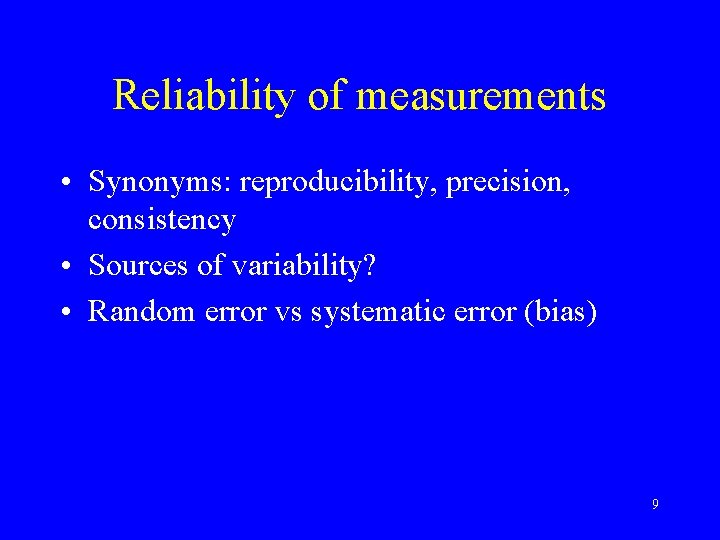
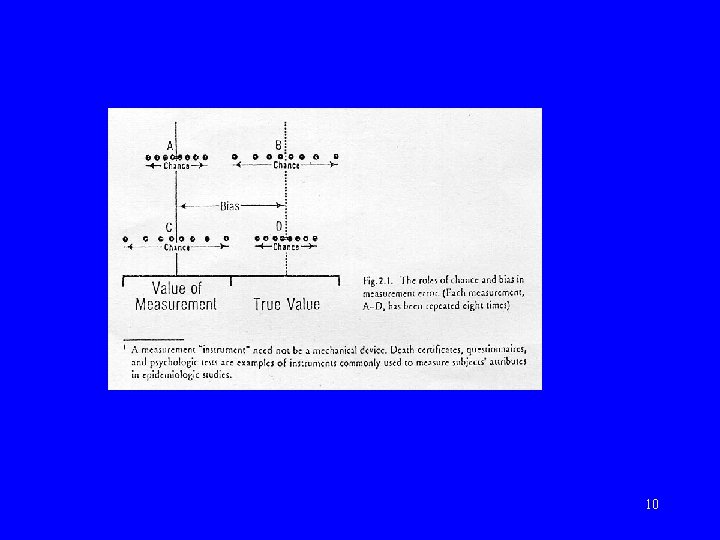
Reliability of measurements • Synonyms: reproducibility, precision, consistency • Sources of variability? • Random error vs systematic error (bias) 9
10
Types of reliability: rater • Between- and within-rater/observer (interand intra-rater observer variation) – At single point in time – Independent ratings – May be random or systematic – Examples: – blood pressure – pathology slides 11
Reliability: stability over time • Stability over time/ test-retest (T 1 and T 2 – Same conditions and rater at T 1 and T 2. Why? – Random or systematic – Example of systematic error: • Regression toward the mean: when subjects initially have extreme values (more likely to be in error than typical values) E. g. , population blood pressure screening • Questions about undesirable beahviour • Uncalibrated instruments 12
Example • Measurement of patient depression using clinical rating scale – Sources of variability? – Measurement of inter-rater reliability? – Results for 10 patients: • Rater 1: 3 patients are depressed • Rater 2: 5 patients are depressed – Conclusion? 13
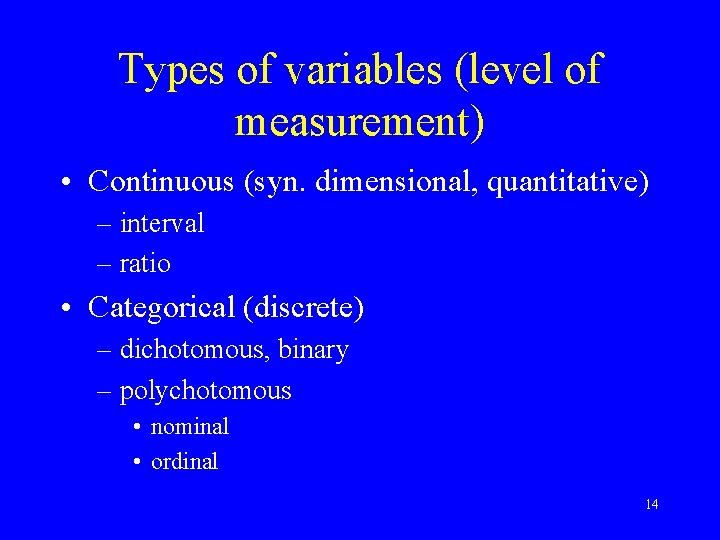
Types of variables (level of measurement) • Continuous (syn. dimensional, quantitative) – interval – ratio • Categorical (discrete) – dichotomous, binary – polychotomous • nominal • ordinal 14
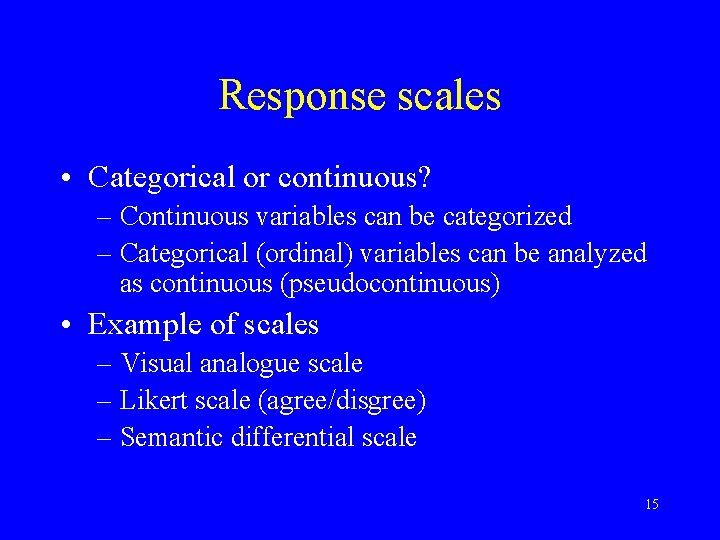
Response scales • Categorical or continuous? – Continuous variables can be categorized – Categorical (ordinal) variables can be analyzed as continuous (pseudocontinuous) • Example of scales – Visual analogue scale – Likert scale (agree/disgree) – Semantic differential scale 15
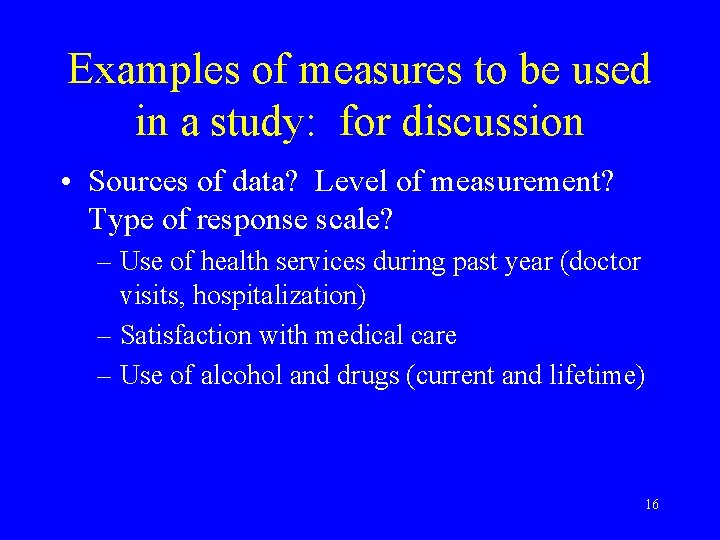
Examples of measures to be used in a study: for discussion • Sources of data? Level of measurement? Type of response scale? – Use of health services during past year (doctor visits, hospitalization) – Satisfaction with medical care – Use of alcohol and drugs (current and lifetime) 16