
Lecture 2 Philosophy of Ancient East 1 Peculiarities
- Slides: 32
Lecture 2 Philosophy of Ancient East 1. Peculiarities of the Ancient Eastern Philosophy 2. The specificity of philosophical knowledge of Ancient India. 3. The specificity of philosophical knowledge of Ancient China.
Peculiarities of the Ancient Eastern way of life and philosophy Intelligent interruption 1. Traditionalism & conservatism; 2. Cyclic attitude to the time and history 3. Practical orientation 4. Closely connected with religion; 5. Cognition = the content and the way of spiritual development; 6. Orientation to the authority of the Teacher, Guru;
1. Traditionalism & conservatism; 2. Cyclic attitude to the time and history; 3. Practical orientation;
4. Closely connected with religion; 5. Cognition = the content and the way of spiritual development; 6. Orientation to the authority of the Teacher, Guru;
Ancient India - The oldest – 4000 years B. C. (Mohenjo-Daro & Harappa) - Who were the founder of the Indian culture? - Dravidians - Arians
2. The specificity of philosophical knowledge of Ancient India. Periods of Ancient Indian philosophy : І period - The Vedic period (II – I thousand years B. C. ). Sruti – (“smth. that was heard”) Rigveda – hymns; Yajurveda – texts for priests; Samaveda – song to the god Sama; Atharvaveda – spells. other texts – Upanishad & Brahman. Smriti – (“smth. that was remembered”) Ramayana & Mahabharata
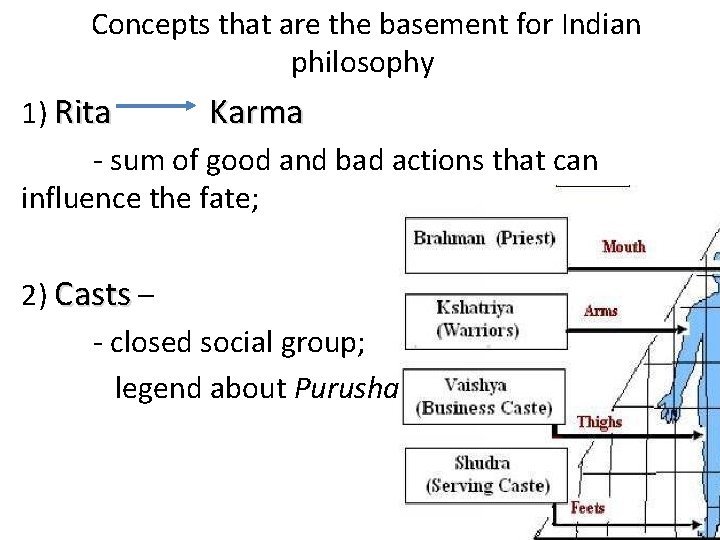
Concepts that are the basement for Indian philosophy 1) Rita Karma - sum of good and bad actions that can influence the fate; 2) Casts – - closed social group; legend about Purusha
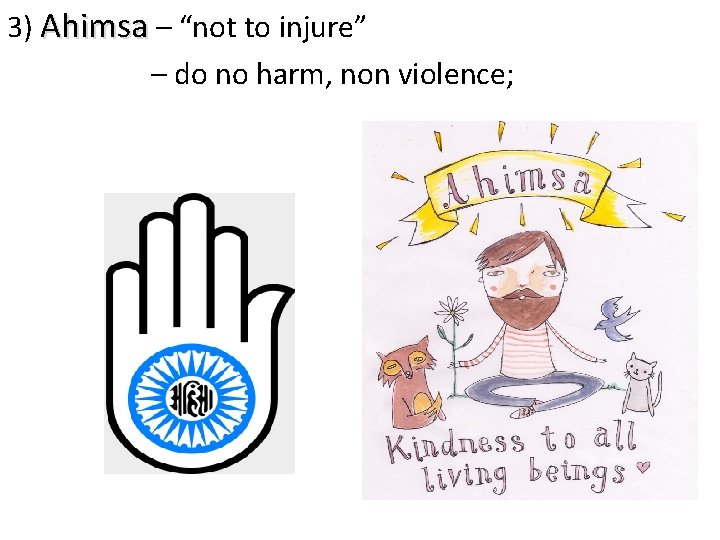
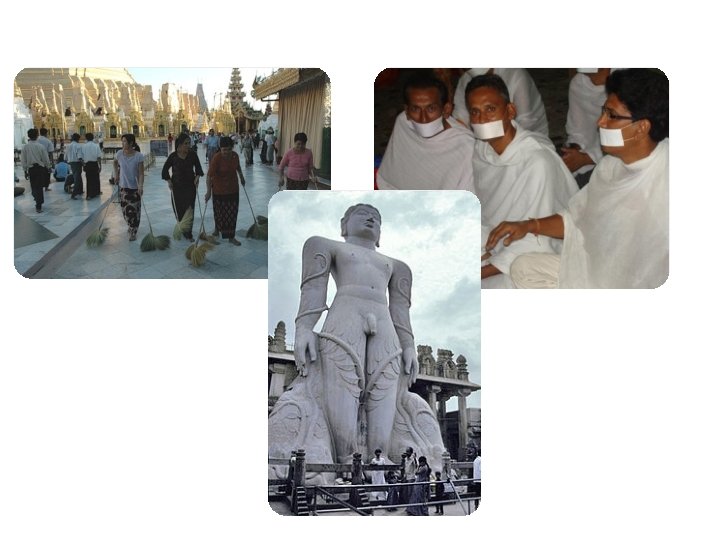
3) Ahimsa – “not to injure” – do no harm, non violence;
4) Samsara - endless circle of life and death; 5) Nirvana - highest spiritual state that can possibly be achieved;
II period – Brahmanic period (10 – 6 century B. C. ) - transformation of the Karma concept: law of retribution; - Karma can be changed by requests & prayers; - Brahmanism as a stage of development of Hinduism and major religion.
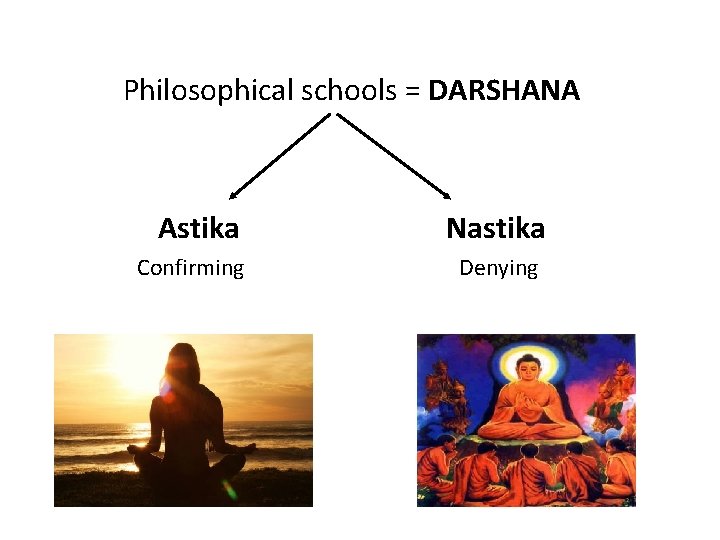
Philosophical schools = DARSHANA Astika Nastika Confirming Denying
- The Orthodox schools. They recognize the authority of the Veda and to some degree based on their texts (Sankhya, Yoga, Mimansa, Vedanta, Nyaya) - III century BC. - II century BC. - The Unorthodox schools, they deny the preceding tradition (Buddhism, Jainism) - about the VI century BC.
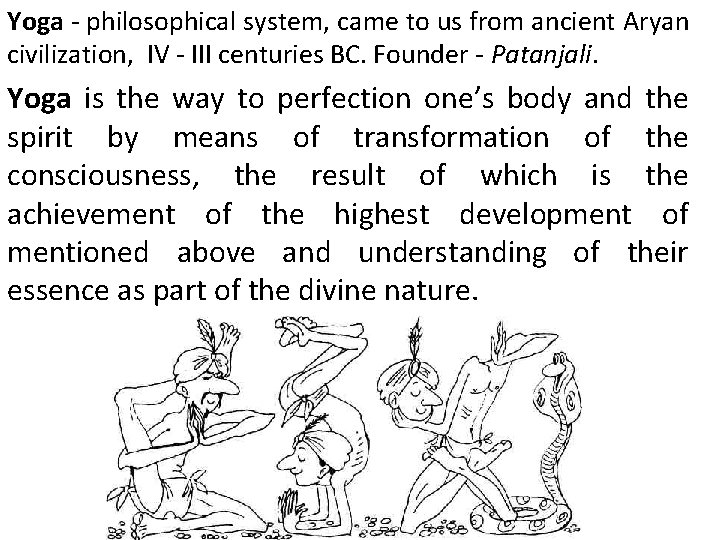
Yoga - philosophical system, came to us from ancient Aryan civilization, IV - III centuries BC. Founder - Patanjali. Yoga is the way to perfection one’s body and the spirit by means of transformation of the consciousness, the result of which is the achievement of the highest development of mentioned above and understanding of their essence as part of the divine nature.
Mimansa - the trend in philosophy, the purpose of which was the strengthening of the authority of the Vedas and the creation of the firm wording of the rules for their interpretation, II century BC. Founder – Jaimini. The school of Mimamsa consists of both atheistic and theistic doctrines and is not deeply interested in the existence of God, but rather in the character of dharma (Natural Law)
The origin and development of Buddhism. - The most ancient in the world - 6 -5 centuries BC. - 400 million + 1 million monks; - Northern India - the doctrine of the Dharma – Sanskrit "the nature of all things; the way it is“ - The teachings of Buddha precepts (teachings) 84 thousand
- The most non-religious religion philosophy there’s NO - God-creator; - God-judge; - Teaching about mind – that perceives and realizes; Buddhism = mind exercises + everyday tips
Goals are - liberation from suffering, - inner peace, - the disclosure of the quality of the mind for the benefit of all beings.
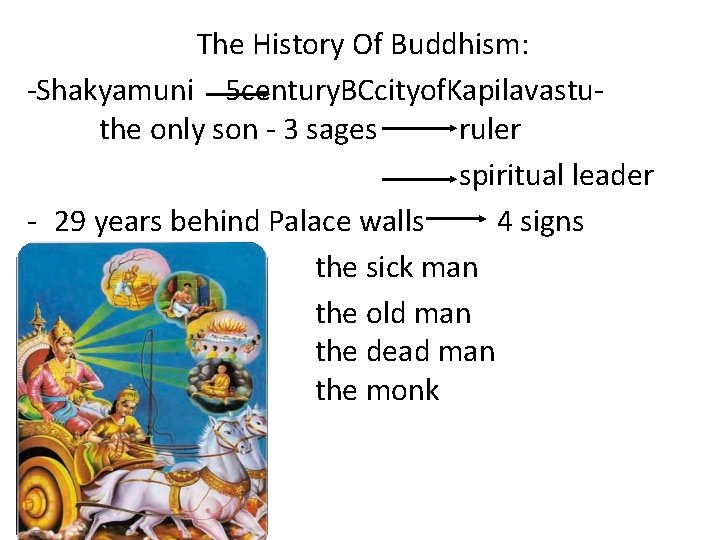
The History Of Buddhism: -Shakyamuni 5 century. BCcityof. Kapilavastuthe only son - 3 sages ruler spiritual leader - 29 years behind Palace walls 4 signs the sick man the old man the dead man the monk
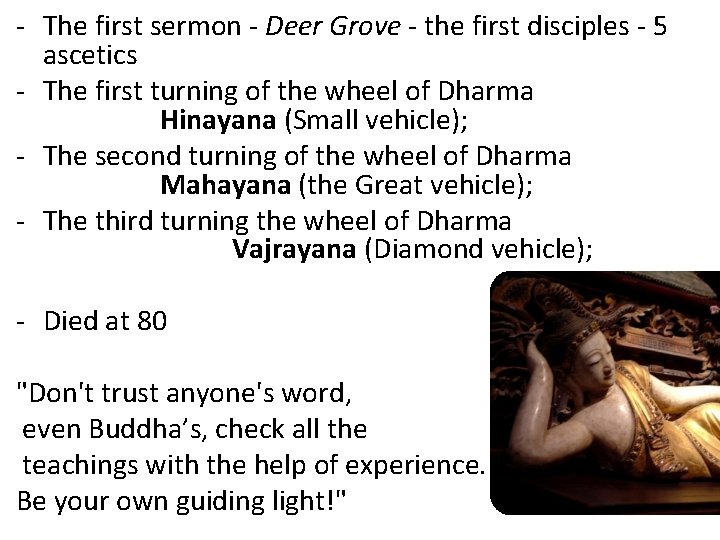
- The first sermon - Deer Grove - the first disciples - 5 ascetics - The first turning of the wheel of Dharma Hinayana (Small vehicle); - The second turning of the wheel of Dharma Mahayana (the Great vehicle); - The third turning the wheel of Dharma Vajrayana (Diamond vehicle); - Died at 80 "Don't trust anyone's word, even Buddha’s, check all the teachings with the help of experience. Be your own guiding light!"
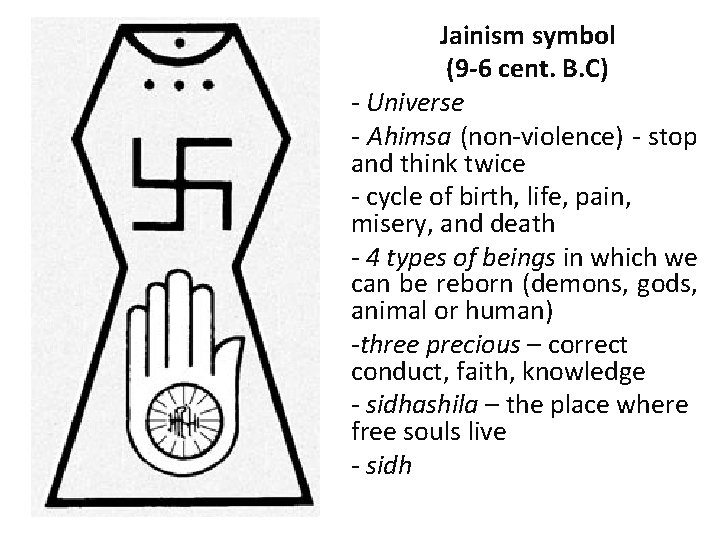
Jainism symbol (9 -6 cent. B. C) - Universe - Ahimsa (non-violence) - stop and think twice - cycle of birth, life, pain, misery, and death - 4 types of beings in which we can be reborn (demons, gods, animal or human) -three precious – correct conduct, faith, knowledge - sidhashila – the place where free souls live - sidh
3. The specificity of philosophical knowledge of Ancient China. The first Ancient Chinese ideas - VII cent. ВС «Book of Changes» , «Book of Songs» , «the Book of History» Features: - the geographical; - moral and political orientation. - the reference to «the wise men» , - the most influential schools - Confucianism and Taoism.
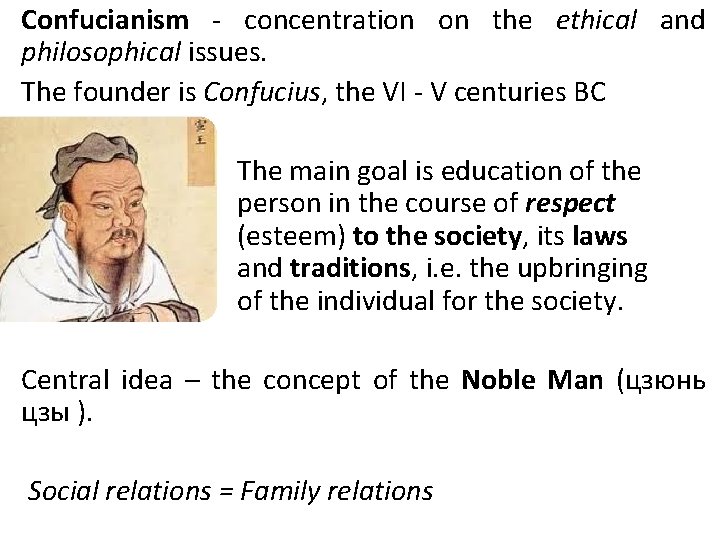
Confucianism - concentration on the ethical and philosophical issues. The founder is Confucius, the VI - V centuries BC The main goal is education of the person in the course of respect (esteem) to the society, its laws and traditions, i. e. the upbringing of the individual for the society. Central idea – the concept of the Noble Man (цзюнь цзы ). Social relations = Family relations
Watch the episode and answer the questions: 1. Specify years od birth/death of Confucius. 2. How he formulated the golden rule of ethics? 3. What concepts were put as a basis for Confucianism? 4. Why is Confucianism is treated more as a philosophy/social doctrine than a religion? 5. To whom his teaching was addressed?
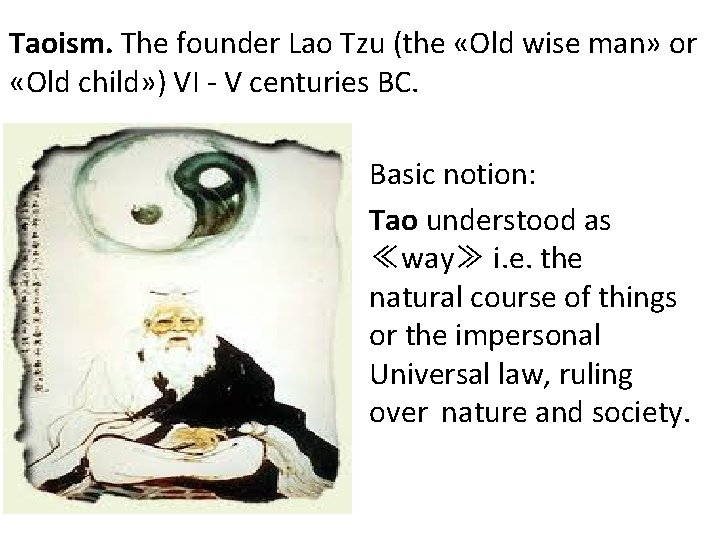
Taoism. The founder Lao Tzu (the «Old wise man» or «Old child» ) VI - V centuries BC. Basic notion: Tao understood as ≪way≫ i. e. the natural course of things or the impersonal Universal law, ruling over nature and society.
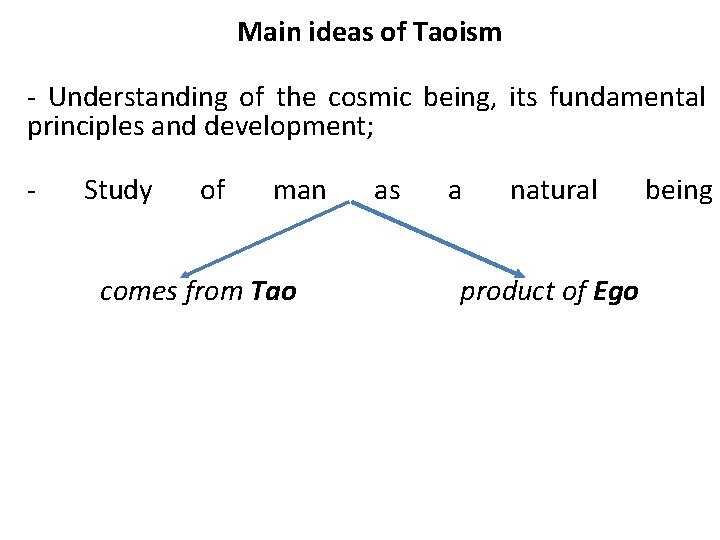
Main ideas of Taoism - Understanding of the cosmic being, its fundamental principles and development; - Study of man comes from Tao as a natural product of Ego being
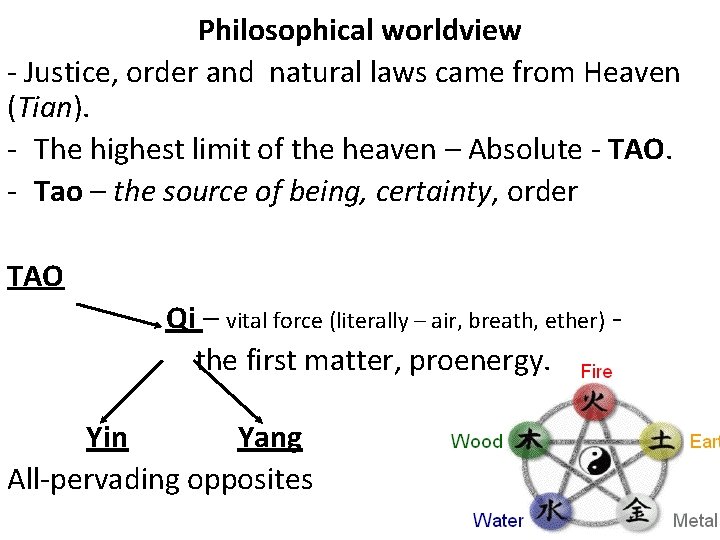
Philosophical worldview - Justice, order and natural laws came from Heaven (Tian). - The highest limit of the heaven – Absolute - TAO. - Tao – the source of being, certainty, order TAO Qi – vital force (literally – air, breath, ether) the first matter, proenergy. Yin Yang All-pervading opposites