
Lecture 2 Overview of the solar system Background
Lecture 2: Overview of the solar system: Background for discussion of Mars and Saturn • Mathematics in astronomy: the essence of physical sciences like astronomy is the mathematical structure of the universe. This is a Hellenistic idea. • A useful tool: scientific notation in expressing very large and very small numbers
Scientific Notation: A shorthand for expressing very large or very small numbers • 1640 = 1. 64 X 1000; 1000=10 X 10 = 103; 1640 = 1. 64 X 103 , OR 1. 64 E+03. • 6, 280, 000 = 6. 28 X 1, 000; 1, 000=10 X 10 X 10 X 10 =106 ; 6, 280, 000 = 6. 28 X 106 = 6. 28 E+06 • Little numbers too; 0. 0015 = 1. 5/1000 = 1. 5 X(1/1000) = 1. 5 X(1/(10 X 10)) = 1. 5 X(1/103) = 1. 5 X 10 -3 =1. 5 E-03
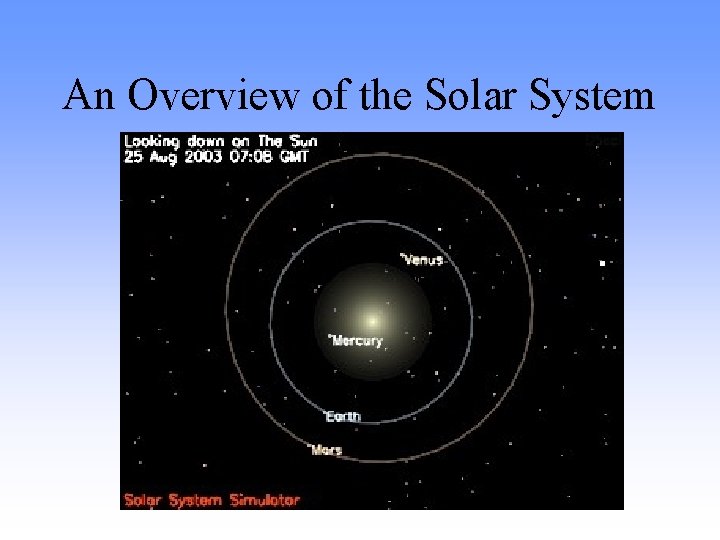
An Overview of the Solar System
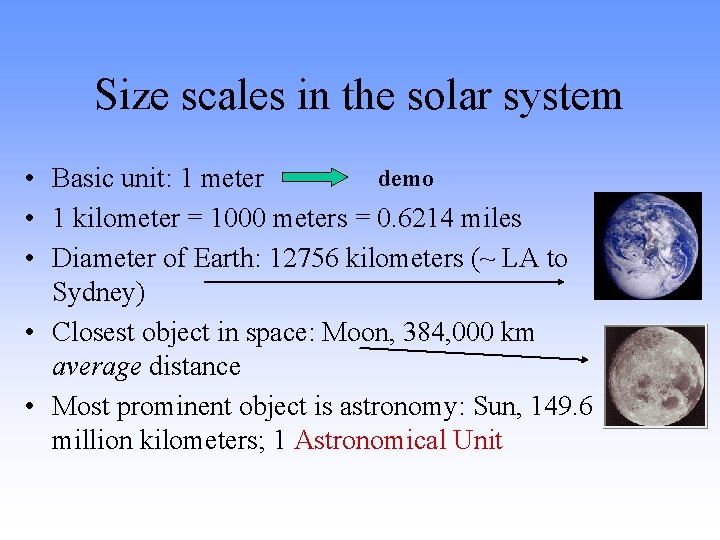
Size scales in the solar system demo • Basic unit: 1 meter • 1 kilometer = 1000 meters = 0. 6214 miles • Diameter of Earth: 12756 kilometers (~ LA to Sydney) • Closest object in space: Moon, 384, 000 km average distance • Most prominent object is astronomy: Sun, 149. 6 million kilometers; 1 Astronomical Unit
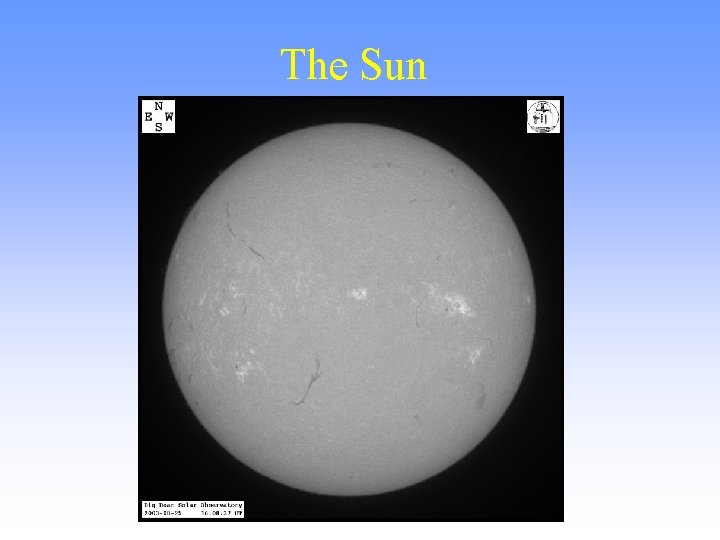
The Sun
Facts about the Sun • Distance: 149. 6 million kilometers = 1. 496 E+11 meters = 1 astronomical unit • Radius = 695, 990 kilometers = 6. 960 E+08 meters (109 times radius of Earth) • If Earth were scaled to 1 foot globe size, the Sun would extend from goal line to 30 yard line at Kinnick stadium • The Sun, not the planets (including Earth) is the dominant object in the solar system
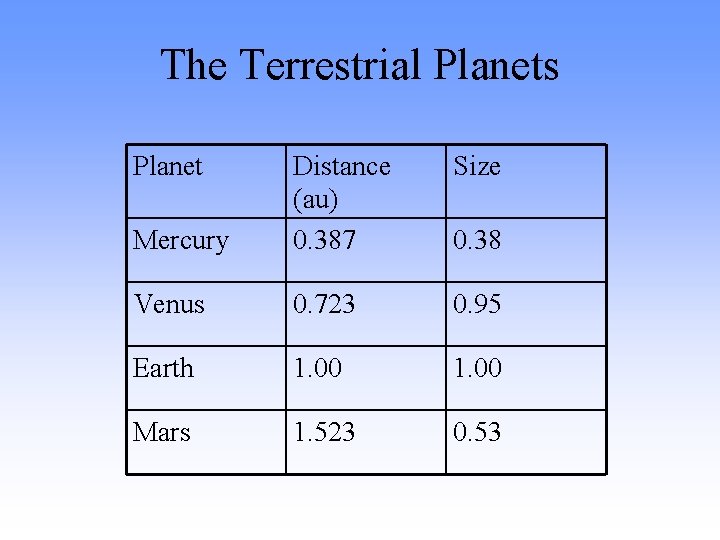
The Terrestrial Planets Planet Size Mercury Distance (au) 0. 387 Venus 0. 723 0. 95 Earth 1. 00 Mars 1. 523 0. 53 0. 38
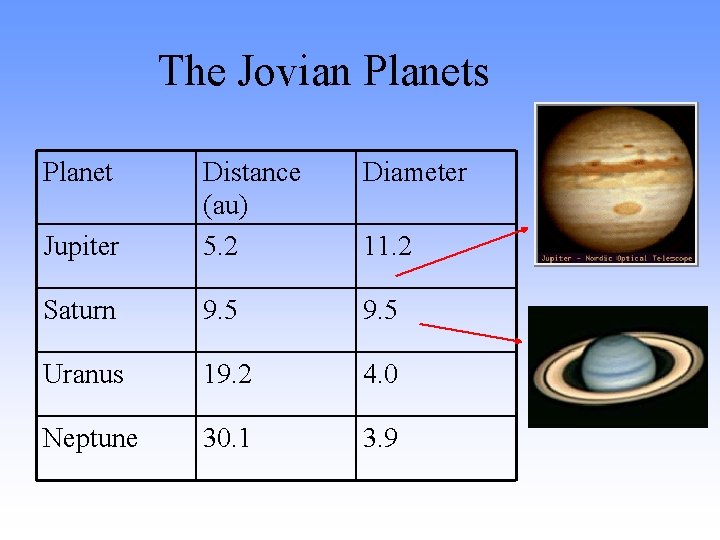
The Jovian Planets Planet Diameter Jupiter Distance (au) 5. 2 Saturn 9. 5 Uranus 19. 2 4. 0 Neptune 30. 1 3. 9 11. 2
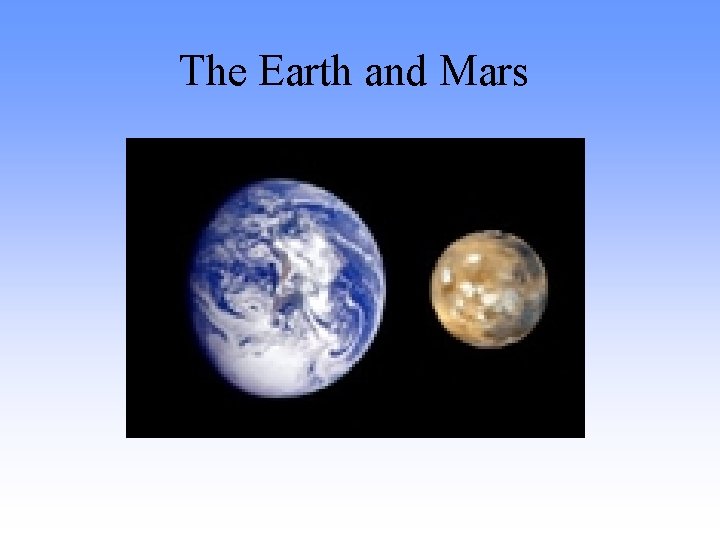
The Earth and Mars
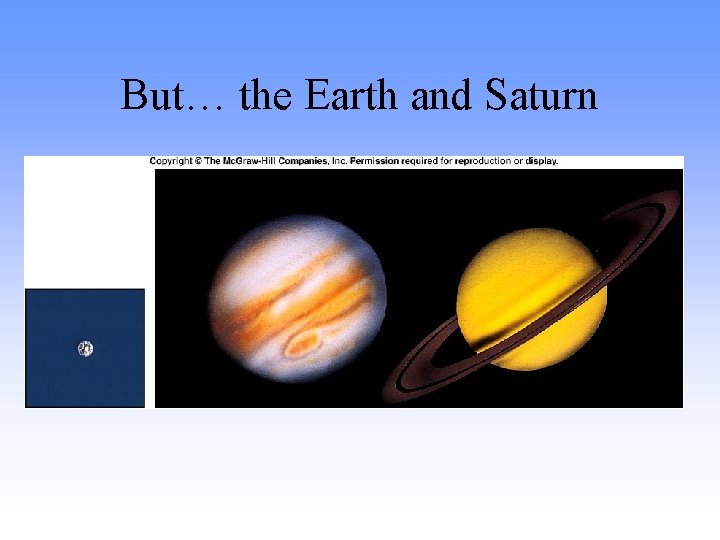
But… the Earth and Saturn
- Slides: 10